Onward to the North: Hello, Basque Country!
August 12-15
We packed our suitcases (and mercifully left one behind in Valencia), picked up our rental car, and headed north to explore the Basque Country. Our trip was made extra special by getting to connect with a beloved teacher (and her family) and taking in our second country during this gap year.
Additional highlights of this stretch included experiencing totality with a solar eclipse, eating delicious pintxos, and being dazzled by a light show in an 800 year old French cathedral.
See some “postcards” below.
Sesma: The Total Eclipse
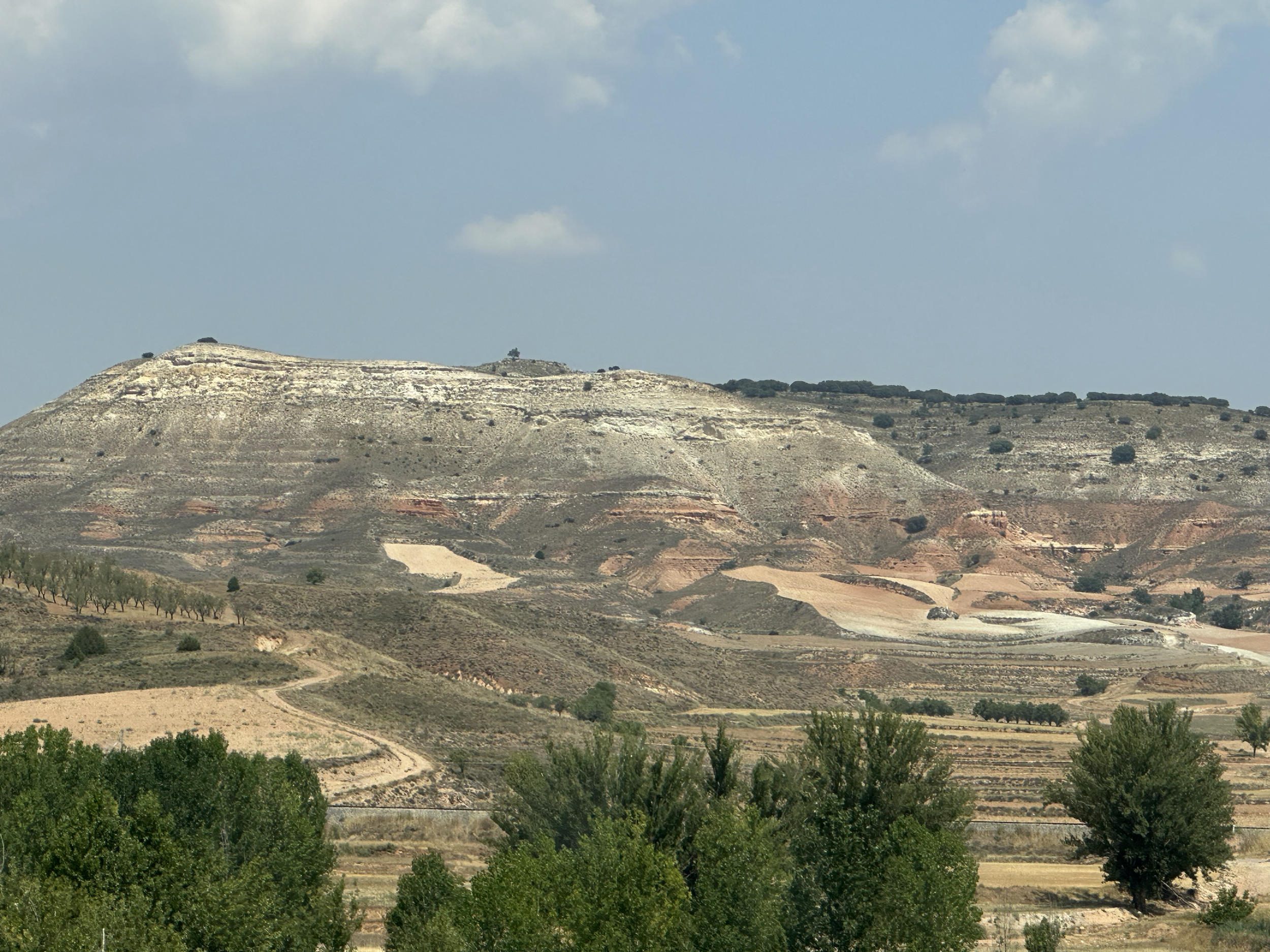
As we left Valencia, we drove into the mountains to the north of the city (the ones you could see from the beach). The landscape changed dramatically as we drove.
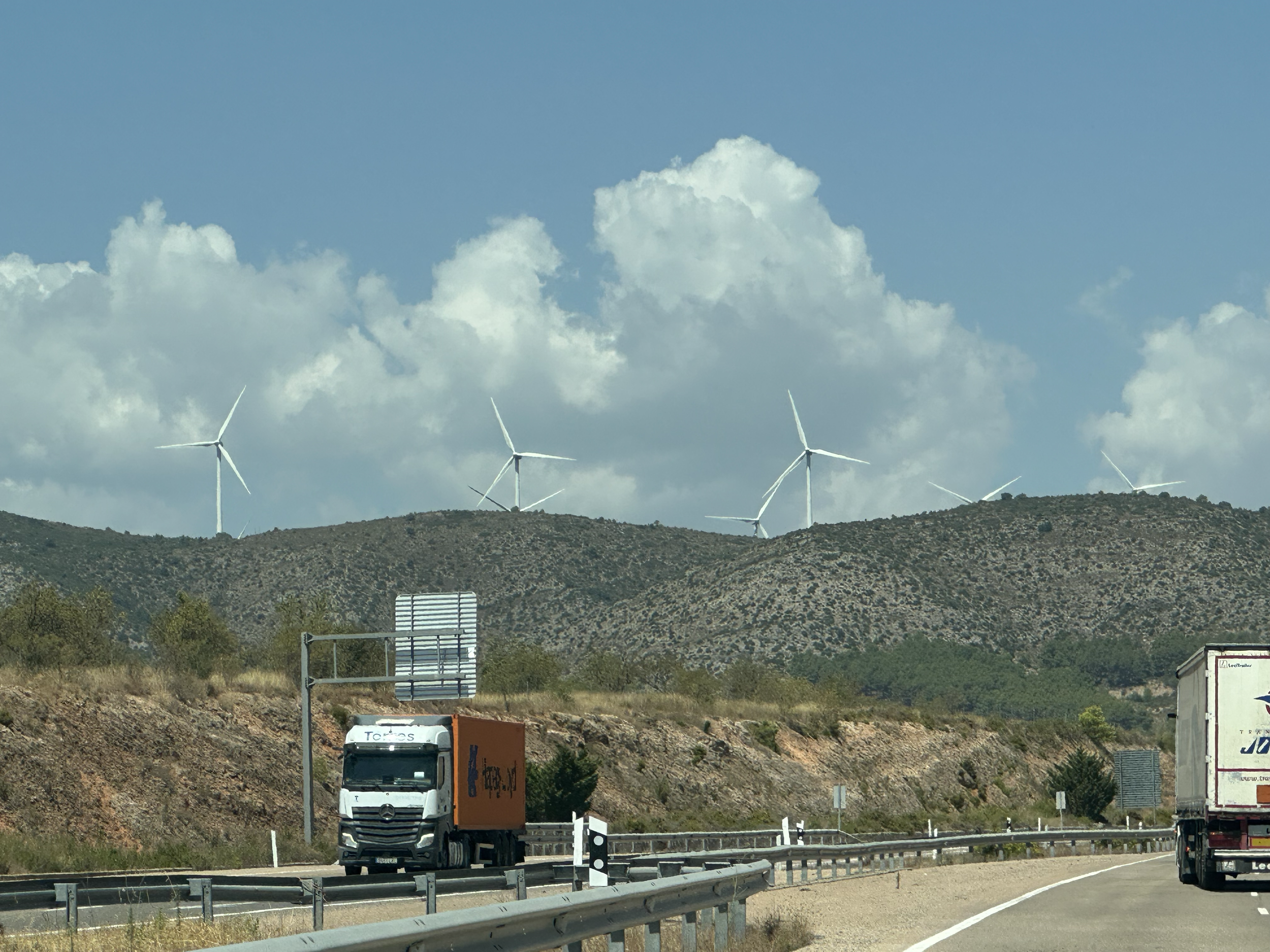
We really enjoyed seeing windmills across the mountains and plains.
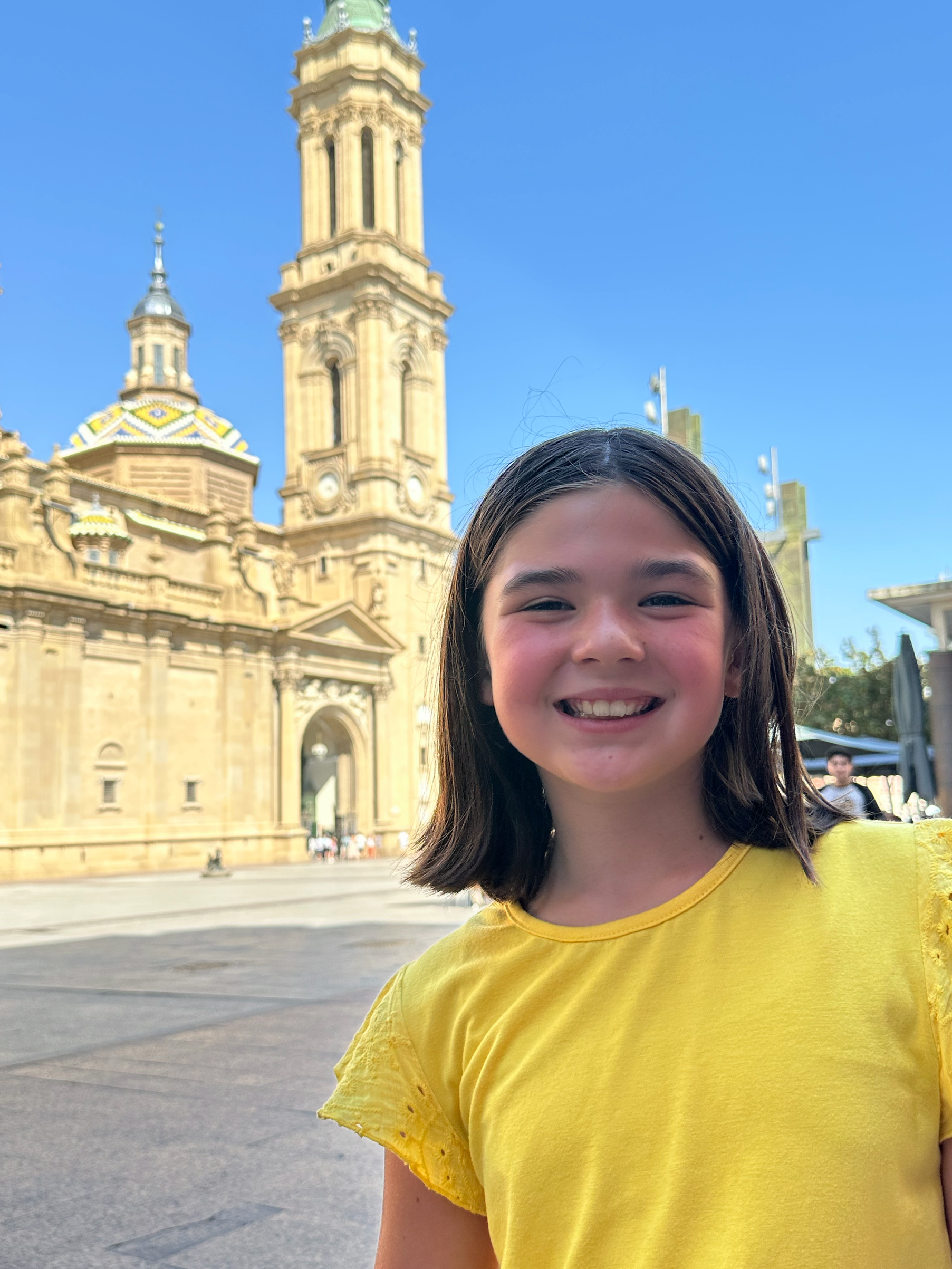
We made a quick stop in Zaragoza for lunch. We only saw a small section of the town square and peeked into the cathedral. It was beautiful. Amelia matched the tiles on the roof of the cathedral in their bright yellows, greens, and blues.
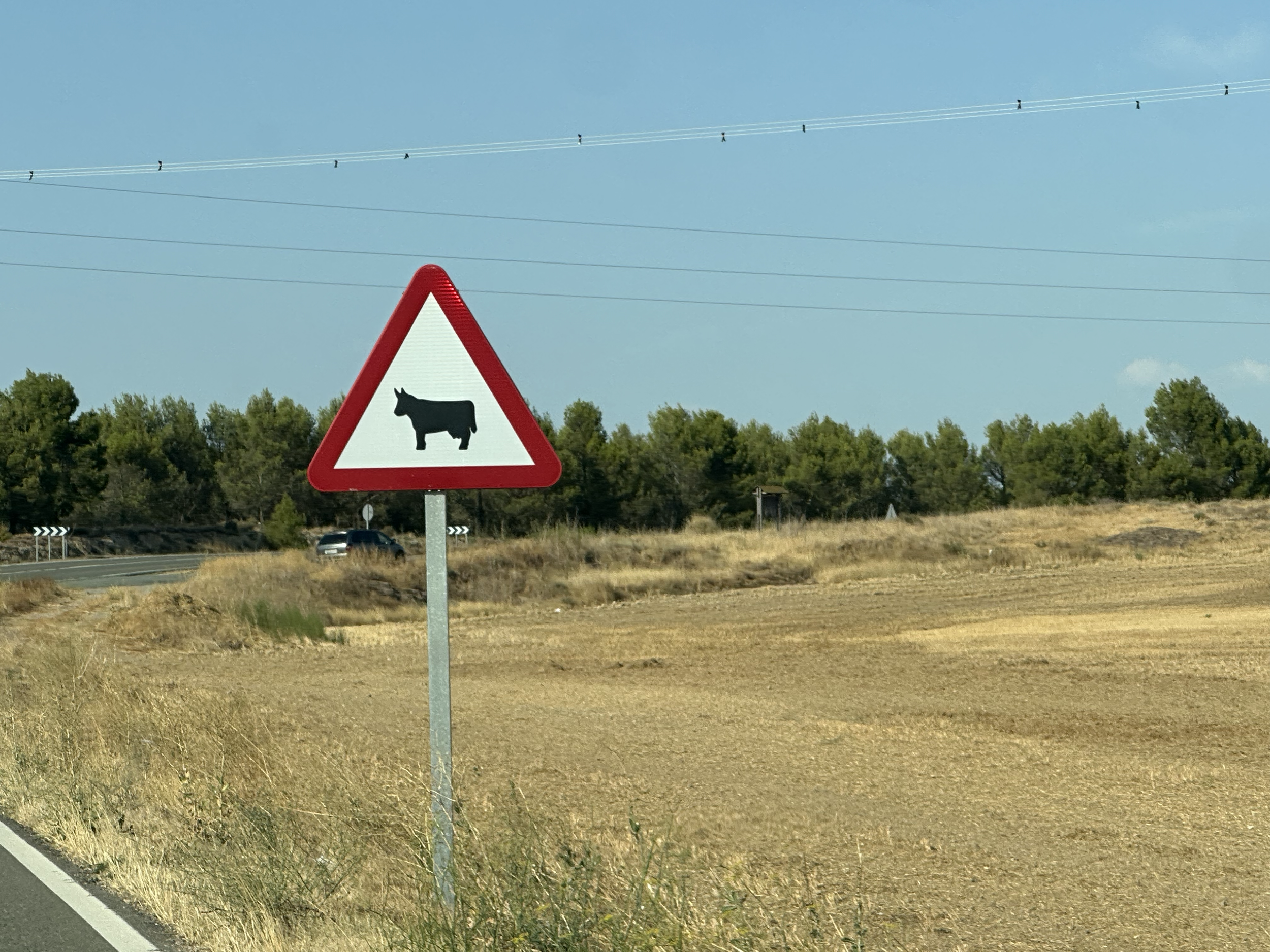
We totally love new road signs! Cows ahead!
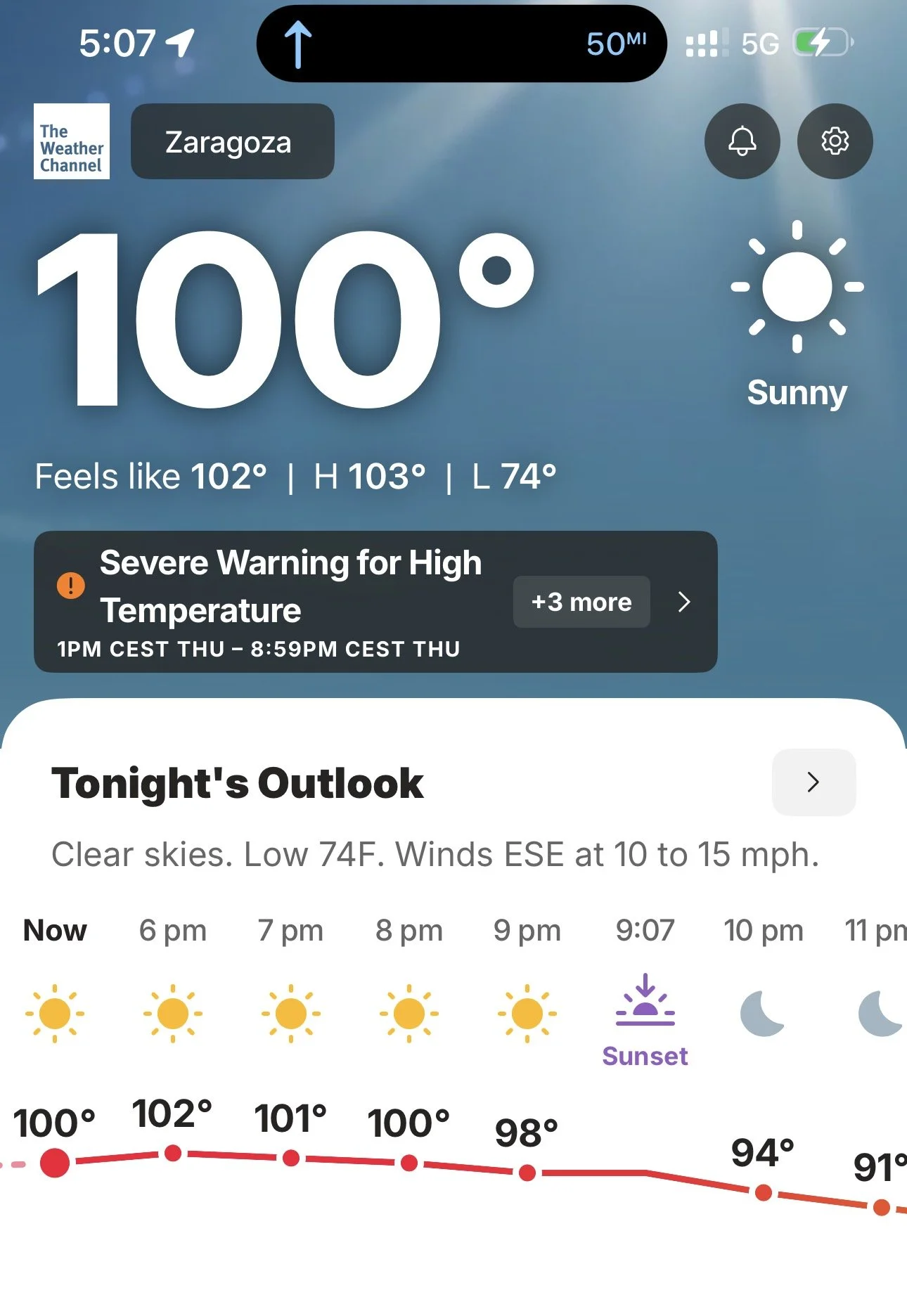
The temperatures were so high during August! However, 100F in Zaragoza did not feel nearly as hot as it did near the coast in Valencia. We think that the humidity in Valencia made the difference.
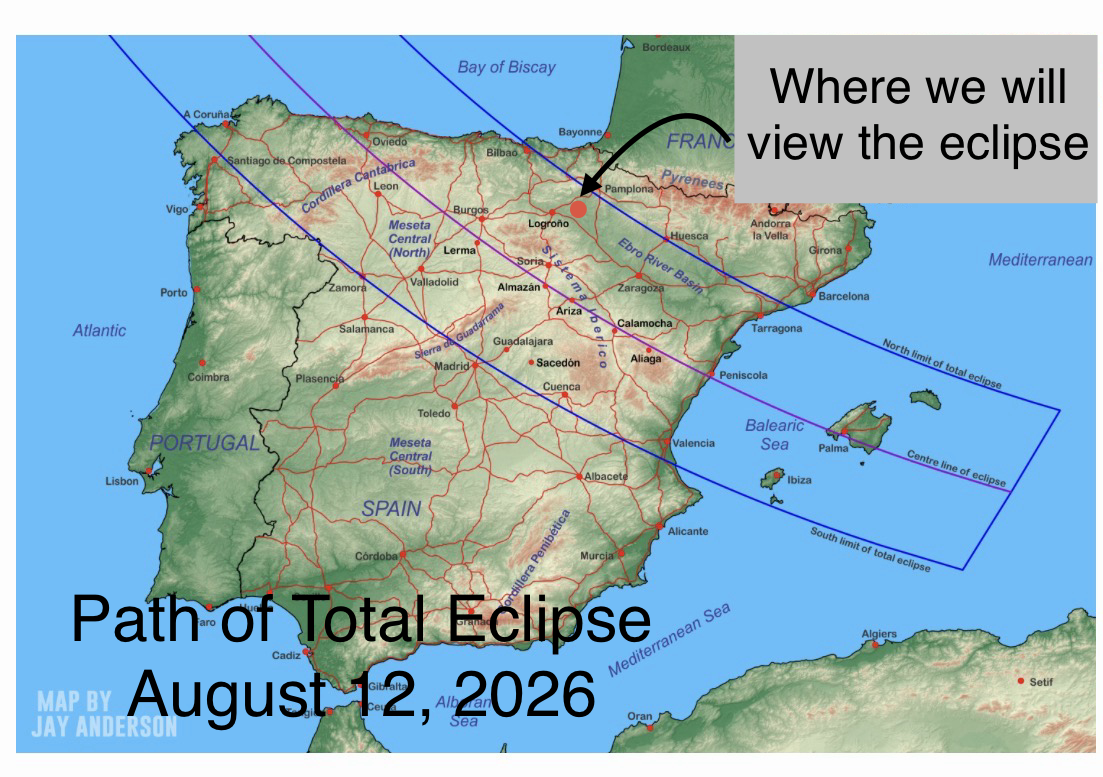
I found this image online (see credit on image) that shows the path of the total solar eclipse on August 12th. We did not realize until the week before that we would be so close to the path of totality. We had been planning to travel north that day to visit with our kids' beloved 1st grade Spanish teacher. She was so kind to invite us to join her family to view the eclipse in the town of Sesma.
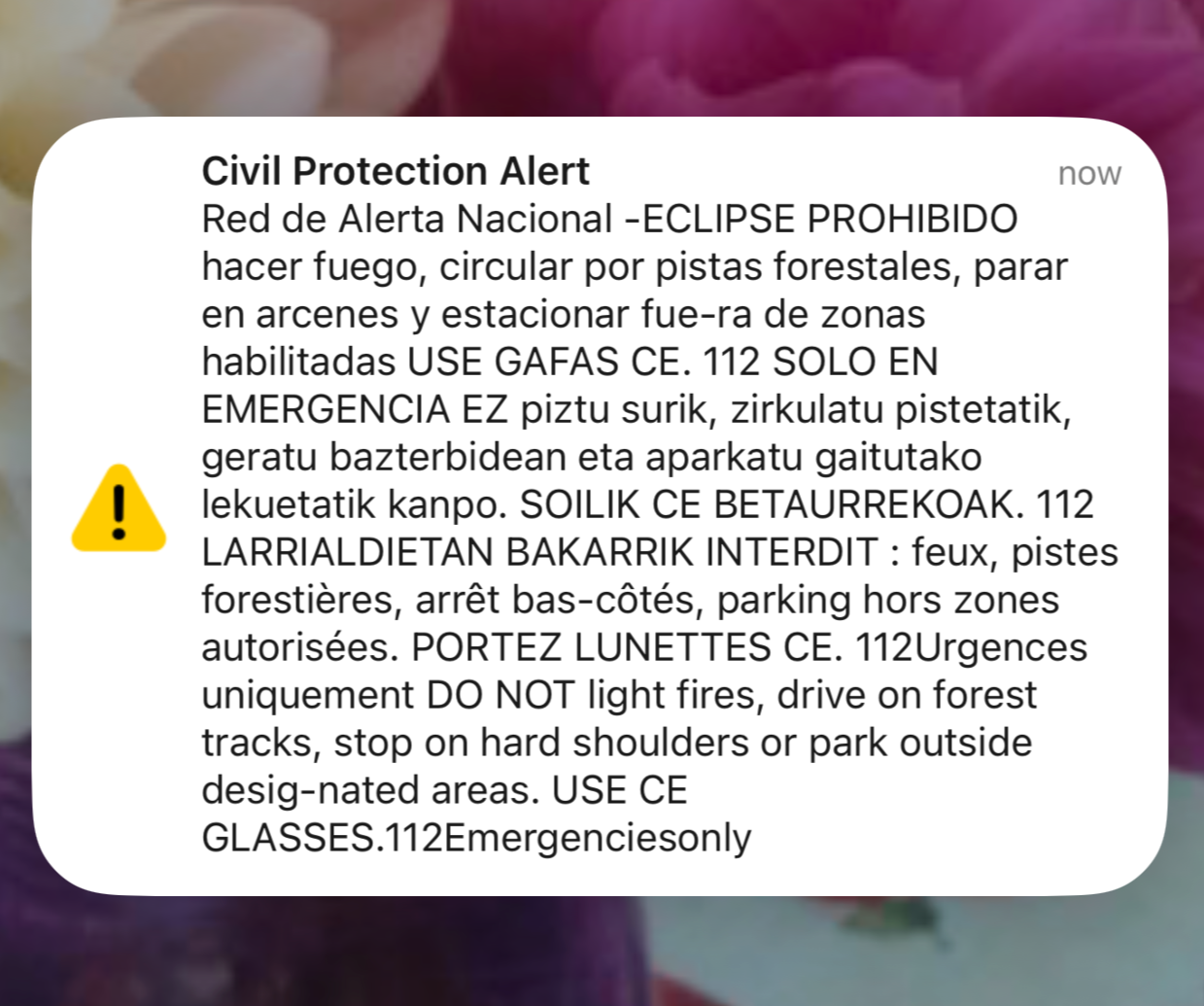
We received red alerts on our phones warning us about the eclipse, first in Spanish, then Basque, followed by French, and at the end in English.
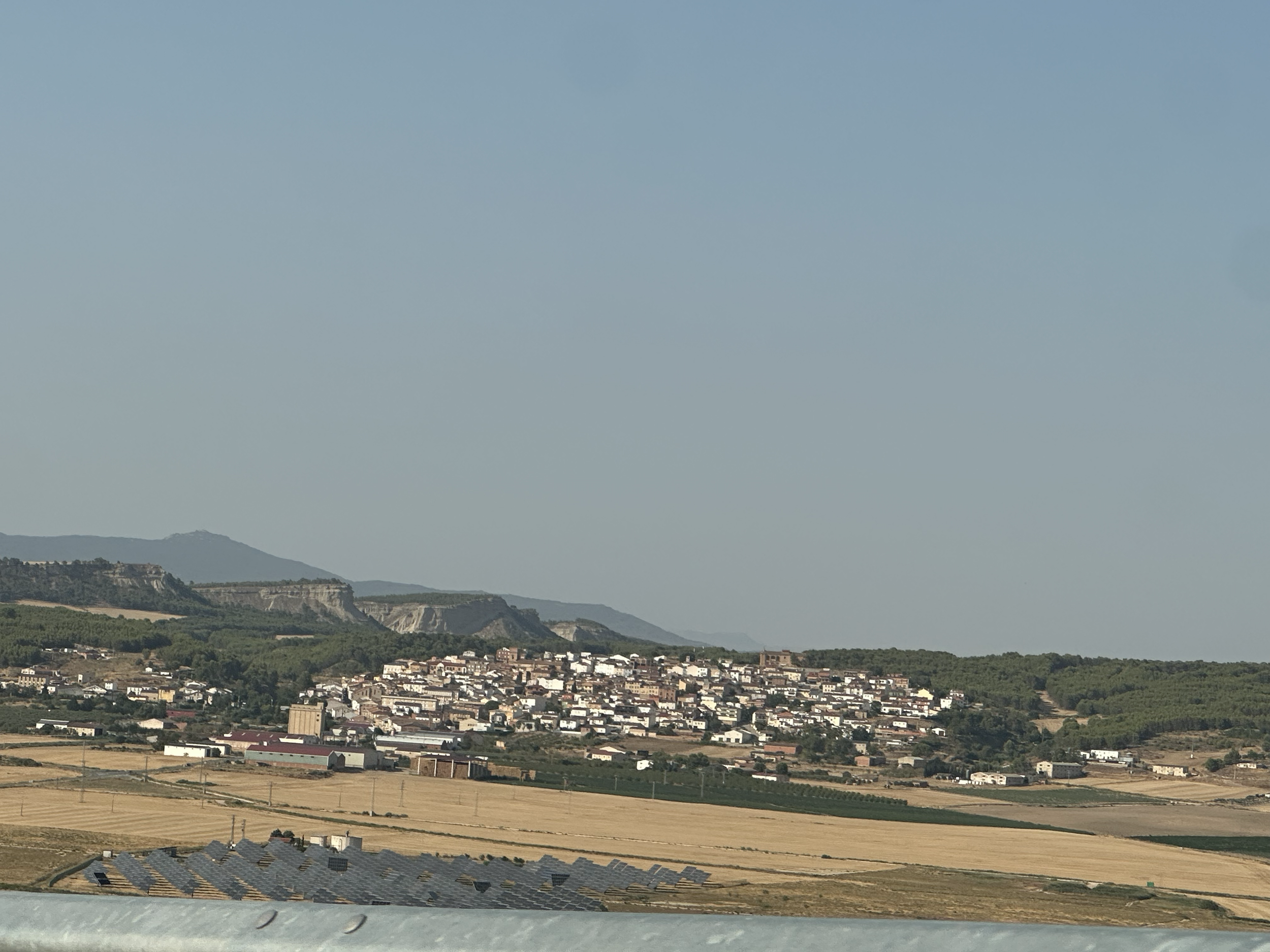
As we came up over a hill, there was the town of Sesma, standing alone amongst fields and mountains. We were really excited to meet Srta. U's family.
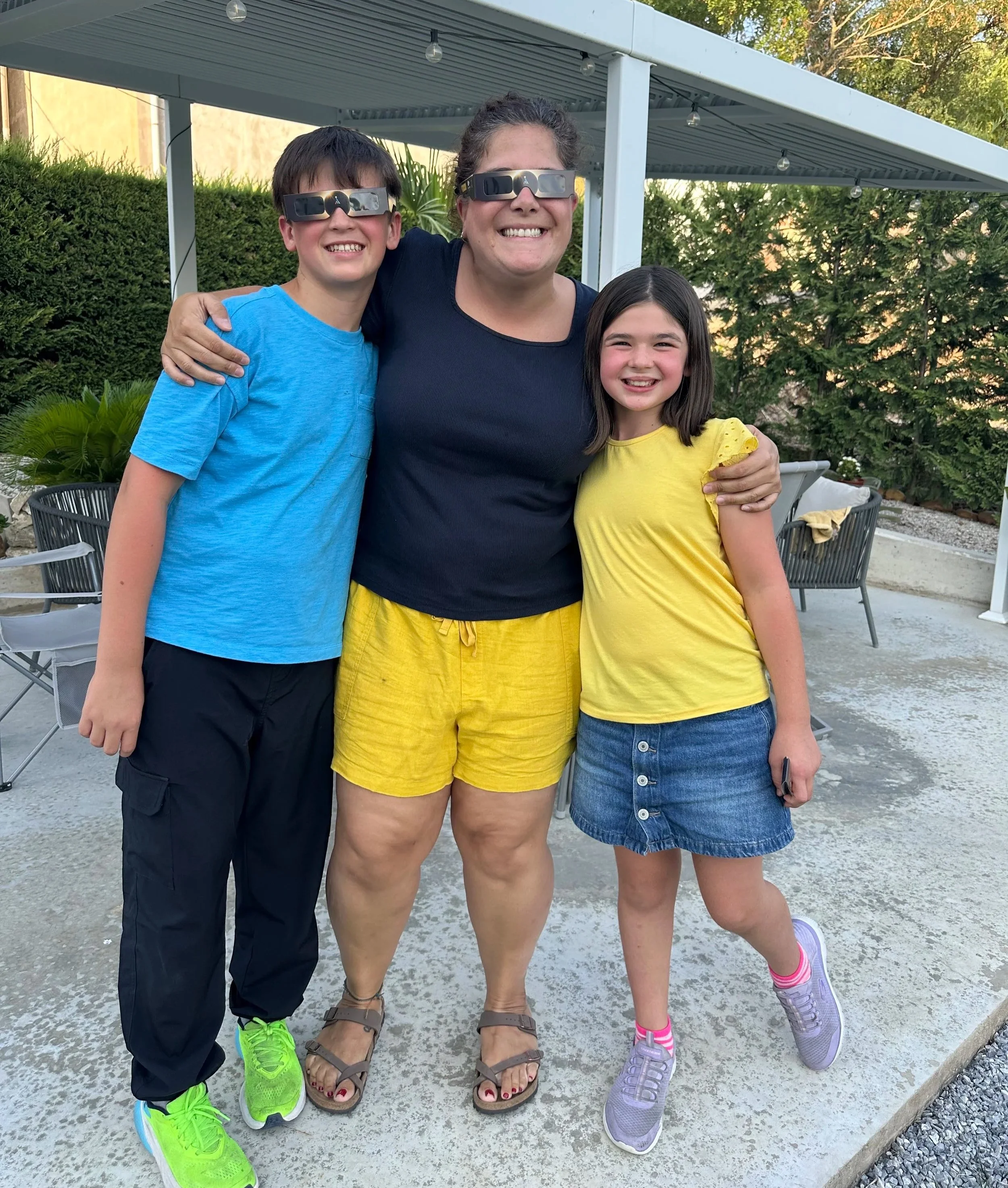
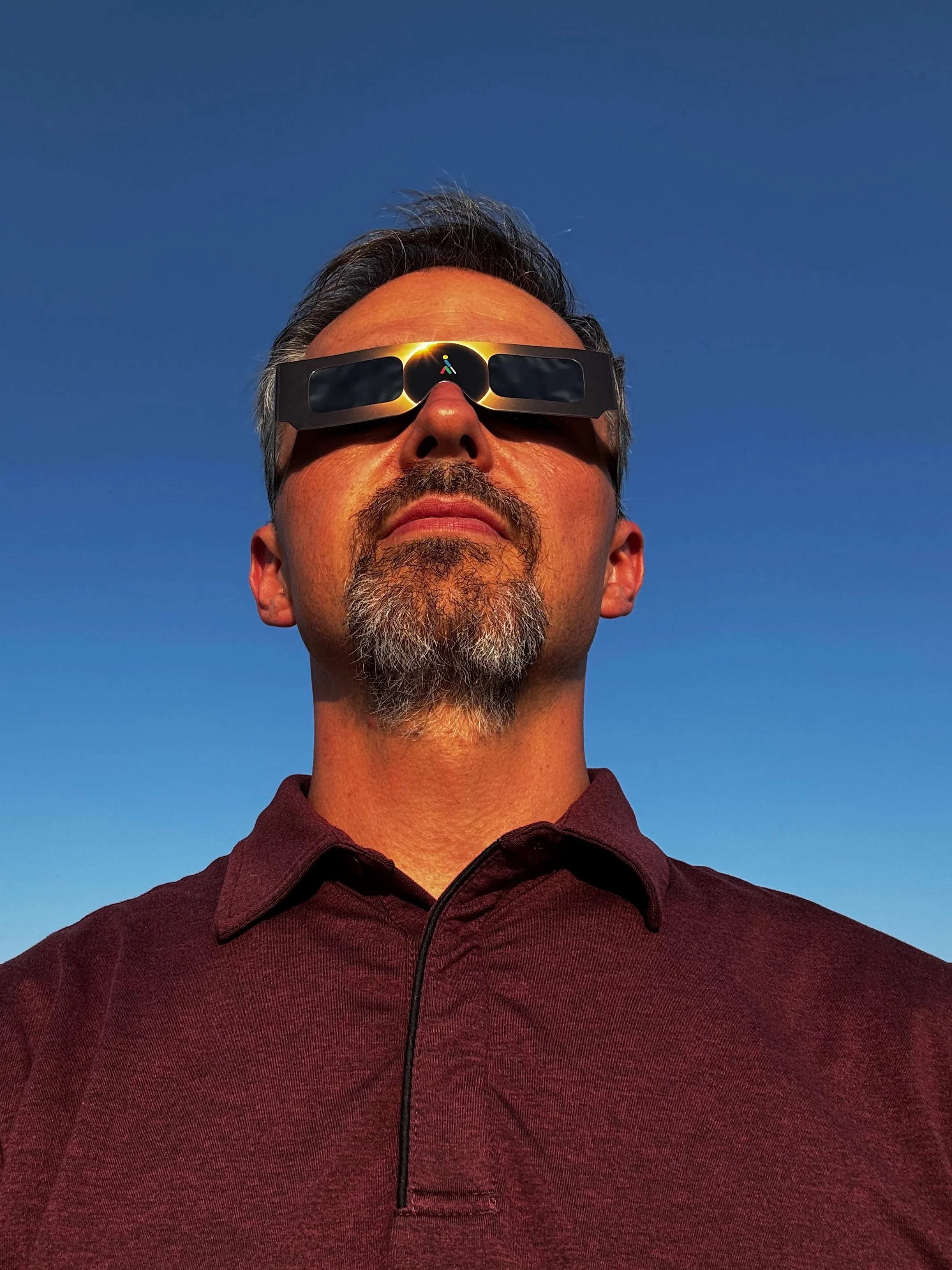
What a sweet reunion! Srta. U was the first person who knows us to see us since we left the U.S. We all came prepared with our eclipse glasses.
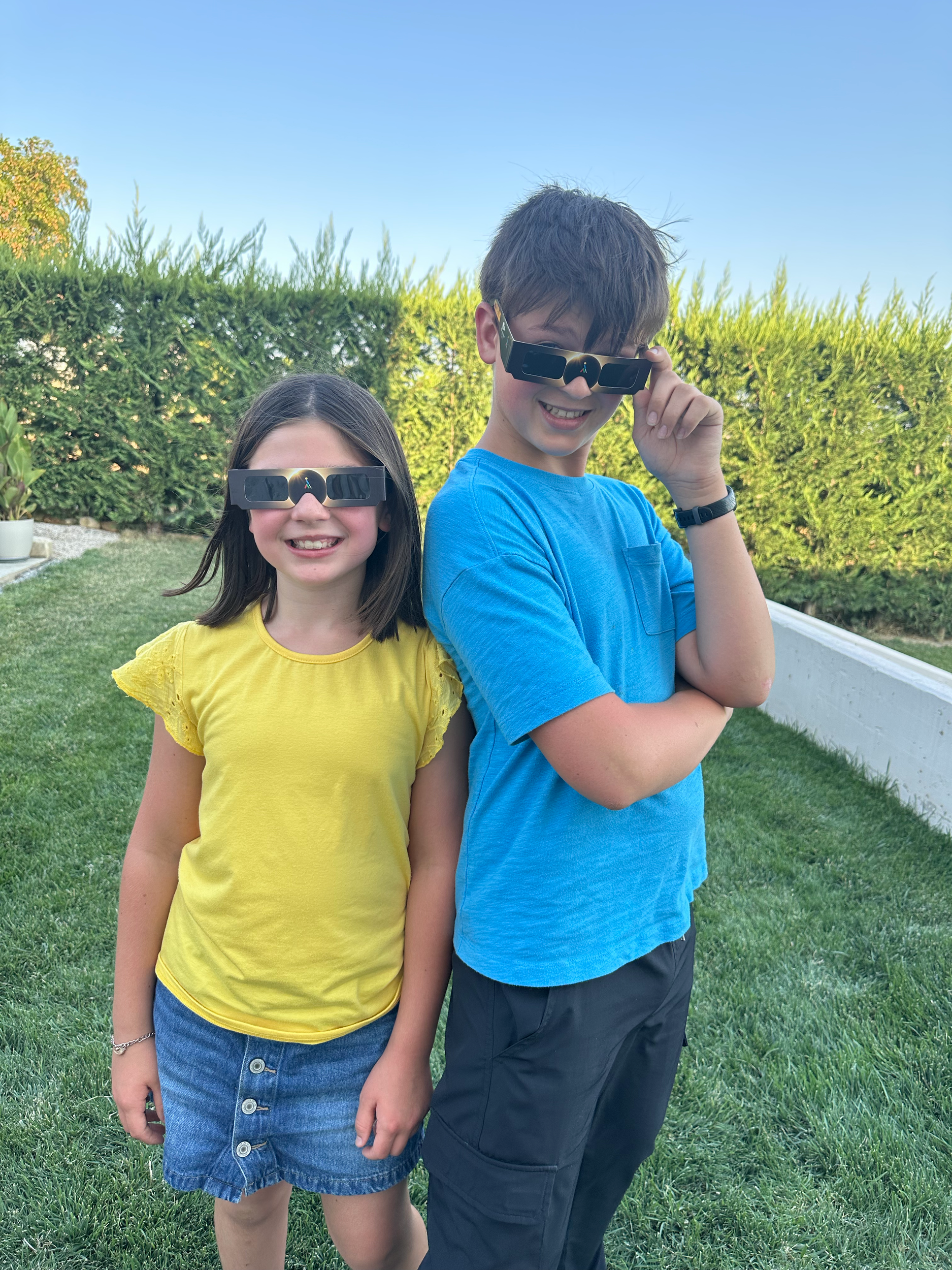
Always stylin'
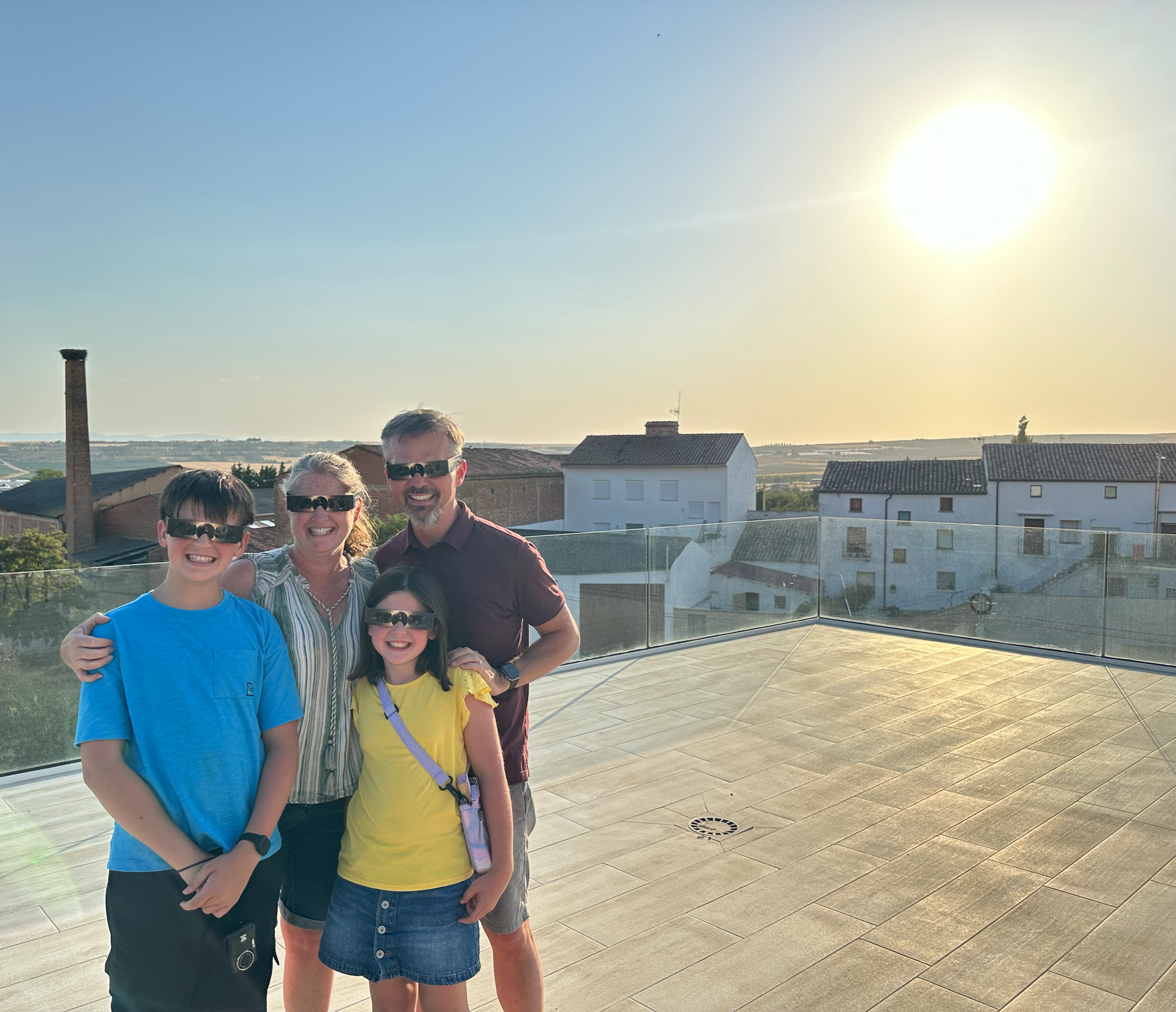
Srta. U's family has an amazing balcony that has a perfect view to the west. The eclipse was at 8:24pm. We were ready well in advance.
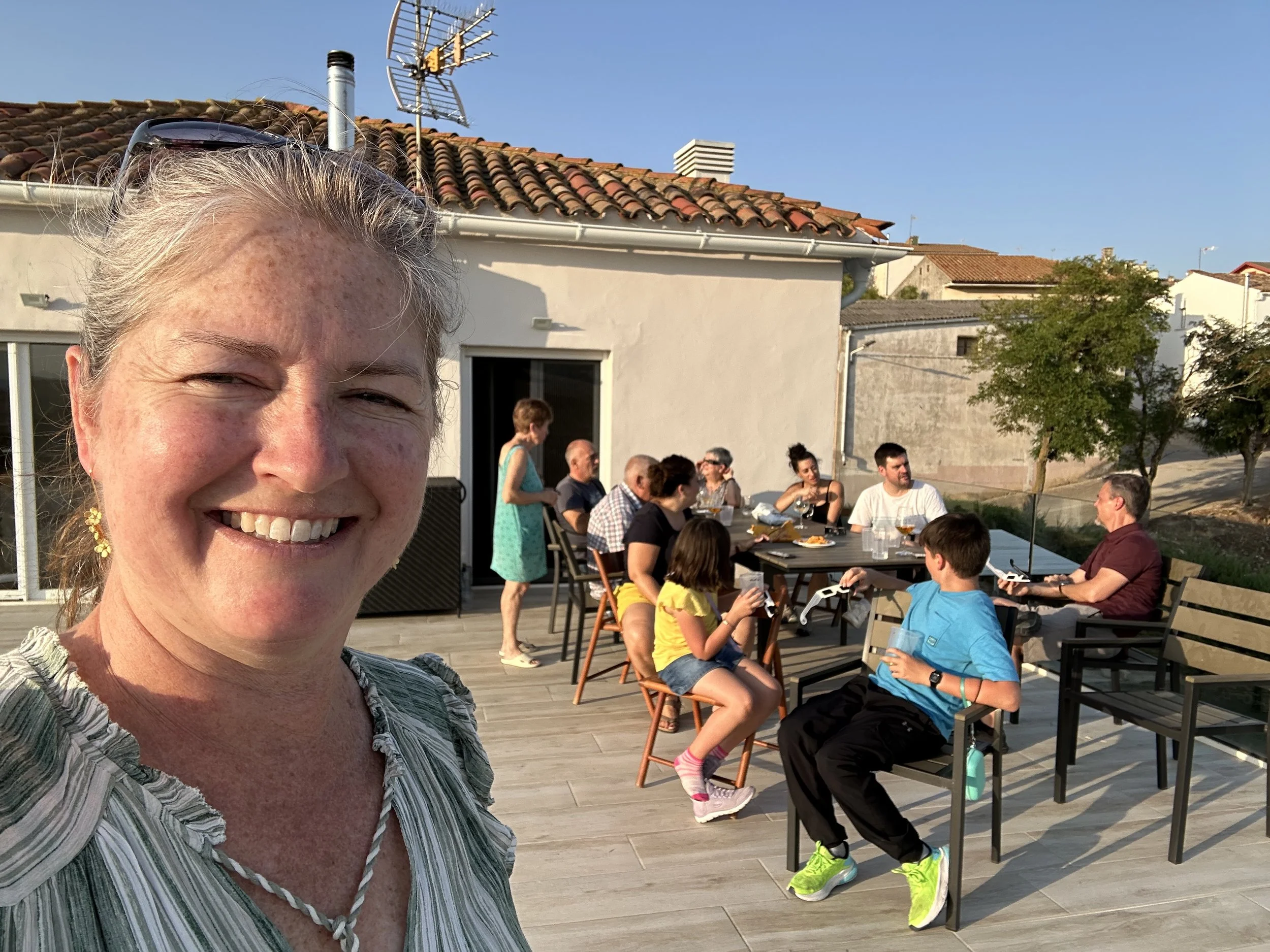
What a fun private viewing party with family! We sat out on the balcony and visited while keeping an eye on the party in the sky.
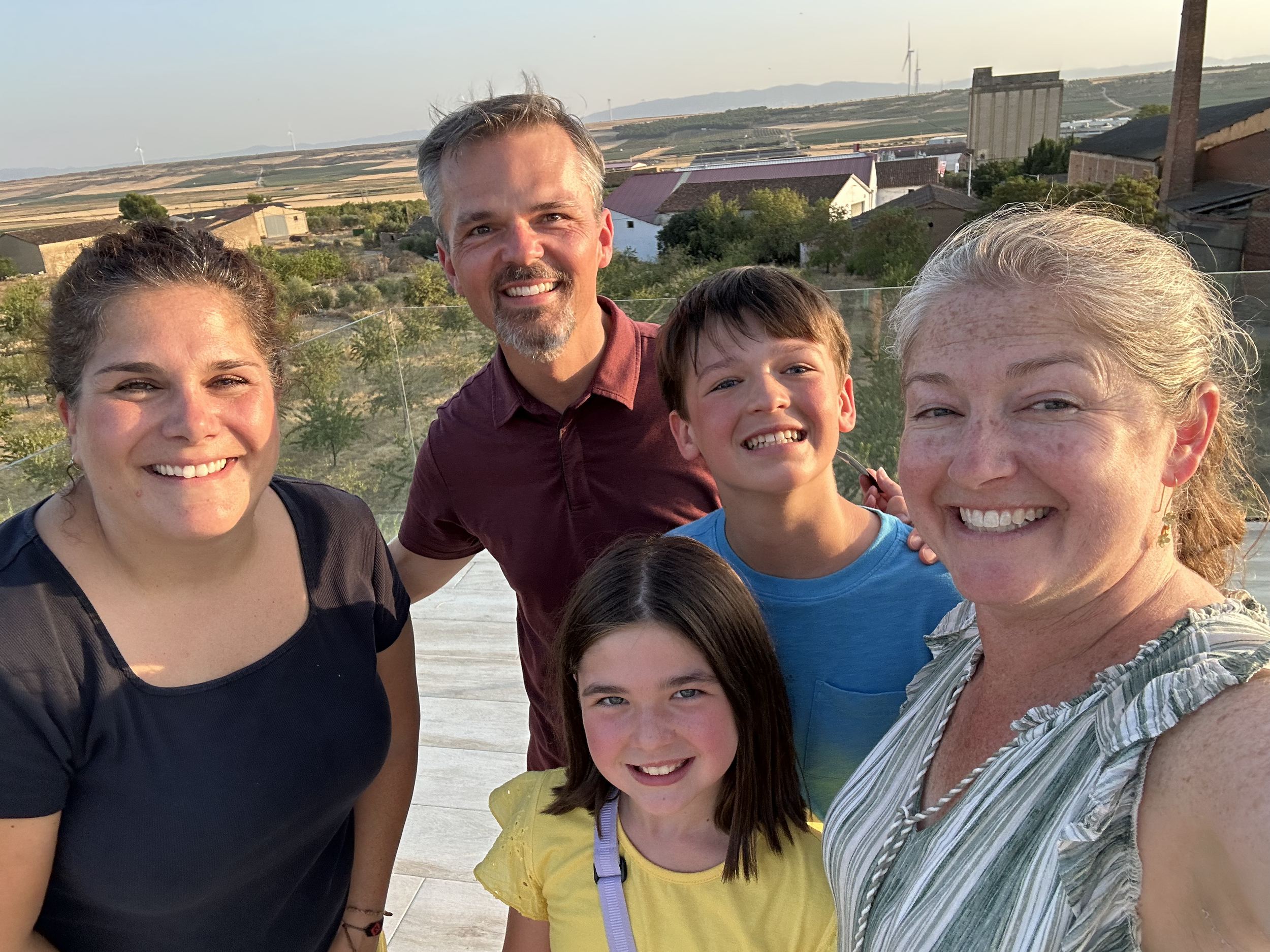
So happy to be with Srta U! The sky had a mysterious darkness to it as the sun was blocked by the moon and everything had a glow to it.
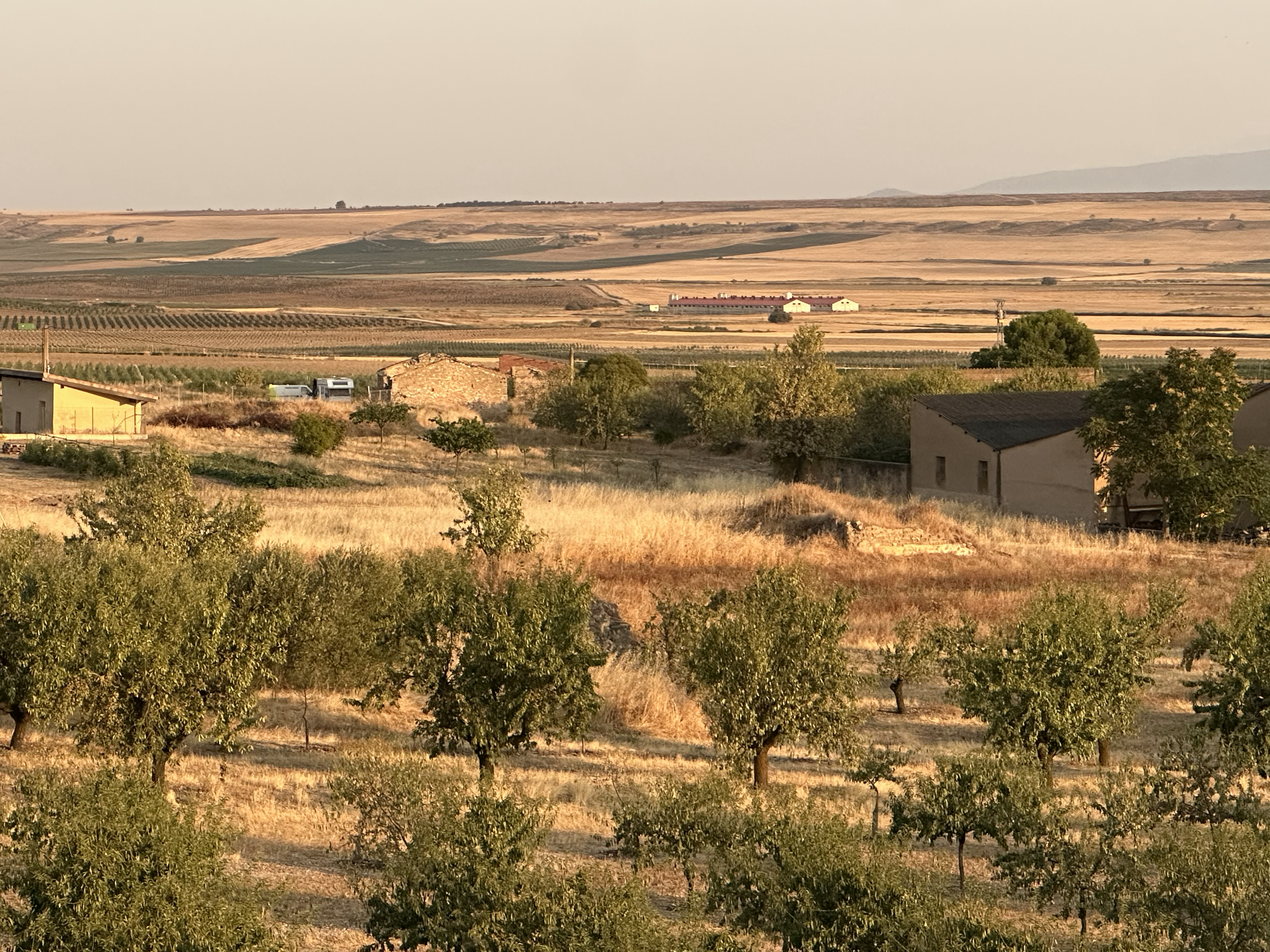
Even looking out at the fields, eveything looked golden. Those are almond trees right around the house.
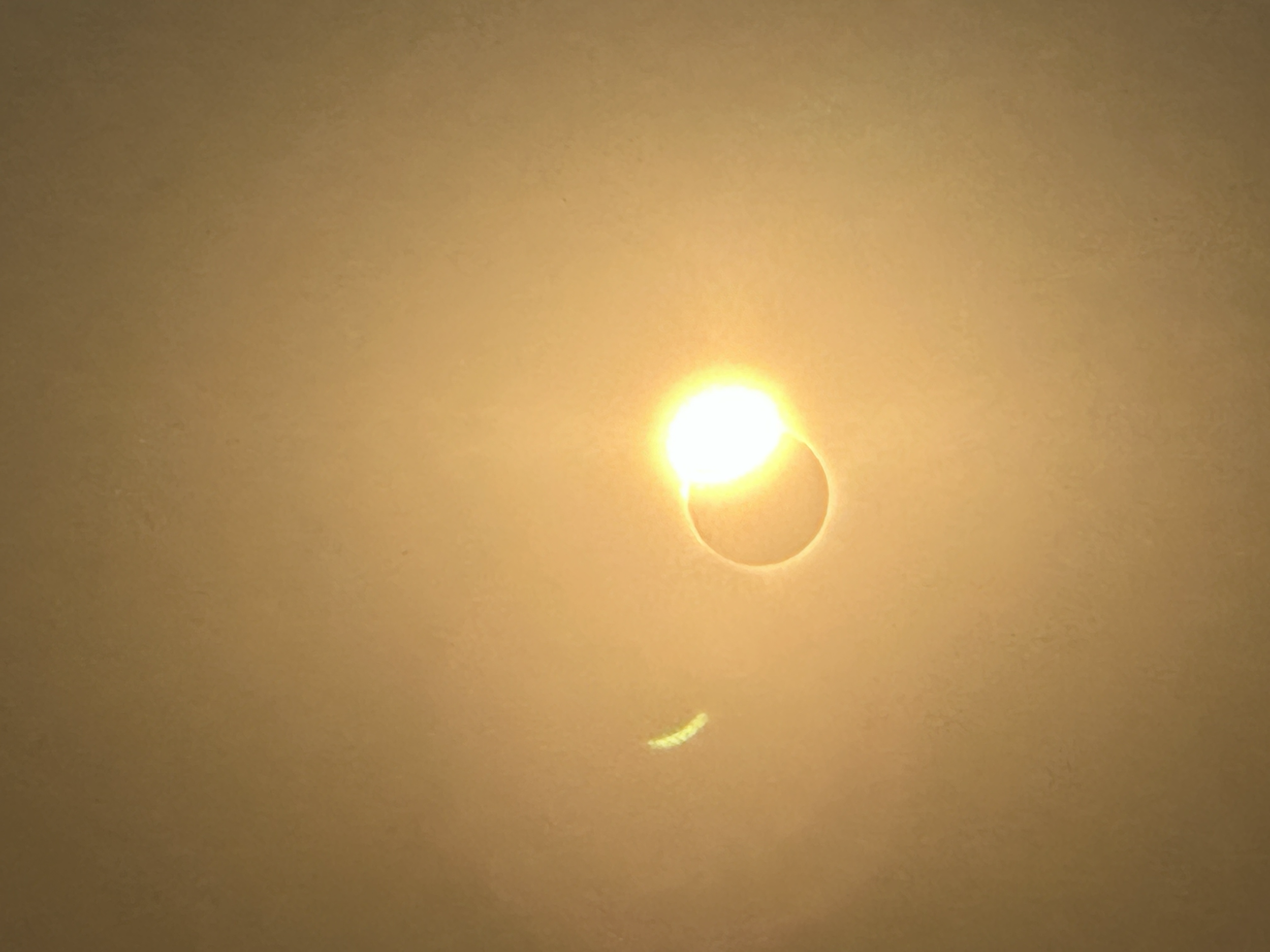
Rachel was able to capture the eclipse by placing her protective glasses over the camera lens on her phone. (Not award winning, but still special to have for the memory and to share). The moon has mostly covered the sun at this point, but a sliver of the sun is still giving off a bright light.
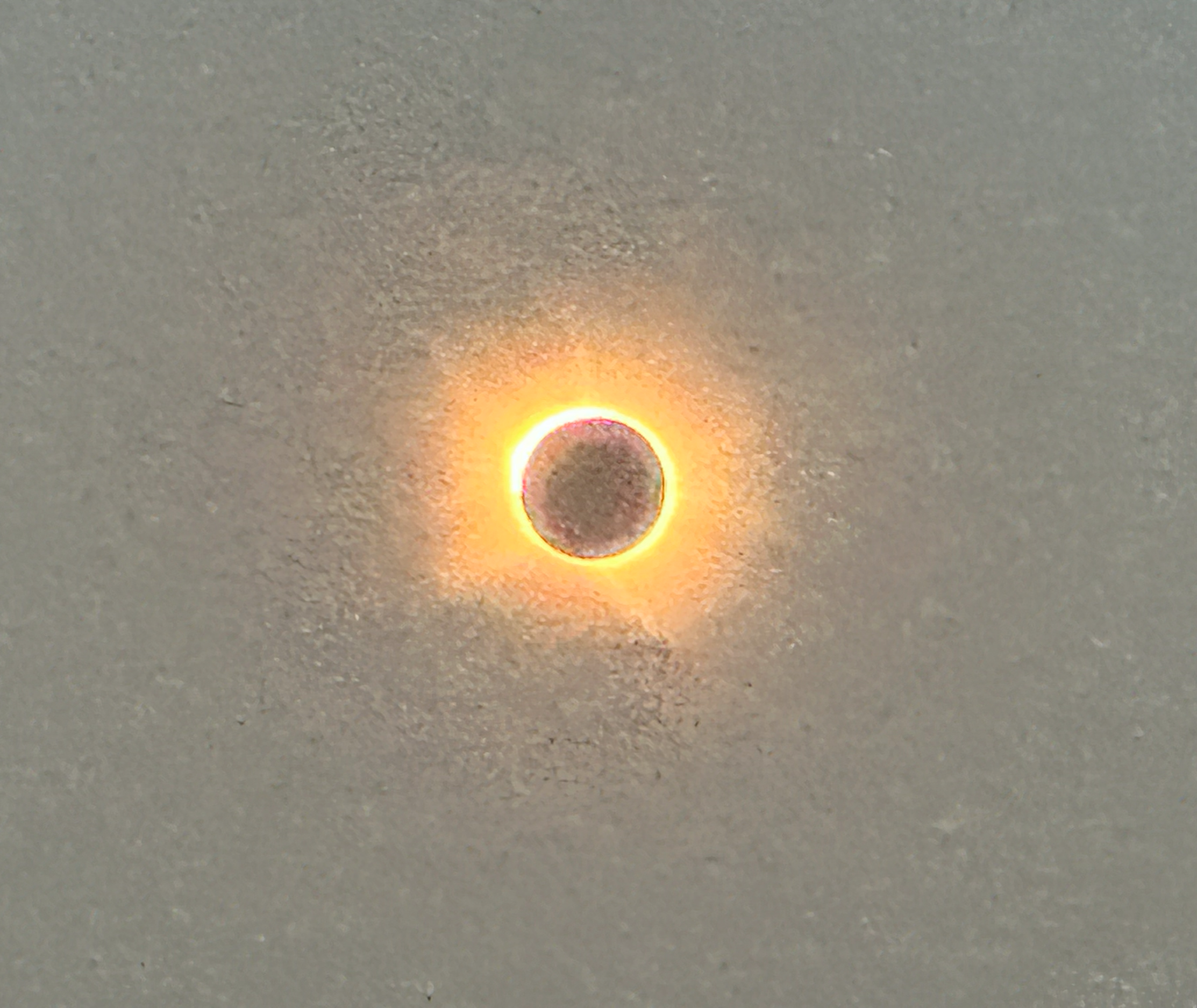
Totality lasted for close to 1.5 minutes. We were able to take our glasses off and look right at the sun and see the glow around the moon. There are no words to describe the experience. But jaw-dropping, awe-inducing, and stunning start to scratch the surface.
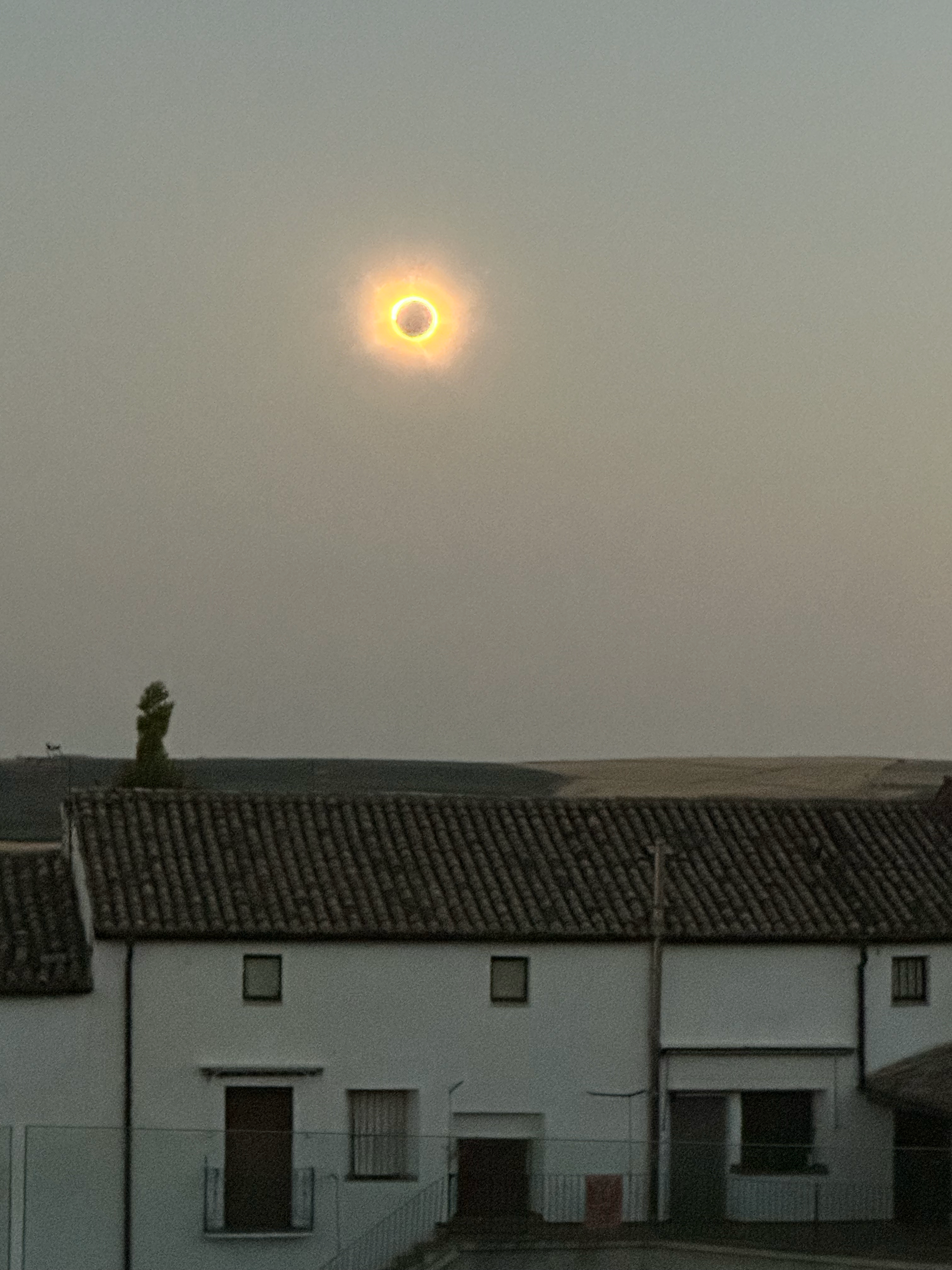
Totality.
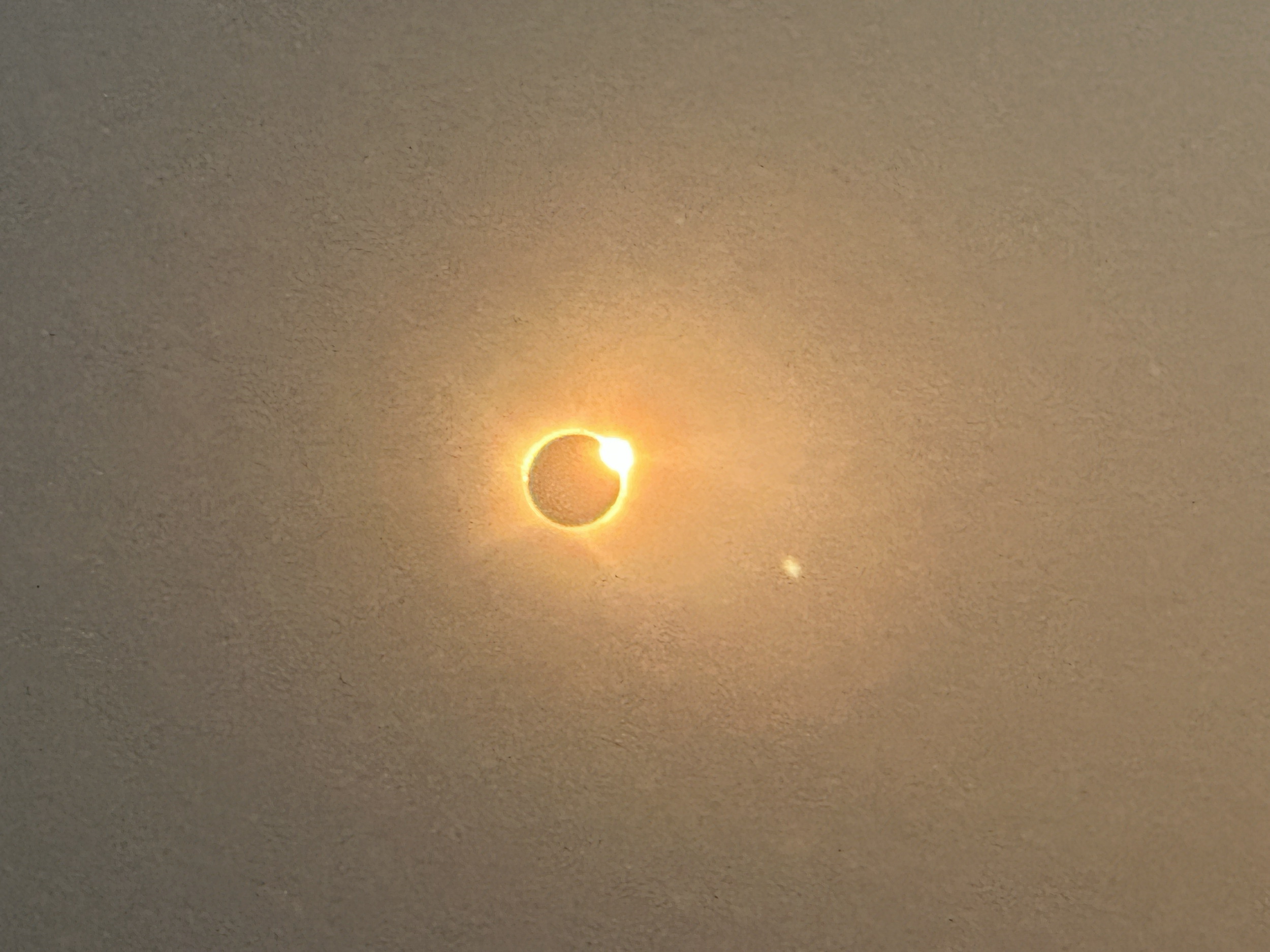
As the moon continued on its path, the sun began to peek out again. Time to get those protective glasses back on.
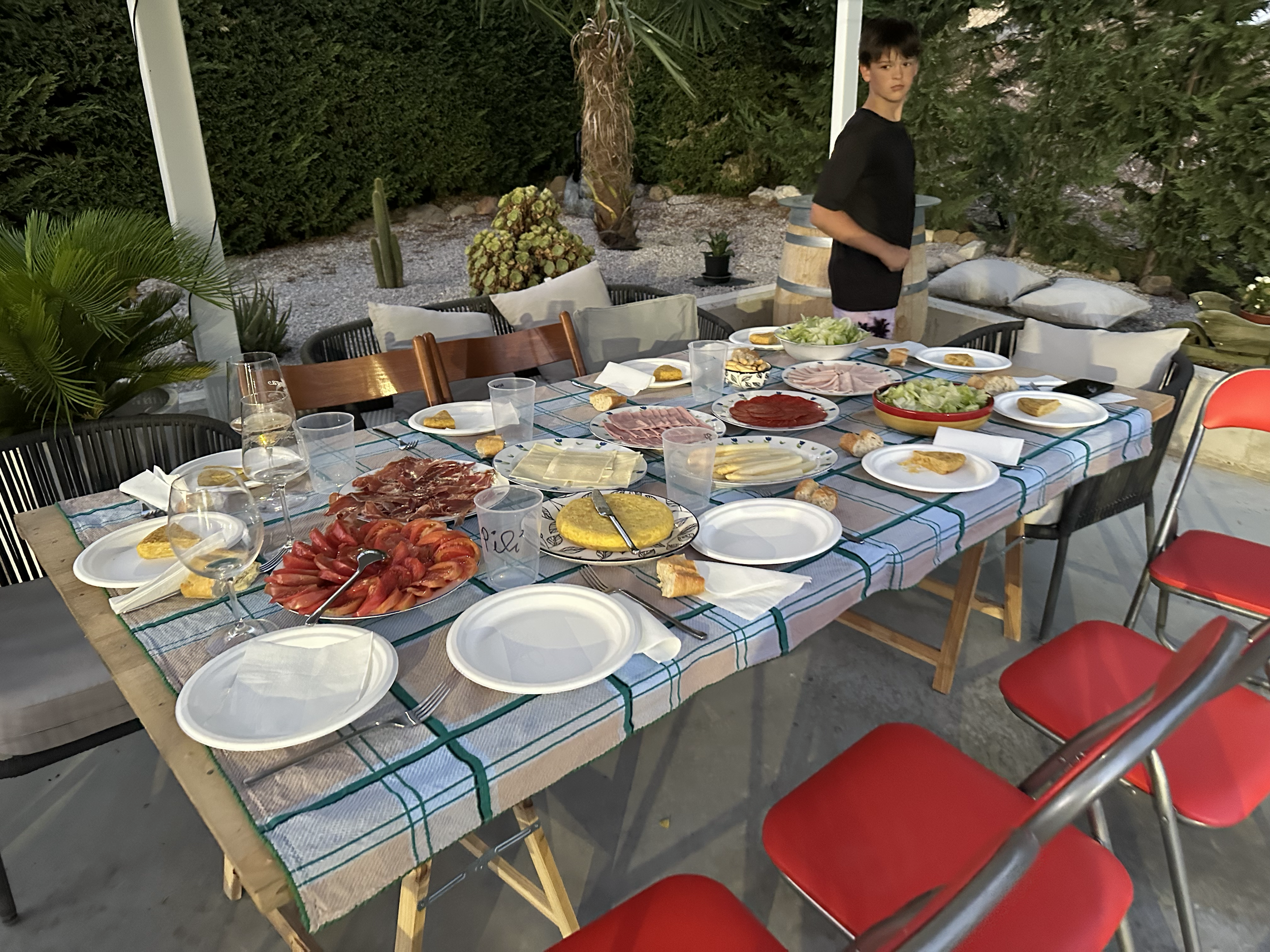
We had a grand feast after the eclipse, with special white asparagus prepared by Srta U's Aunt, fresh cut tomatoes, delicious salads, sliced meats and cheeses, and Spanish omelettes. So delicious!
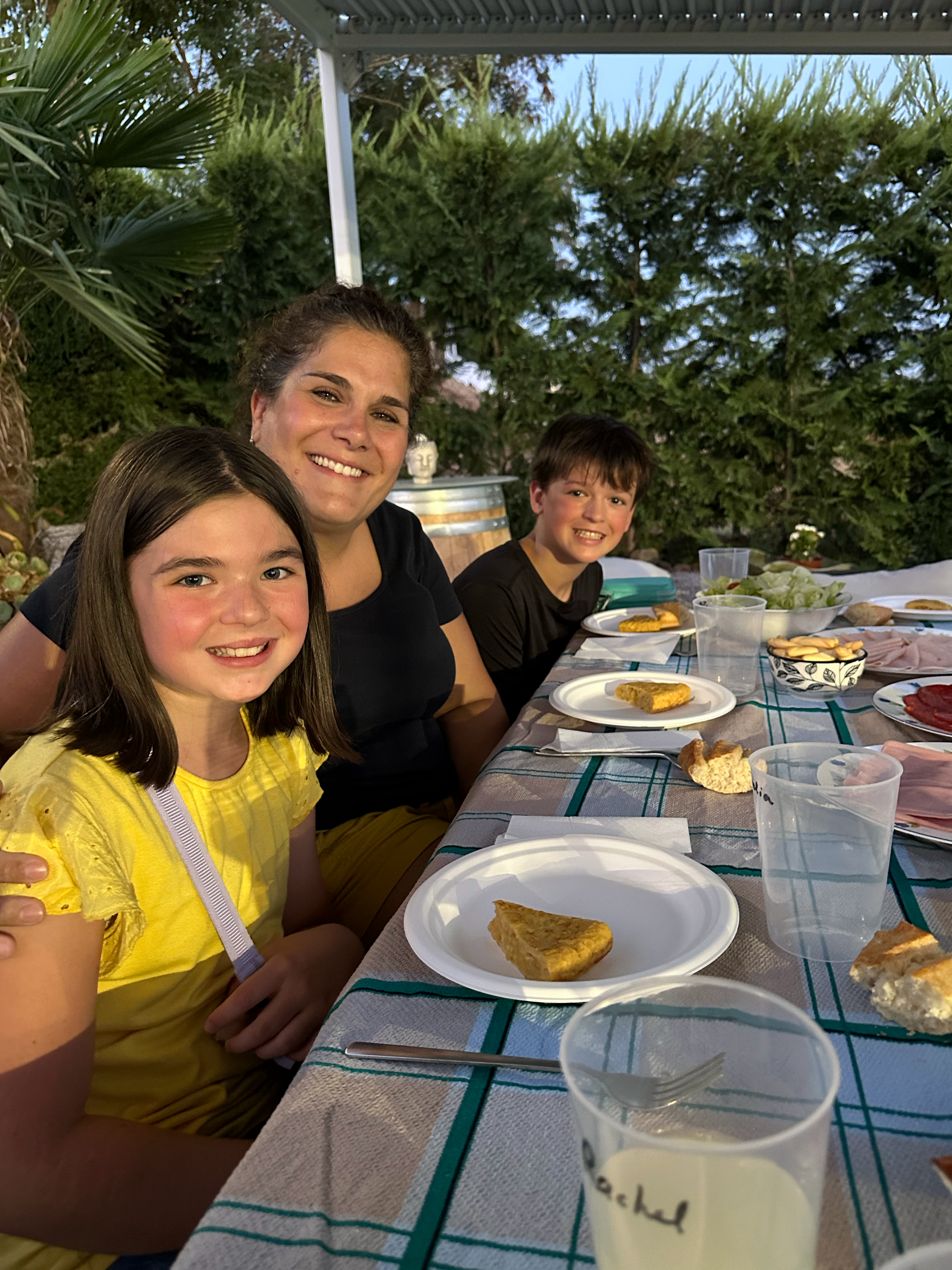
The kids were thrilled to sit on each side of Srta. U for our dinner celebration.
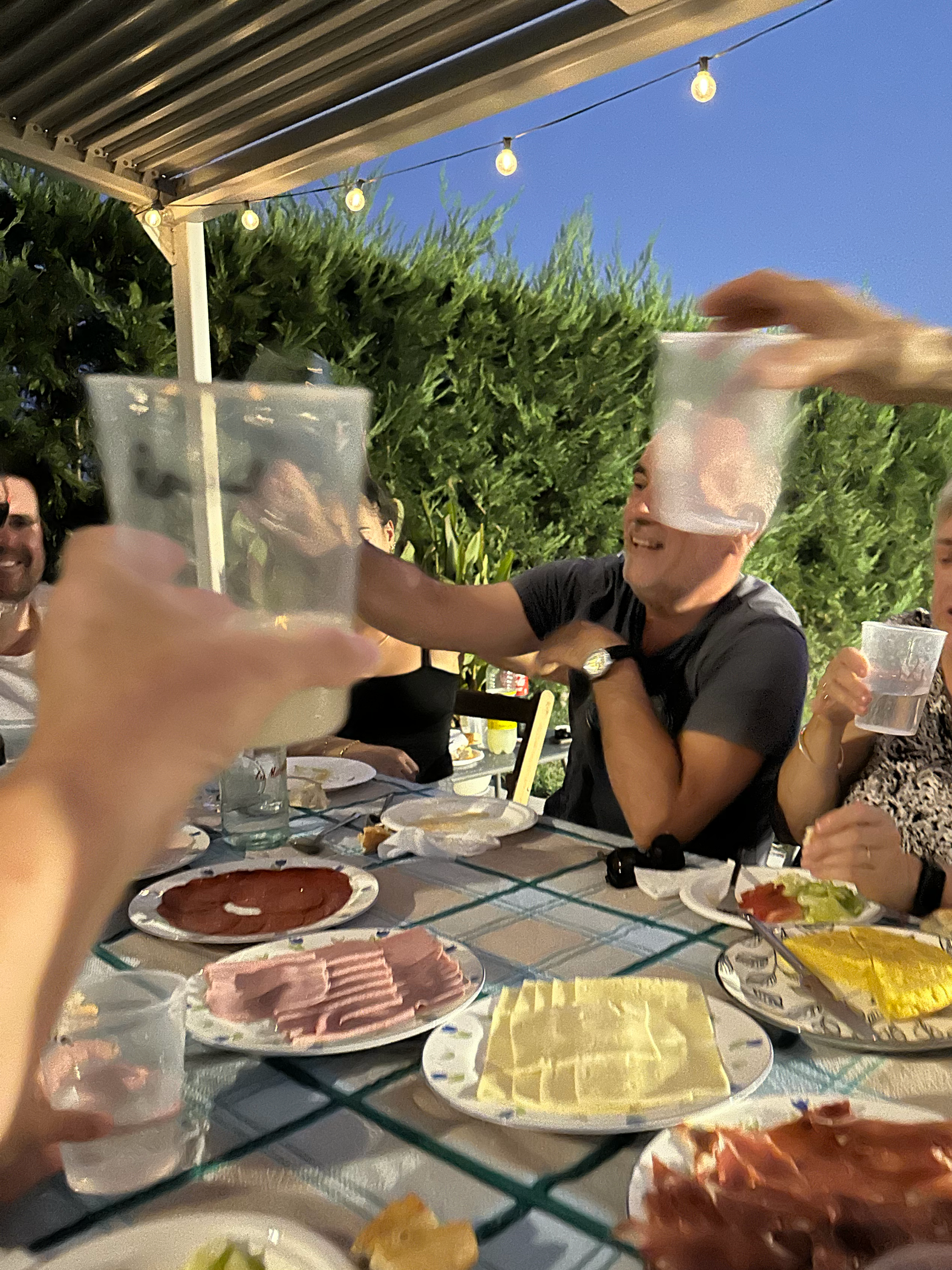
Cheers!
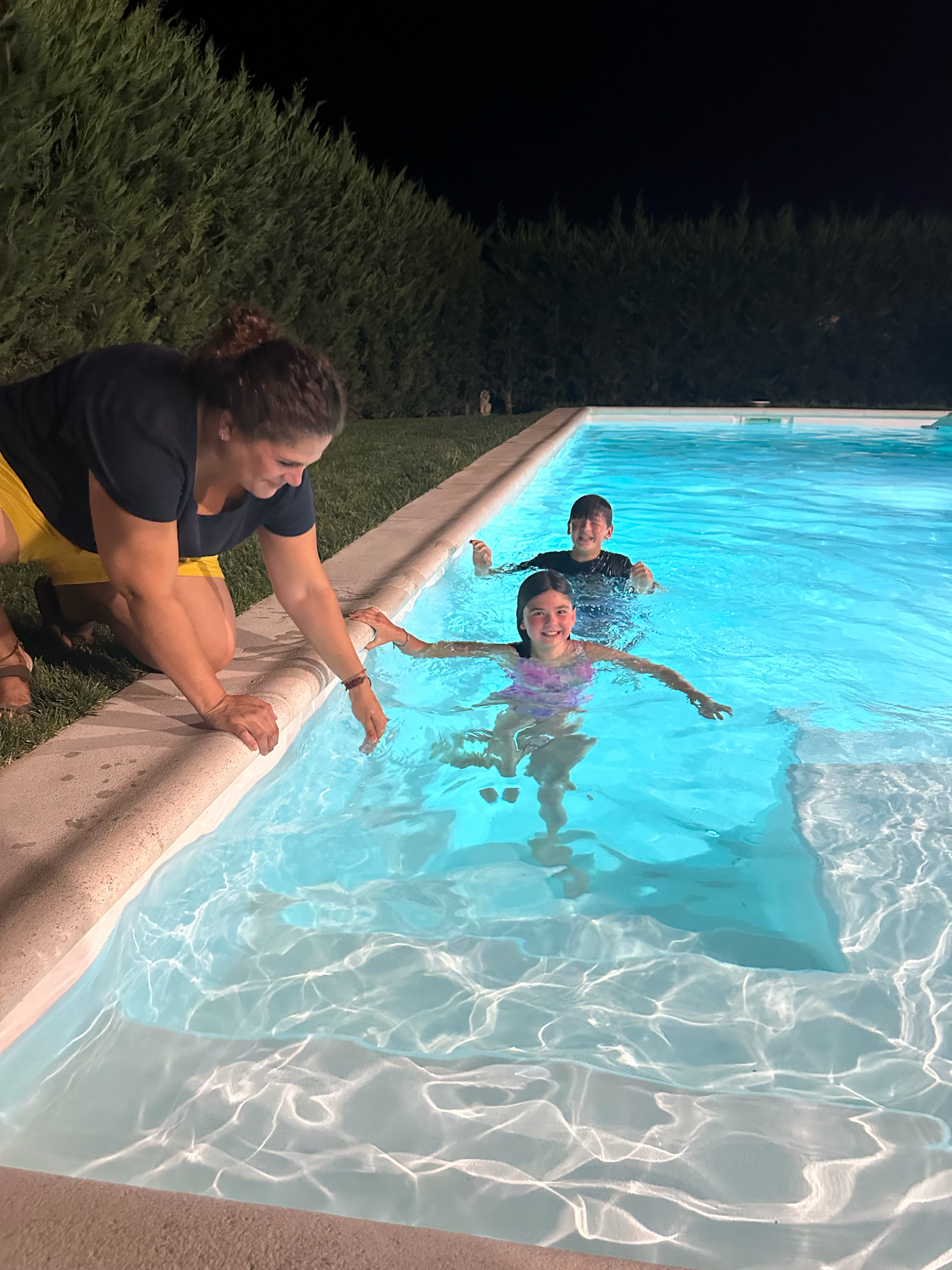
The kids were in for a special treat when they were able to go swimming after dinner. What a beautiful pool!
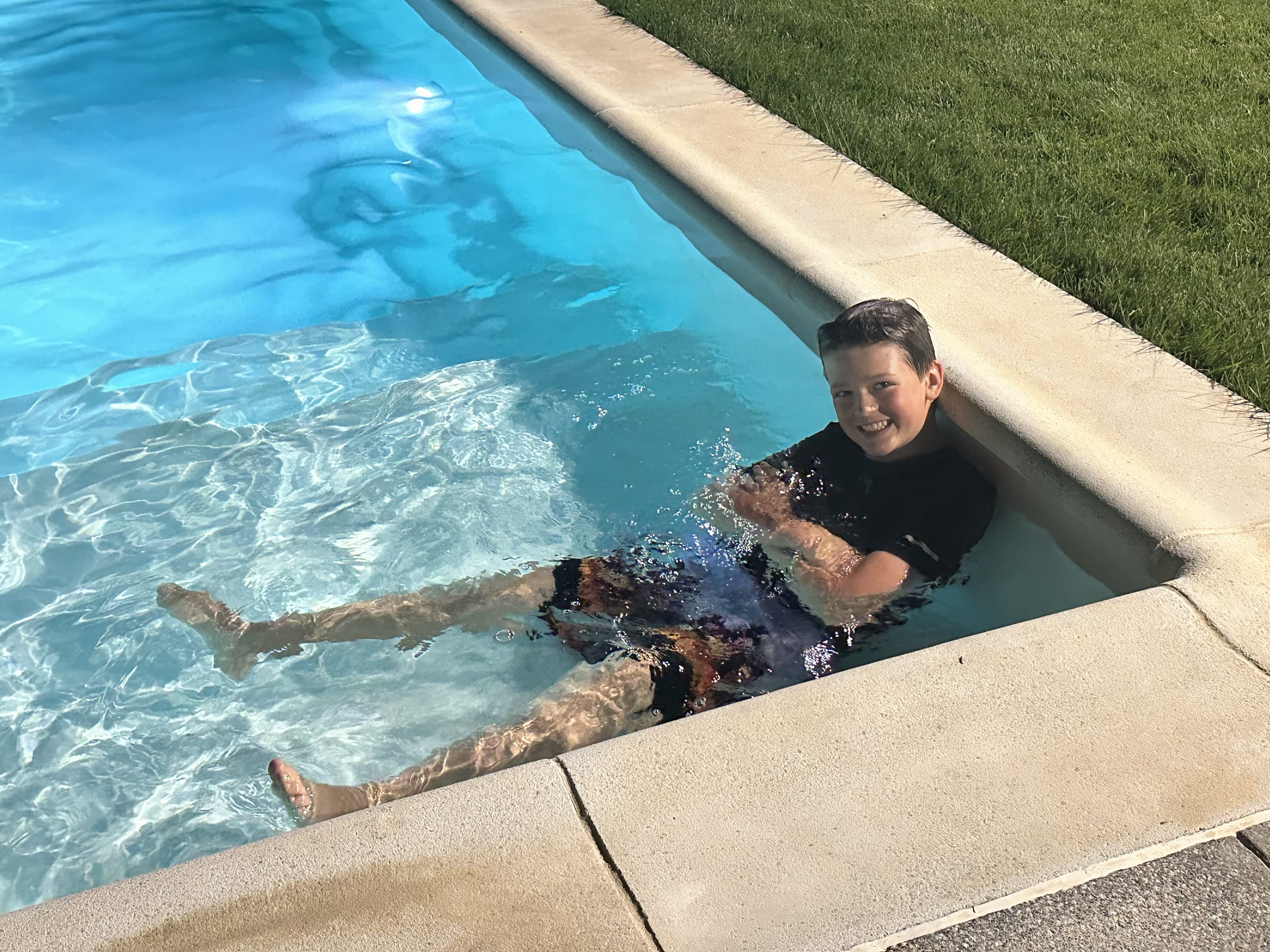
He would have stayed in the pool all night, but we had to leave to drive to Pamplona to get to our hotel before midnight. Thankfully, Srta. U came along with us.
Pamplona: Intro to Basque Country
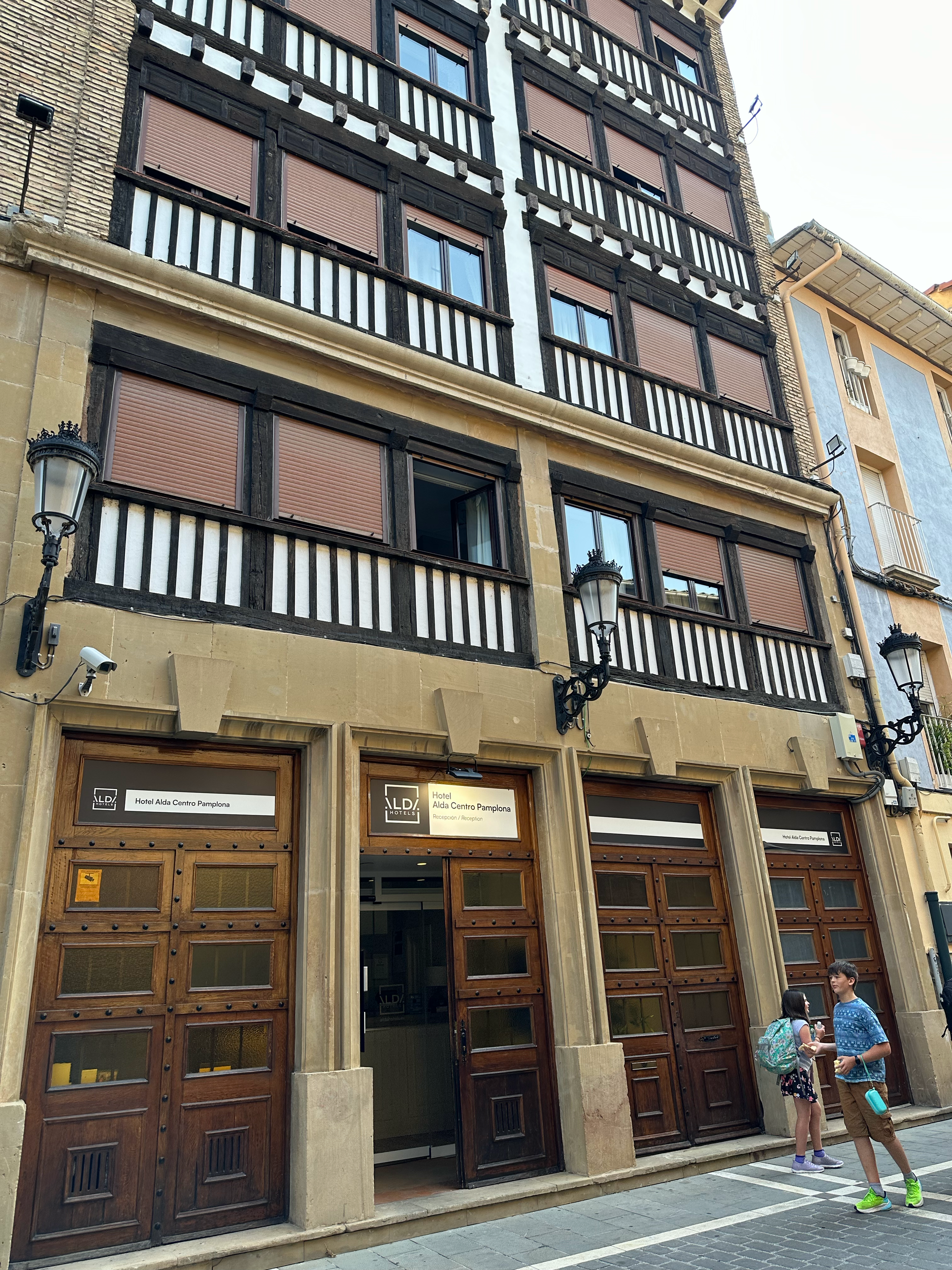
In the morning light, we can see what our hotel looks like. Beautiful large wooden doors and street lights. We were in a great location in the old town.
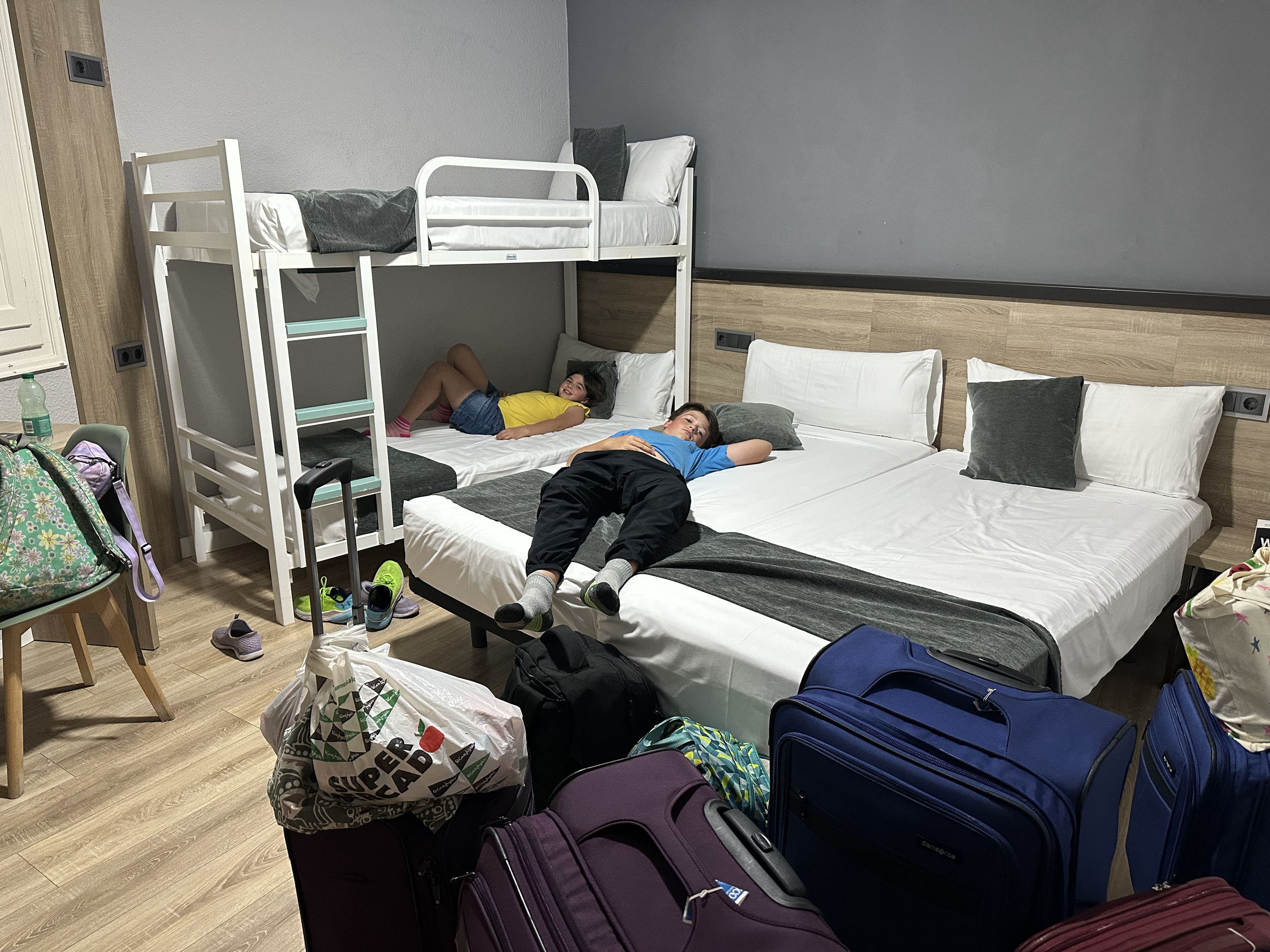
Bunk beds in a hotel room! This space saving aspect allowed us to fit all of our luggage in the room--but just barely. :)
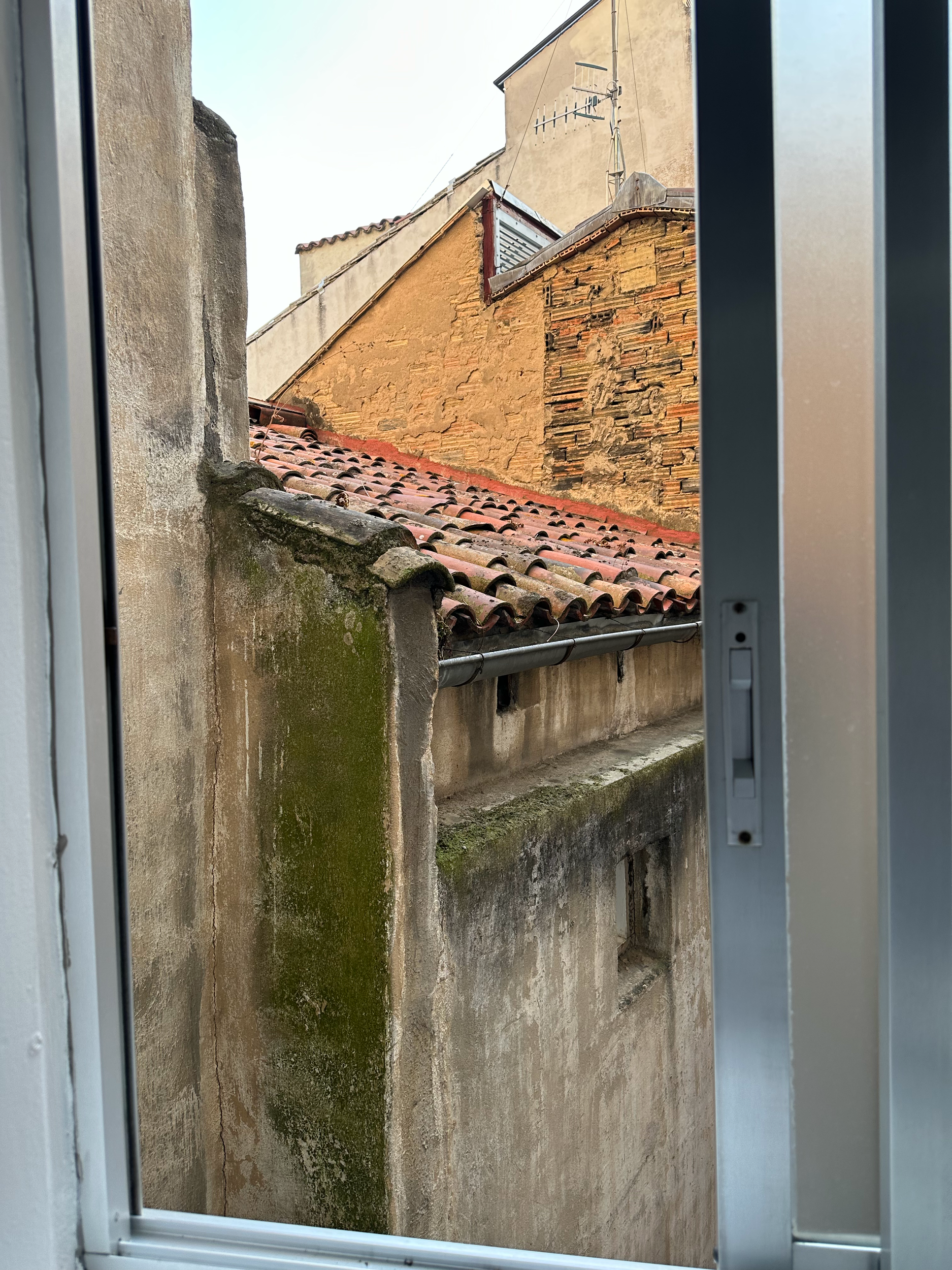
View from our hotel room. Look at those Spanish roof tiles!
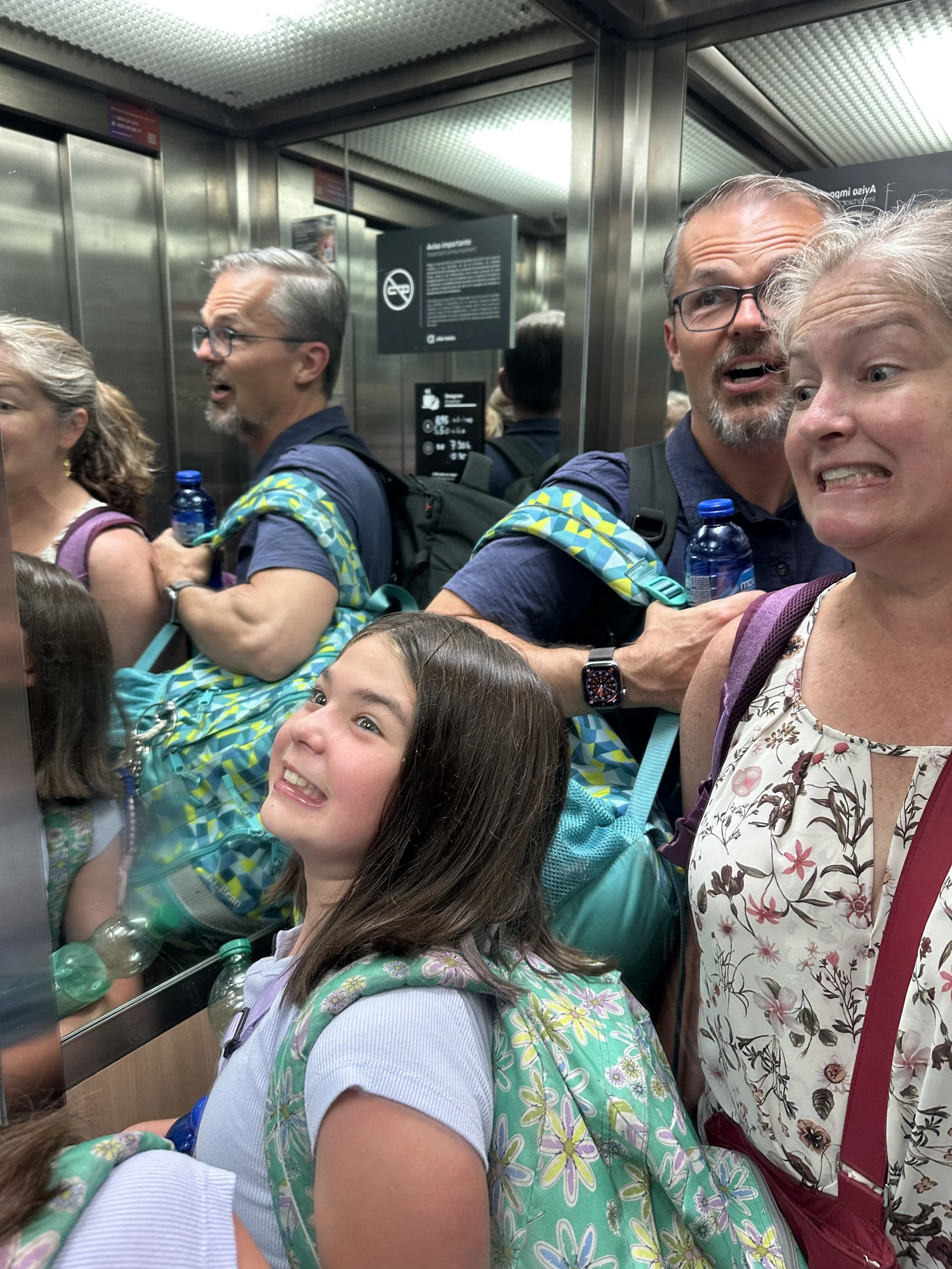
Generally, elevators seem to be small in Europe (maybe because they were mostly added into old buildings later?). We didn't all fit into this elevator.
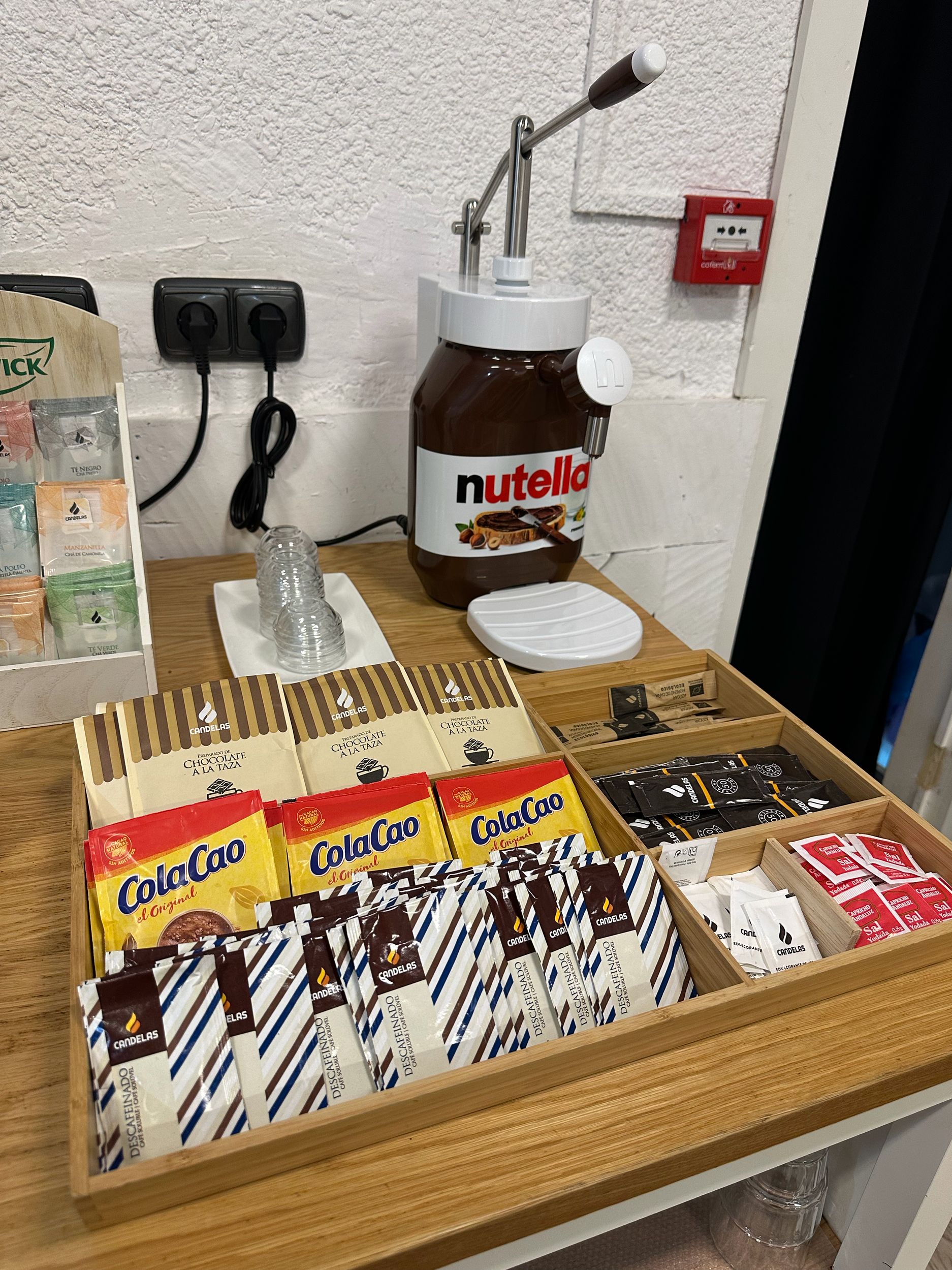
ColaCao is the standard cold milk chocolate drink (no Nestle Quick here!). And Joshua was super excited about that tub of Nutella.
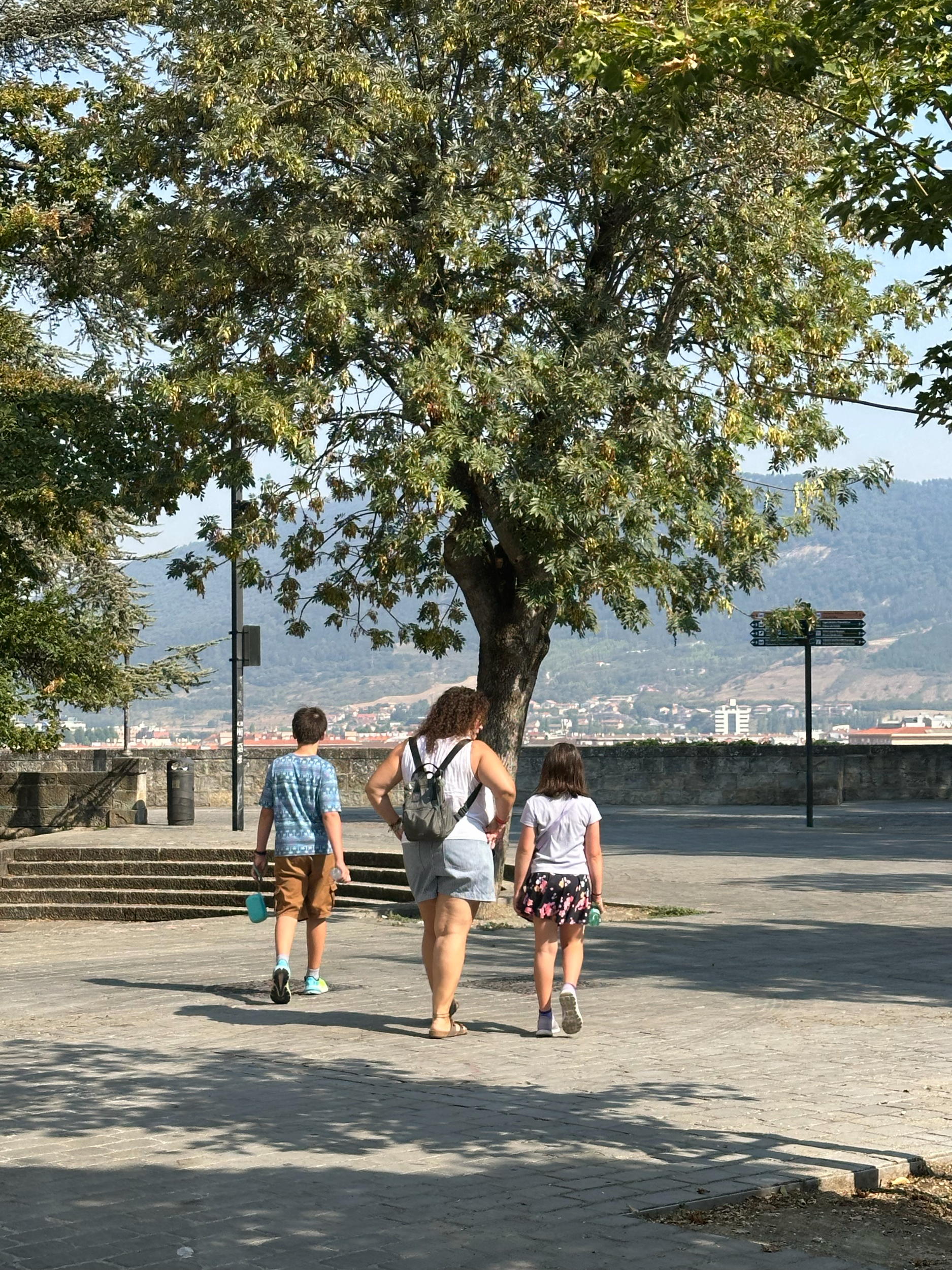
Srta. U was our official tour guide for Pamplona. Only the best! First, we went to get a view of the city and see the old city walls.
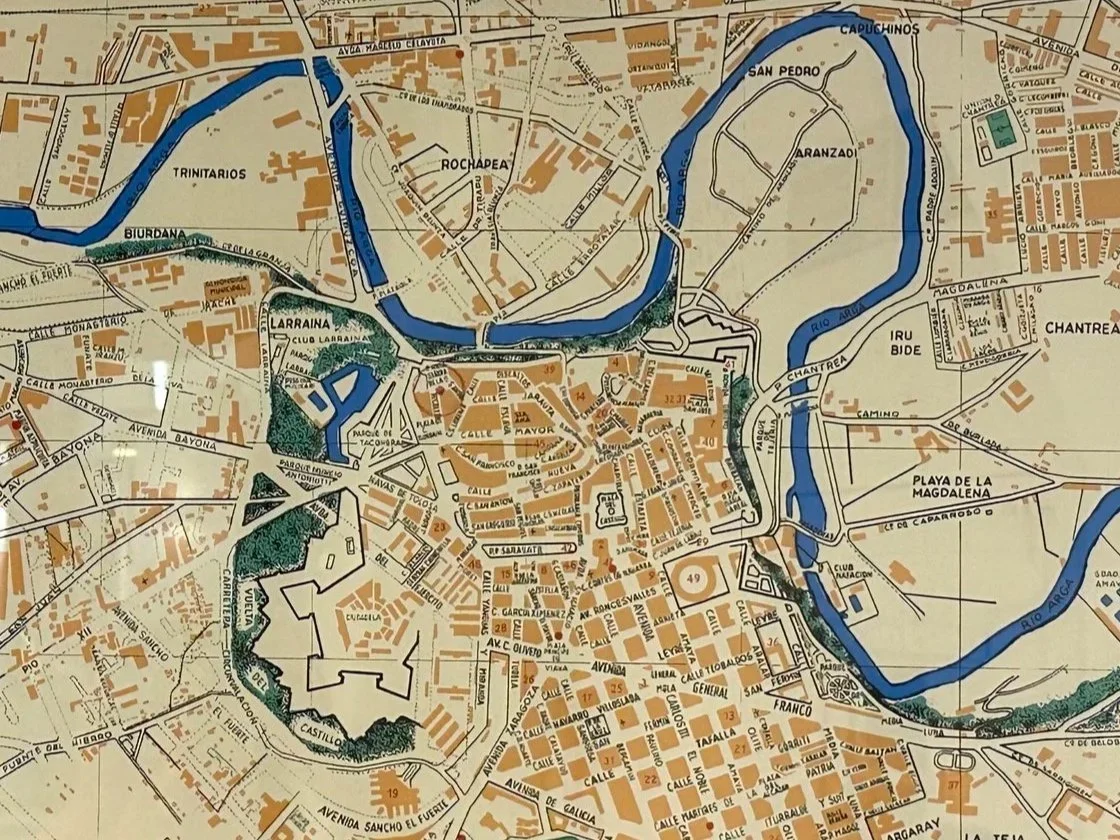
In this old map, you can see the winding river Arga and the old town with the walled fortress from the Renaissance. It is mostly a green space now, but you can still see some of the walls and moats of this star-shaped fortress.
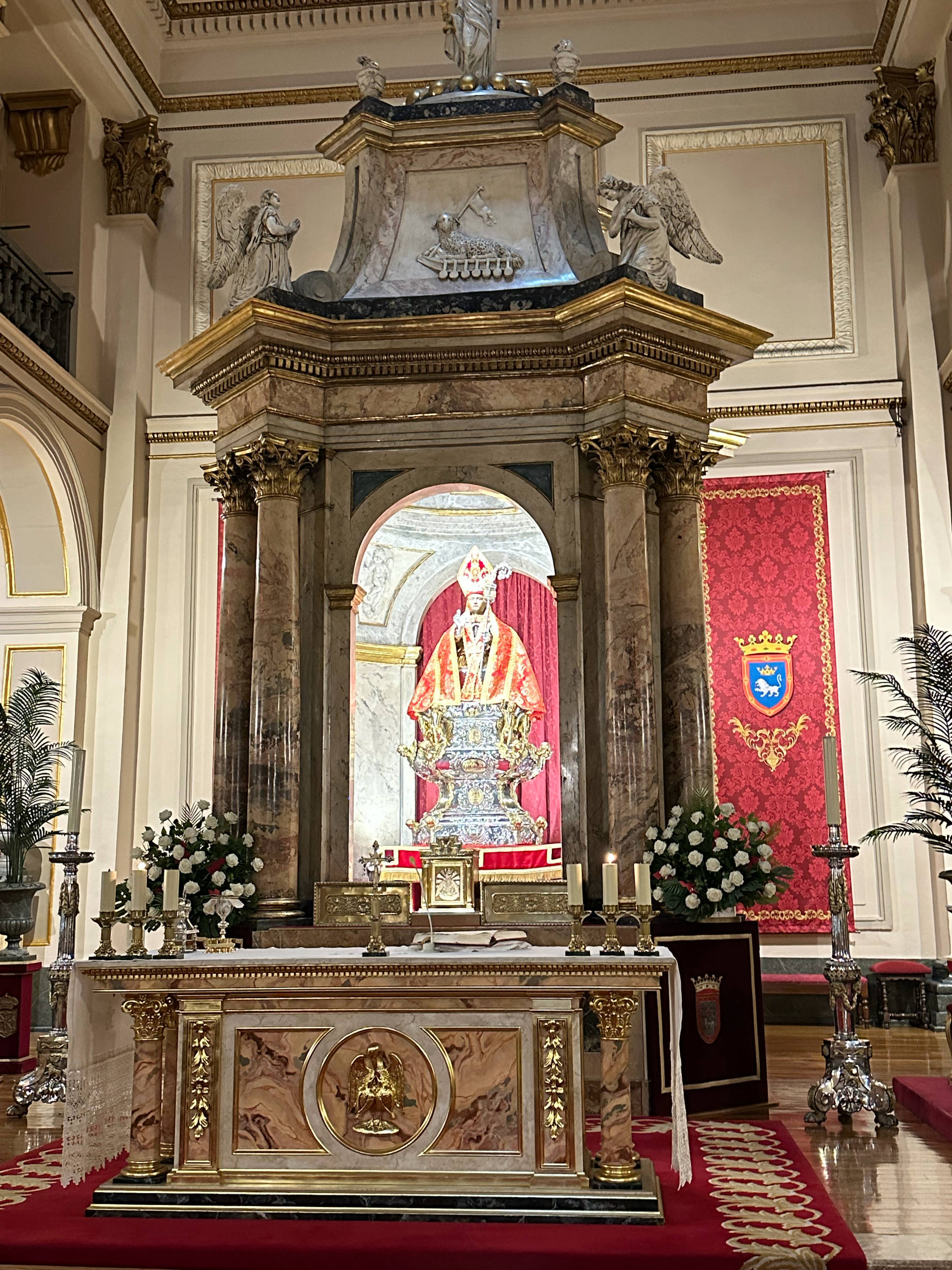
The Chapel of San Fermin is located in the the Church of San Lorenzo. San Fermin is the patron saint of Pamplona. There are annual celebrations of San Fermin and small statues or pictures of him throughout the city.
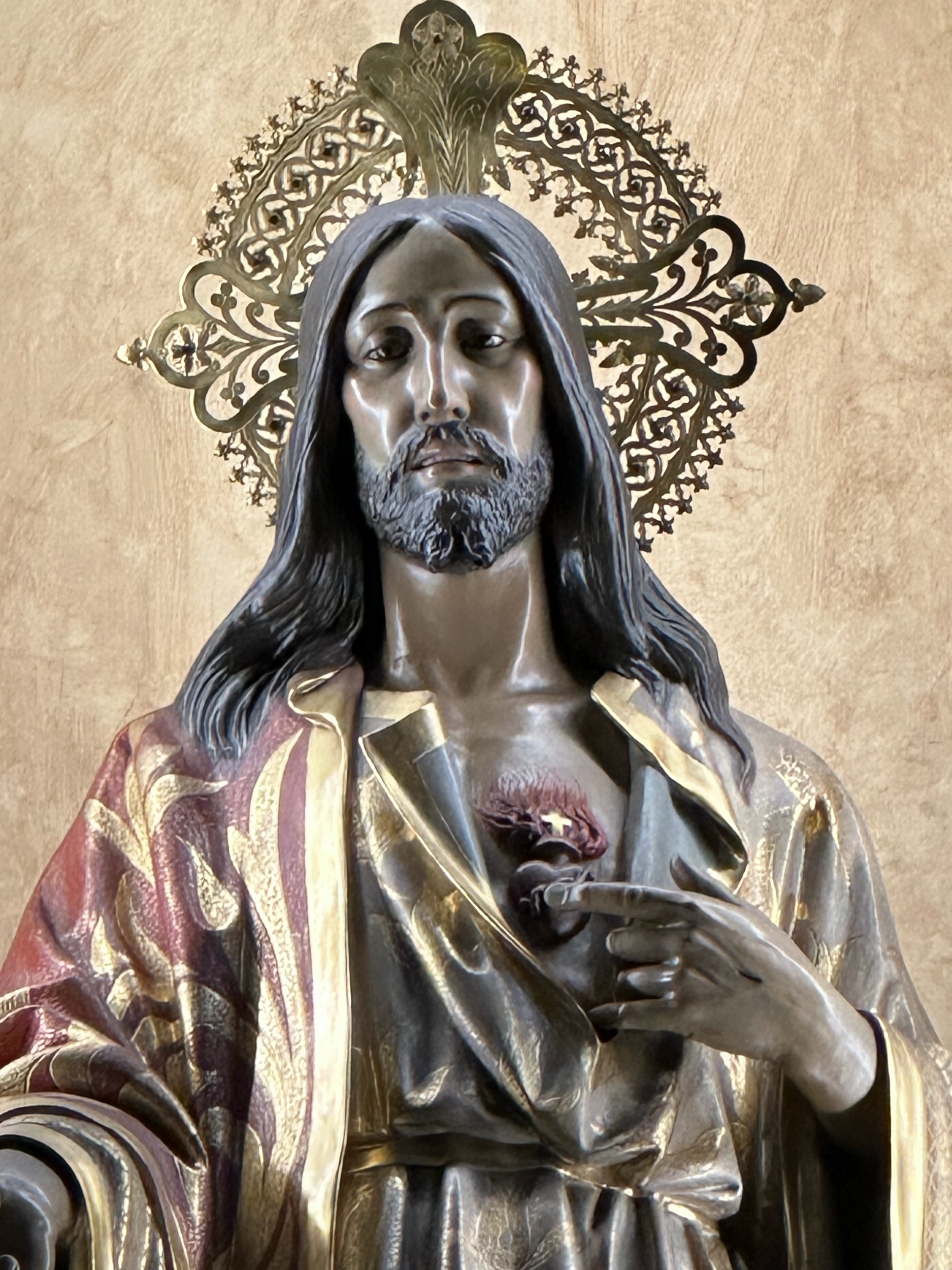
The statues within the Church of San Lorenzo were some of the most intricate and life-like that I have seen.
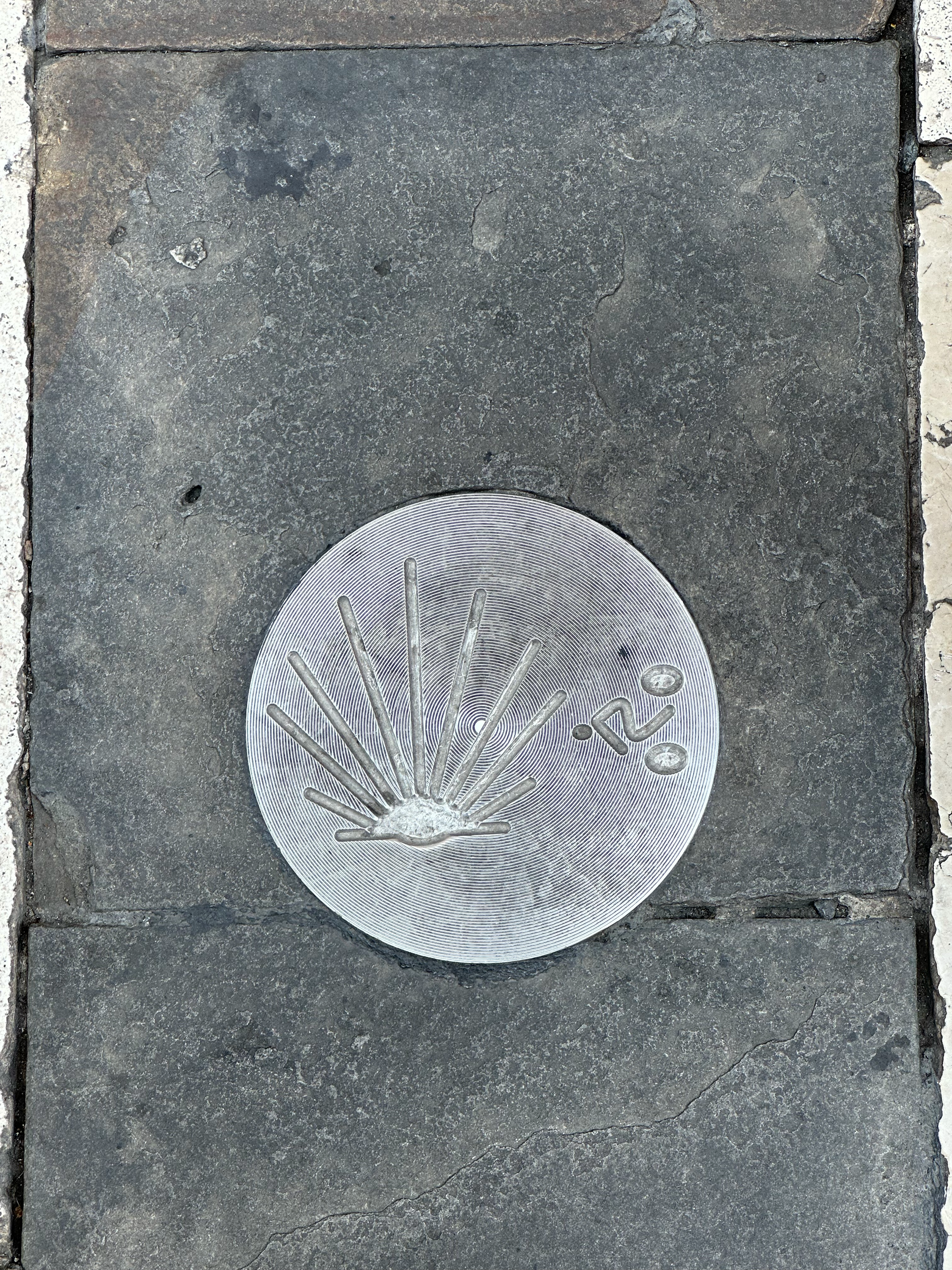
Back out on the street, you will find the shell symbol marking the streets or on the building walls. This signifies the path of the Camino de Santiago, a hiking/pilgrimage network of trails that lead to the town, Santiago de Compostela, which is said to be the burial place of St. James.
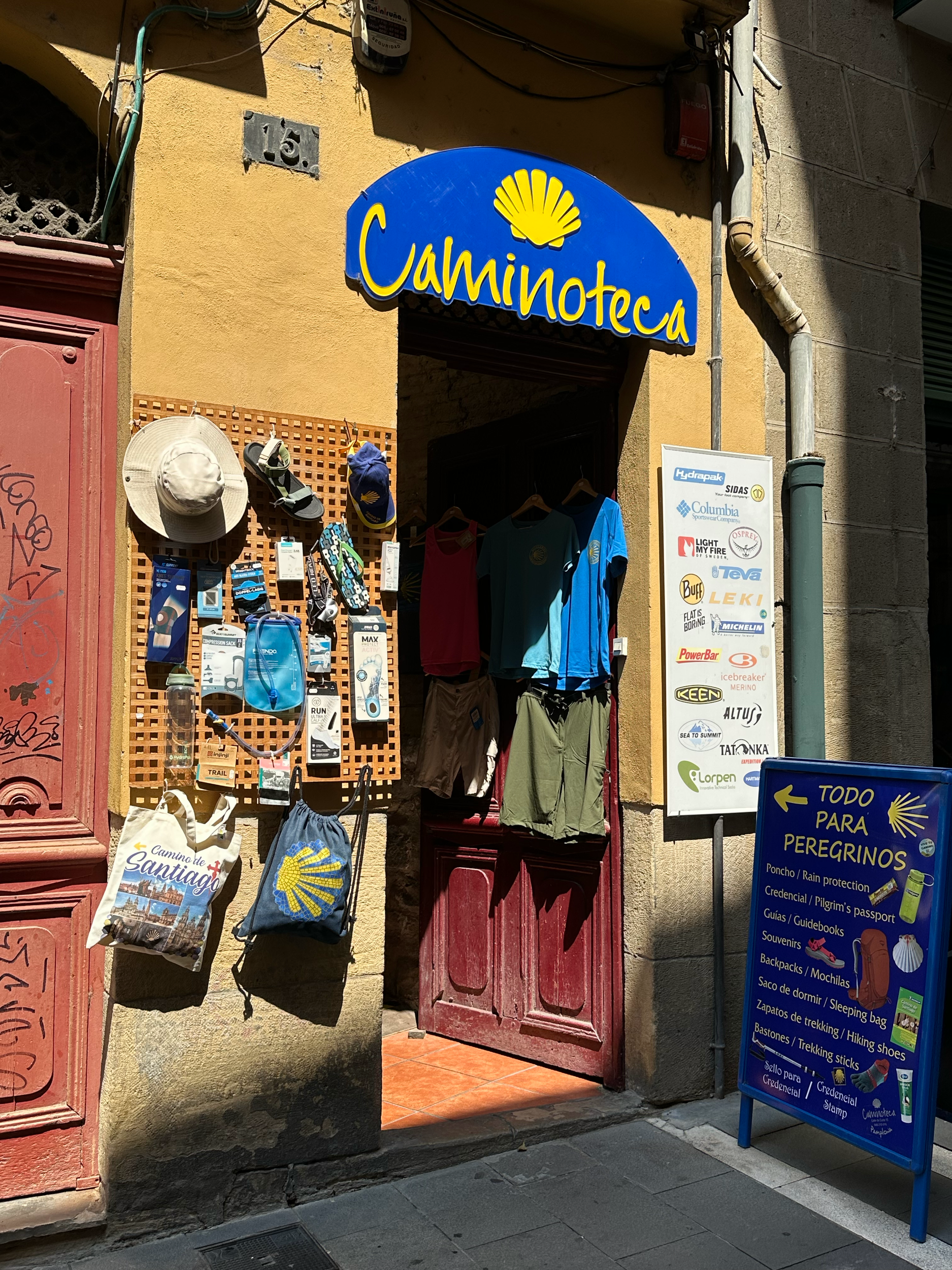
There are even stores committed to helping the pilgrim on his way to Santiago, with gear and rest stops and help. We've met a few people in Spain who have completed the Camino and they all say it was life-changing.
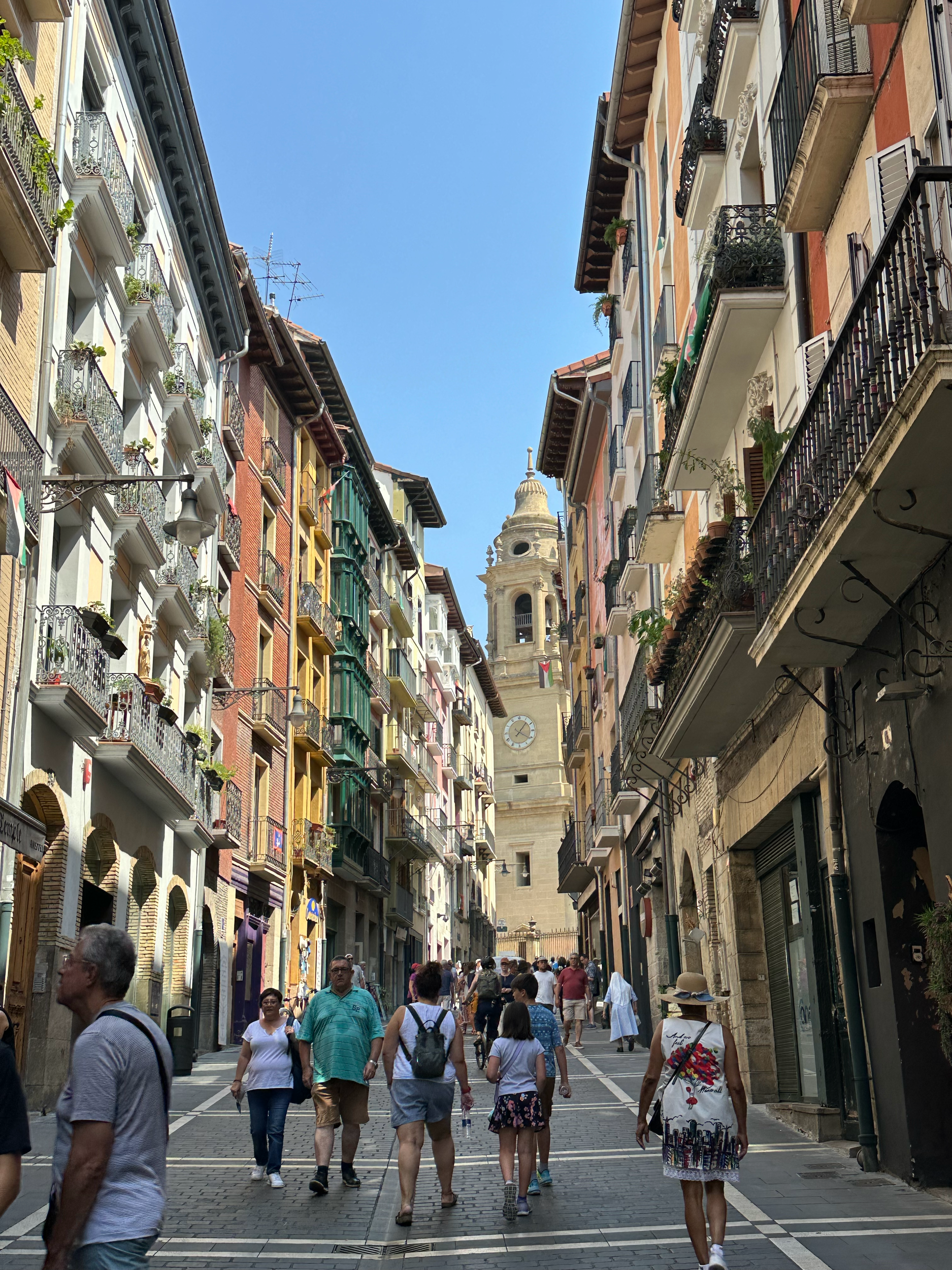
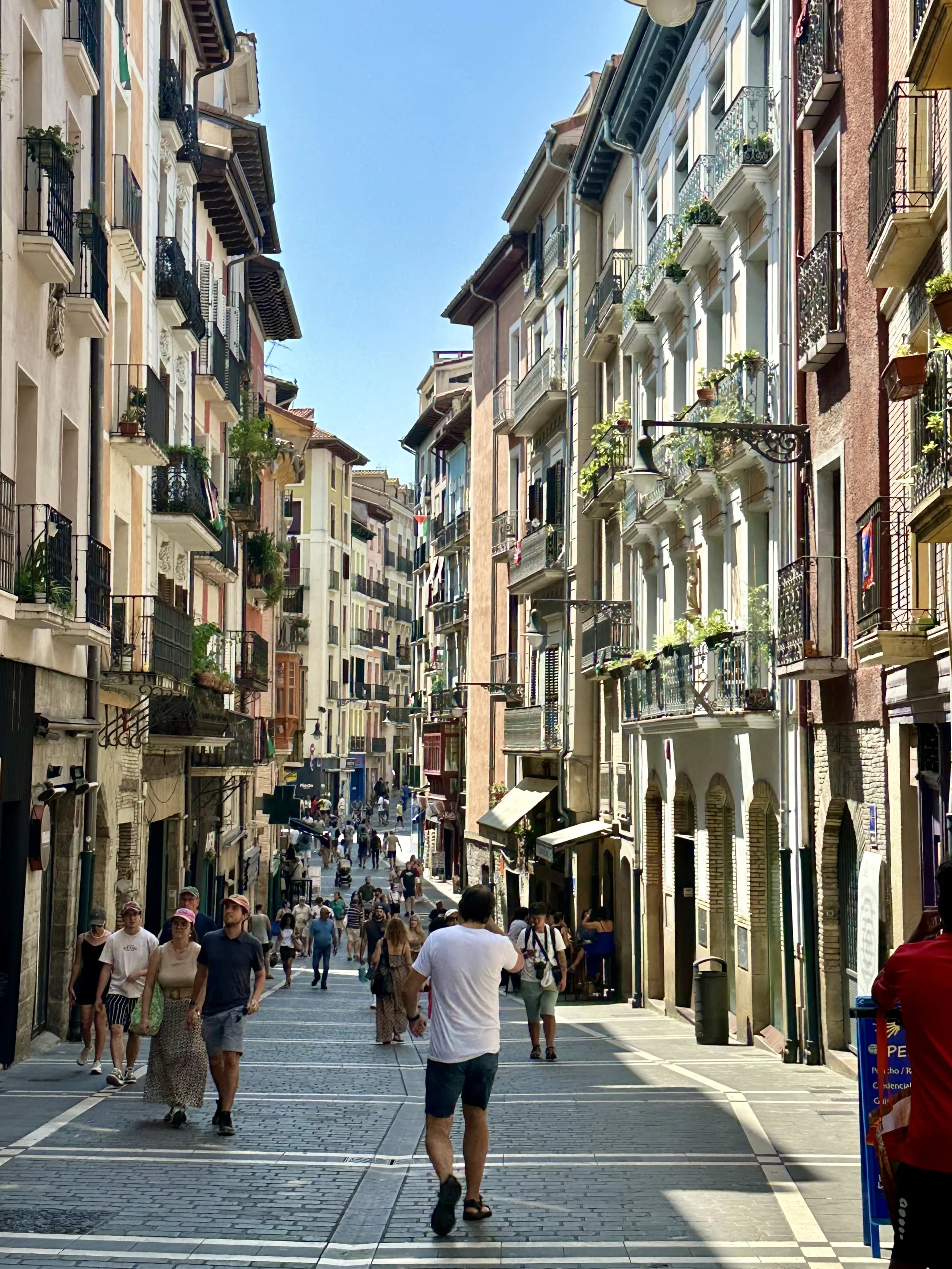
Pamplona has beautiful streets with lots of balconies.
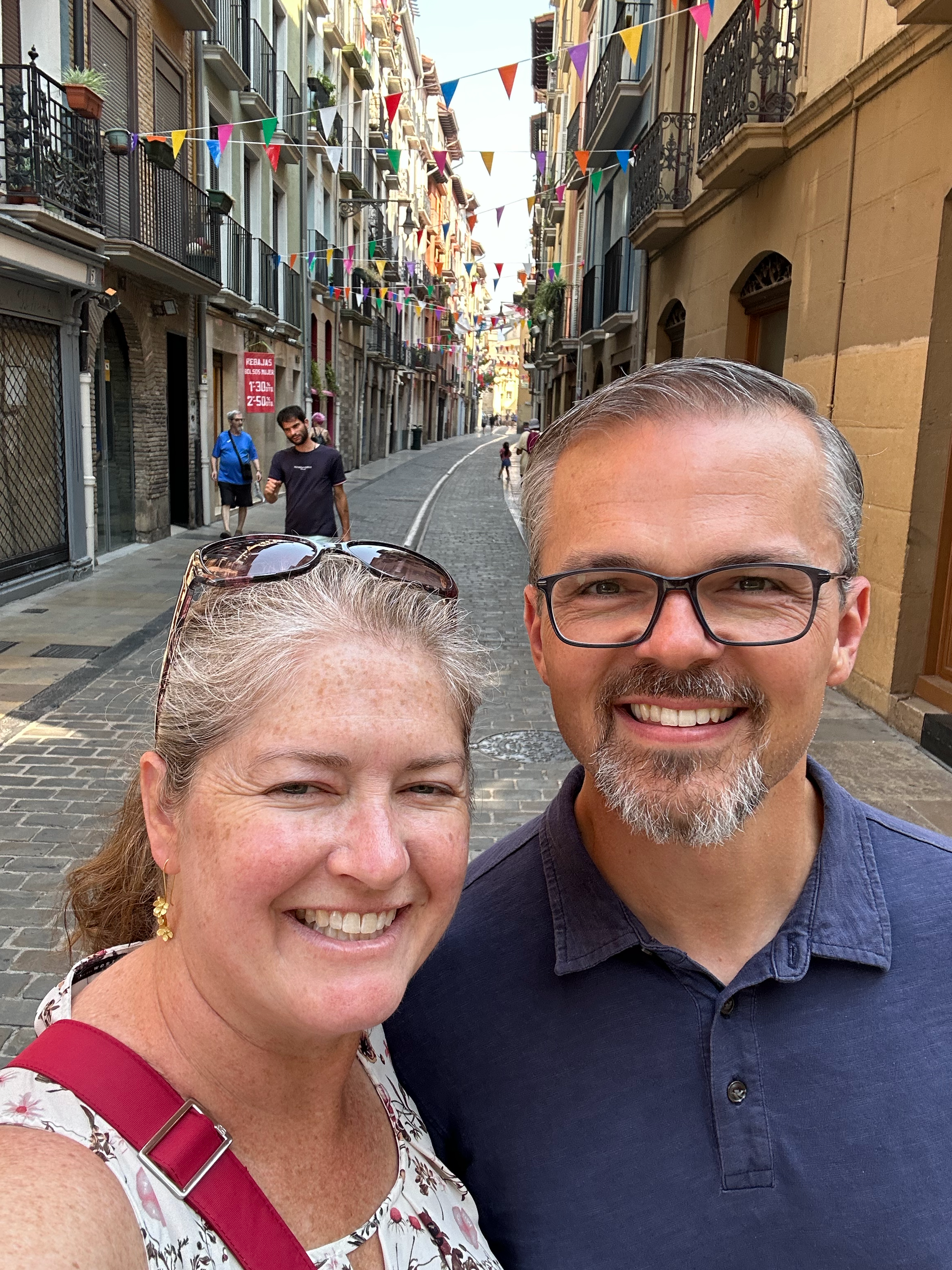
Totally enjoying life on the road!
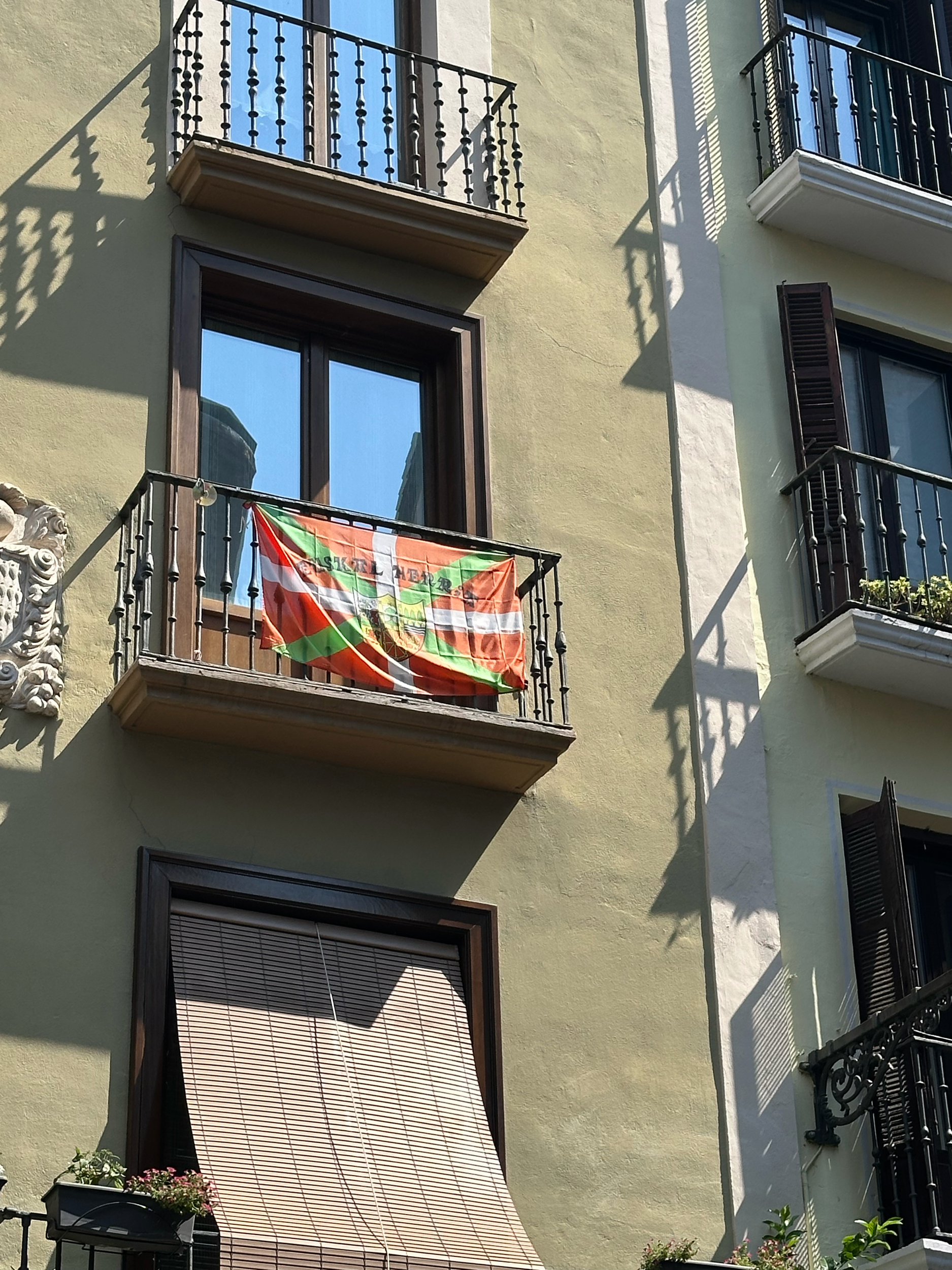
Pamplona is the capital of Navarre, which is located within the Basque region. The Basque flag (above) is seen throughout the region as there is great pride in Basque heritage and there are even some separatists who would prefer the Basque region of Spain and France to be named its own country.
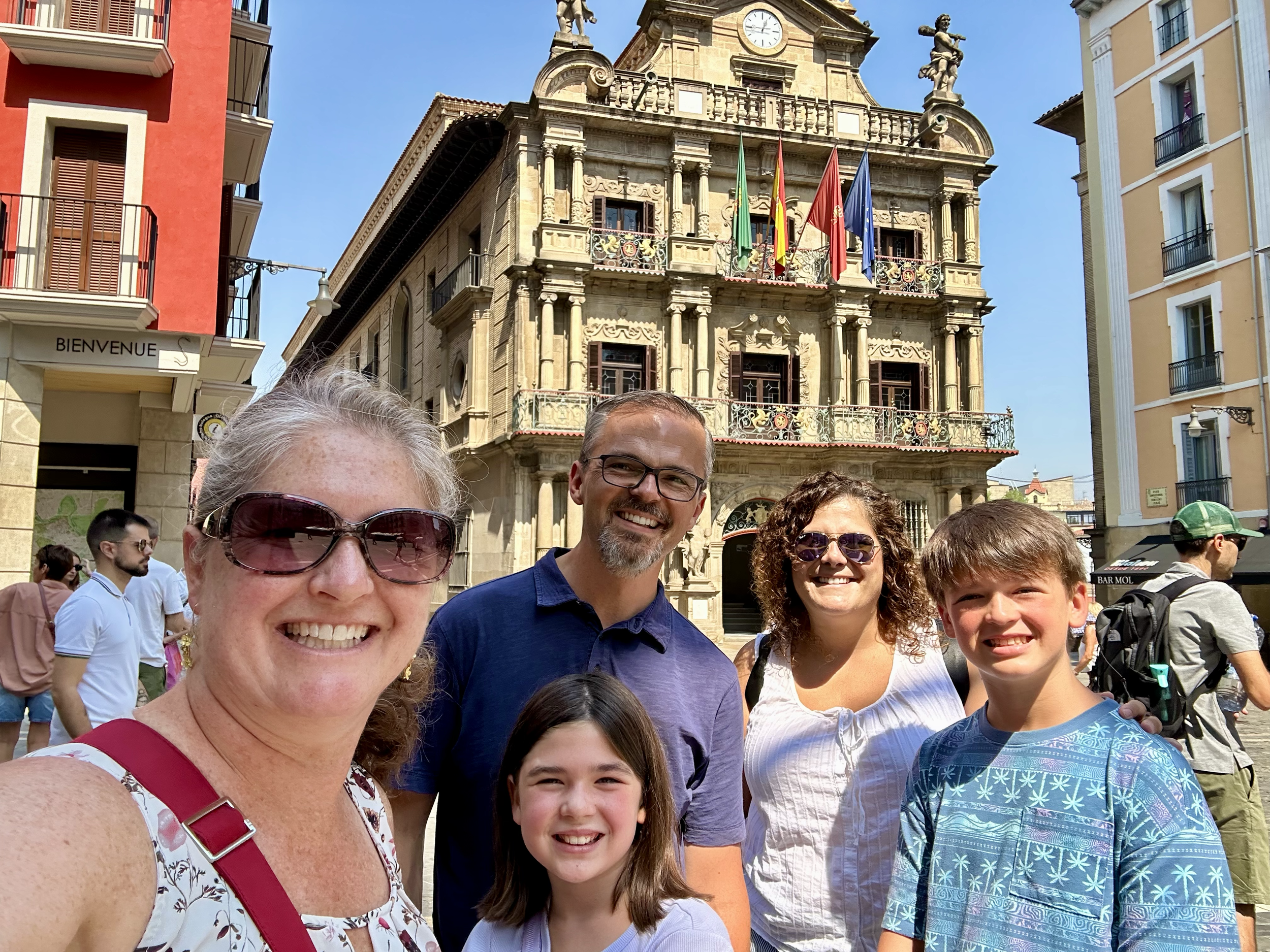
The City Hall and Plaza Consistorial. This is where the Festival of San Fermin begins and ends every year. At noon on July 6th, a rocket is fired from the City Hall. The week is filled with the procession of the Saint, parades, and of course, the running of the bulls every morning. The fesitval ends at midnight on July 14th after a grand finale fireworks show in this plaza.
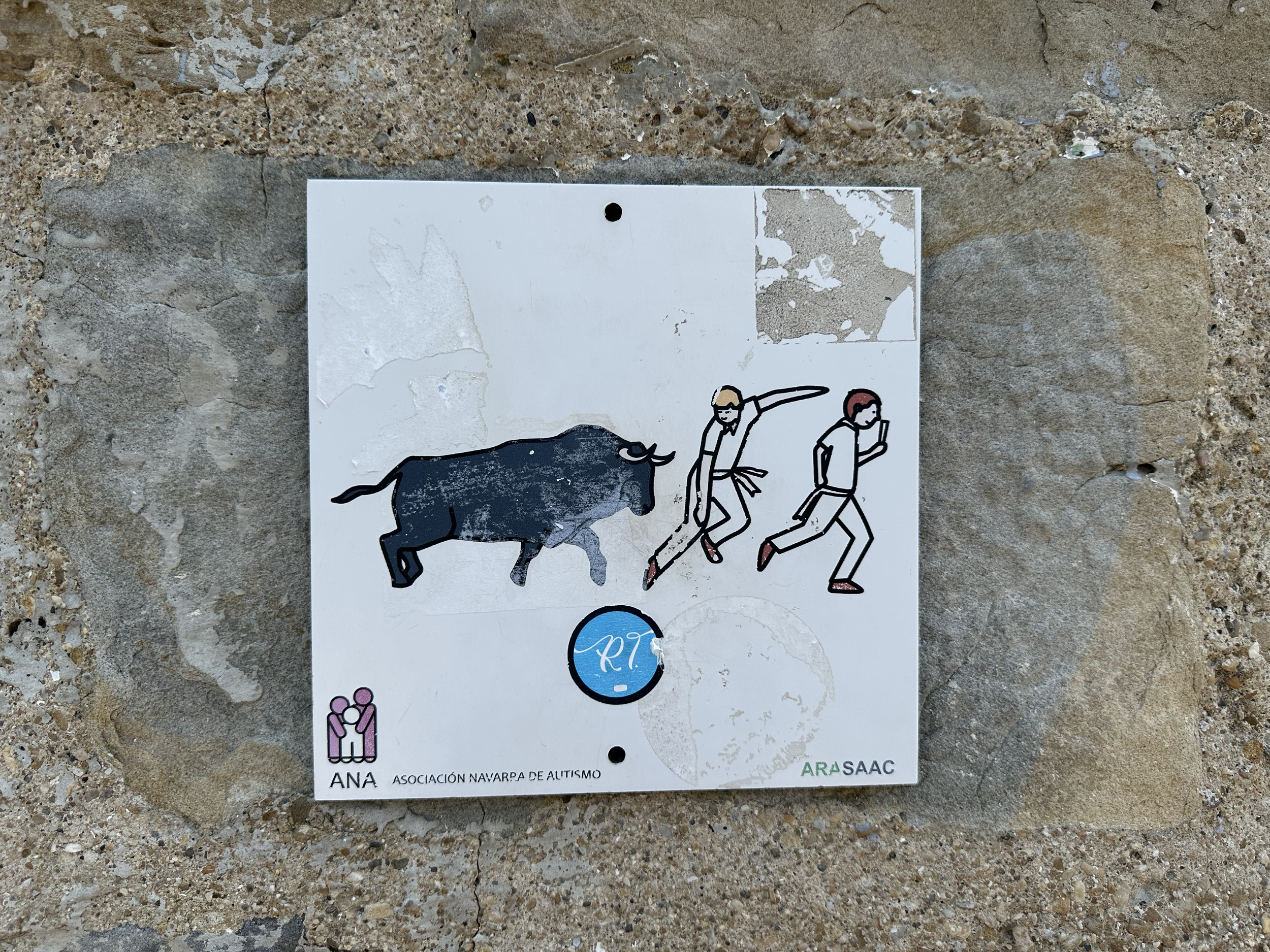
Plaques marking the route of the running of the bulls.
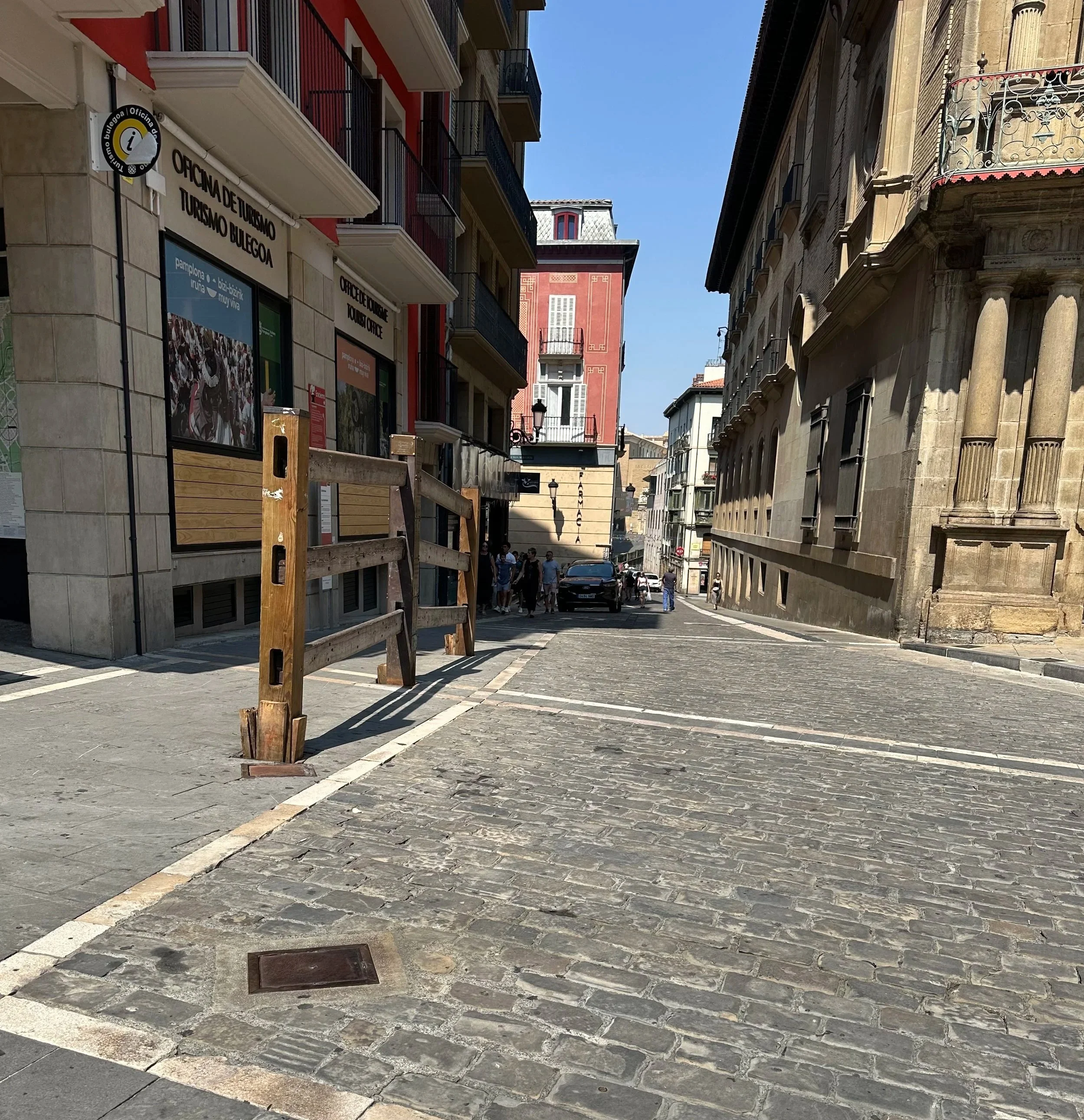
This is an example of how the fences are set up to separate the crowds from the bulls and runners. The square metal plate on the street lifts up and the fence posts are installed. Spectators are behind a double fence with at least a 5 foot space between. Would you feel safe enough?
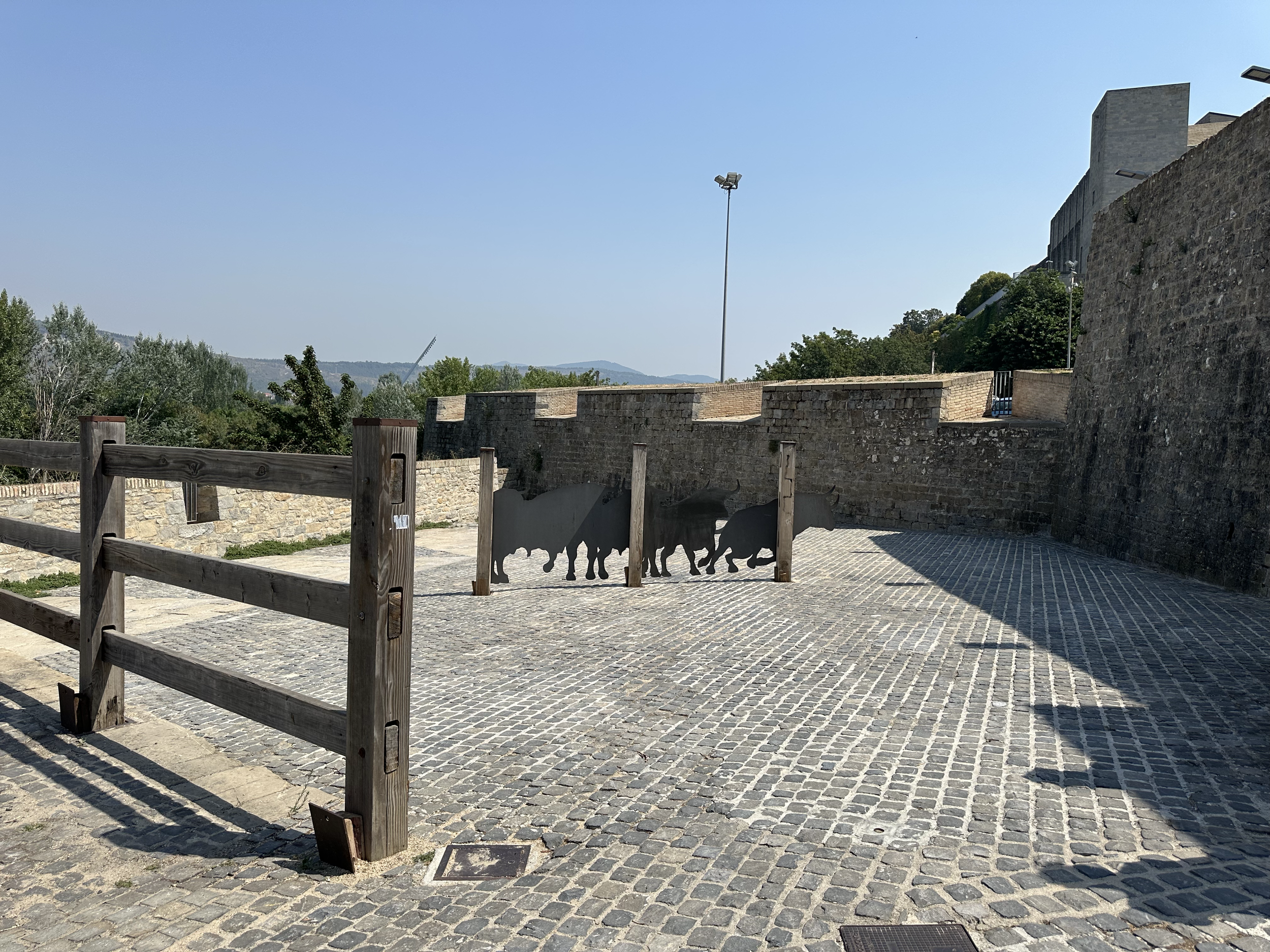
The bull pen is located at the beginning of the route. Every morning the bulls are provided by a different ranch and are held in this area until a rocket is set off signaling the release of the bulls. There are 6 bulls that run in the morning who will be charging the bull fighters in the evening. And there are another 6 bulls wearing bells, who are calmer and help guide the bulls along their route.
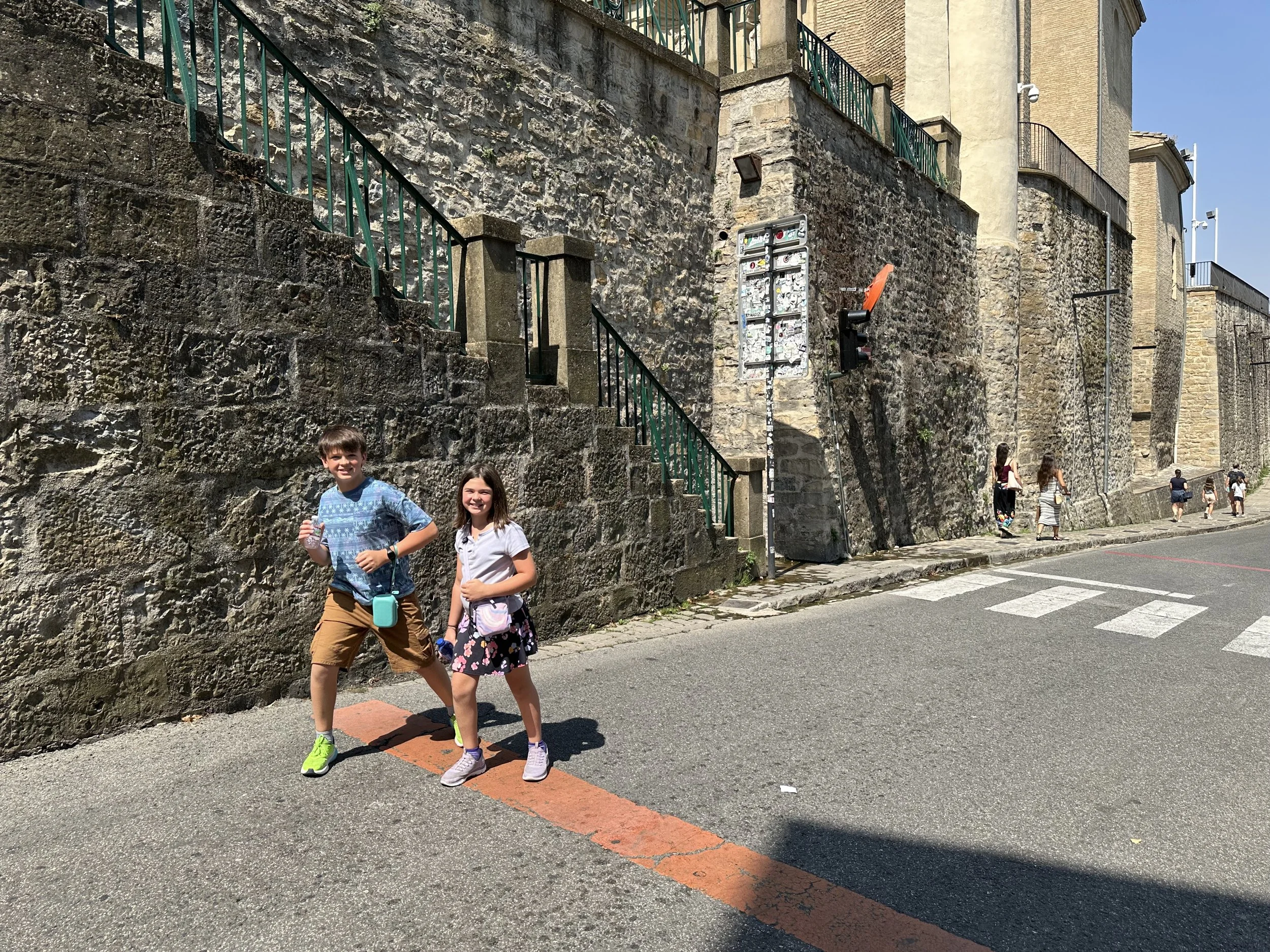
A little ways up the street is the starting line for the runners. This is where experienced runners would start. Do these kids look ready to outrun the bulls?
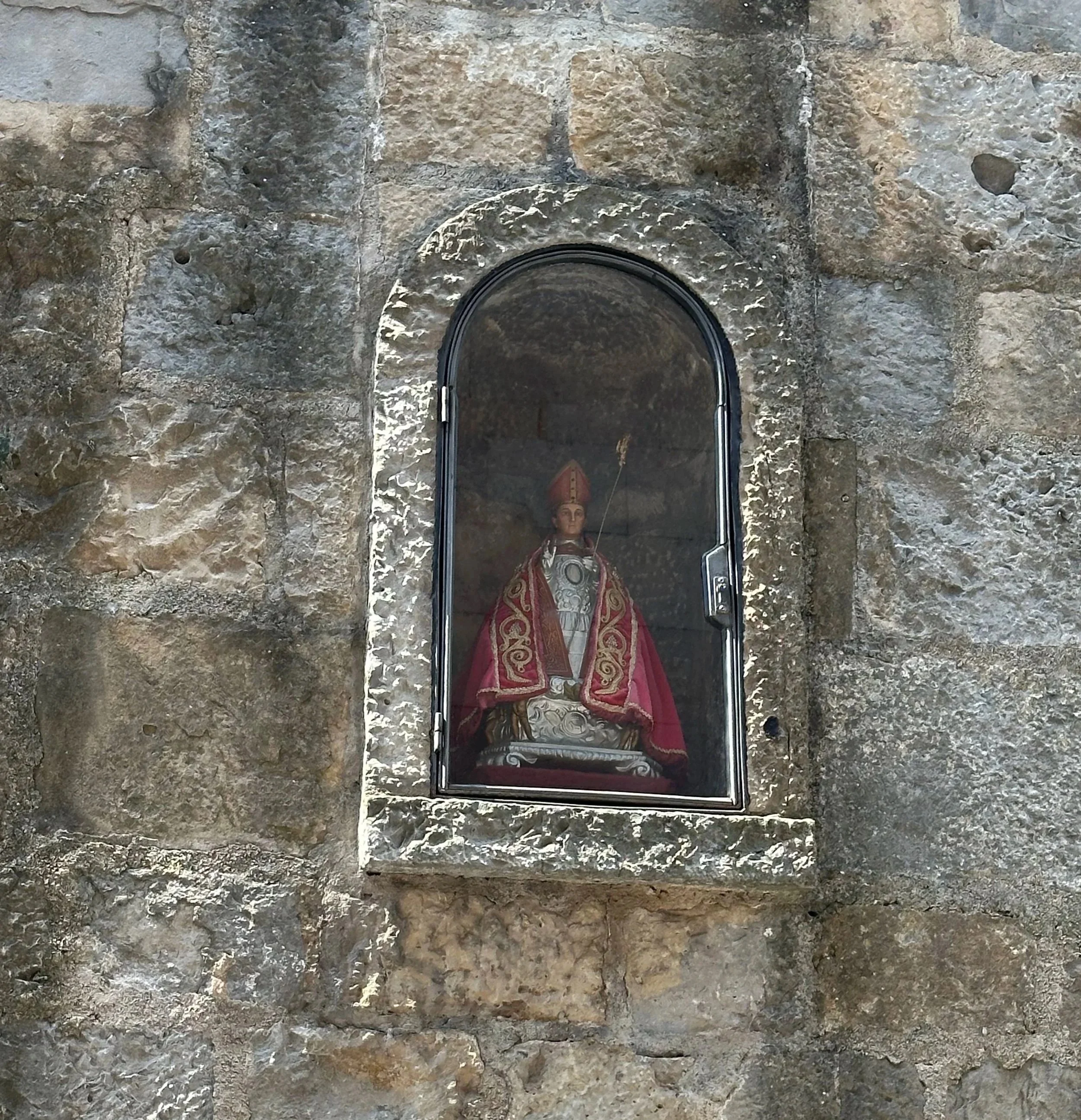
A small statue of San Fermin sits in this portion of the wall. Before the start of the race, the runners sing to San Fermin three times to ask for his protection and blessing.
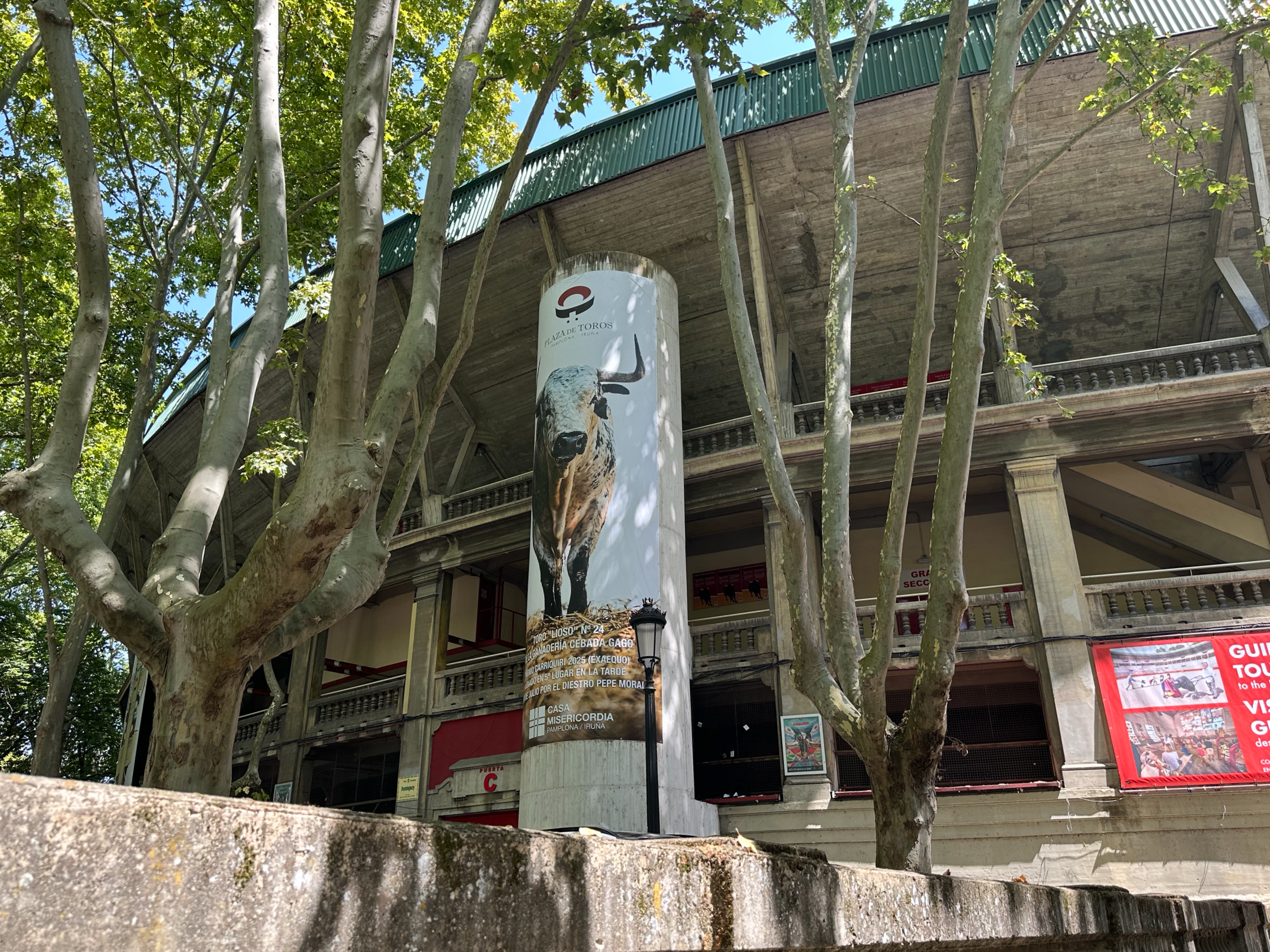
We walked the whole route of the bull run and ended at the bullring.
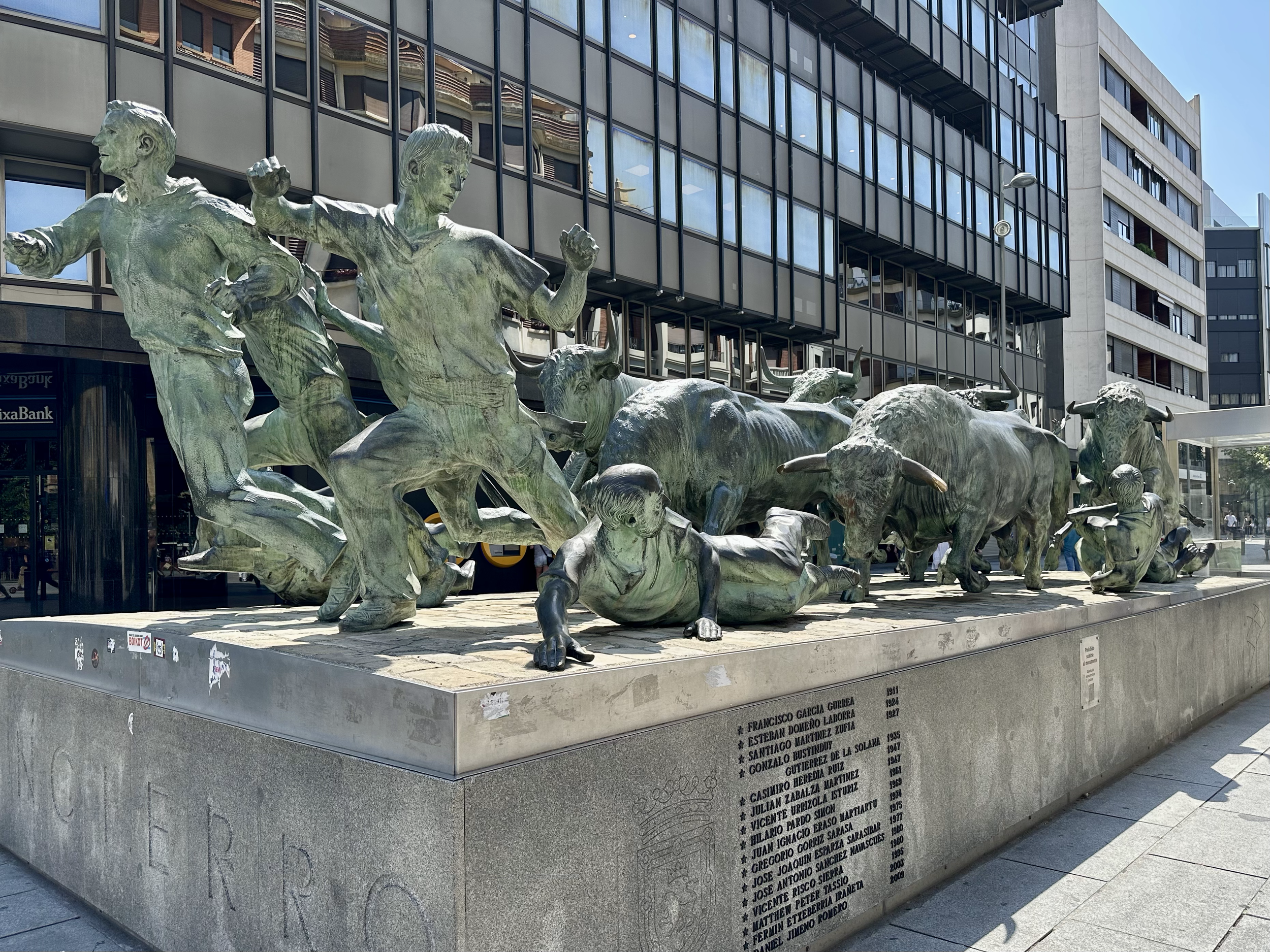
Running of the Bulls Monument. The 15 people who have died during the running of the bulls (recorded since 1910) are listed on the side of the monument.
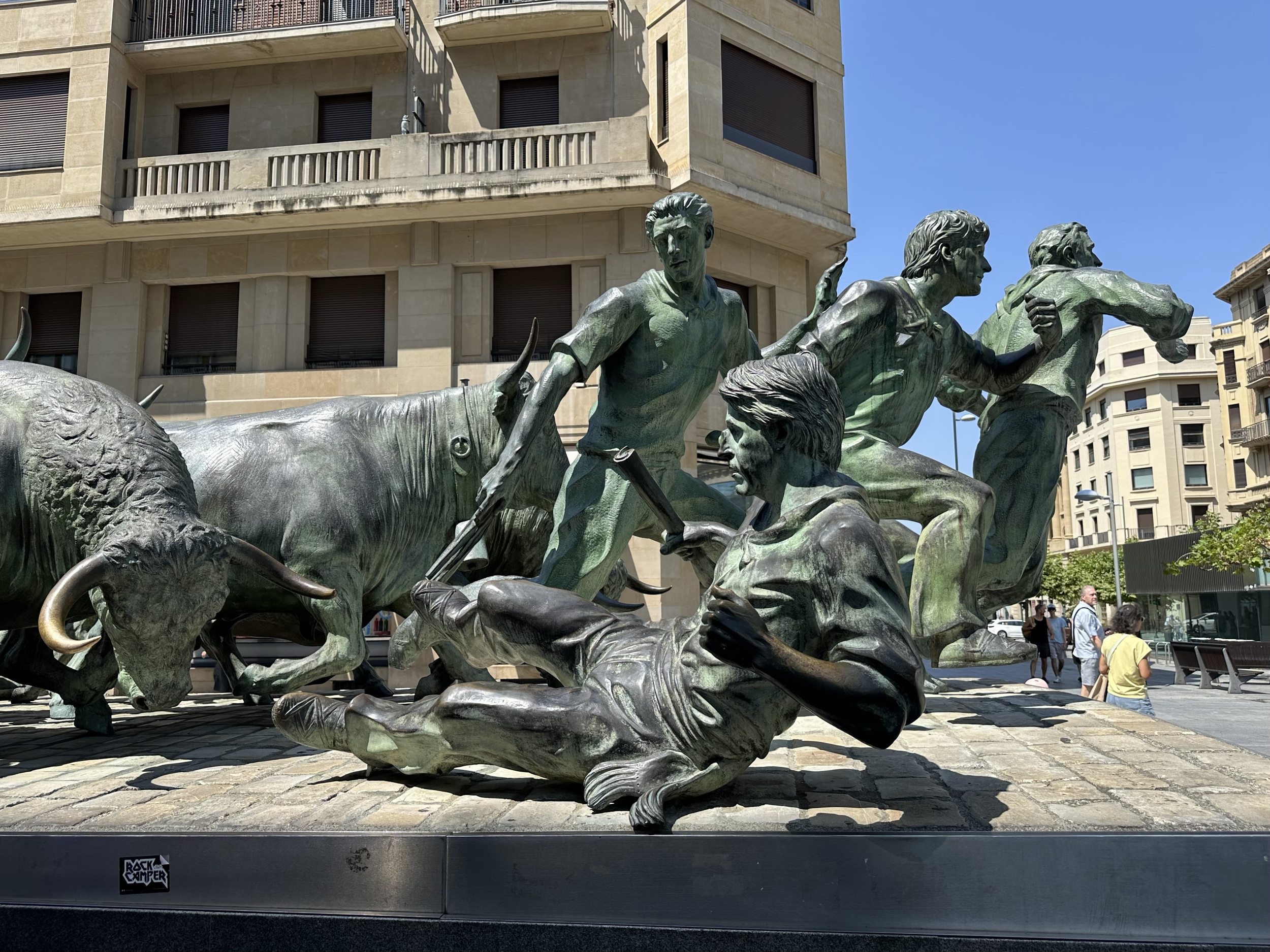
Such a life-like depiction with their facial expressions. This portion shows how a runner would hold a rolled up paper and throw it to the side to distract the bulls if they are charging.
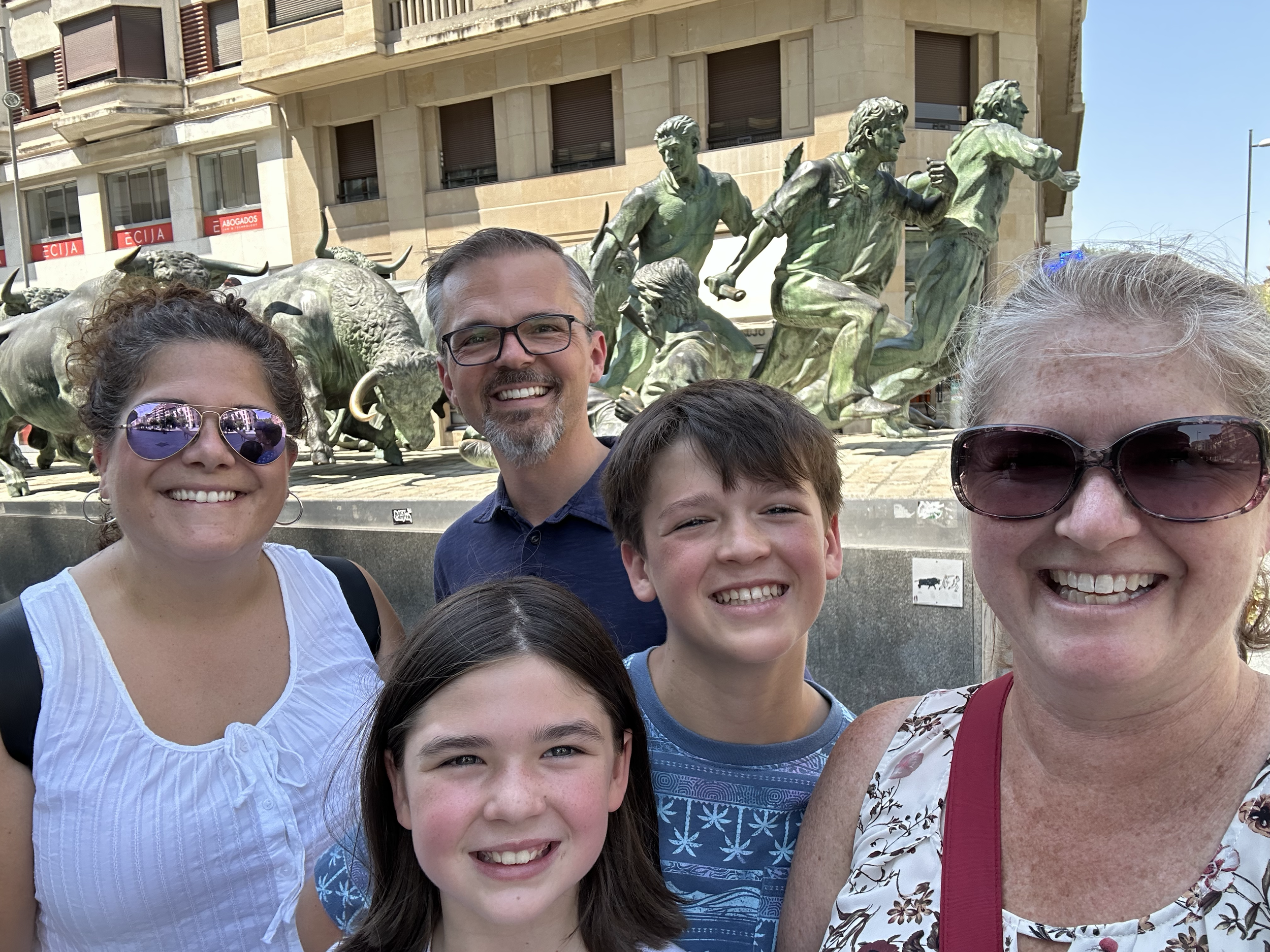
Such a beautiful day to explore Pamplona together!
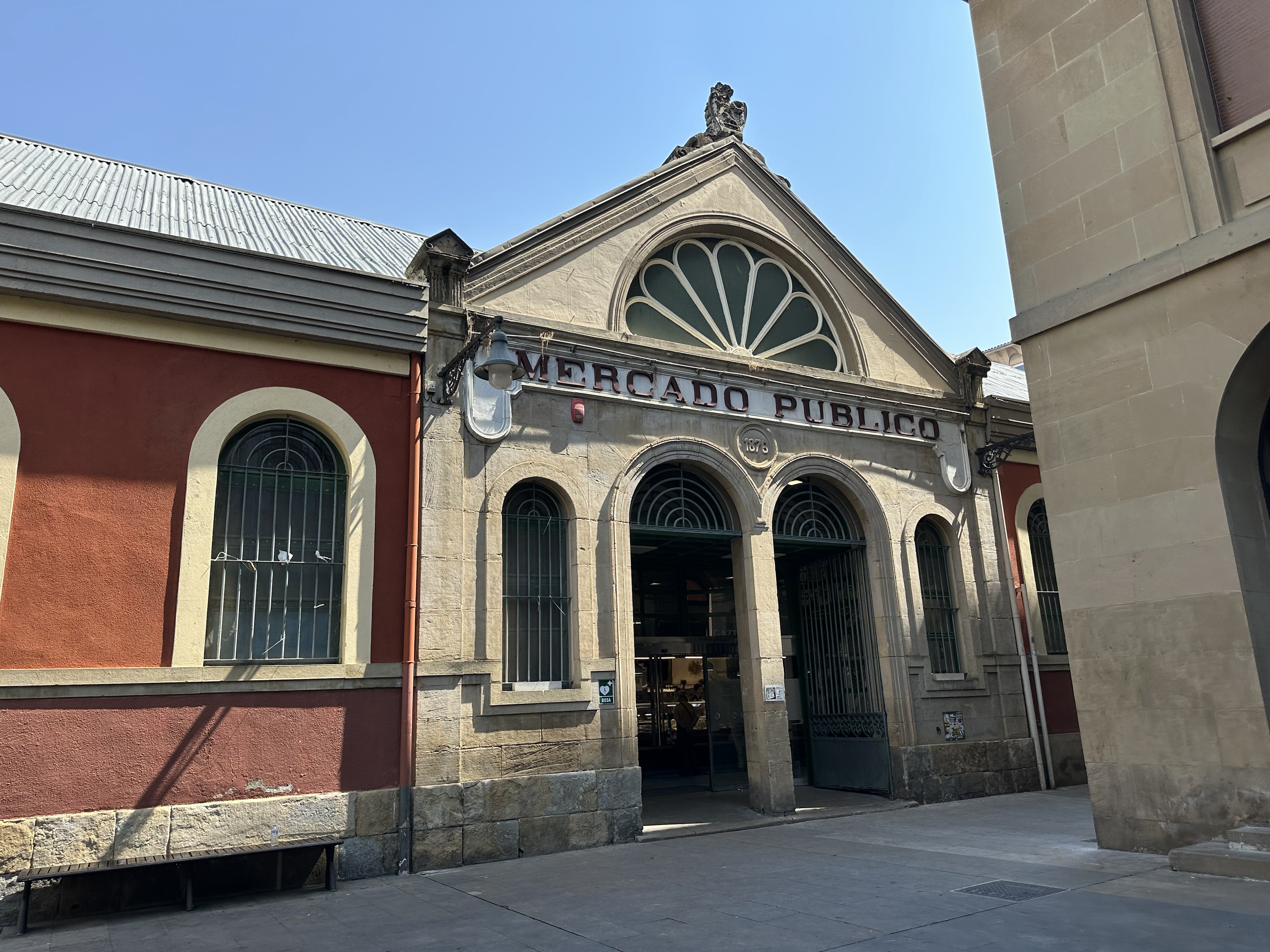
During our walk of the "Running of the Bulls" path, we stopped at the Mercado de Santo Domingo.
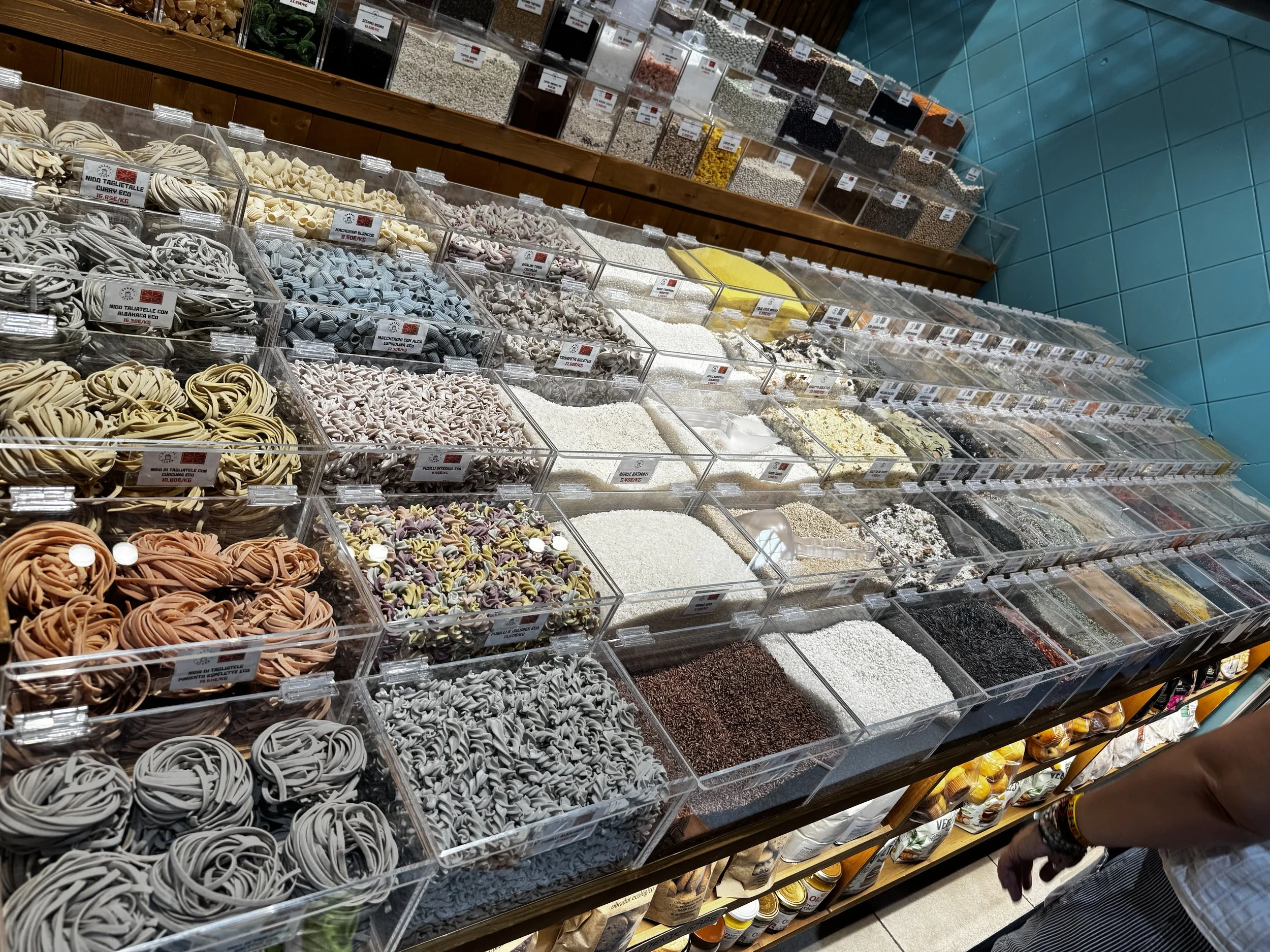
Beautiful spice and pasta options at the Mercado de Santo Domingo.
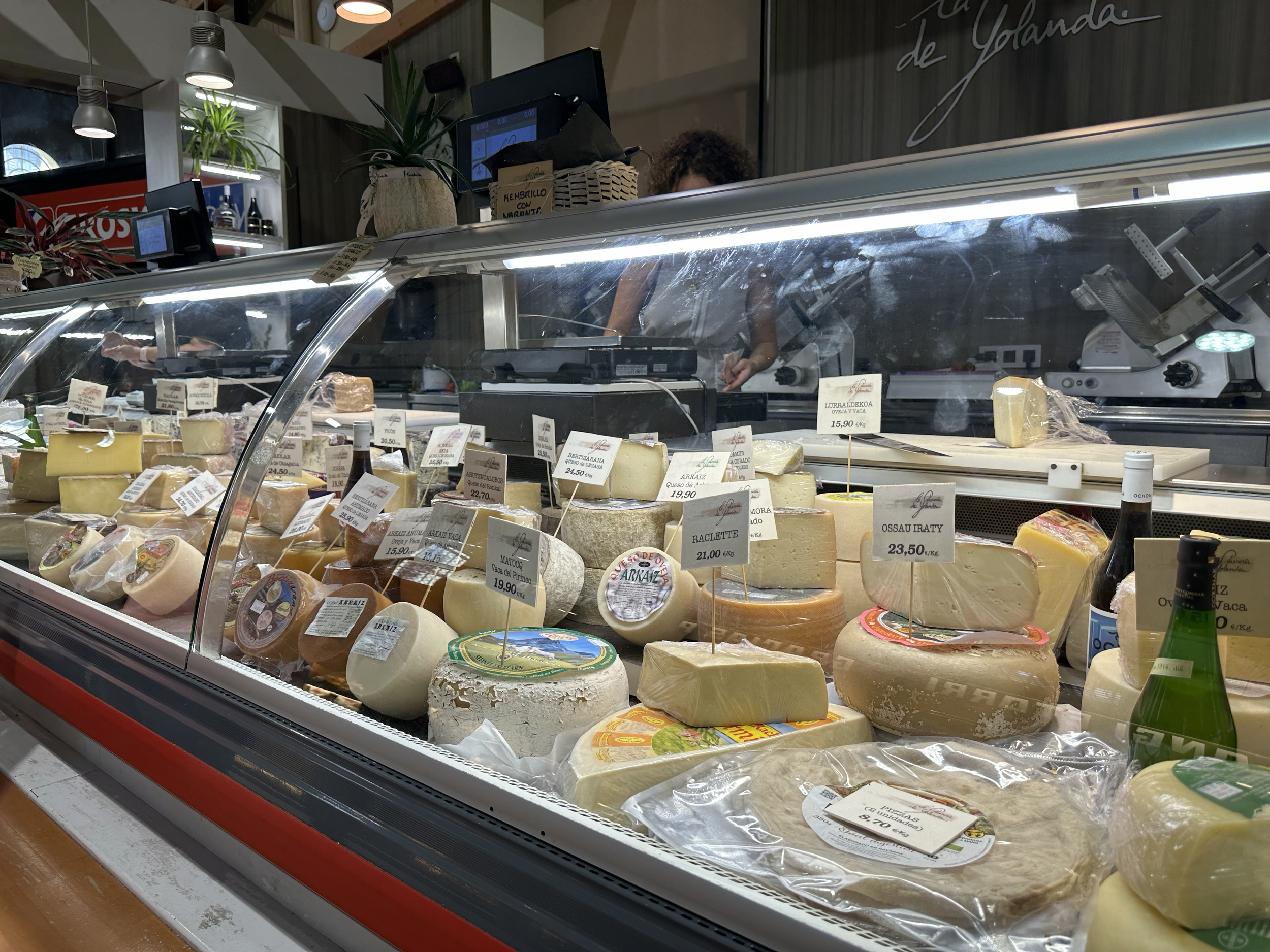
So many cheese options!
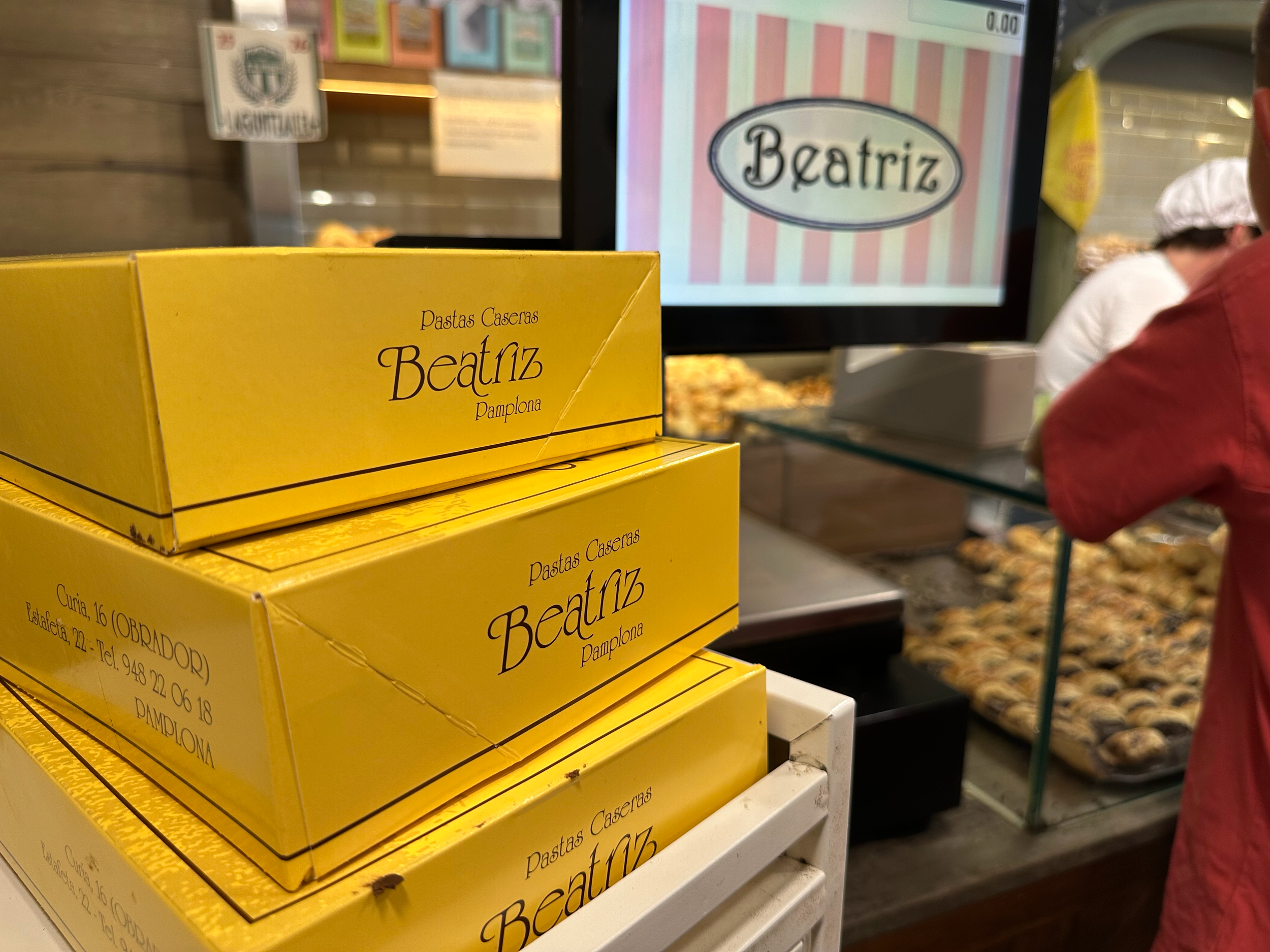
Time for a pastry at Beatriz!
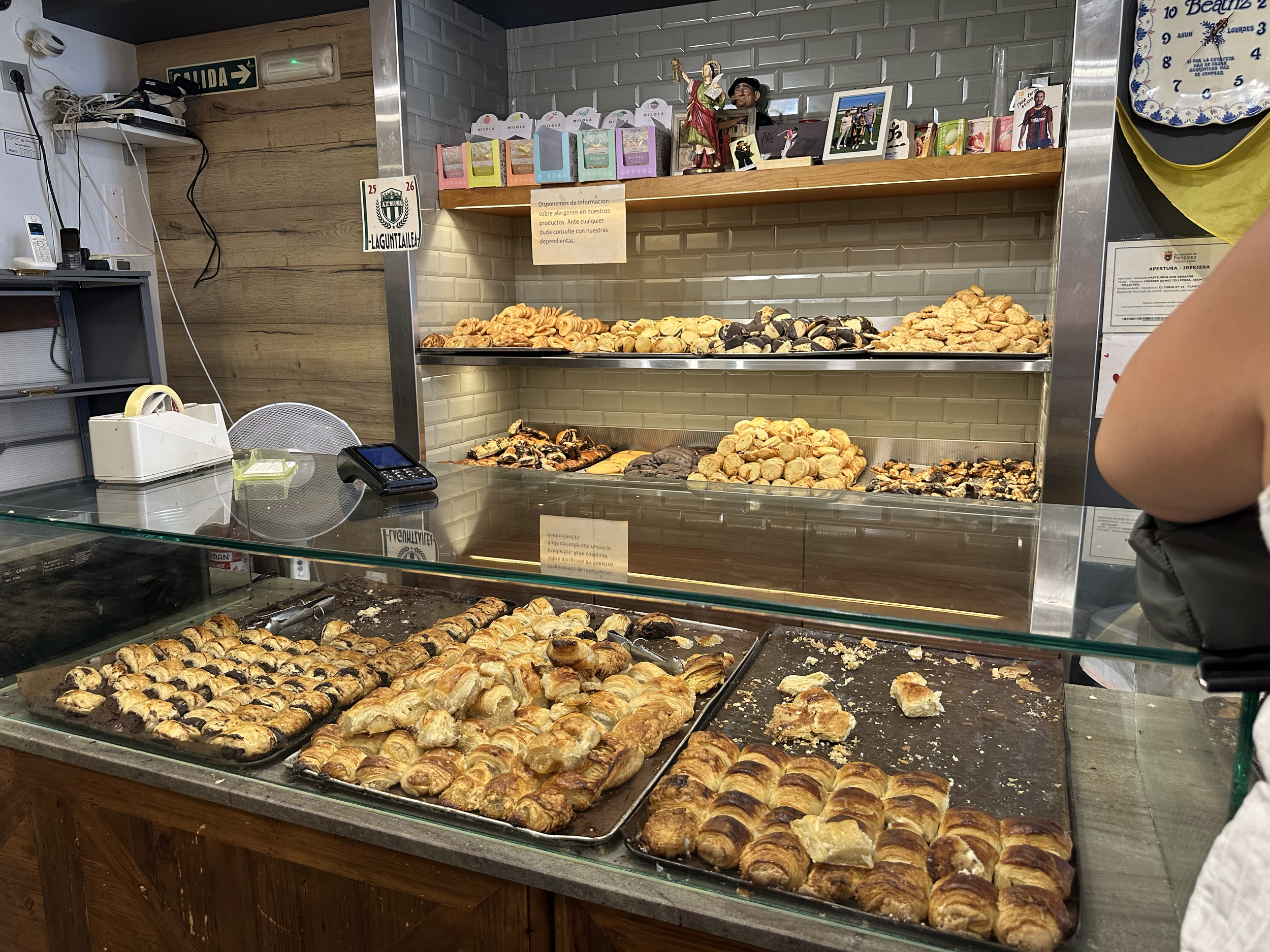
Beatriz specializes in "Garroticos," something like a mini-croissant filled with chocolate (or cream or apple).
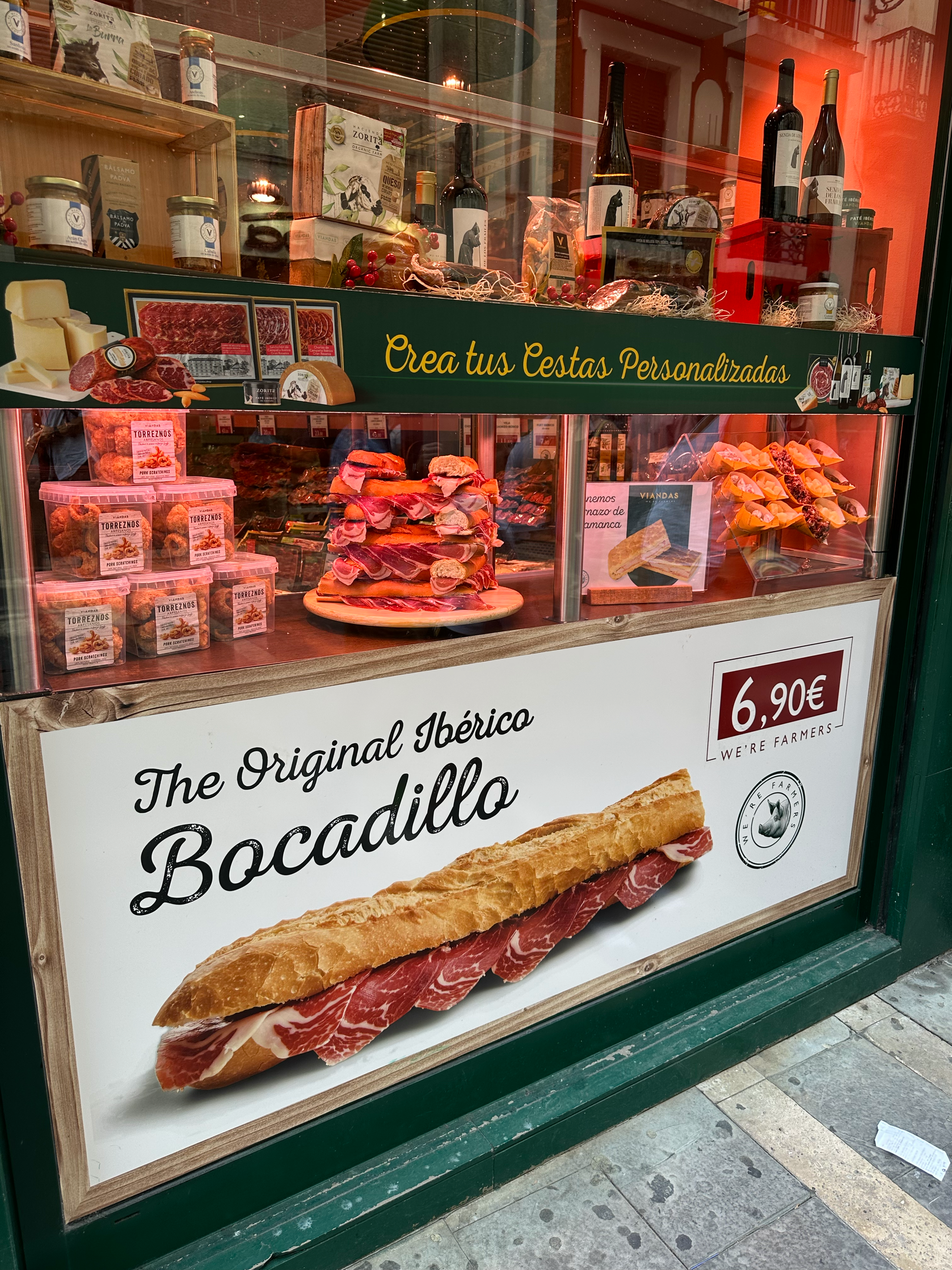
We have become big fans of the Bocadillo, which consists of Iberico ham on a baguette. Easy and delicious.
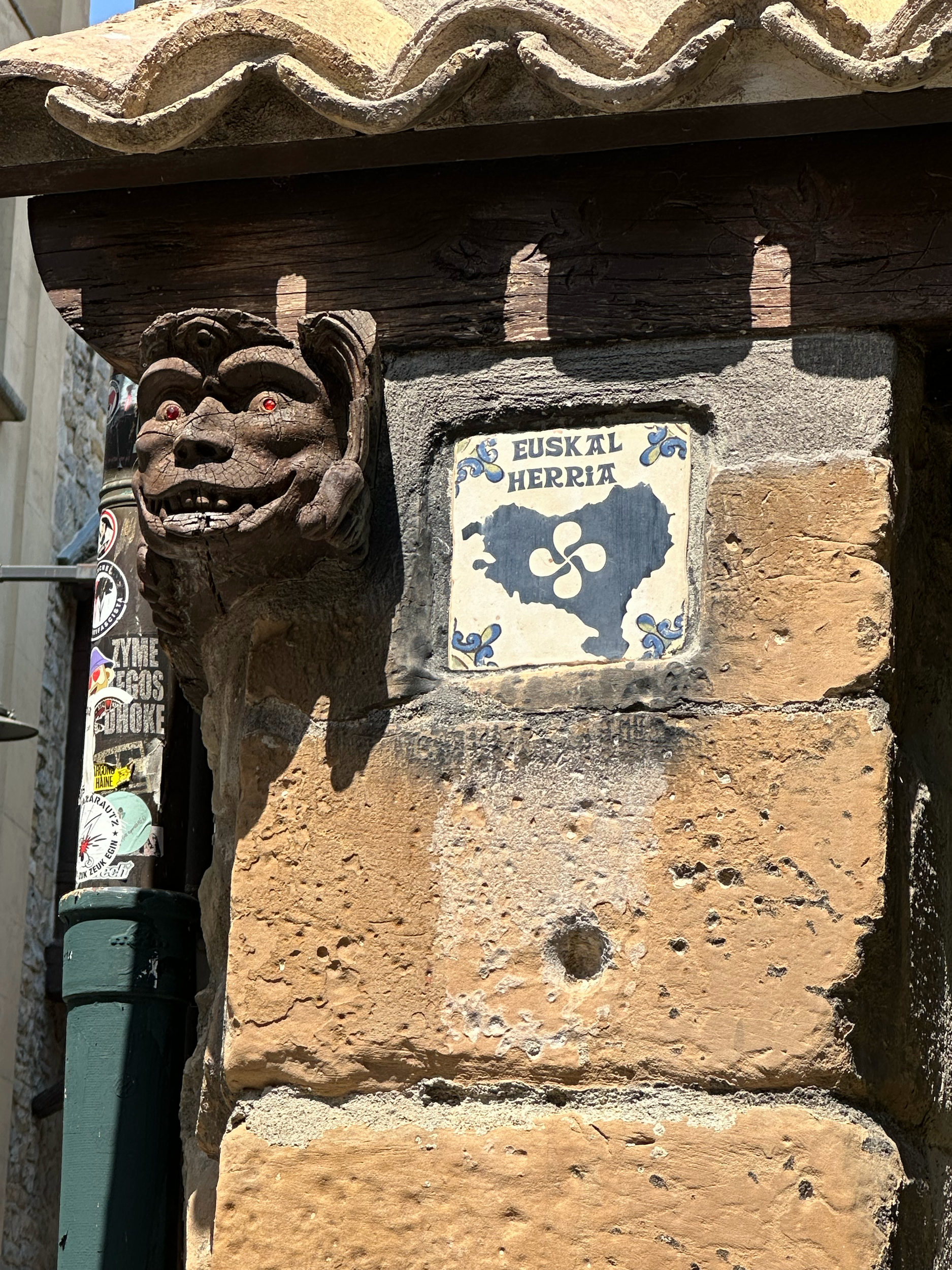
Gargoyle carved into the wood of the building and a tile supporting the "Pais Basque" or Basque country with the Basque cross in the center (looks like 4 commas forming a pinwheel).
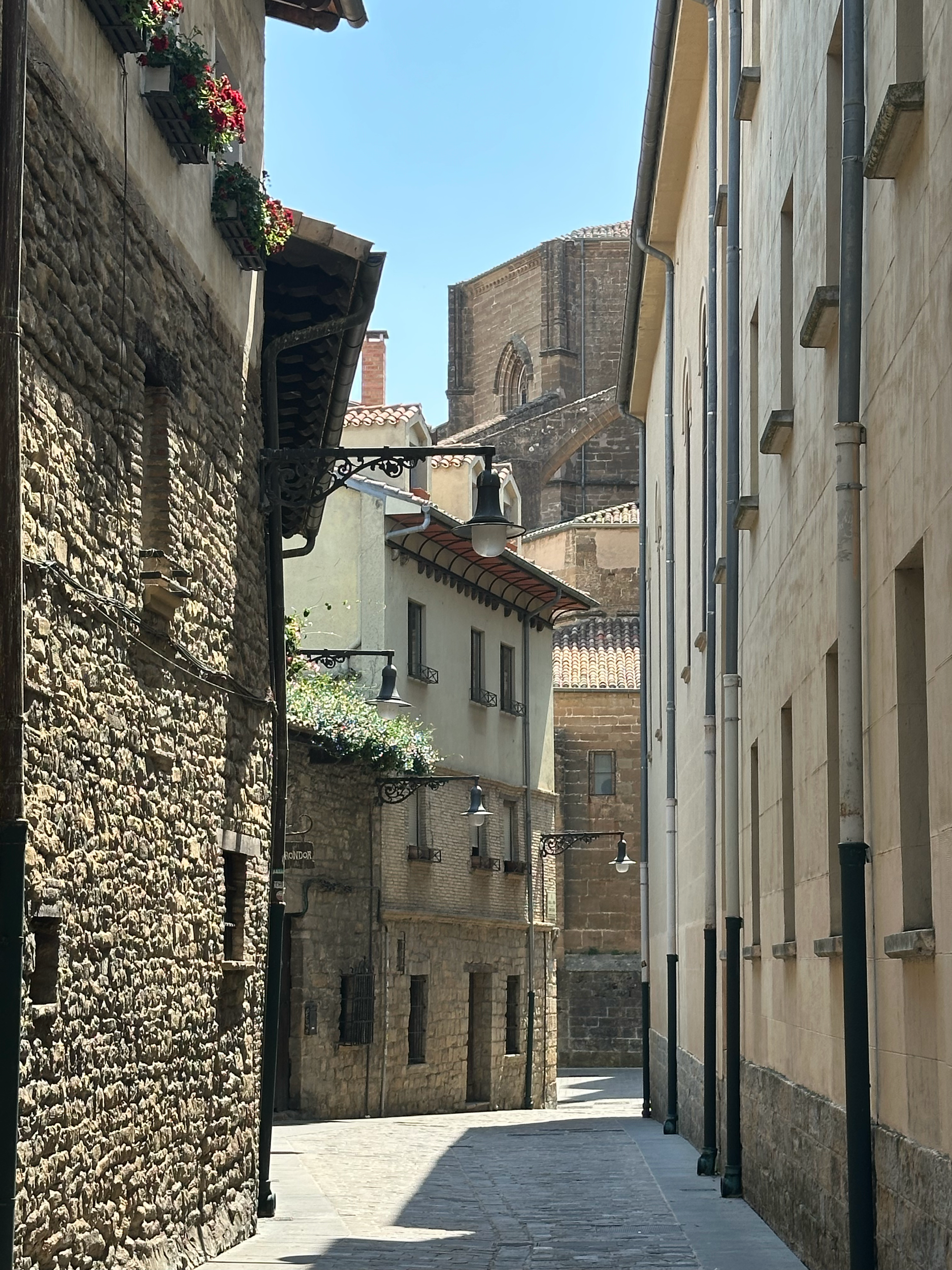
Small winding stone paths through the city.
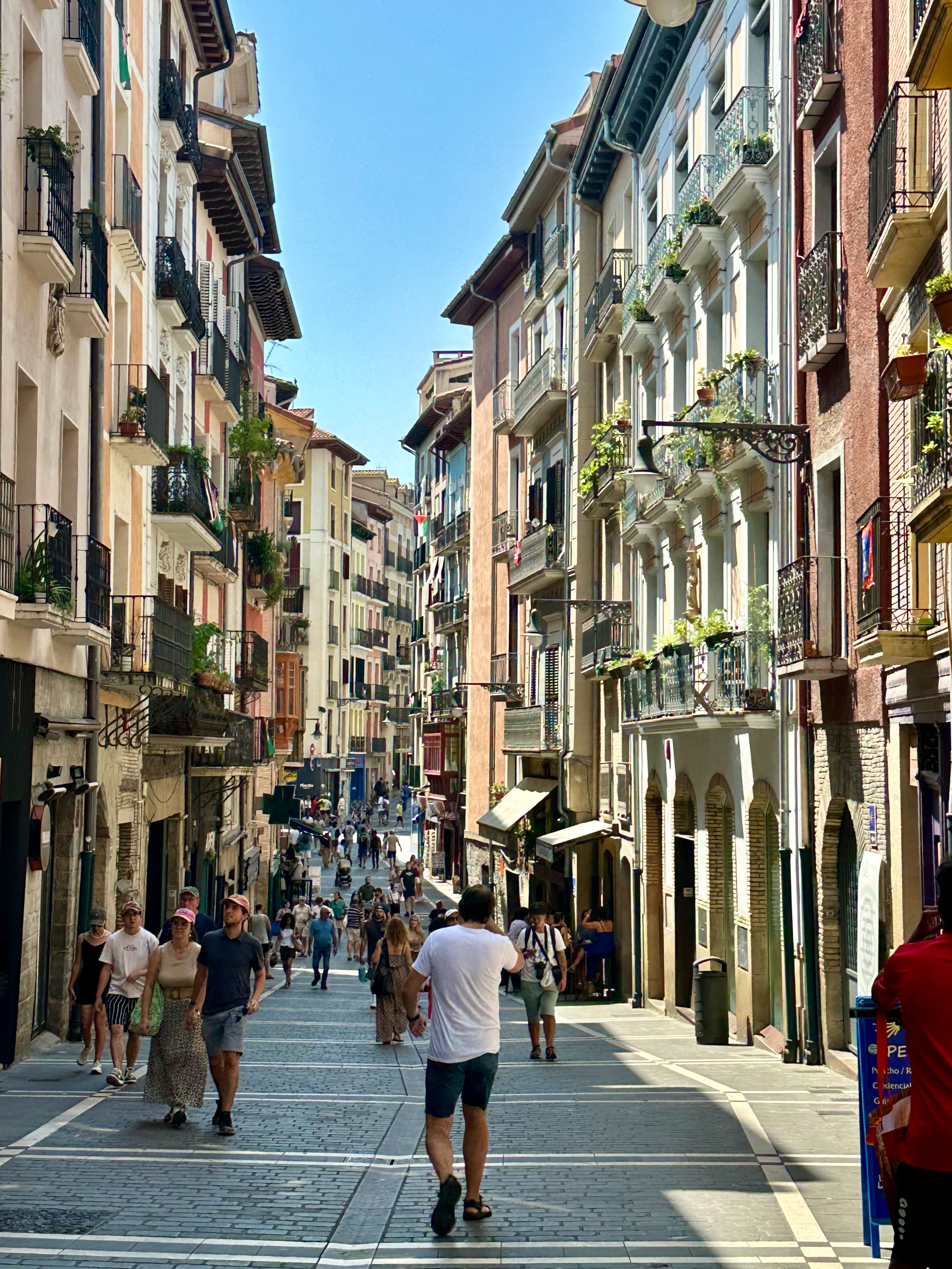
And the wider pedestian streets, again, with beautiful balconies.
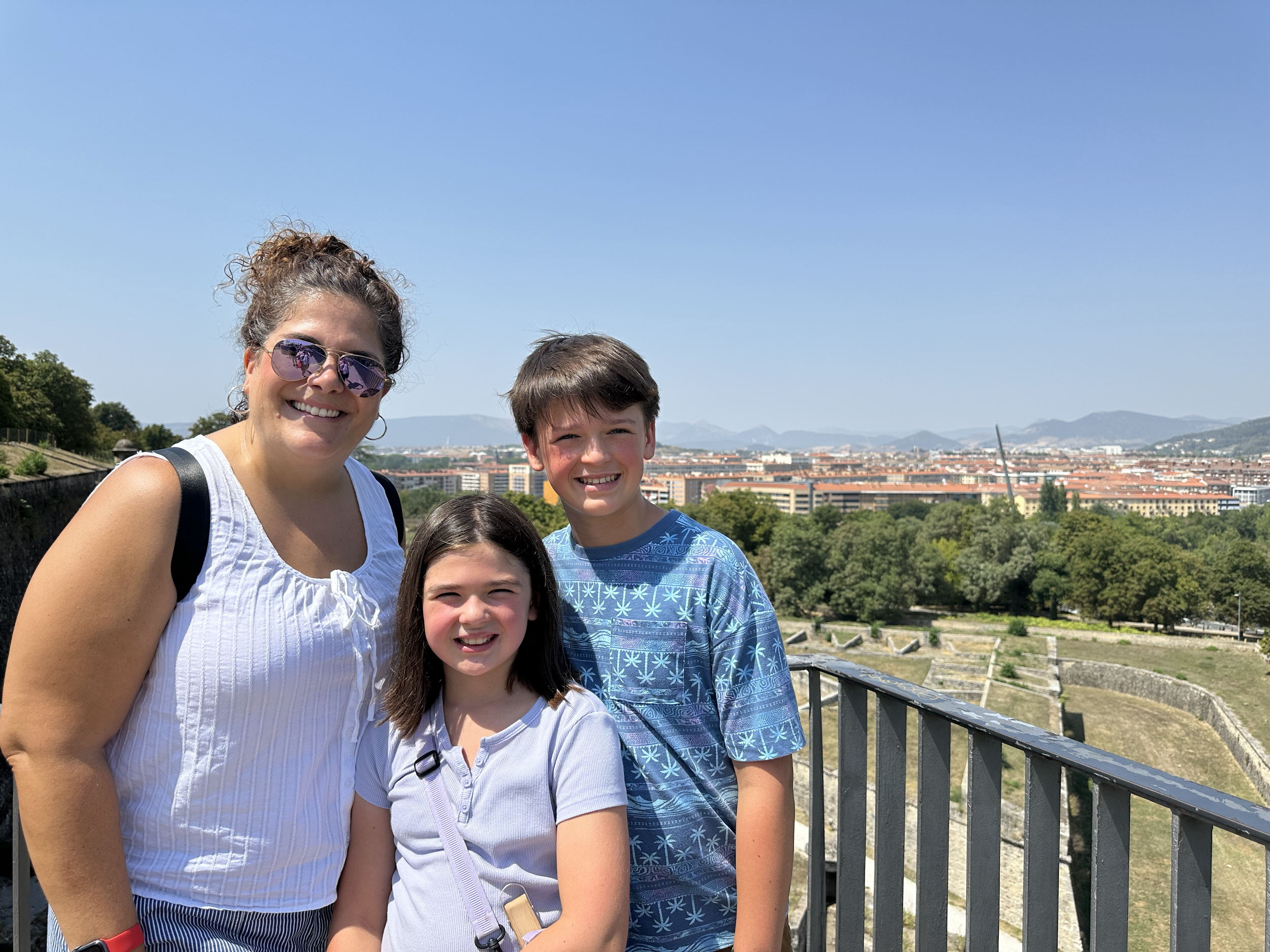
Enjoying the sunshine with Srta. U.
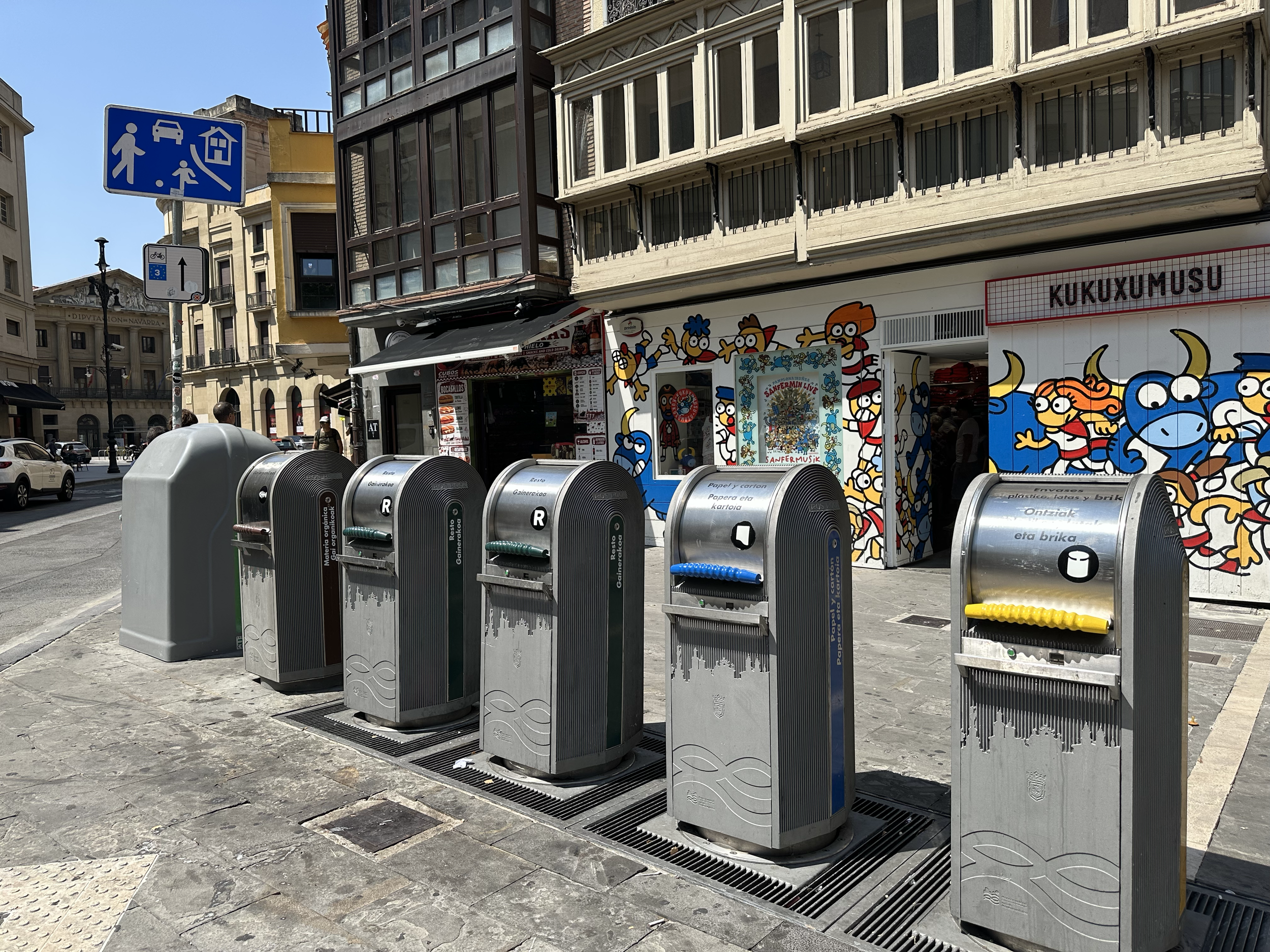
Spain really takes recycling seriously, but Pamplona takes it to another level. Here are 6 different bins on the street for sorting out your trash. These are located throughout the city, so there is really no excuse not to do it correctly.
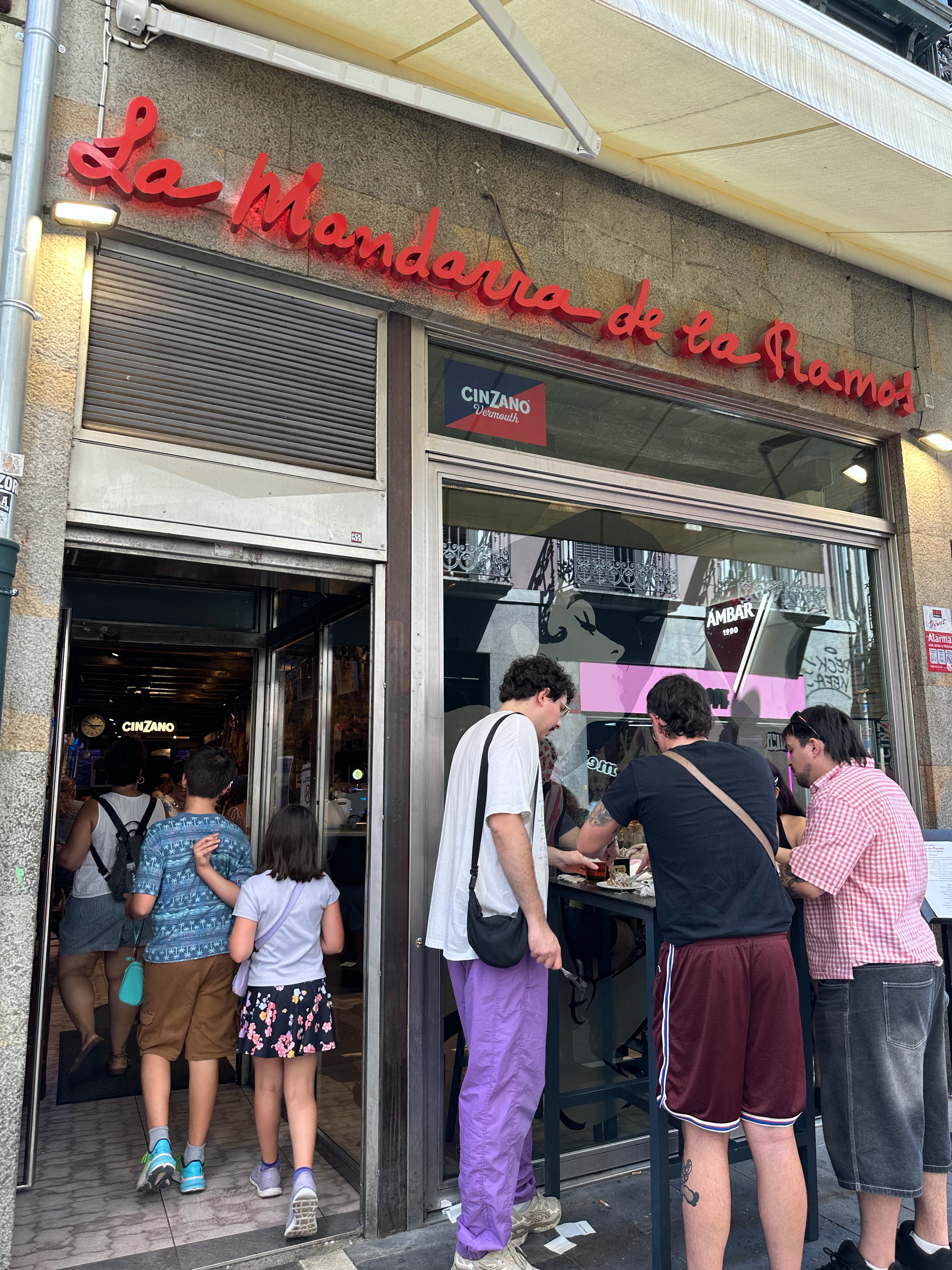
In Basque country, tapas are called Pintxos. Srta. U took us on our first pintxos tour through Pamplona. No need to eat at one restaurant when you can make stops at several and eat the specialty of each restaurant.
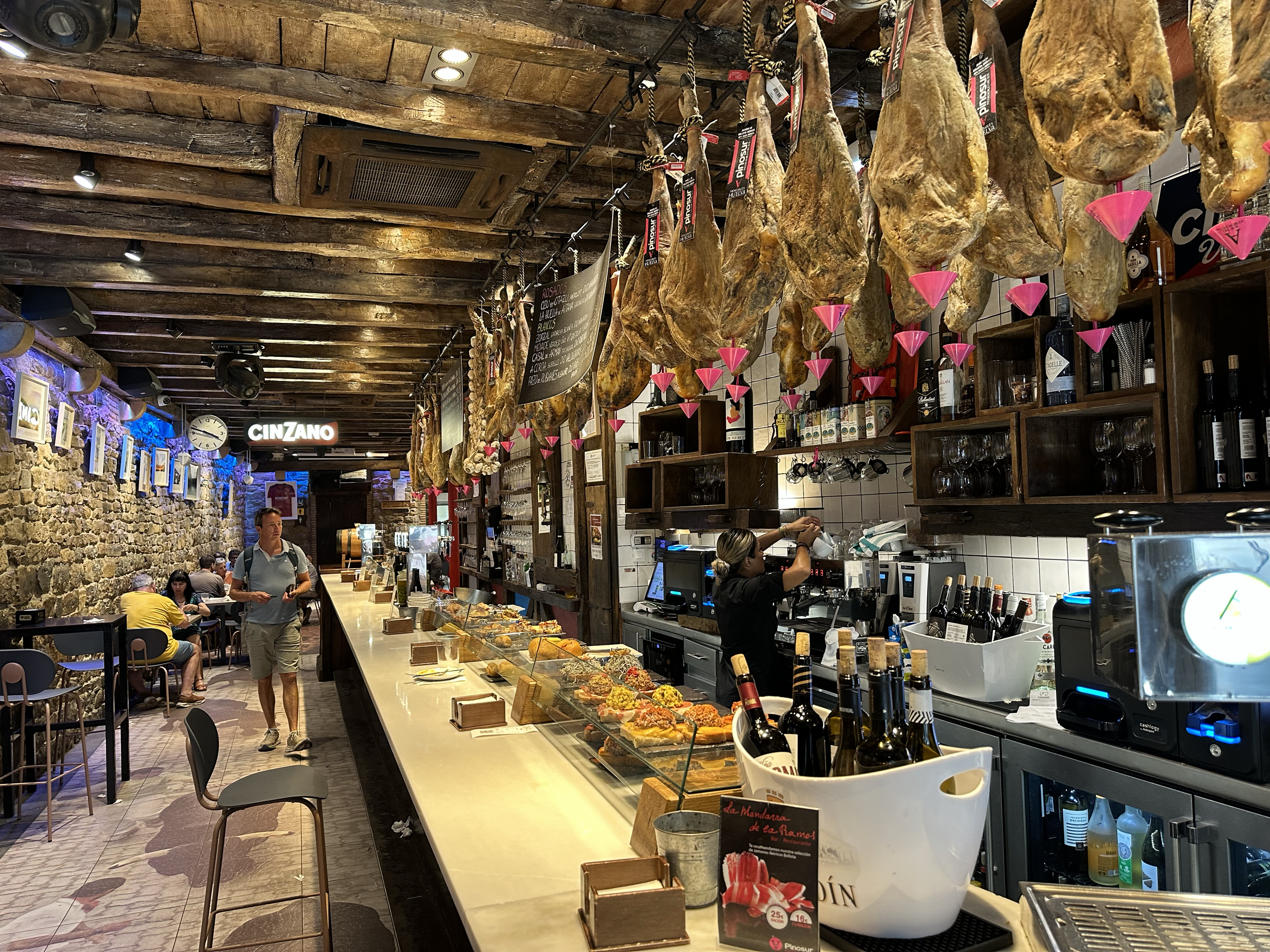
A beautiful display of pintxos, braided garlic, and ham (Iberico and/or serrano).
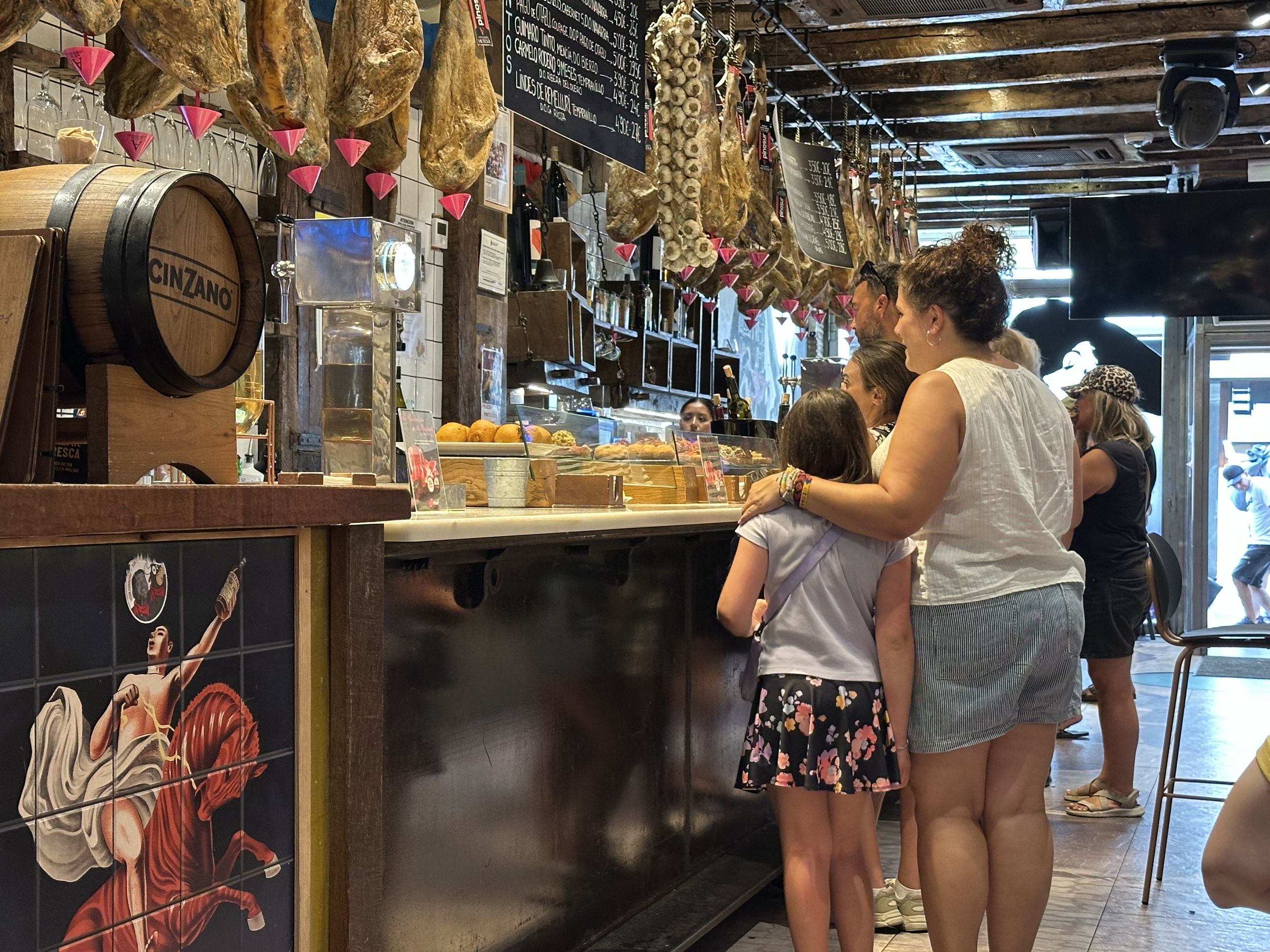
Amelia was brave and went up to the counter to place the order with Srta. U.
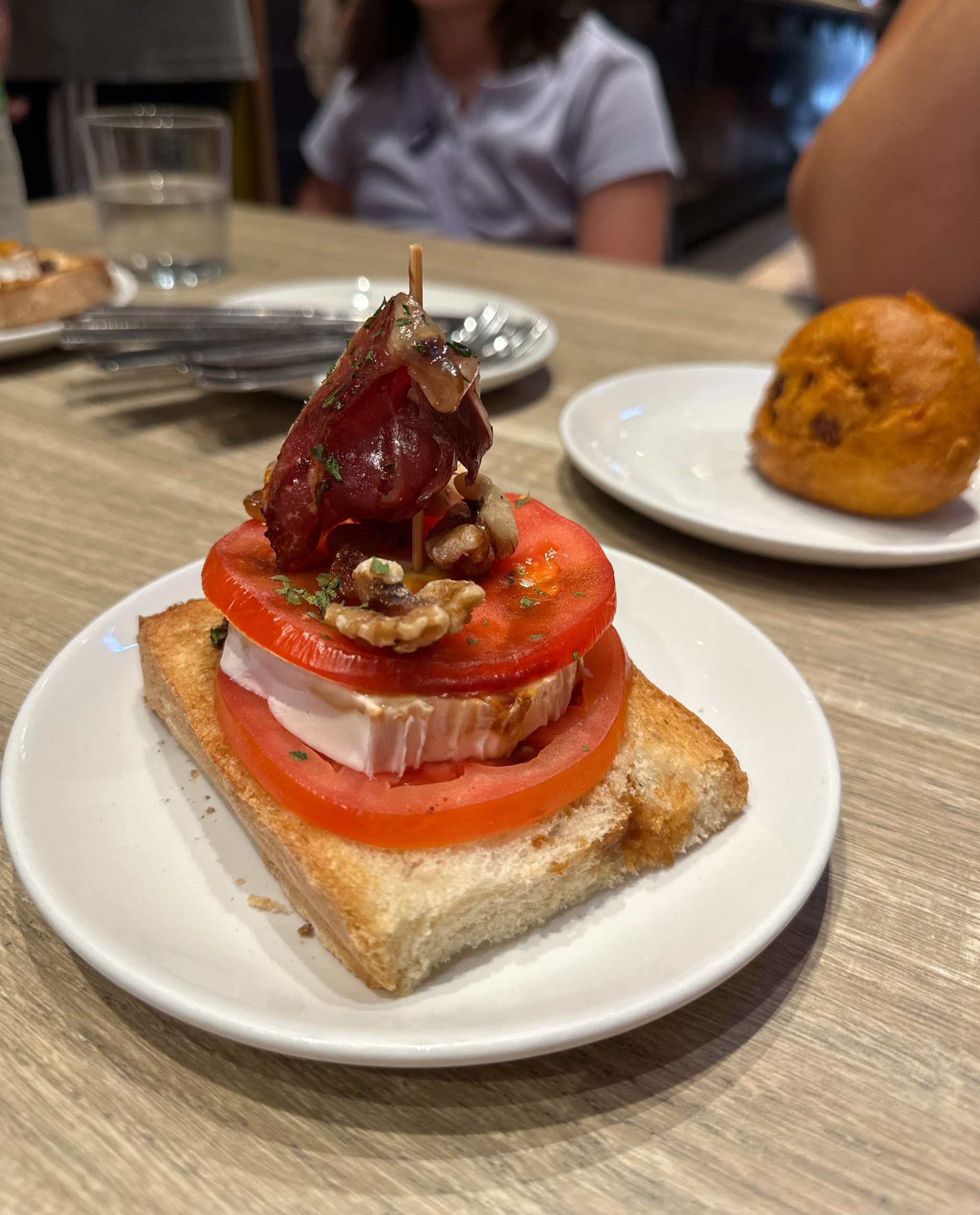
One of our favorites. Toasted bread with sliced tomato, brie, walnuts, iberico ham, and balsamic. And in the background a croquette.
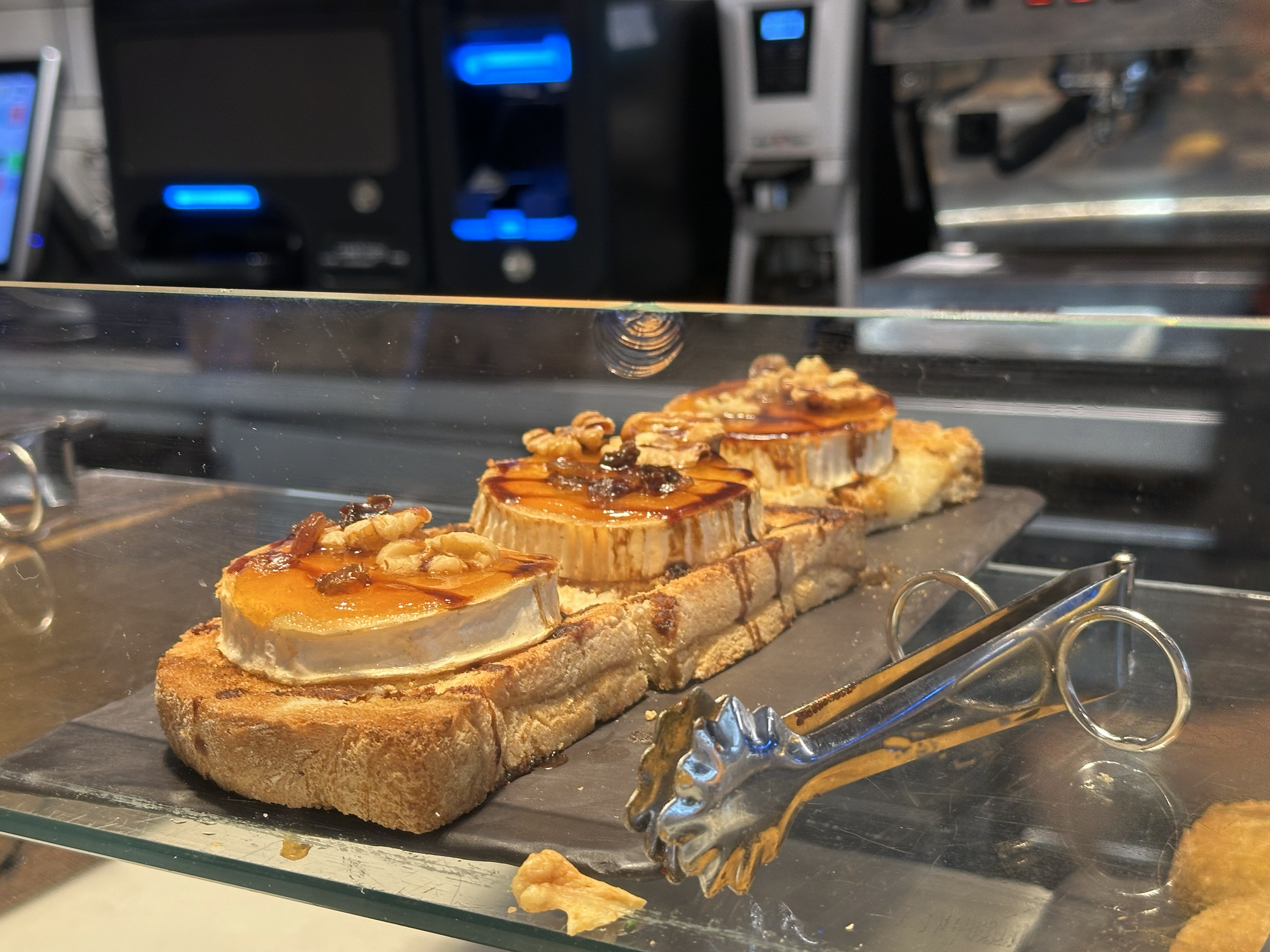
Bread, brie, walnuts, and honey. Delisioso!
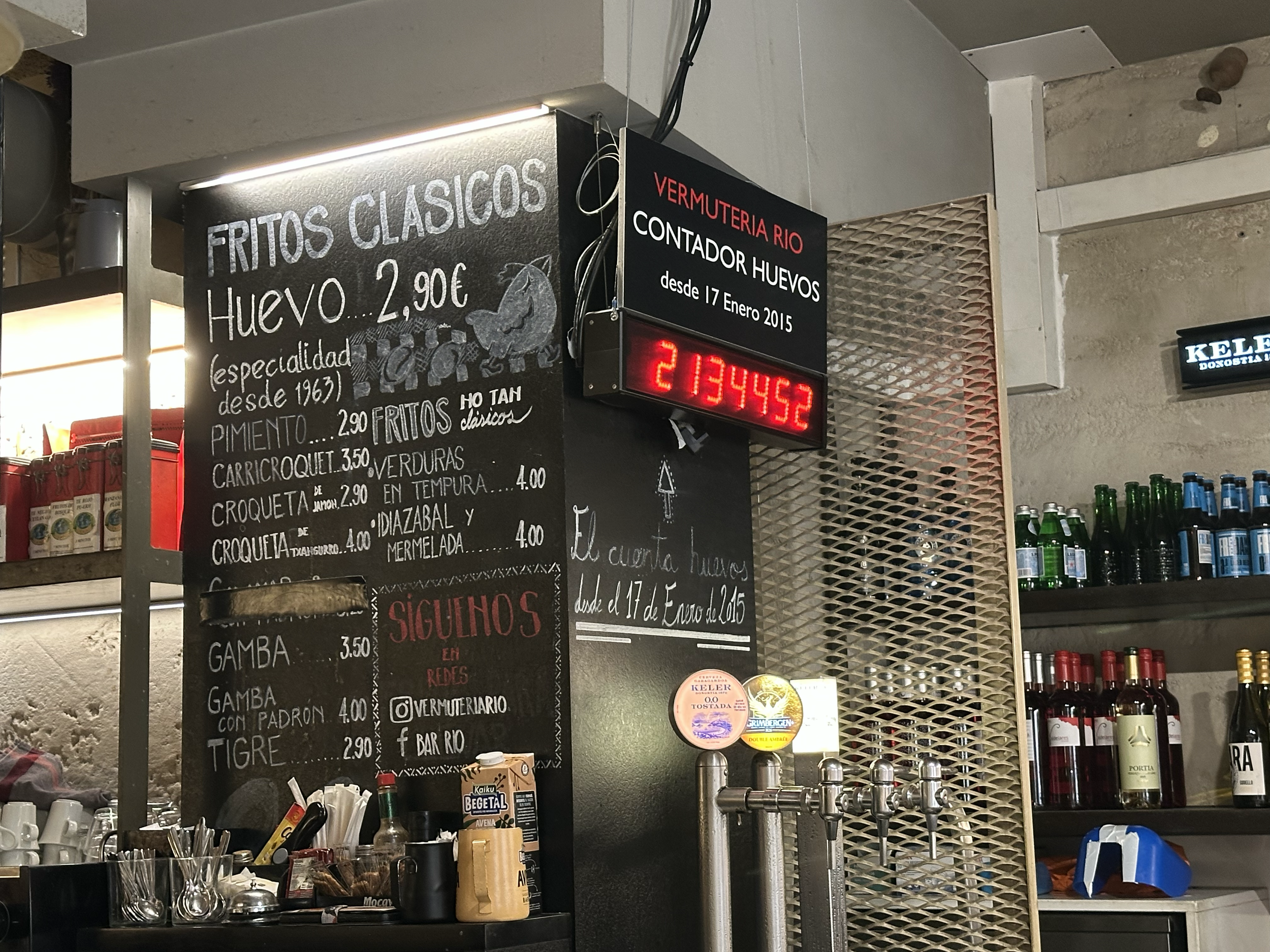
Second stop for the "Fritos Clasicos Huevo." They have a counter running for how many they have served since 2015.
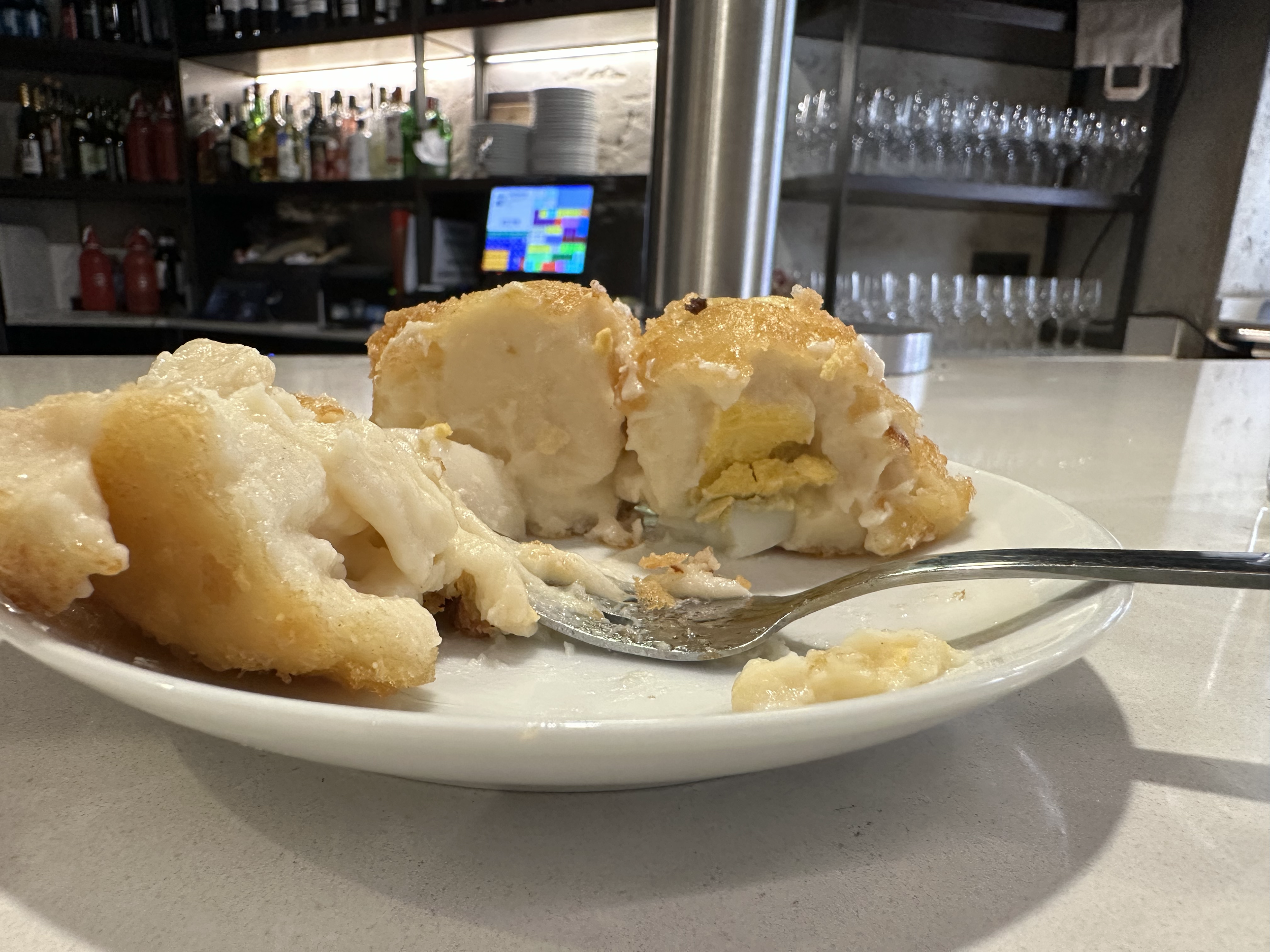
The famous "Fritos Clasicos Huevo." is a boiled egg fried in batter like a croquette. It was delicious.
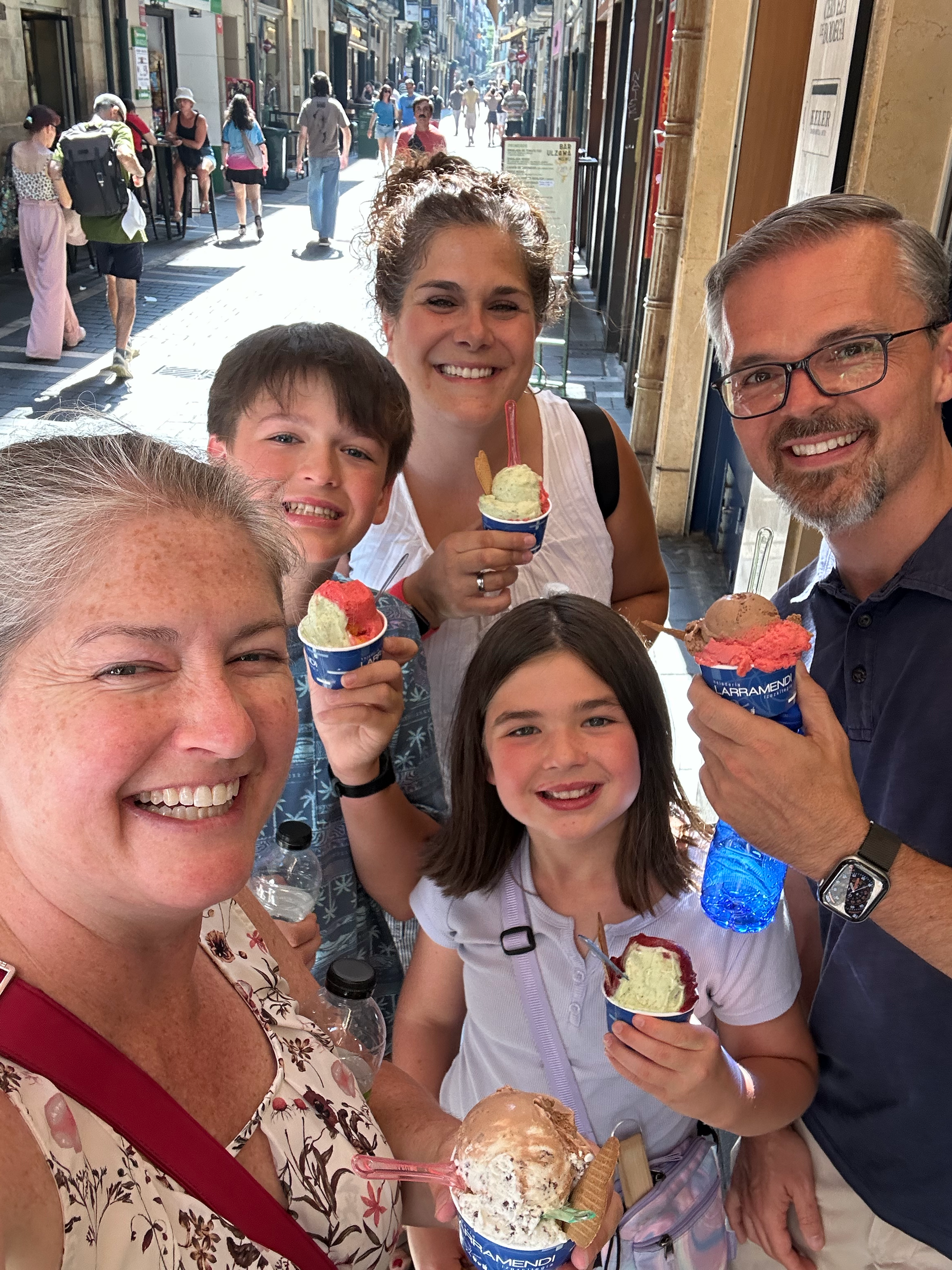
Of course, we needed to end the festivities with some gelato!
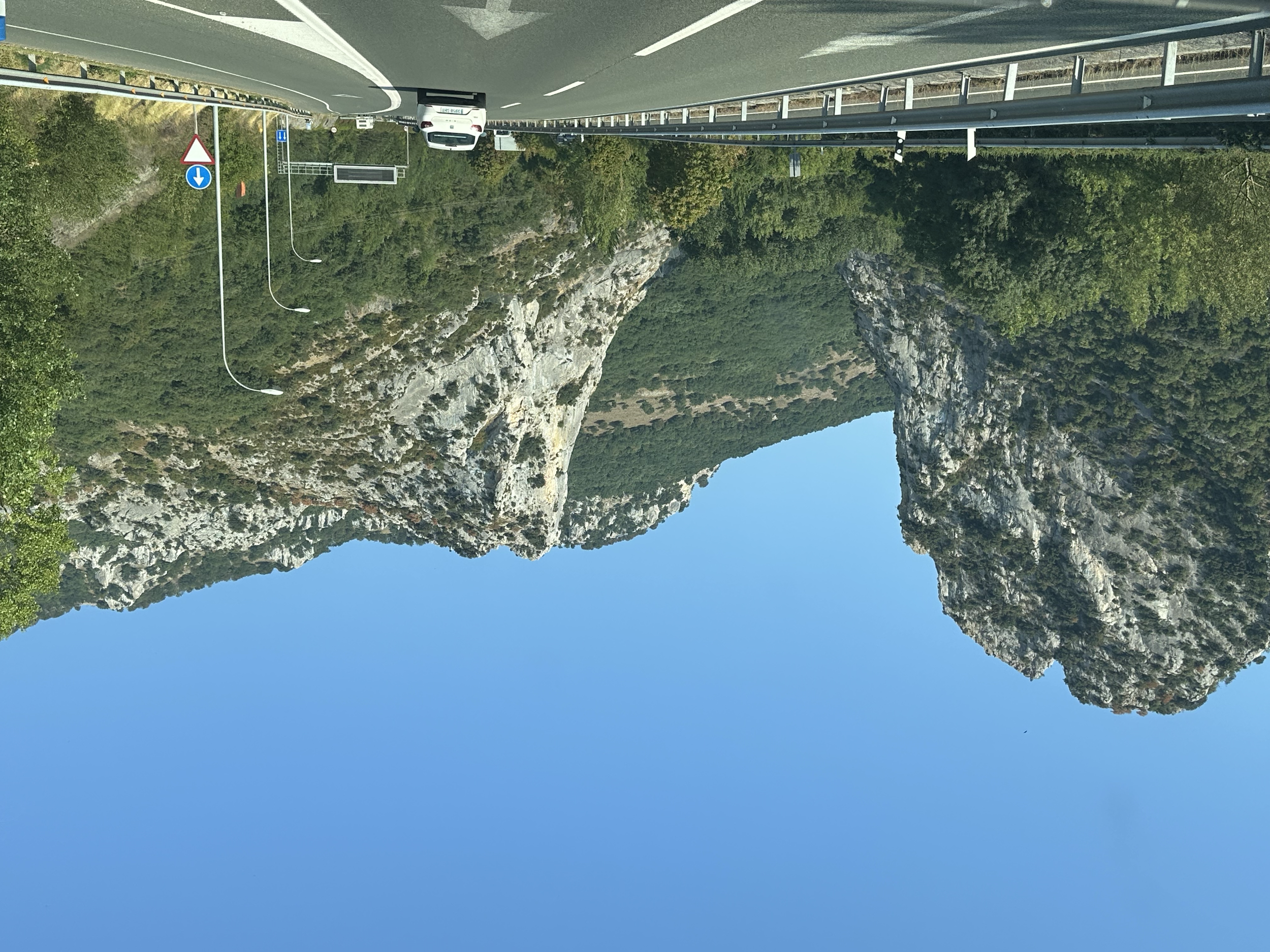
After a fun filled day in Pamplona, we headed further north and into France to experience some of the Basque region in another country! The mountains we saw along the drive are not the Pyrenees, as they are close to the sea, but they sure did look like big mountains to us.
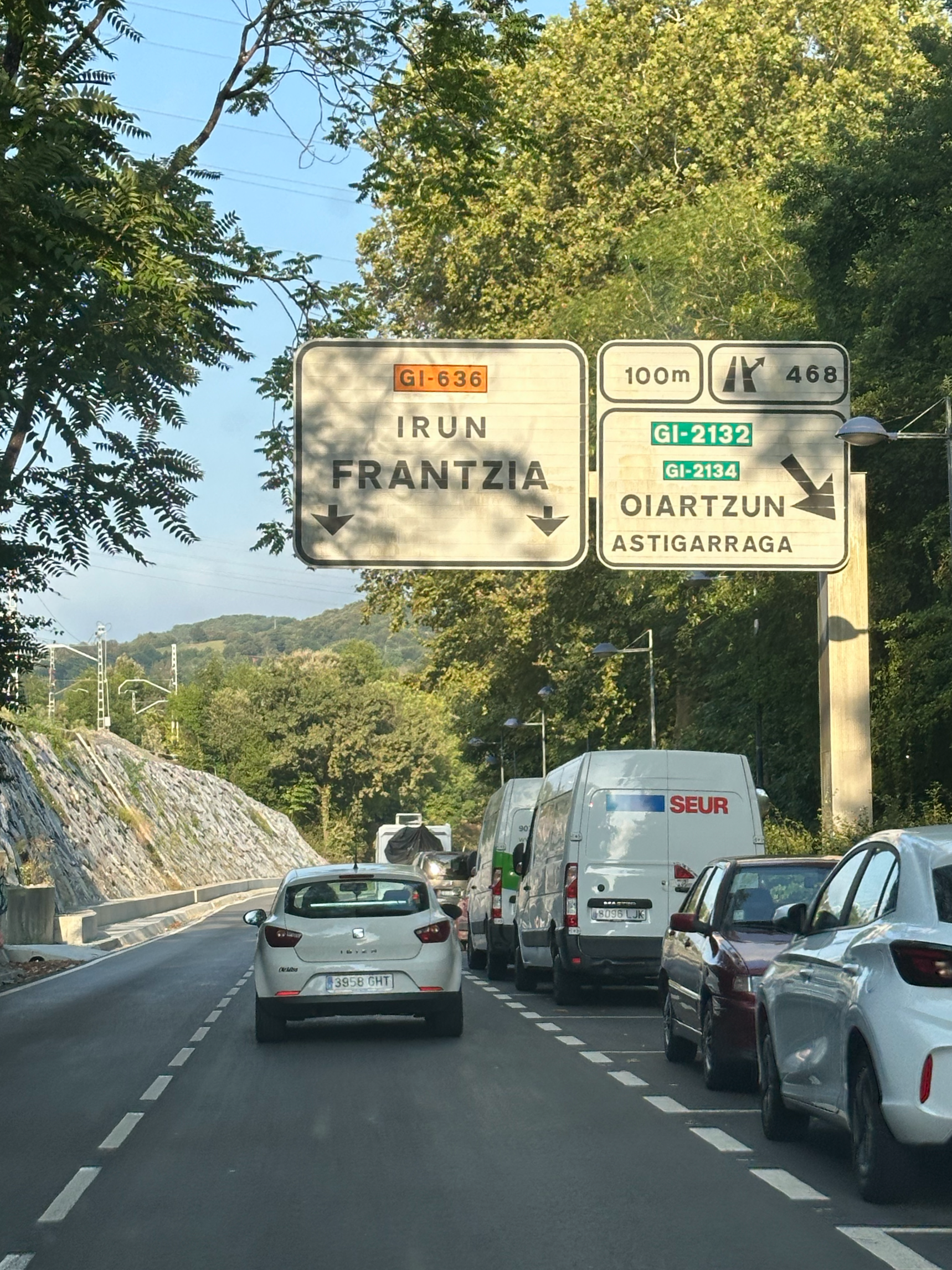
We ended our day with lots of traffic going into France. What would normally take 1.5 hours was closer to 3 hours on this day.
St. Jean de Luz, Biarritz, and Bayonne: The Trifecta in France
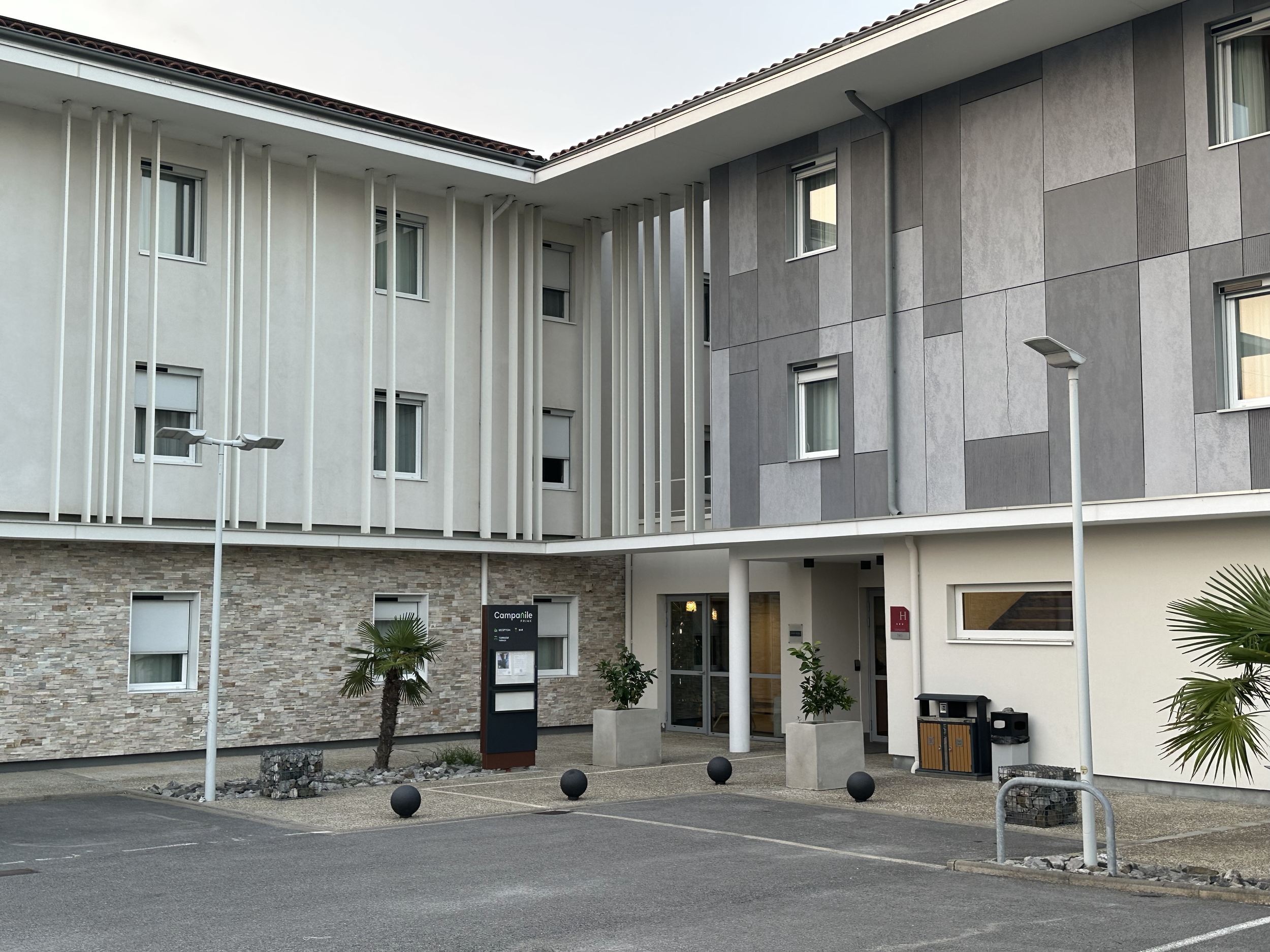
We stayed in a hotel outside the city of San Jean de Luz in France.
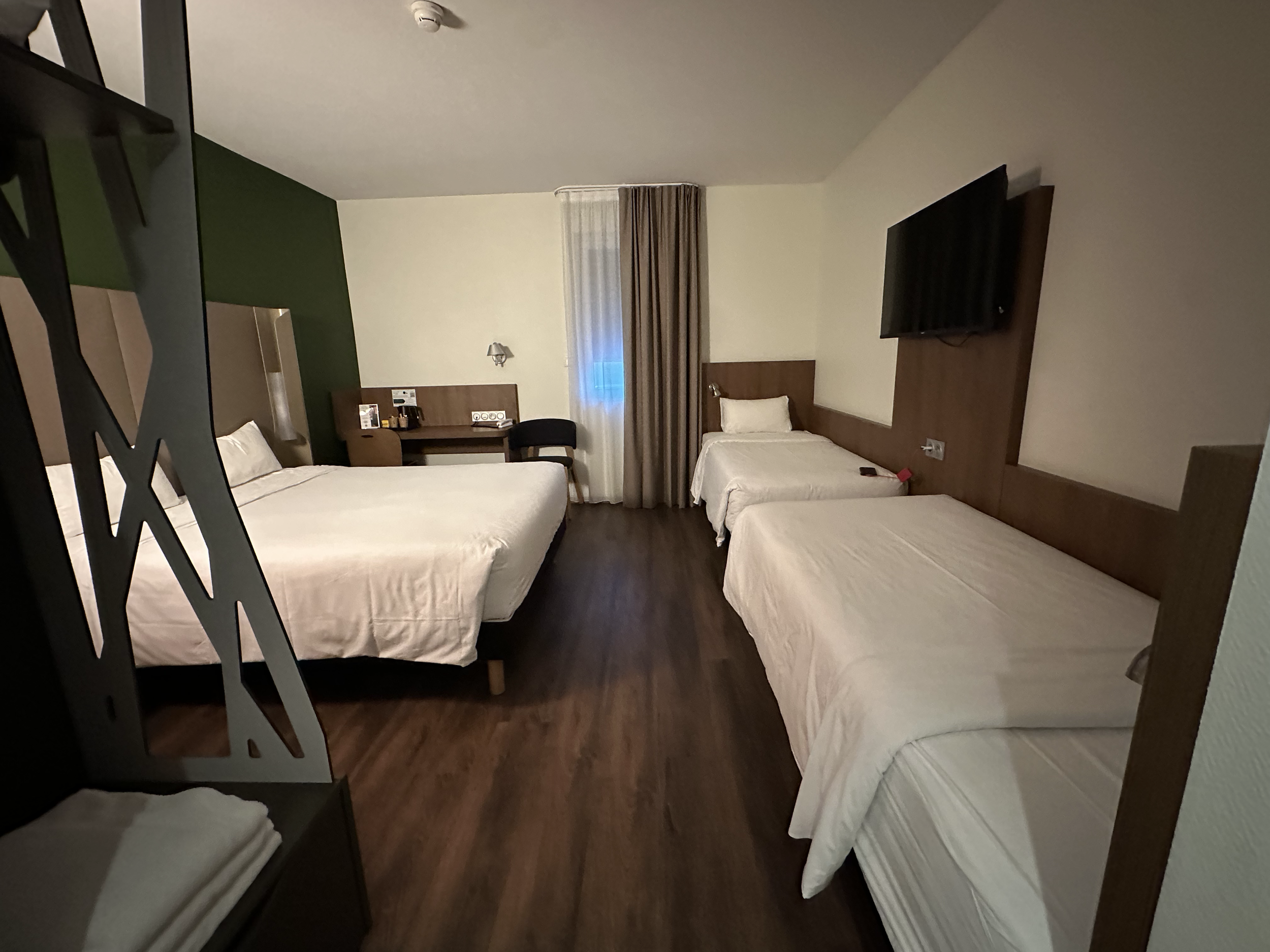
Family rooms always seem to be a creative set-up. The twin beds along one wall actually worked quite well for us.
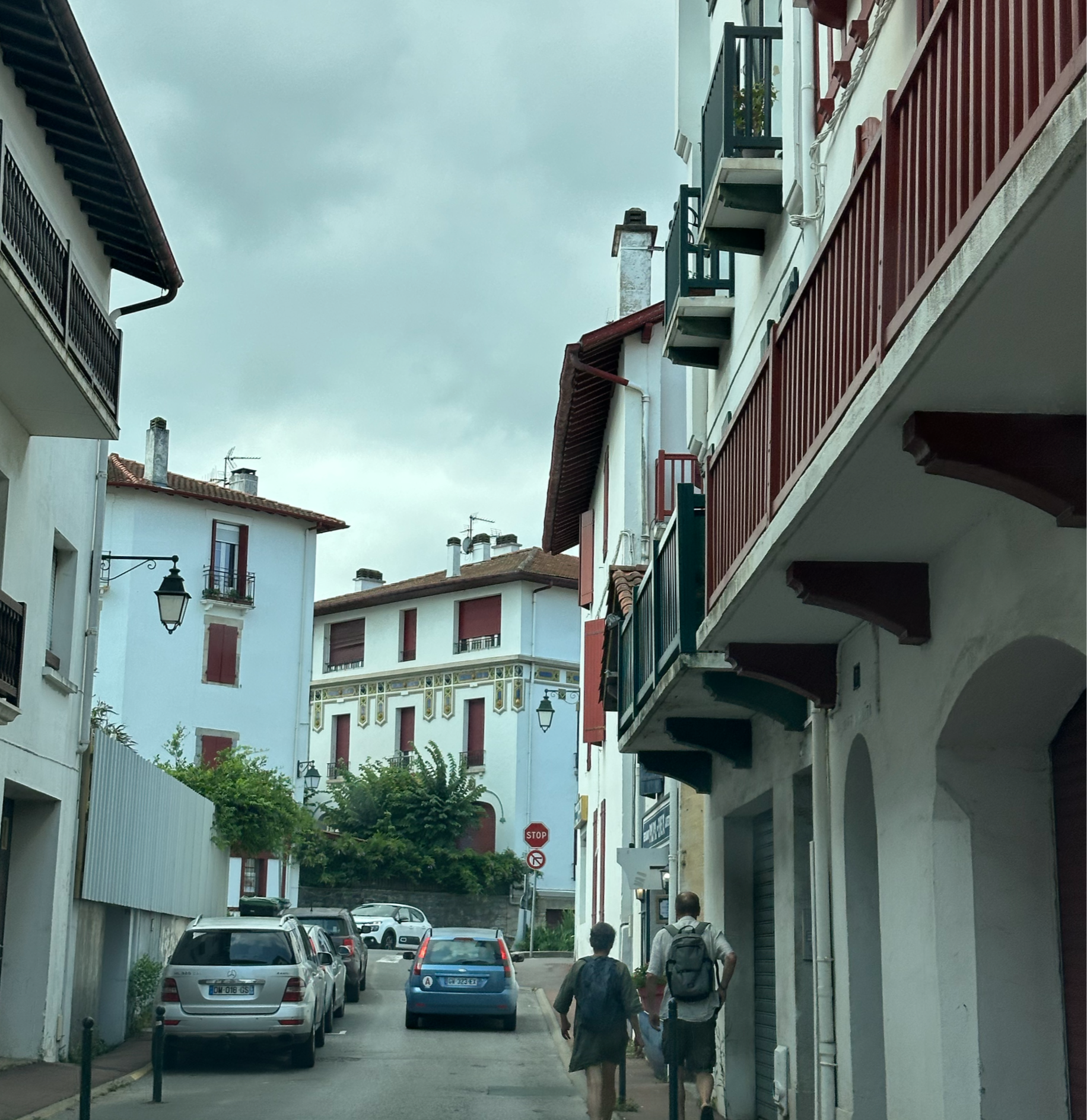
We could feel the change in the architecture as we entered the old town.
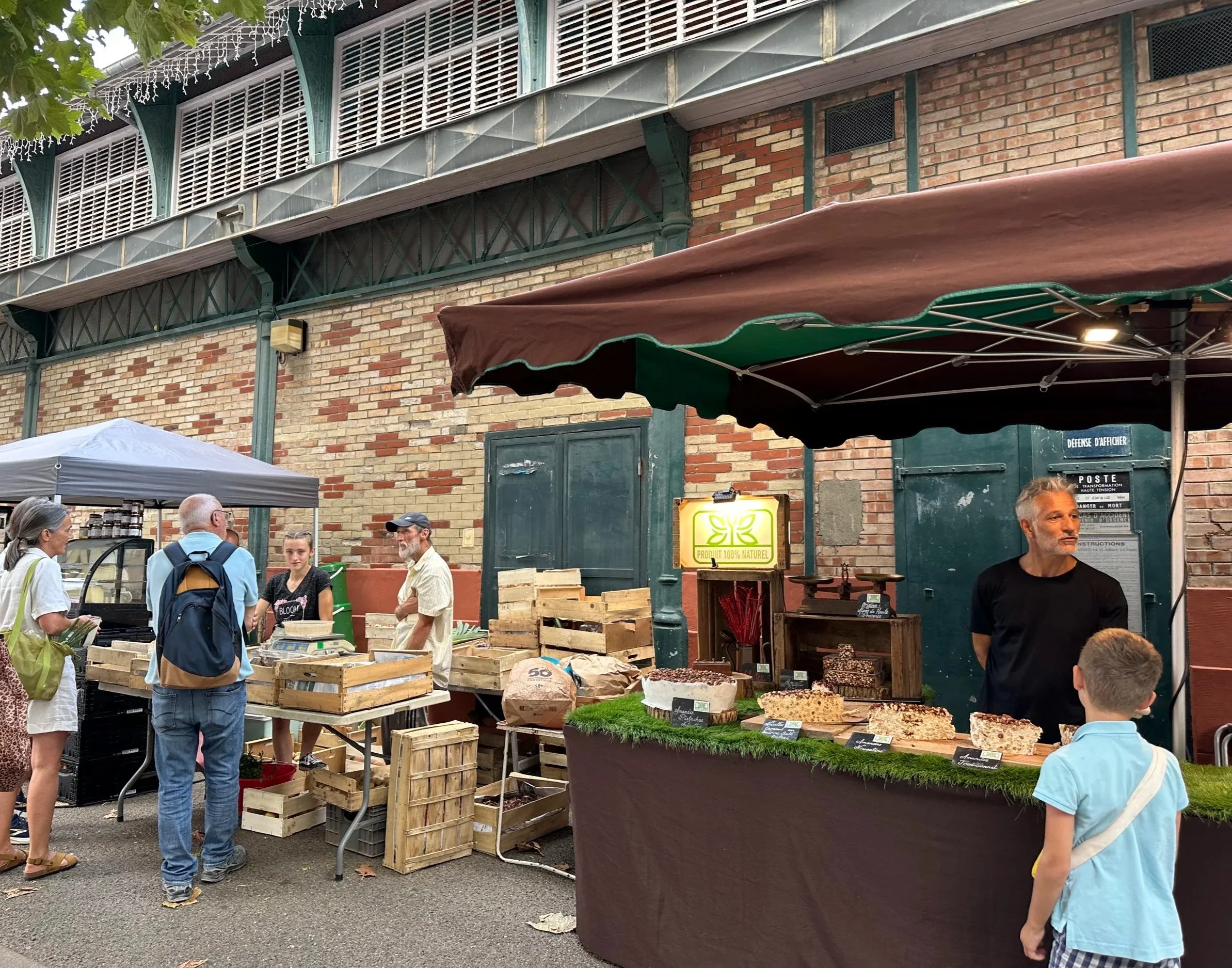
After we found parking-an adventure unto itself- we wandered into town and found an open air market to grab some breakfast.
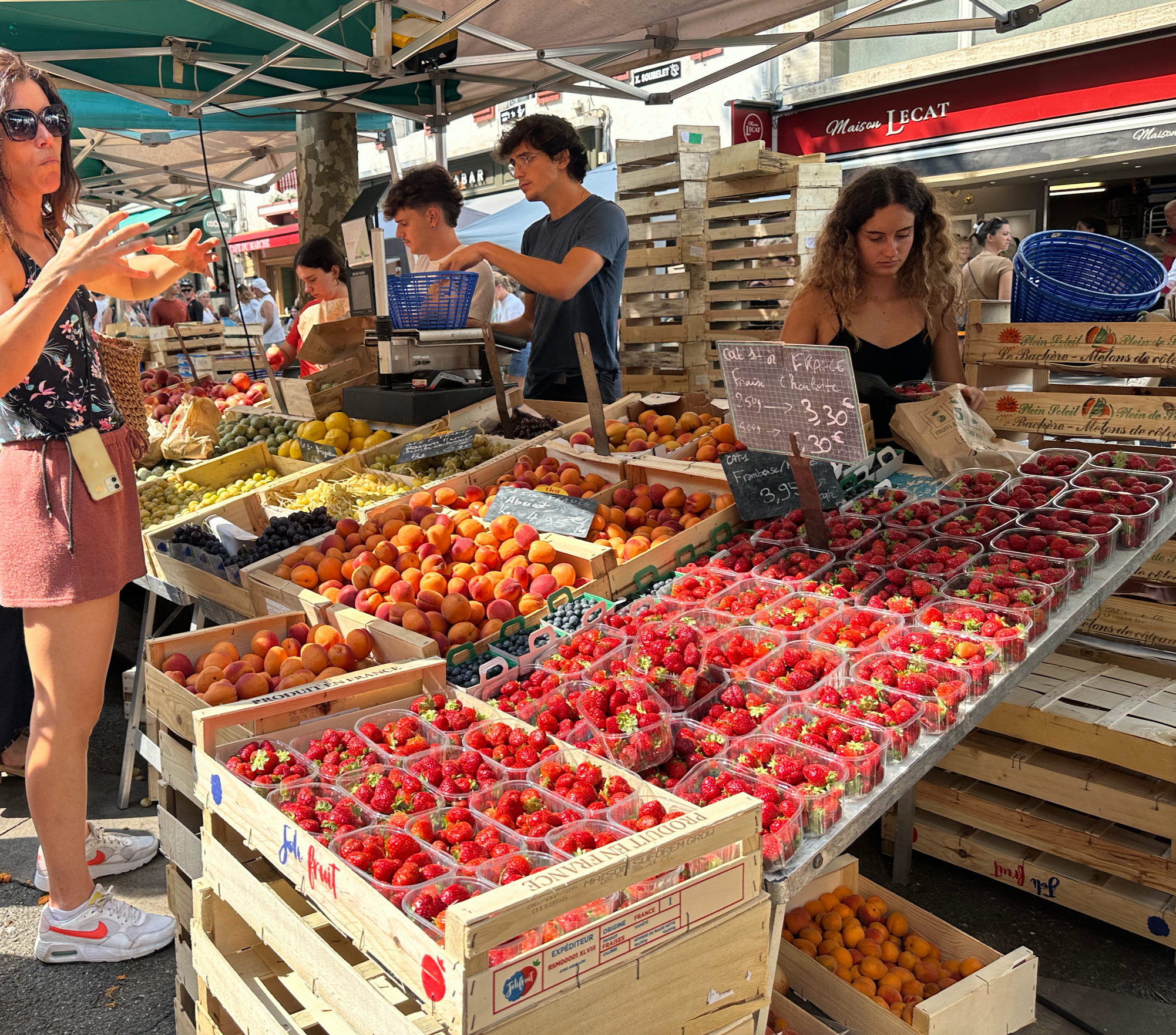
The fruits were beautiful!
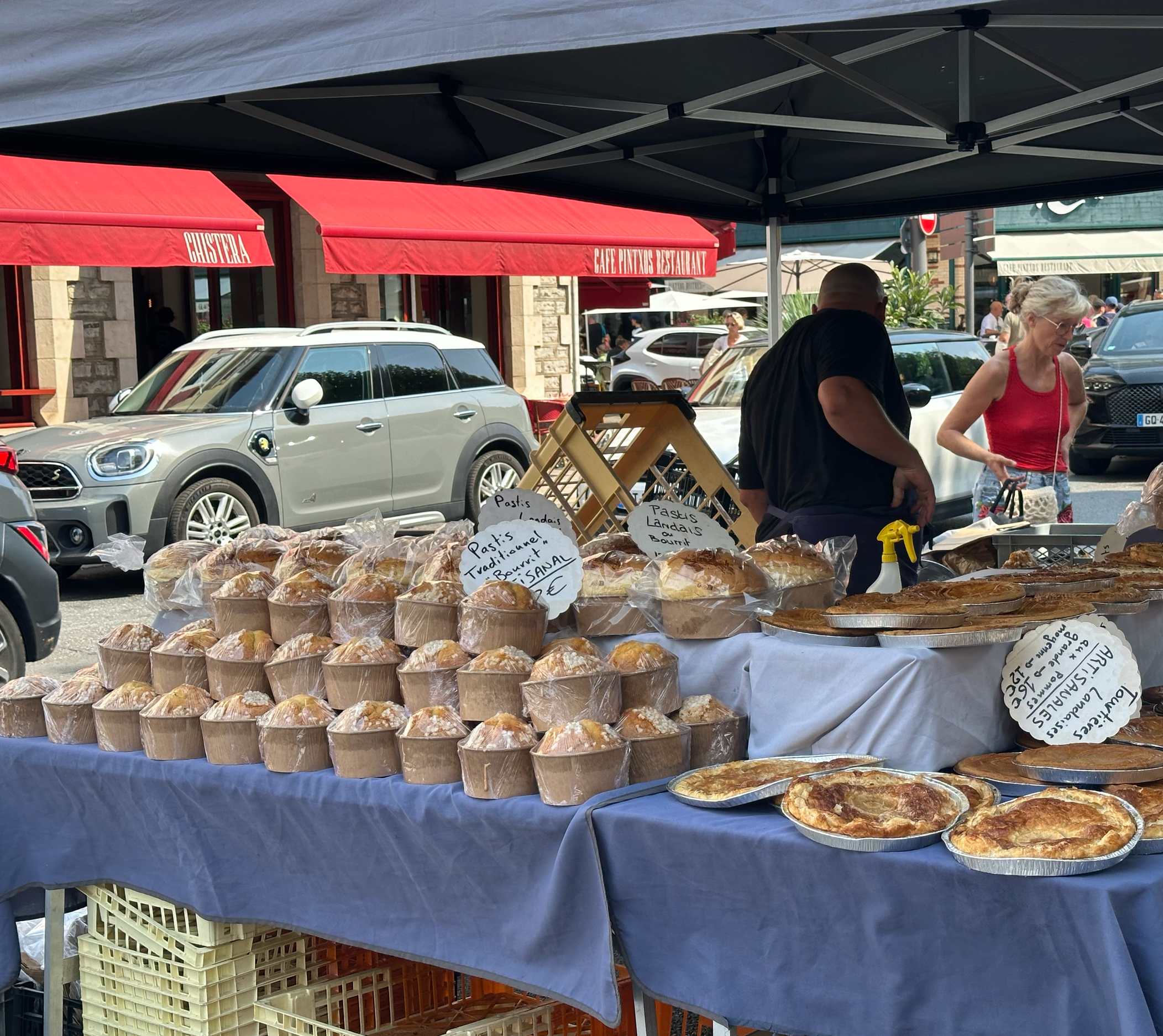
And there were lots of traditional breads and pastries.
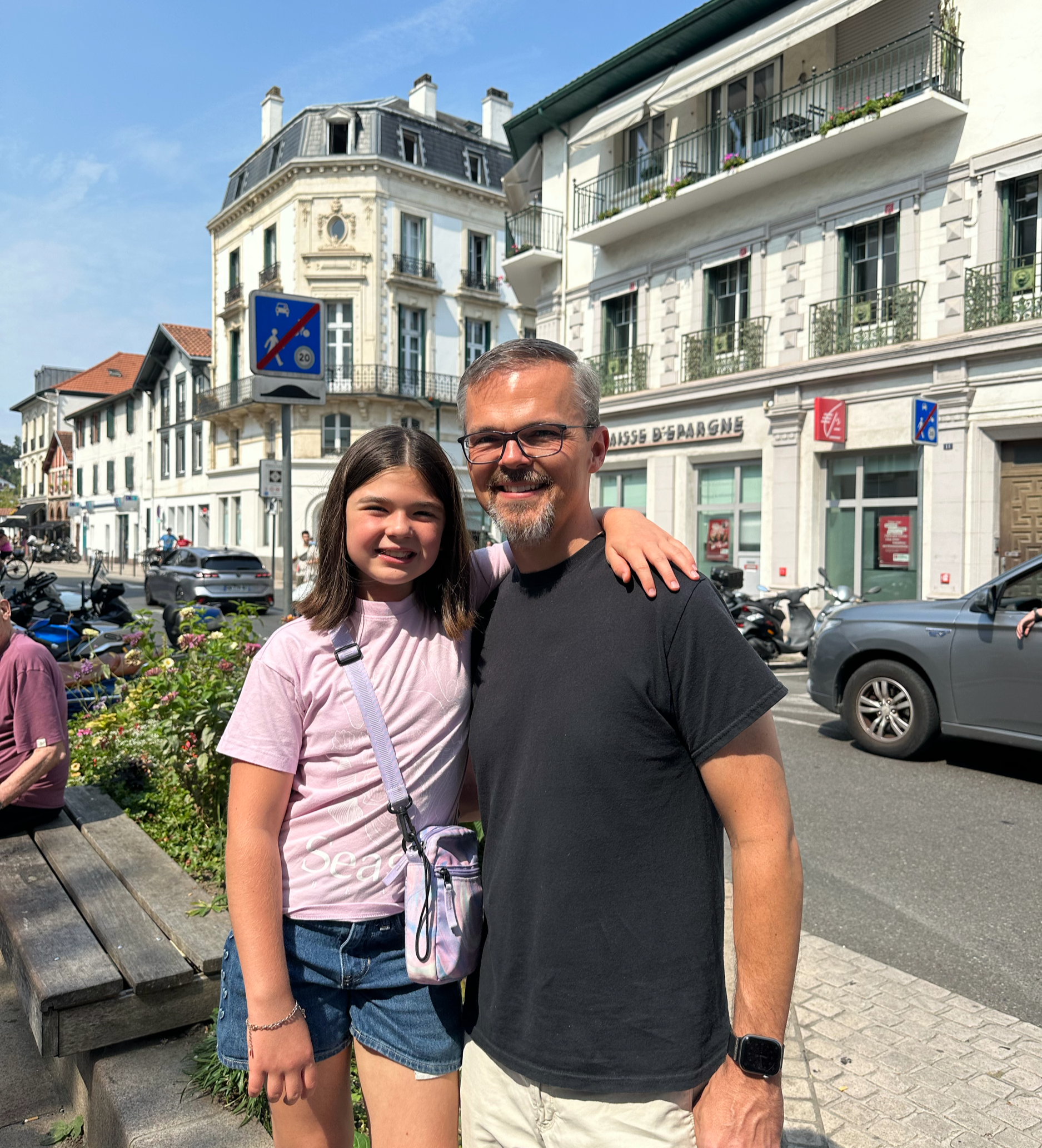
Enjoying the scenery!
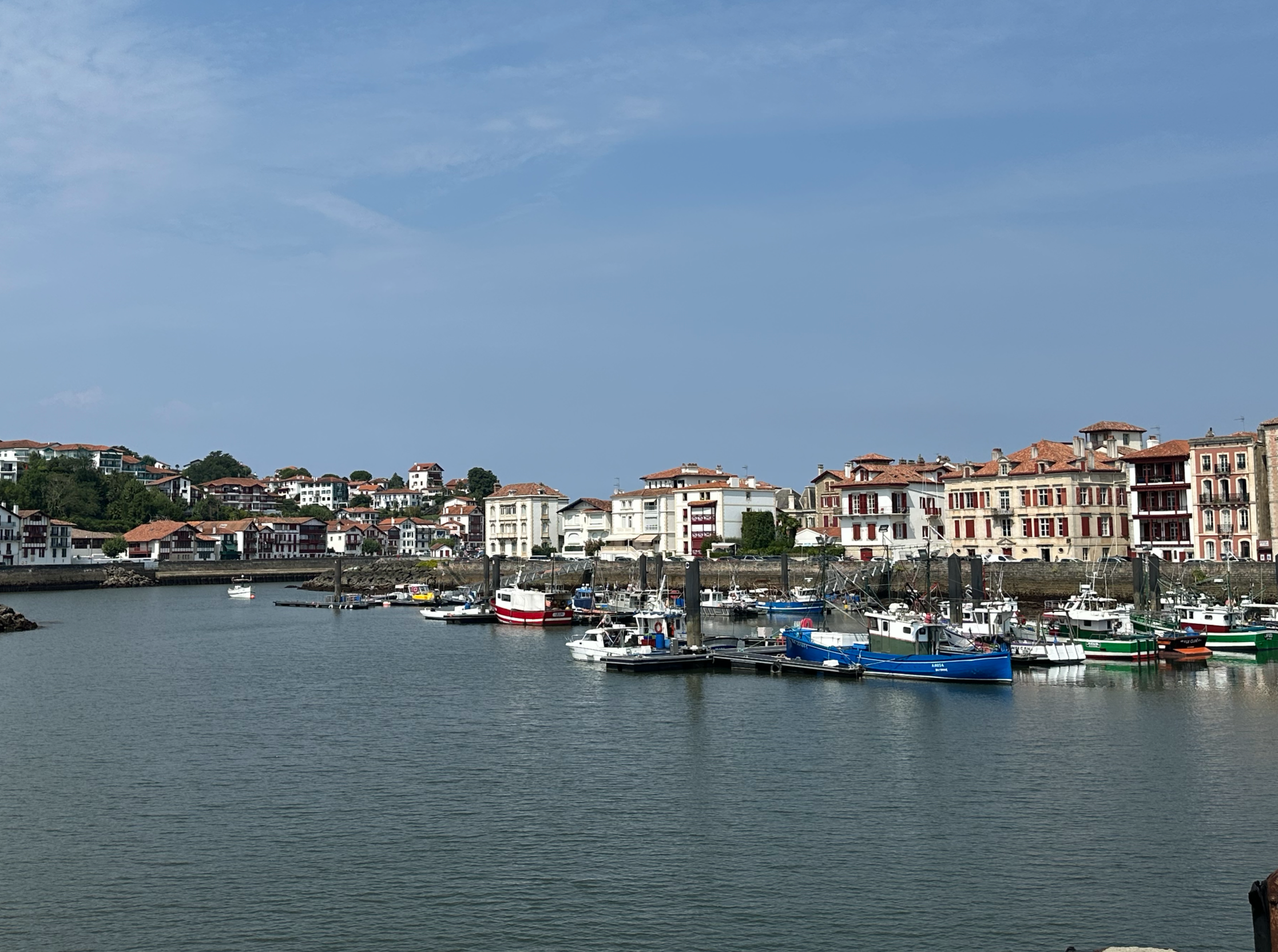
San Jean de Luz is on the Bay of Biscayne. This is the marina at one end of town.
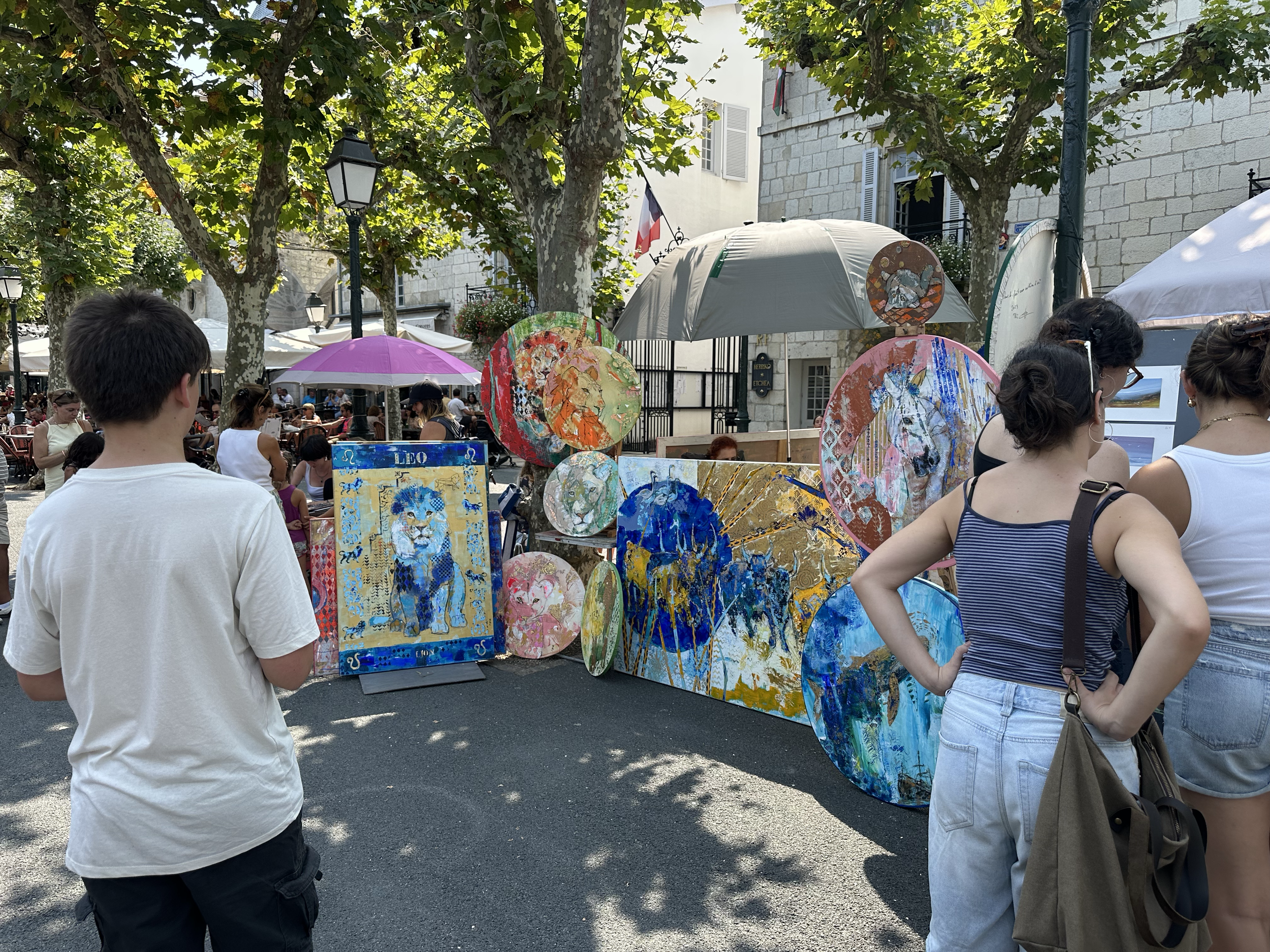
As we walked along the streets, we came across an art market and fell in love with these paintings.
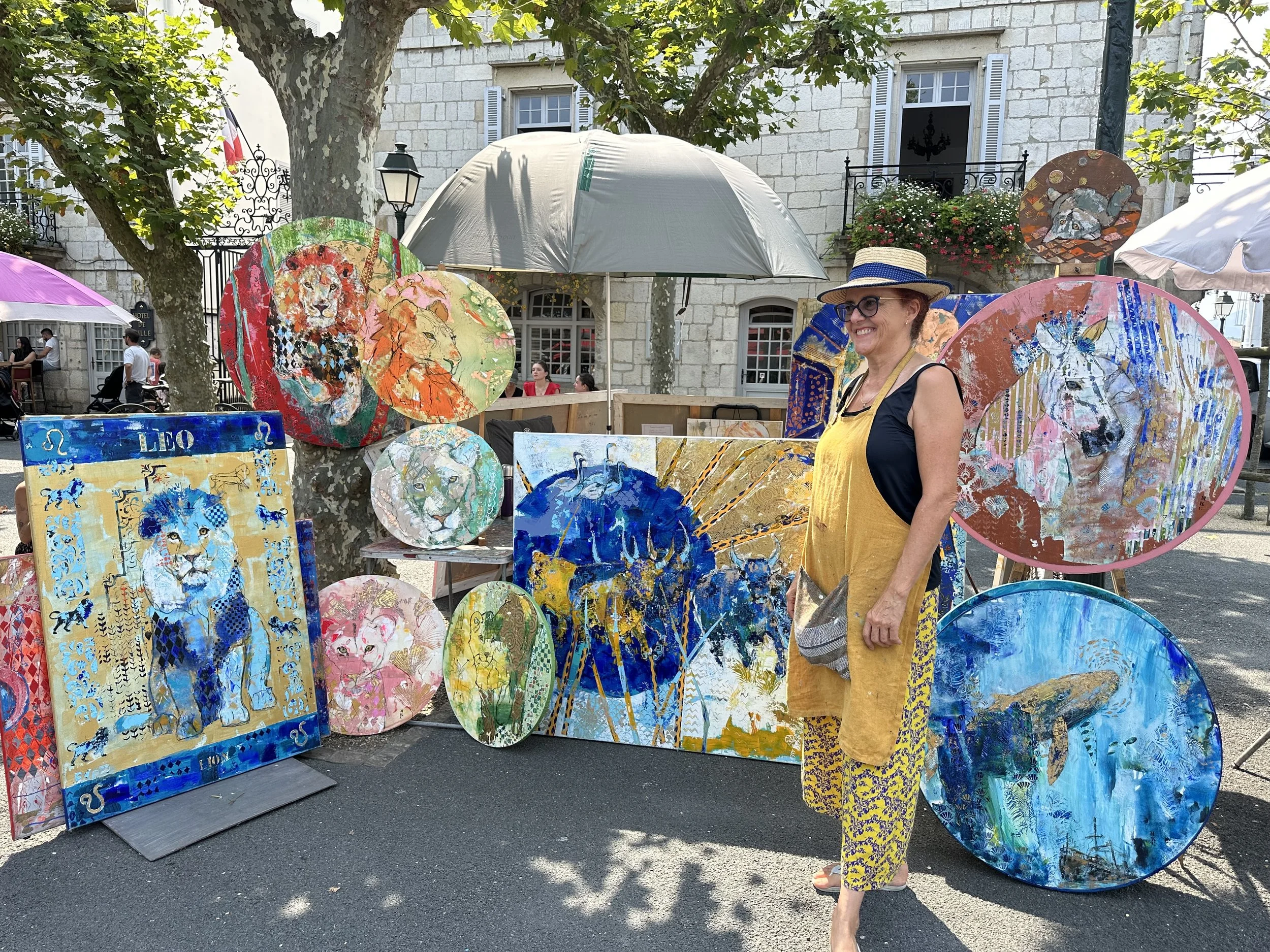
After talking to the artist, she even let me take a picture of her with her work. Joshua especially loved the blue lion painting.
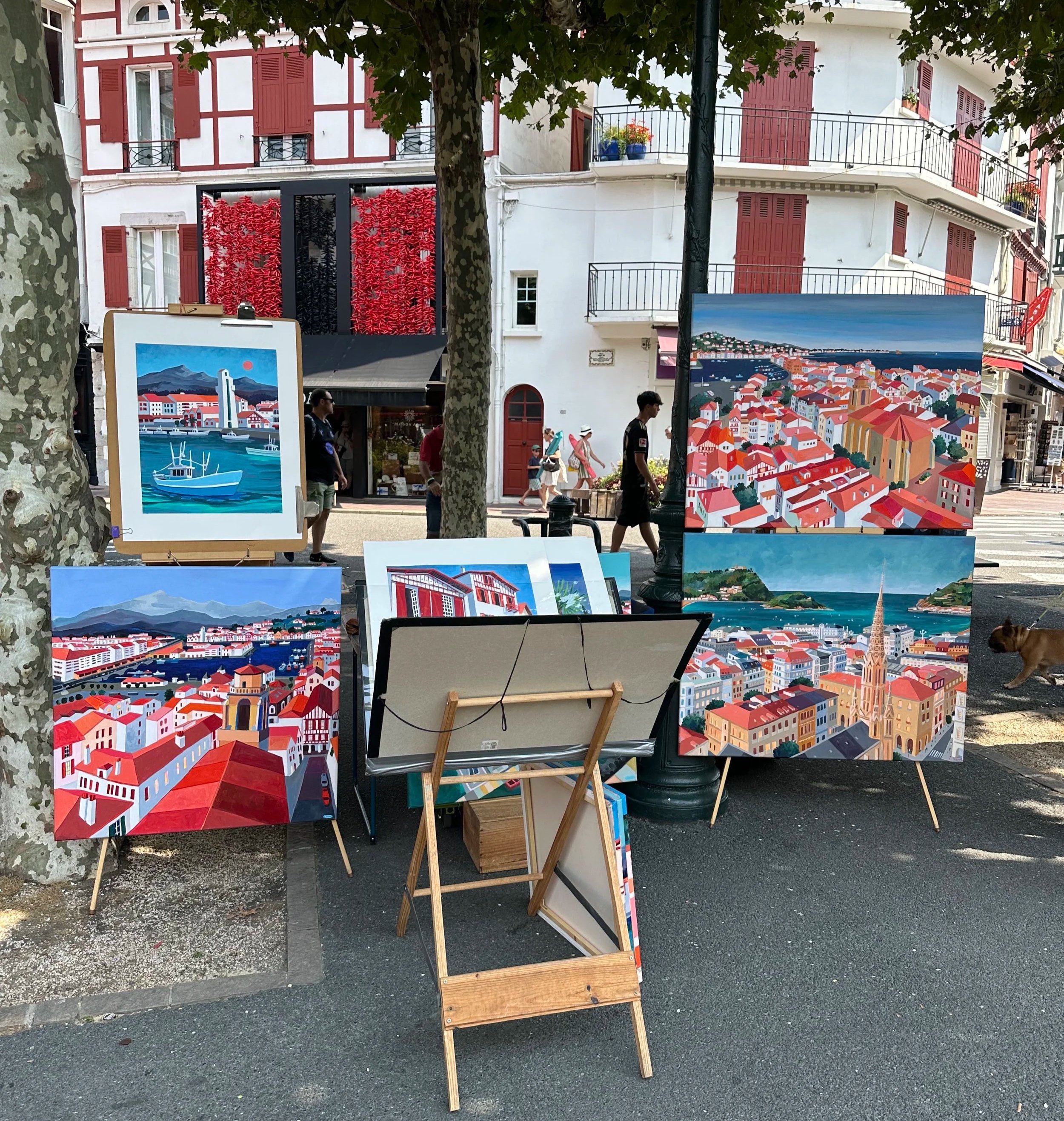
We really enjoyed these depictions of San Juan de Luz.
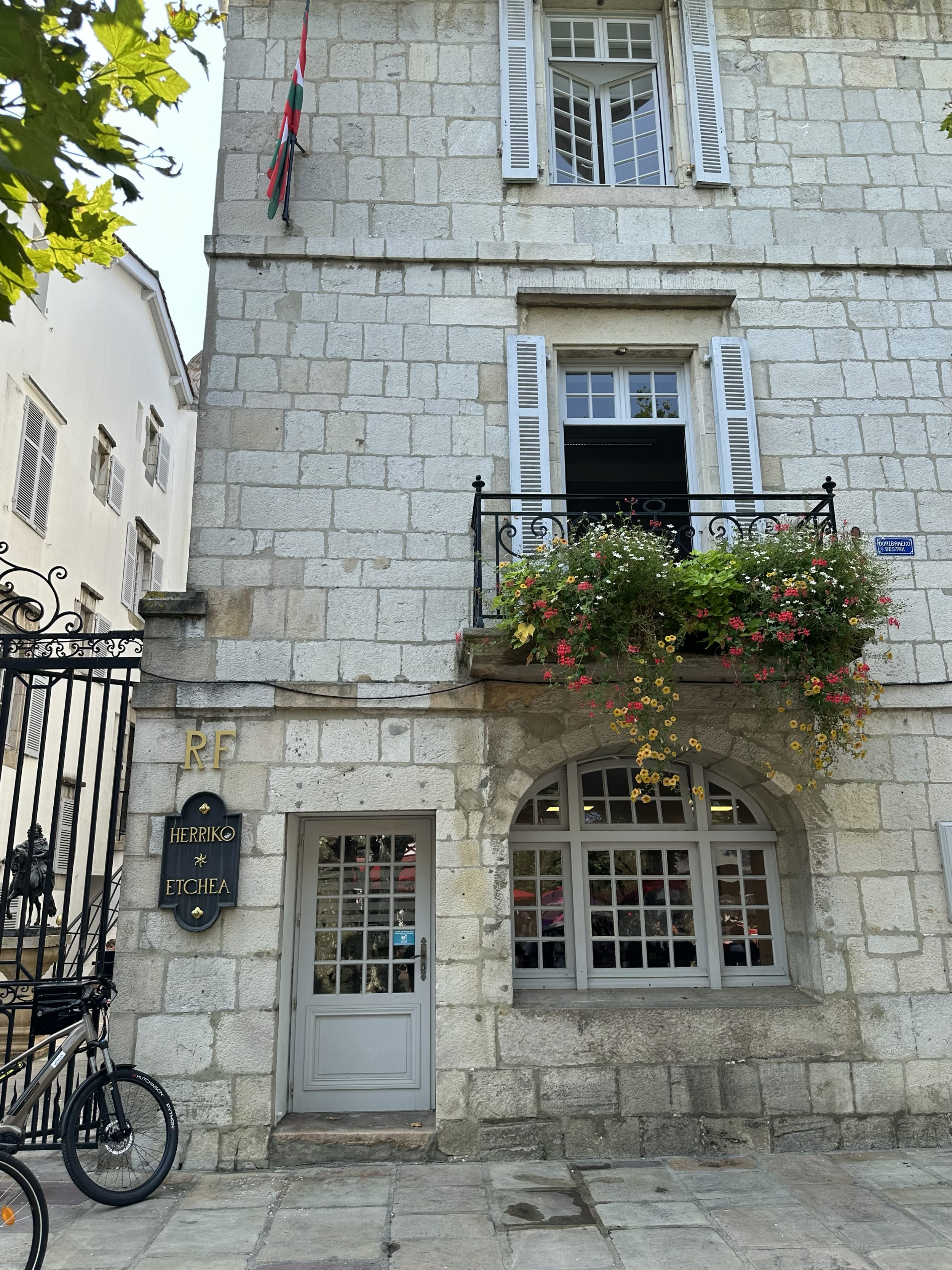
This feels like an iconic image of Europe- the stone, the windows, the balcony, the hanging baskets, and the bicycle.
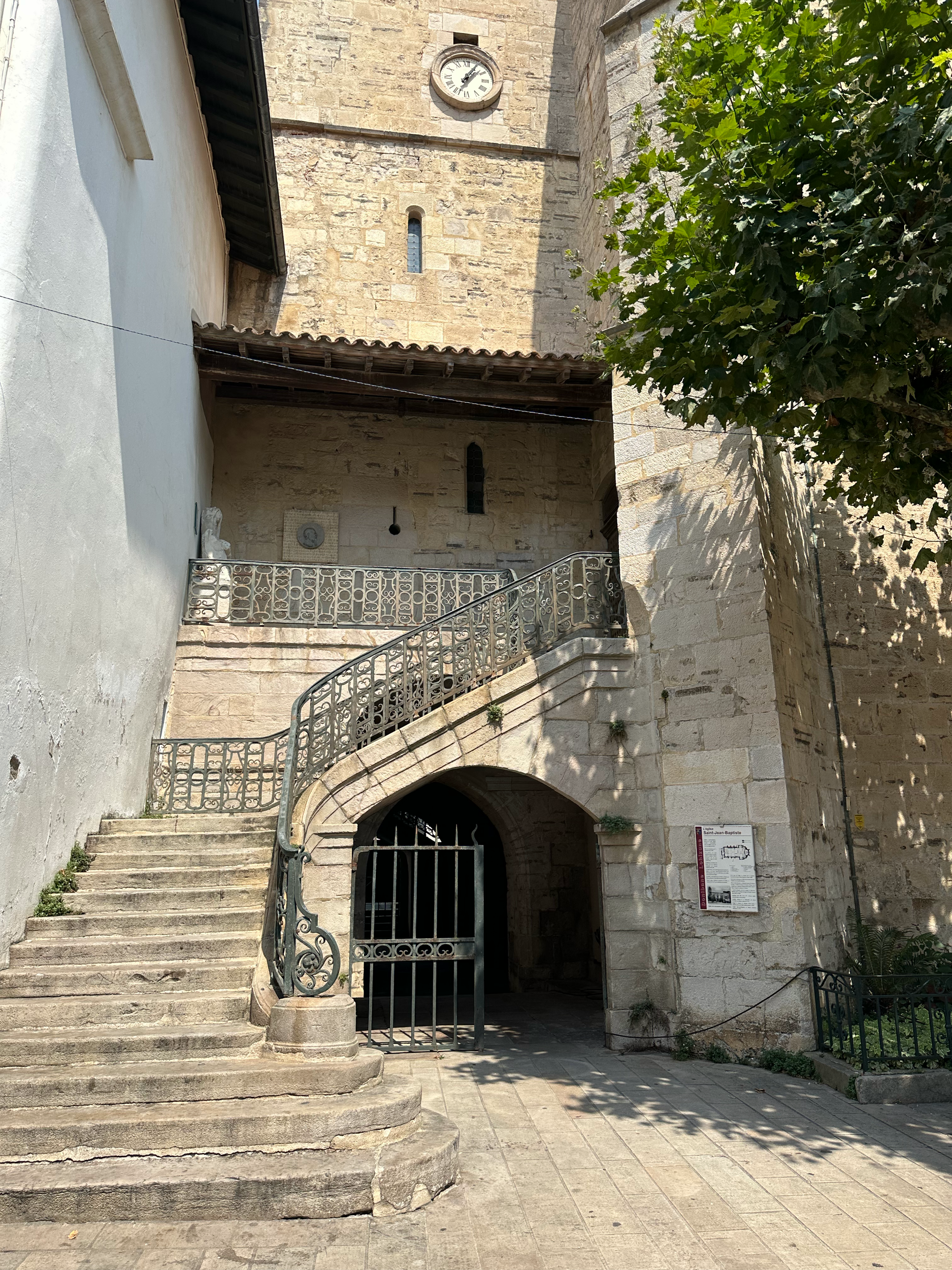
The entrance to The Church of St. John the Baptist, mostly made famous because Louis XIV was married to Maria Theresa of Spain in this church in 1660.
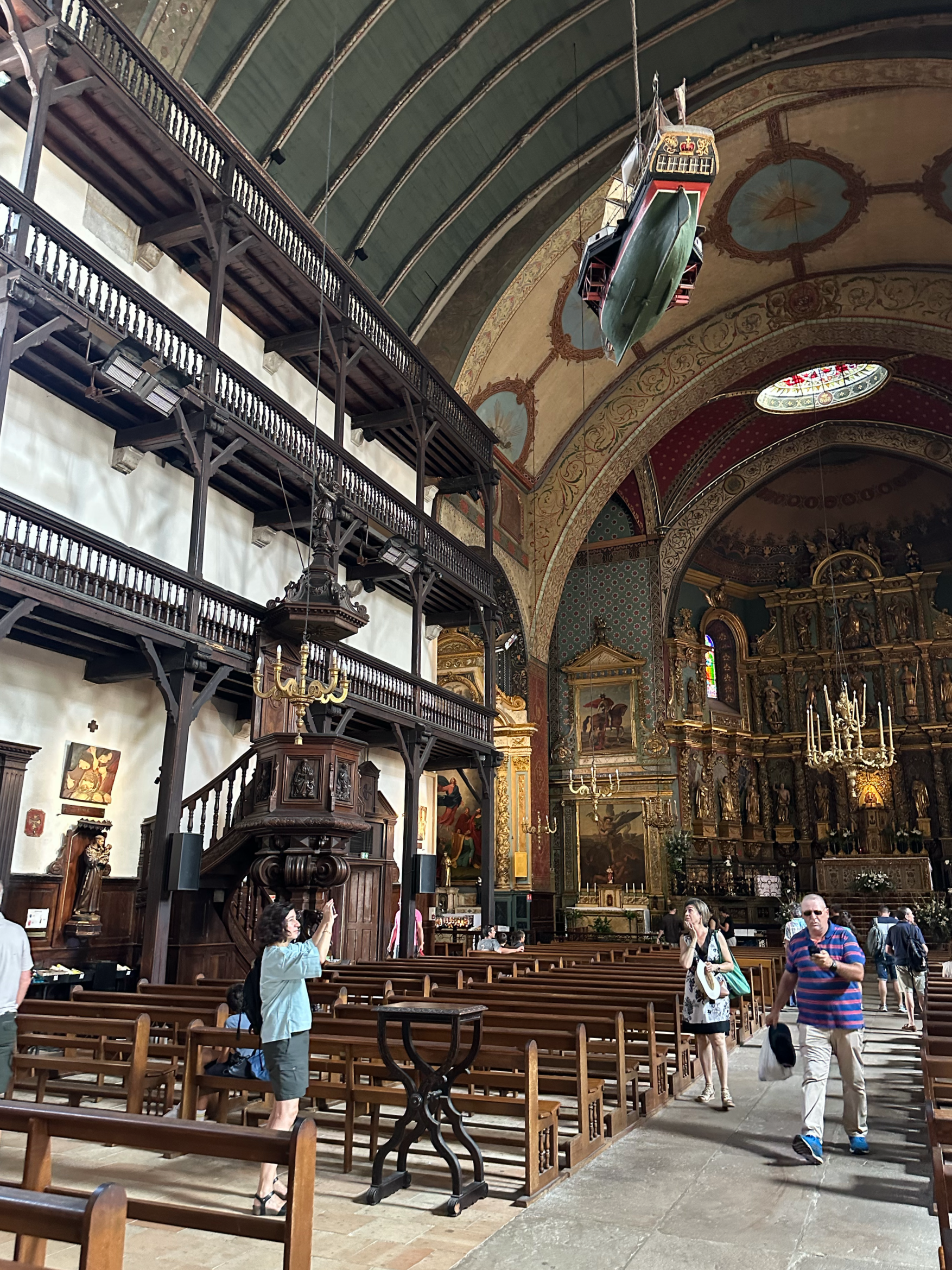
The church was very dark inside and curiously decorated with hanging boats!
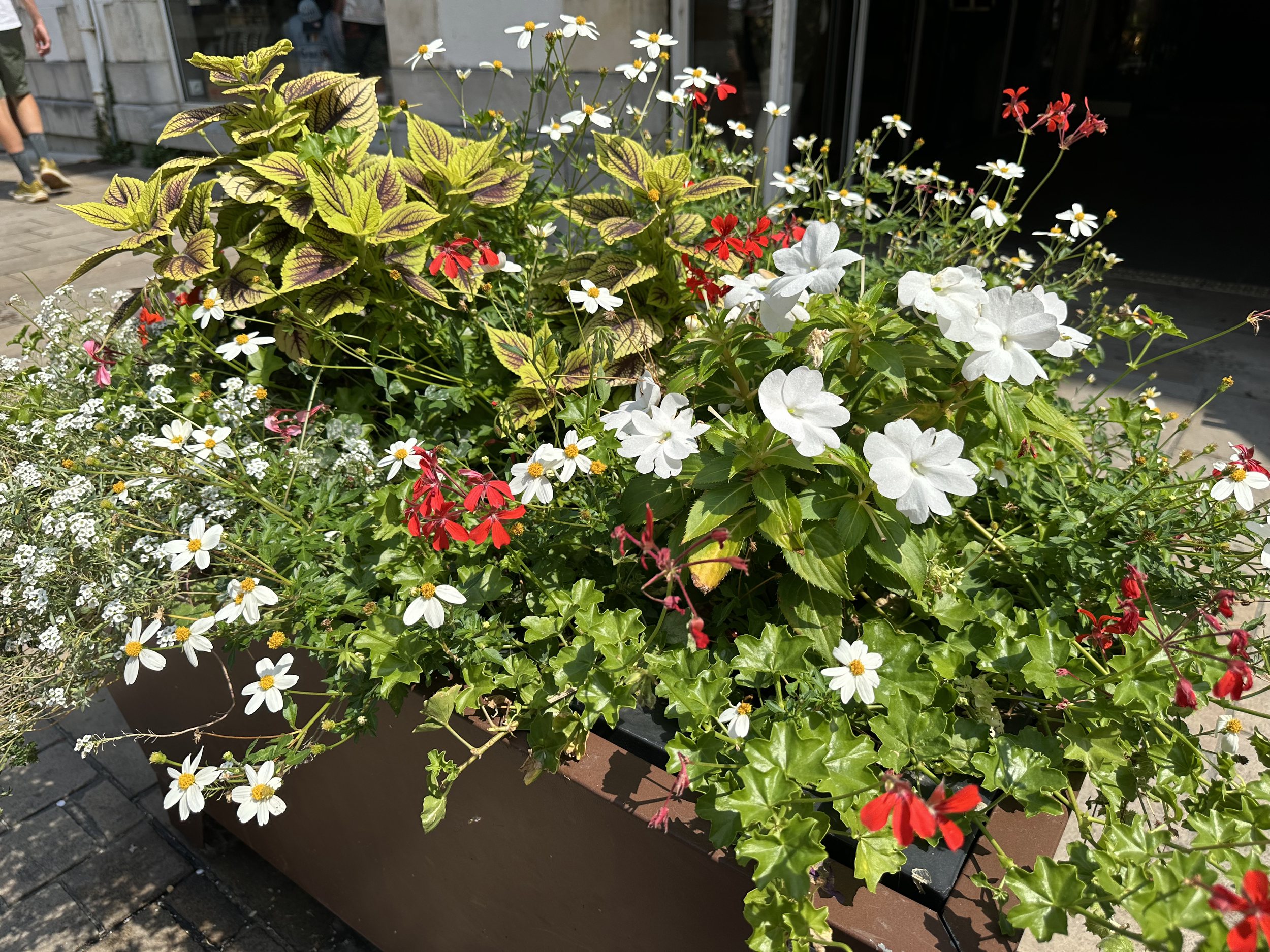
Beautiful flowers decorated the sidewalks of the town.
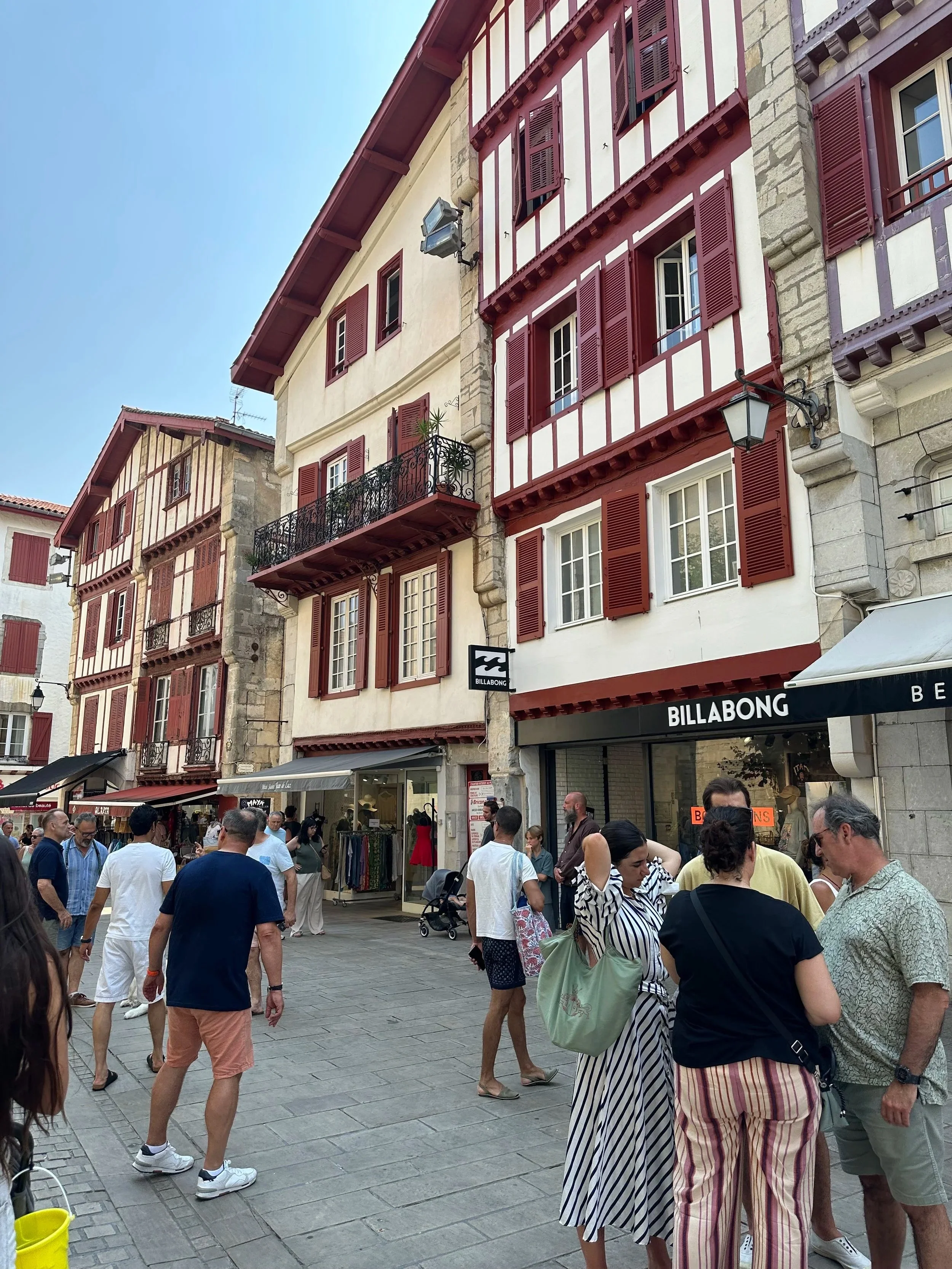
Old buildings and modern stores. I was surprised to see a Billabong in this small coastal town in France; but as it turns out, most of these coastal towns are also big surfing communities.
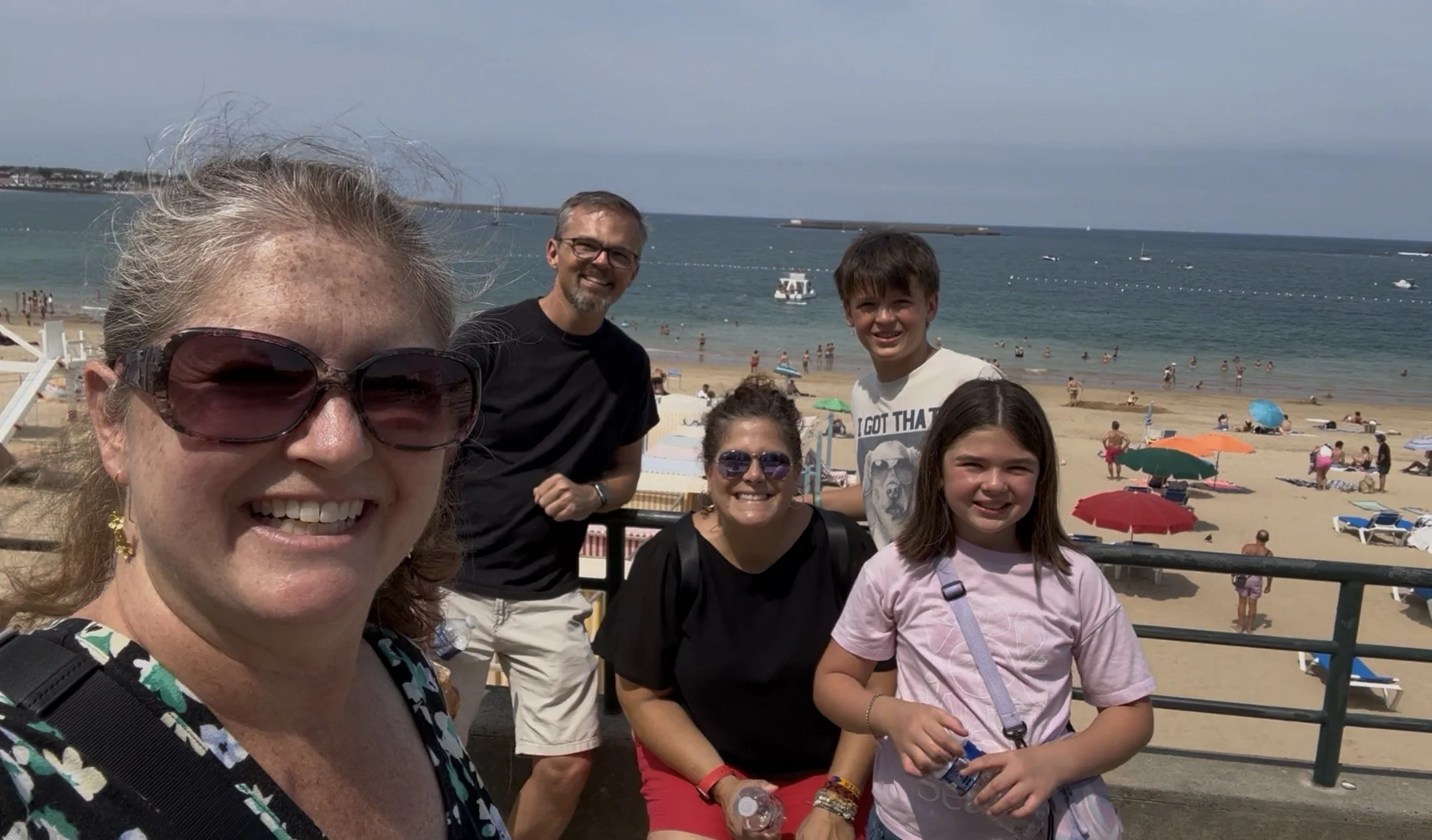
Although we weren't dressed for the beach, it was still a beautiful day to explore with Srta. U.
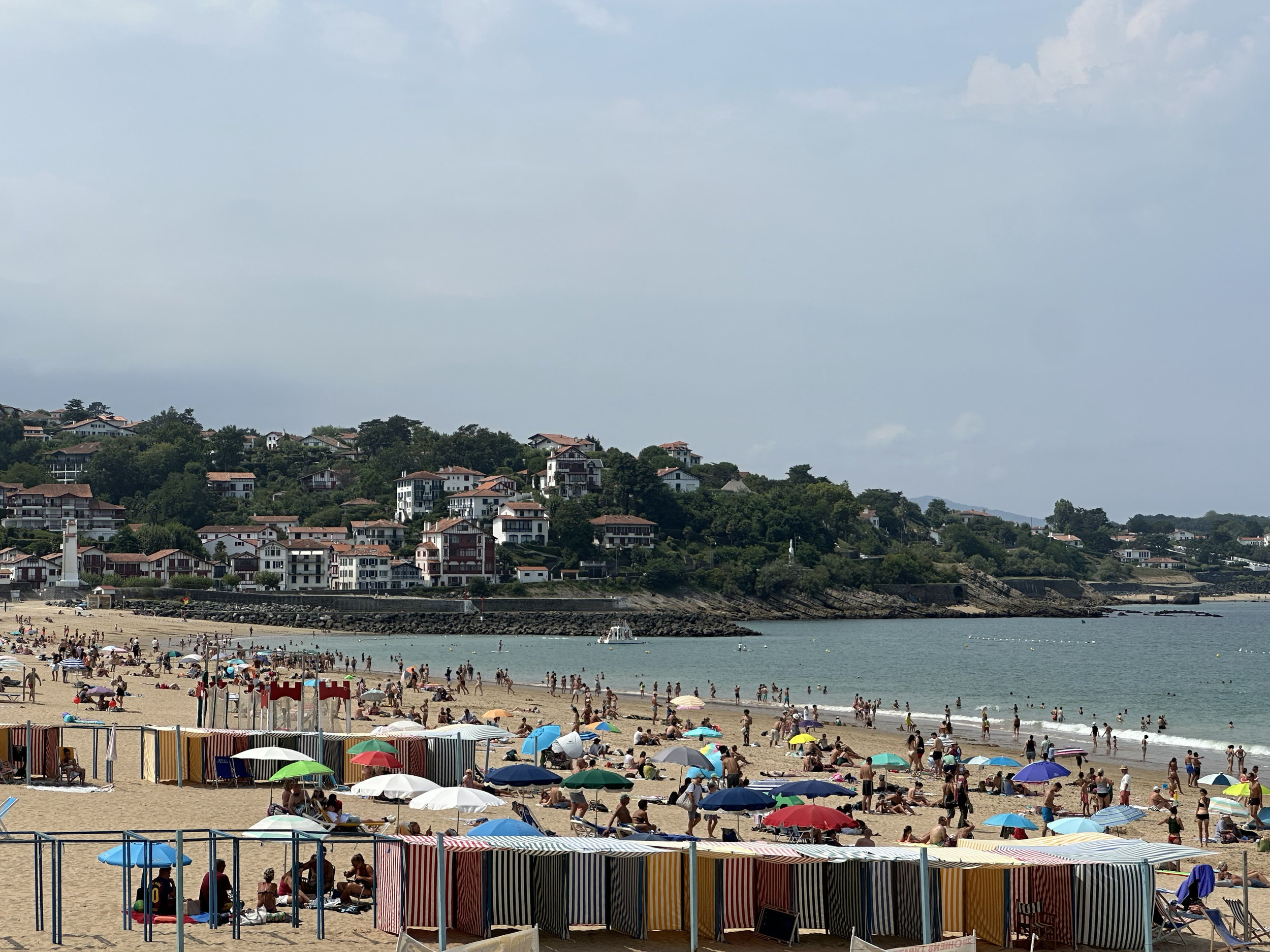
The juxtaposition of the hills, villas, and beach with colorful changing tents felt like stepping back in time.
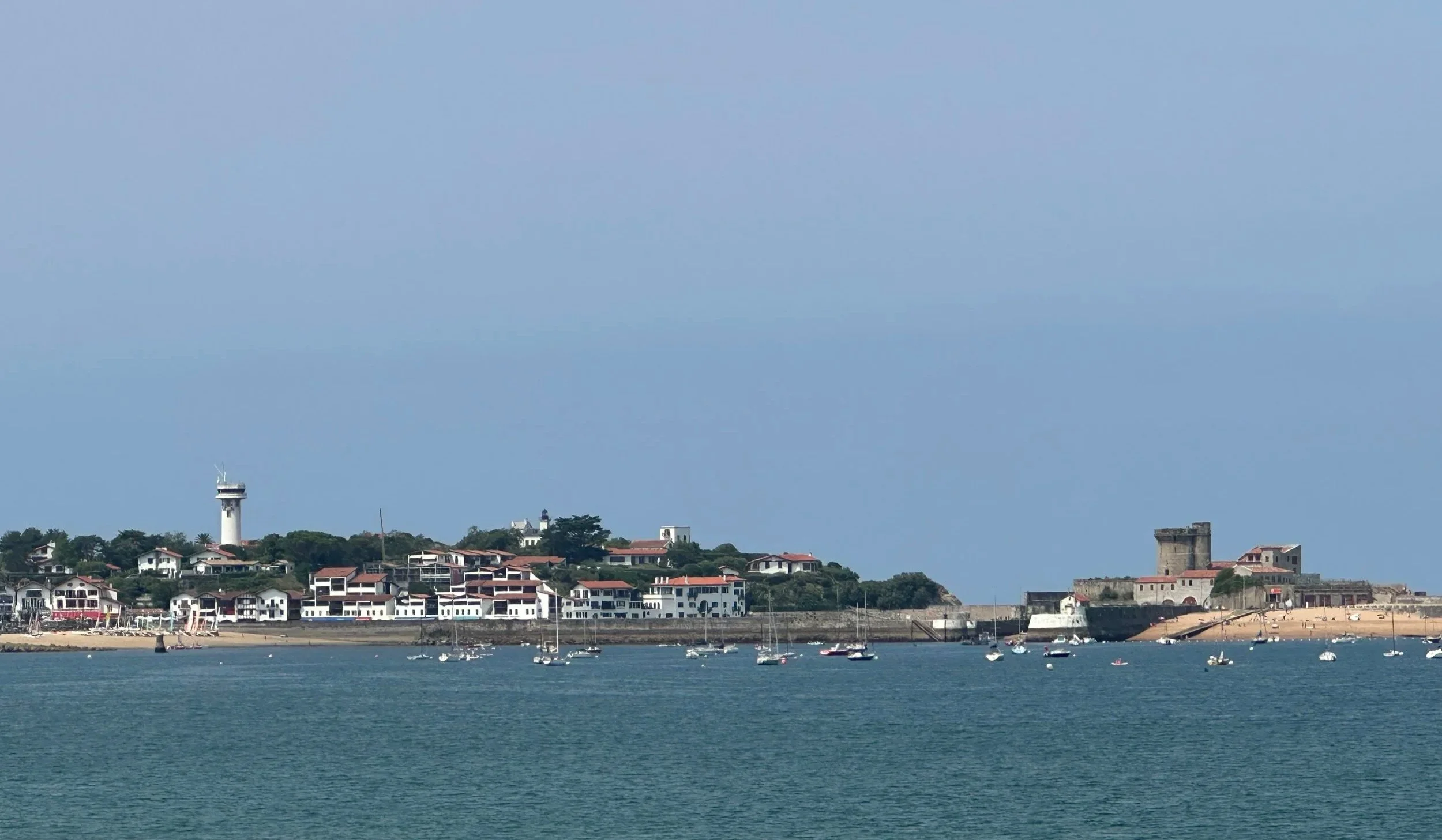
The beach is part of a half circlular bay with a peninsula and barrier island protecting the bay of San Juan de Luz from the Bay of Biscayne.
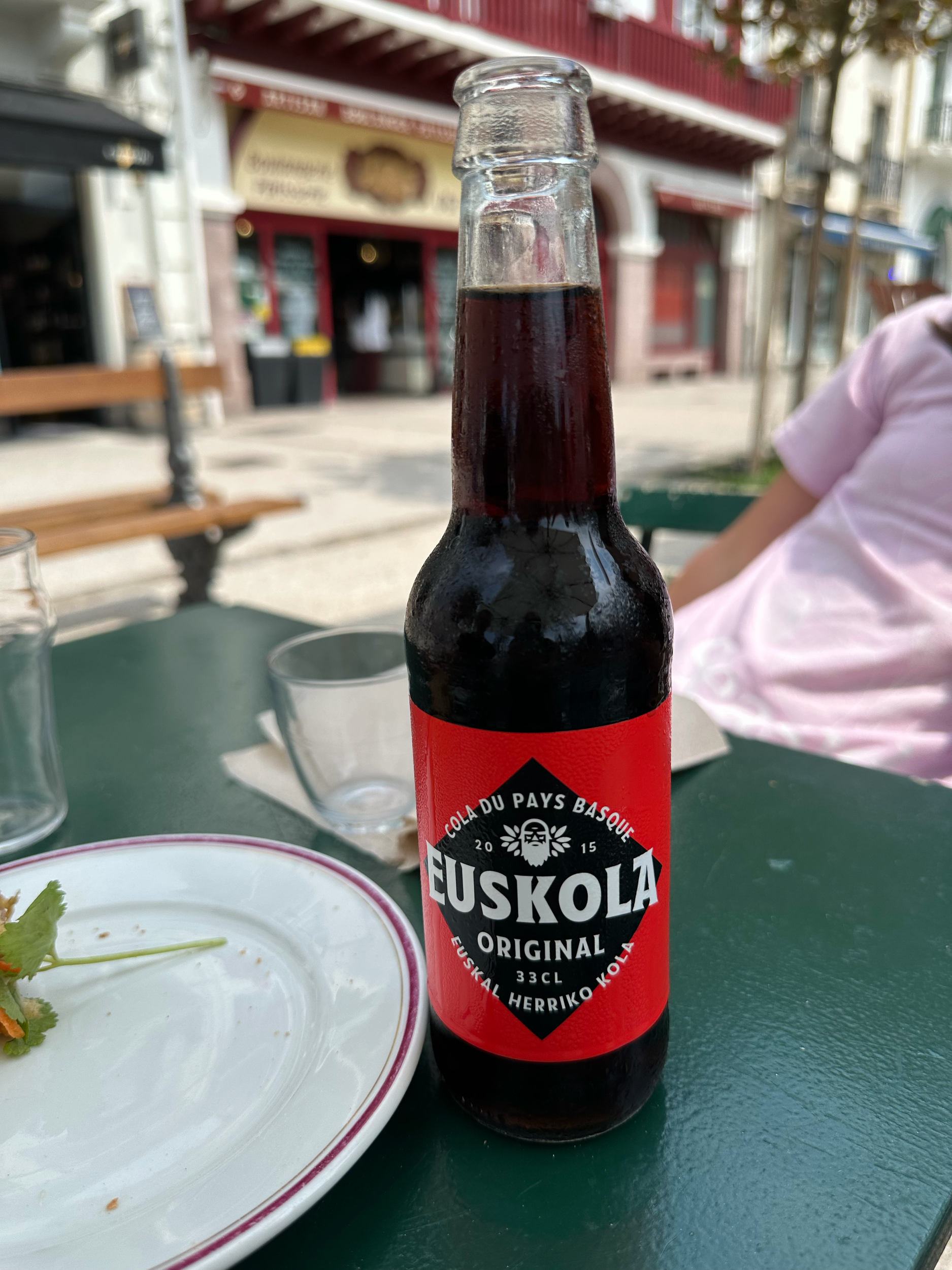
The Basque version of Coca-cola. Hey- we're supporting a local French Basque company!
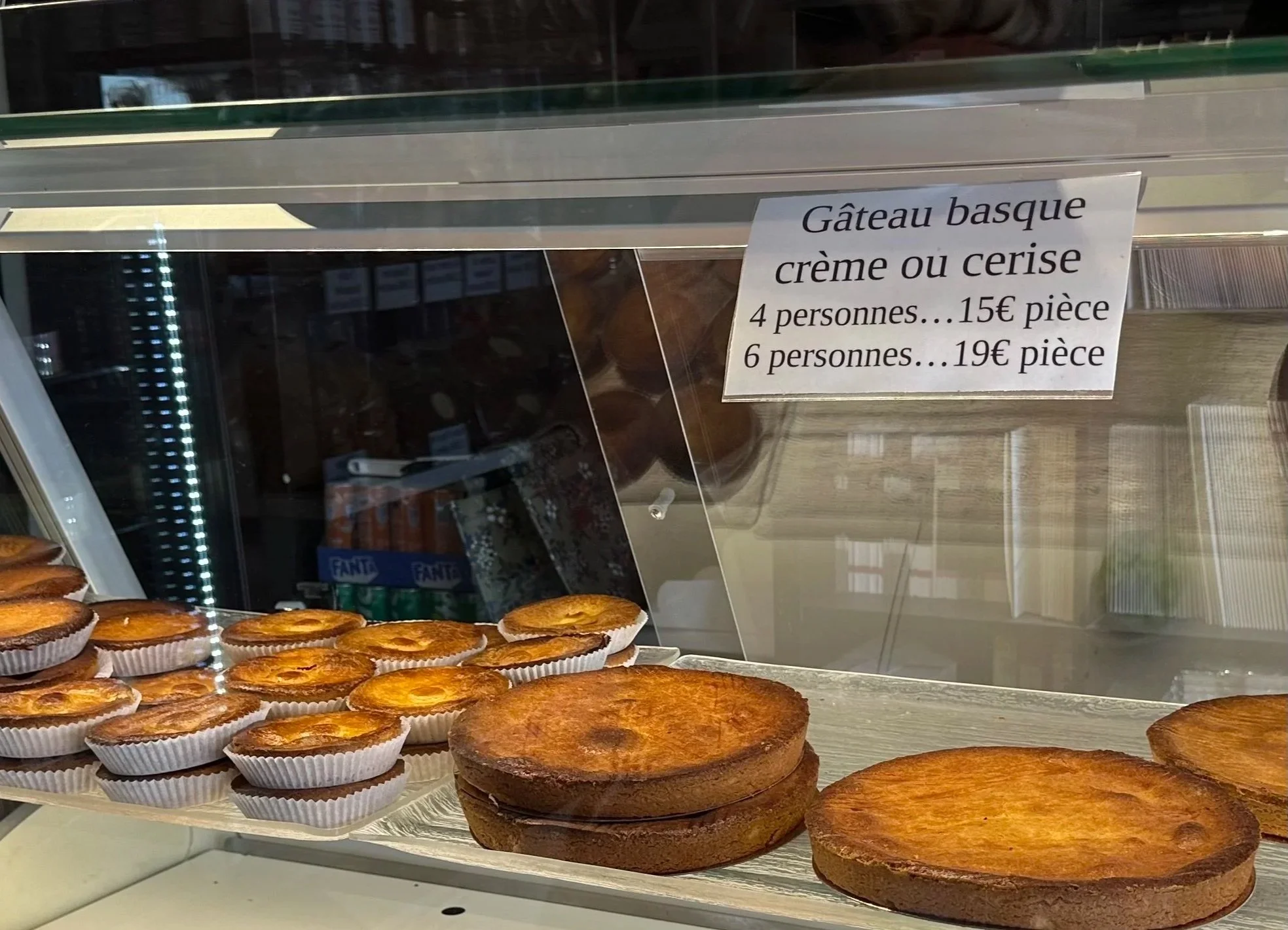
Traditional Basque pies (Gateau basque) are a delicious dessert with a cream or a black cherry jam in the center.
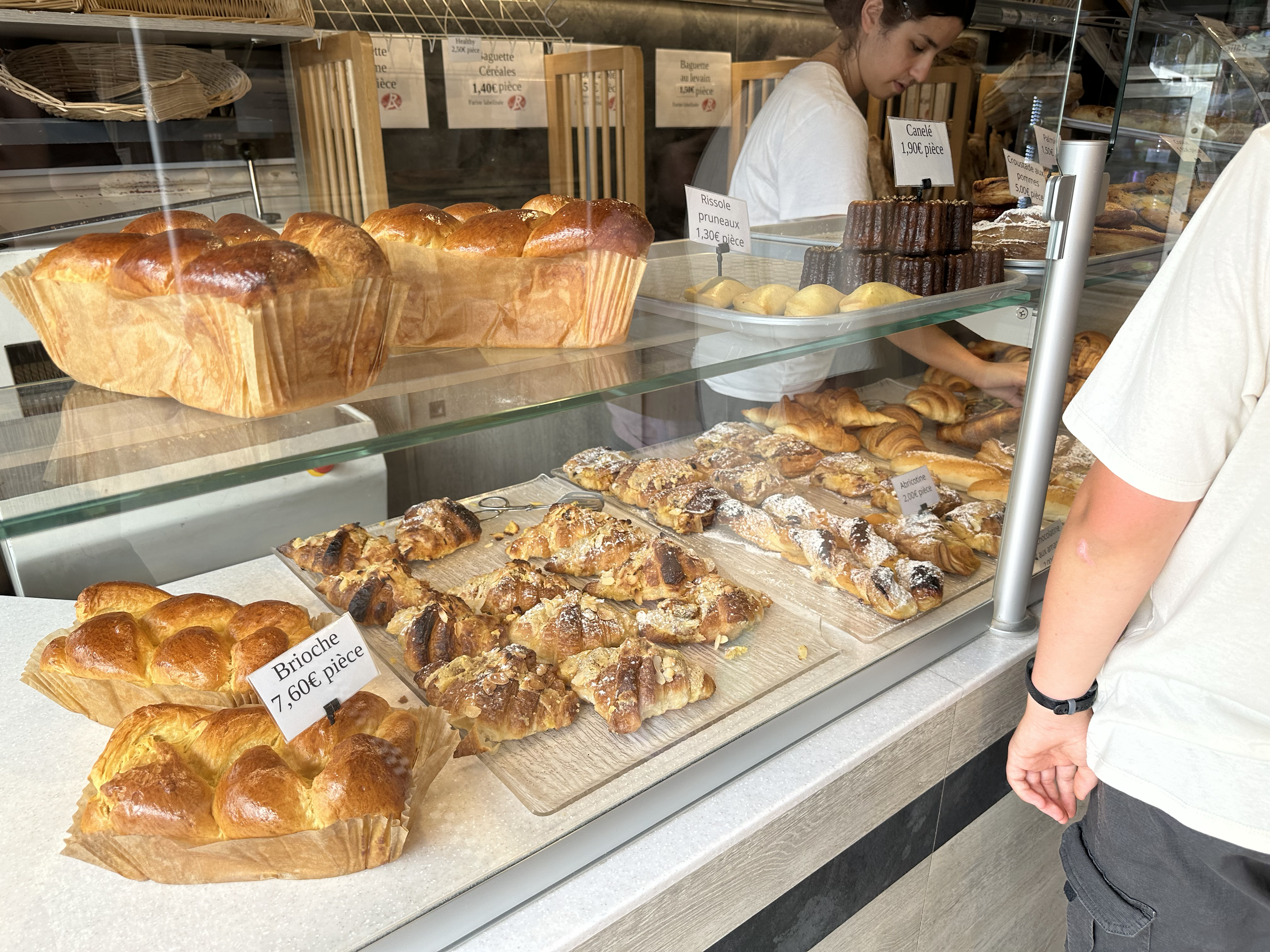
More beautiful breads!
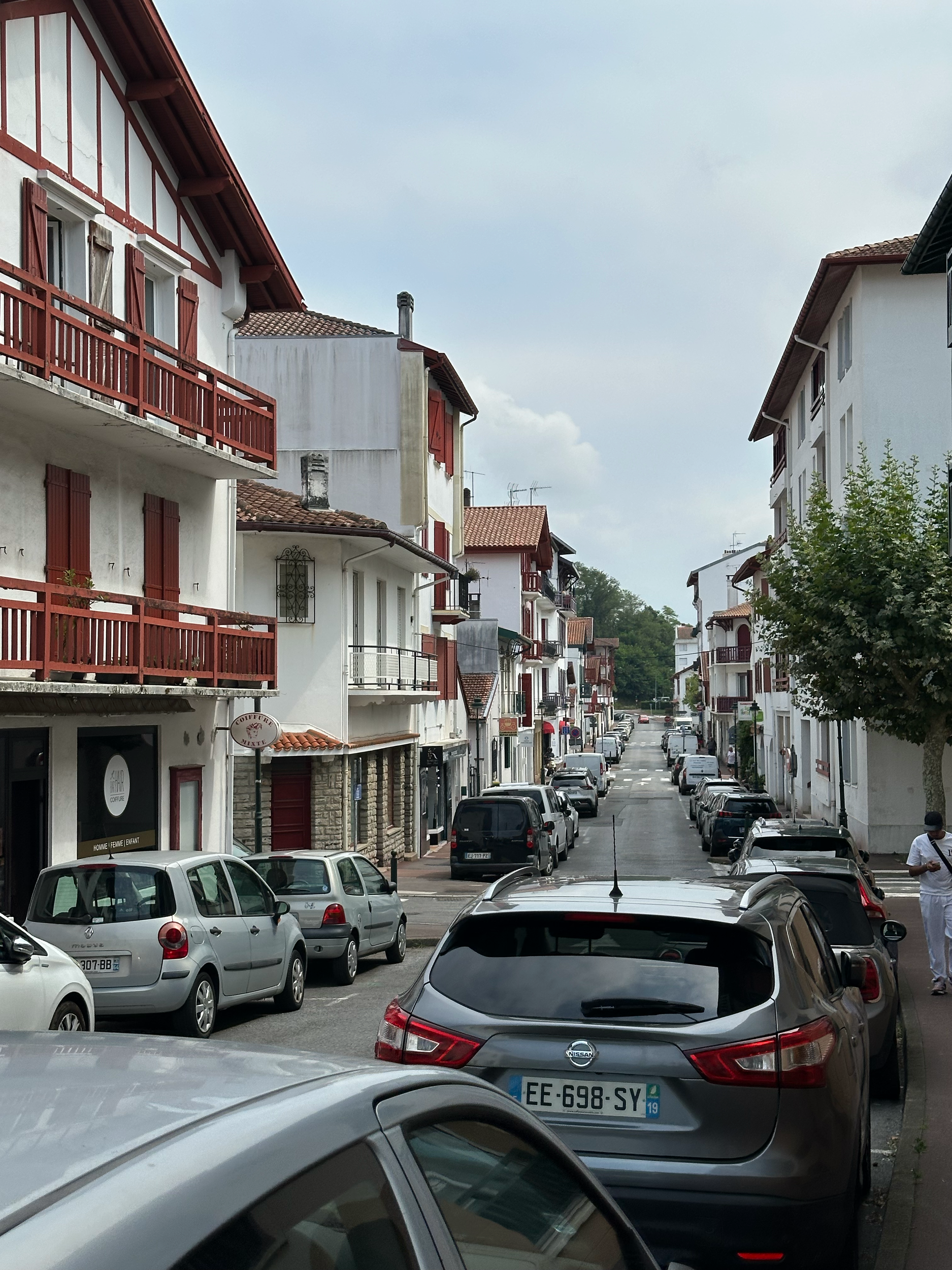
After lunch, we headed back to our car parked in a local neighborhood. Off to the next adventure!
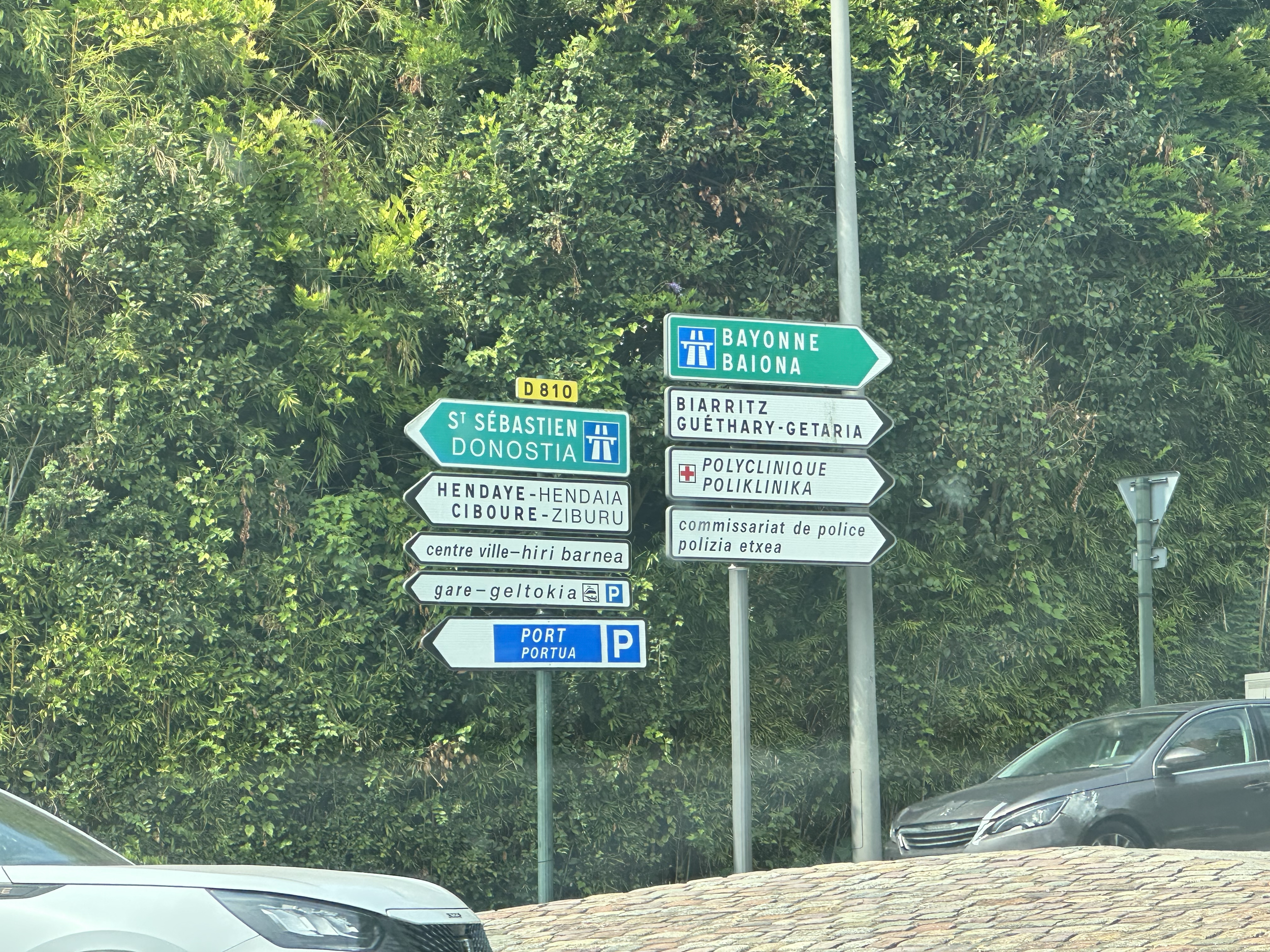
From San Jean de Luz, we headed further east into France to visit another coastal town, Biarritz. There are many stories from driving and parking in these little towns!
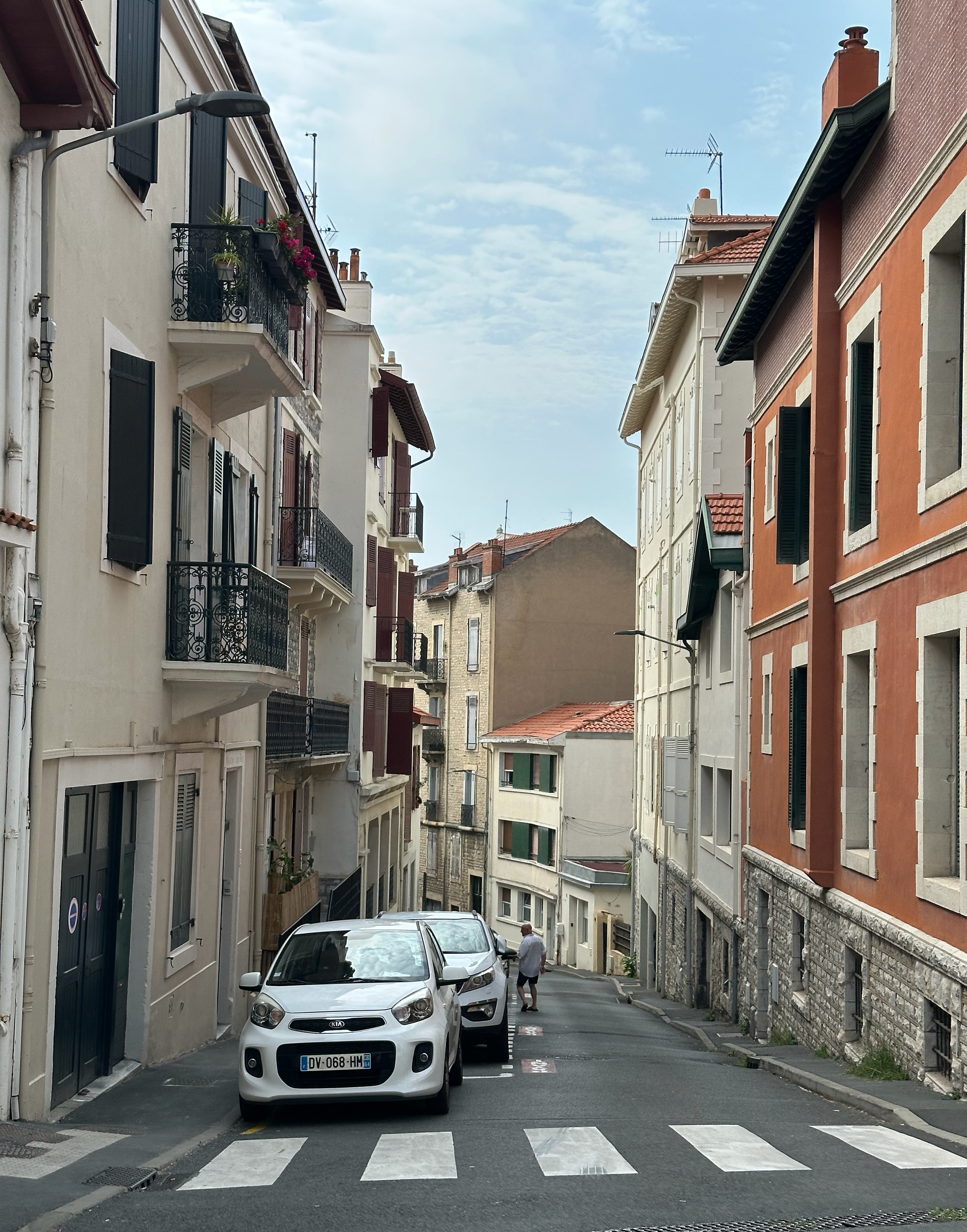
Biarritz had a lot more streets with steep inclines (and declines). Again, we parked outside of the old town in a neighborhood.
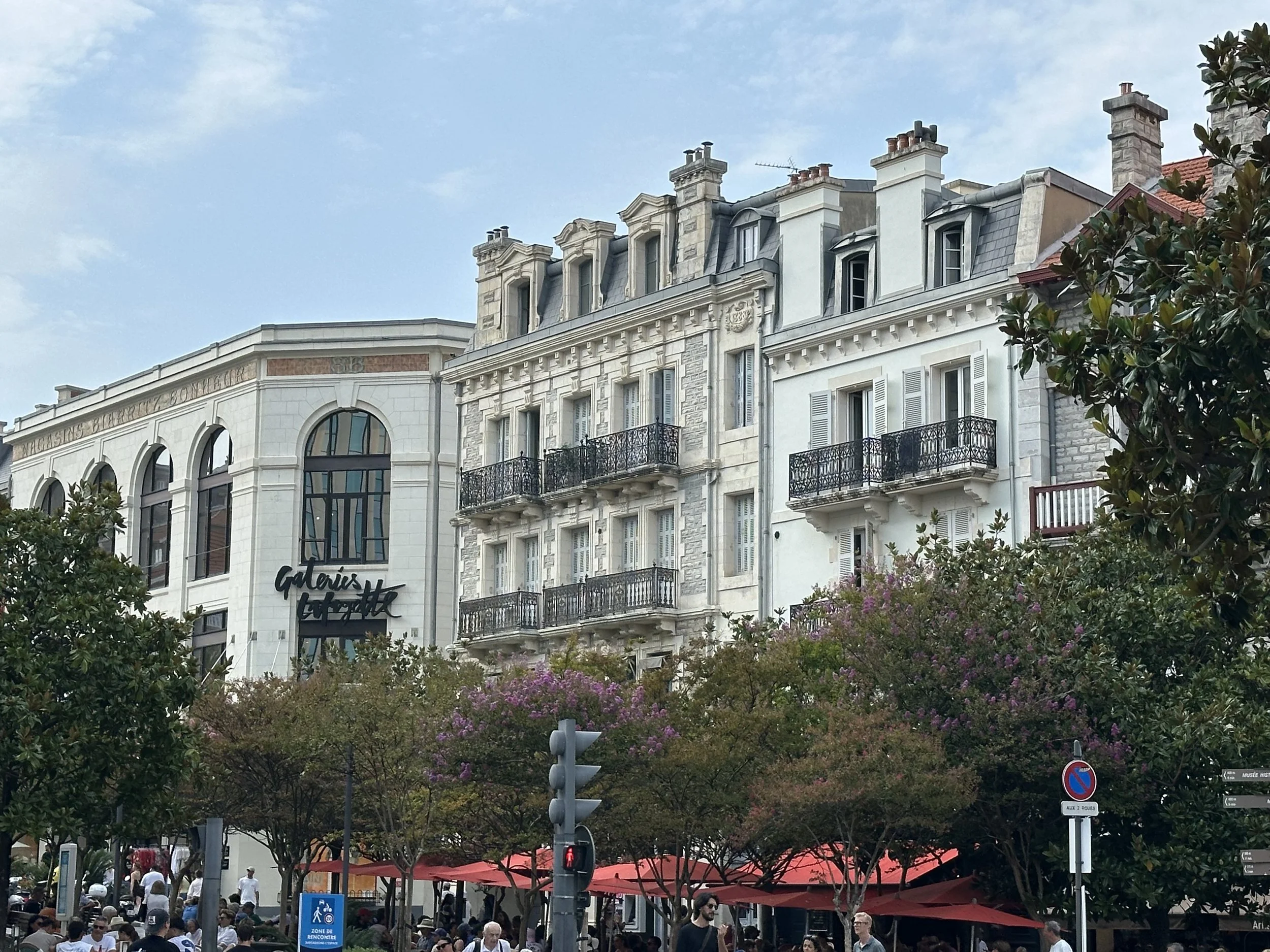
As we walked into town, the buildings looked more opulent and you could feel that this area was more affluent. After Napolean and his wife Eugenie made Biarritz their summer home in the 1850s, the town changed from a fishing village to a resort town.
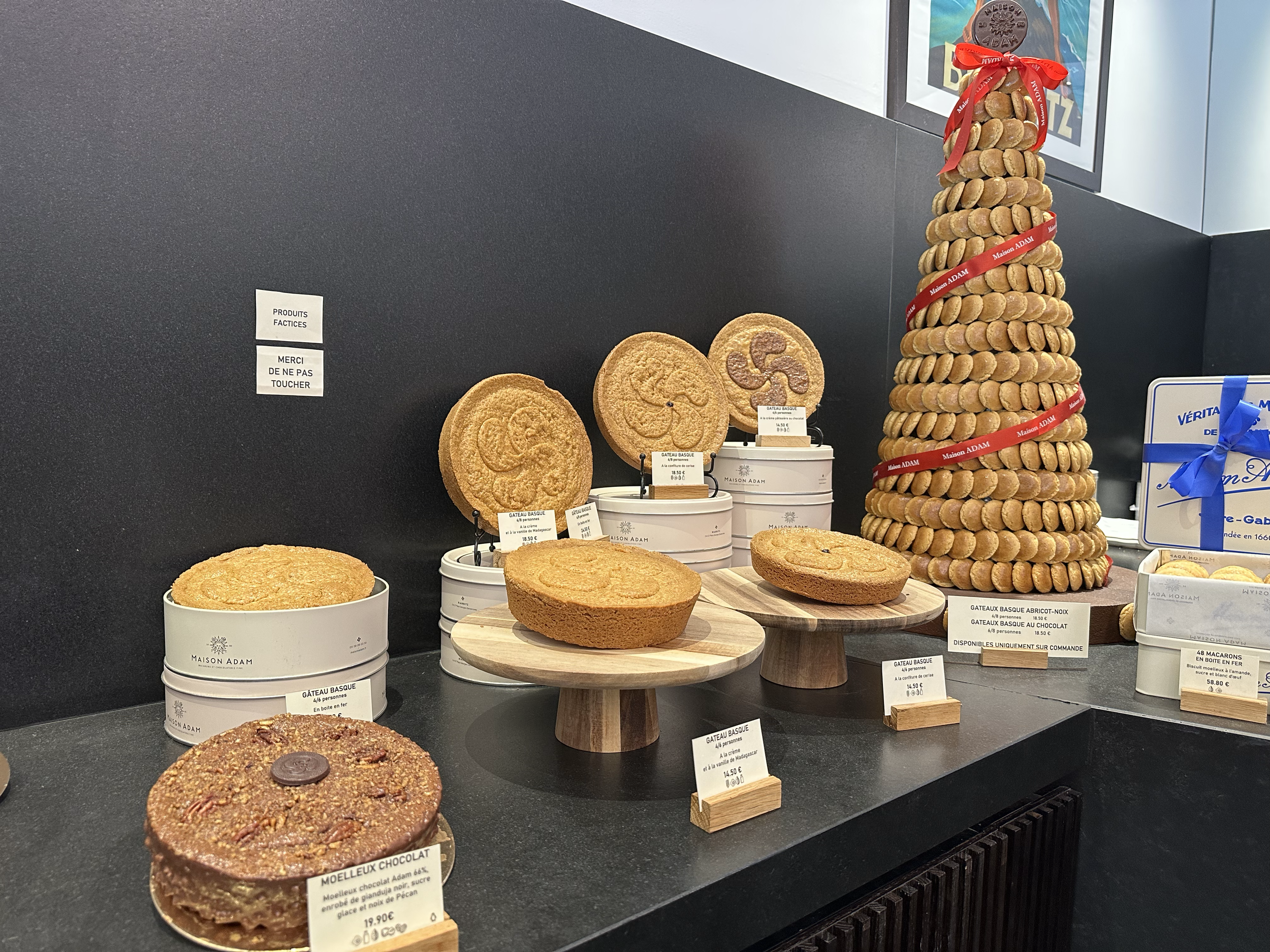
We stopped at the beautiful Maison ADAM to admire the Basque pies and the tower of macarons. We may have also purchased some macarons to enjoy as we strolled through town.
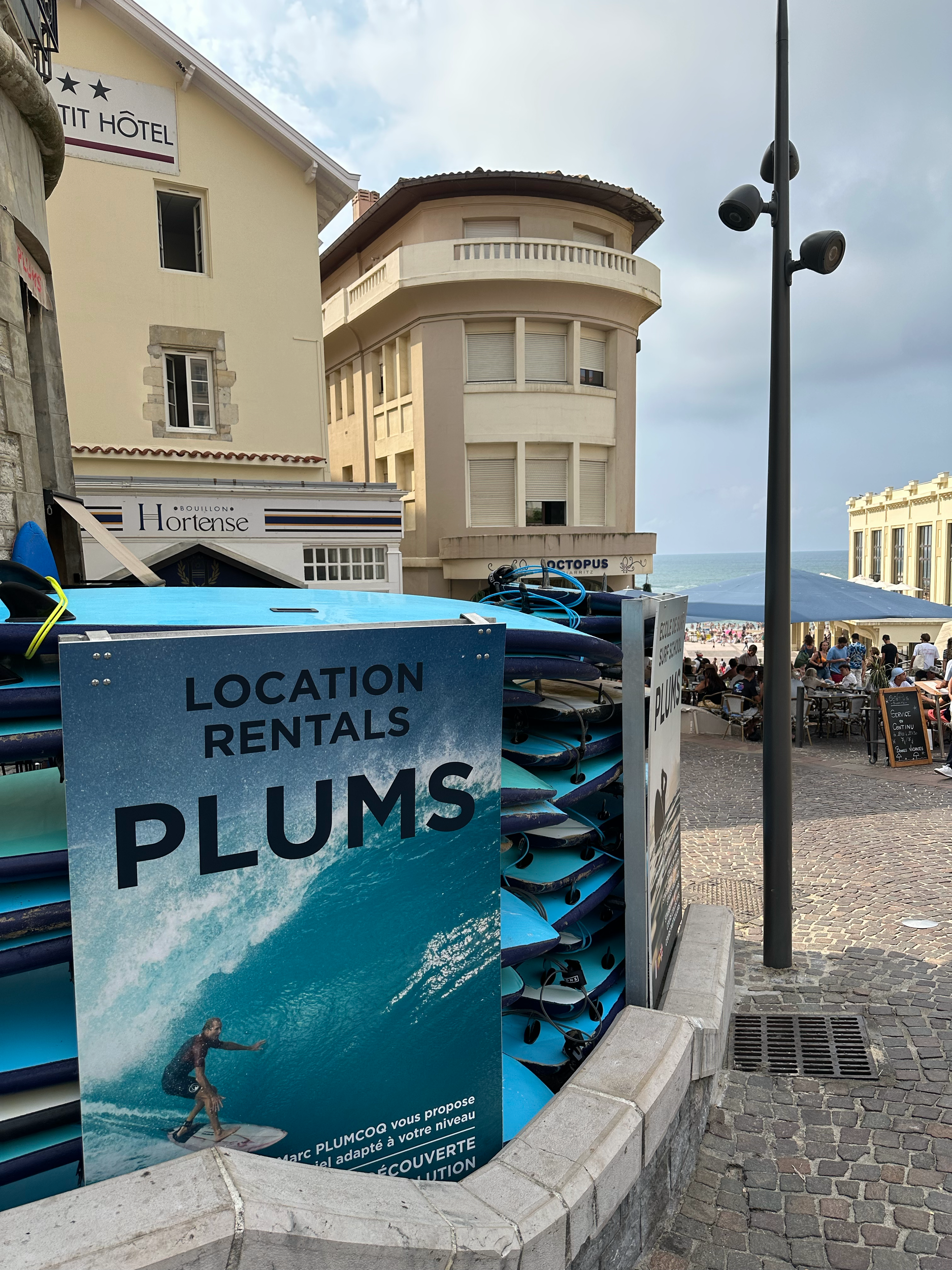
While Biarritz felt more opulent, there was still the juxtaposition with the "surfer village." Right in the midst of these beautiful buildings, you could rent a surf board and head down to the water.
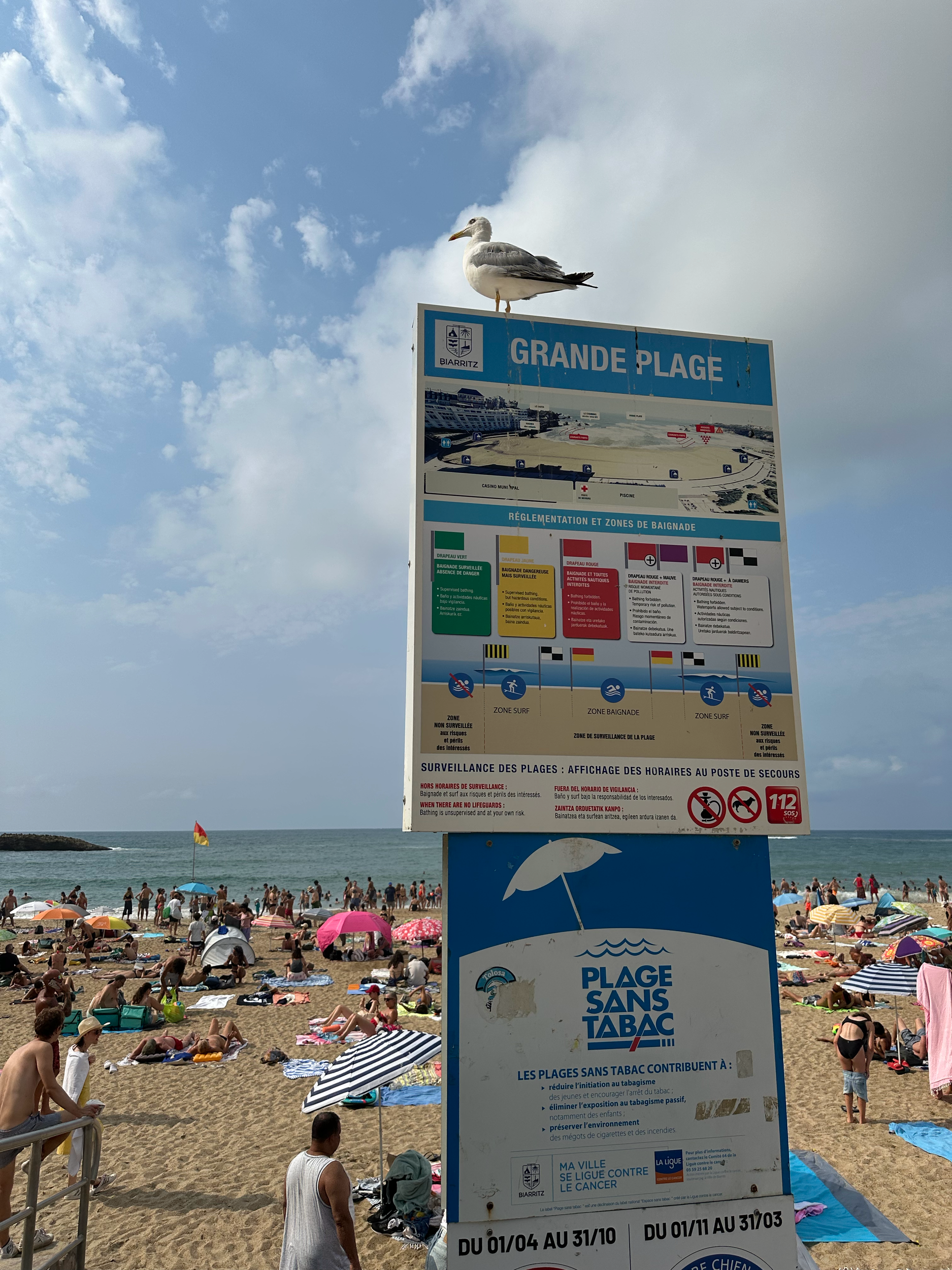
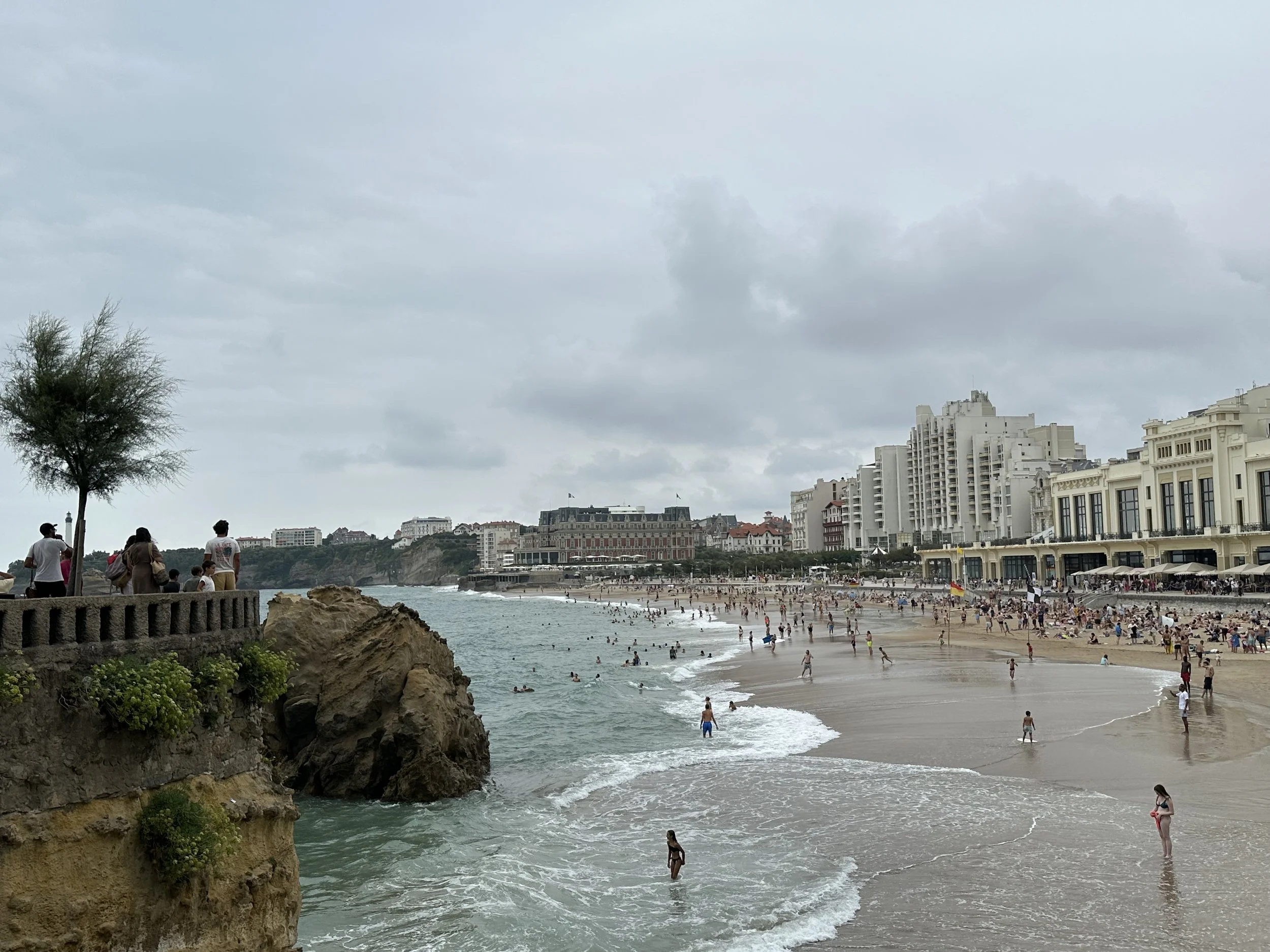
The beach was well marked with flags indicating locations for swimming, surfing, and areas to stay away from due to the rocks under the water.
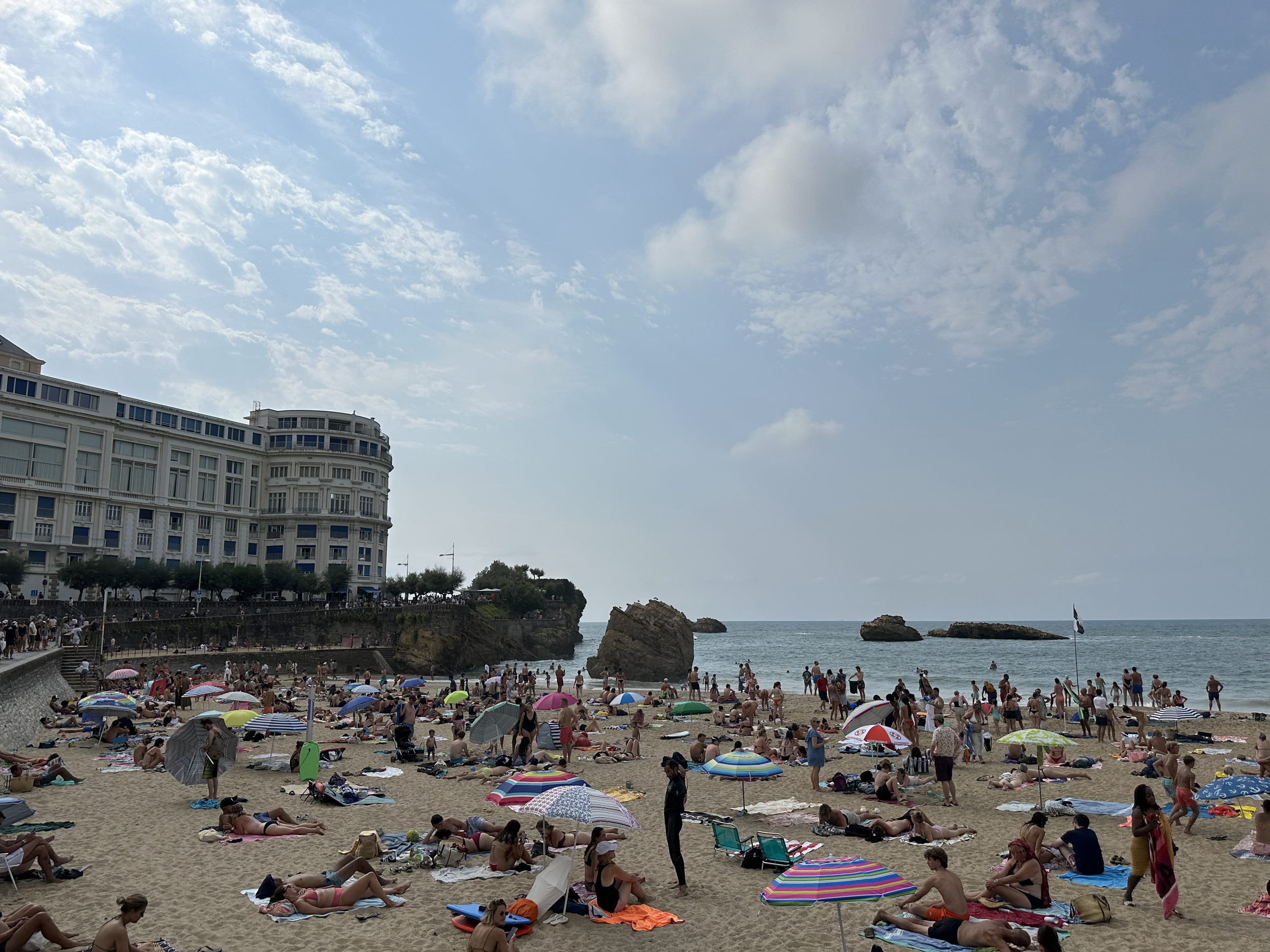
On one end of the beach was a large conference center. You can see the large rock formations in the water near the beach.
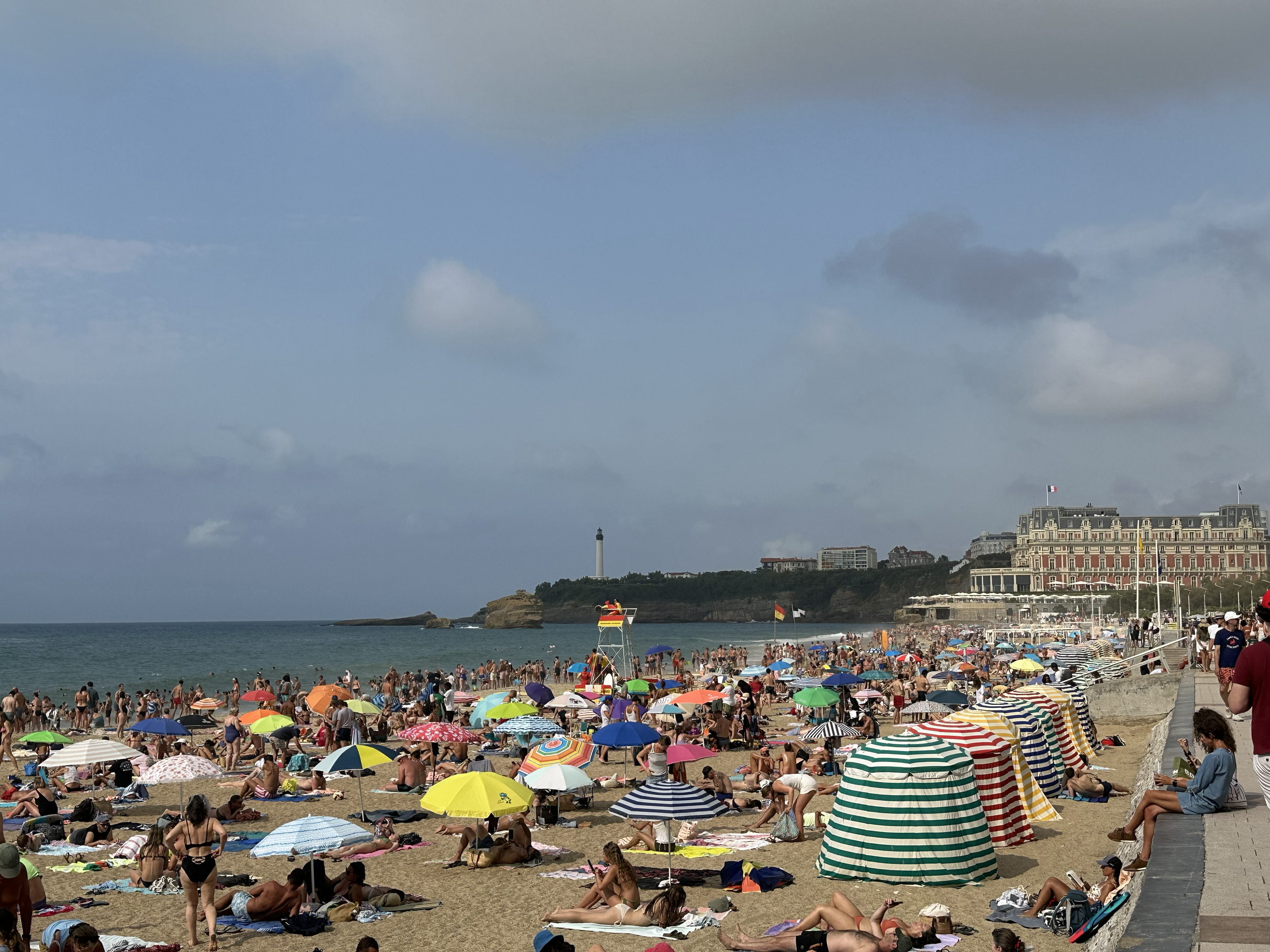
And in the other direction, you can see the Hotel du Palais de Biarritz (built by Napolean for his wife Empress Eugenie de Montijo) and the lighthouse on the peninsula. The feeling was so different than San Jean de Luz.
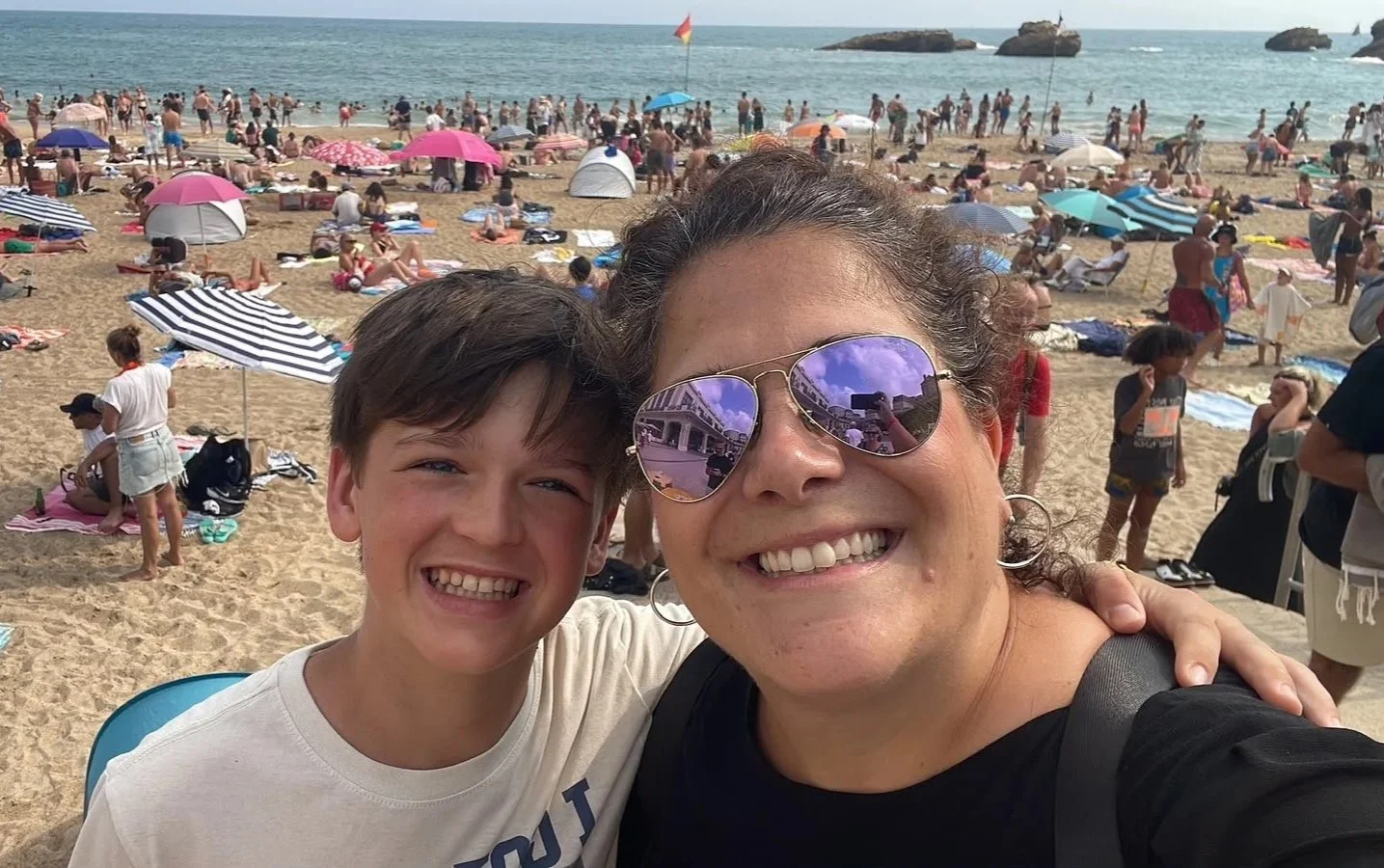
Enjoying the sunny day!
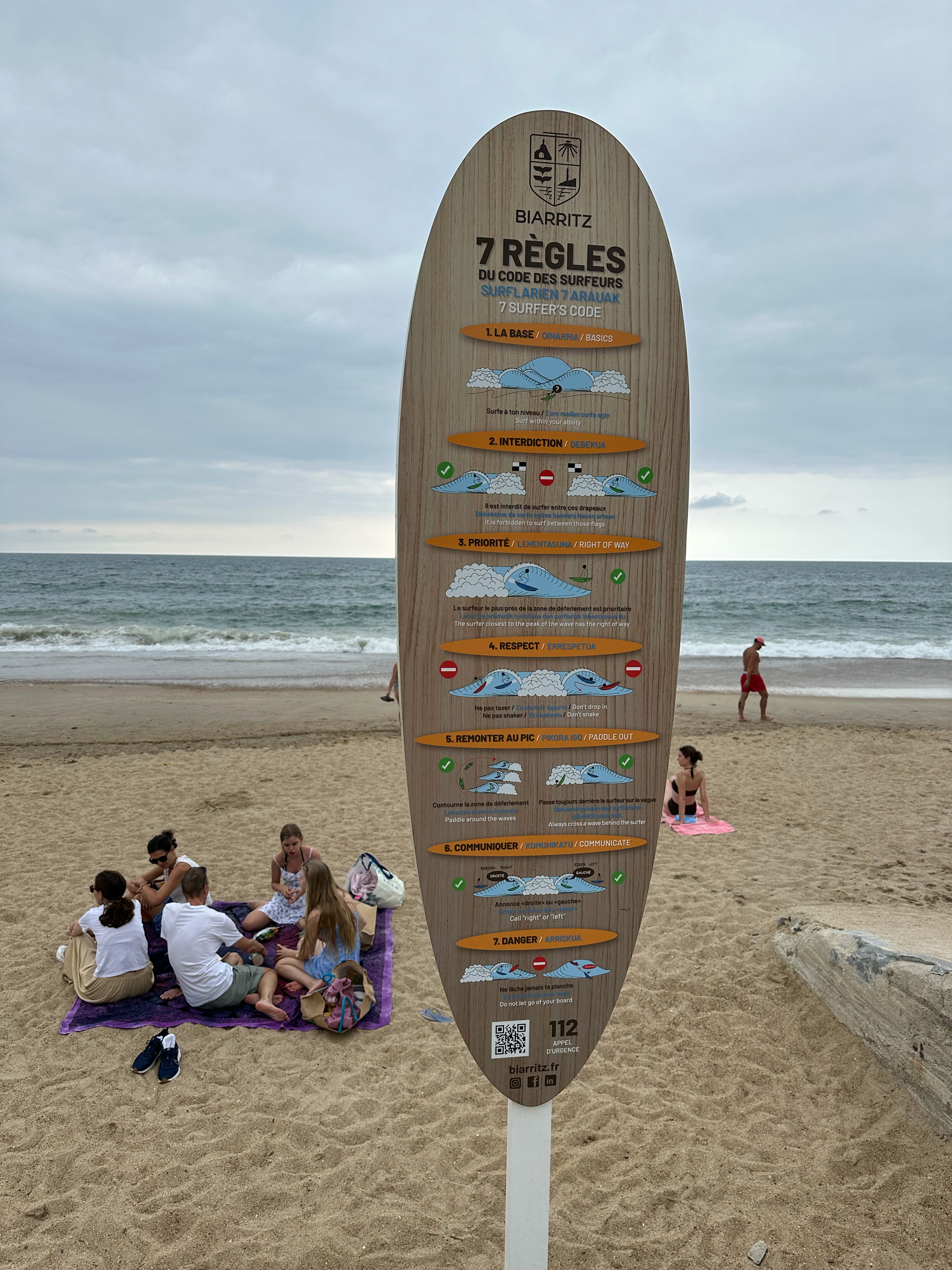
Surfer's Code in 3 languages.
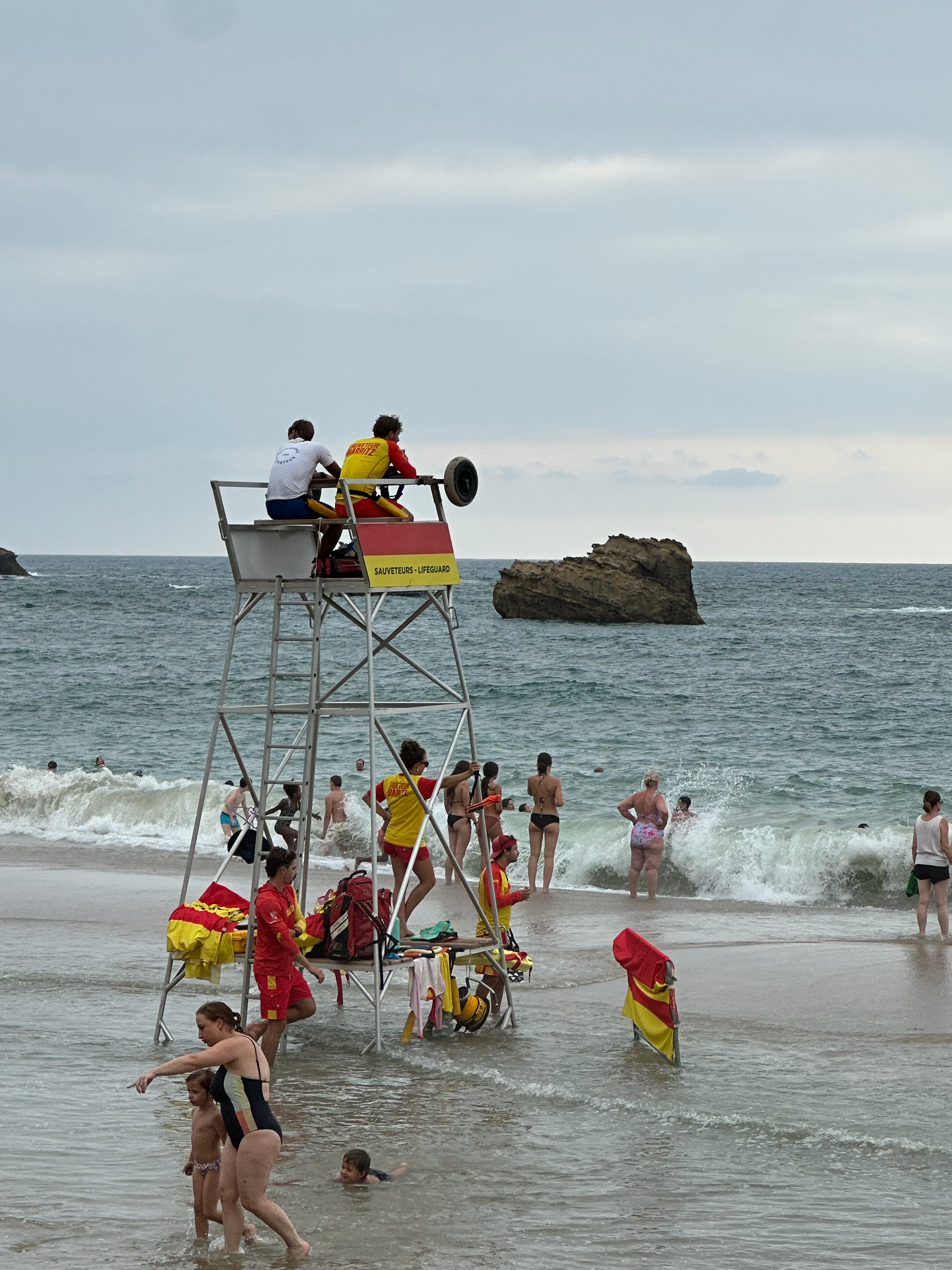
I loved seeing the life guard station. Yellow and red :) And those waves were crashing!
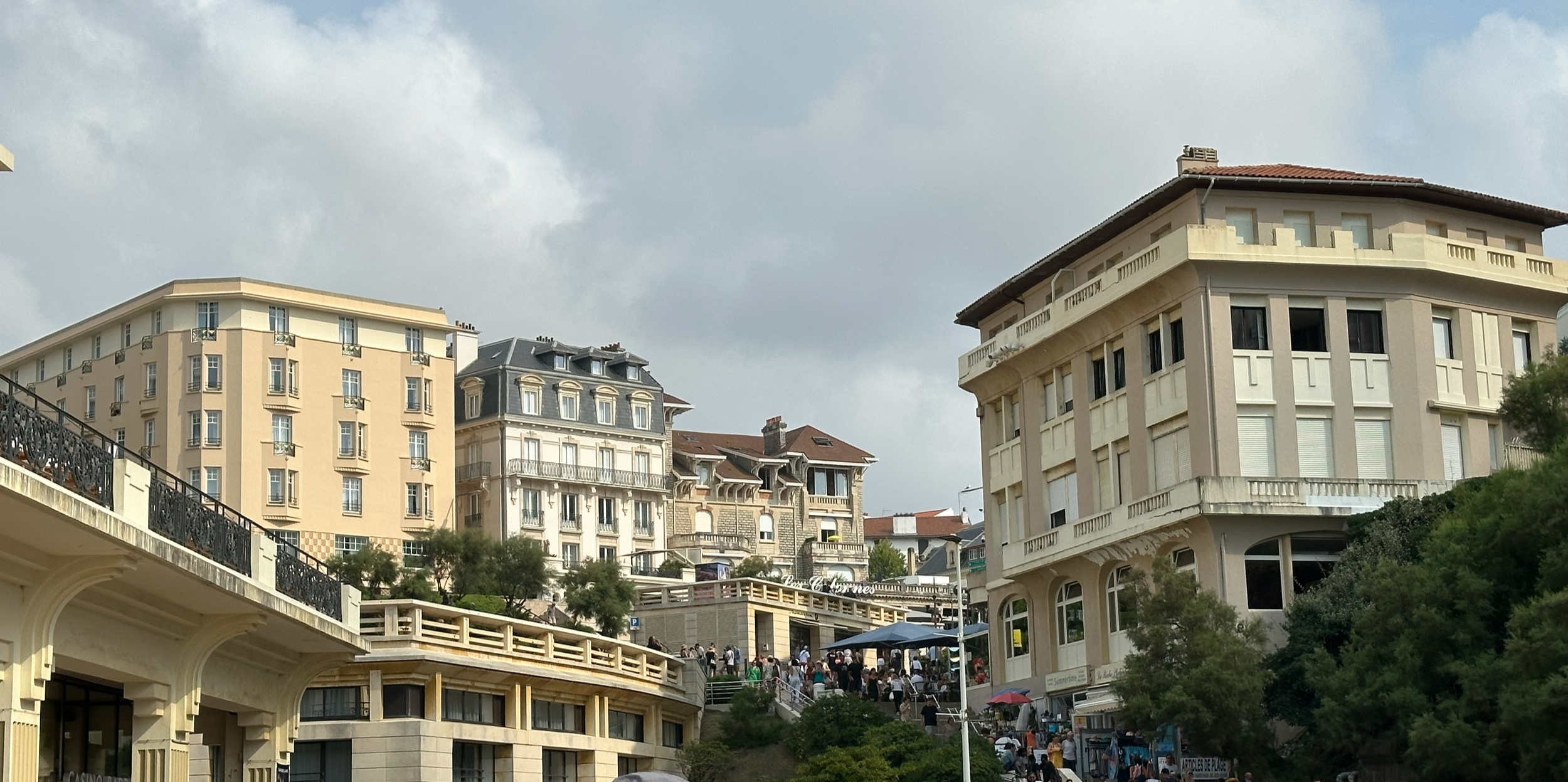
Looking back up from the beach, the buildings are striking. High-end shopping and strangely enough, a large casino.
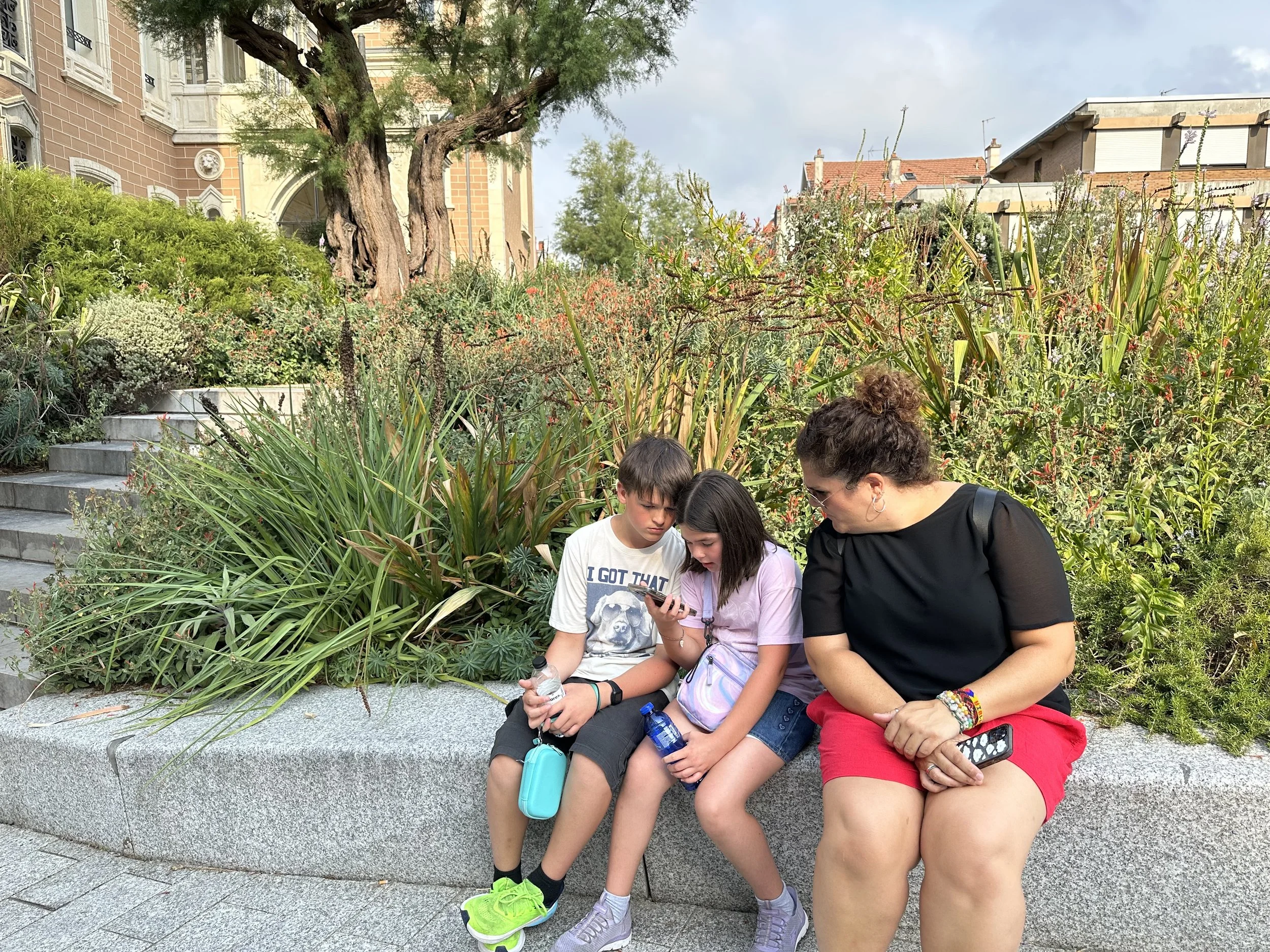
We downloaded a scavenger app to make the walk around the city more fun and to give us a little history and explanations of the buildings.
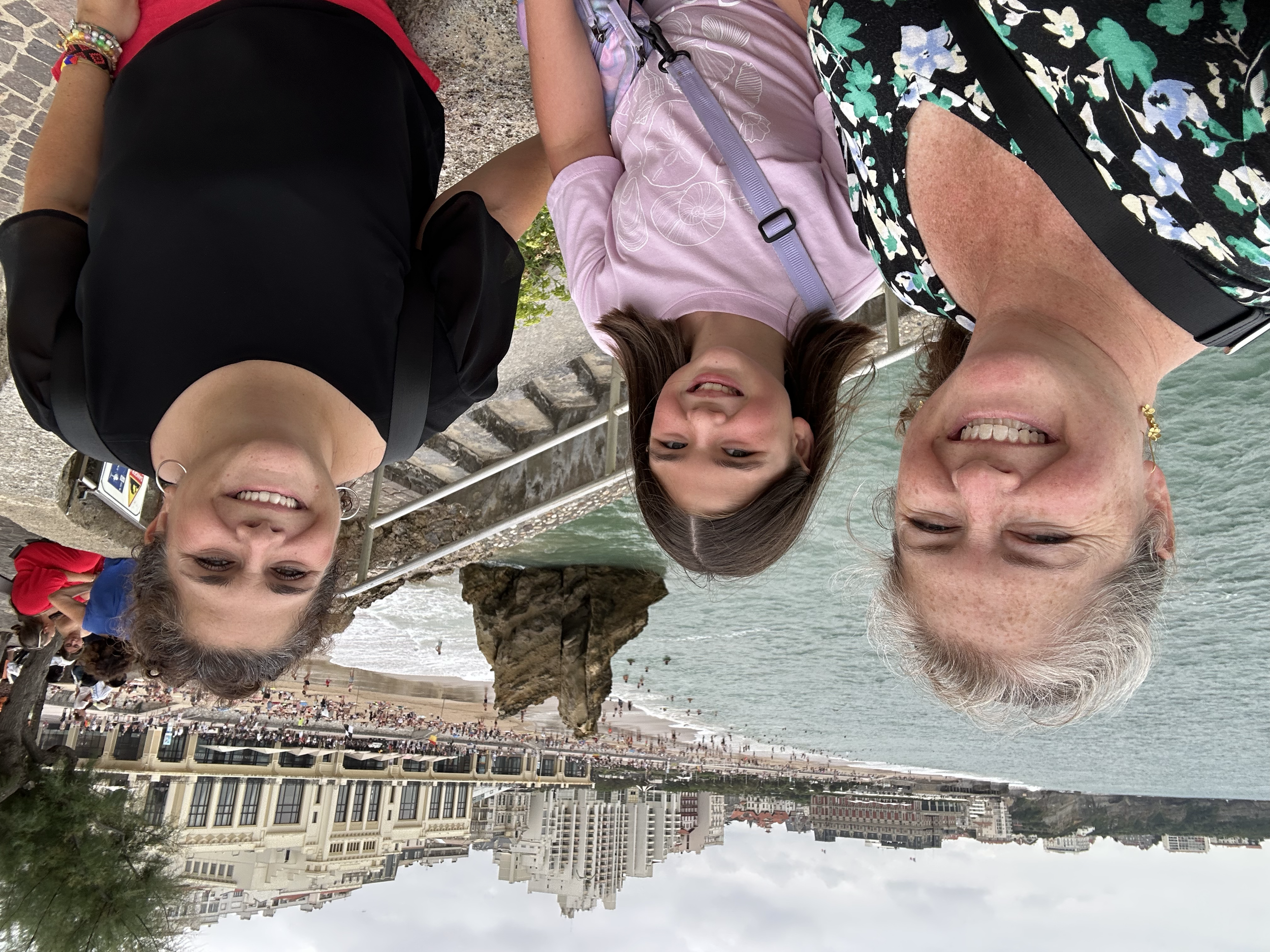
We hiked up the penisula on the west side of the beach.
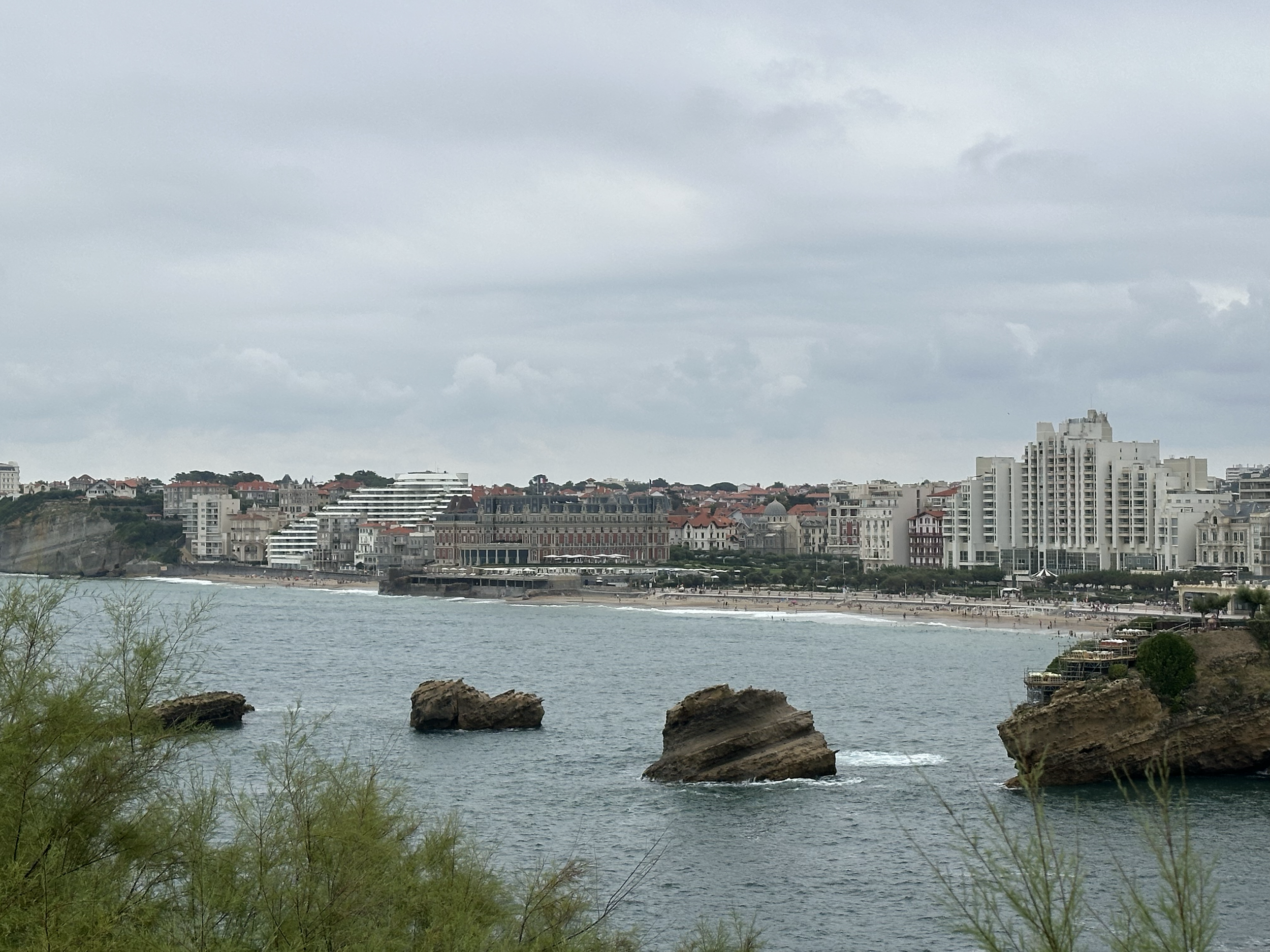
Spectacular views of the city.
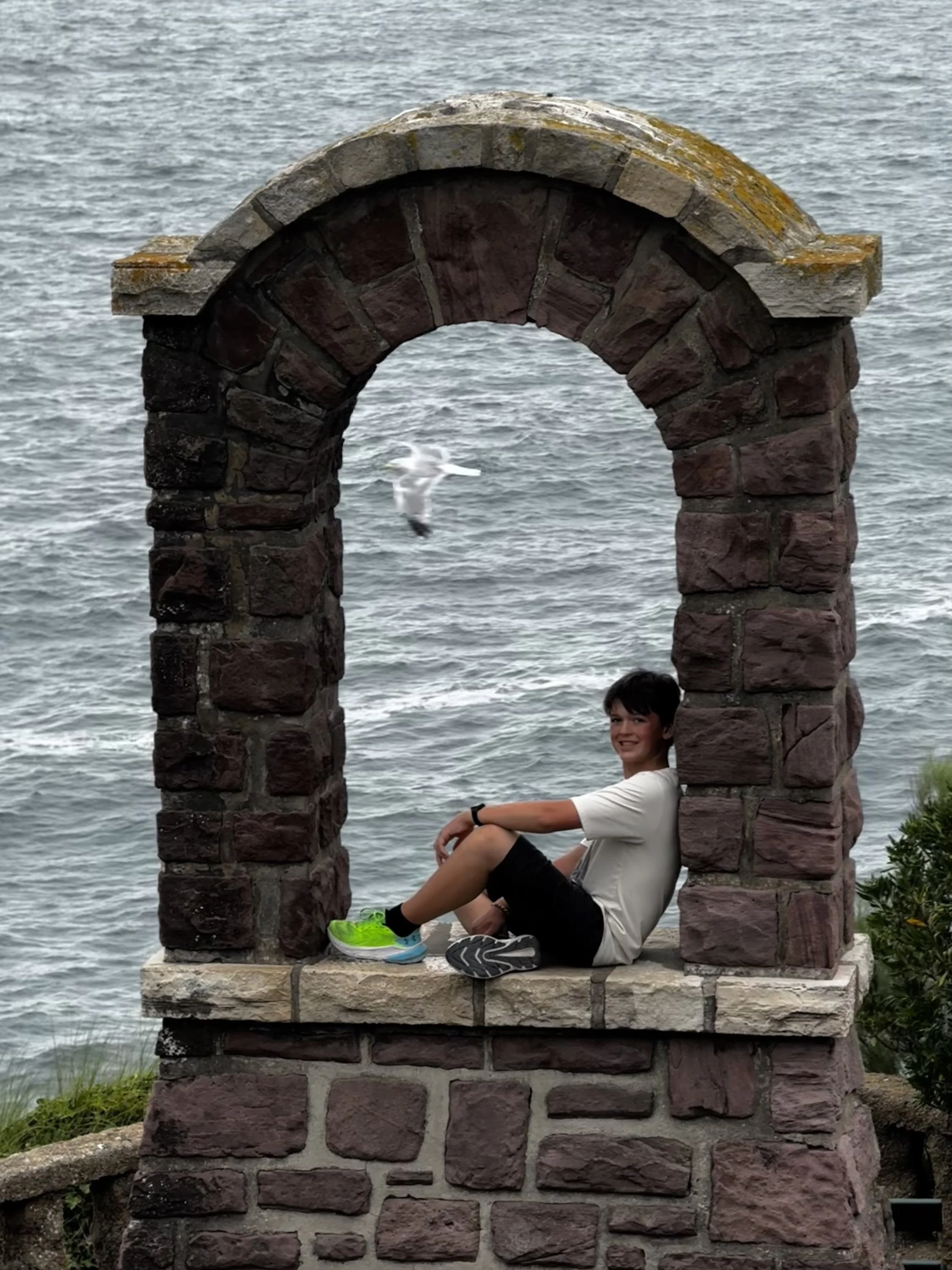
Peep the sea gull flying by!
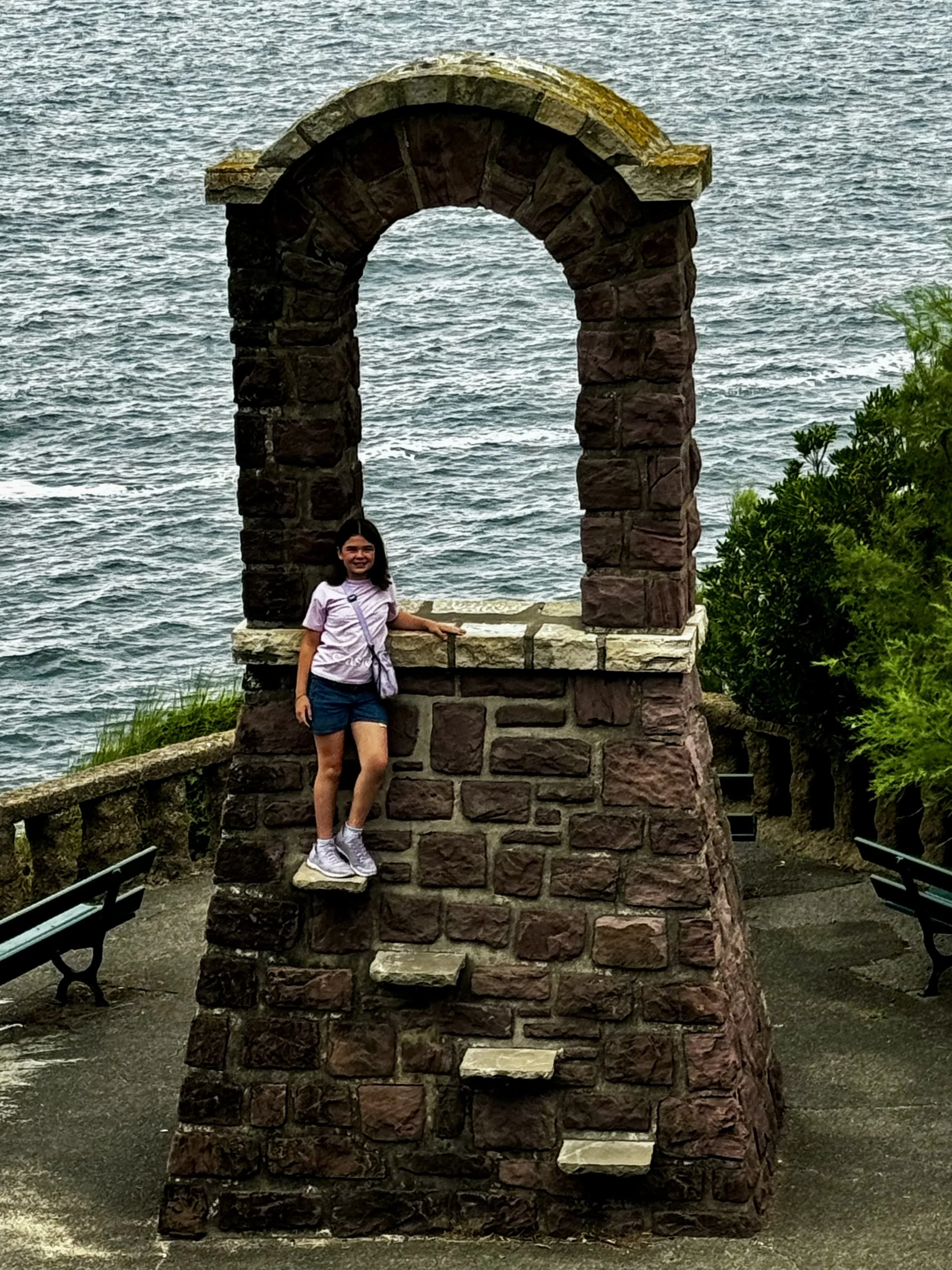
The kids both took turns climbing and posing :)
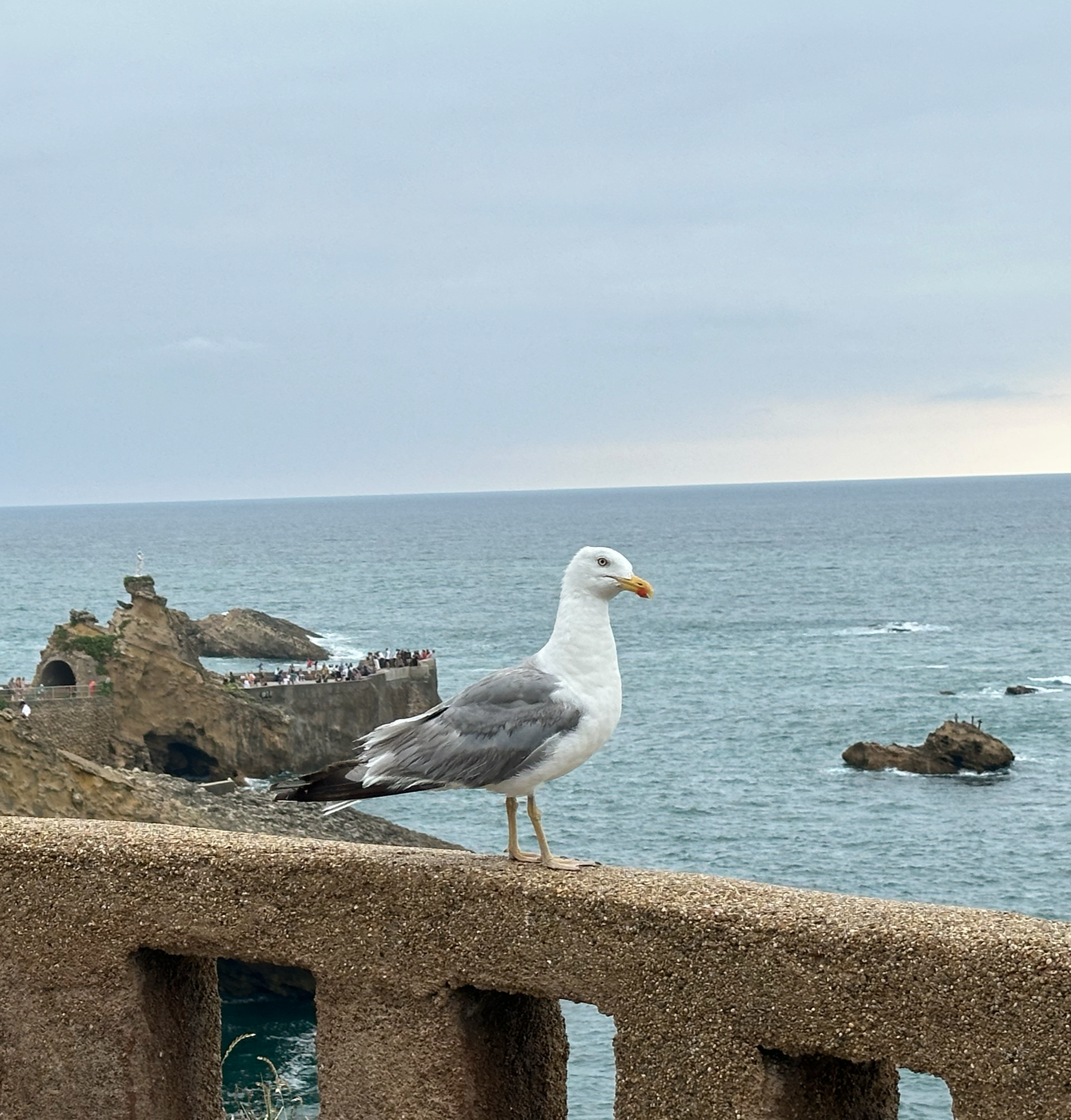
The sea gulls were very entertaining in Biarritz.
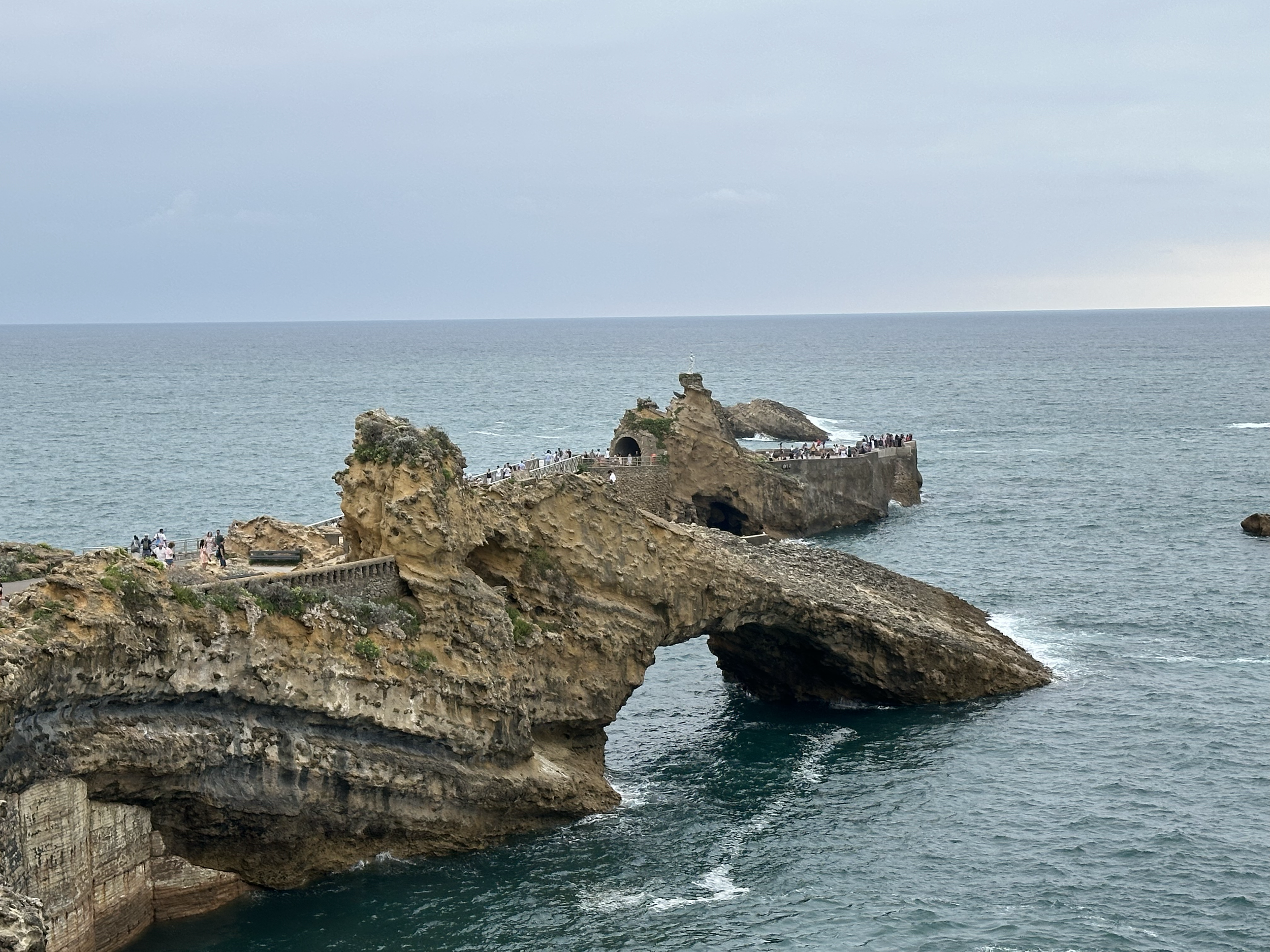
Rocher de la Vierge (Rock of the Virgin). Legend has it that whalers were caught in a storm and guided back to shore by a bright light shining from this light. As a means of gratitude, a 3 ft bronze statue of the Virgin Mary was placed on the summit of the rock in 1865.
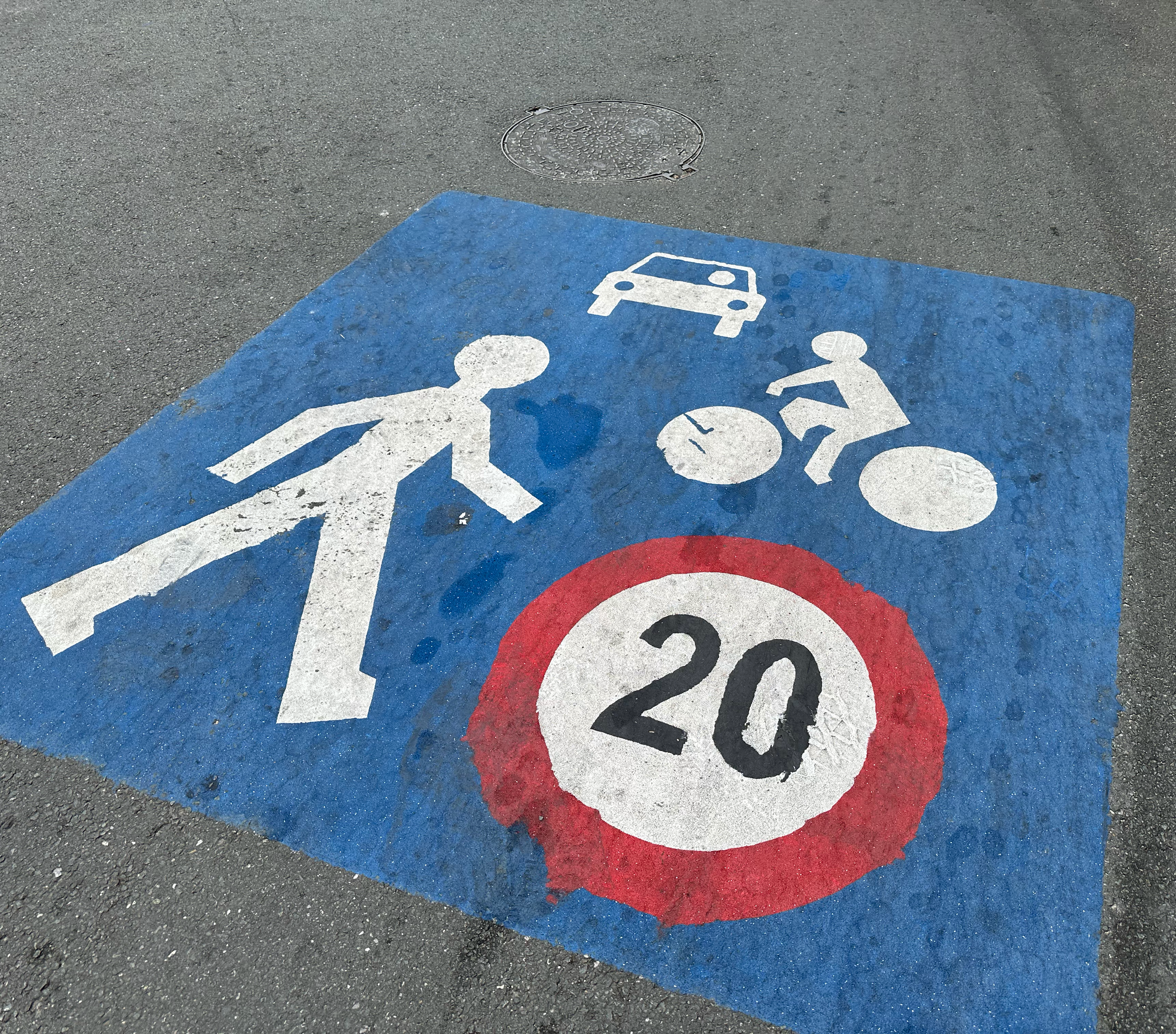
We all cracked up at this sign painted on the road. The lane is for pedestrians, bicycles, and motorists! Talk about having to watch out for traffic around you!
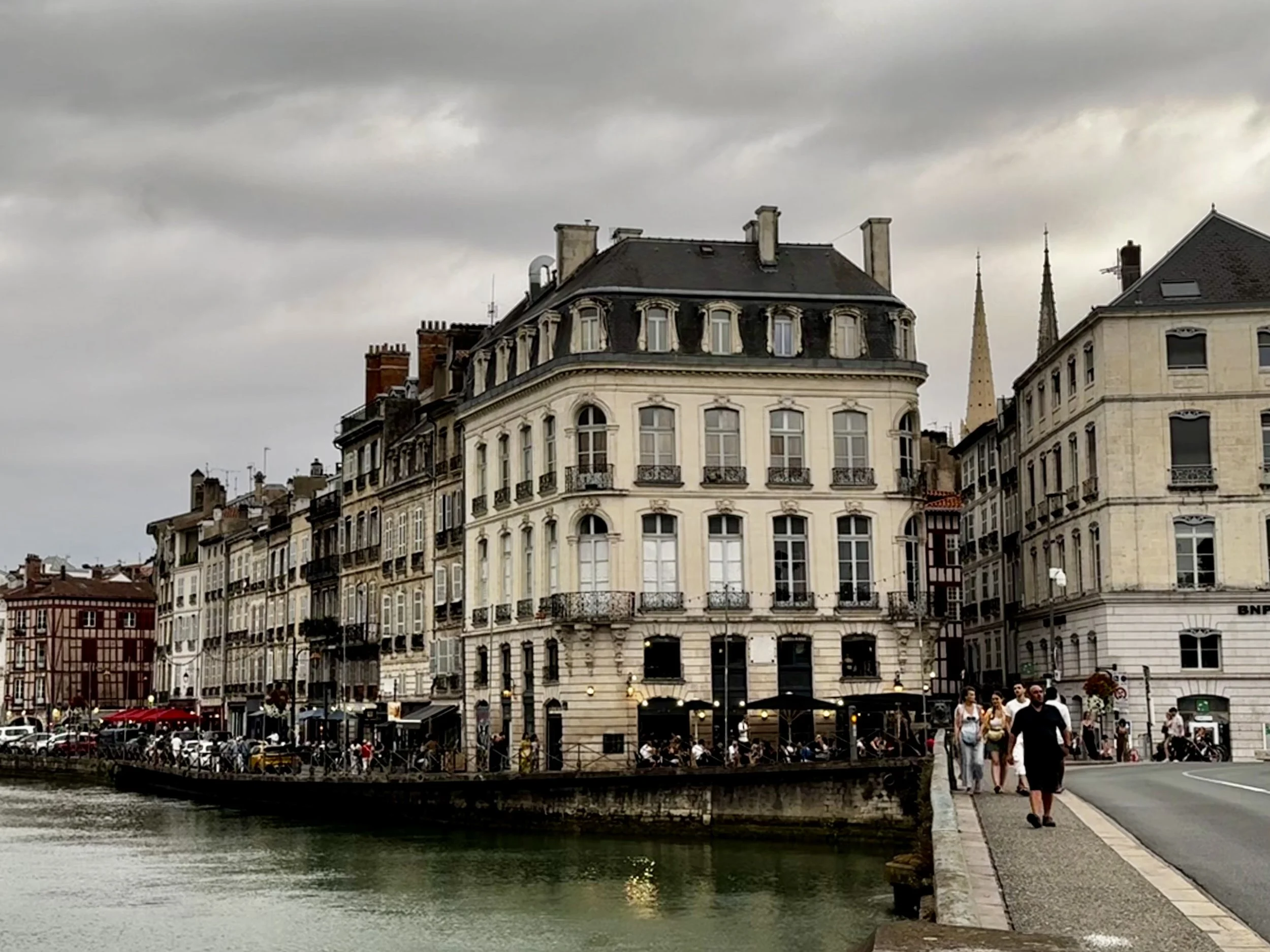
For our final stop of the day, we traveled inland to where the Nive and the Adour rivers converge at the town of Bayonne.
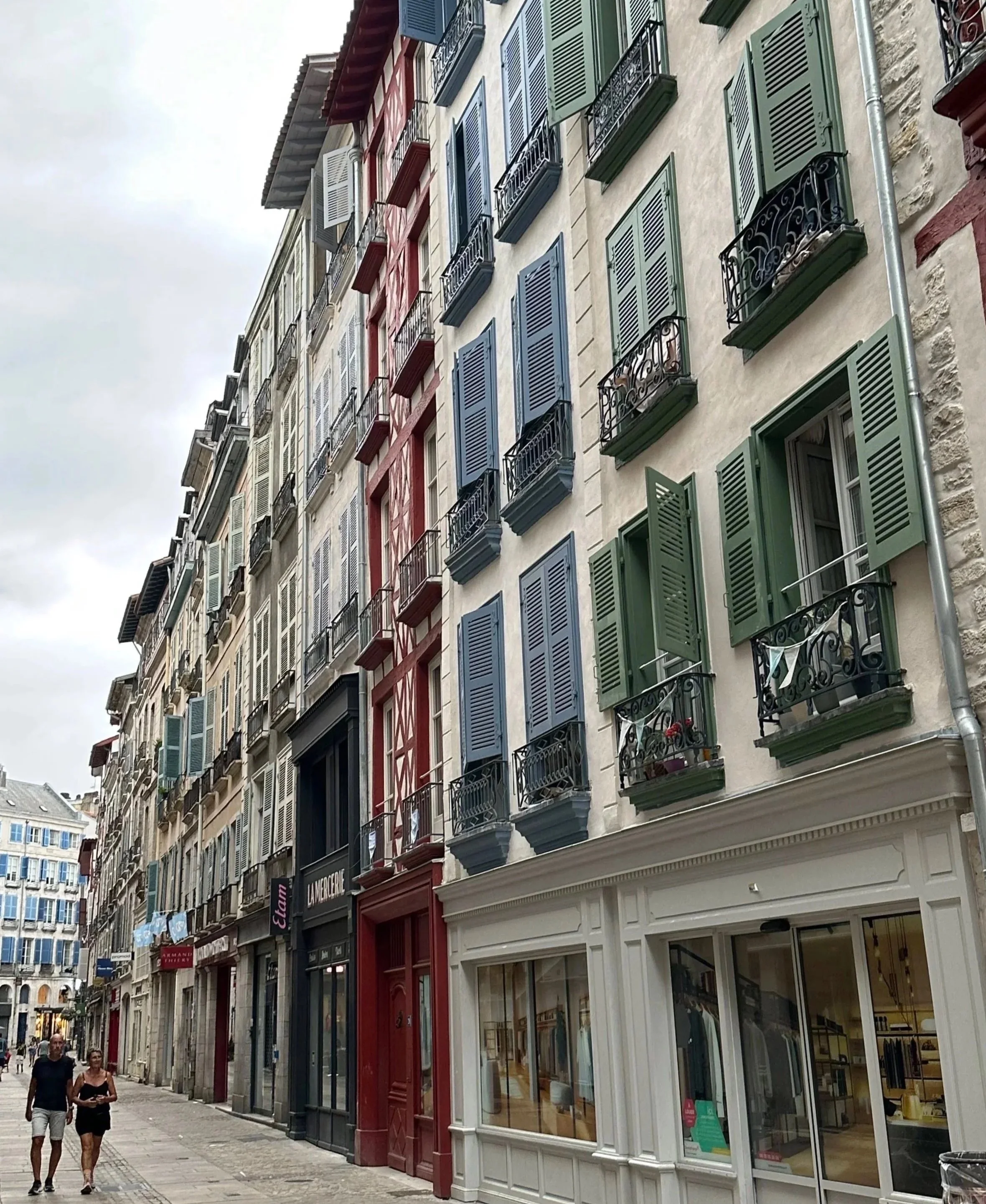
Oh! The shutters and balconies and stone steets. It gives all the feels.
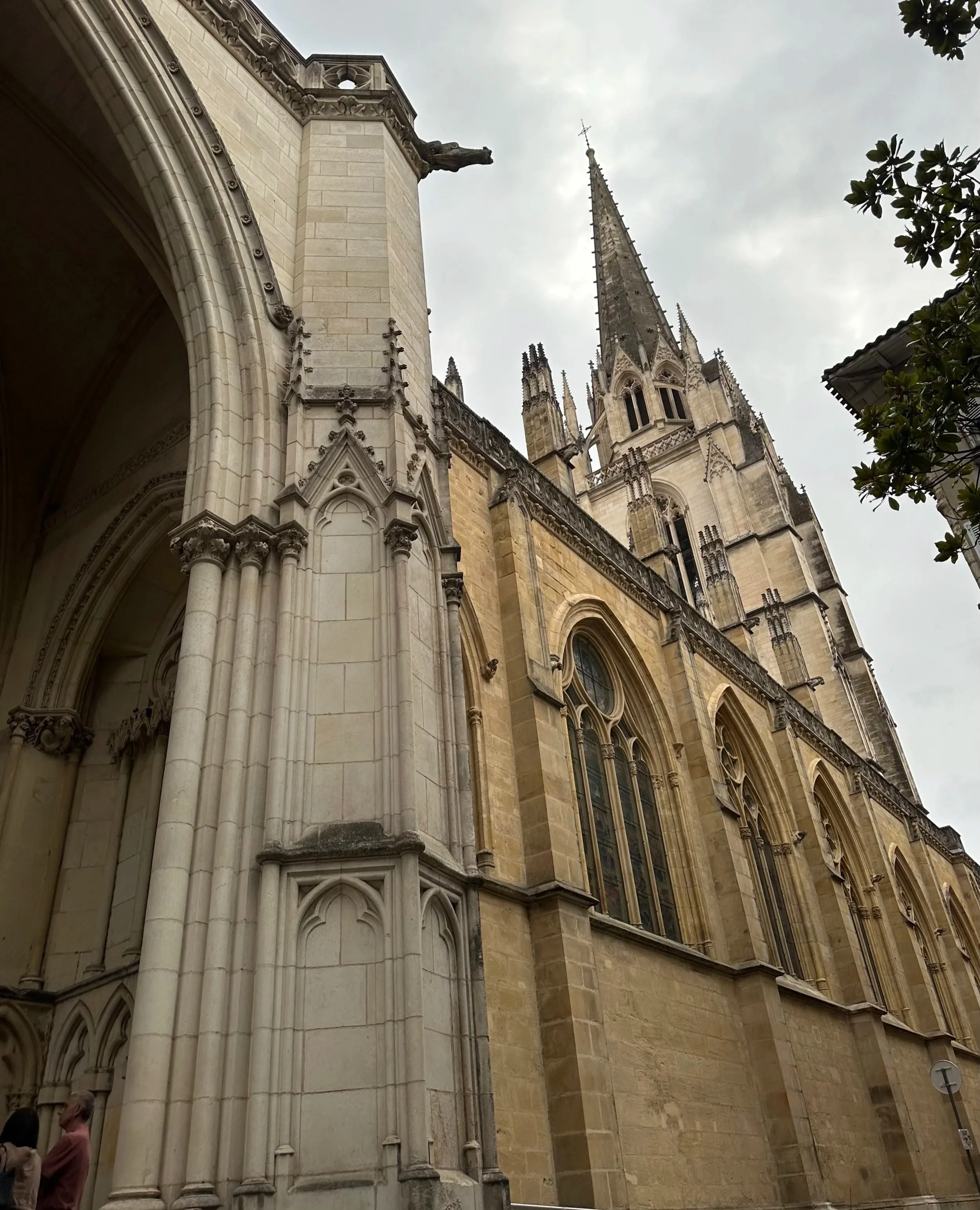
We came to Bayonne specifically to see "Luminiscnece," a light show in the Sainte-Marie cathedral of Bayonne with choir Bayonne Pays Basque performing as video-mapping lights up the cathedral.
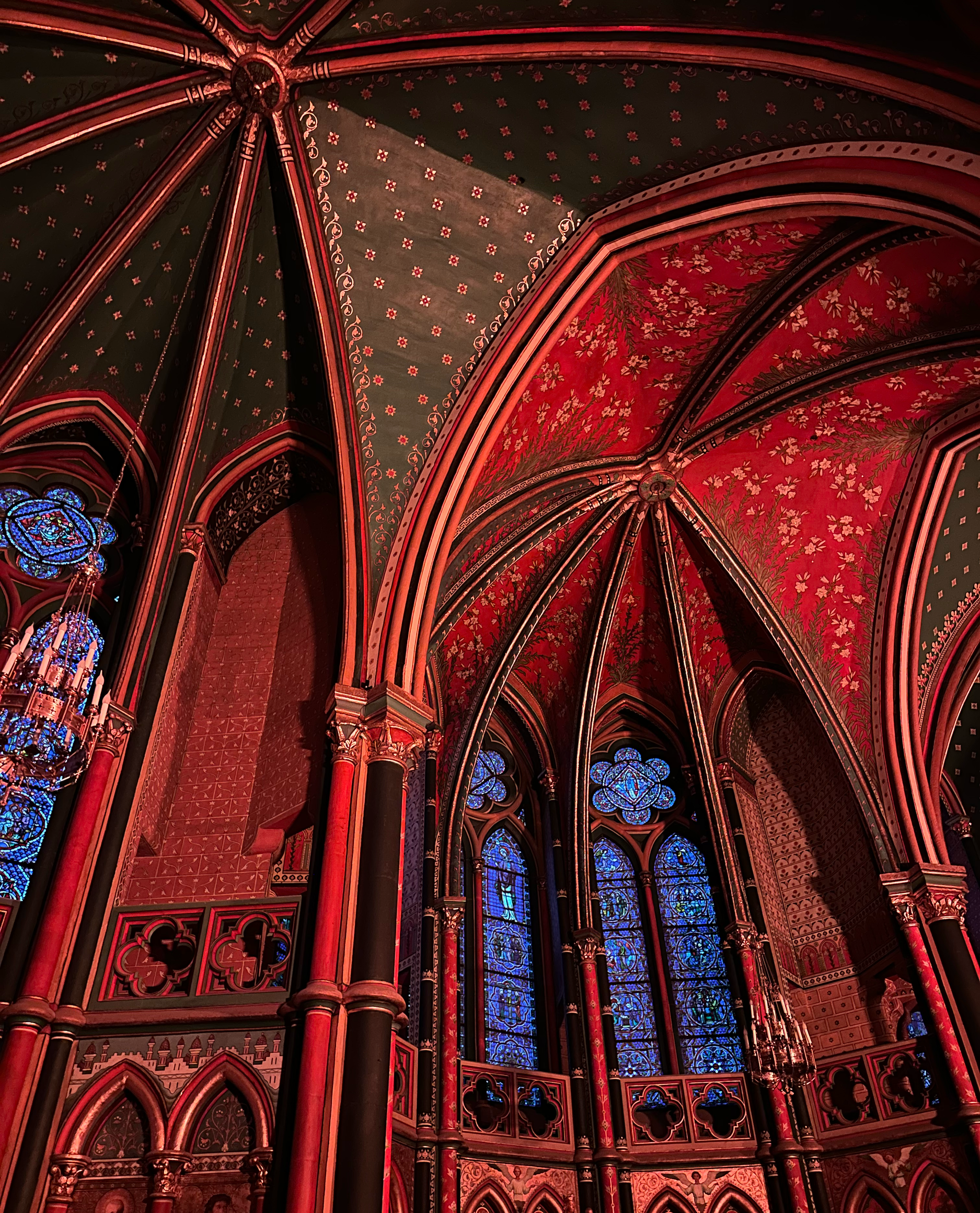
The vaulted ceiling of the cathedral was lit up as we entered.
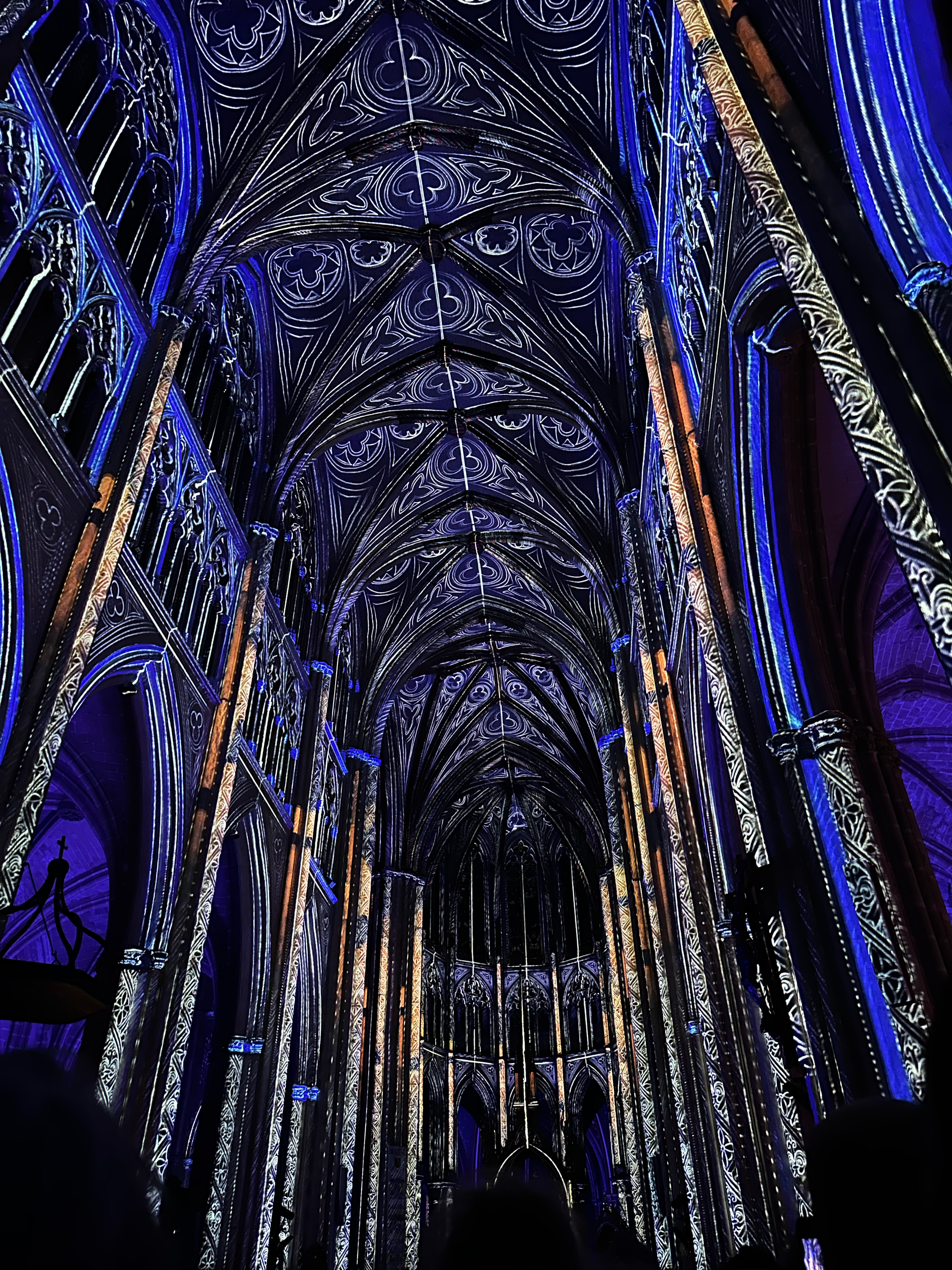
The light show highlighted the history of the cathedral through time. As decribed in the program, the cathedral says "a Roman camp became a medieval city, and a city became a port of passage. I have watched over it all, through every name it bore."
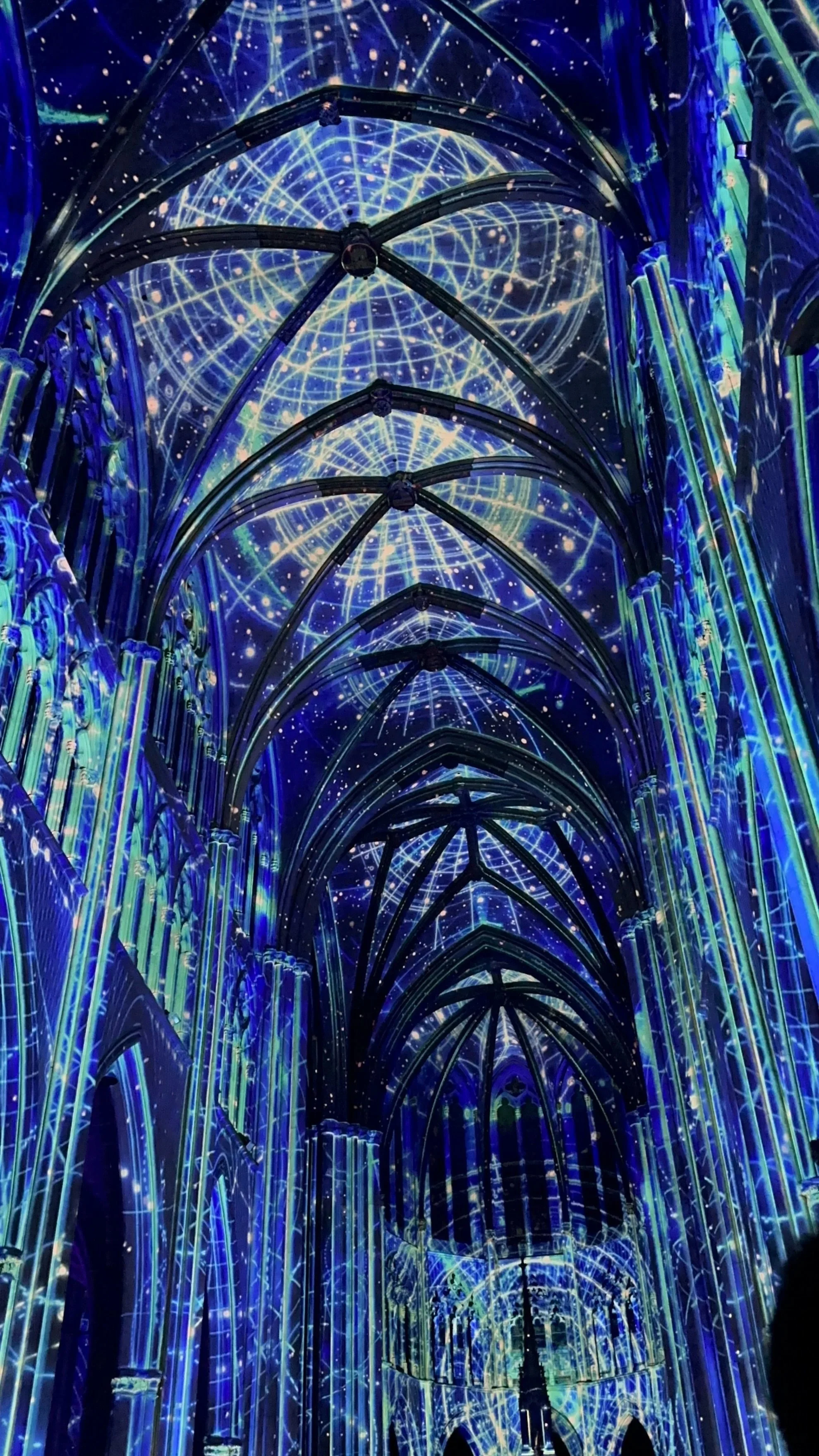
The colors and designs were amazing, and watching them morph into other colors and designs to the rhythm of the music was mesmerizing.
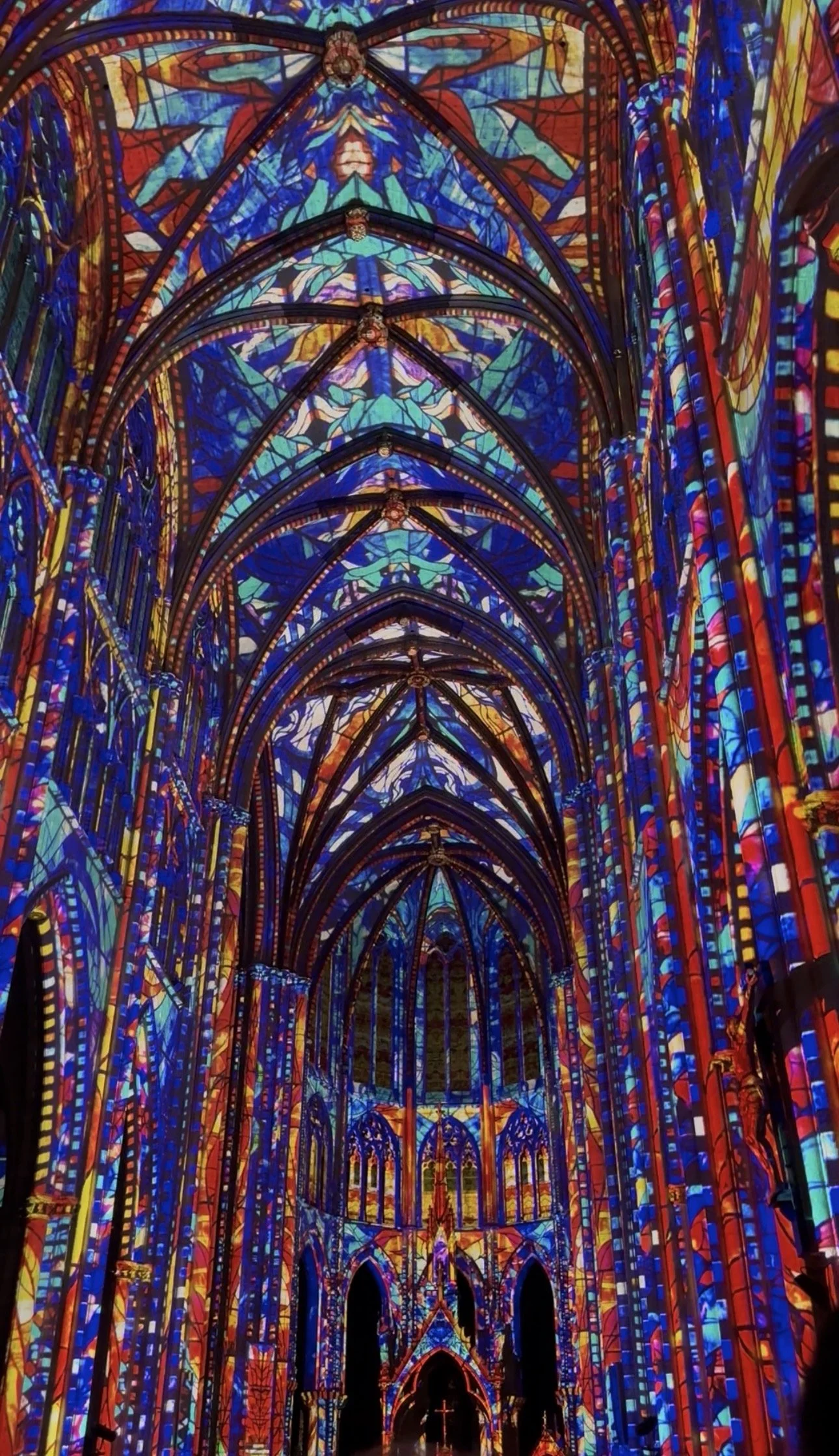
The music that accompanied the production included a live choir, orchestral songs, and the organ.
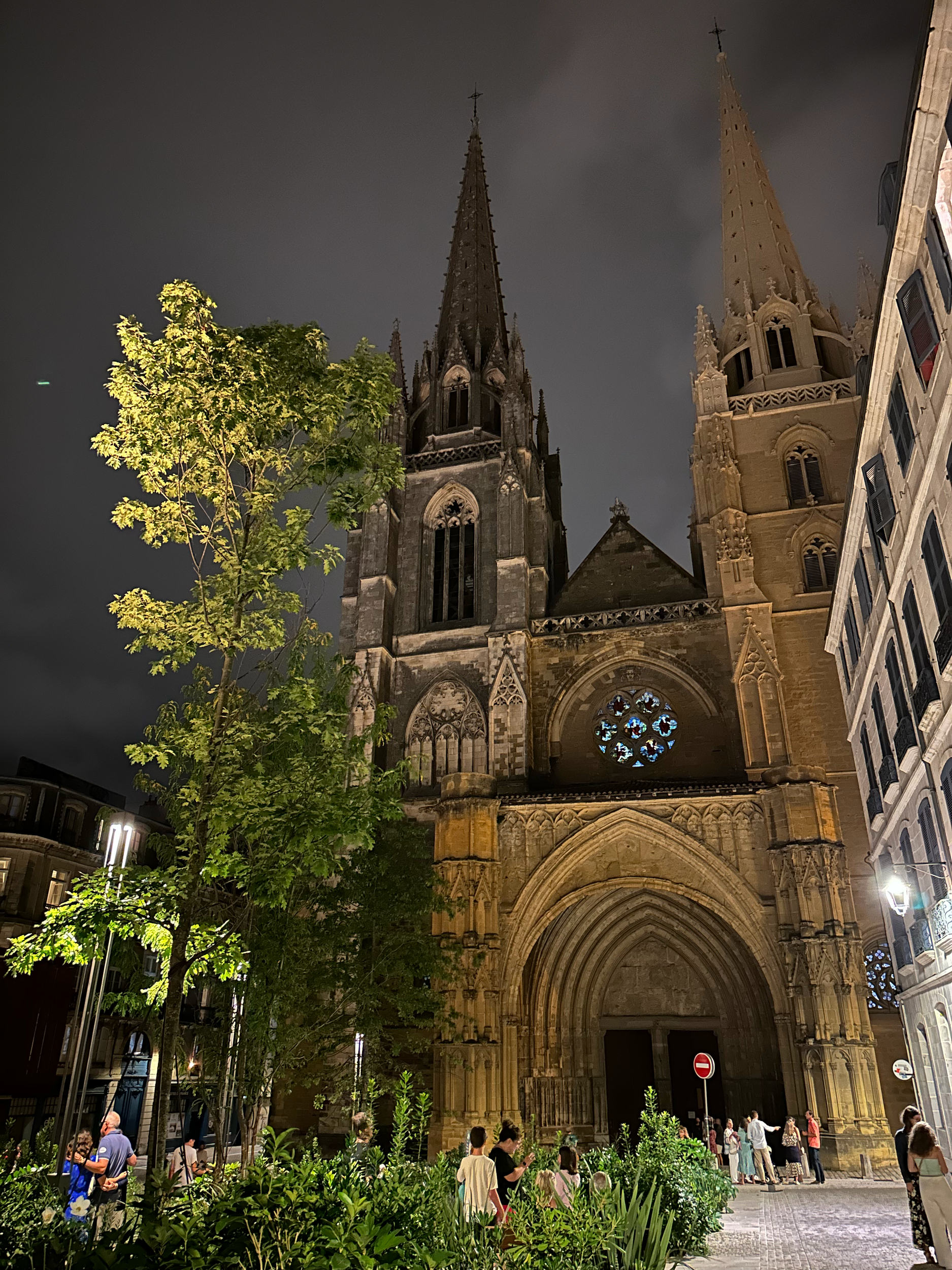
The front of the cathedral in the dark of night. Notice that one tower is light while the other remains a darker color. Restoration of the cathedral is being completed in sections, and one spiral has not yet been restored.
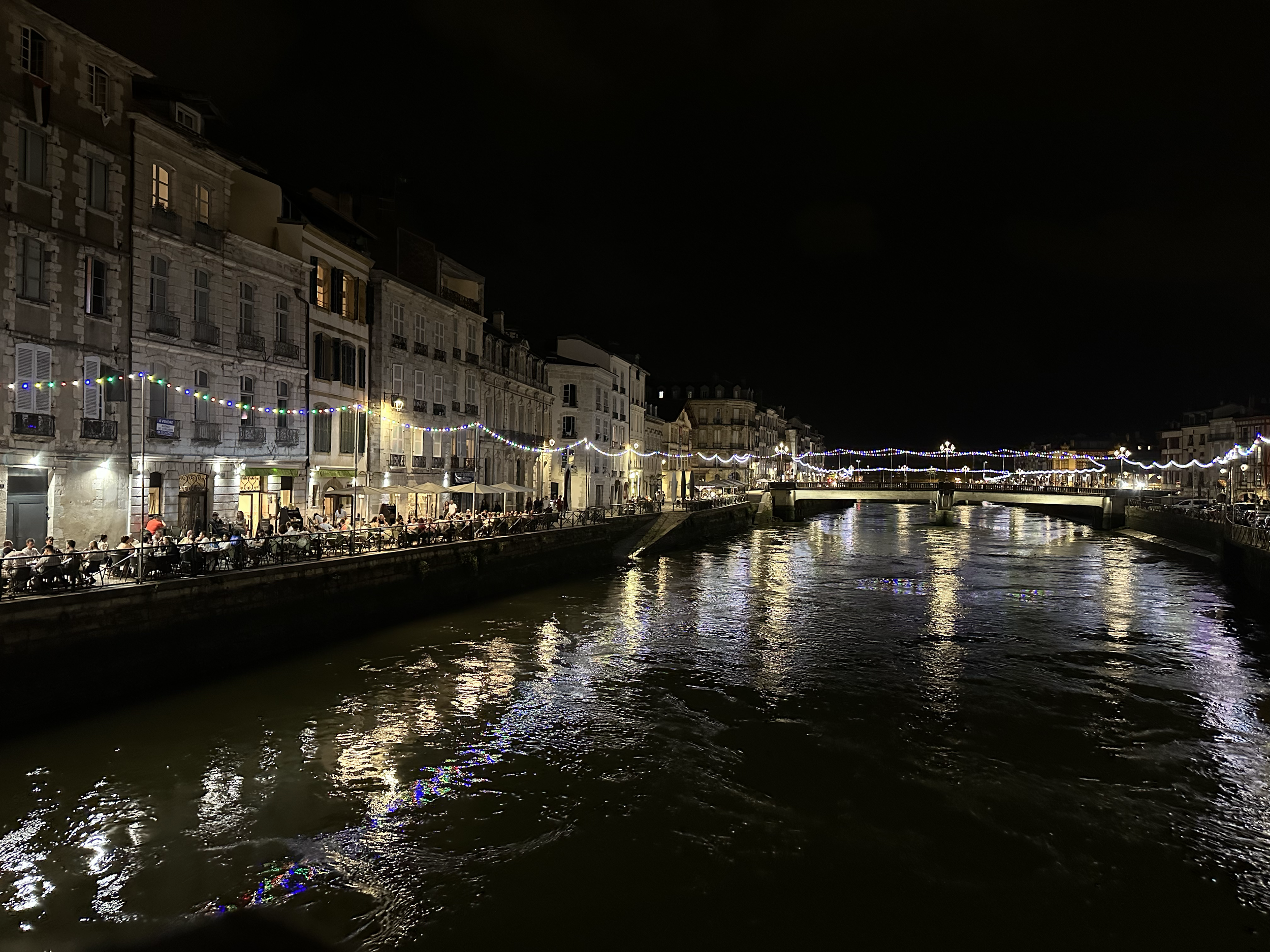
The river was lit up as we crossed it when leaving late at night. We headed back to our hotel in San Jean de Luz for one final French evening. Tomorrow. back to Spain.