Viva, España! : Toward the Capital and “Kilometer 0”
August 16-21
From beaches to mountains to the capital city, our last stretch in Spain (for August) was packed with excitement and beauty….and some more tough lessons about the need to pack lighter (travel tip: cobblestones are best appreciated without roller luggage) :) .
We enjoyed a terrific city tour of San Sebastian, marveled at art in the Guggenheim Bilbao, and practiced living like Spaniards with another tapas tour and an out-past-midnight adventure with some sweet friends in Madrid.
Six wonderful days to round out our first Schengen chapter and to help us fall more in love with Spain.
San Sebastián: Back to Spain
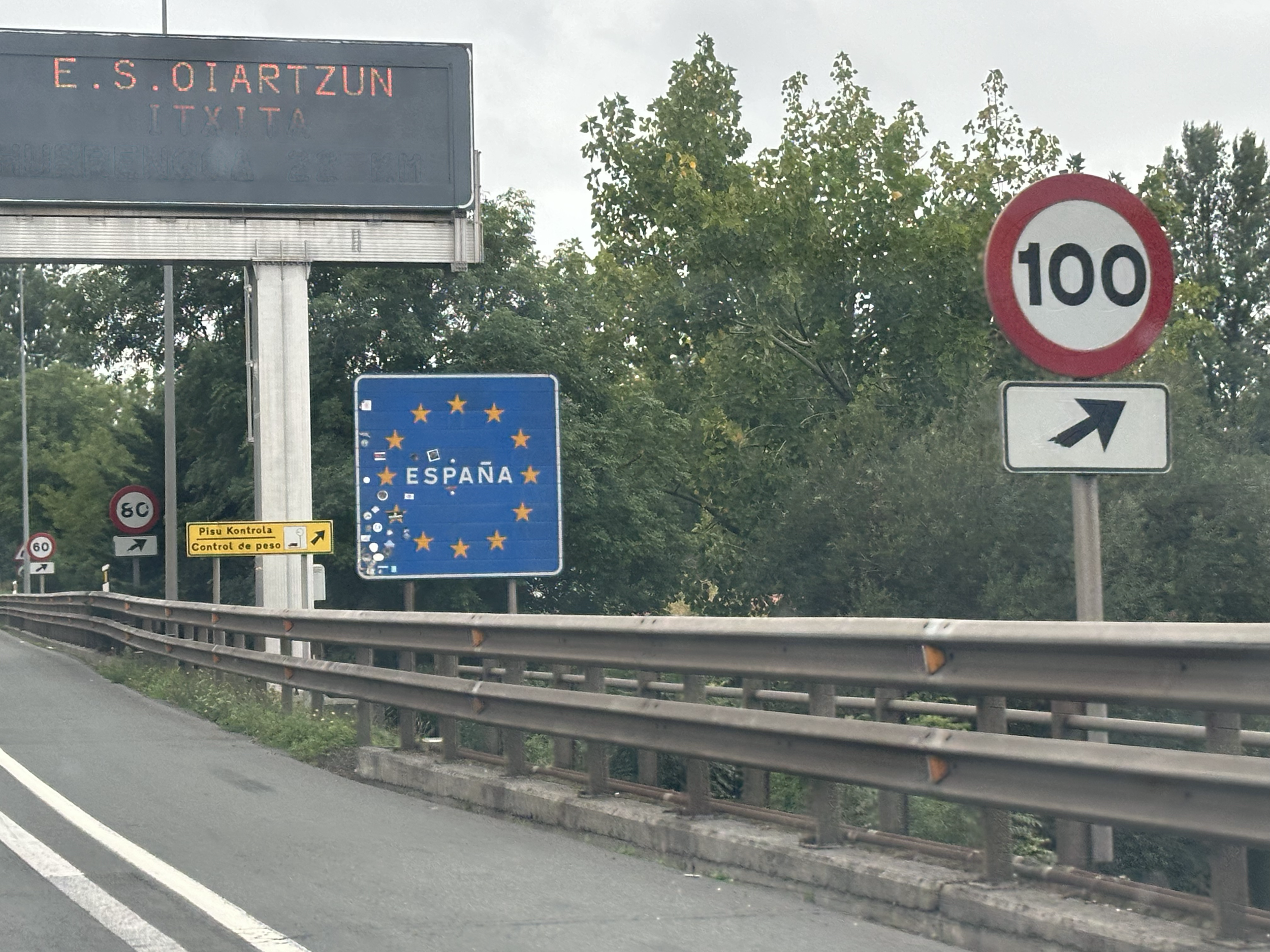
Headed back into Spain! We were very happy! :)
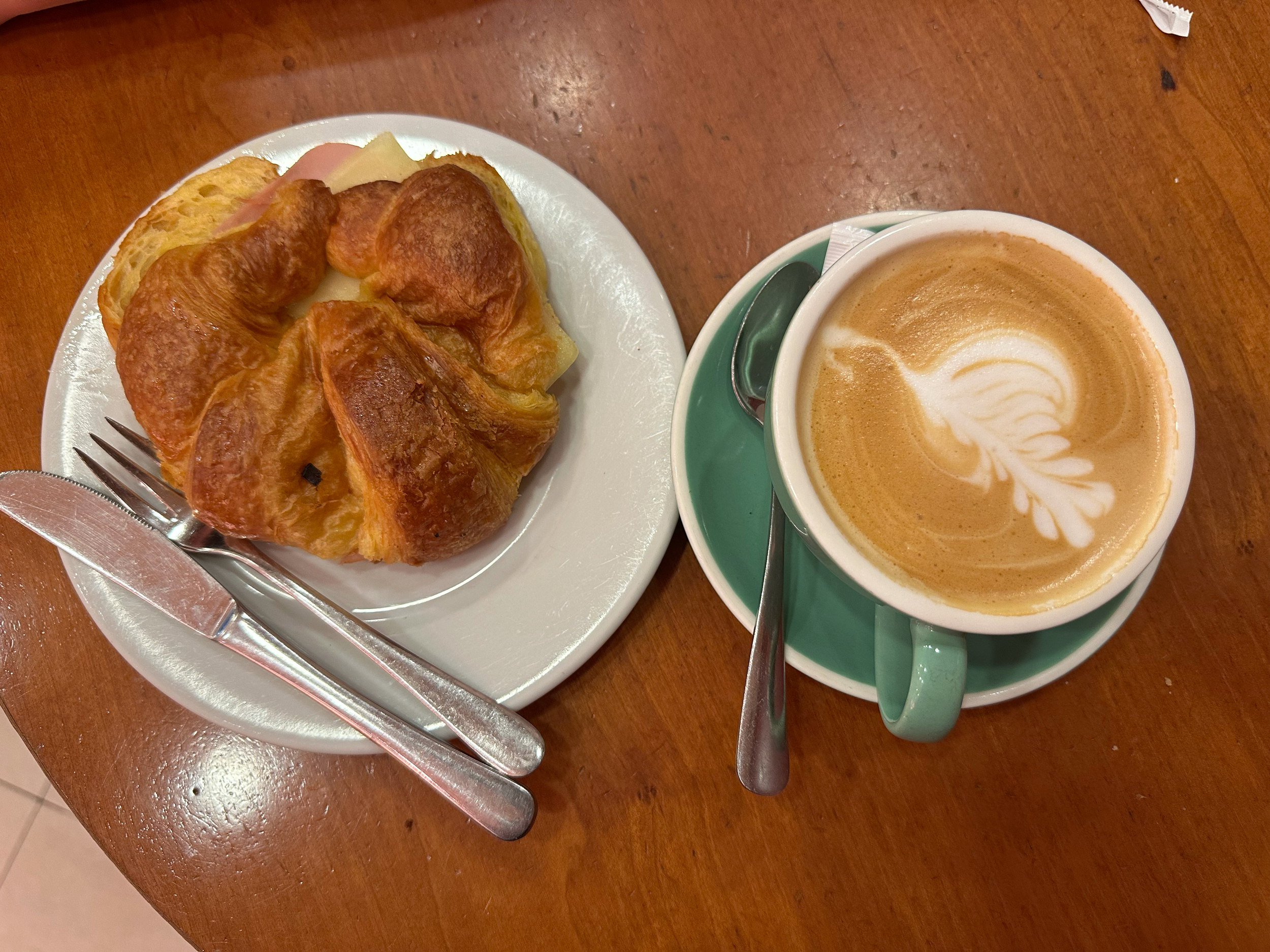
We arrived in San Sebastian in time for breakfast. Nothing beats a Café con Leche with a ham and cheese croissant.
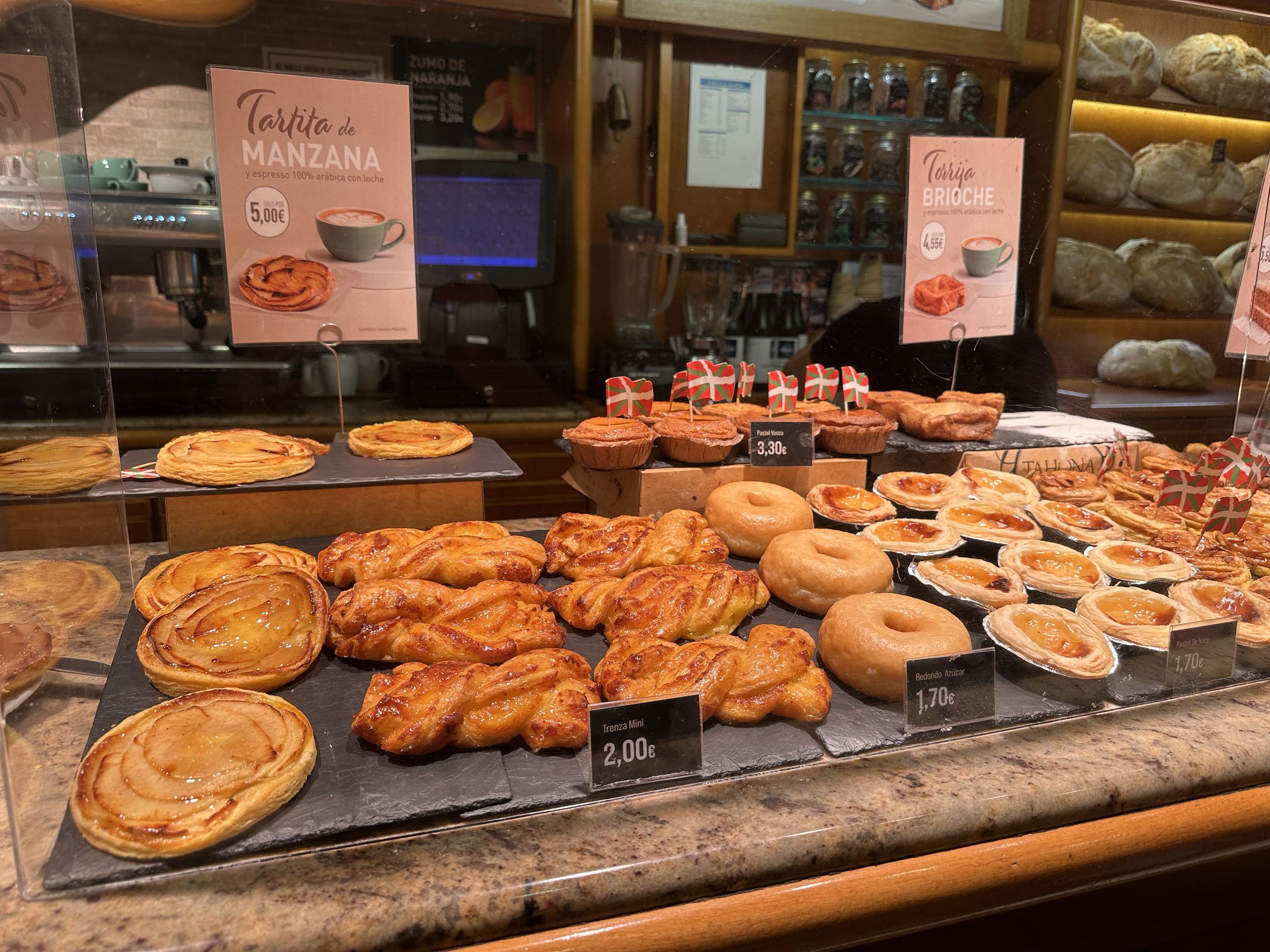
Beautiful pastries.
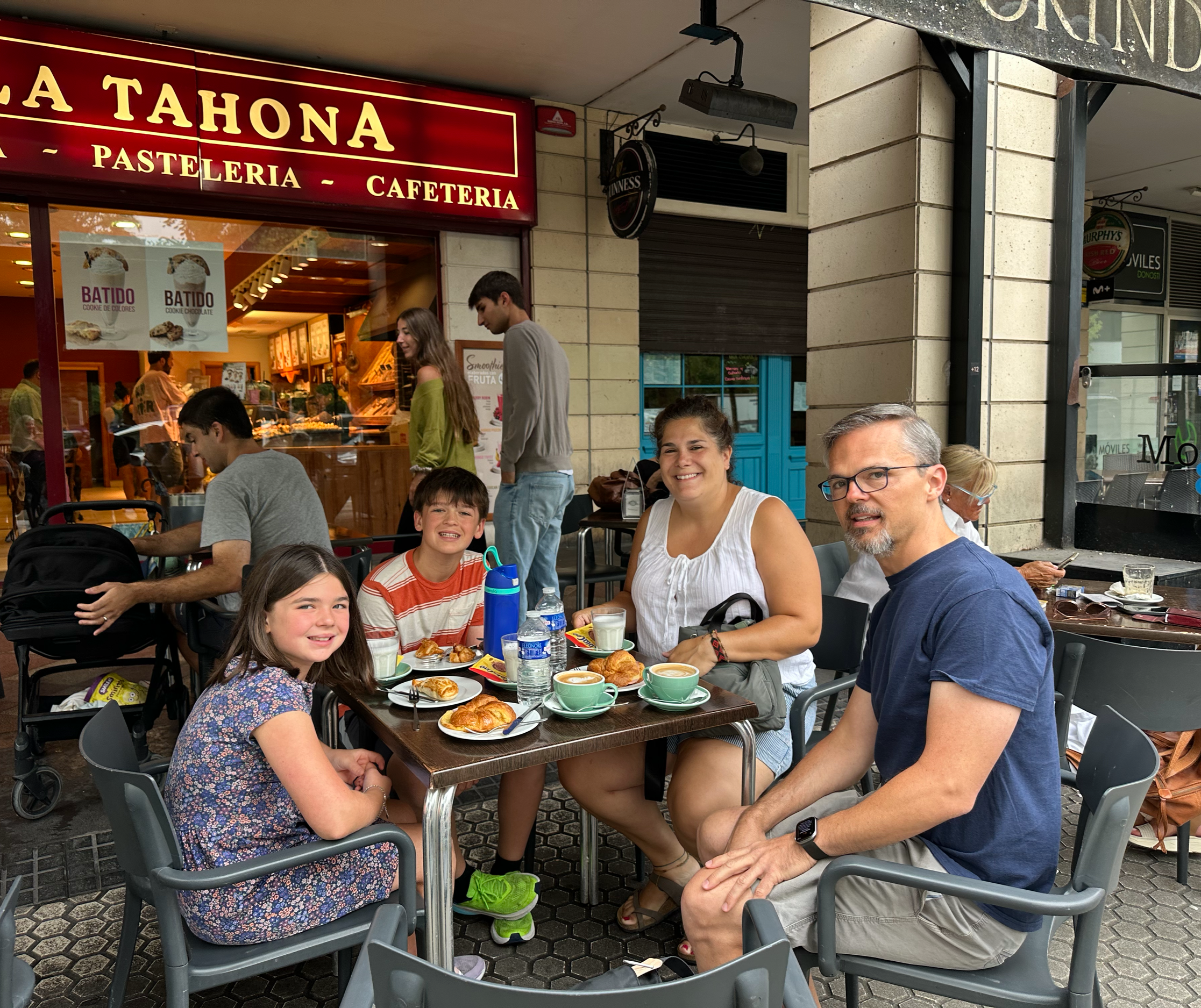
We were sad to say goodbye to Srta. U. She headed back home to prepare for her own departure to the U.S. while we continued exploring.
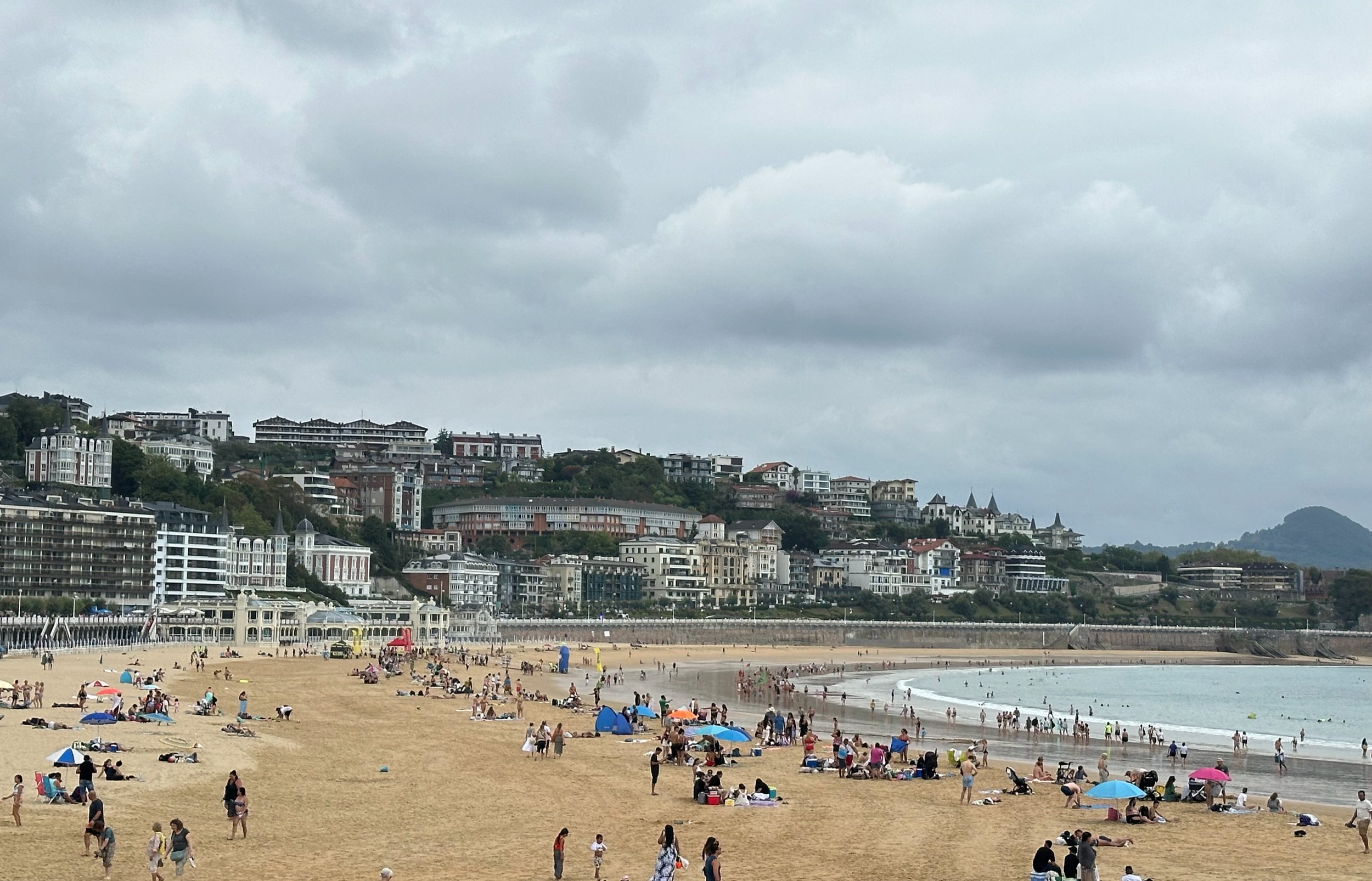
San Sebastian is another beach town on the Bay of Biscayne. The beach here is called "La Concha," as the coast line forms a very regular crescent shape along the Bay of La Concha, exiting out to the Bay of Biscayne.
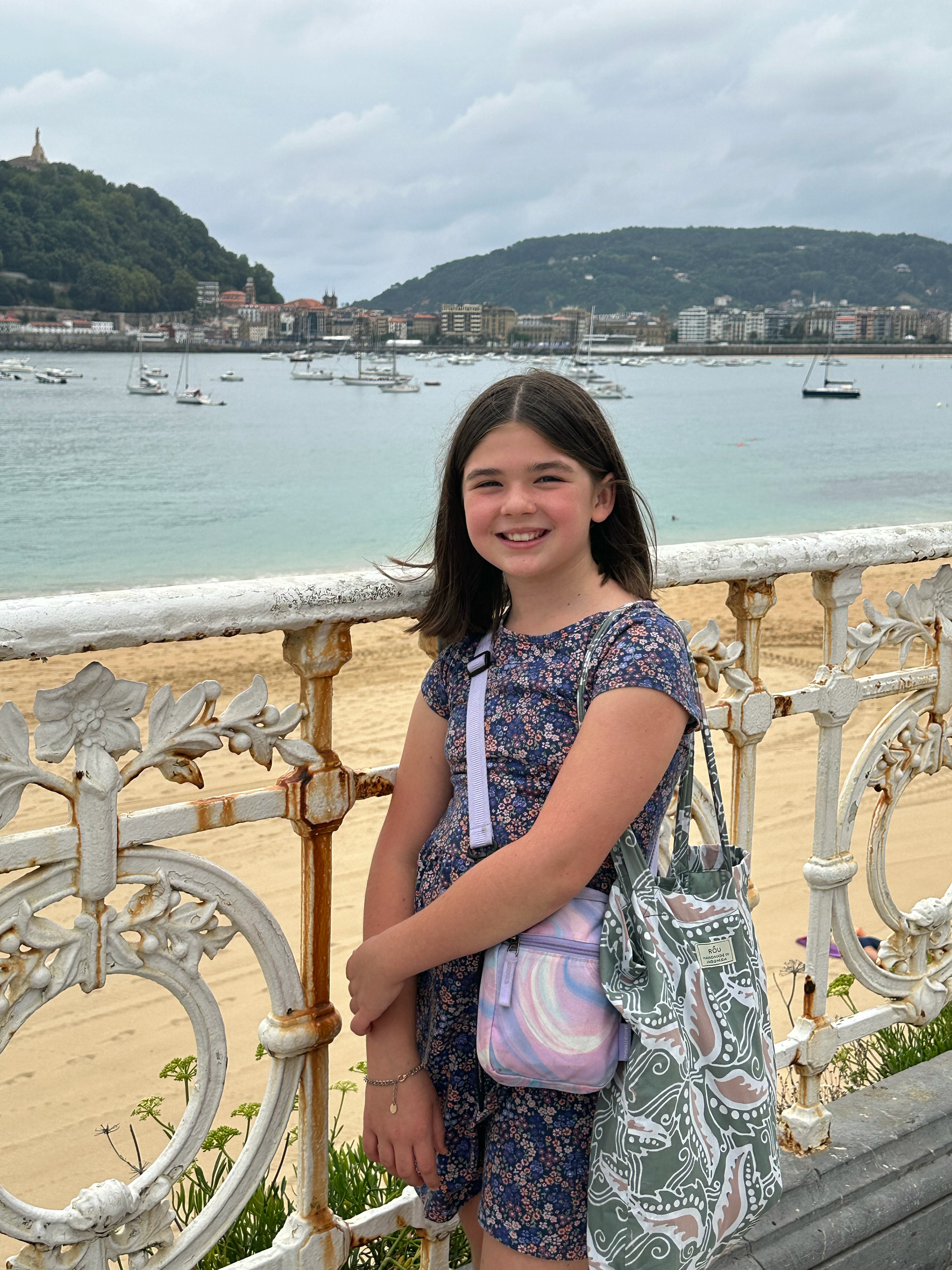
Amelia is excited because she knows we'll spend time in the water at this beach!
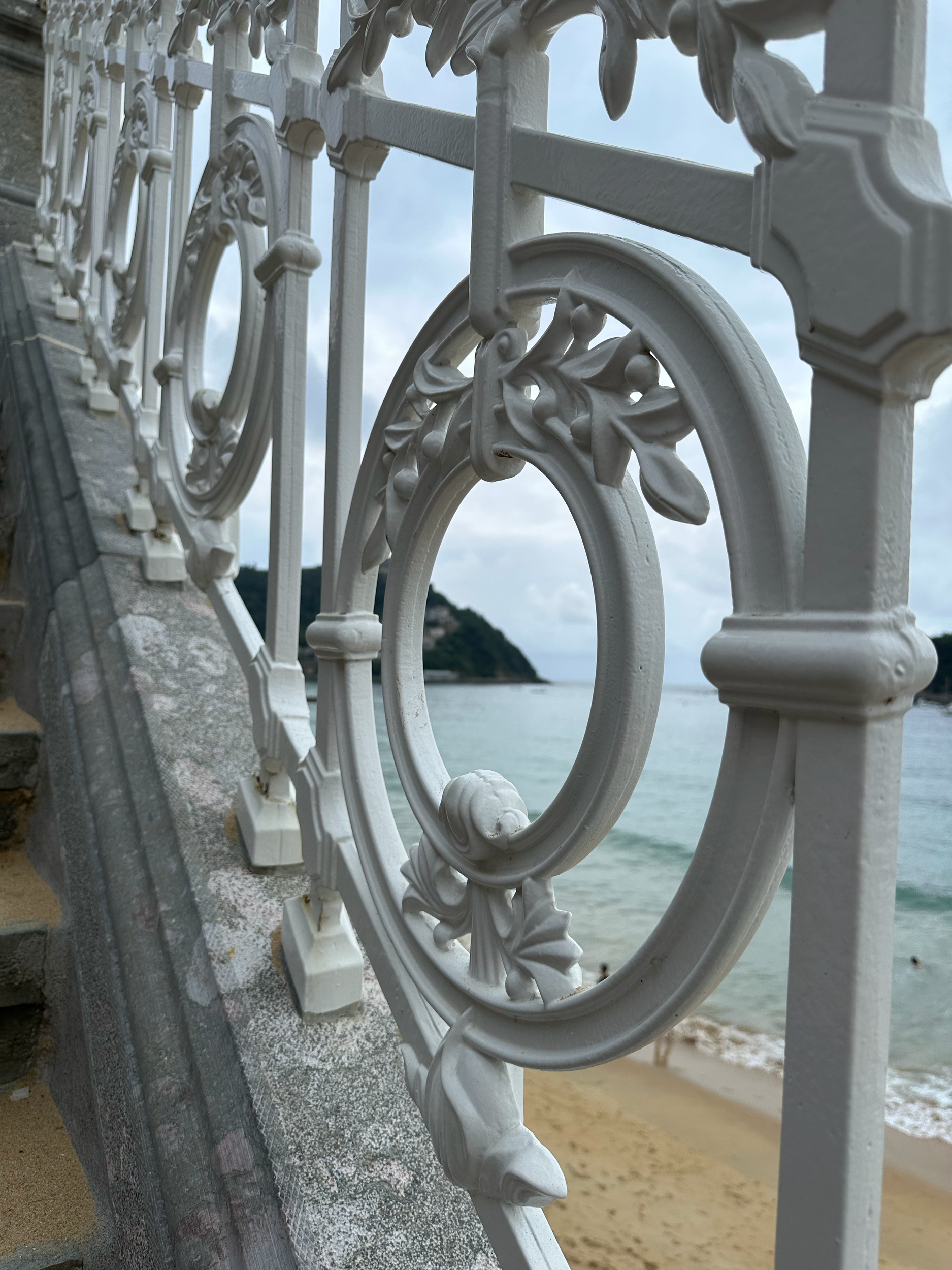
Beautiful railing along the stairs down to the beach.
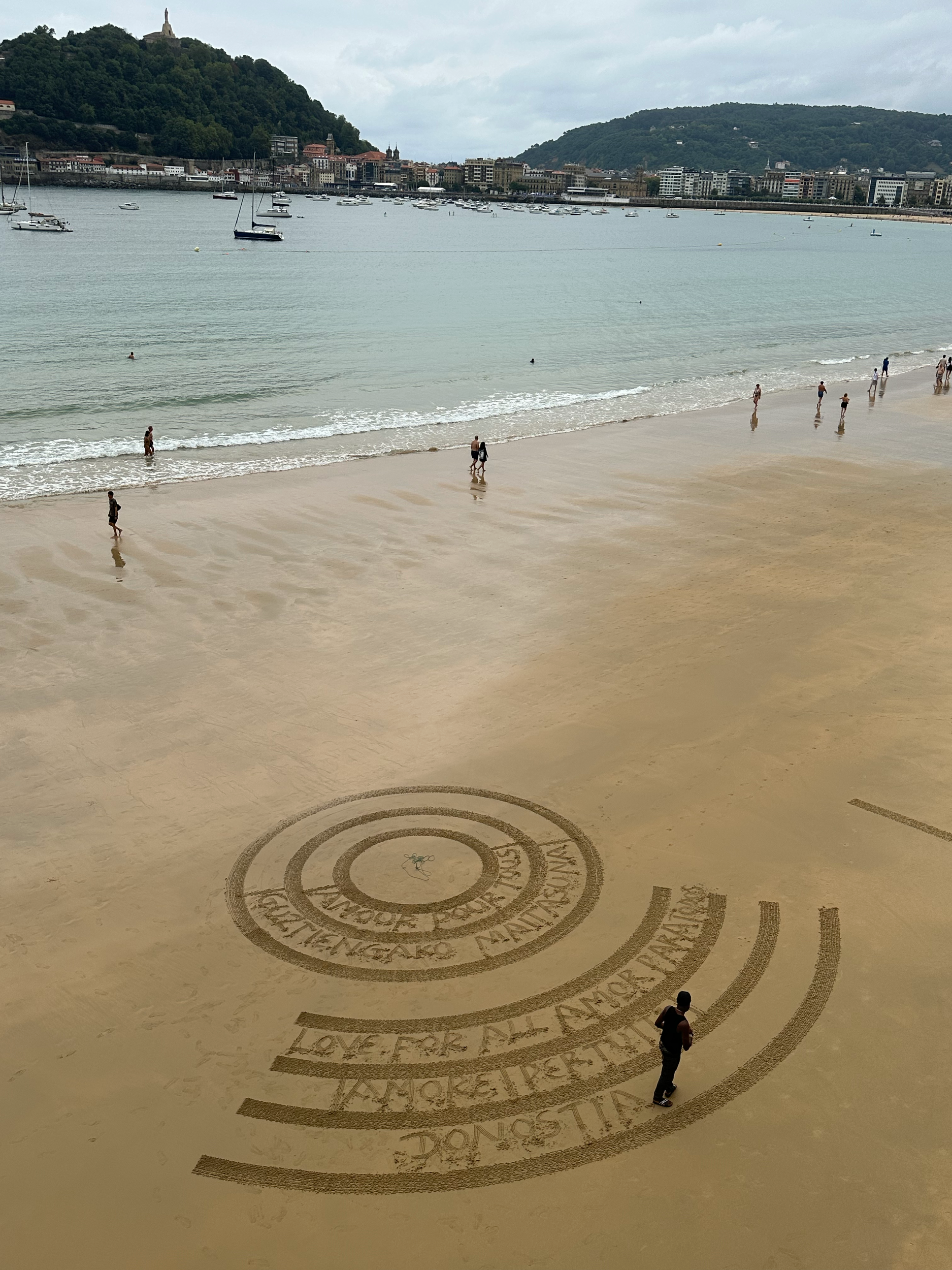
Artists claim sections of this large sandy beach to draw and create designs and patterns. They all have Instagram tags as well and a bucket down in the sand where you can throw tips down to them.
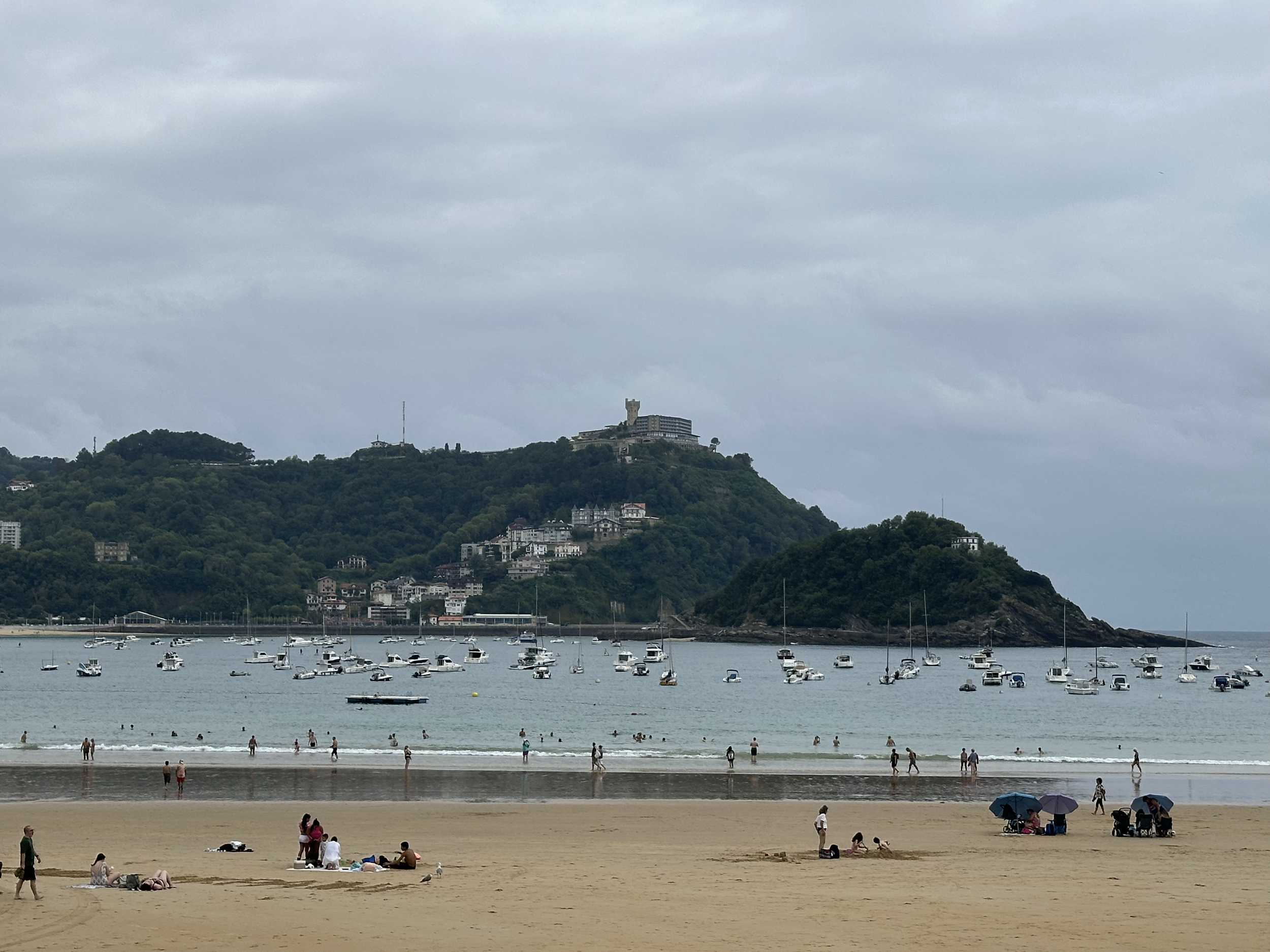
We walked along the "Paseo de la Concha" around the beach as we made our way to a our starting point for a tour of the town.
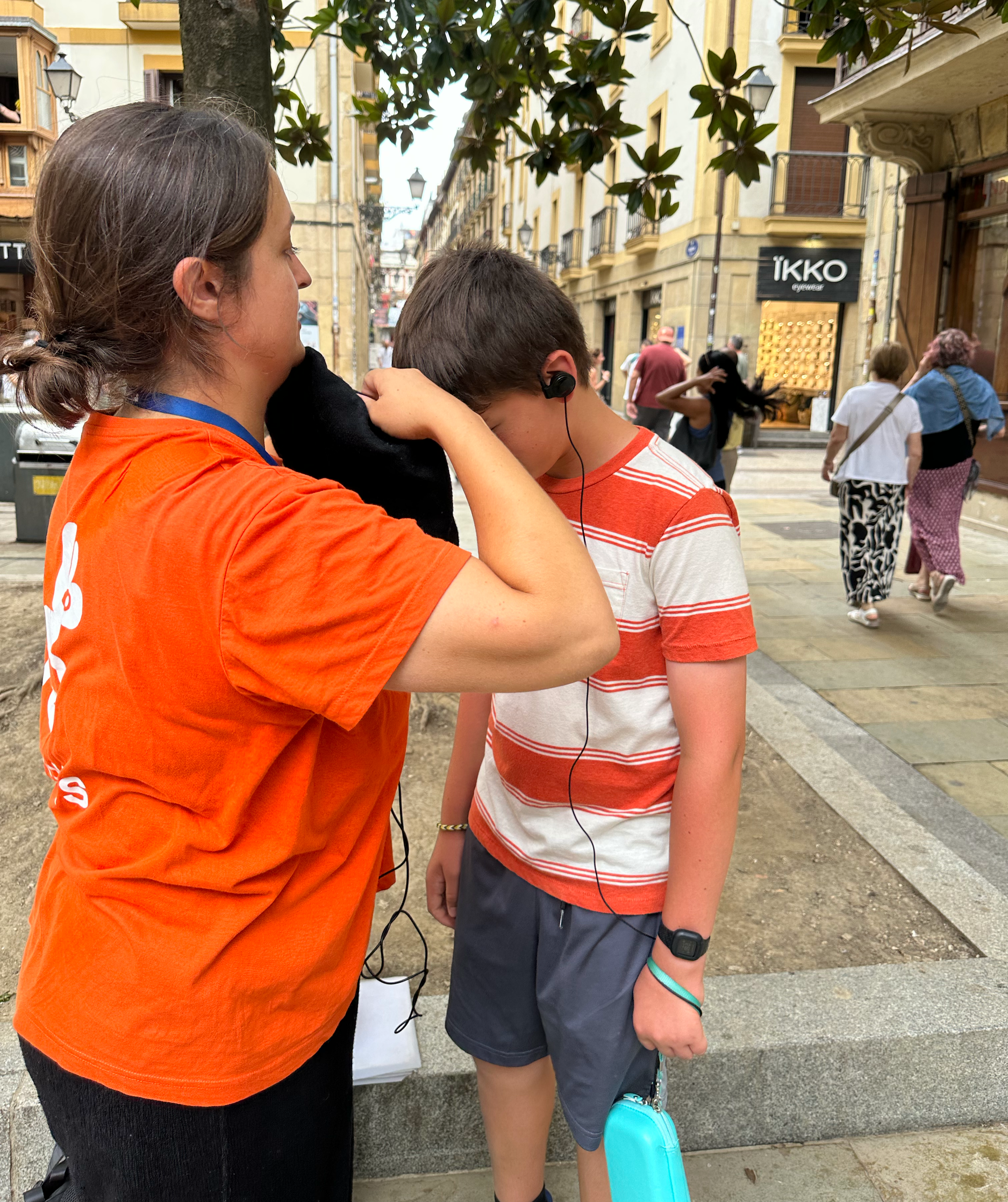
We went on a GuruWalk free tour of San Sebastian. Our guide, Maria, was so entertaining. She is Basque, so she could tell us a lot about the Basque culture from her own perspective. Joshua volunteered to try on the Basque-style beret called a "Txapela."
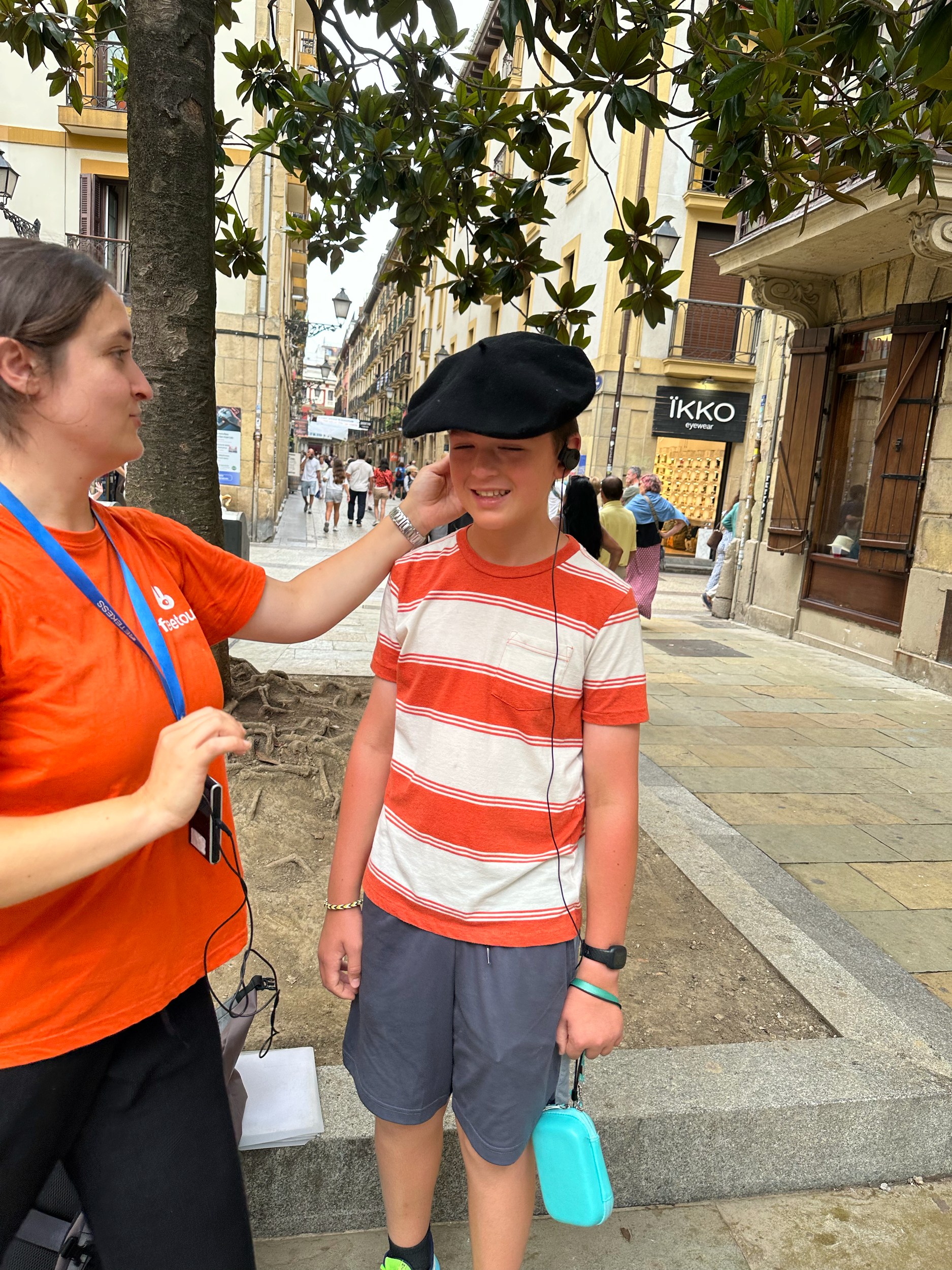
Apparently, Joshua wore it very well!
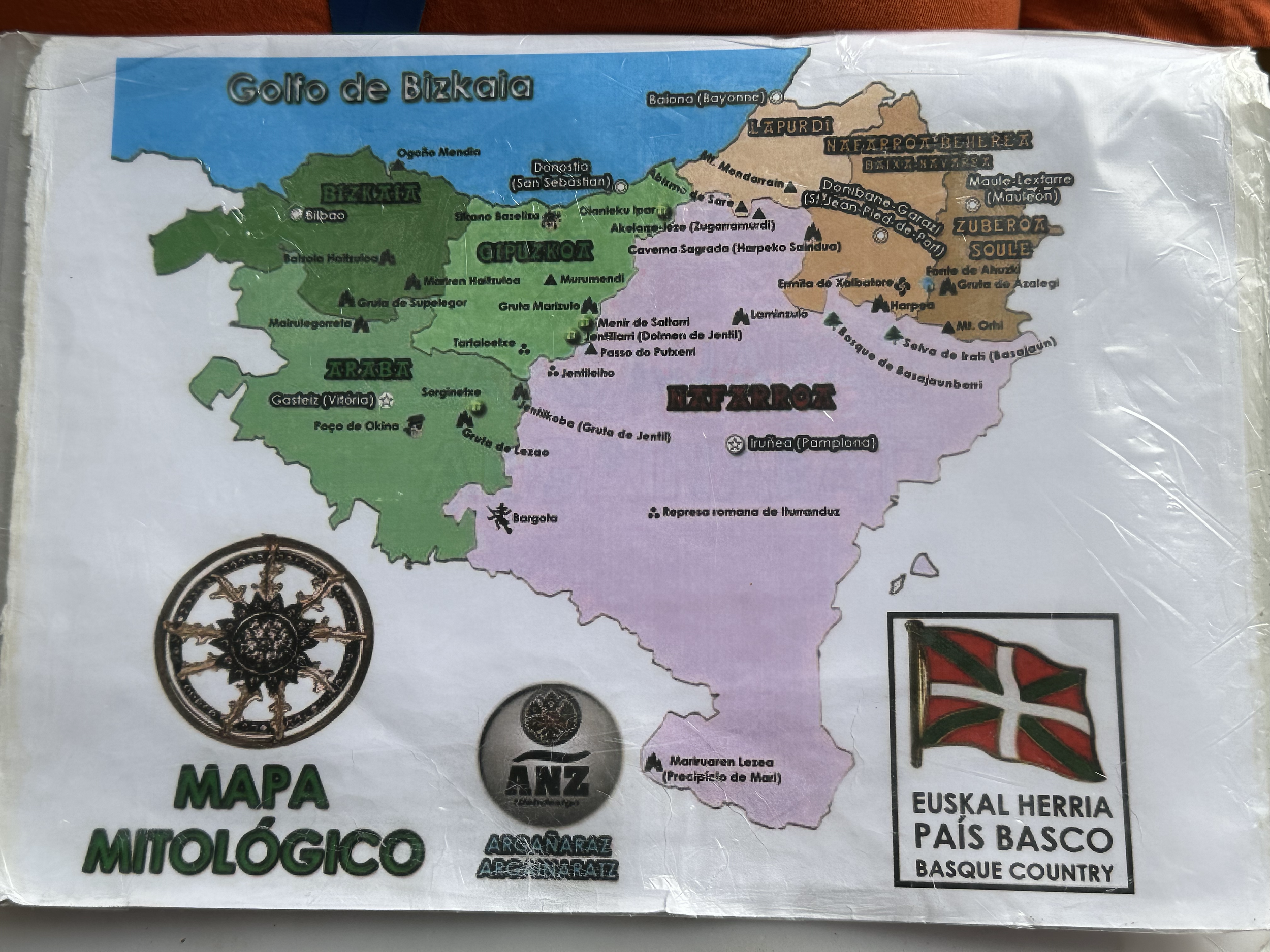
Maria had a map of the Basque region. The three tan regions are located in France. The three green regions are provinces in Spain with Vitoria-Gasteiz as the capital (according to our guide, San Sebastian and Bilbao are a bit of rivals, so the capital was placed in the 3rd region). The pink region is Navarra, which has a separate government and capital in Pamplona. (Notice the map is labeled in the Basque language- more on that later!)
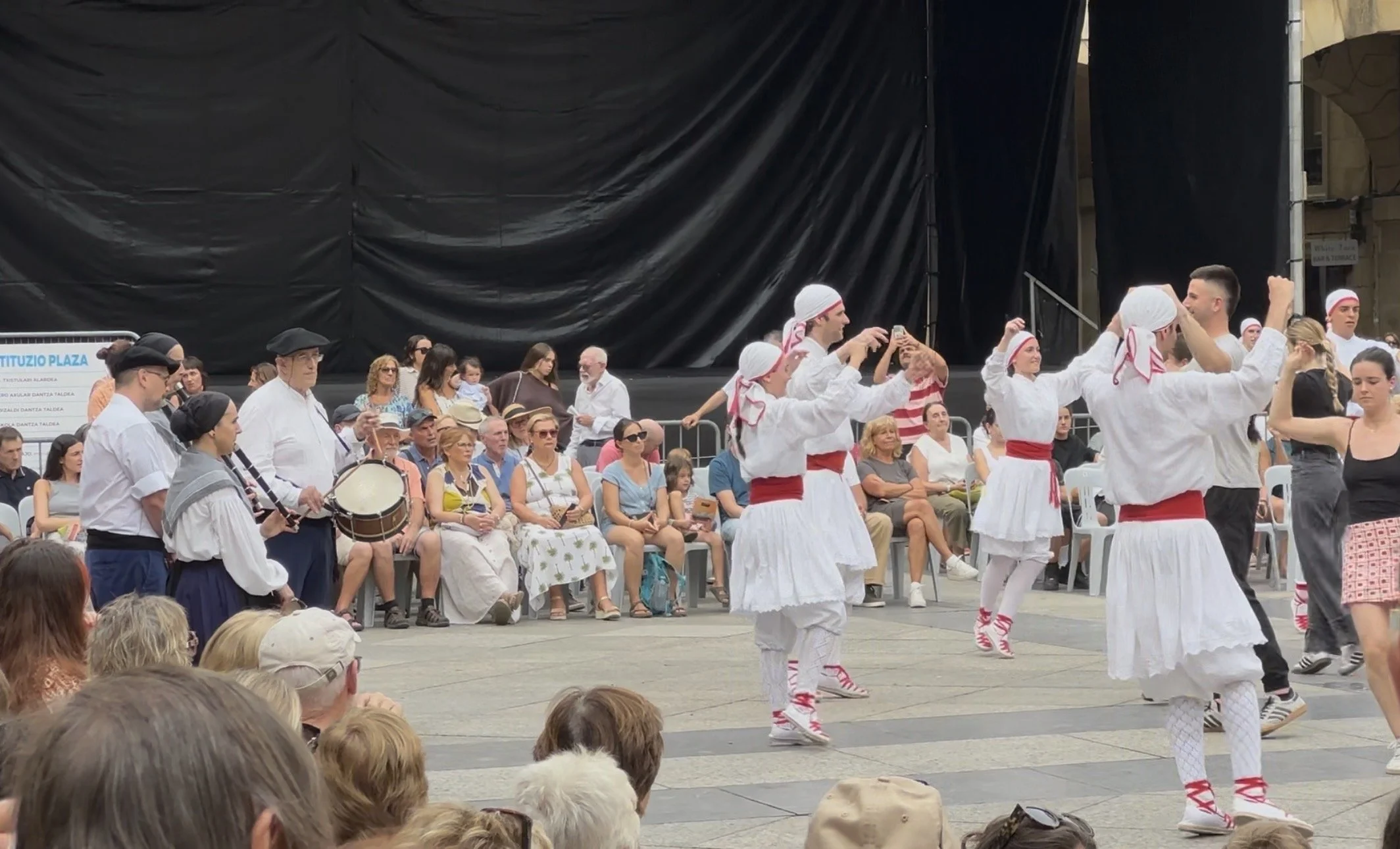
We happened to be in San Sebastian on the last day of the "Semana Grande," a week long celebration of Basque culture with dancing, music, sports, and food. Our guide was so excited that we came upon a group performing a traditional Mutxiko dance, which involves a lot of jumping, along with the musicians playing traditional instruments, including the Txistu (three holed flute played with one hand while the other hand beats a drum- how do they do that?!).
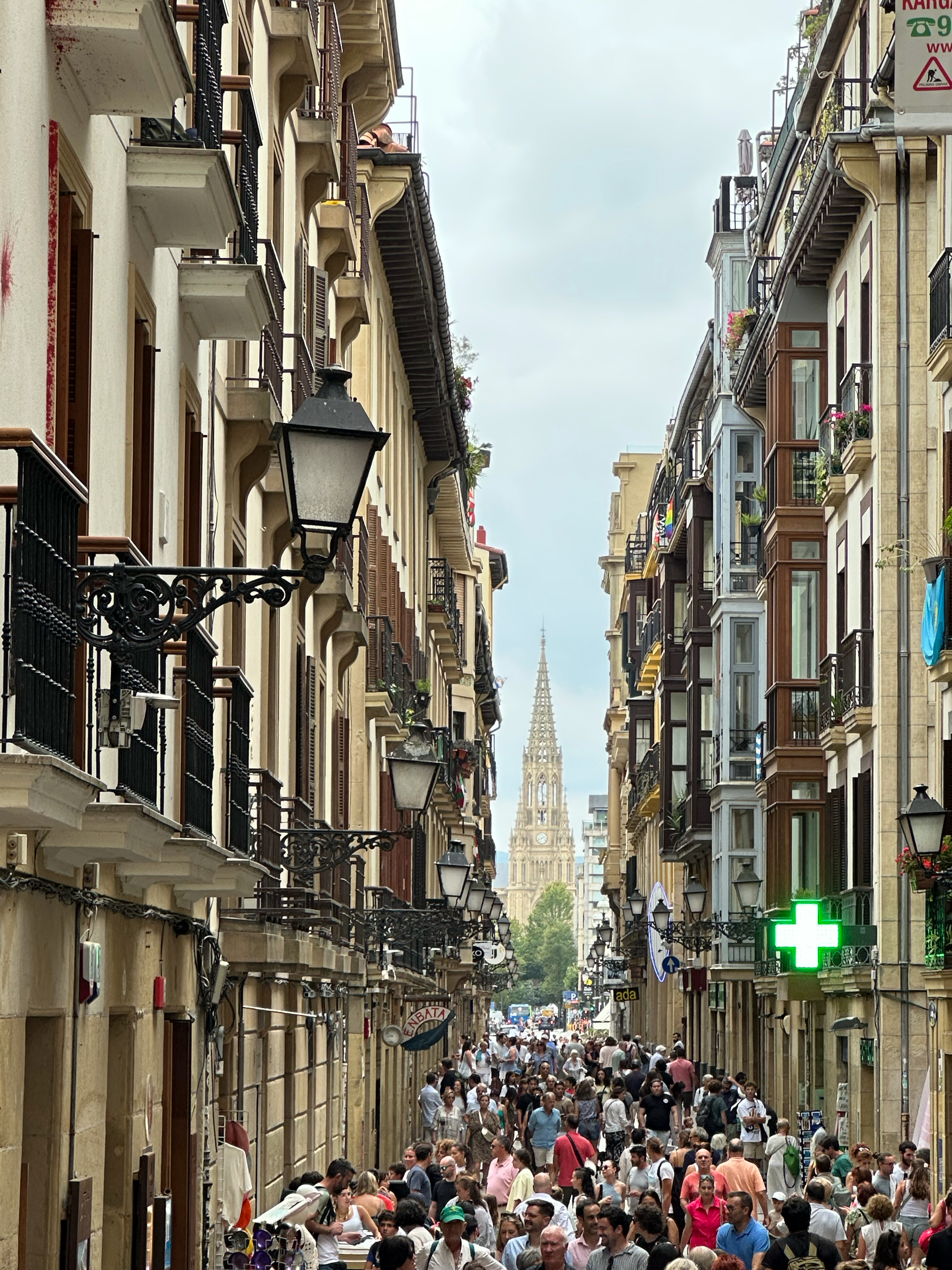
The streets were packed! At the far end of this street, you can see the Catedral del Buen Pastor (Good Shepherd Cathedral), built in the late 19th Century in the neo-Gothic style.
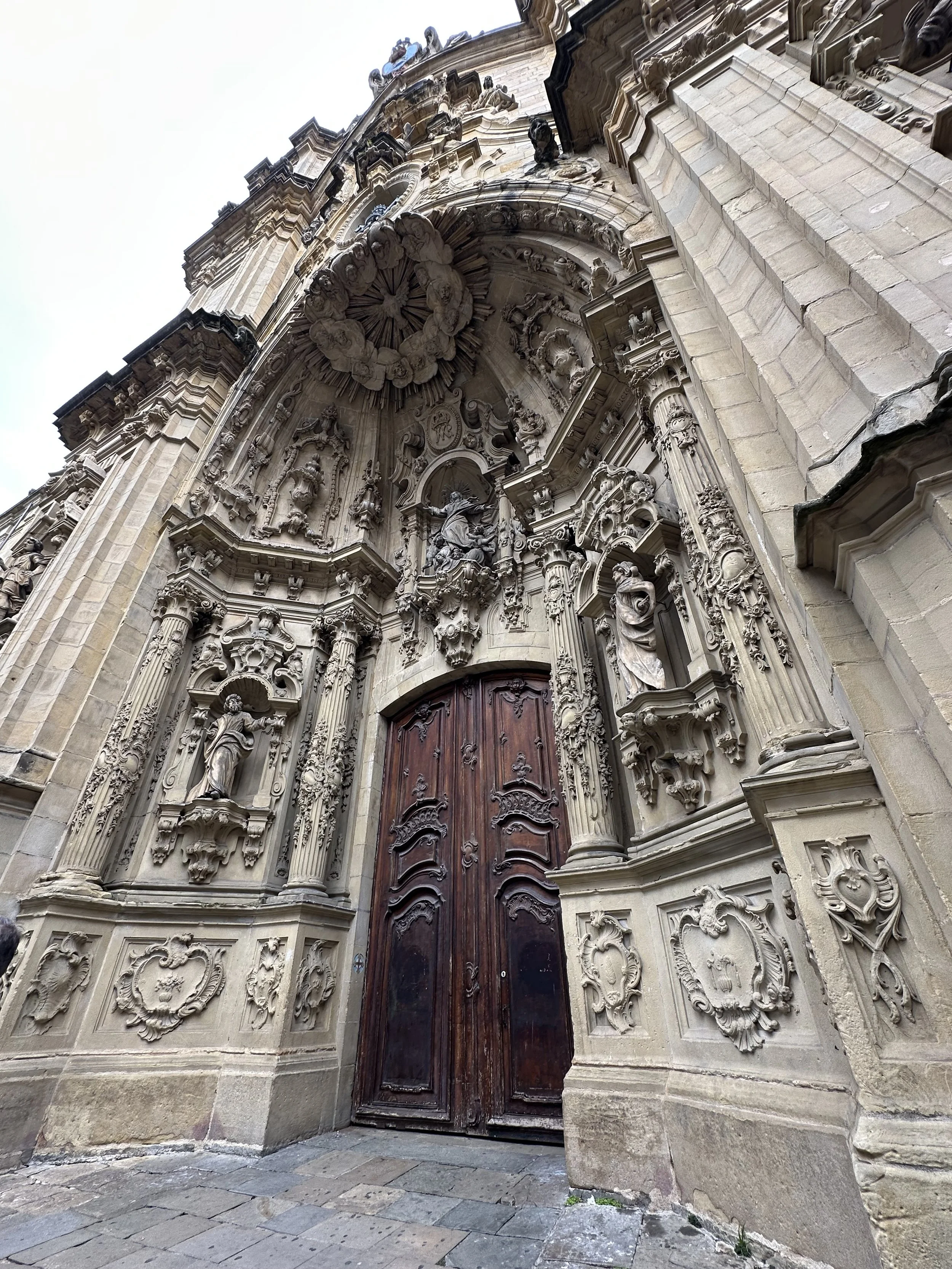
While looking down the street at the Good Shepherd Cathedral-we were actually standing in front of the Basilica of Santa María del Coro (18th century Baroque). They are exactly 1000 yards apart connecting the Old Town to the "new" part of the city.
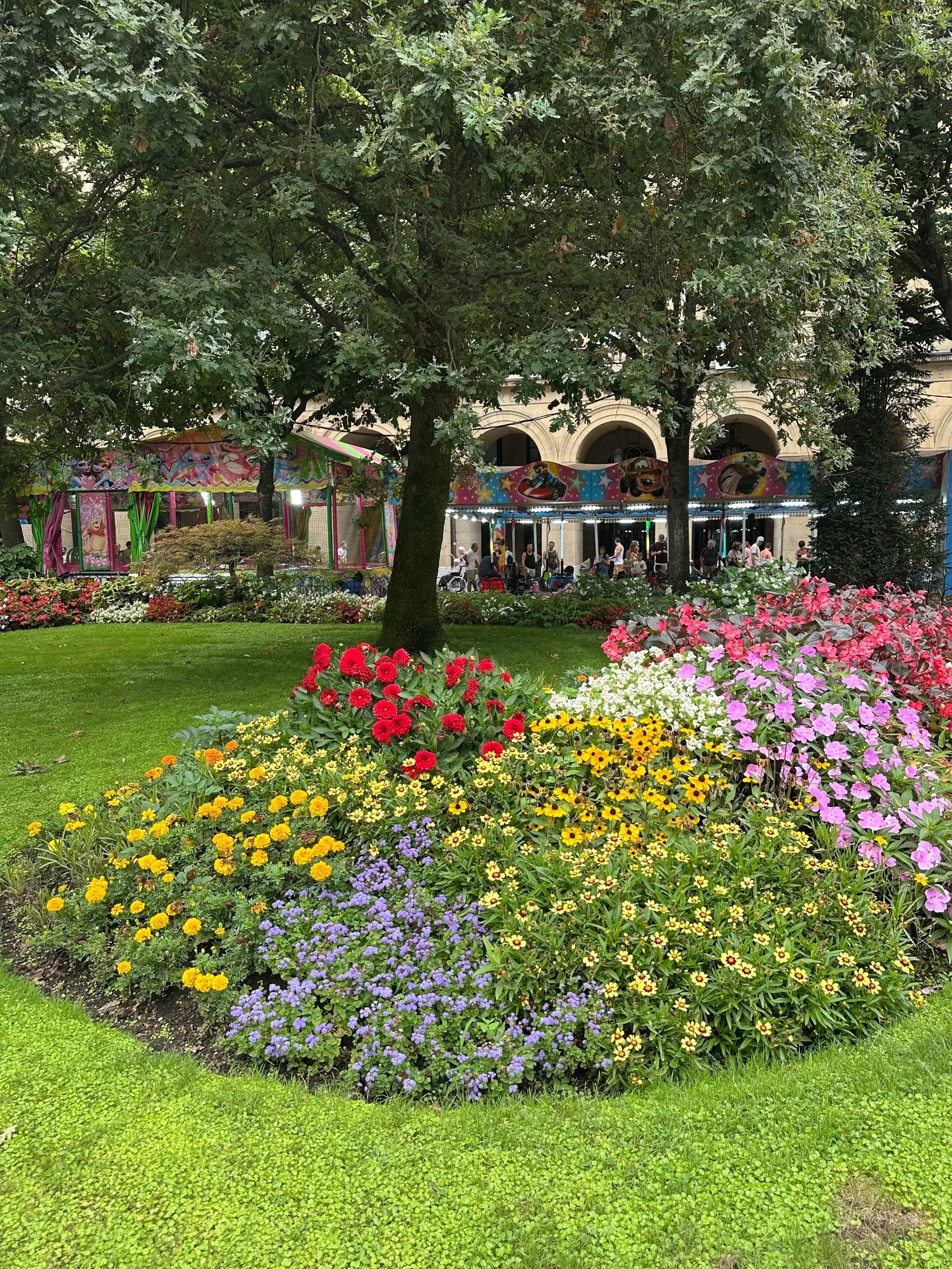
An English-style garden in the Plaza Gipuzkoa
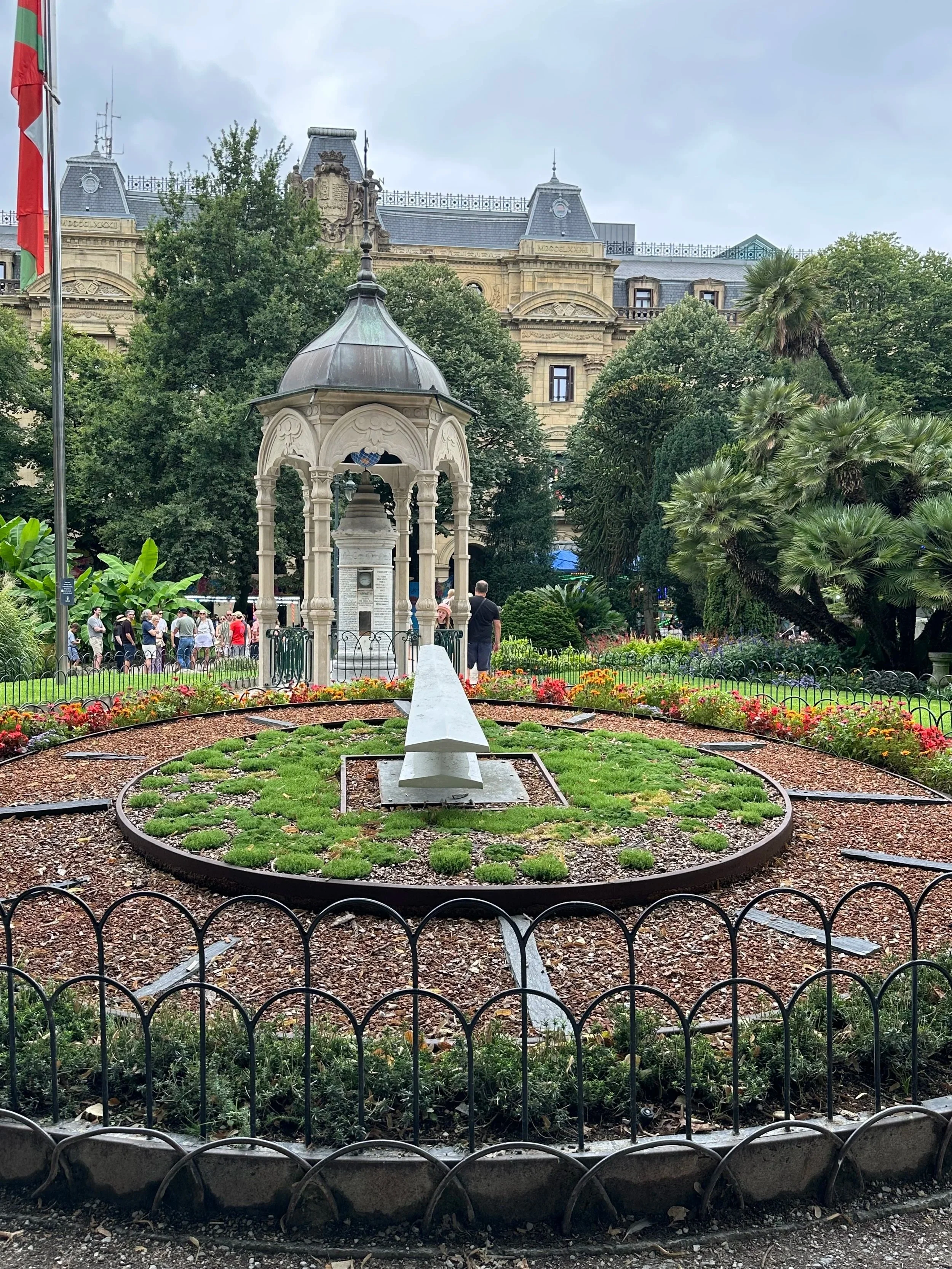
Plaza Gipuzkoa also had a special floral clock with the Meteorological Temple behind it (containing a sundial, barometer, thermometer, and hygrometer. It was donated by a local scientist in 1879).
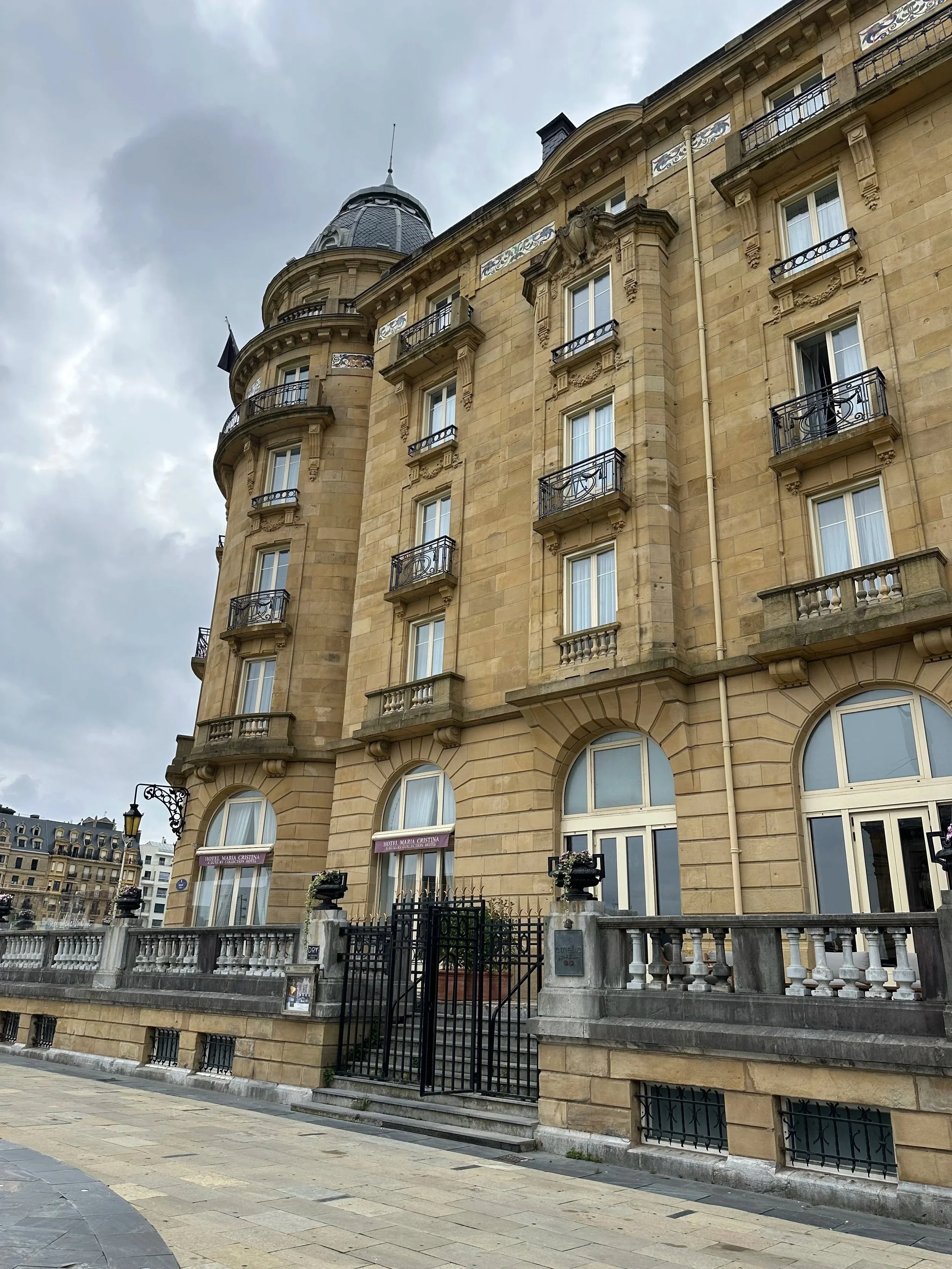
Plaza Okendo houses the Hotel Maria Cristina and the Victoria Eugenia theatre. This plaza was part of the Spanish Civil War in the 1936 Battle of San Sebastian and its buildings still show the consequences.
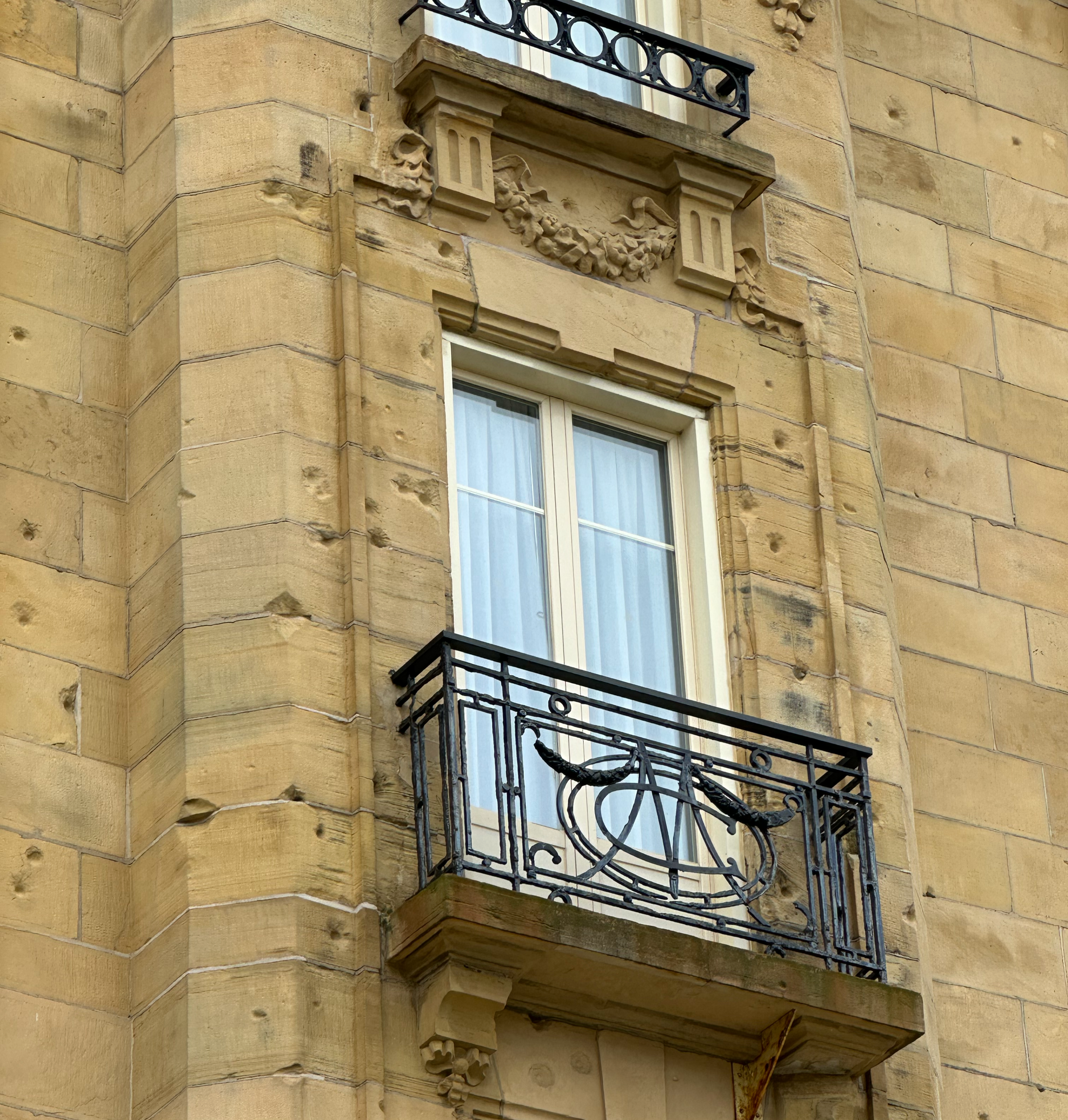
The Nationalists (Franco) fought the Republicans in this square. The Hotel Maria Cristina shows bullet holes and impact of schrapnel all across its facade.
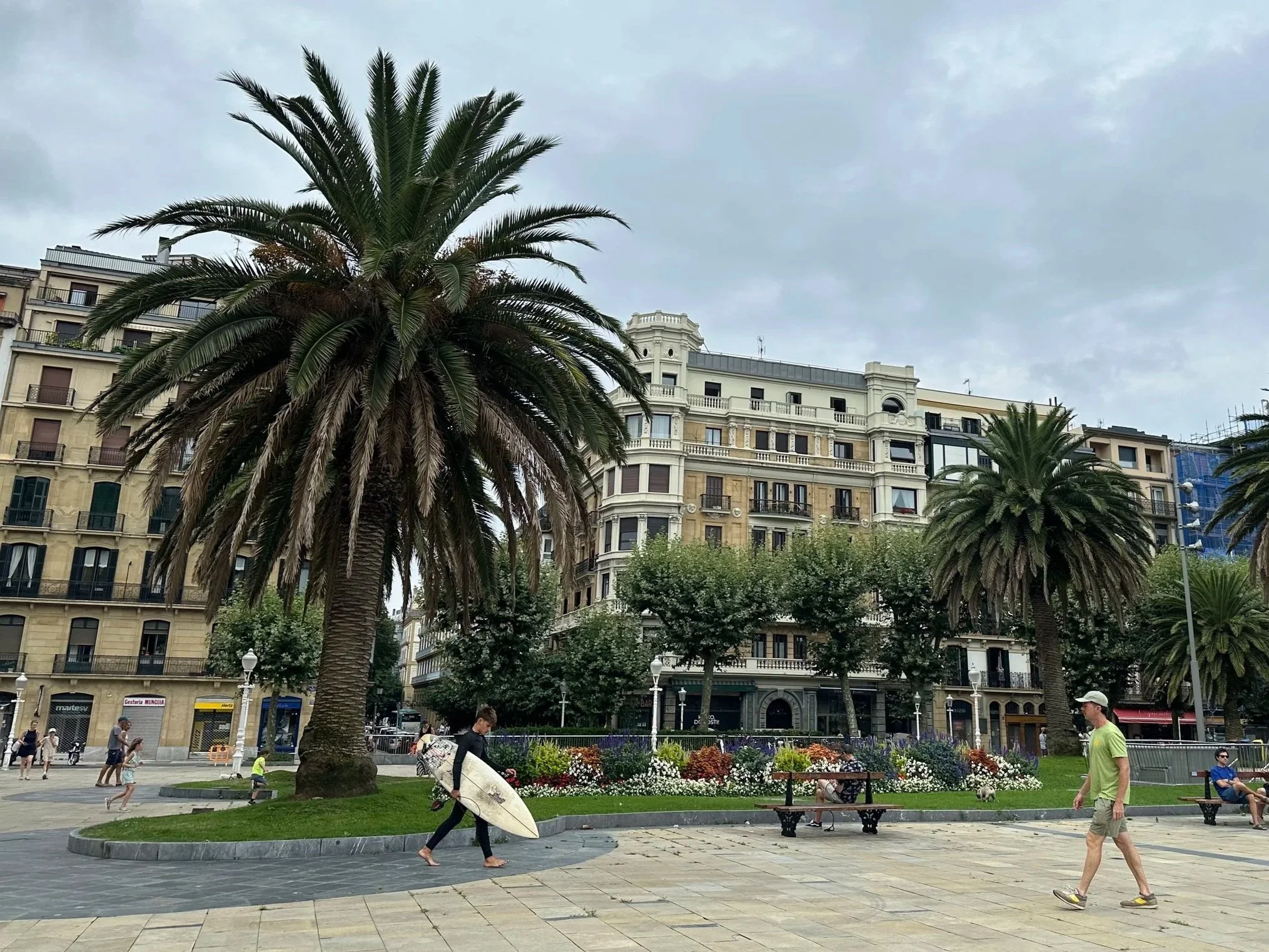
Such a historical location...and a surfer walking across on his way to the beach.
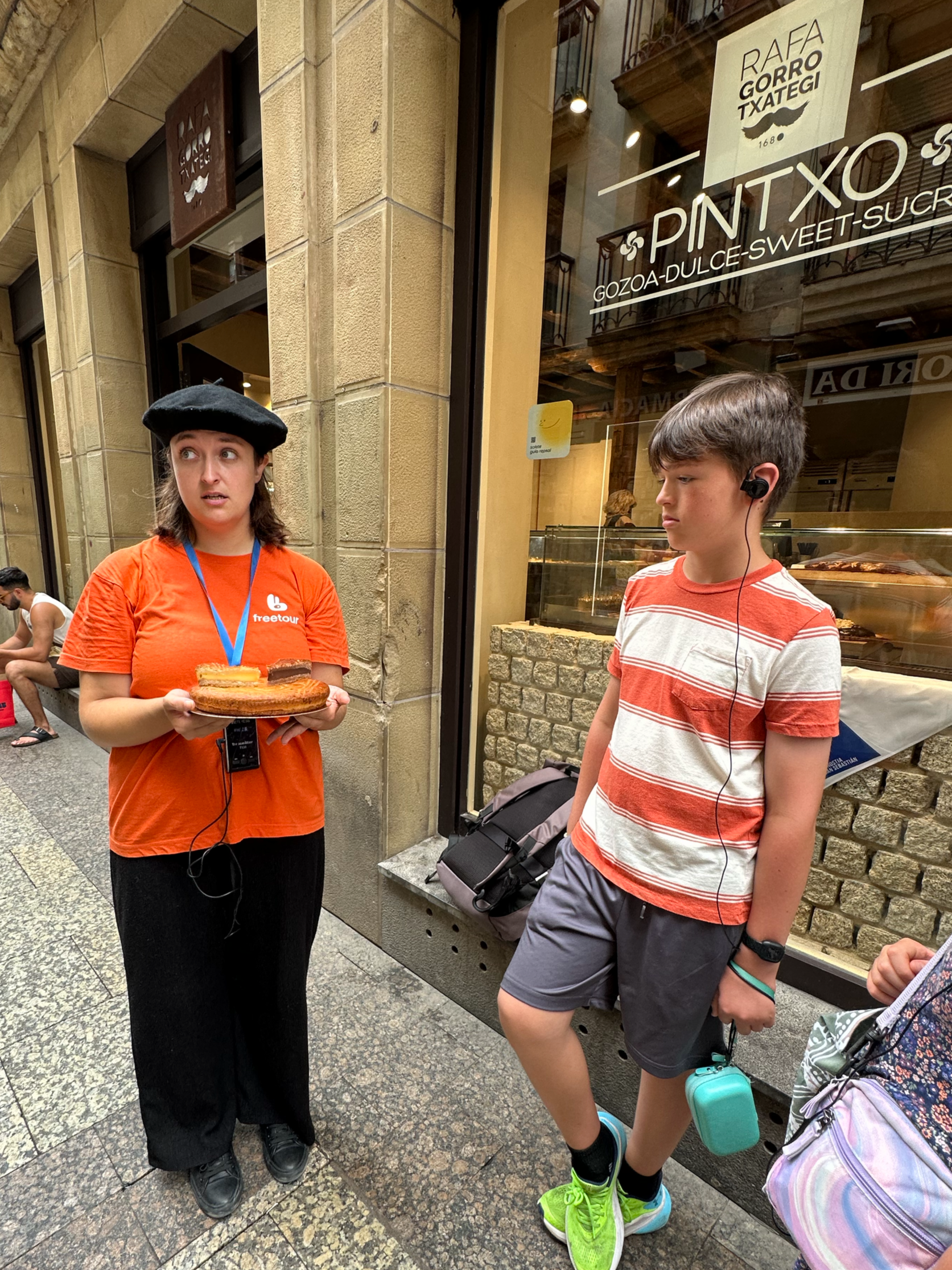
Our guide was able to go into this pastry store and bring out an example of Gataux Basque.
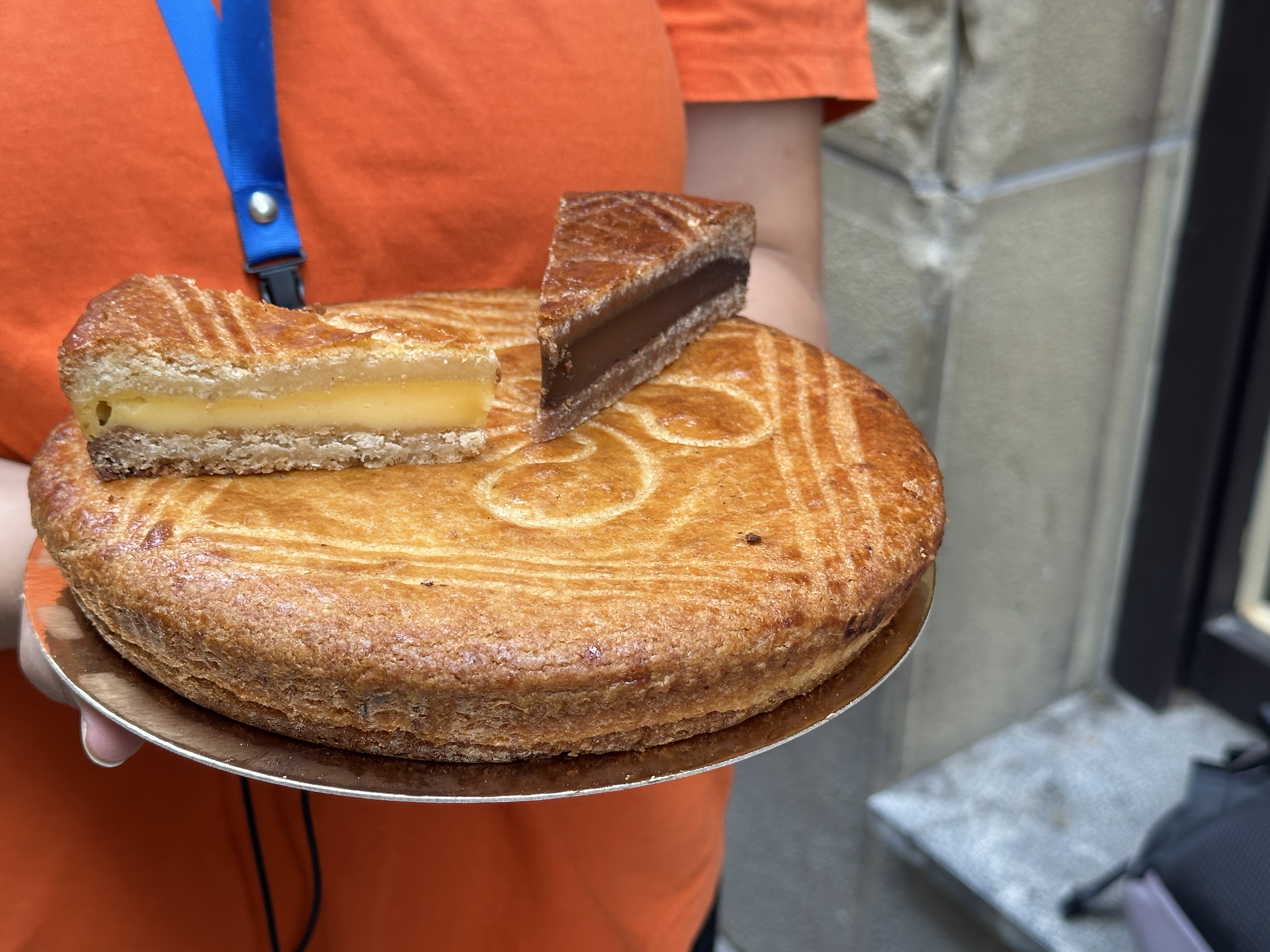
Here's a close up so you can see the intricate design on top and the delicious fillings inside.
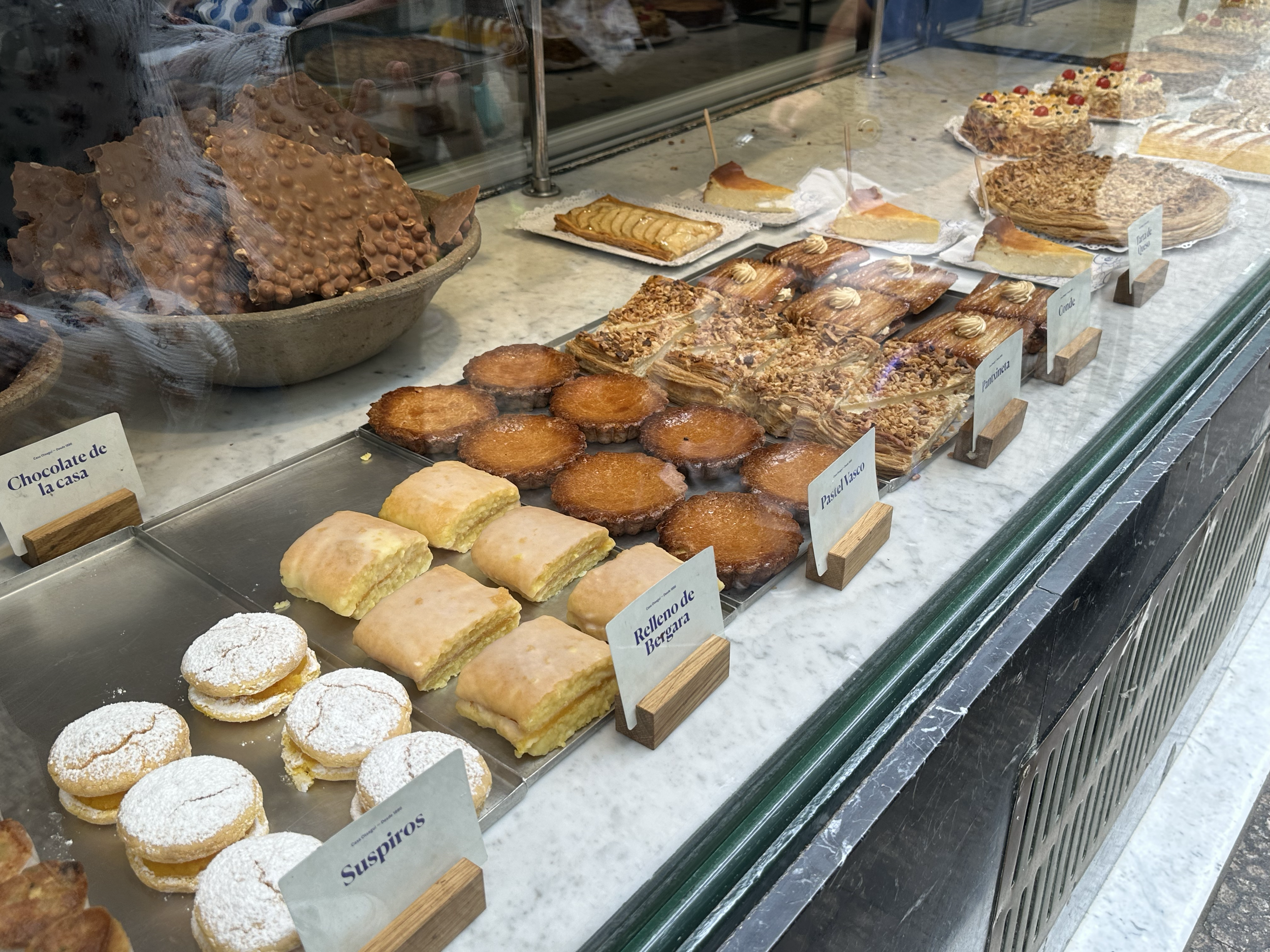
A whole case of delicious local desserts
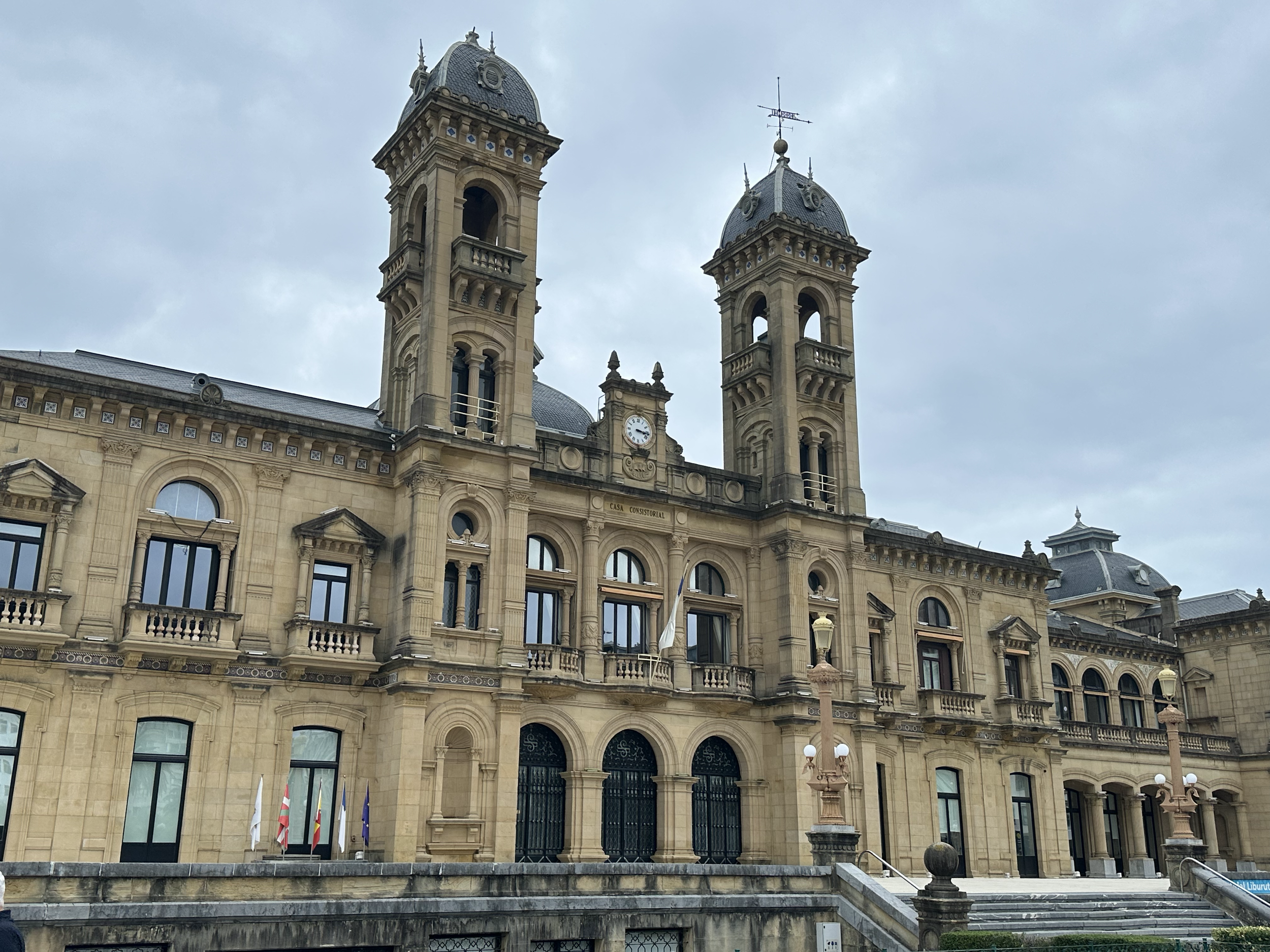
San Sebastian City Hall sits near La Concha with a view out over the Alderdi Eder gardens and the water. This building was built in the late 1900s as the Gran Casino, which explains its location. It closed when gambling was banned in 1924 and reopened as City Hall in 1947.
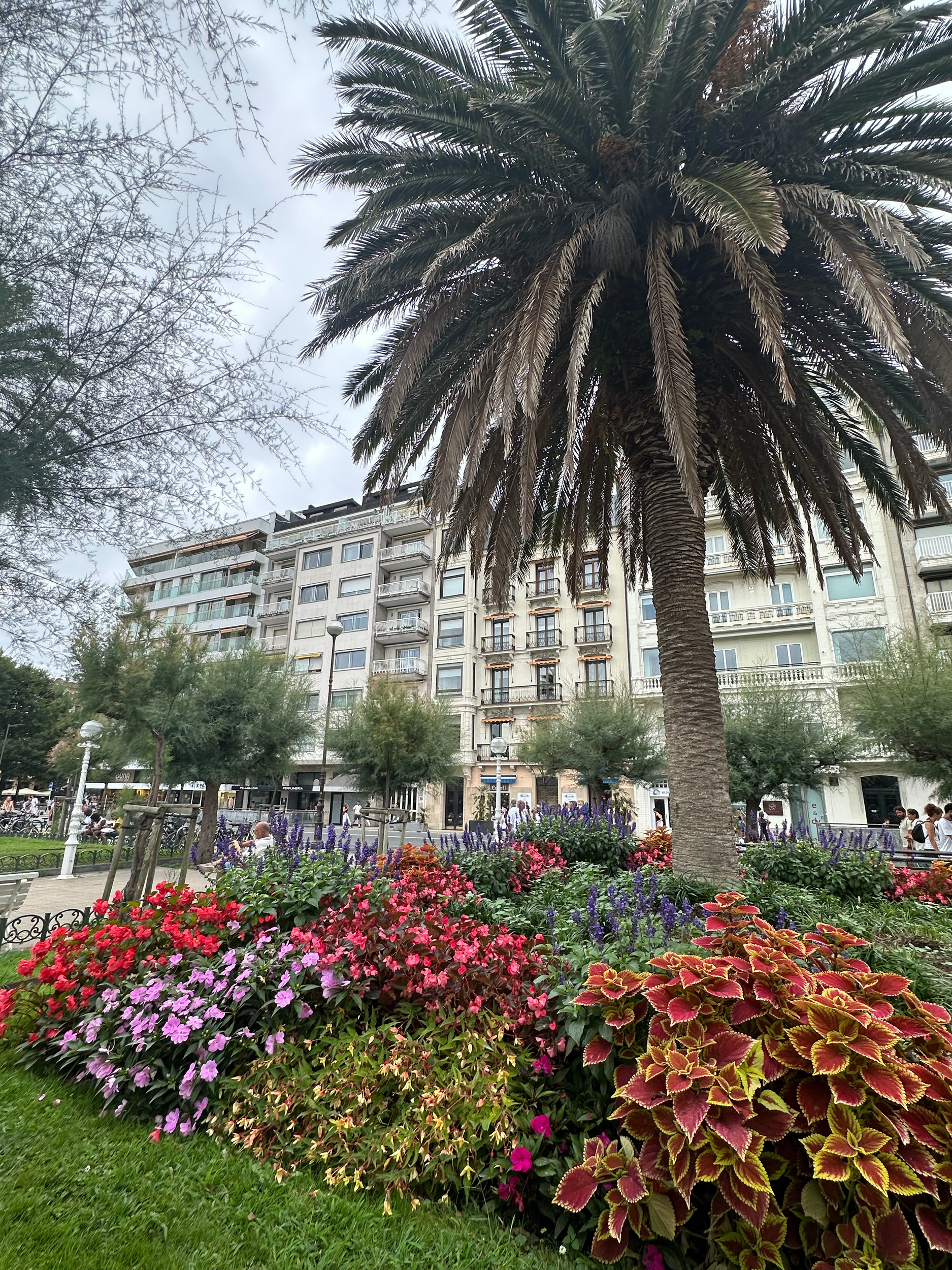
Alderdi Eder gardens is filled with palm trees and tamarind trees among colorful flower beds.
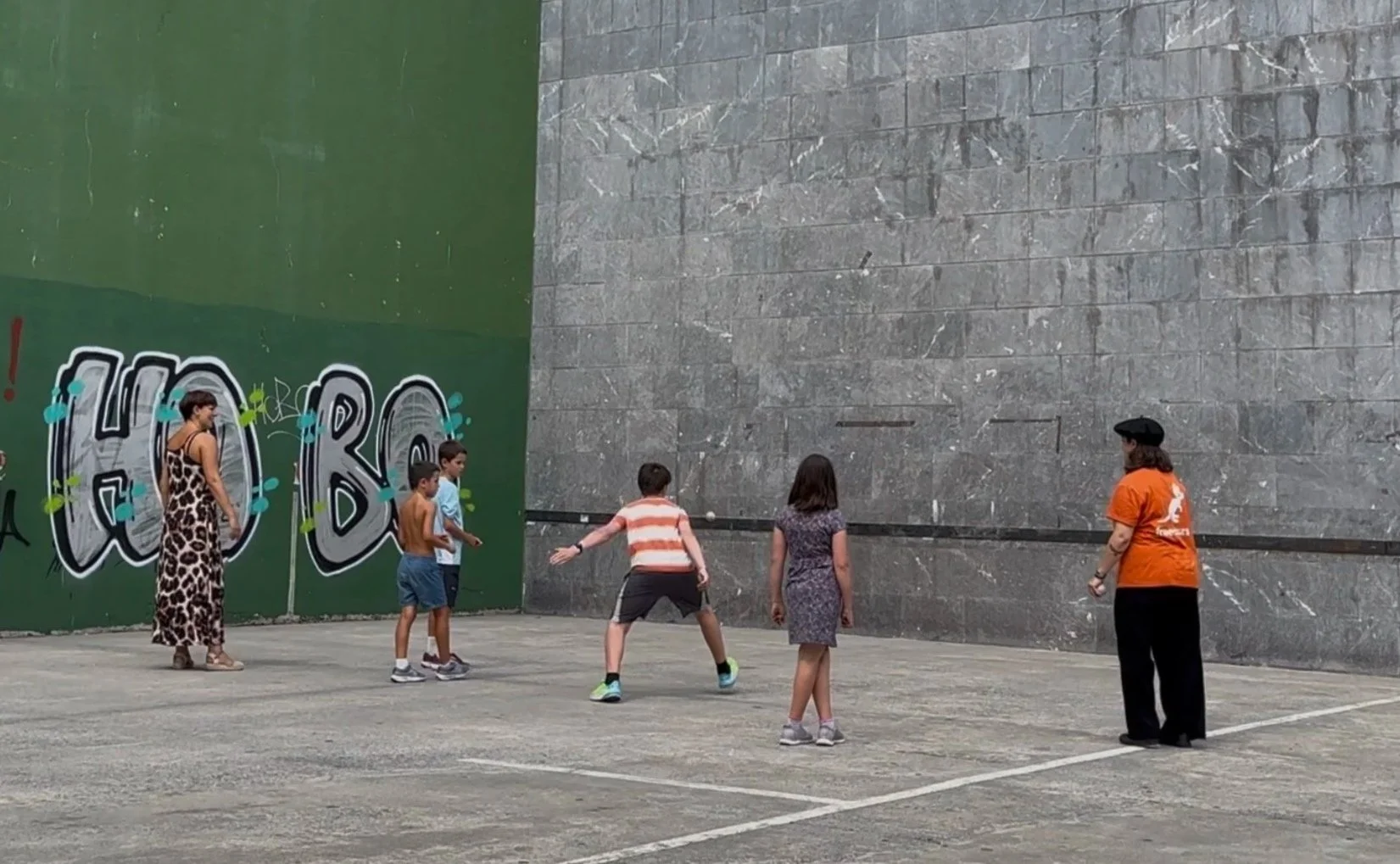
Maria took us to a court to tell us about "pelota ball," a game that is part of Basque tradition. How fun that a family was there playing and invited our kids to join in. (There is a Valencian variation of the game with a slightly larger ball).
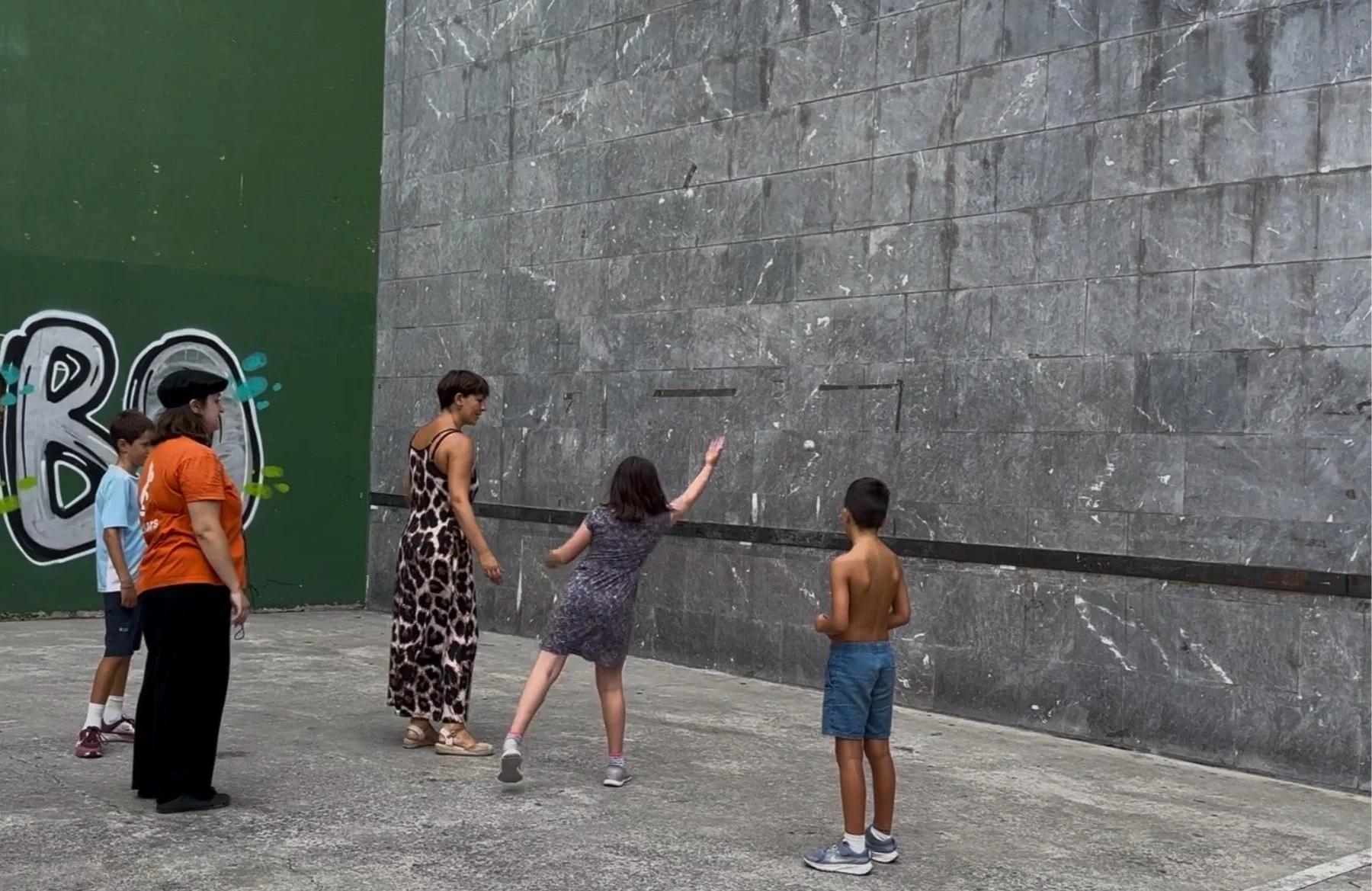
The game reminds me of raquetball, in that the ball is hit against a wall (above a line), back and forth between two people. Sometimes a paddle is used, but usually your hand is the paddle.
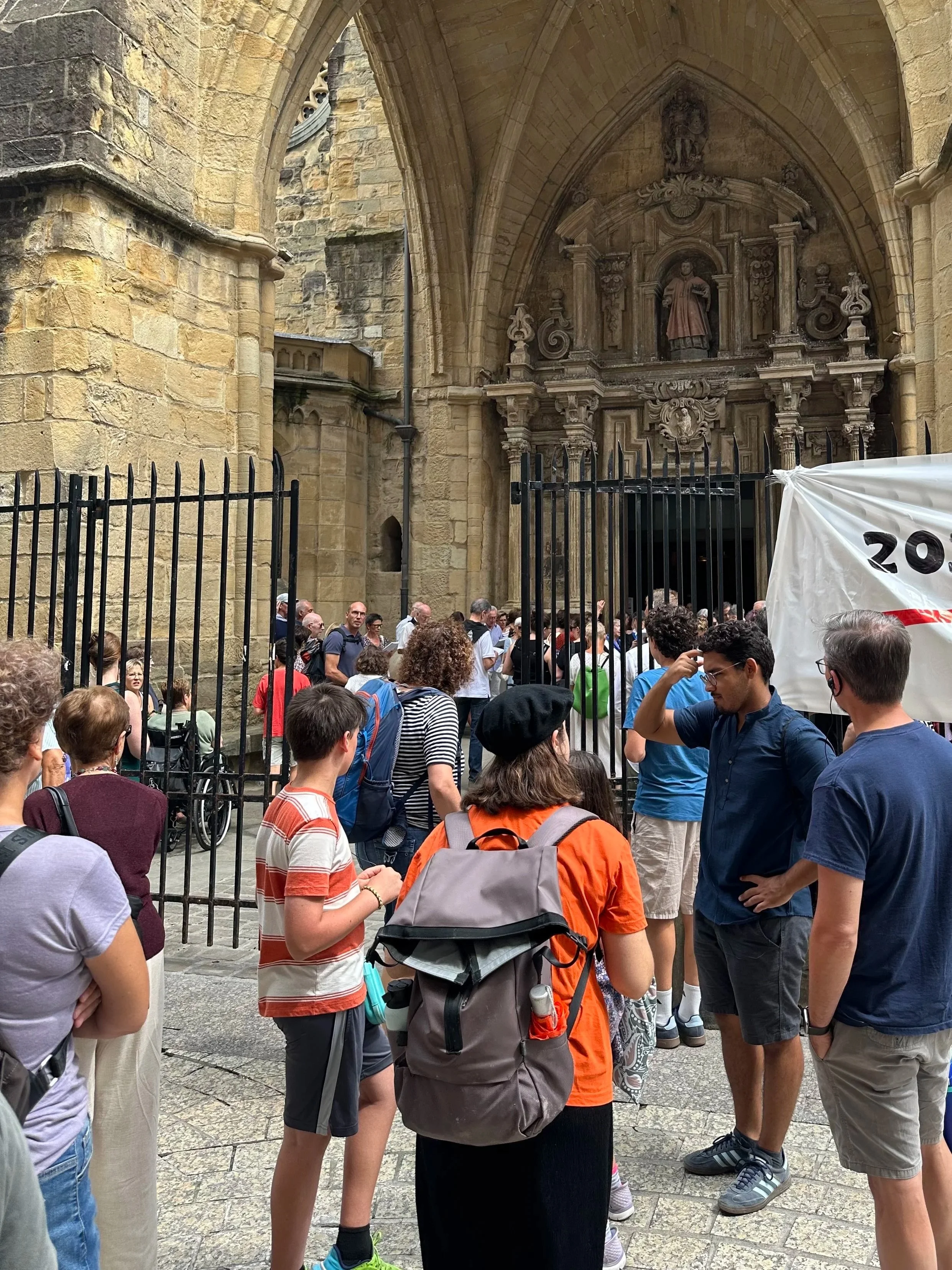
We stopped to hear a capella singing in the front of a cathedral. Maria told us that "social singing" in the Basque language is very common. She even sang a Basque folk song for us. Basque (Euskara) is considered a paleo-European language, as it has no known links to any other language. Under Franco's Spain, the use of Basque was restrained. However, in the 1960s, these policies were reversed; and now, even education takes place in the Basque language.
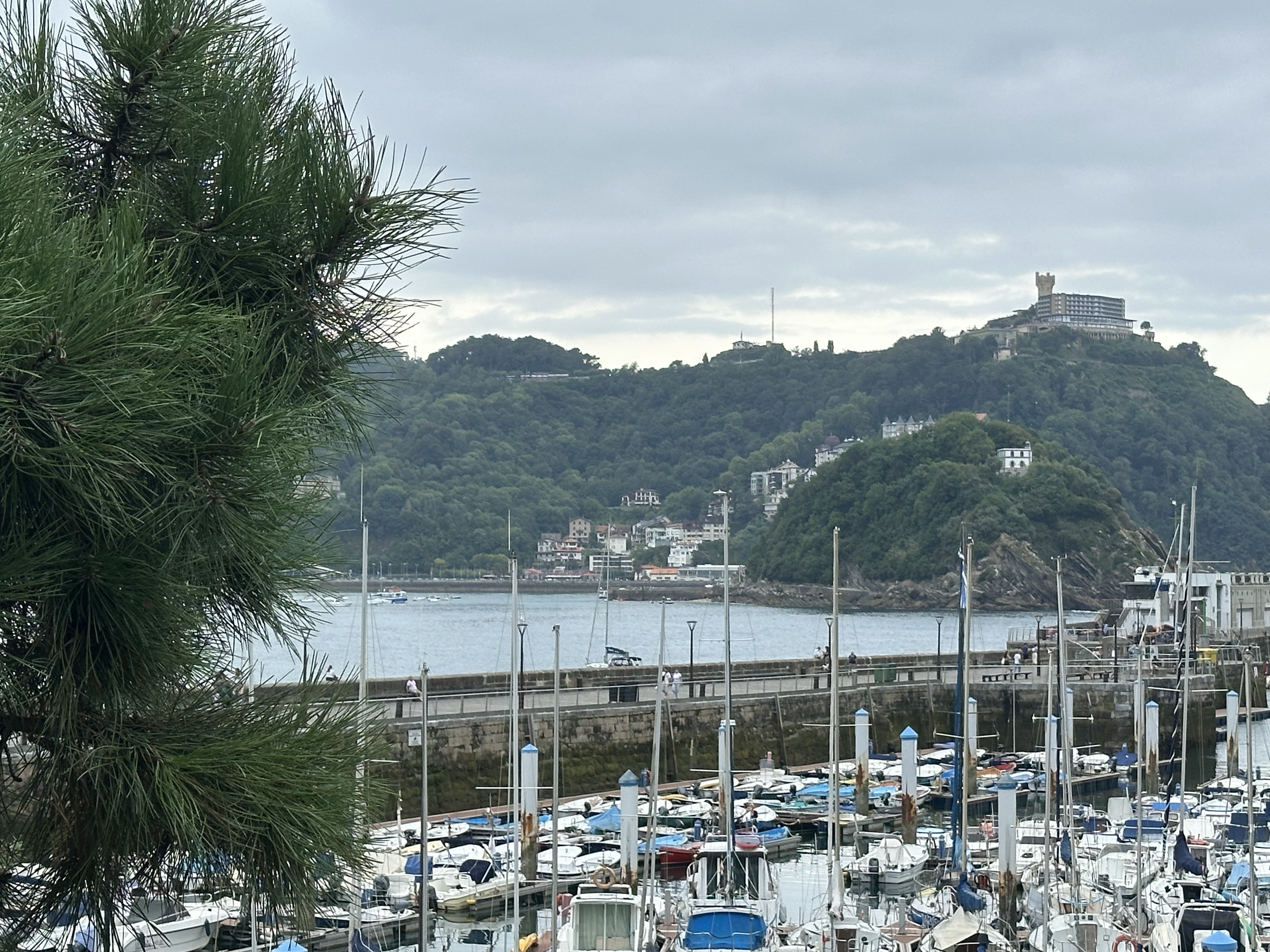
Our tour ended at the Marina, with a view up to Monte Igueldo on the opposite side of the Bay.
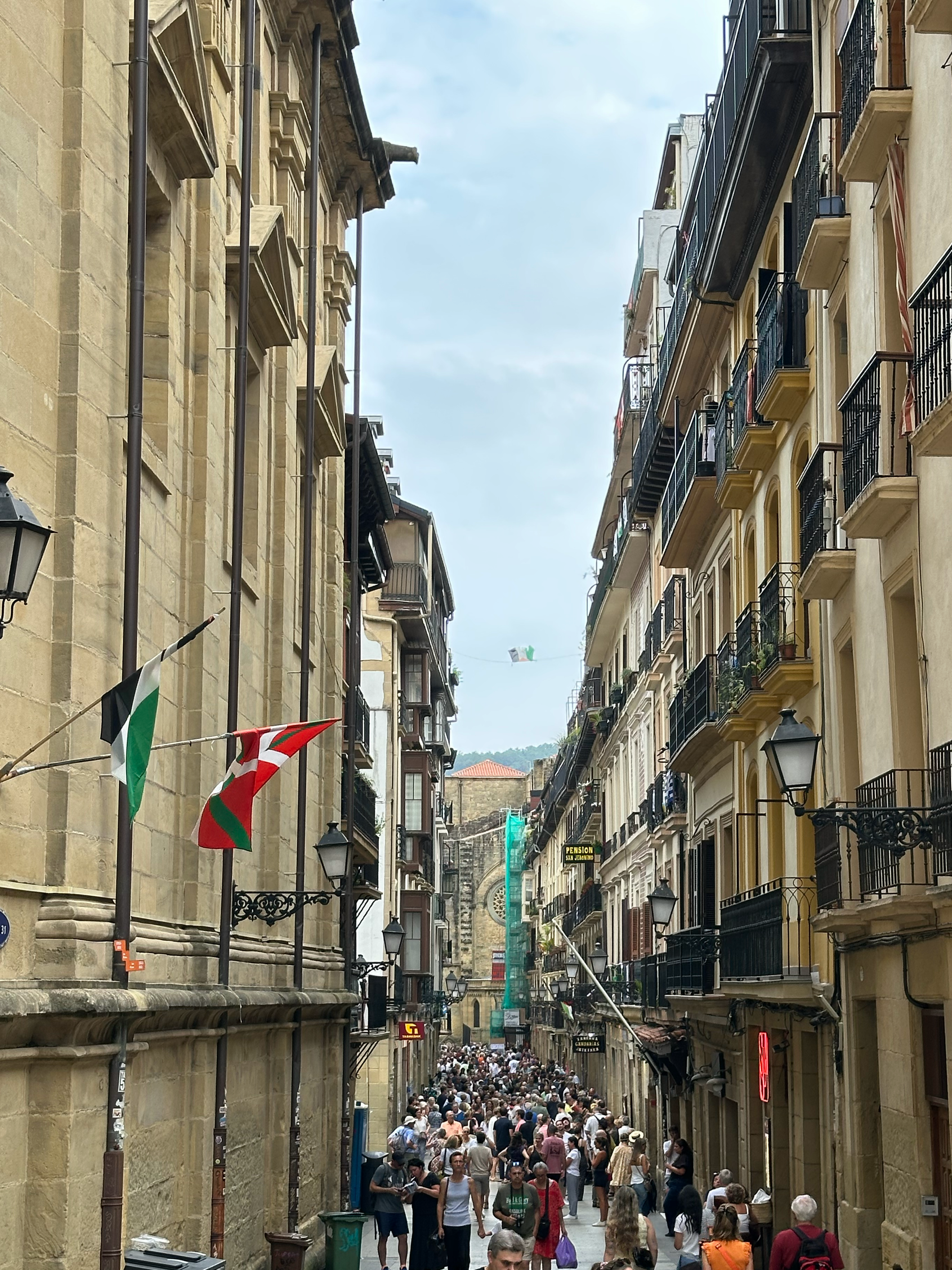
We left the tour in seach of food, which led us down more beautiful streets.
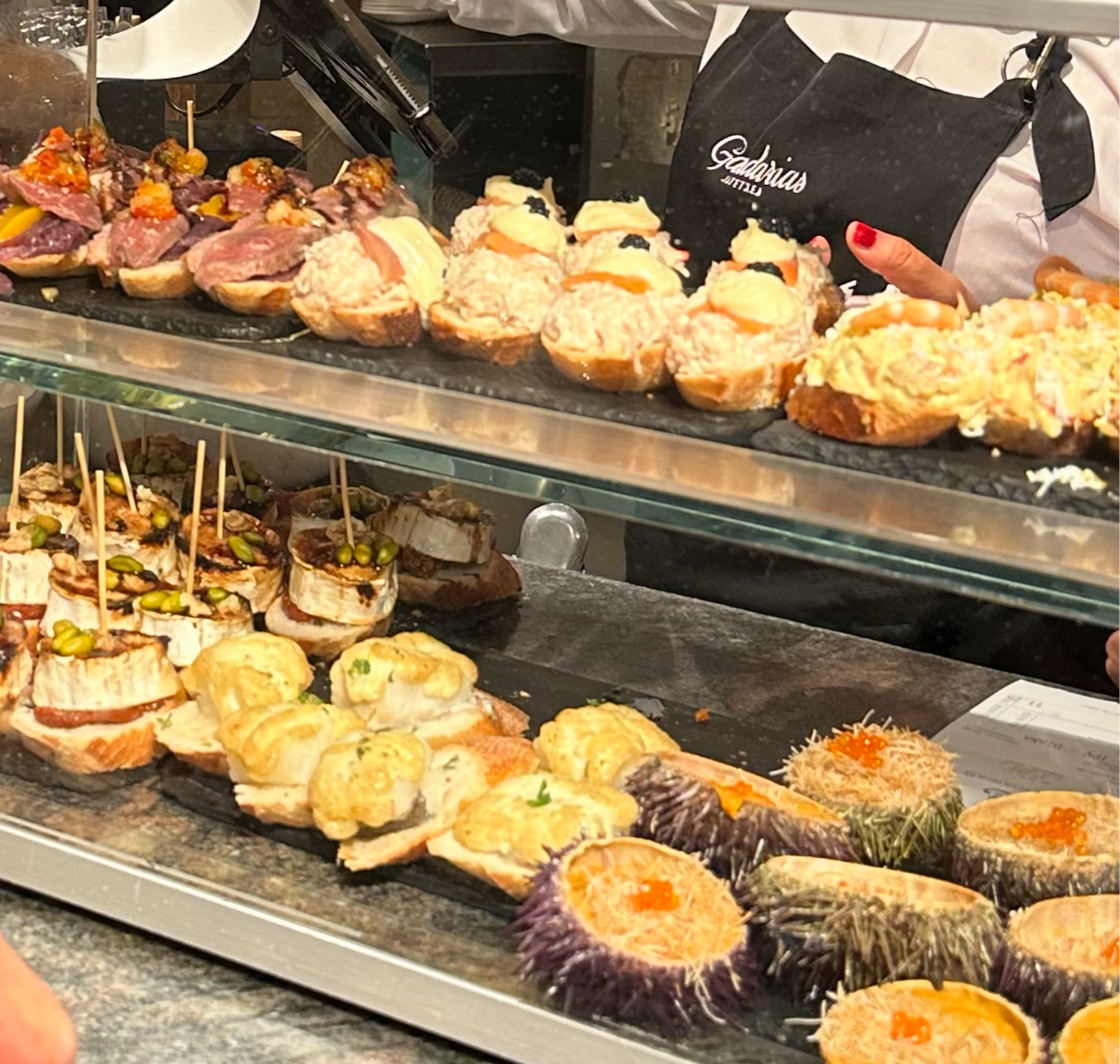
We ended up at Casa Gandarias bar, well-known for their pintxos. We had a lovely steak brochette, risotto, and croquettes. But I wanted you to see some of the other choices. We saw lots of people coming out of the restaurant with the seafood gratine in an urchin shell. My family would get no where close to that!
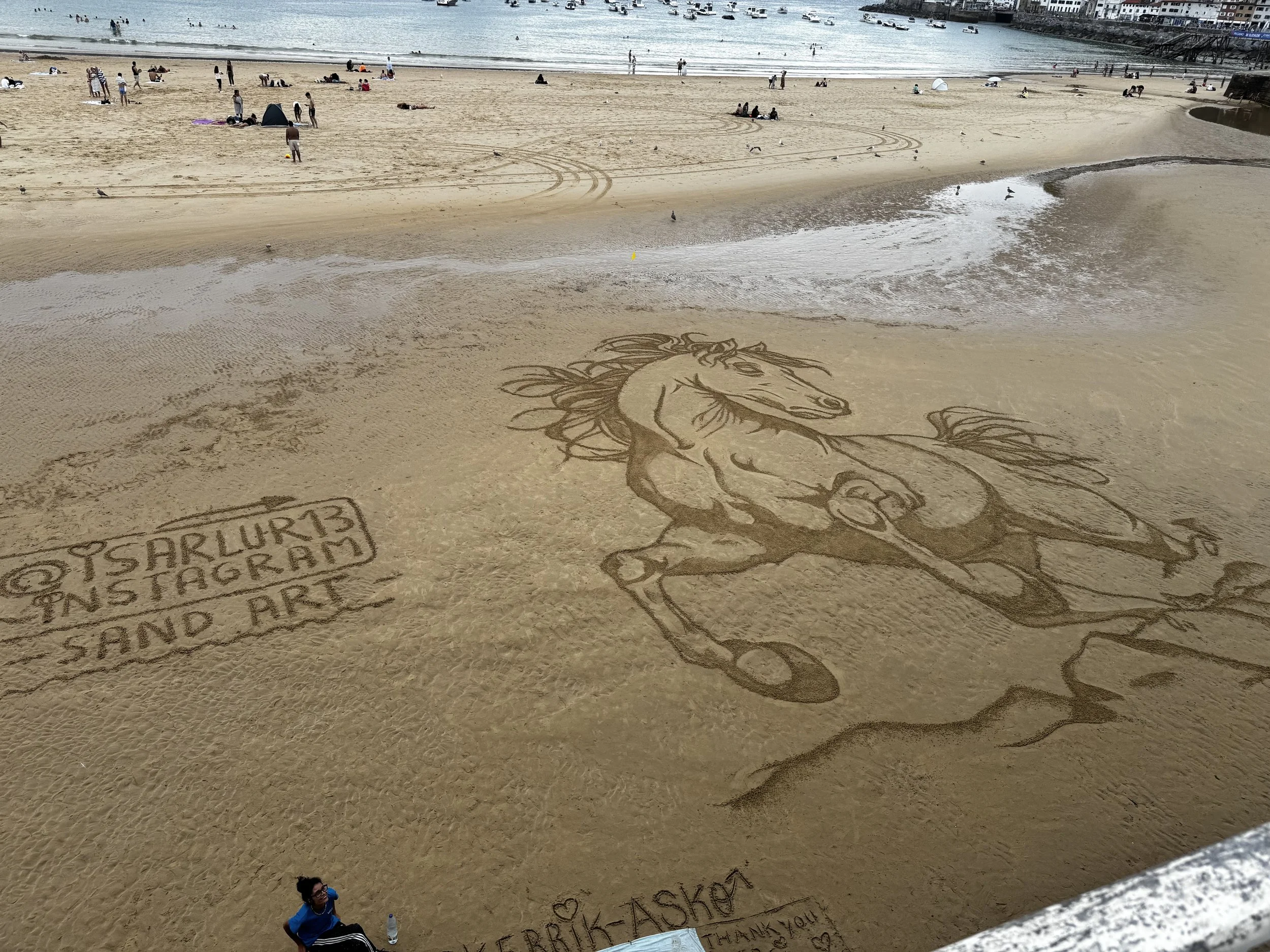
After eating, we made our way back to the beach. We were really impresssed with the sand art and the artist's ability to draw such a large piece with correct proportions. Amelia was so impressed that she dropped the artist a tip!
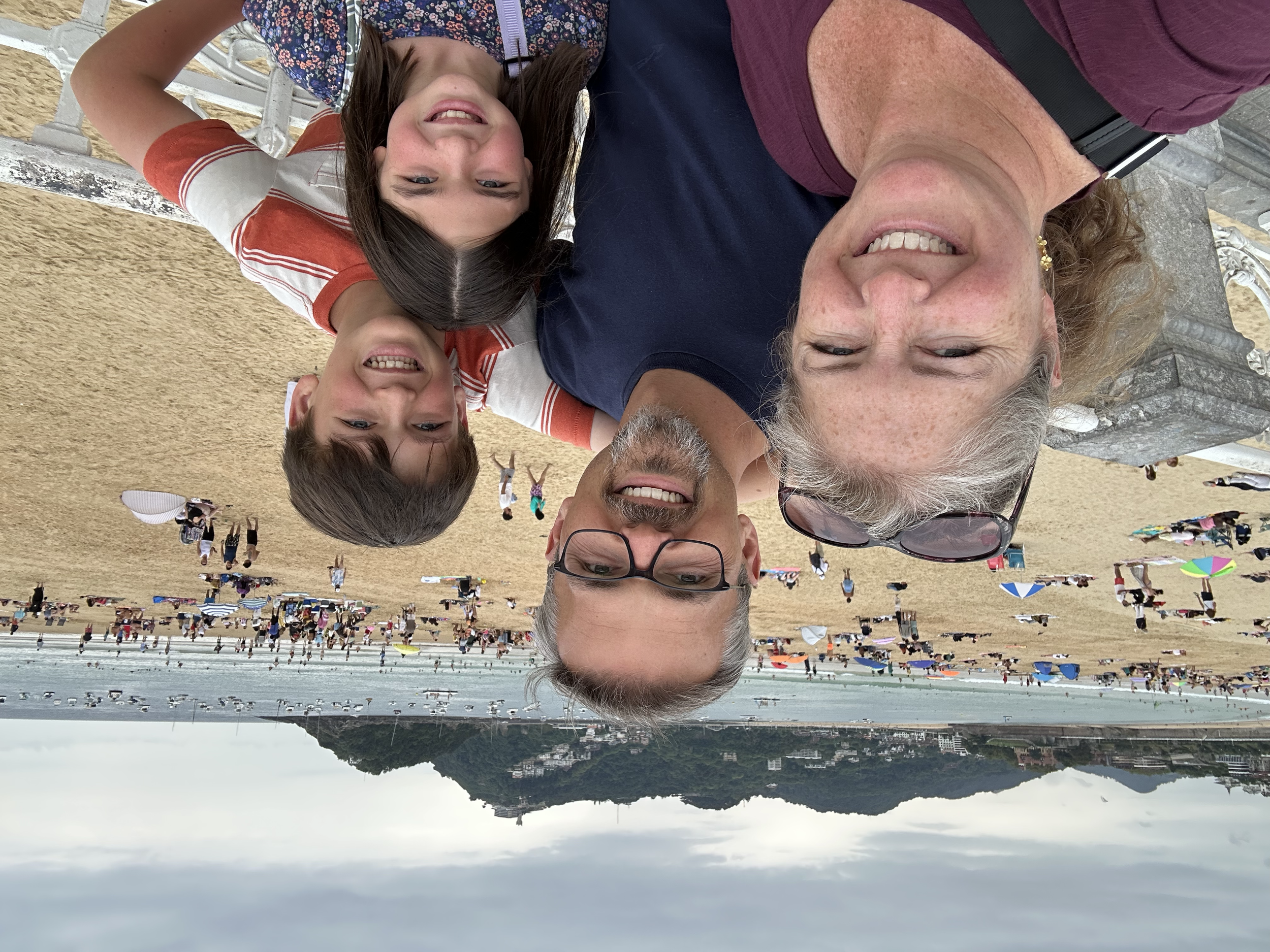
A perfectly peaceful day at La Concha.
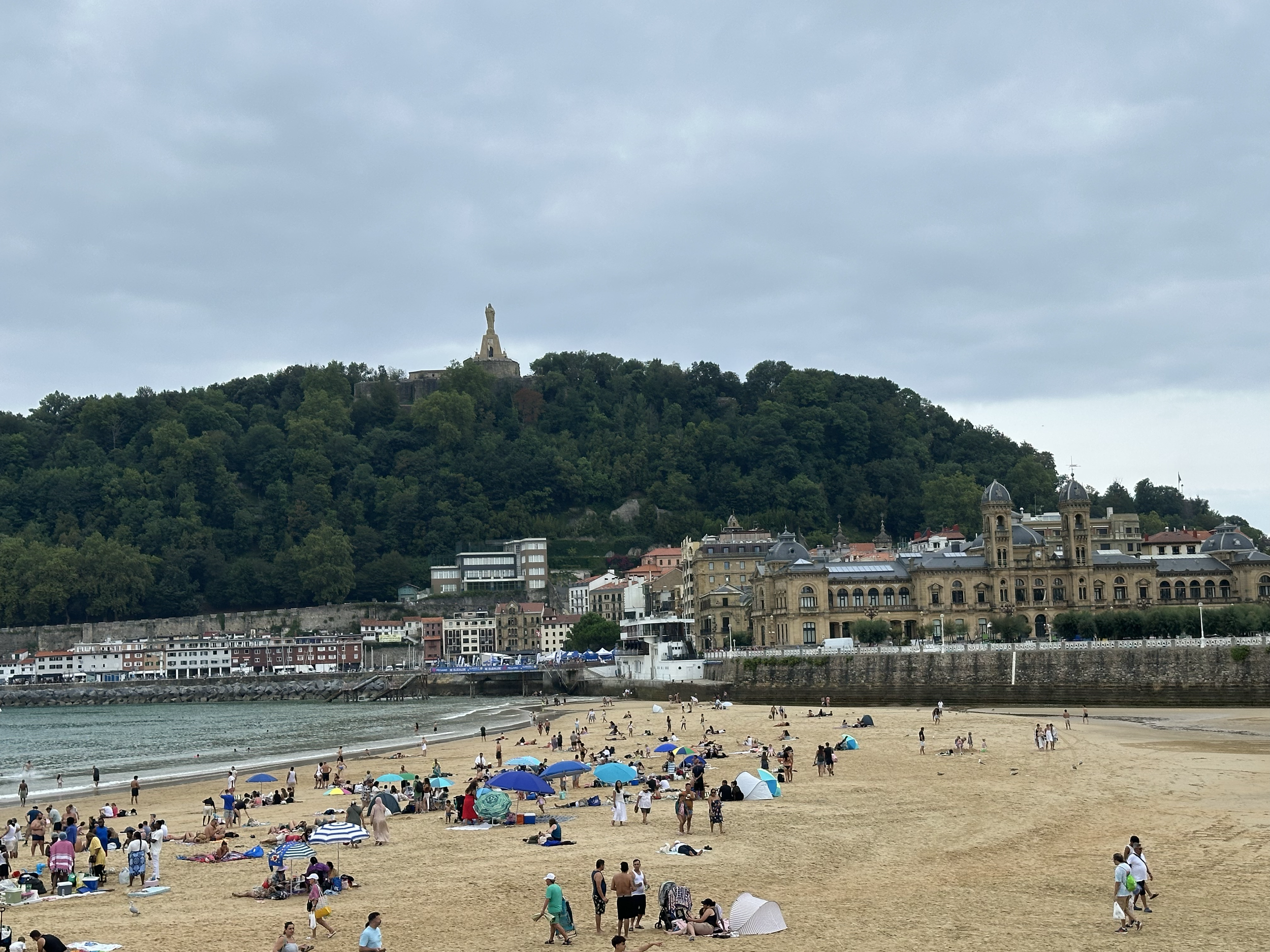
Here you can see how the City Hall looks out over the beach. When you think about it formerly being a casino, you can see how the location makes sense.
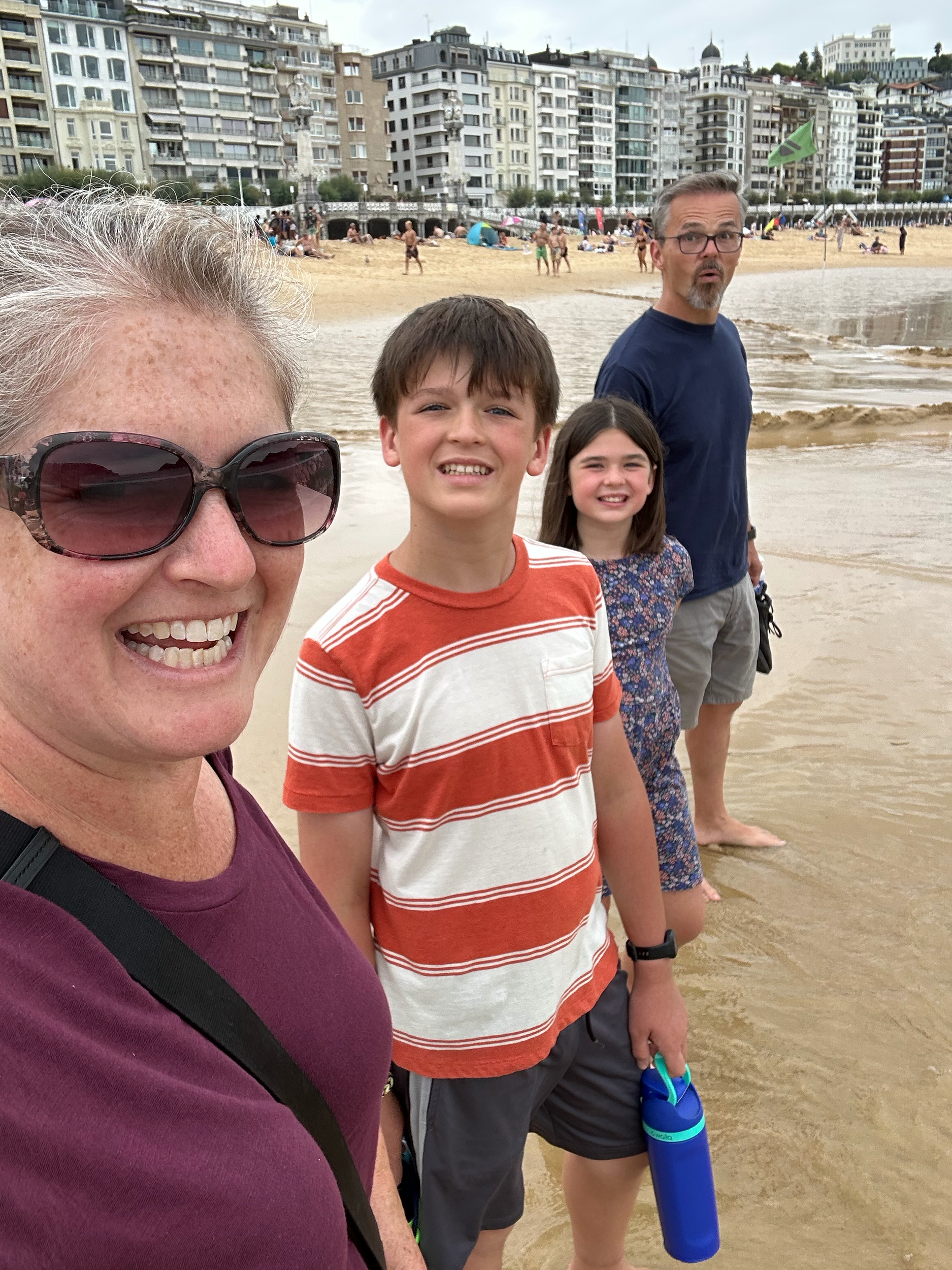
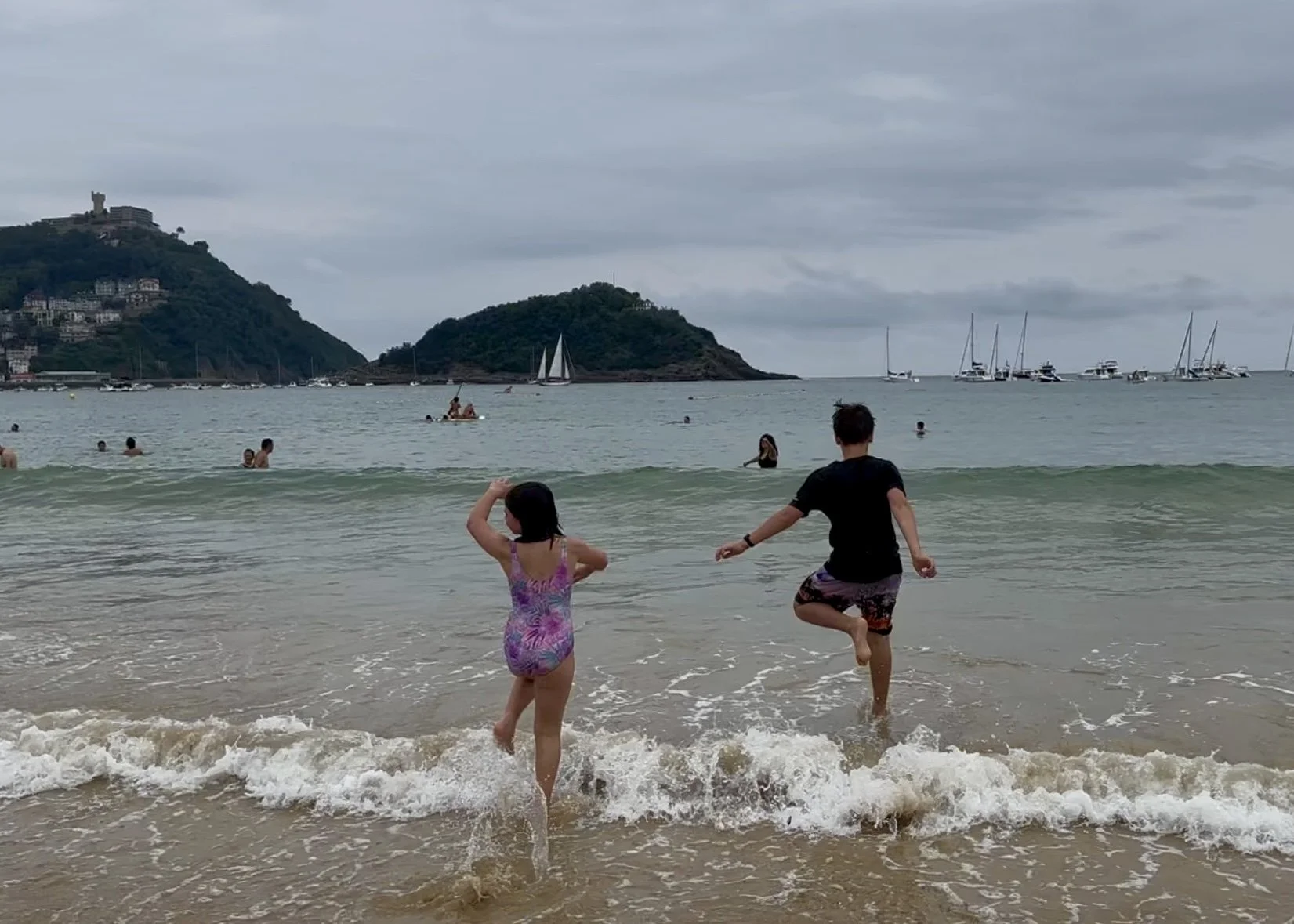
We all stepped into the water together and it was COLD!
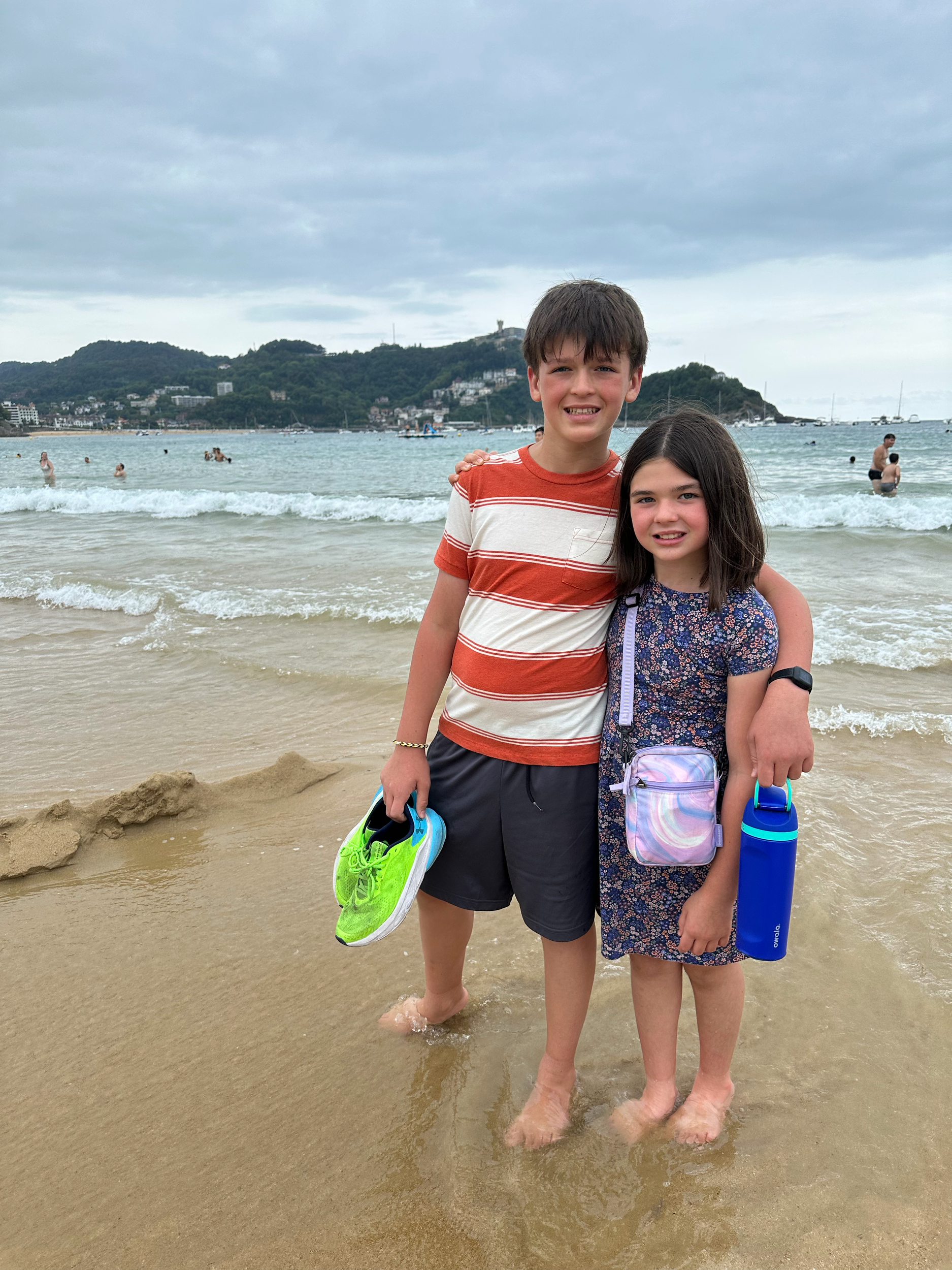
So happy for a beach day!
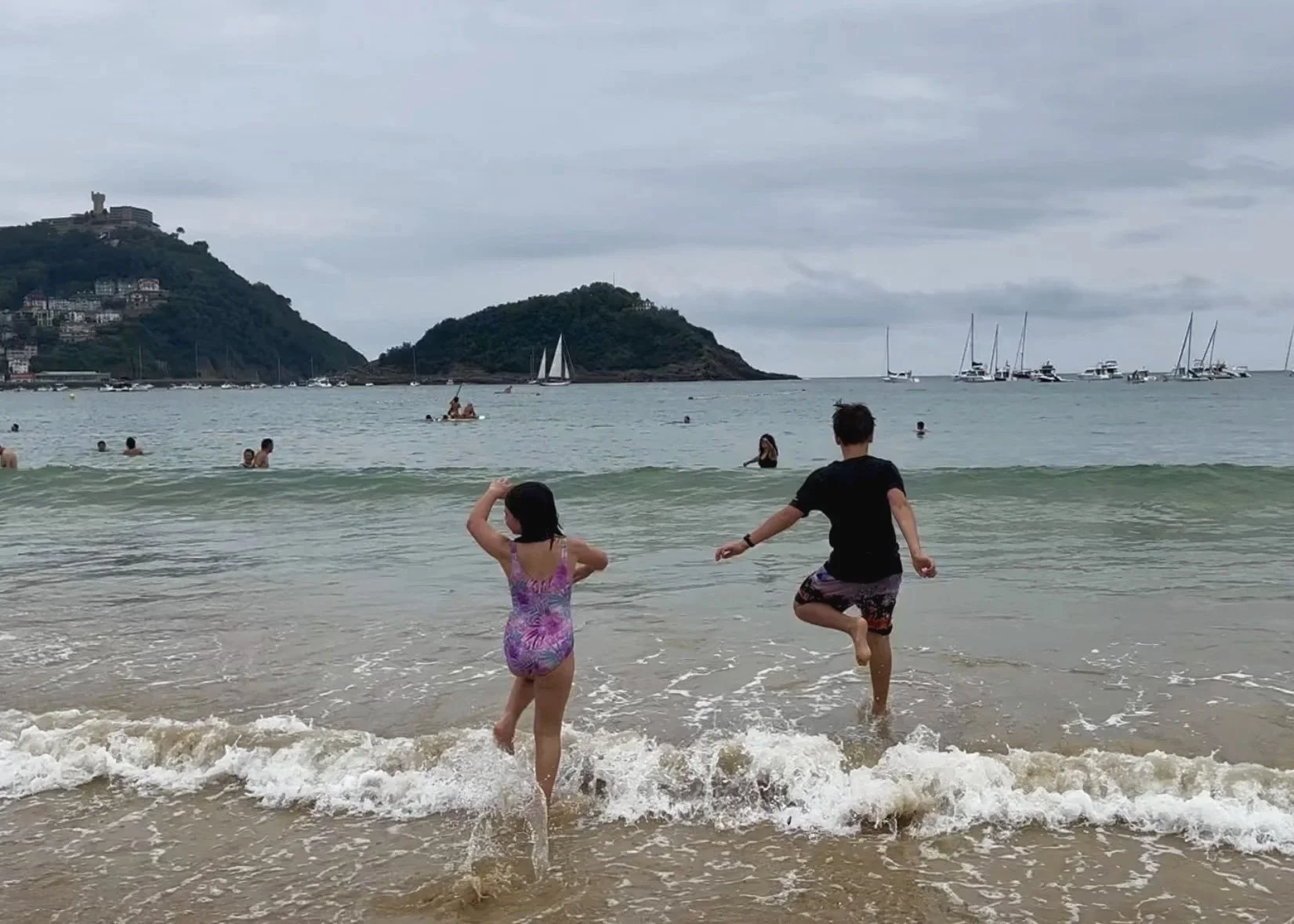
The temperature did not stop the kids from getting into their swimsuits and heading into the water.
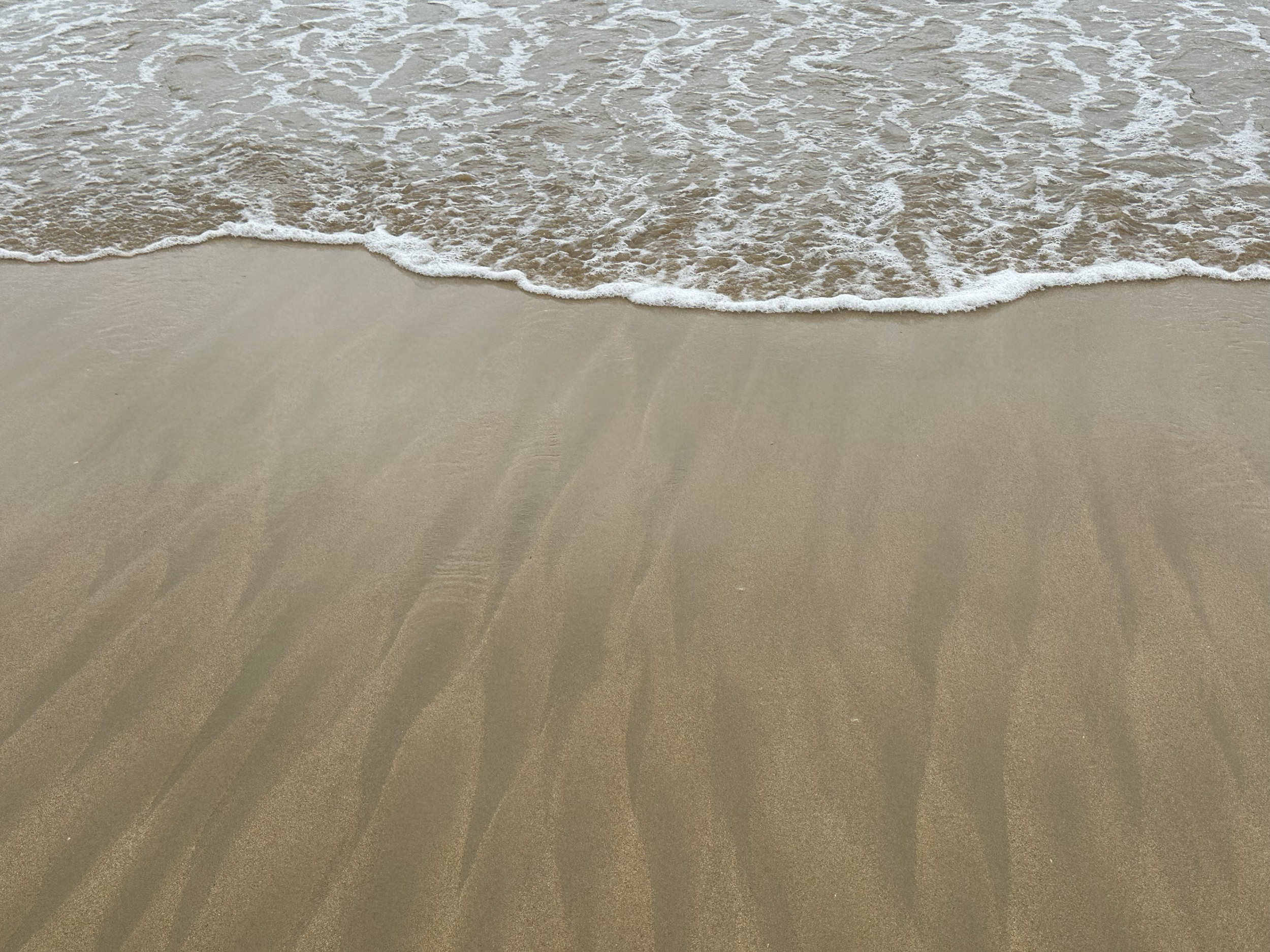
The flow of the water made beautiful patterns in the sand.
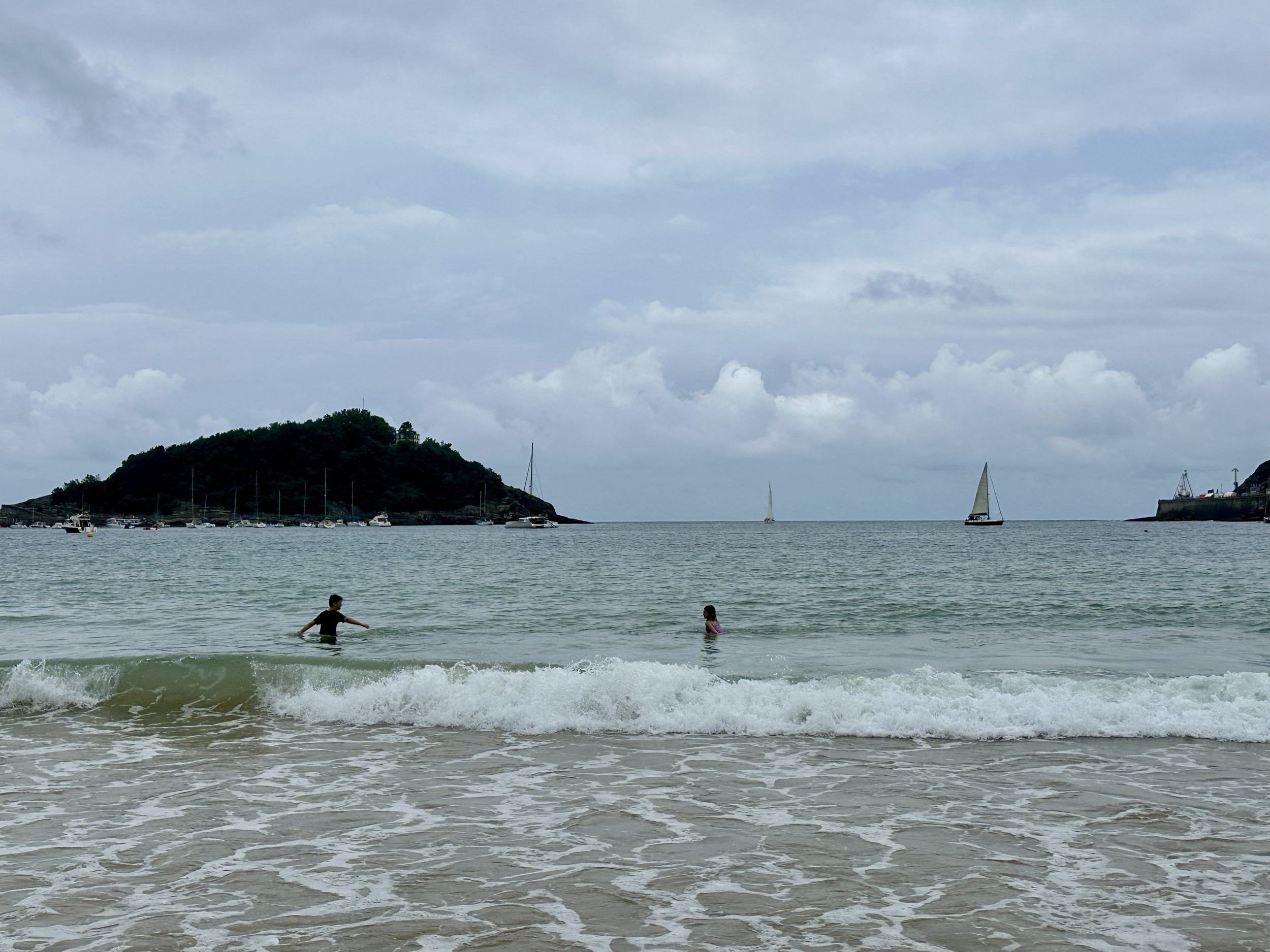
The kids stayed parallel to shore and walked/swam/played in the water all the way from one end of La Concha to the other.
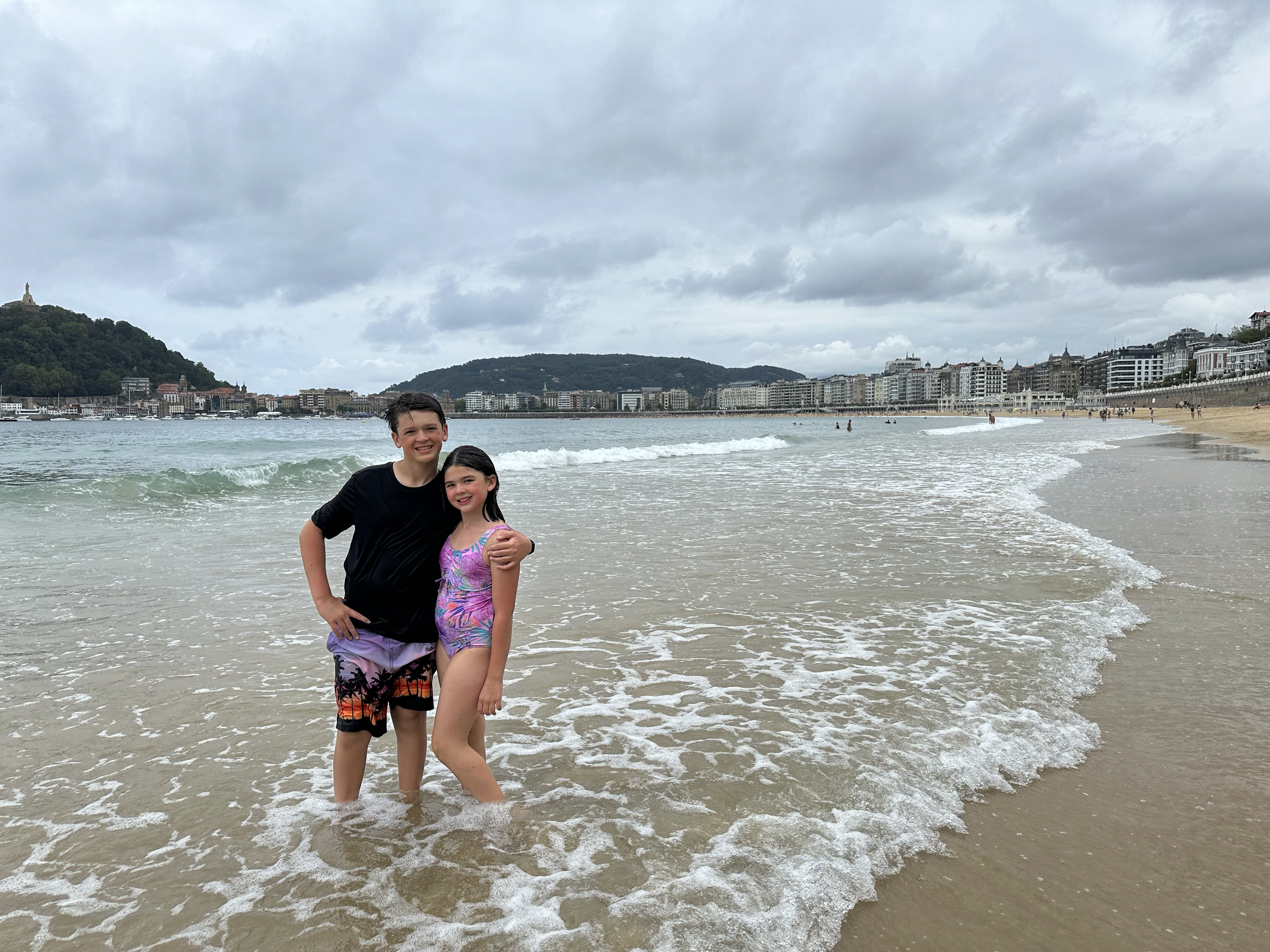
After a long tour of the town, this was the perfect playtime reward!
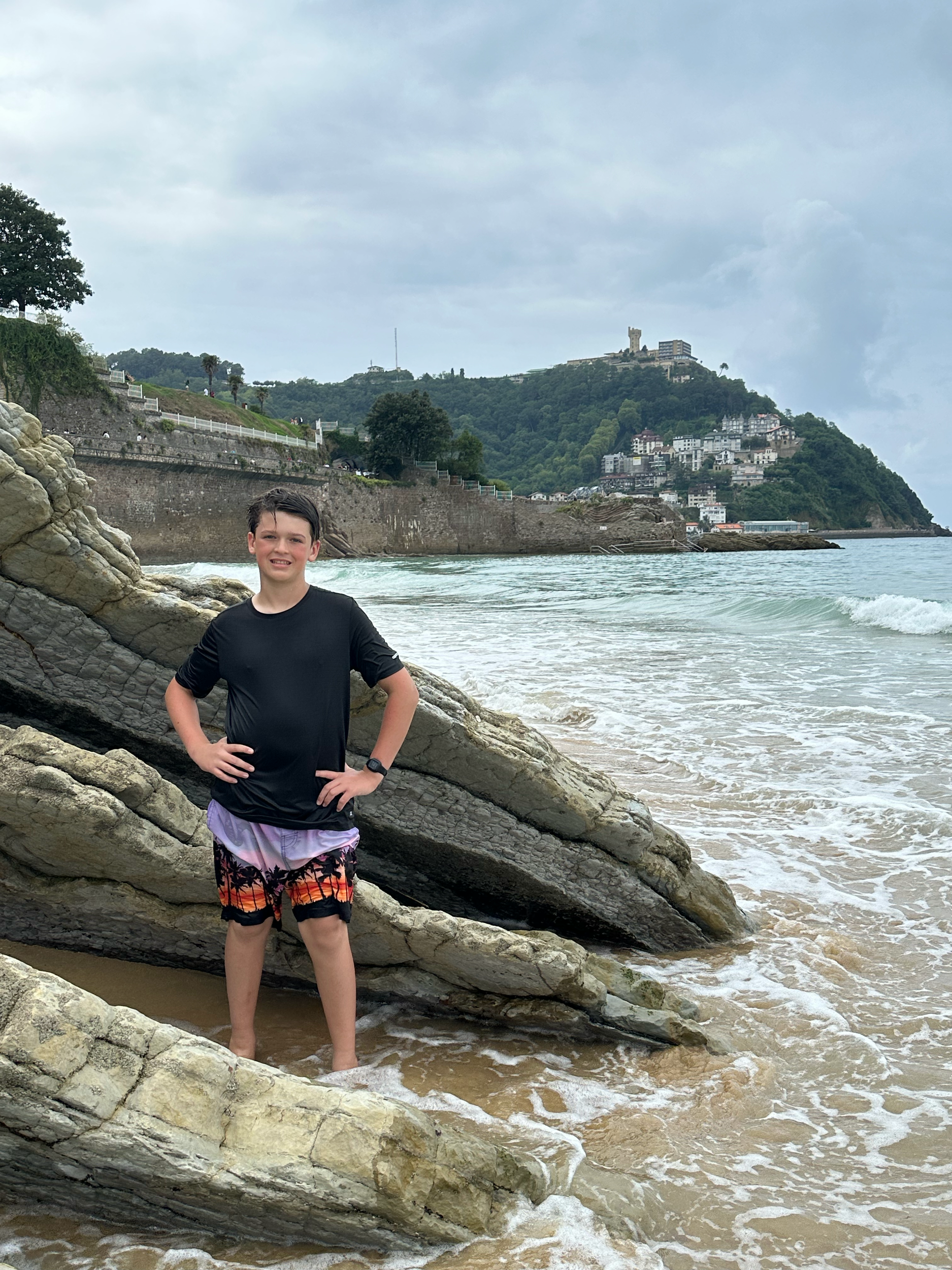
Joshua loved exploring the rocks and looking for tide pools.
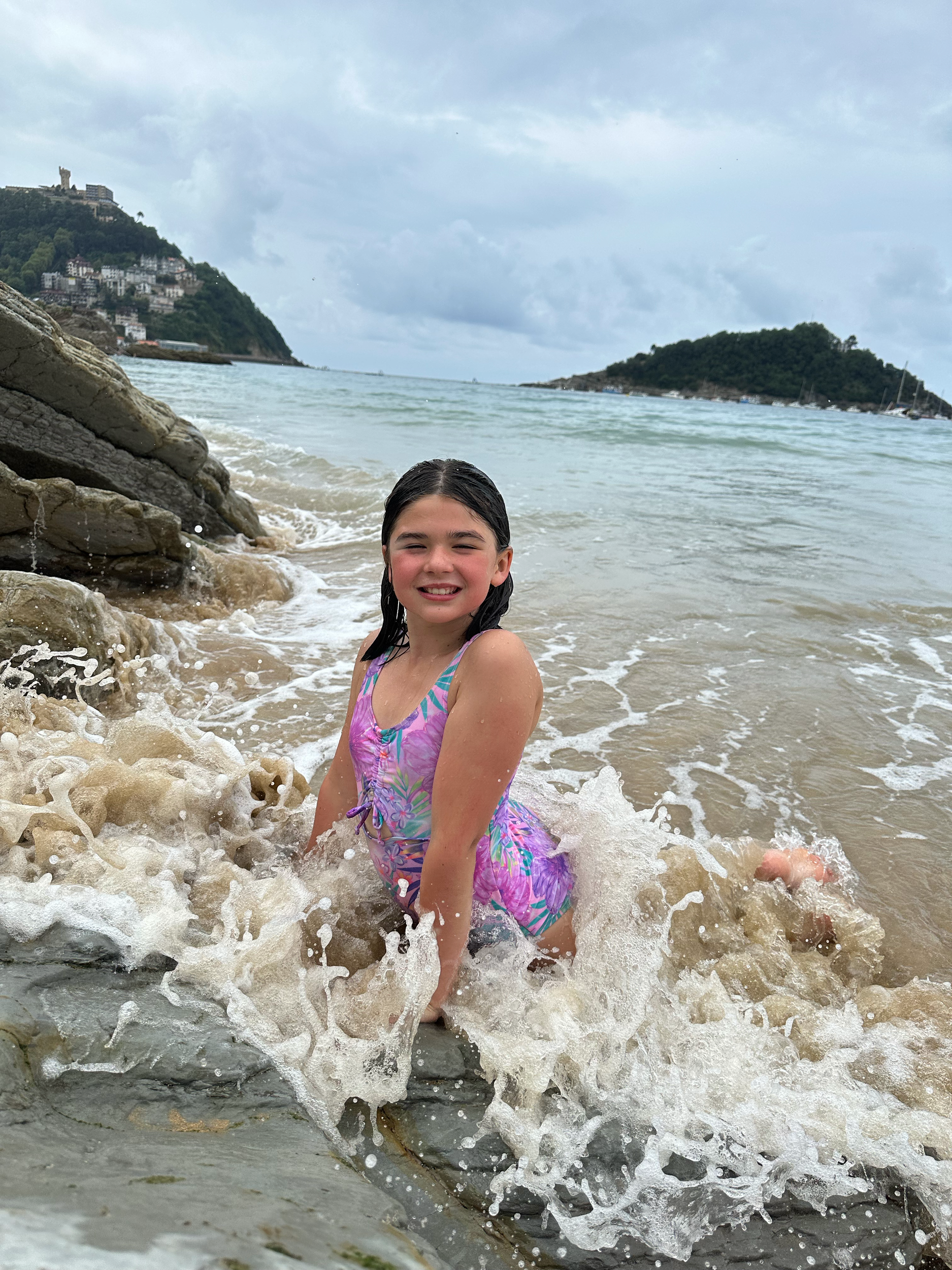
Amelia let out her inner Little Mermaid!
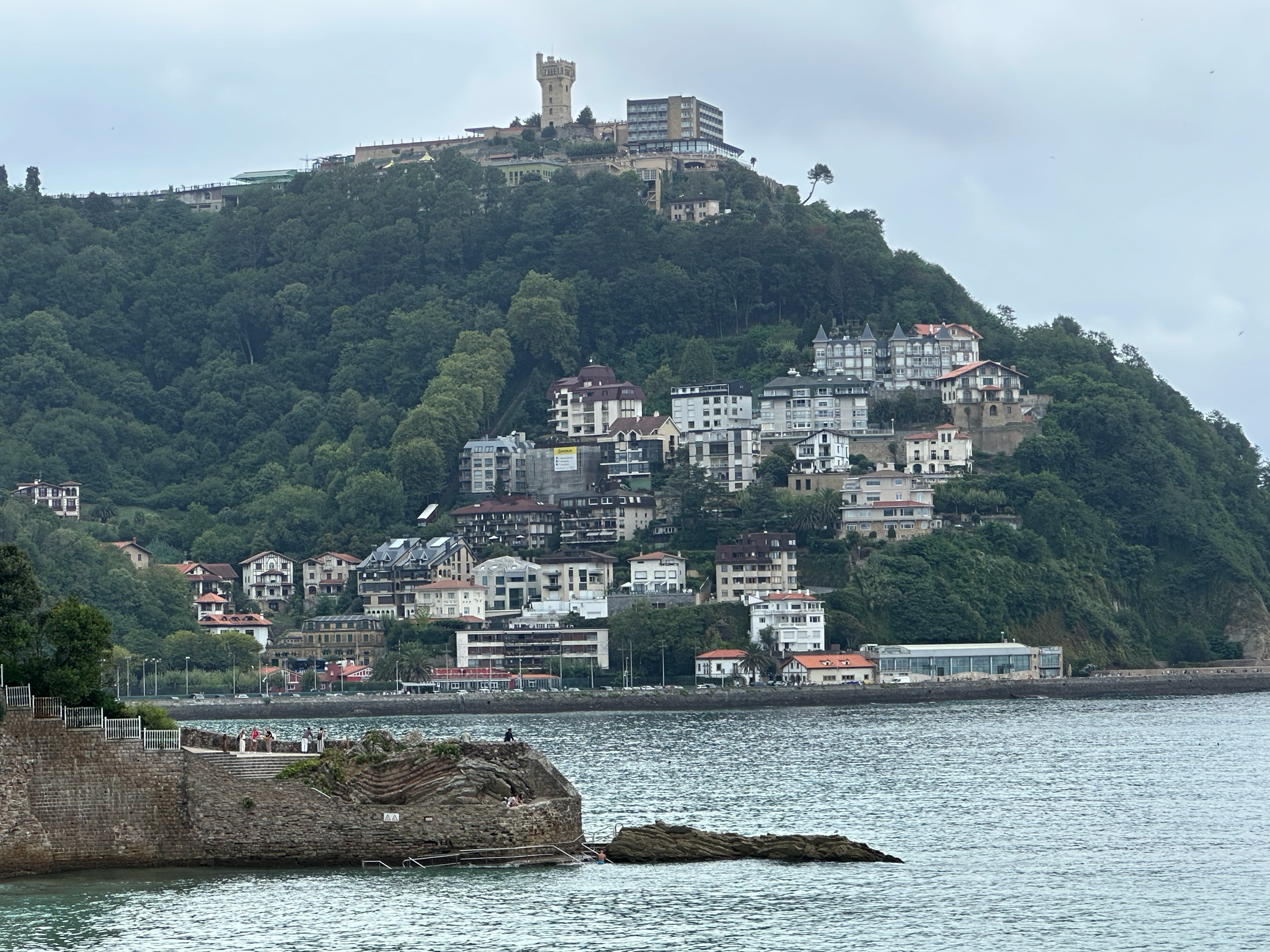
We had a great day of sight-seeing the town and playing at the beach. One last view of Mount Igueldo as we headed back to the car and on to our next destination.
Bilbao: From Gatztelegutxe to the Guggenheim
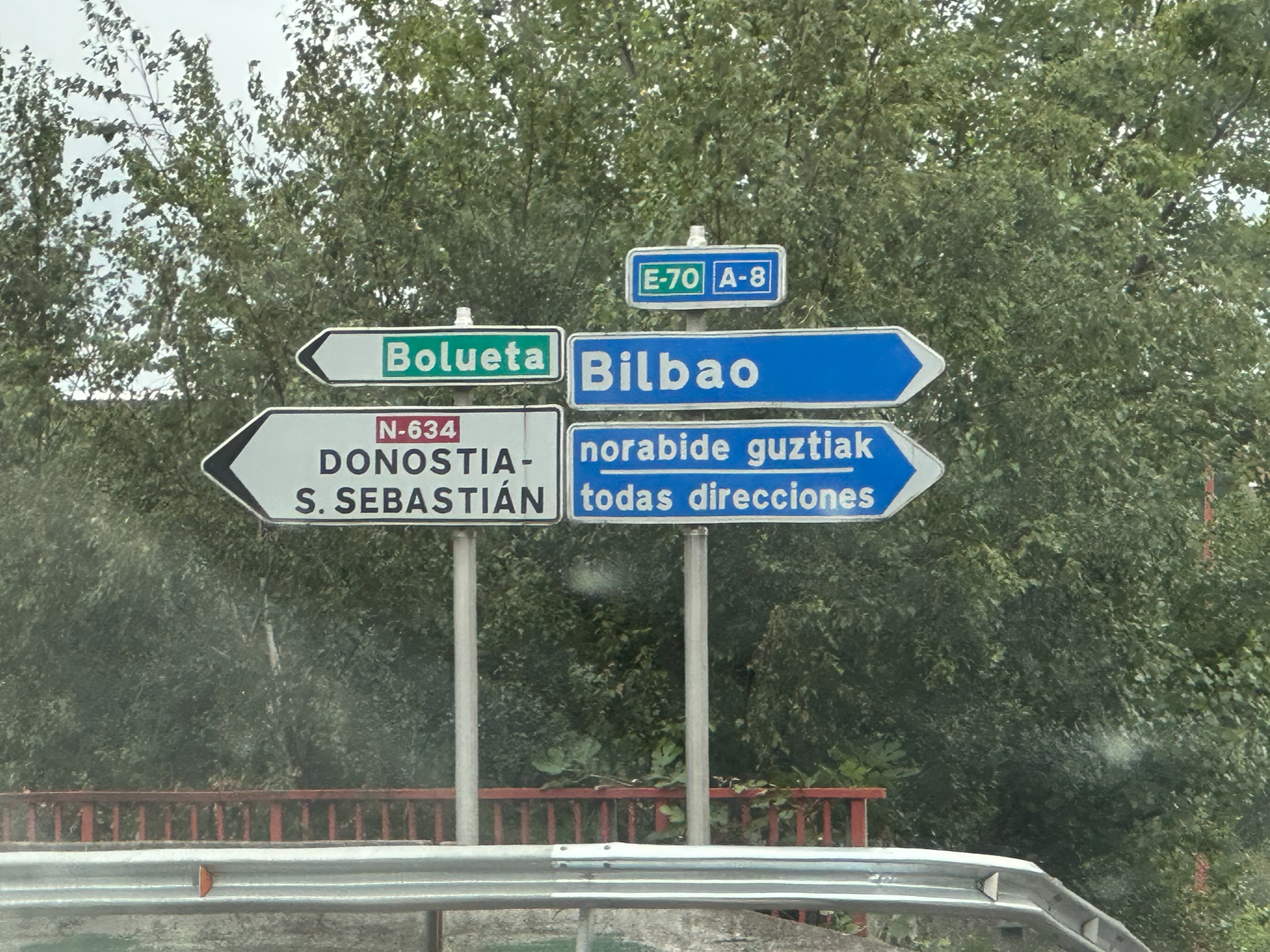
We left San Sebastian late in the afternoon and started our drive to Bilbao, which is another town in Basque country.
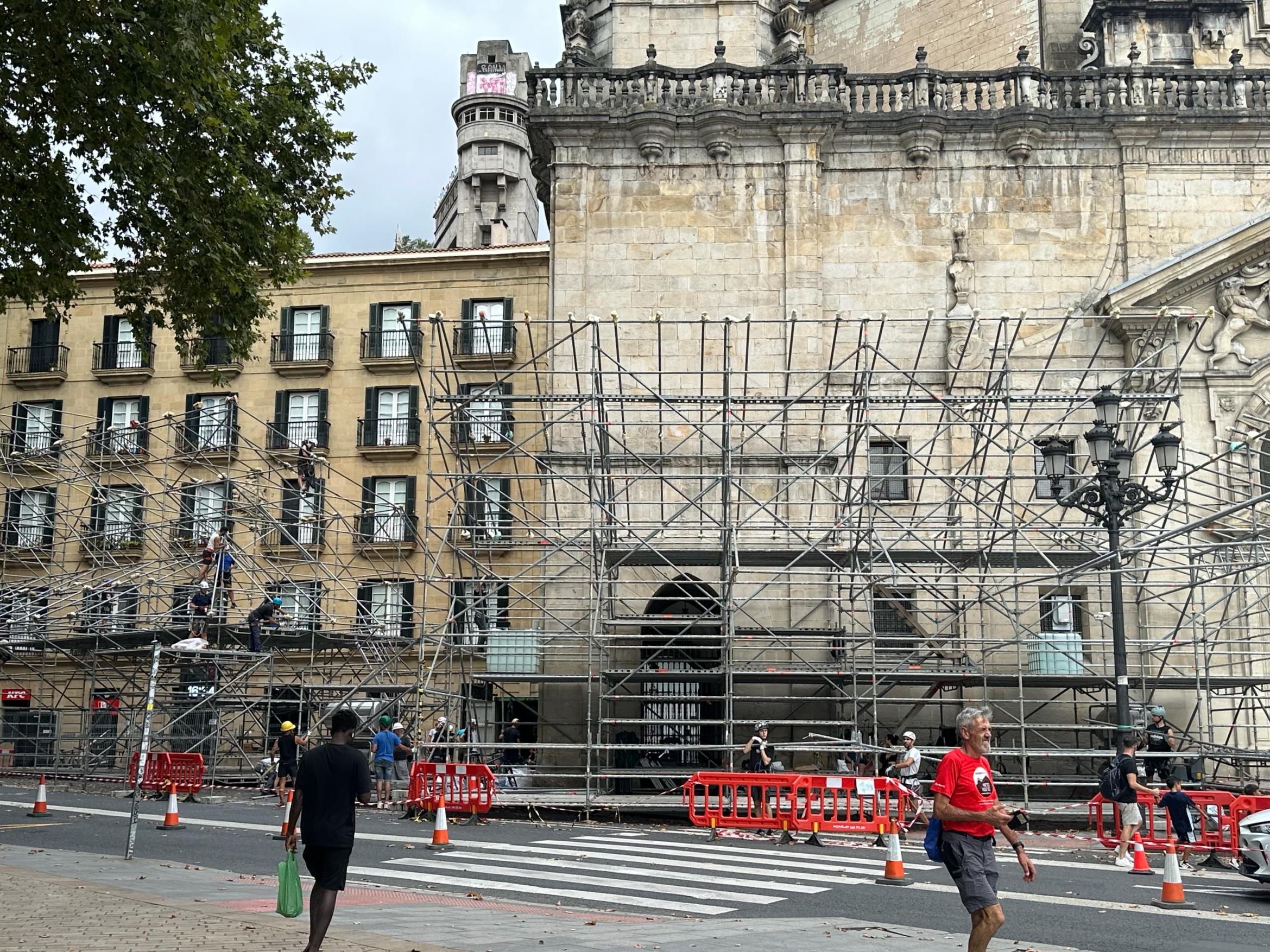
We found the streets in Bilbao to be confusing. We were trying to get to our apartment in the Old Town, but you can't drive in that area, and to make it more difficult, they were building major scaffolding structures all over the city for their "Semana Grande."
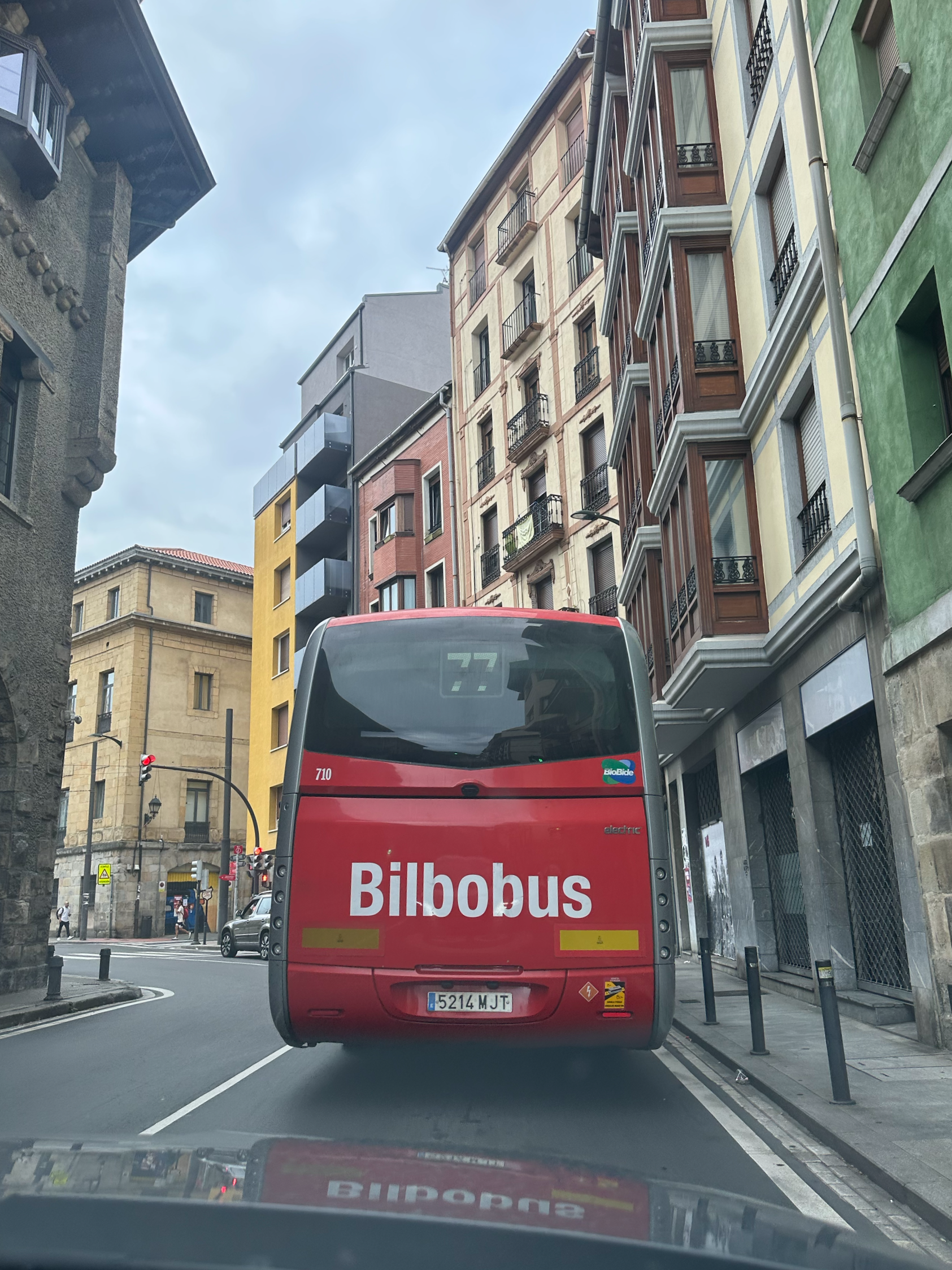
Somehow we ended up behind a Bilbobus and followed it into the bus lane and it took some time to work our way out and find the parking garage. We laugh now, but it was really stressful at the time.
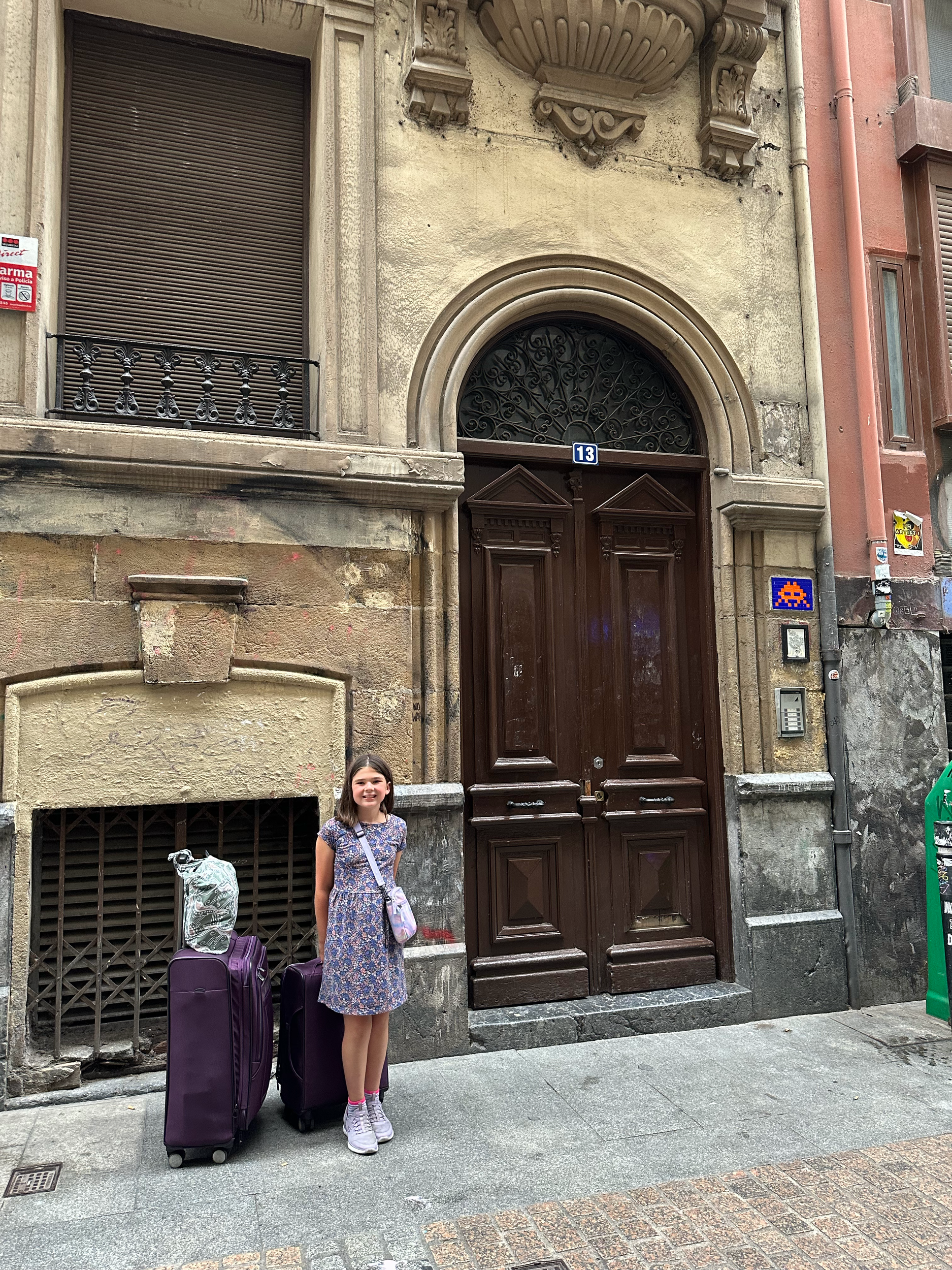
Little did we know that we would be carrying all of our luggage down the cobblestone roads to our apartment that was 15 minutes away. But look at that amazing door! (And peep the tile crab on the right- my brother informed me that this is street art from a guy called "Space Invader." I've seen them multiple times since).
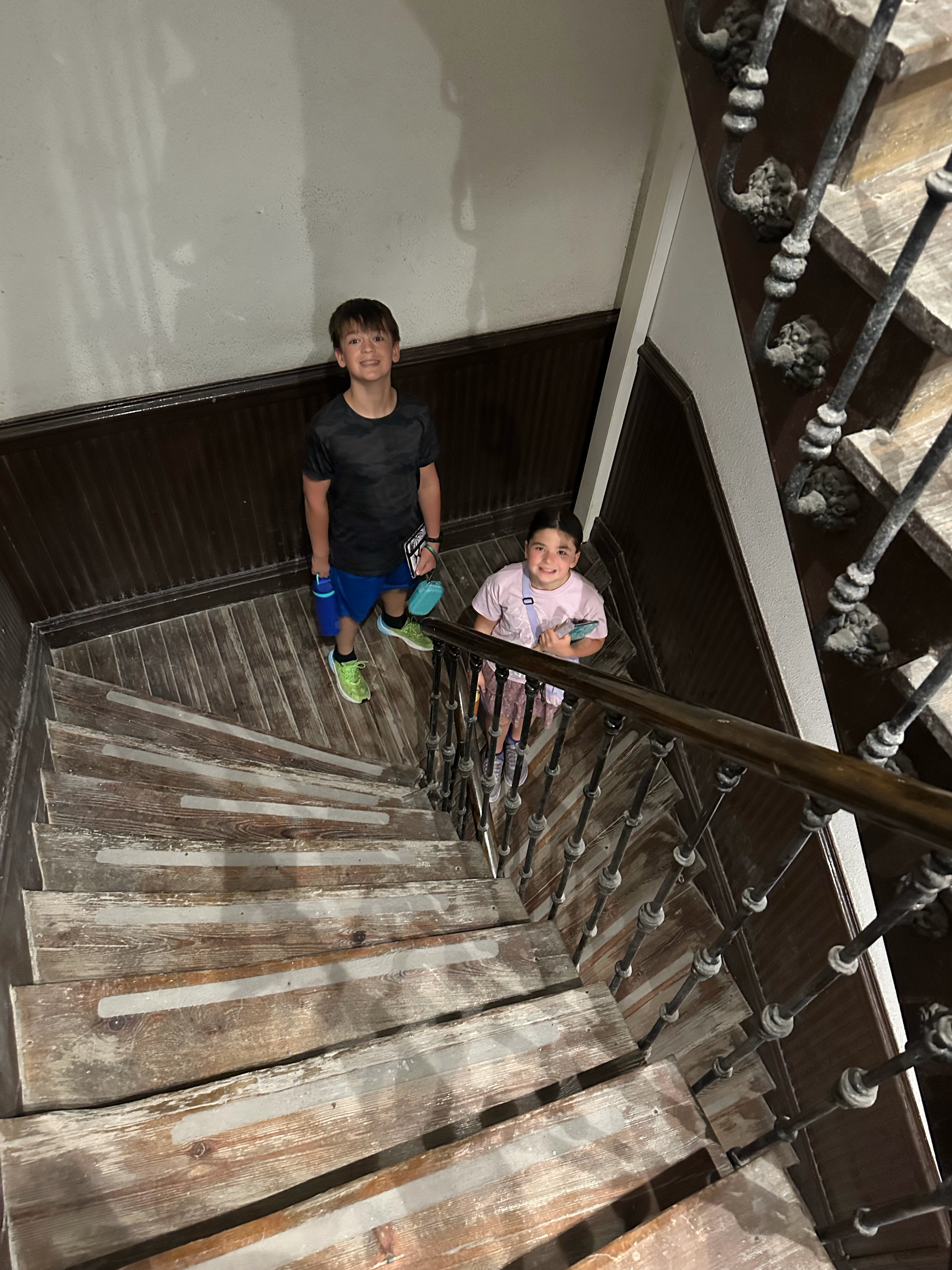
Sometimes a cute old apartment building means 3 floors up on sagging wooden stairs. Yikes!
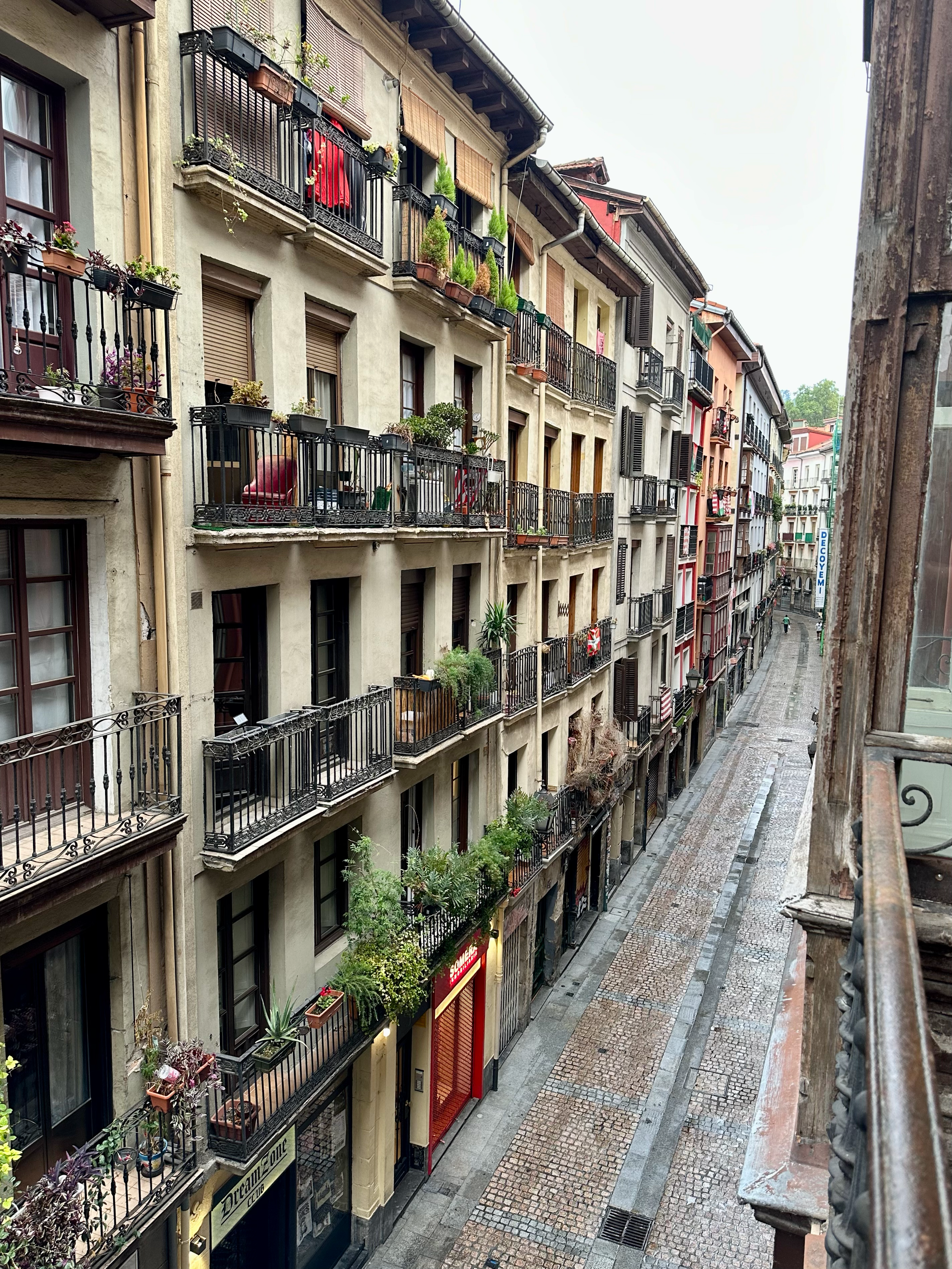
This view! This view made all the traipsing worth it. Here is our idealistic view of life in Europe. Ha!
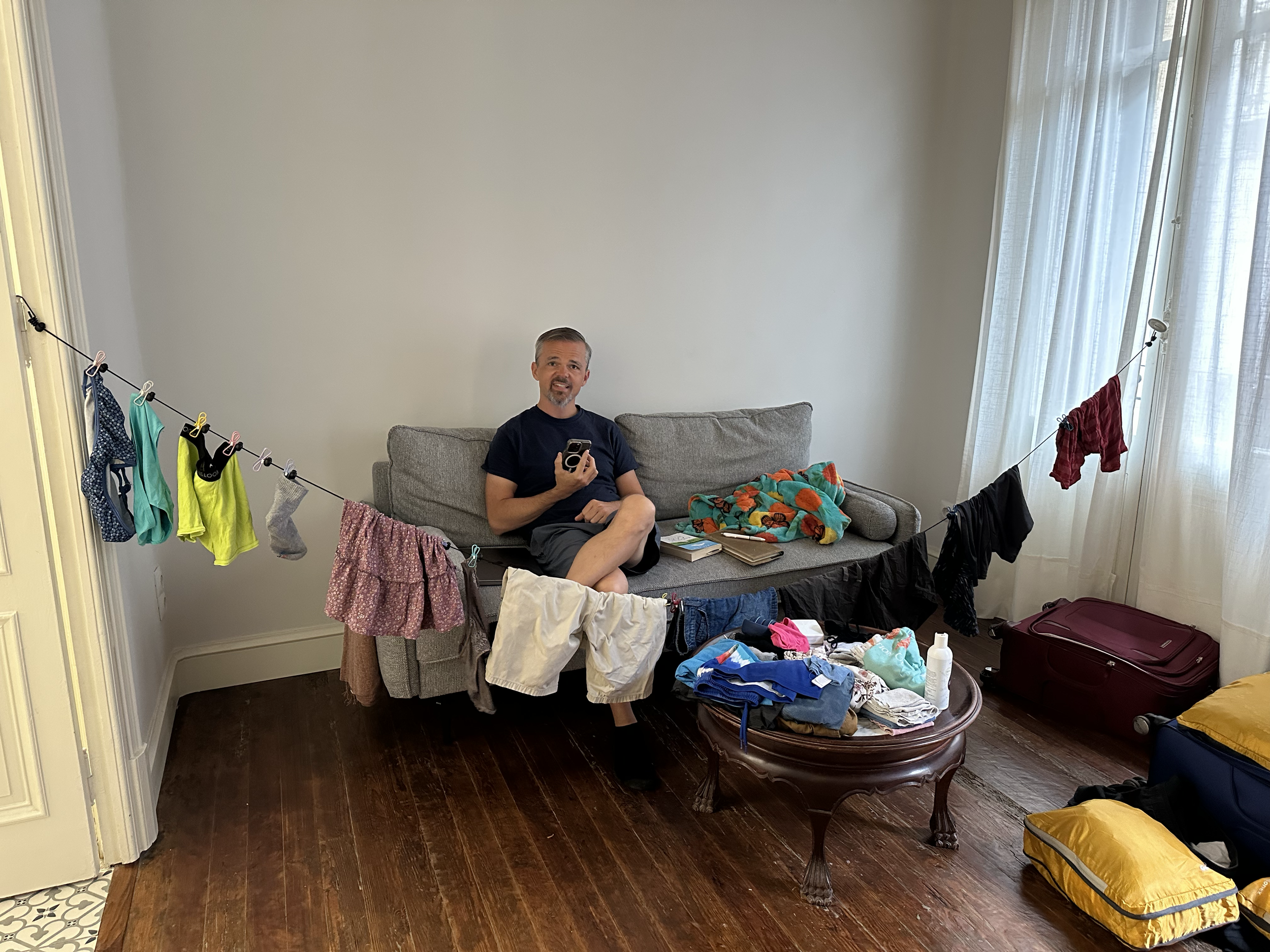
And back to reality. Finding a way to hang clothes to dry and plan out our day with luggage spread all over the floor.
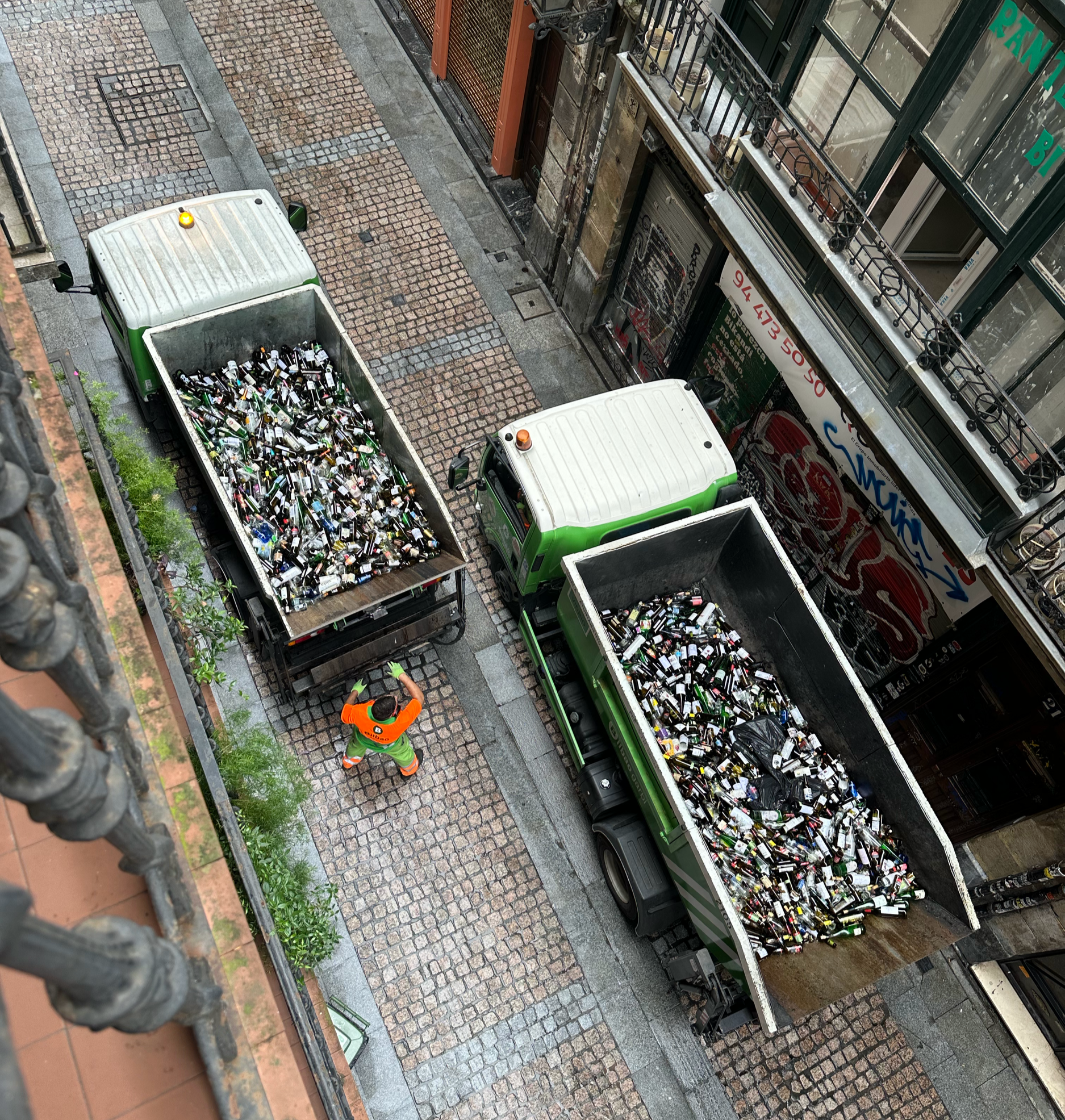
Our apartment balcony was over a street full of bars. After late Saturday night reveling, the Sunday morning glass recycling was intense!
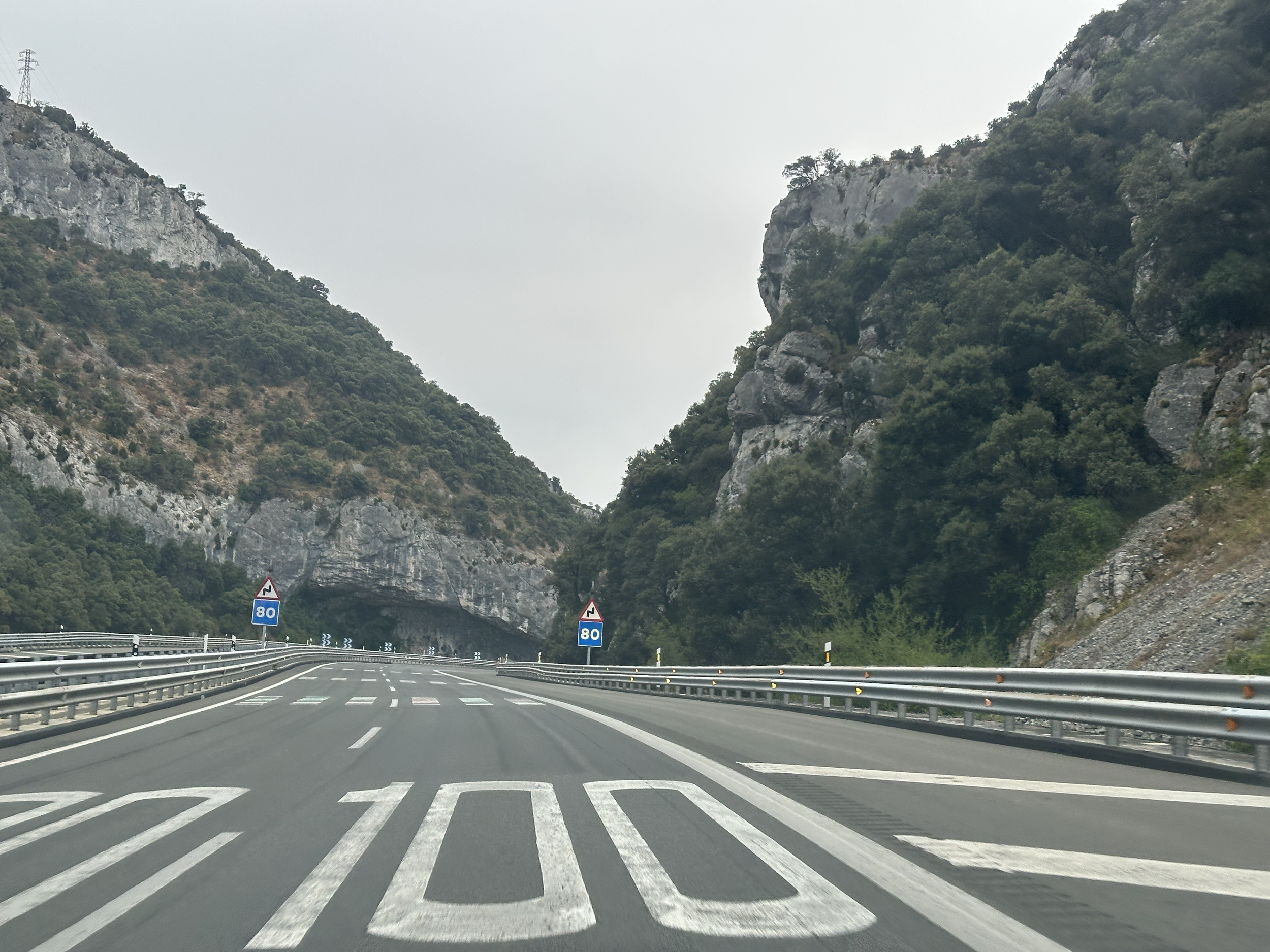
Driving through the mountains at a casual 100km/hr!
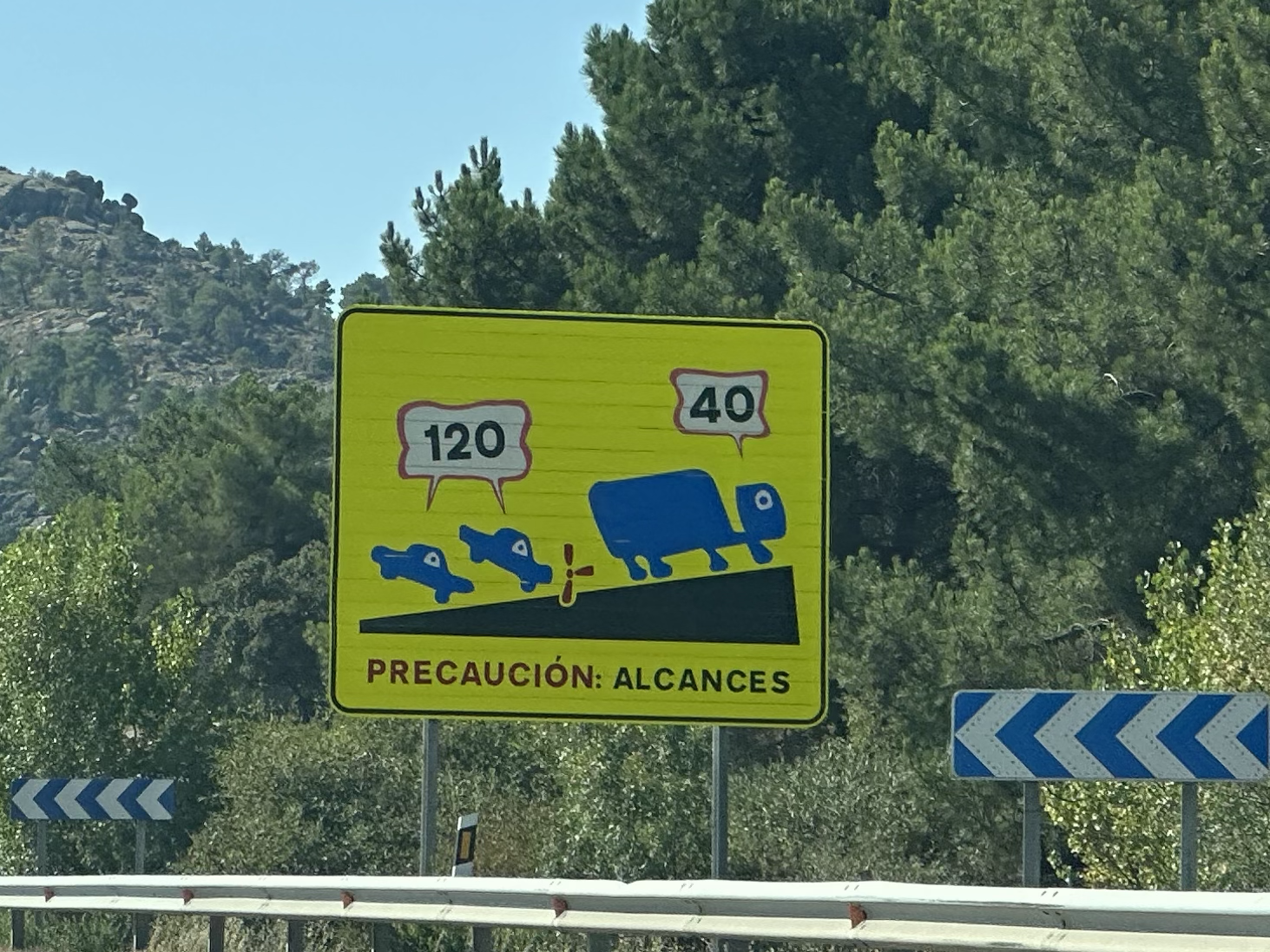
More road signs that made us crack up!
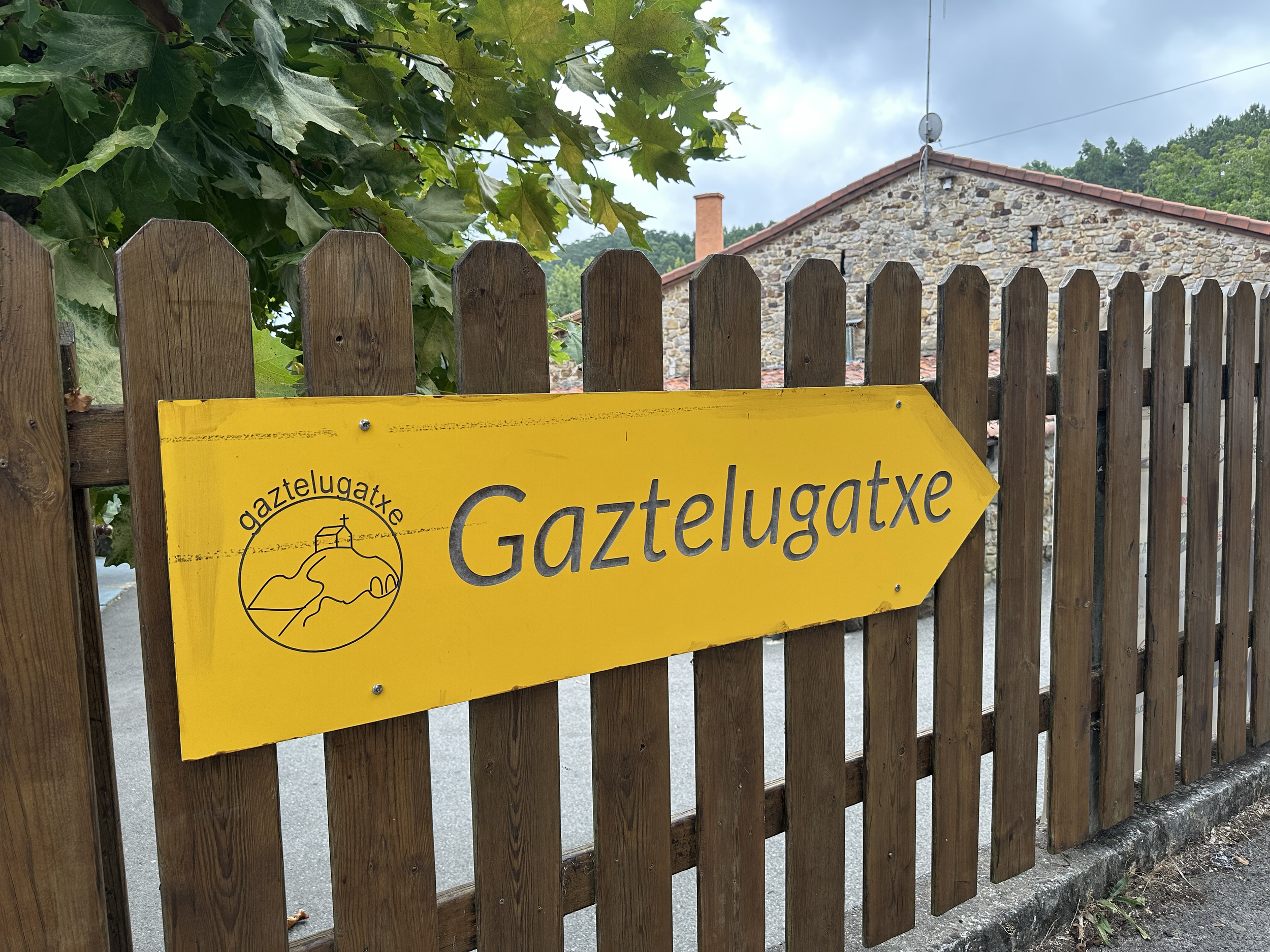
Our first adenture in the area of Bilbao was a hike to Gaztelugatxe, loosely translated "castle rock." This was a bucket list item. The views are amazing, and we were all excited to get there.
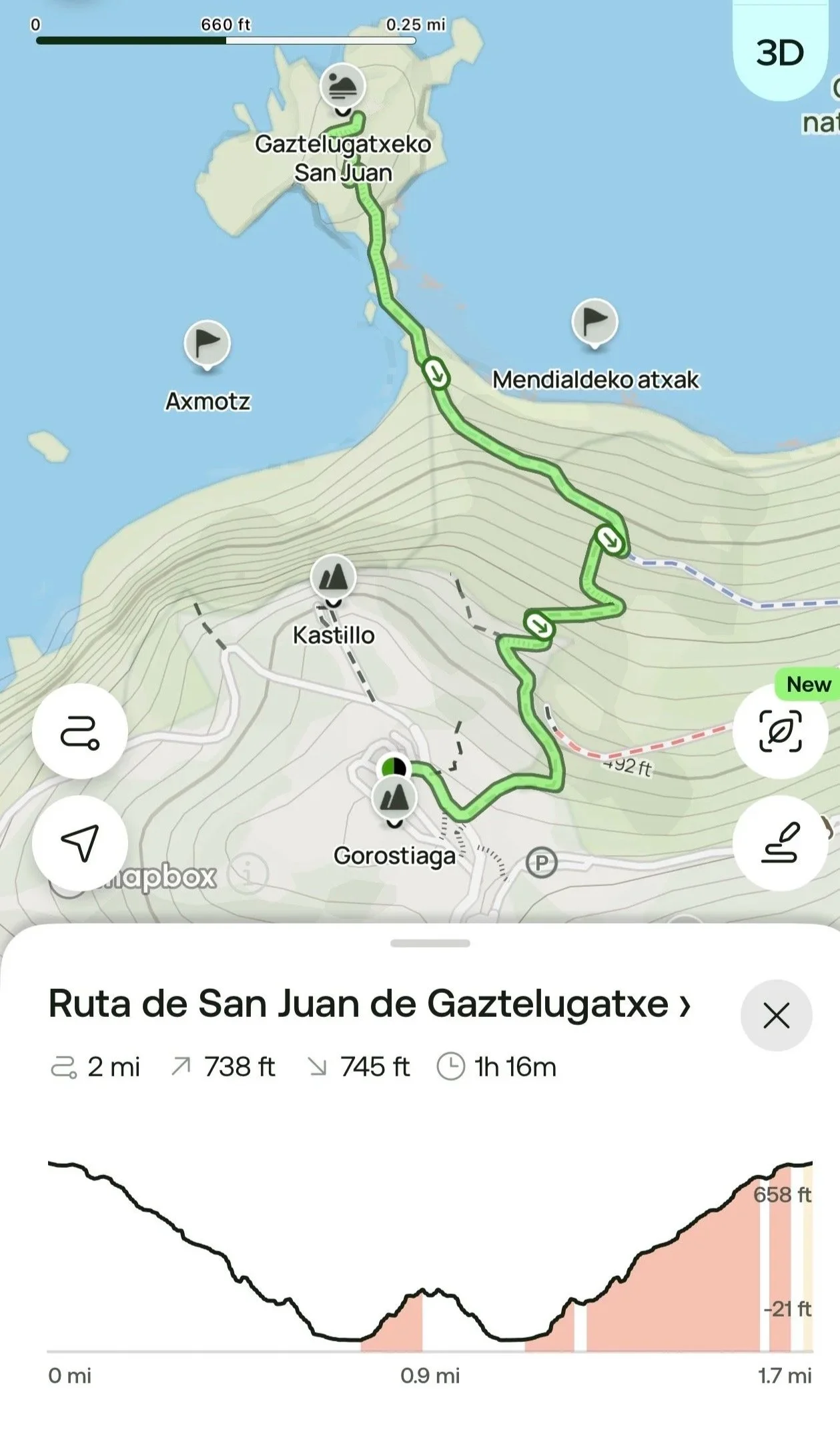
I love this hiking map that really shows the elevation and what we were about to attempt.
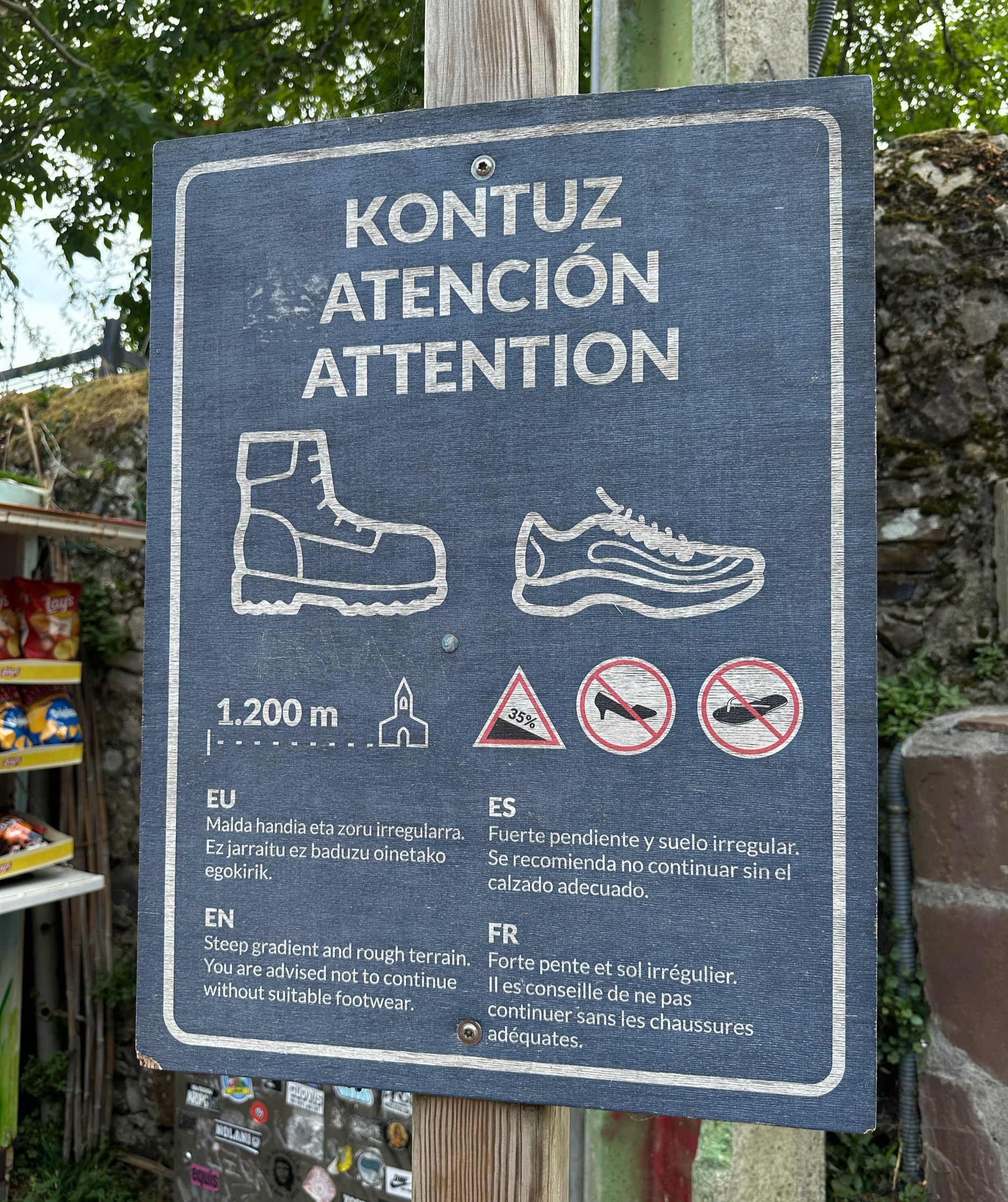
And if you weren't already taking it seriously, they had additional signs with recommendations for shoe-wear.
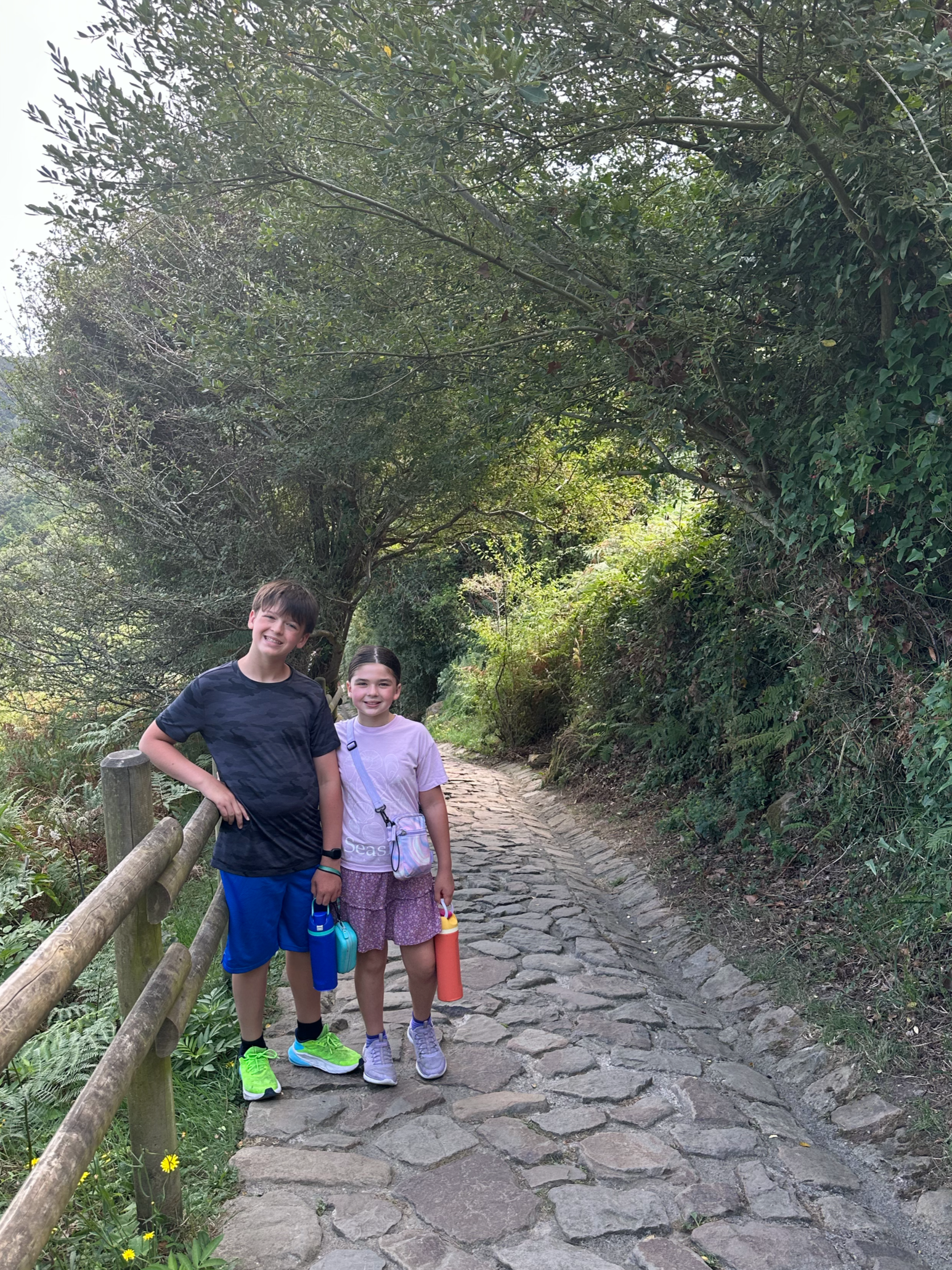
Set with water bottles and ready to head down the path that began with large stones
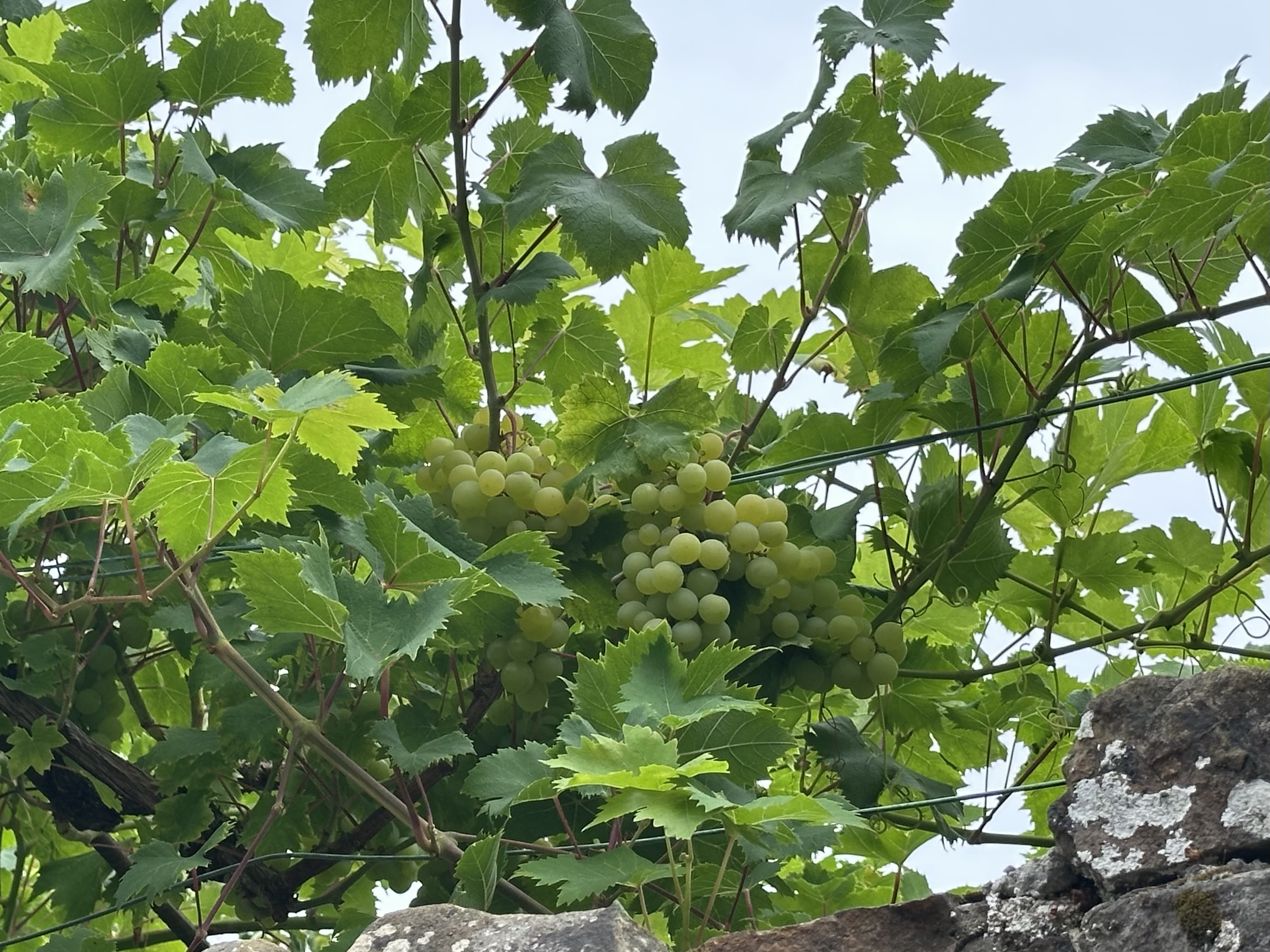
Grapes growing along the way
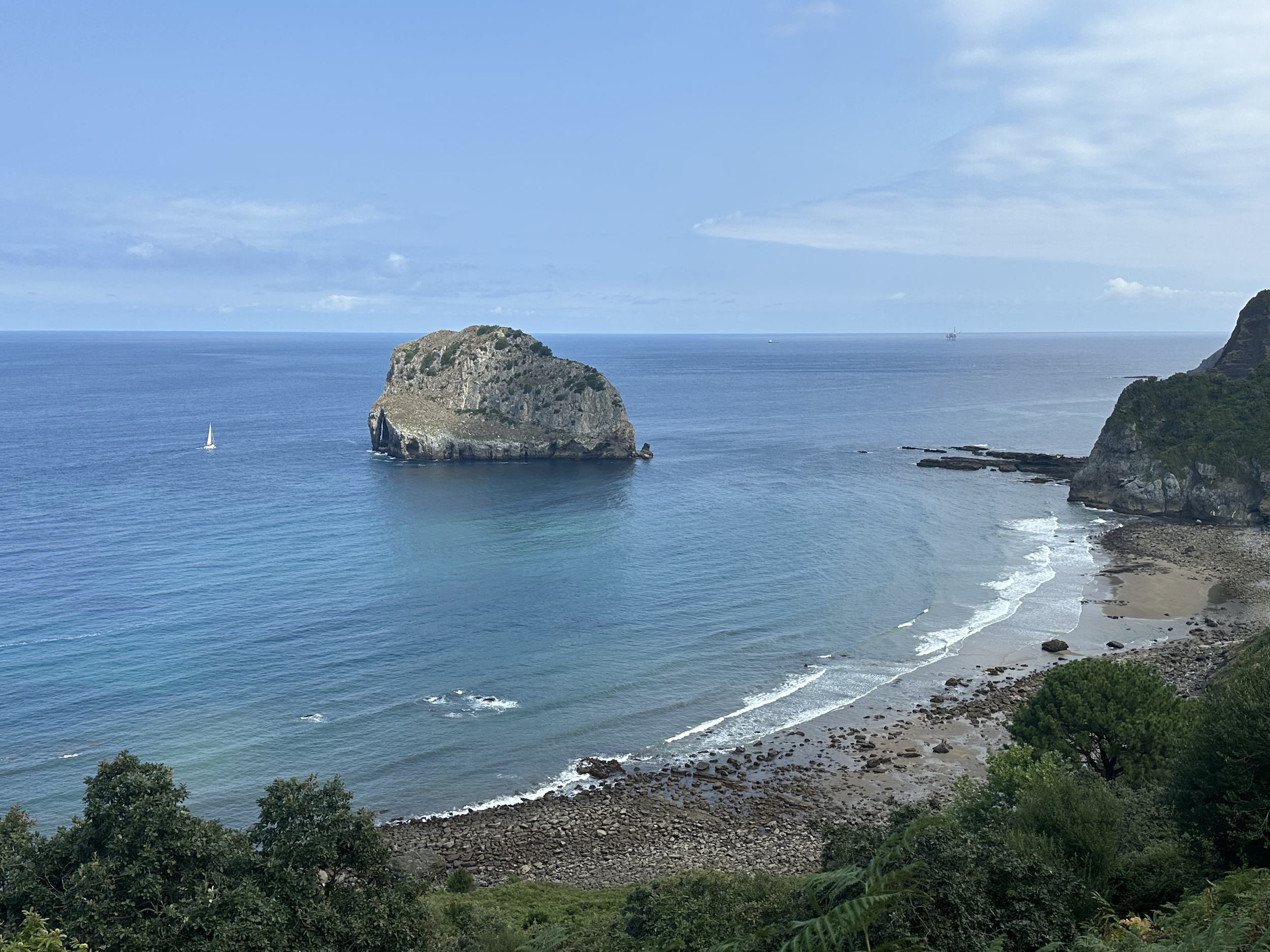
The first views of the coast were absolutely amazing. Look at that little sailboat making its way toward the rock.
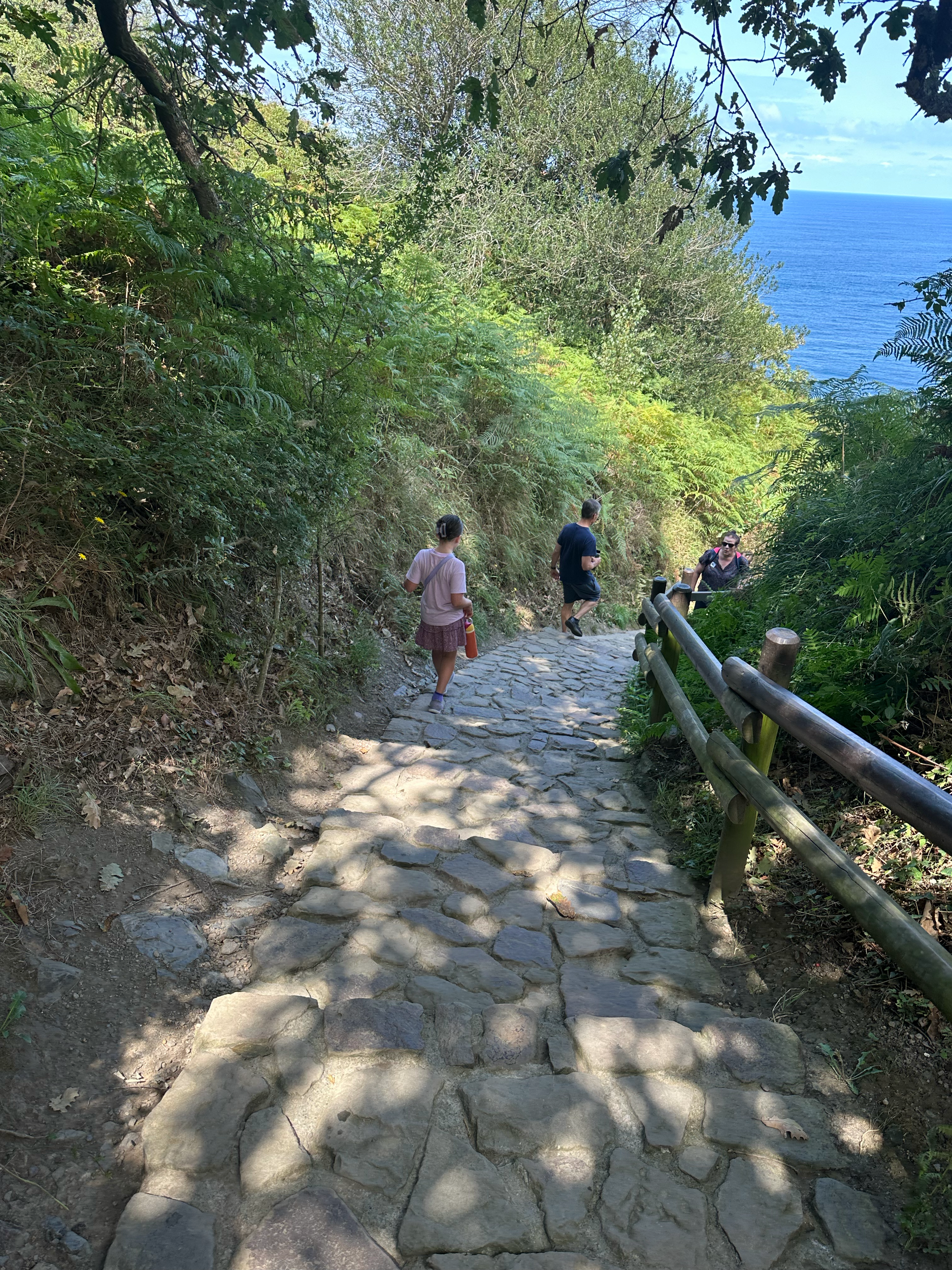
The path is growing steeper down to the water.
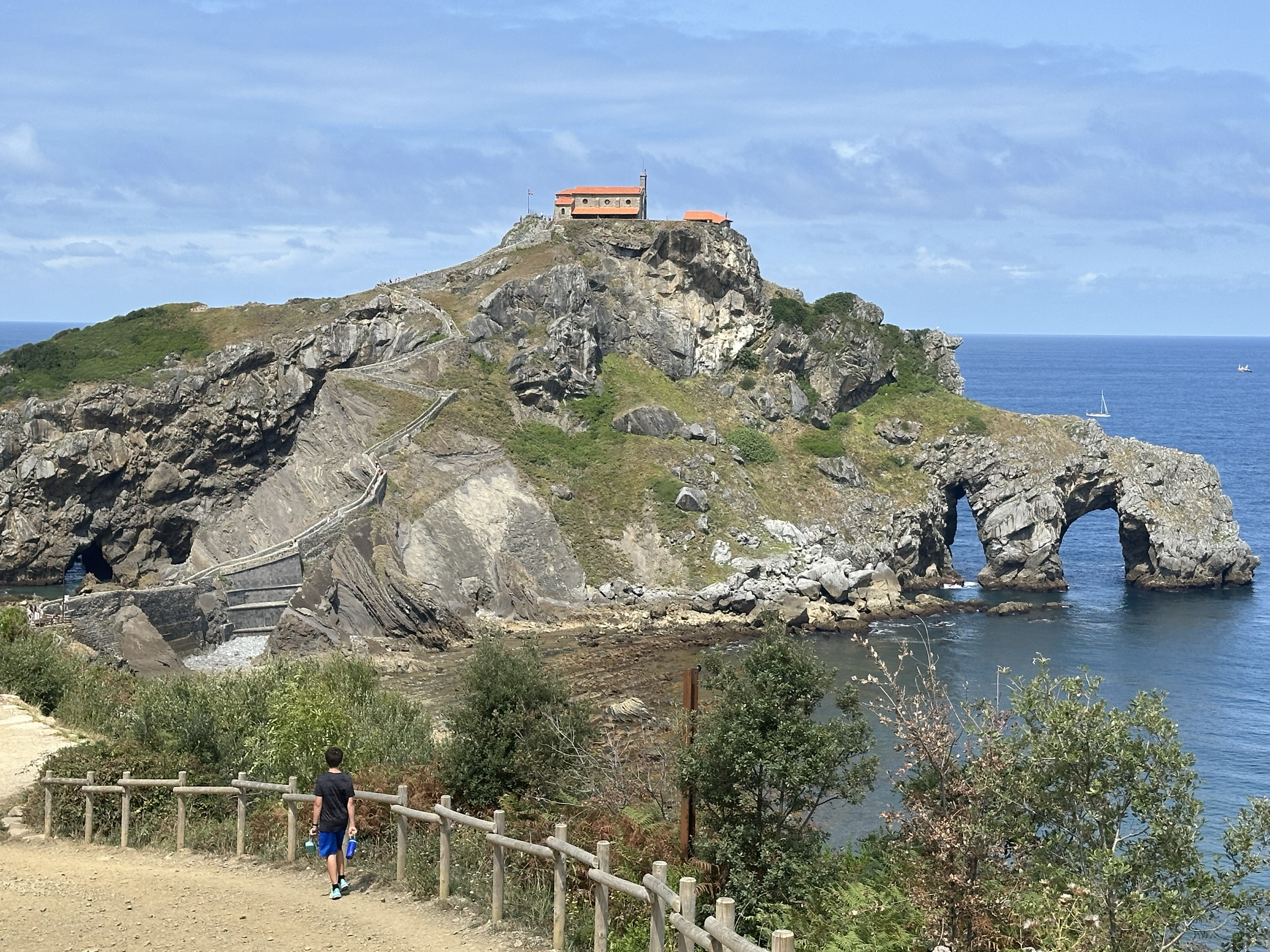
But then we got the real view. Gaztelugatxe is an islet on the Bay of Biscay that is connected to the mainland by a rocky footbridge. At the top of the islet is a church dedicated to St. John the Baptist. The current structure was built in the 1980s, but the original was believed to date back to the 9th Century.
Well-prepared for the hike to the top!
John and Joshua getting ready for the 241 step climb to the top!
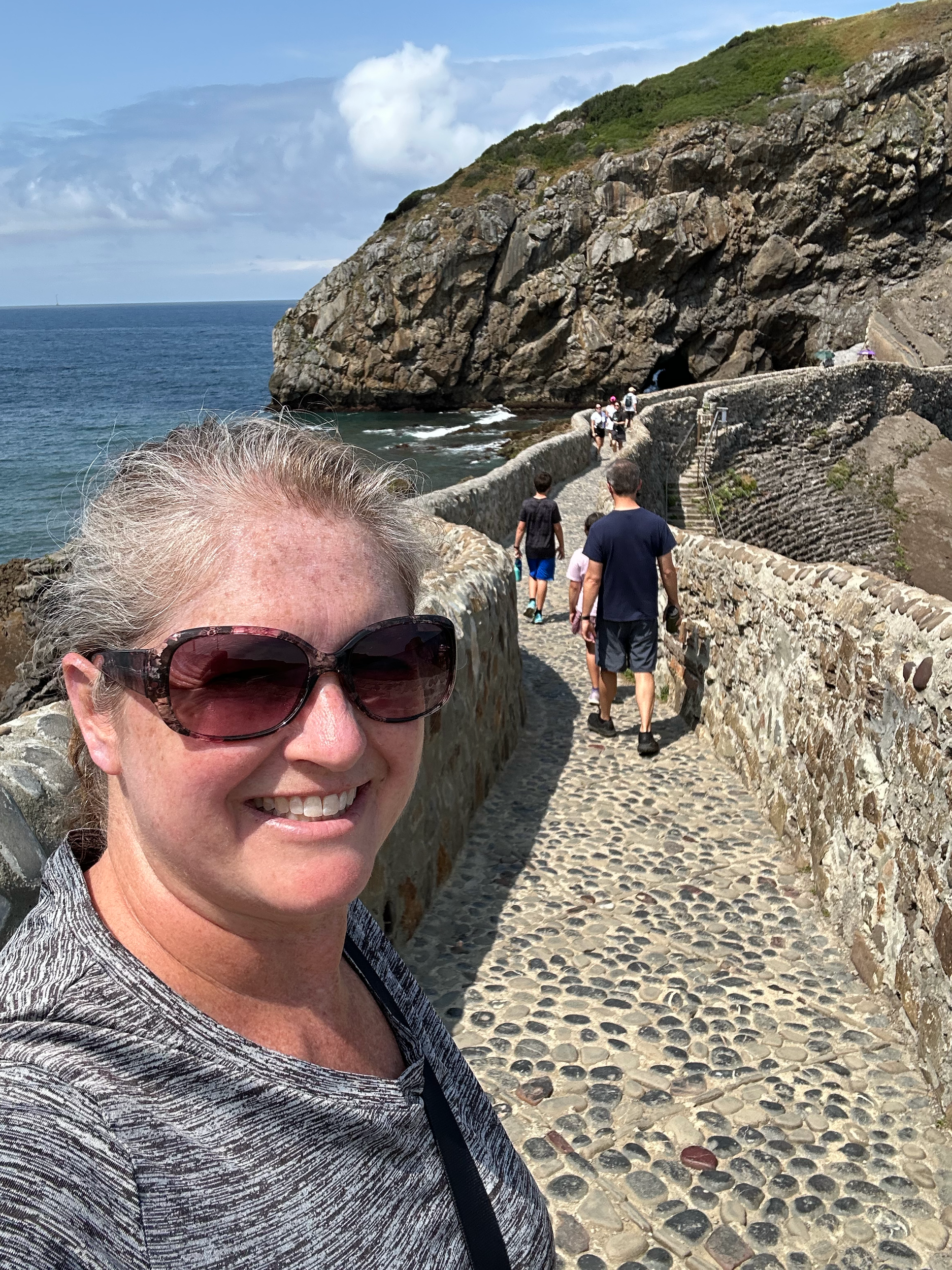
First the footbridge across, and then the steps up!
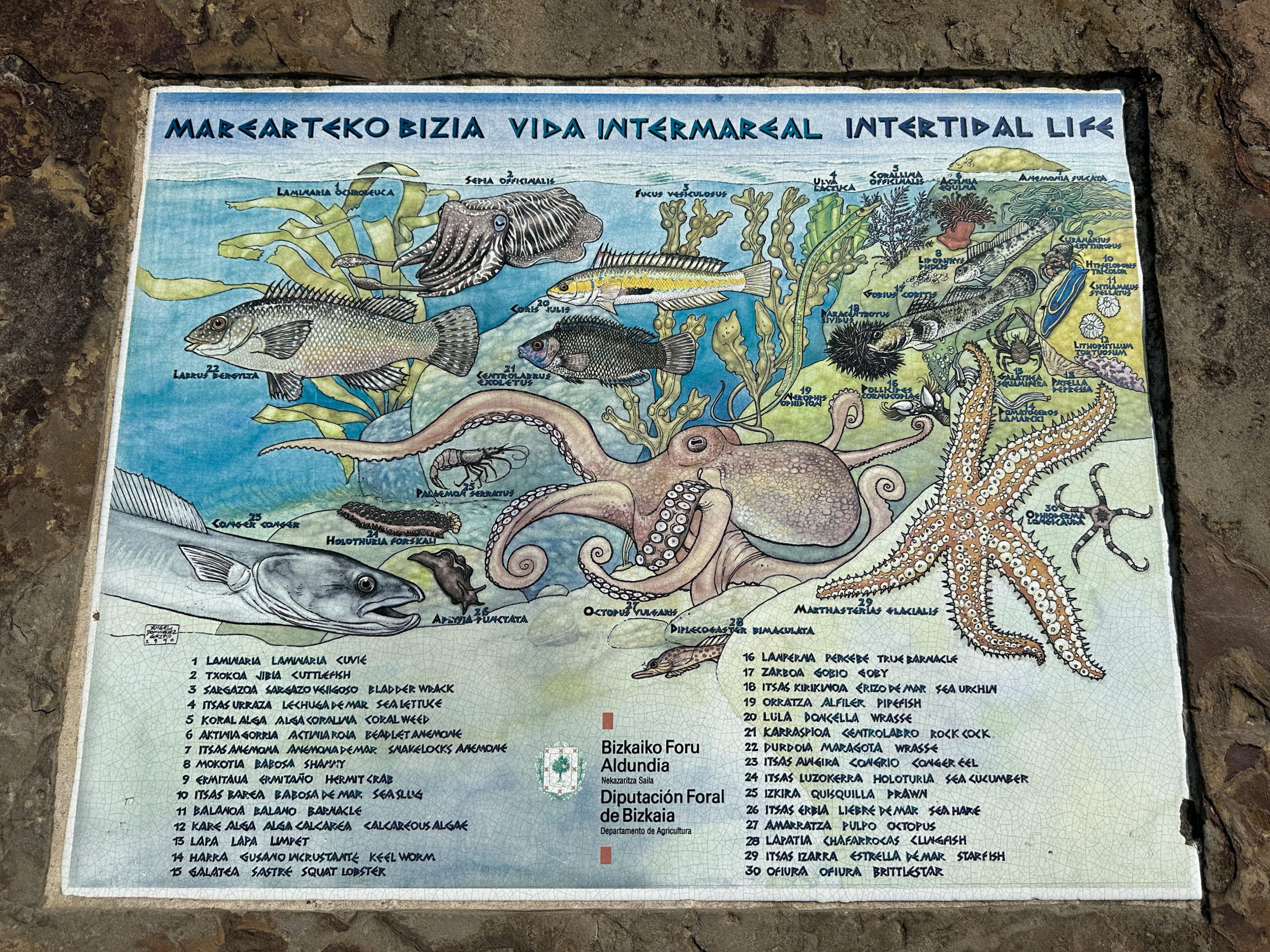
When Joshua saw this plaque for the creatures that live in the intertidal pools, he was keen to climb down.
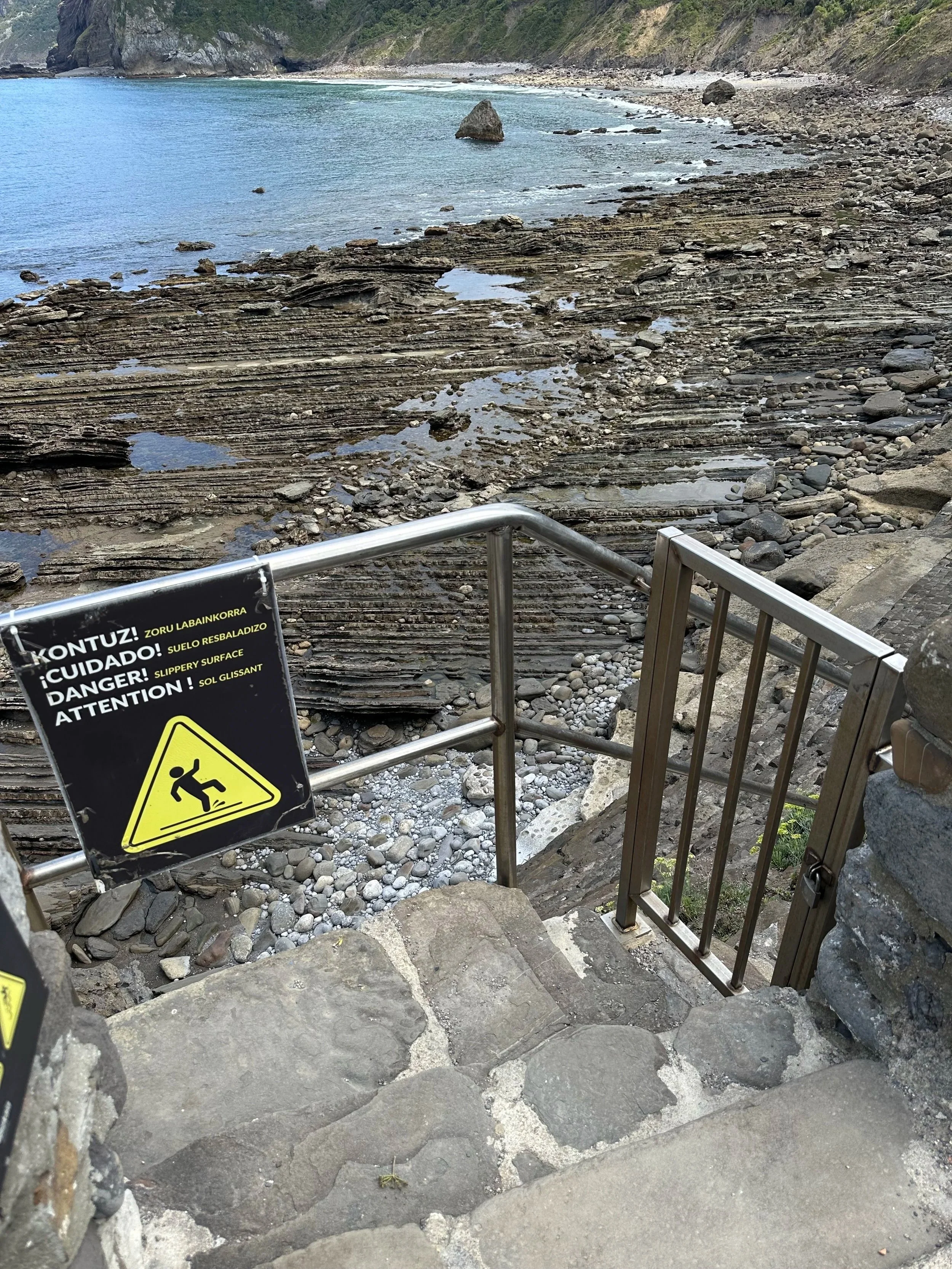
However, whatever access they have given people in the past was clearly blocked off at this point. We stared down at the tidal pools from the footbridge.
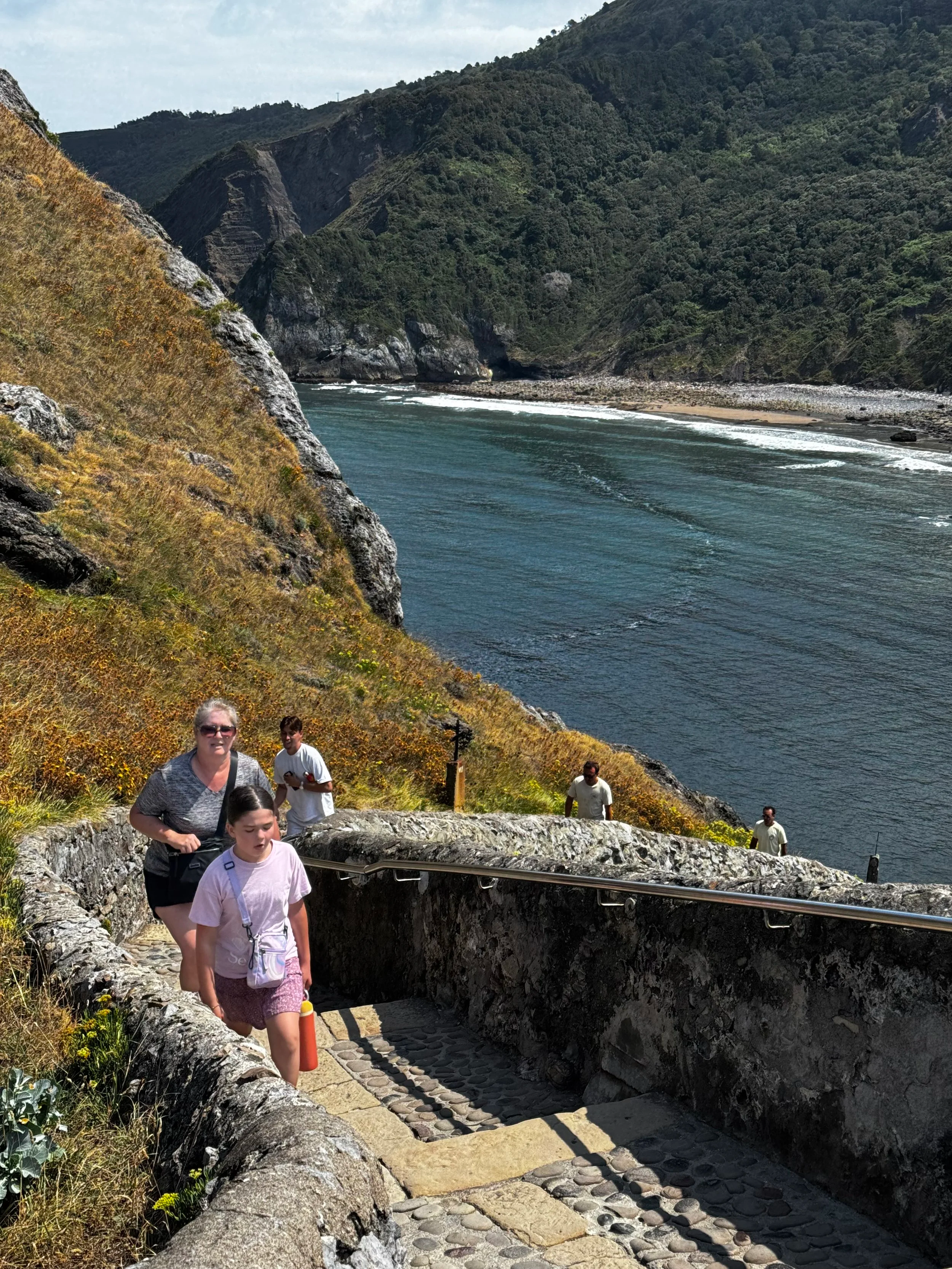
Slow and steady we go.
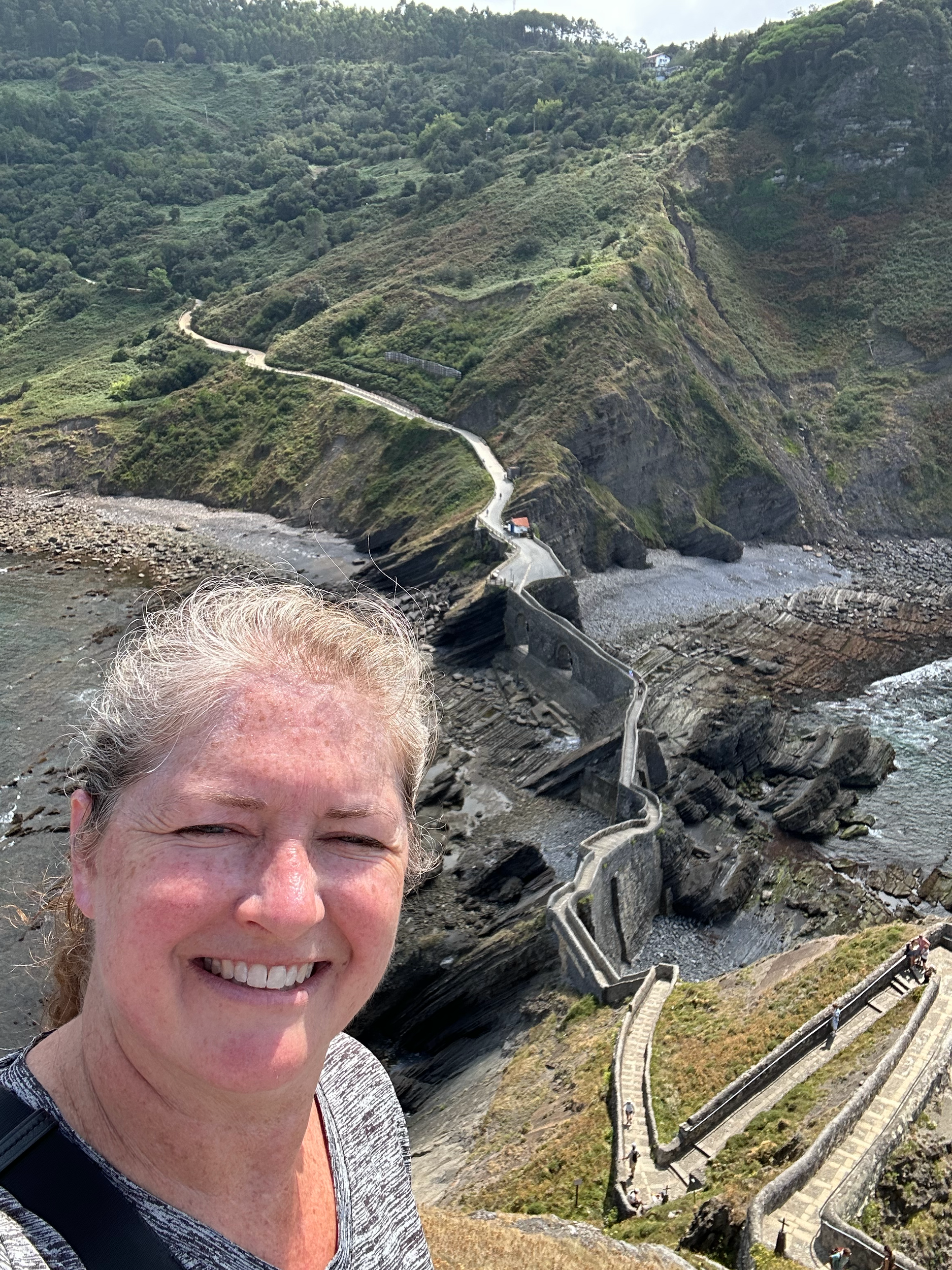
The view behind us back to the mainland.
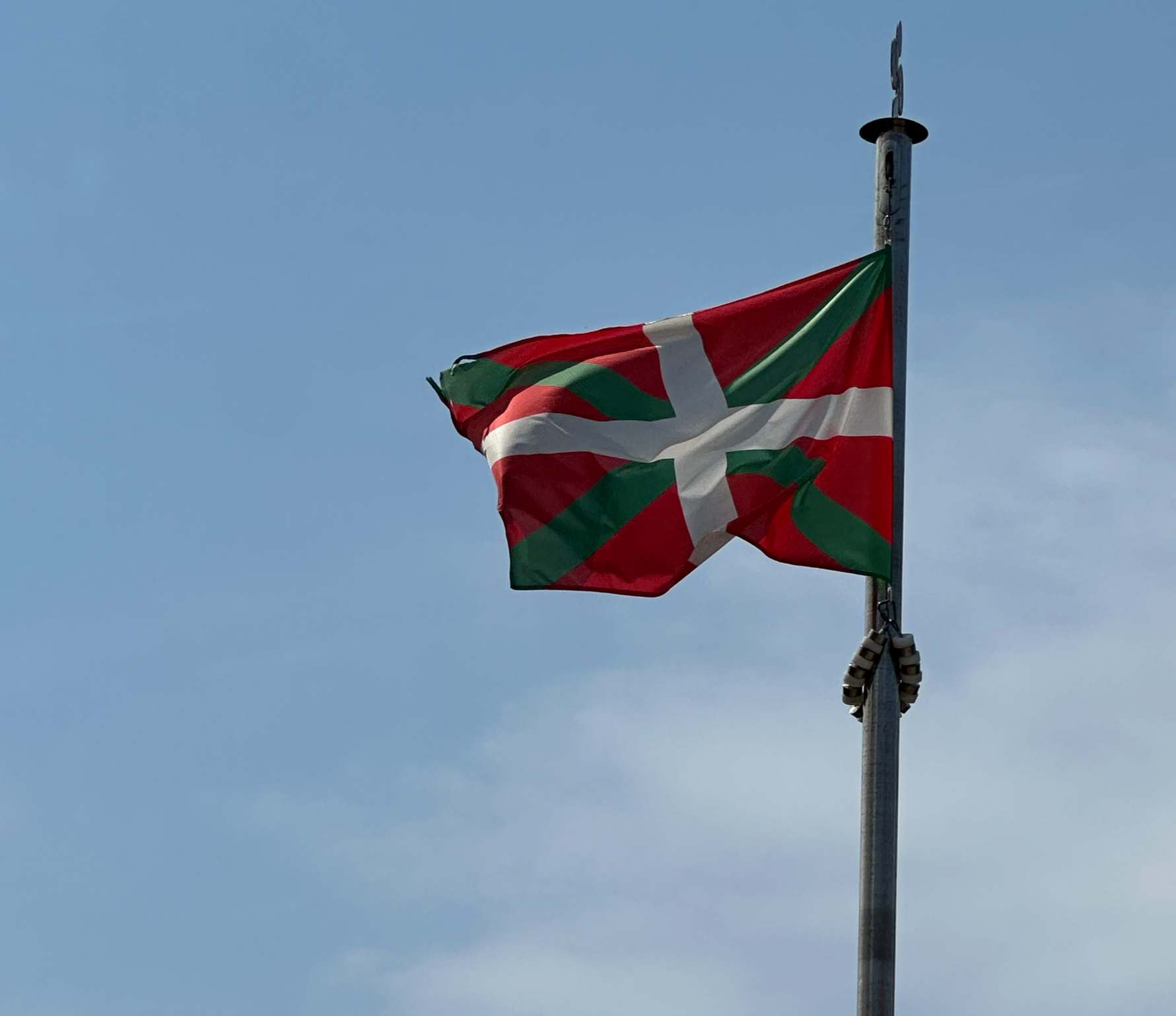
At the top, we were greeted by the flag of Basque Country!
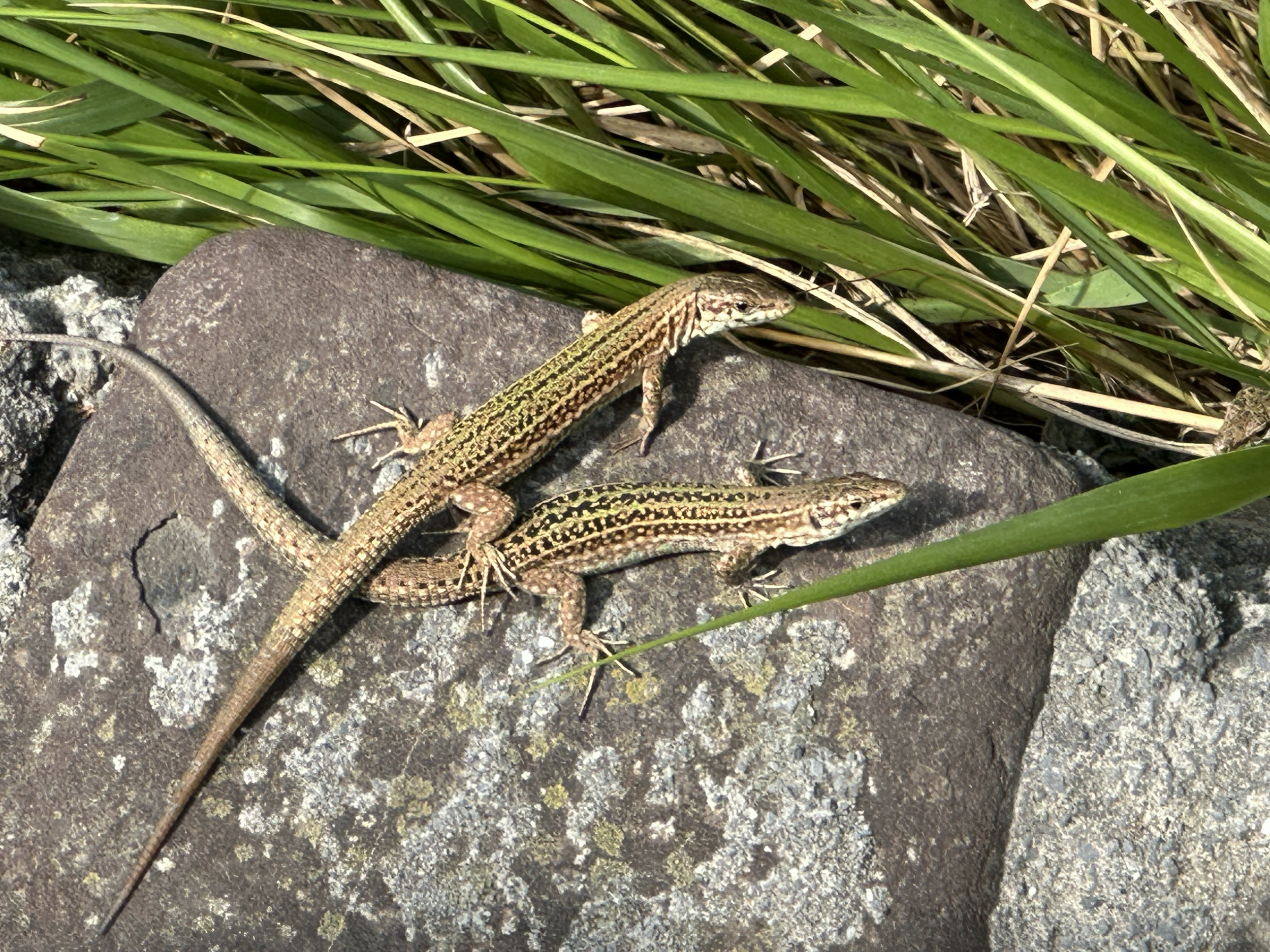
We walked around the outside of the church and quickly noticed that a group of lizards (a lounge!) is living among the rocks at the top. They come out to sun on the rocks and as soon as a person walks by, they dart back into the rocks.
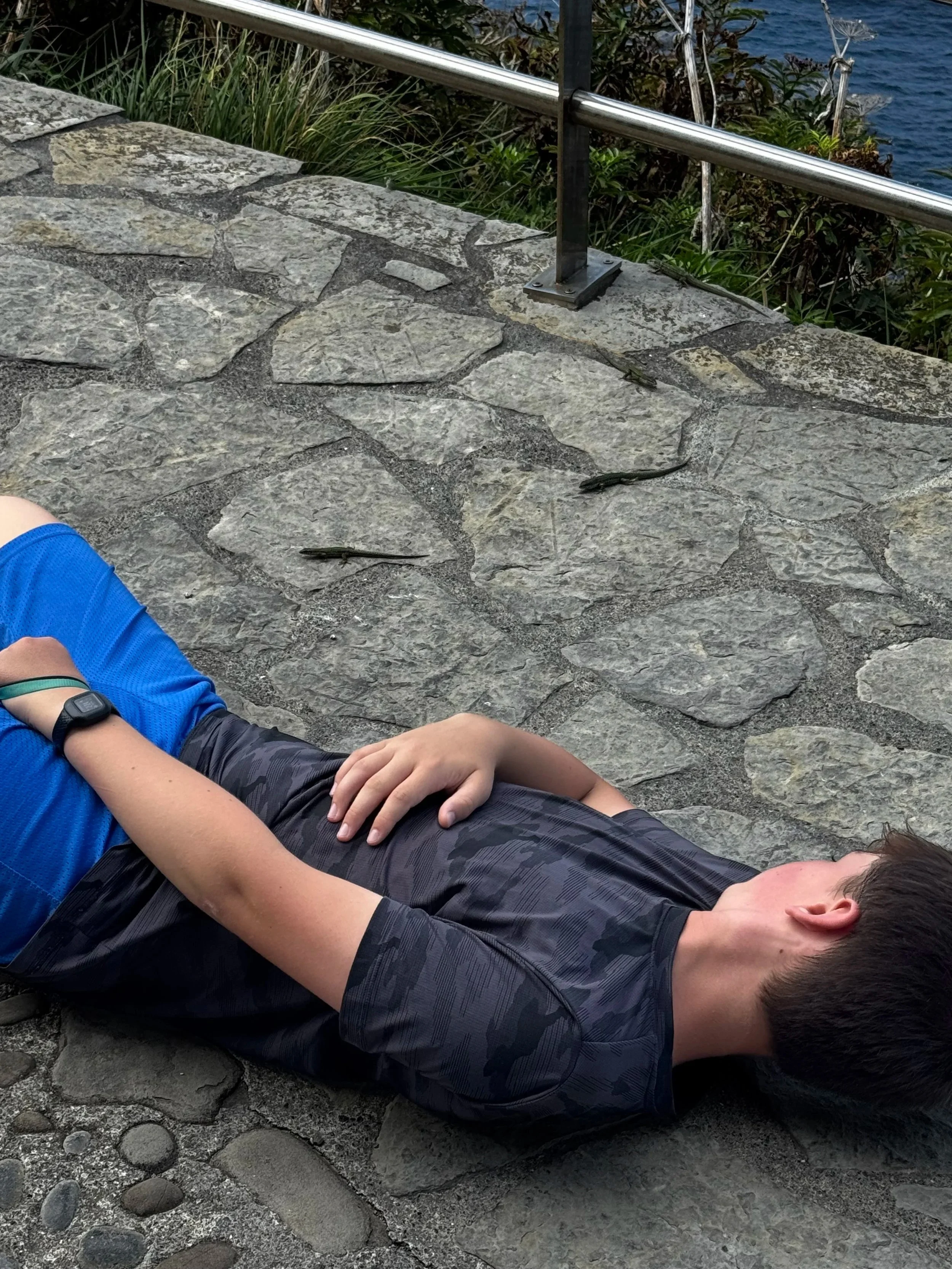
The lizards were a hit; they played "cat and mouse" with Joshua, who was loving every second.
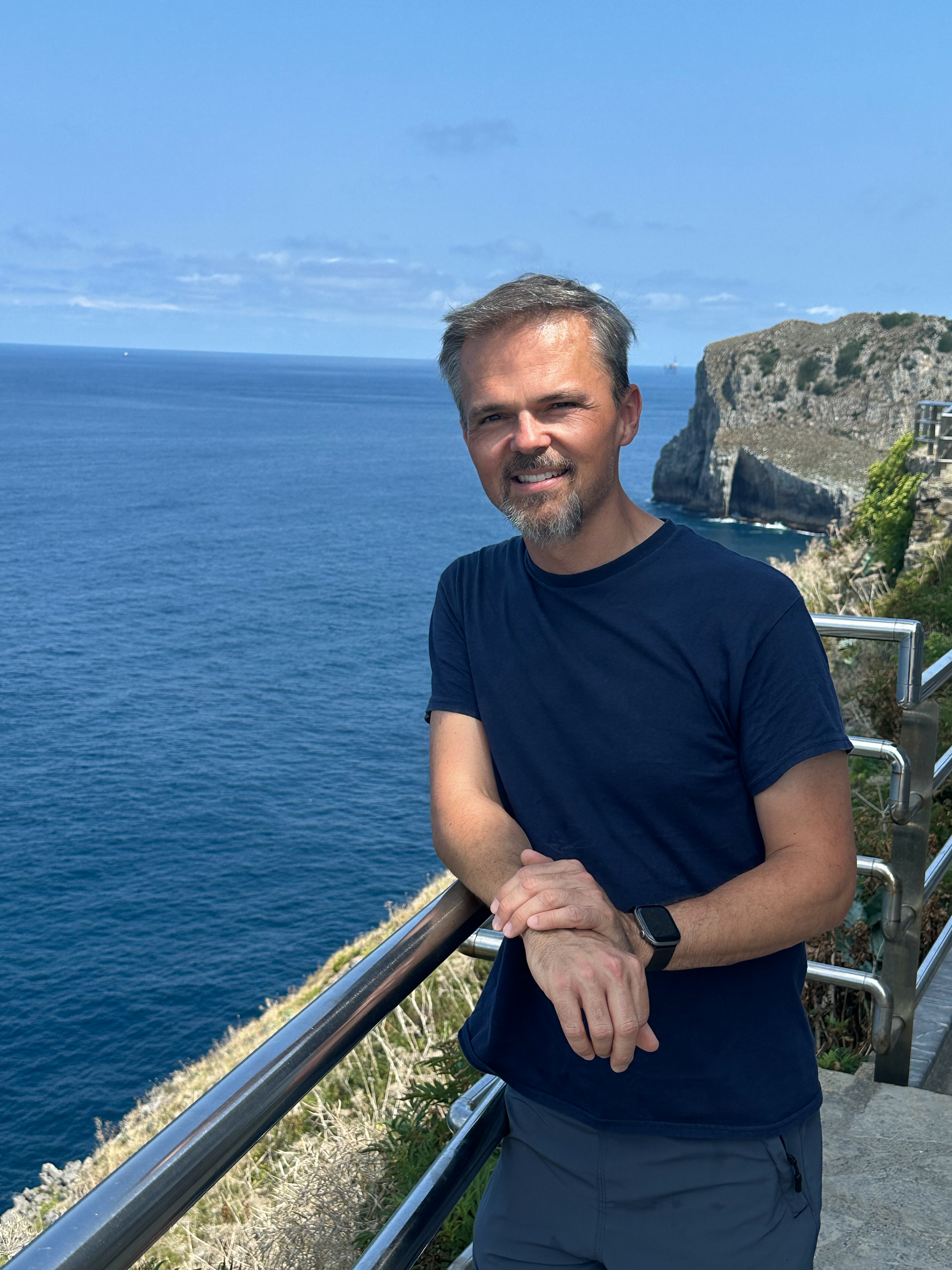
John took a moment to enjoy the view of the expansive blue!
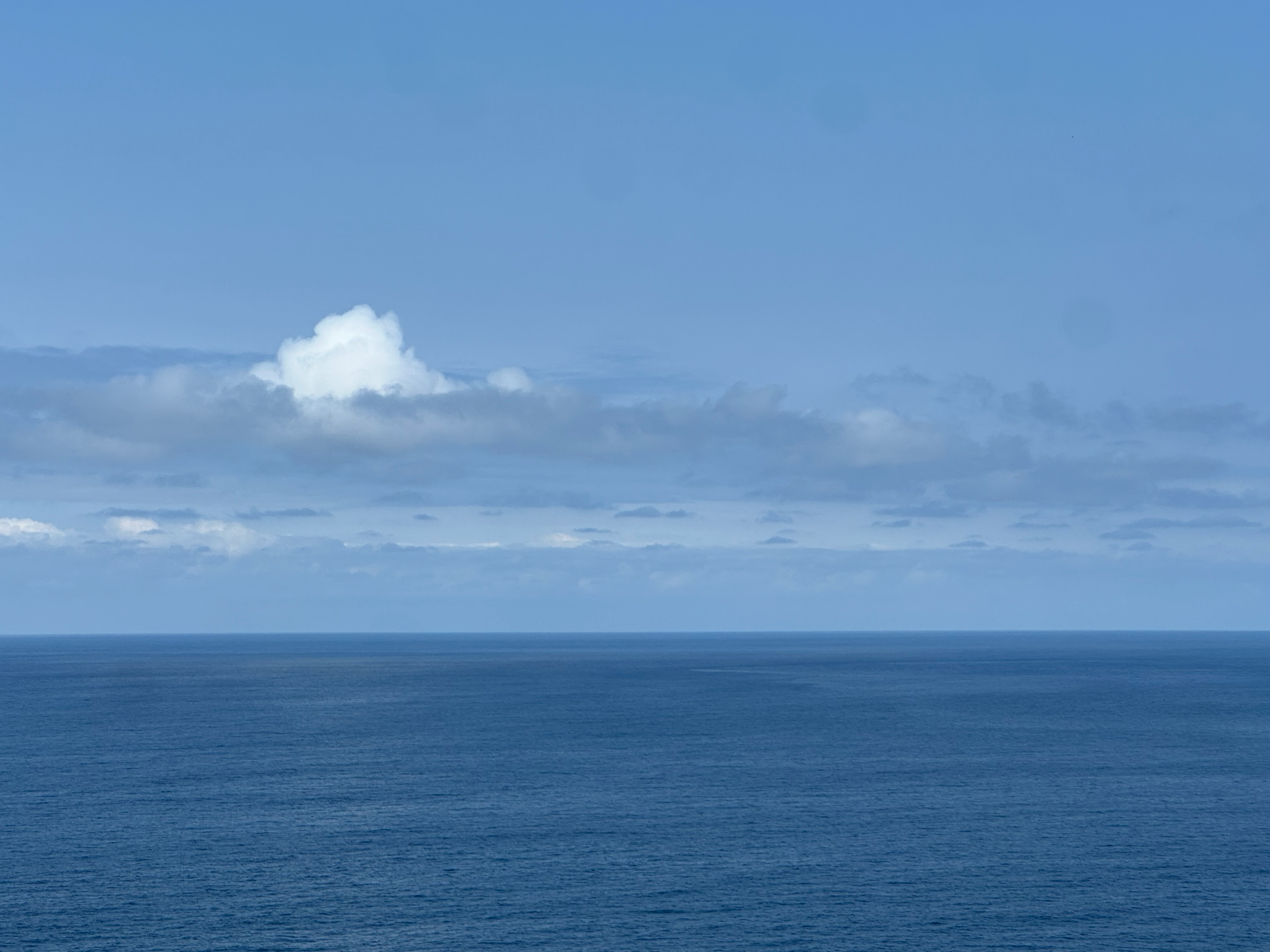
Serene
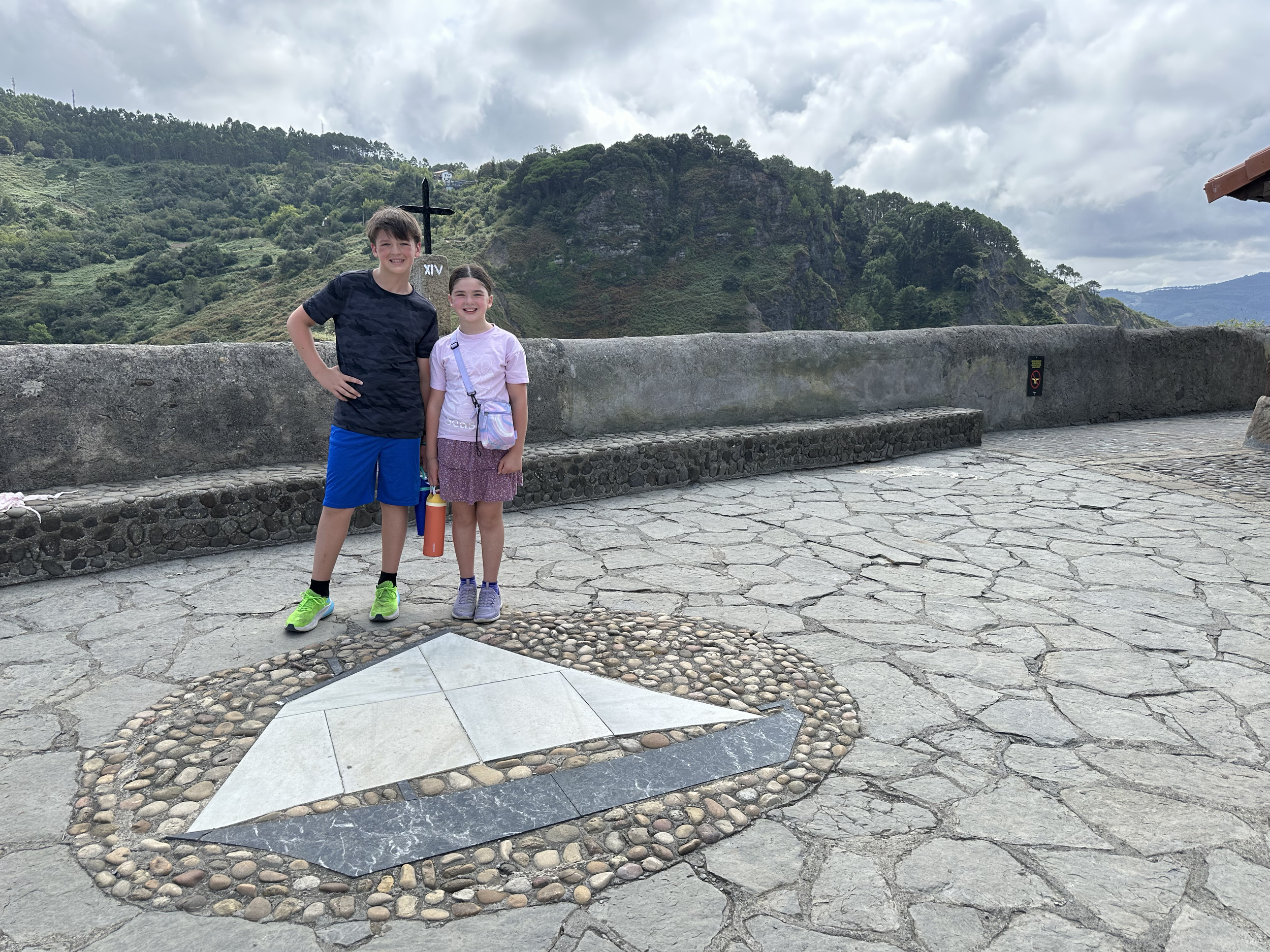
Makes sense that there would be a boat motif!
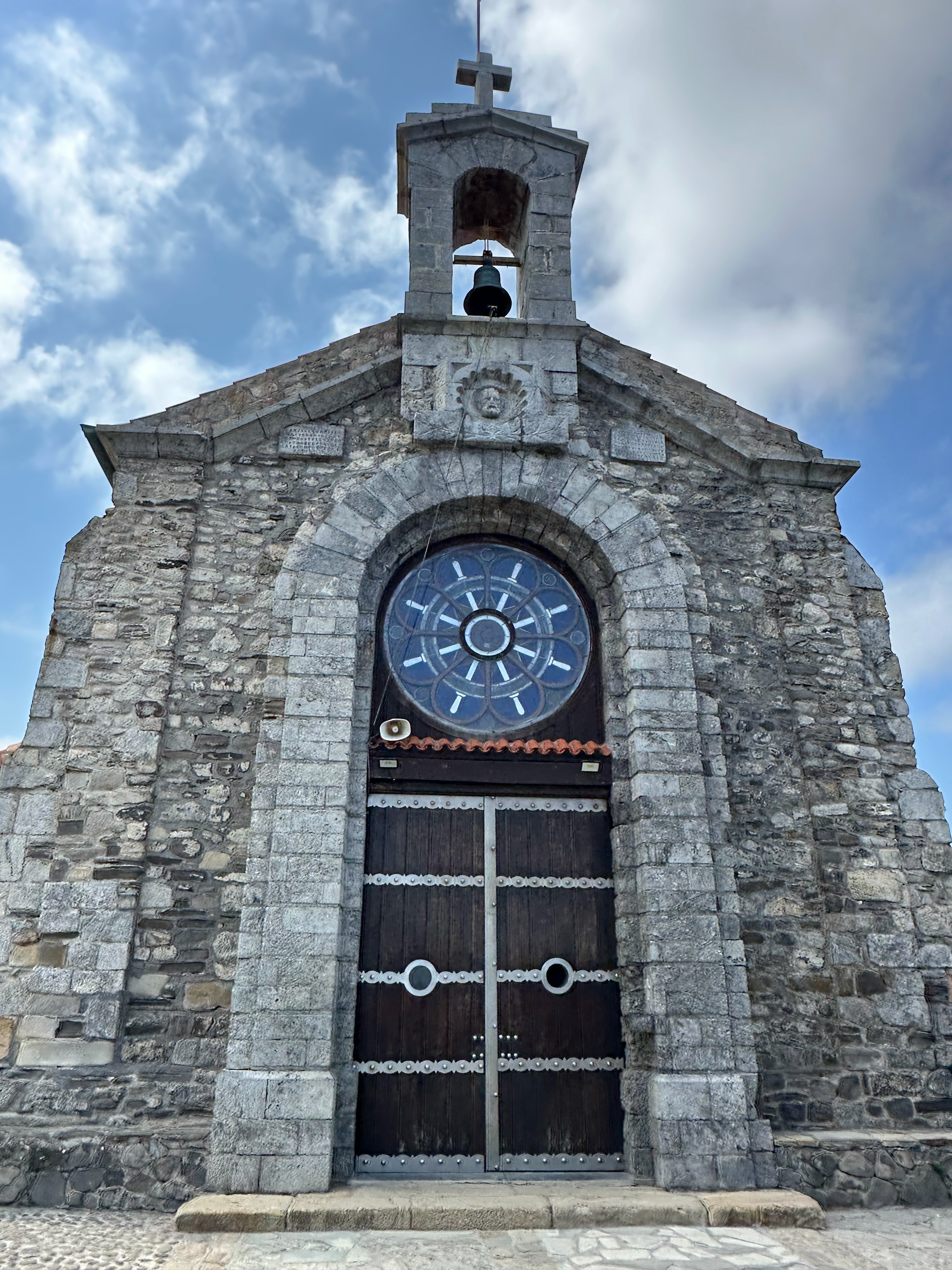
The church dedicated to St. John the Baptist.
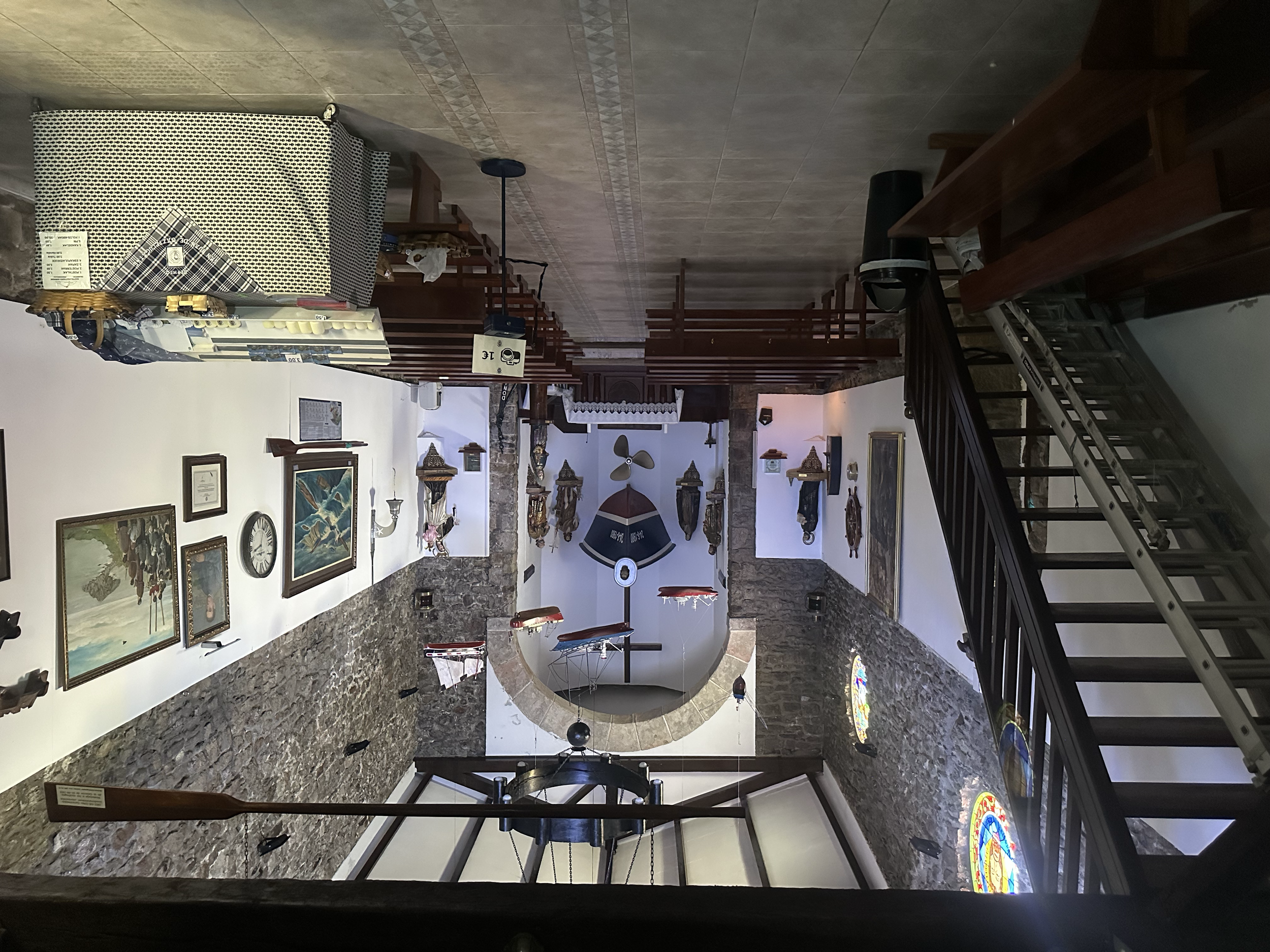
We weren't able to go inside, but we could see through a window in the door. More hanging boats! This time I think it makes sense.
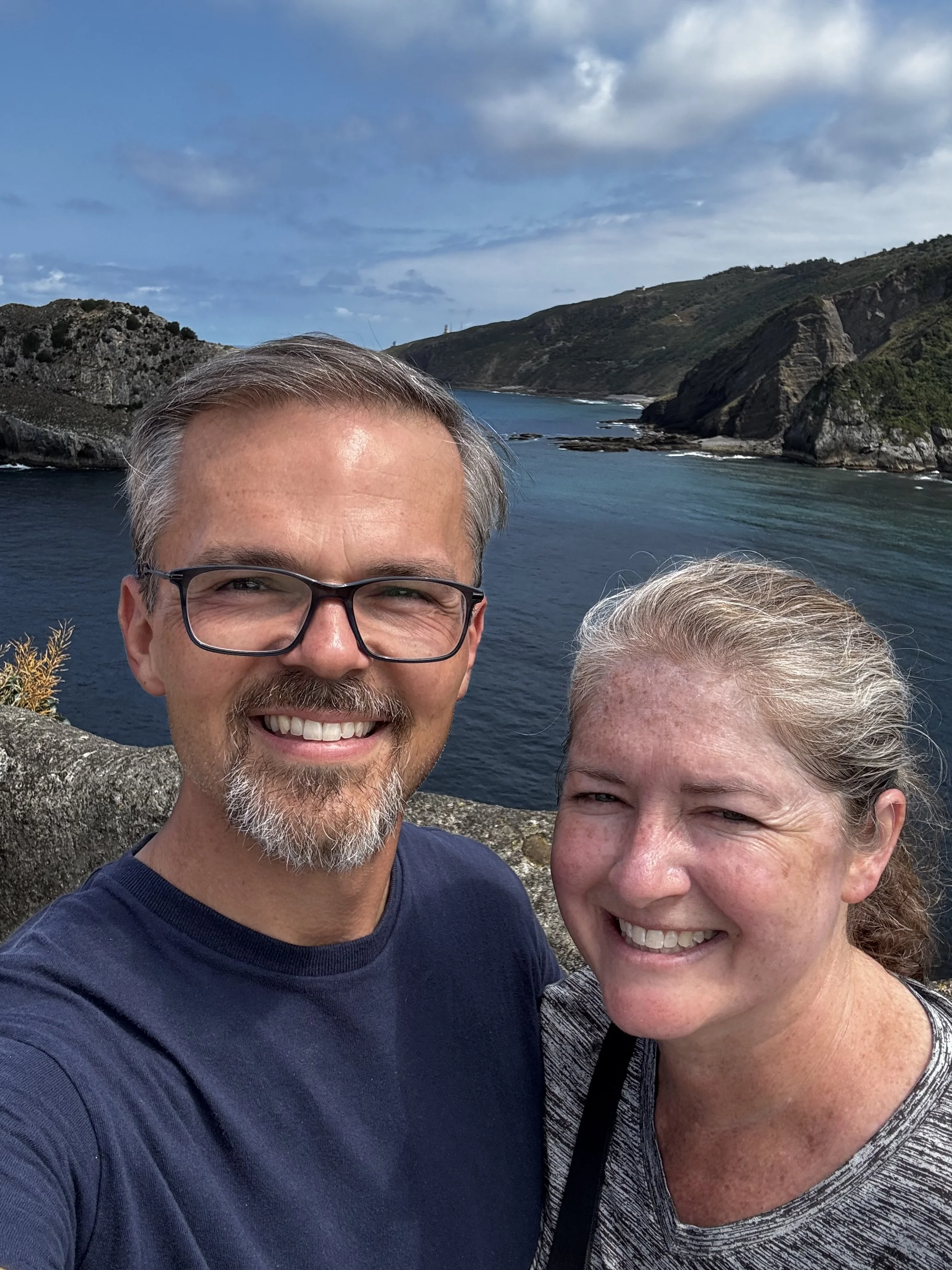
At the top of the 241 steps. Bay of Biscay's beauty all around.
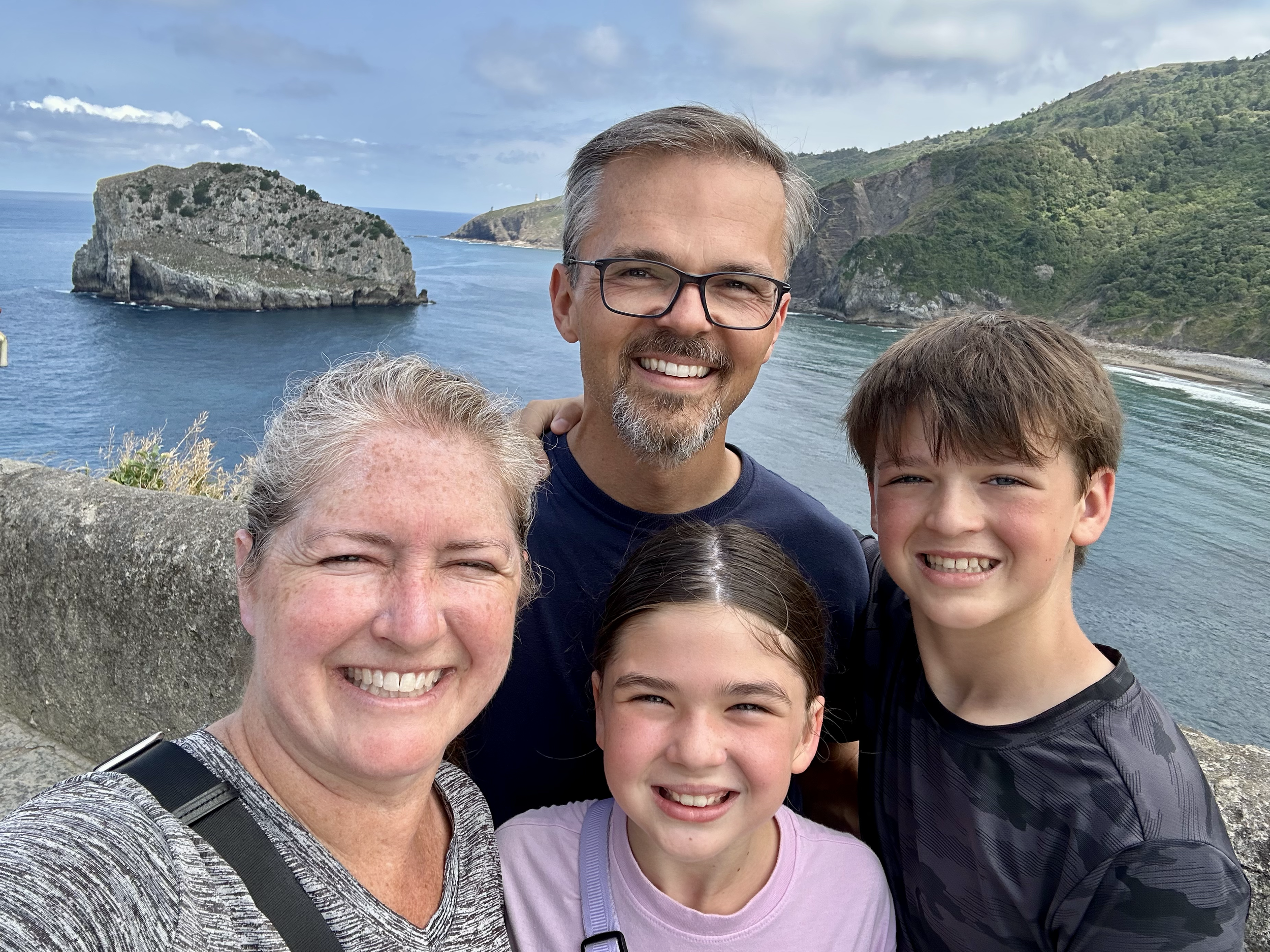
Family hiking (aka stair climbing) was a success!
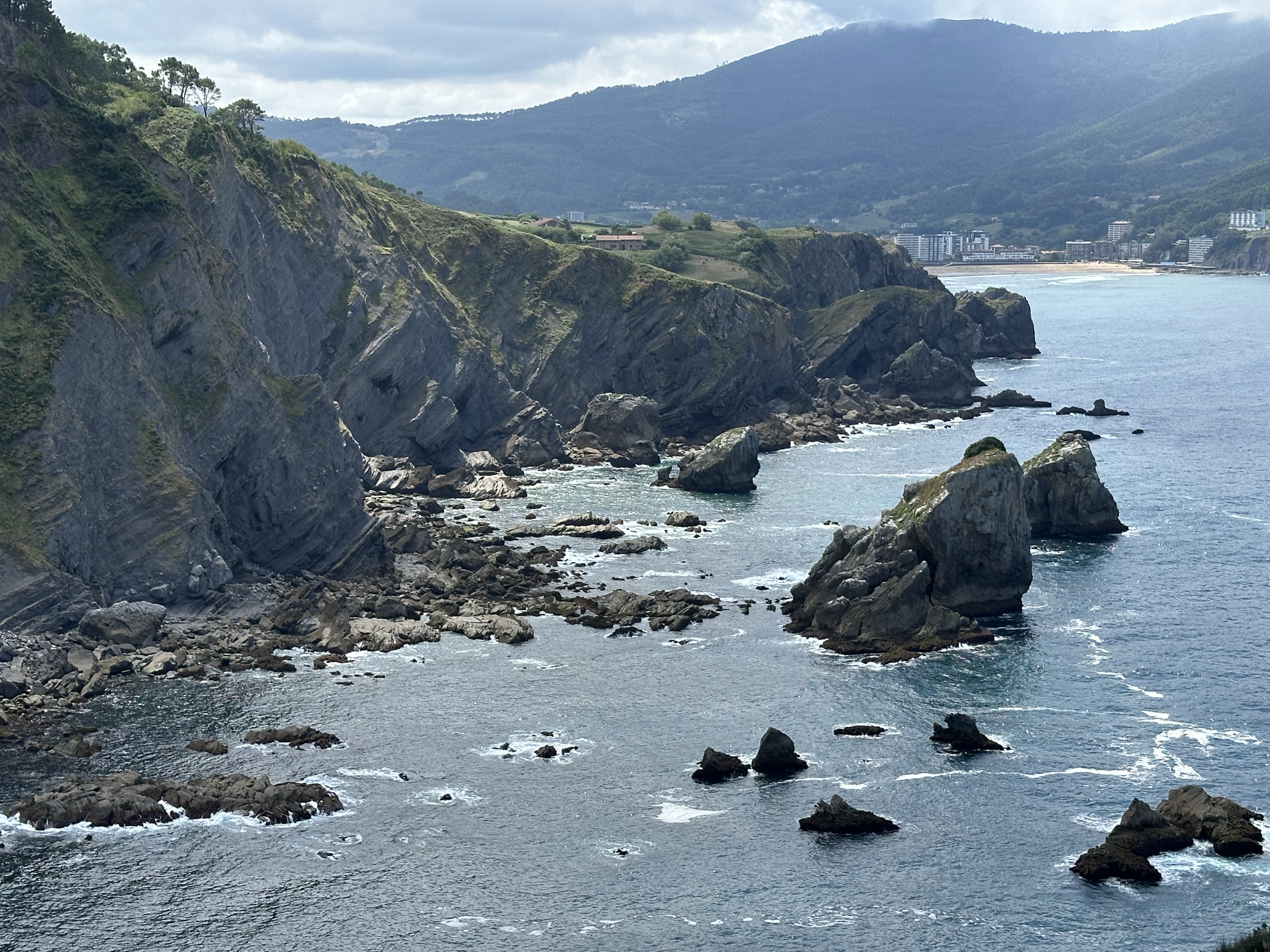
After a little rest and taking in the beauty all around, it was time to head back.
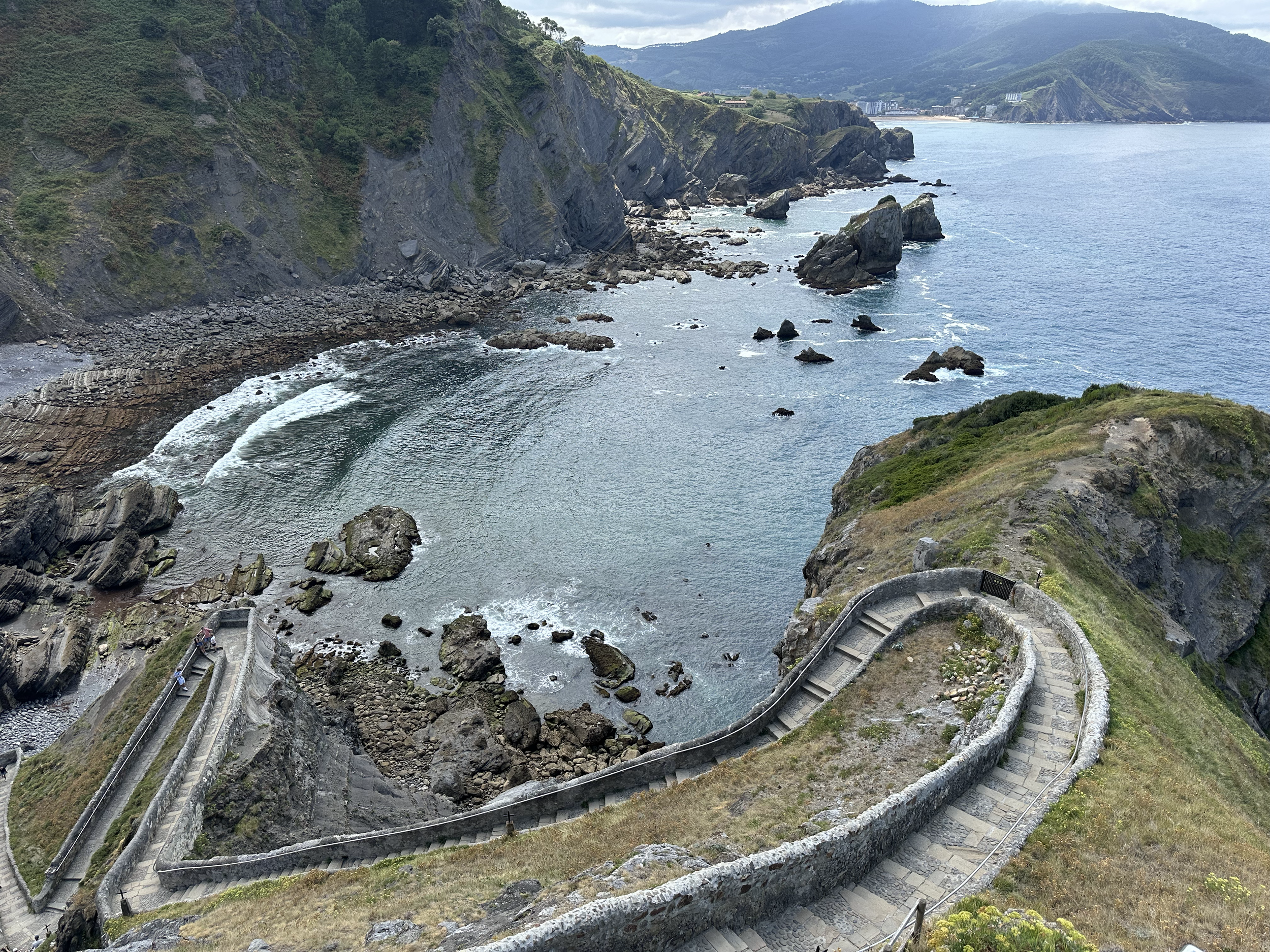
Whoa! Looks extra steep on the way down!
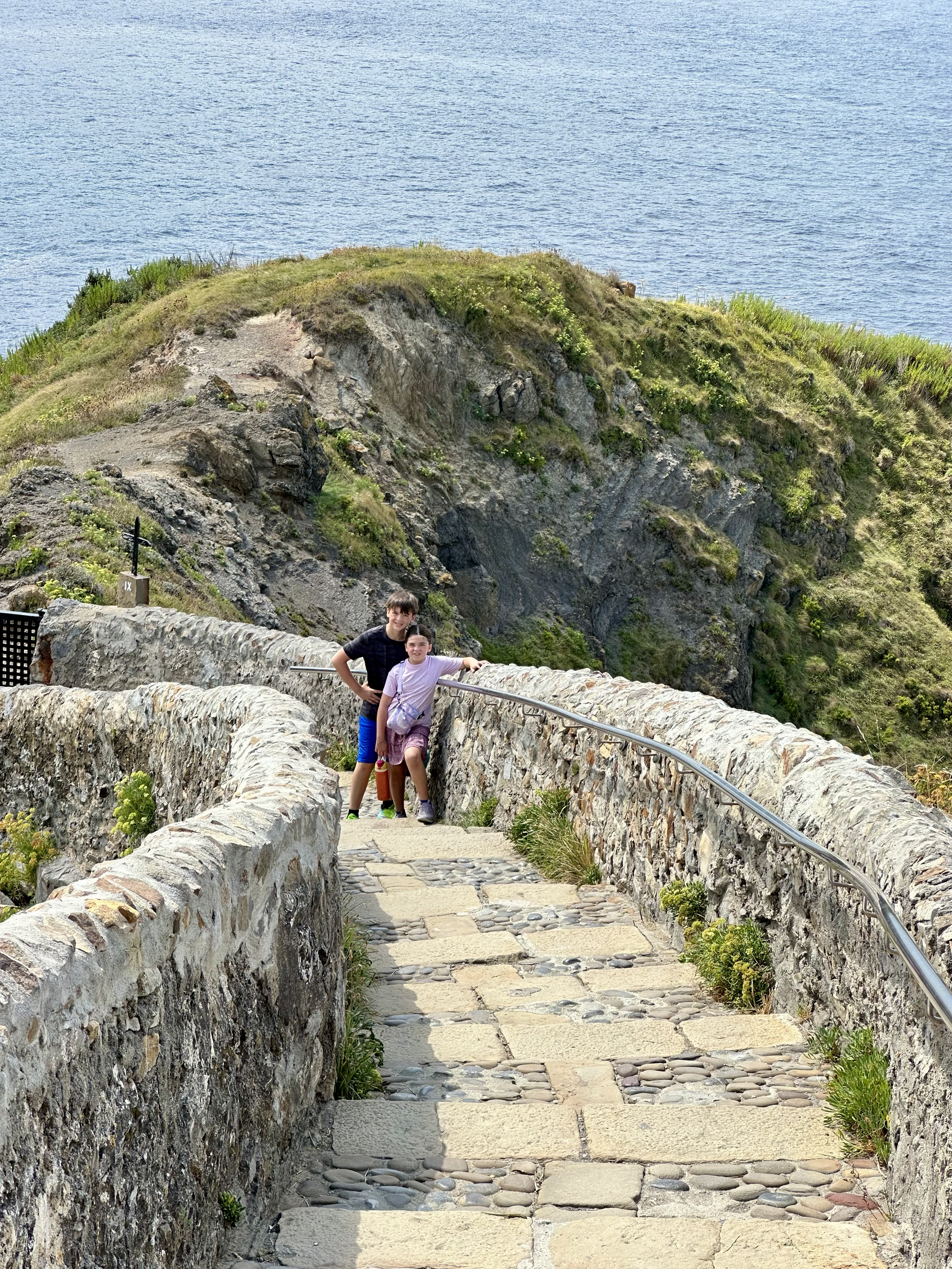
These kiddos were way ahead of the parents. They stopped for a photo op!
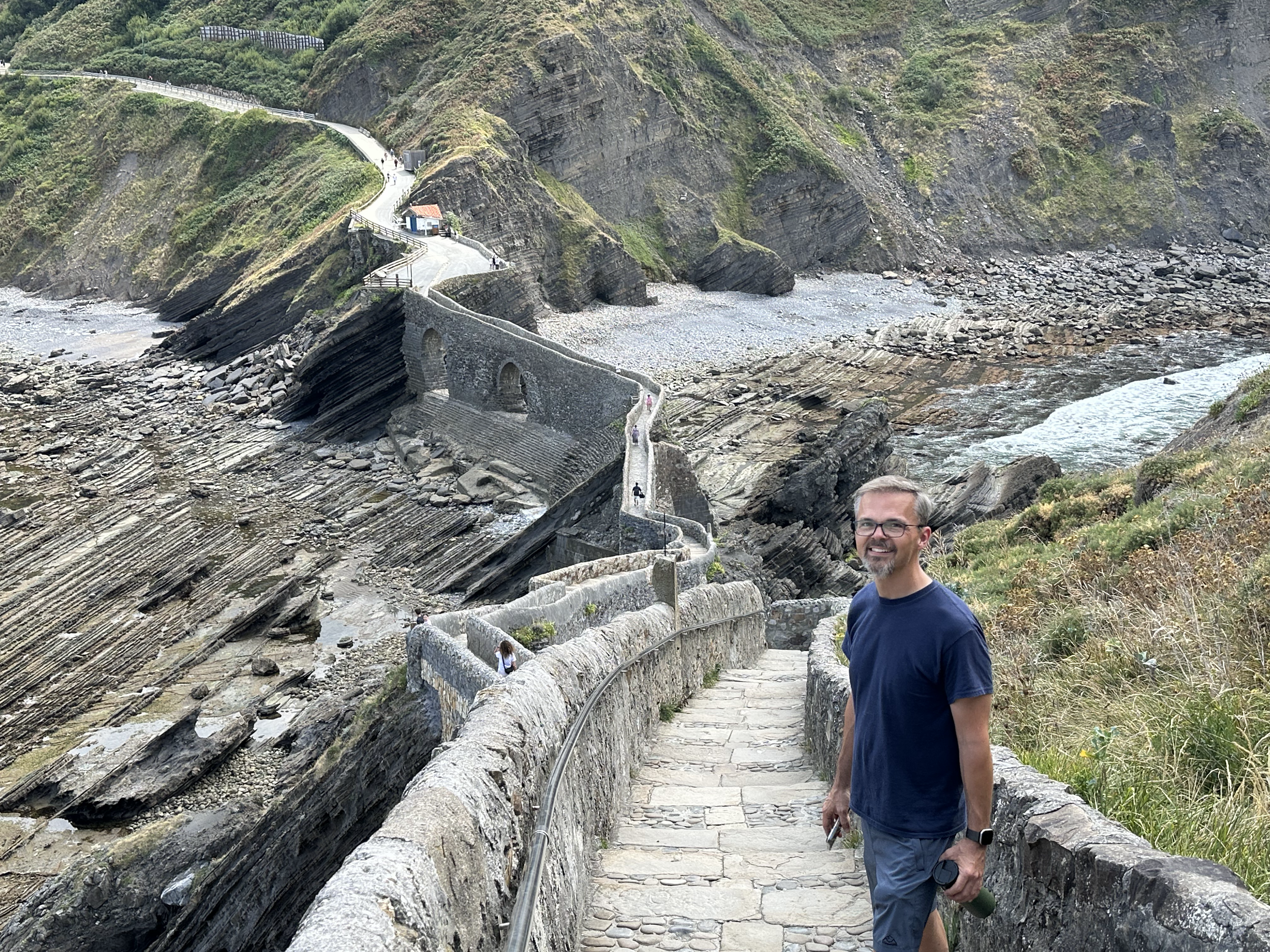
How cool is this!
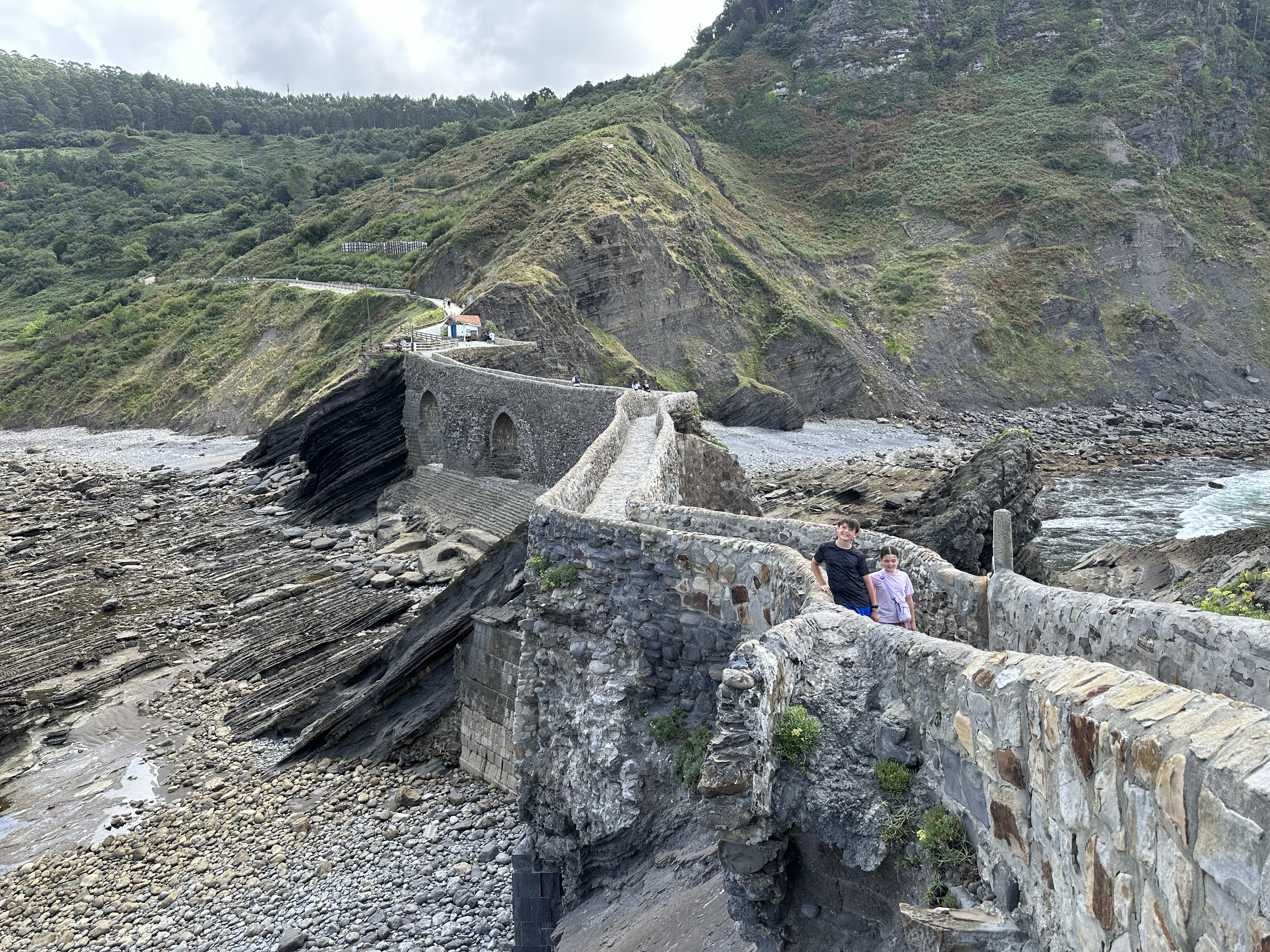
One more picture of the footbridge back across. Can you spot Joshua and Amelia?
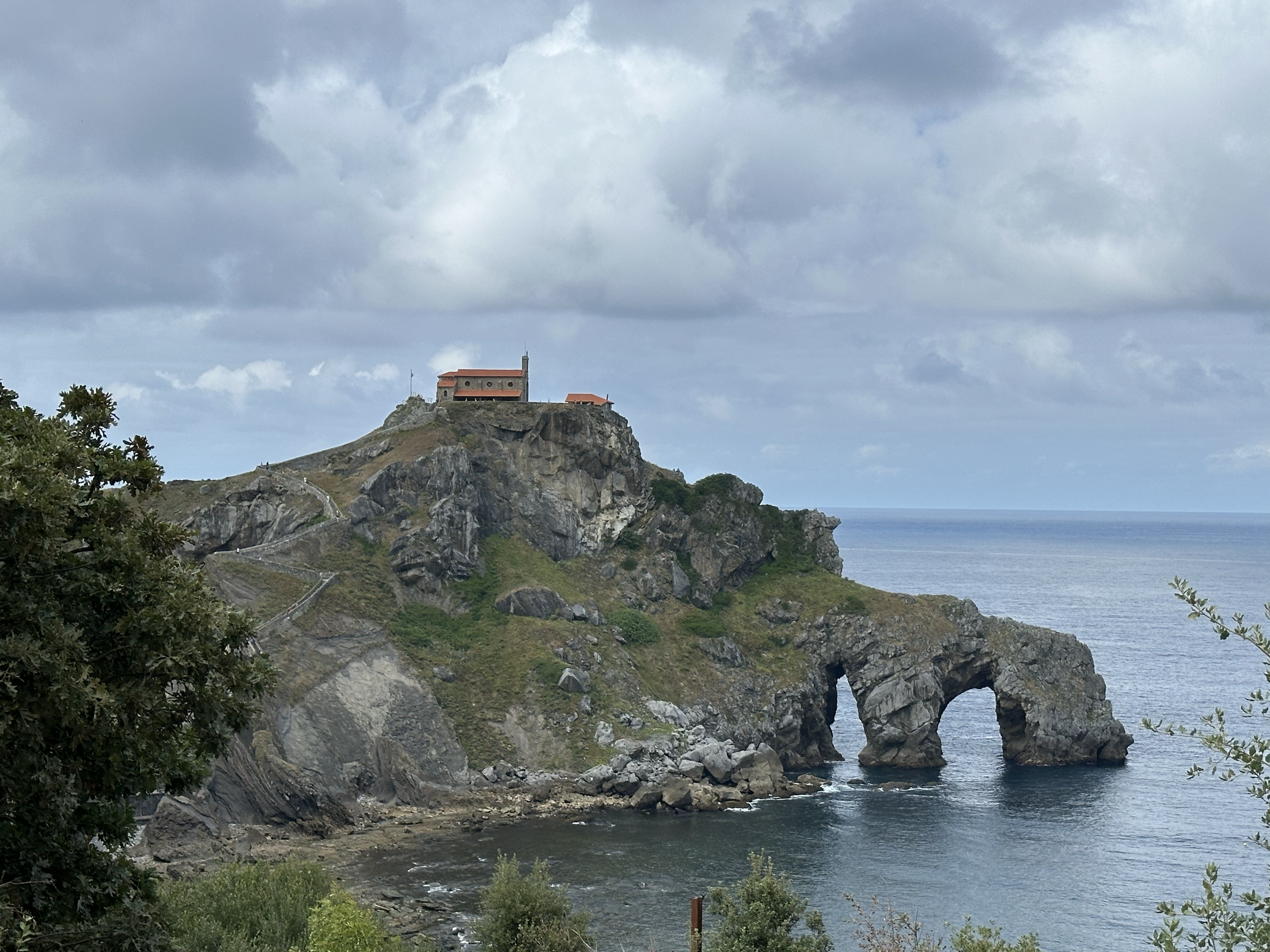
And one more look back- we climbed up there!
The hike back up the "hill" was no joke. Sweaty and exhausted.
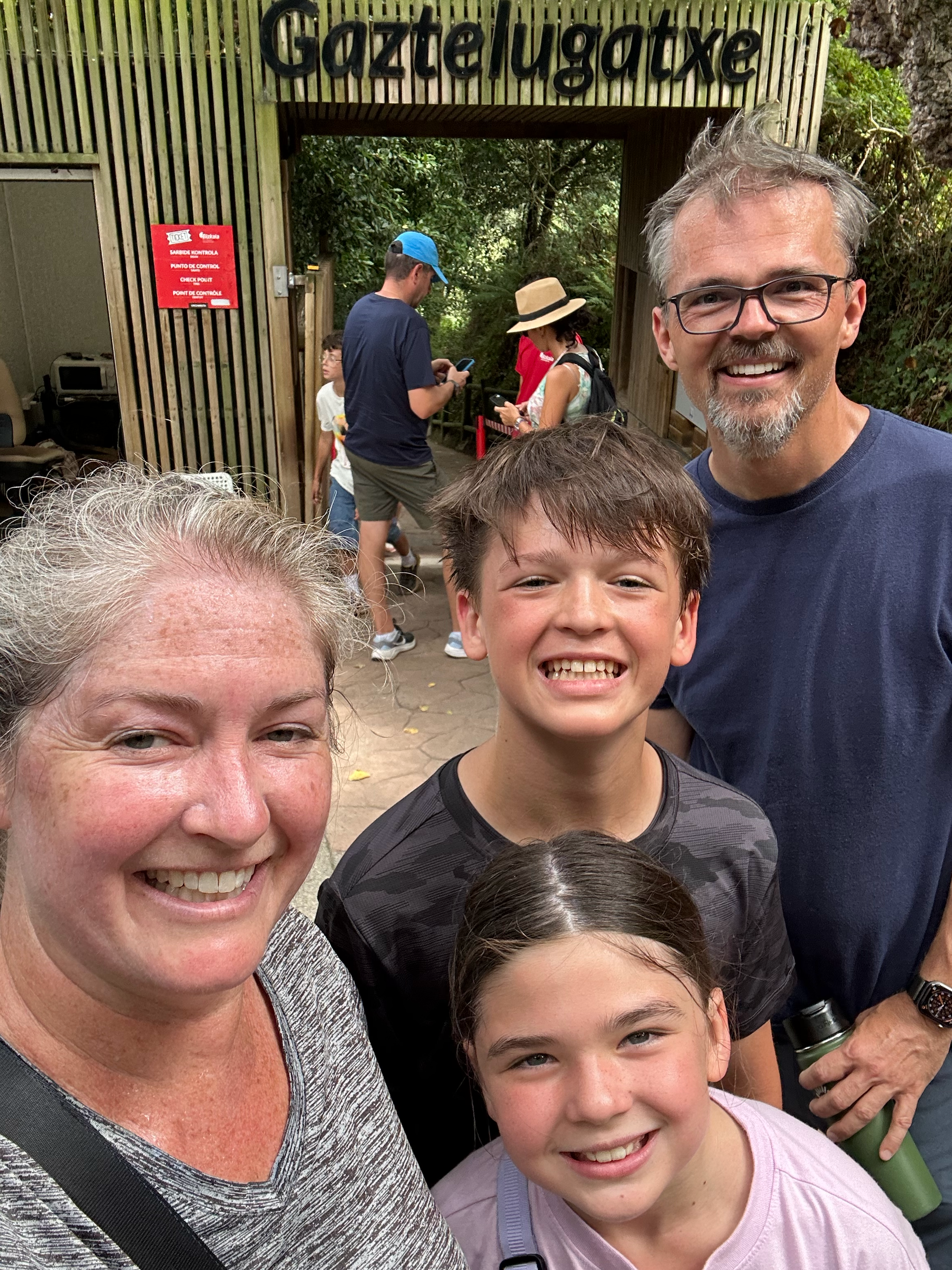
We all made it back to the entrance/exit. We did have to take lots of breaks, but it was worth it. We headed back to our apartment and changed out of the sweaty clothes so we could get ready for our second Bilbao adventure.
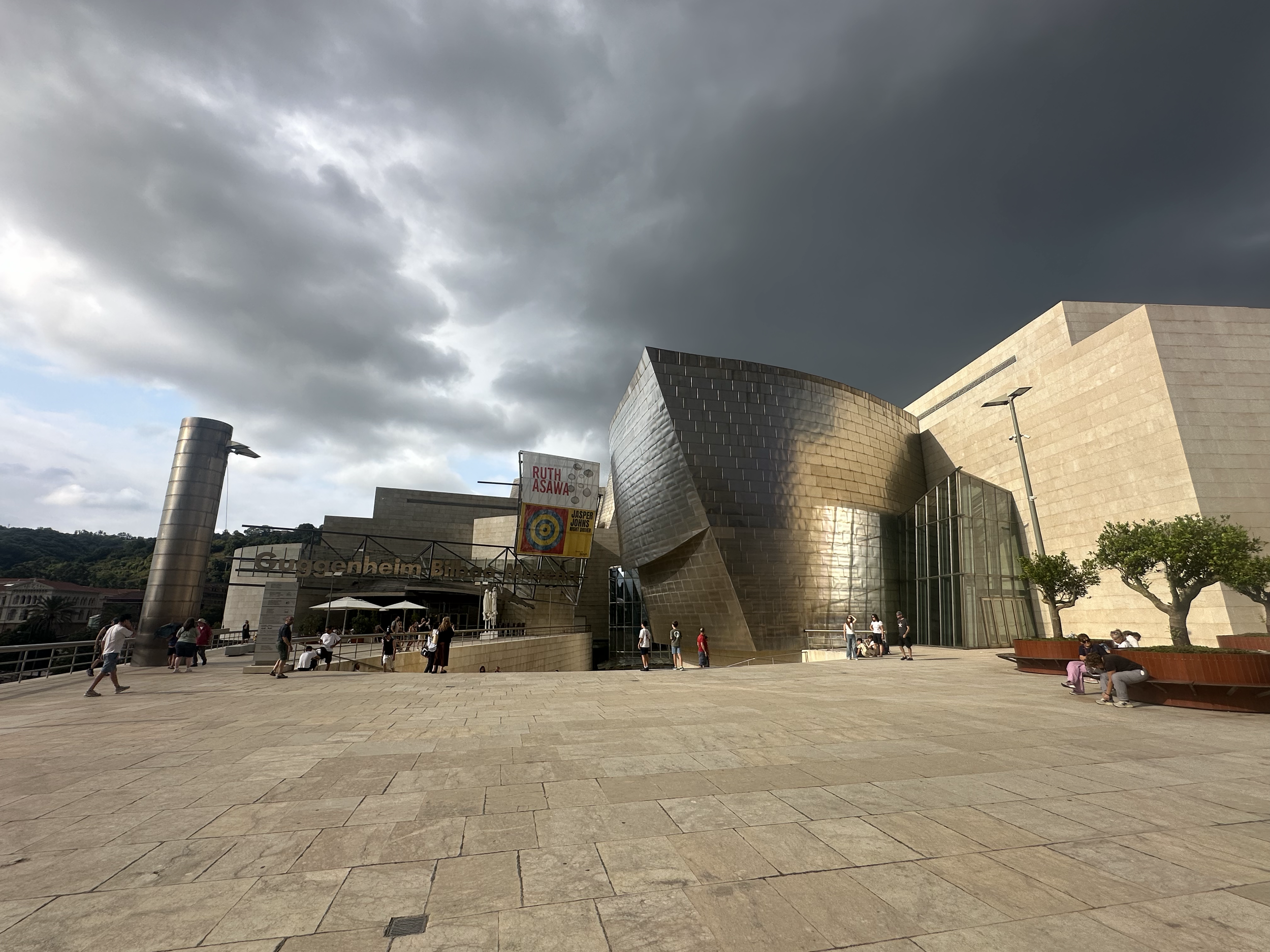
This ominous image is of the entrance to the Guggenheim in Bilbao. Who says you can't appreciate nature and art in one day?
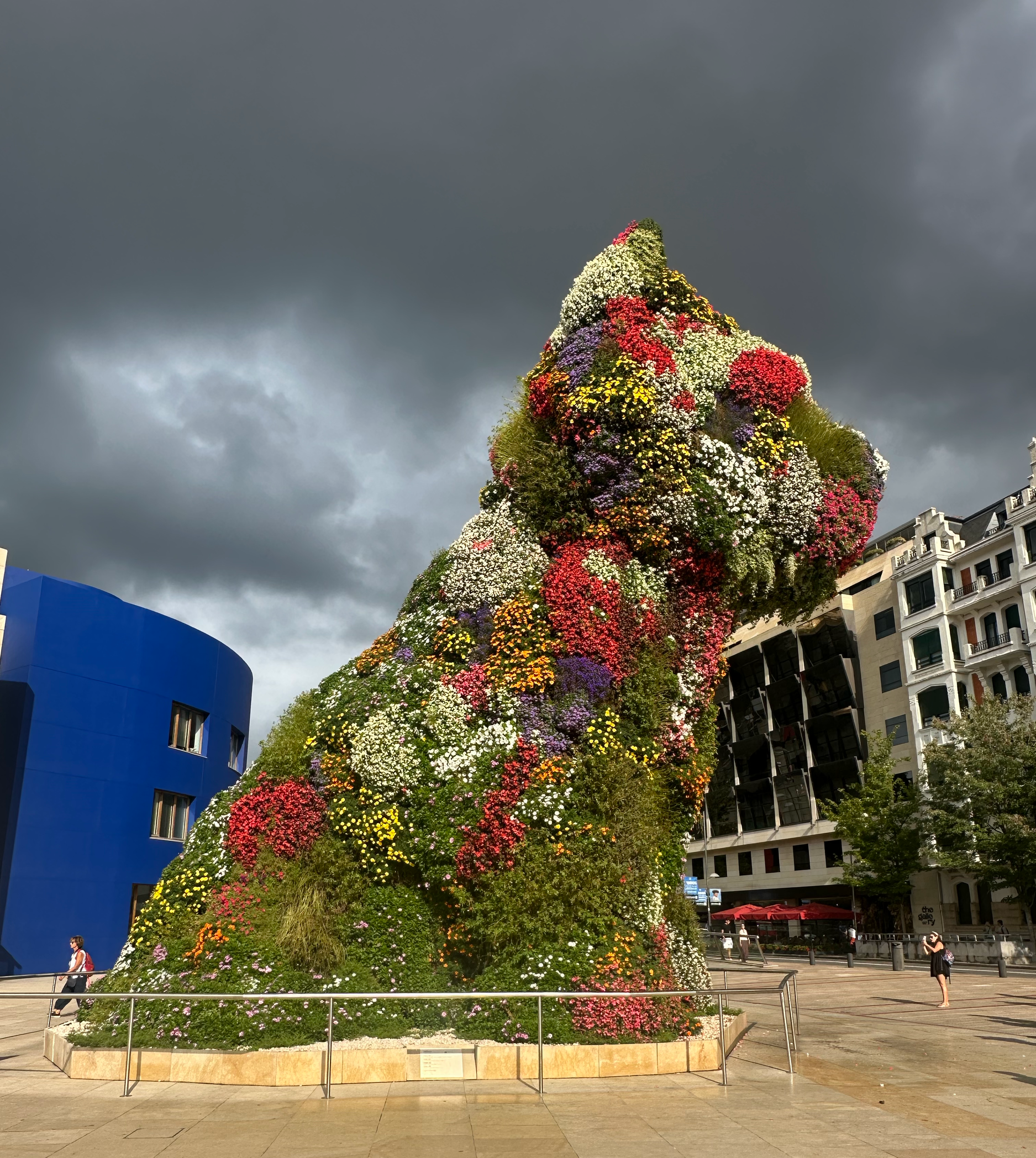
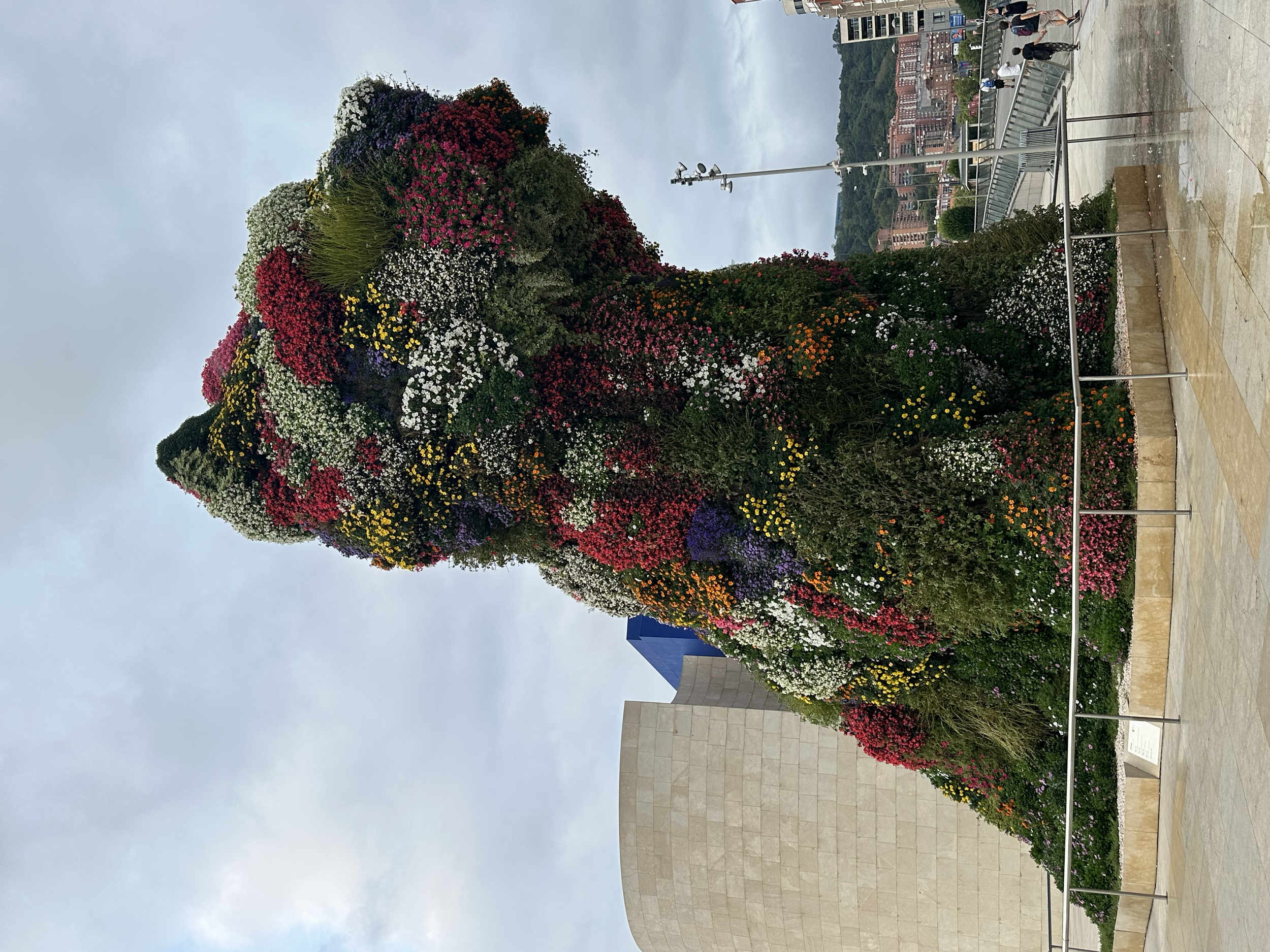
We were fascinated by the Guggenheim "Puppy," erected in 1992 by Jeff Koons. It is a steel structure with flowering plants. So vibrant against the threatening sky.
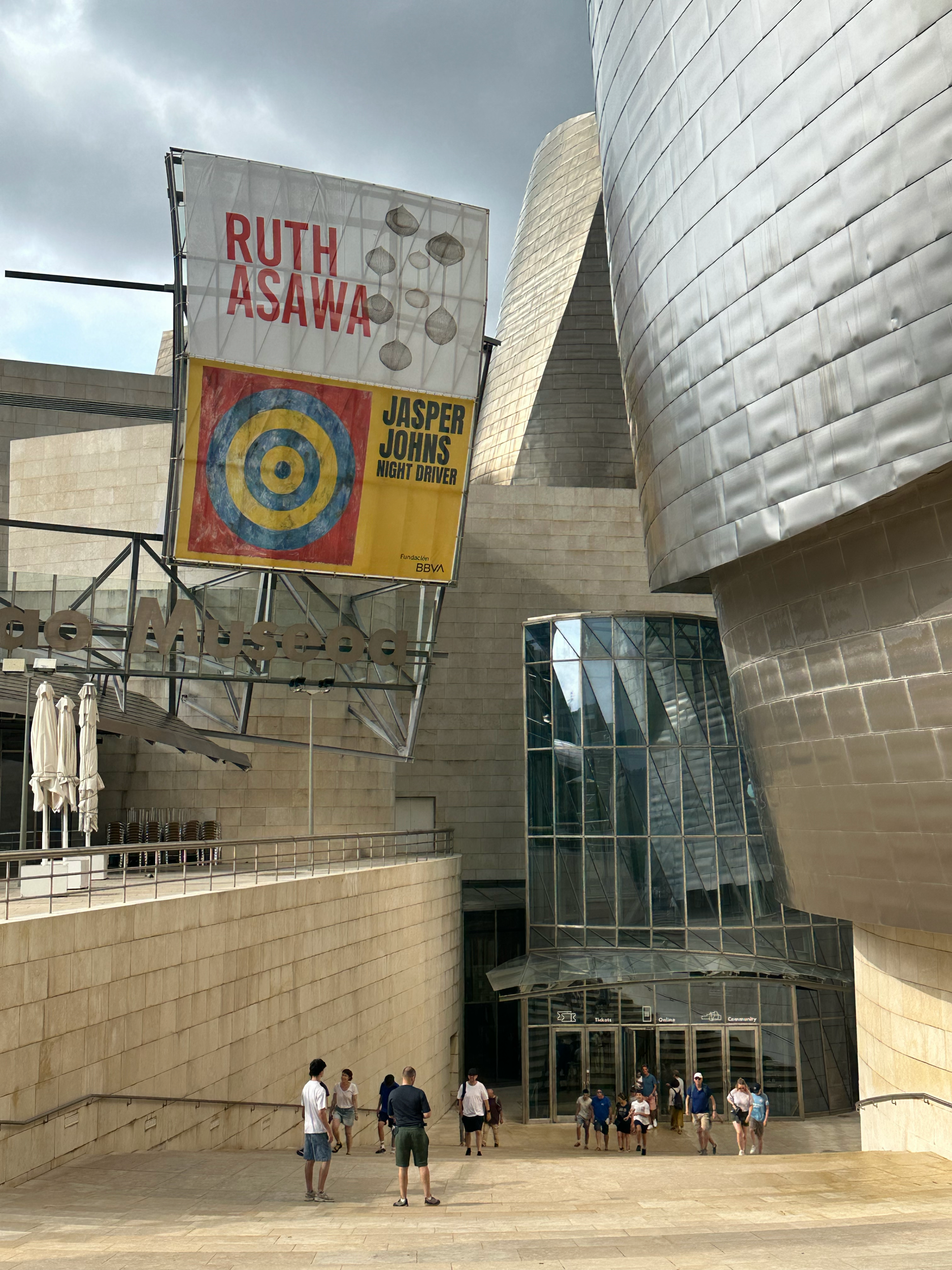
The entrance to the Guggenheim is down the stairs (not up like so many buildings). Two artists with works featured while we were there: Ruth Asawa and Jasper Johns.
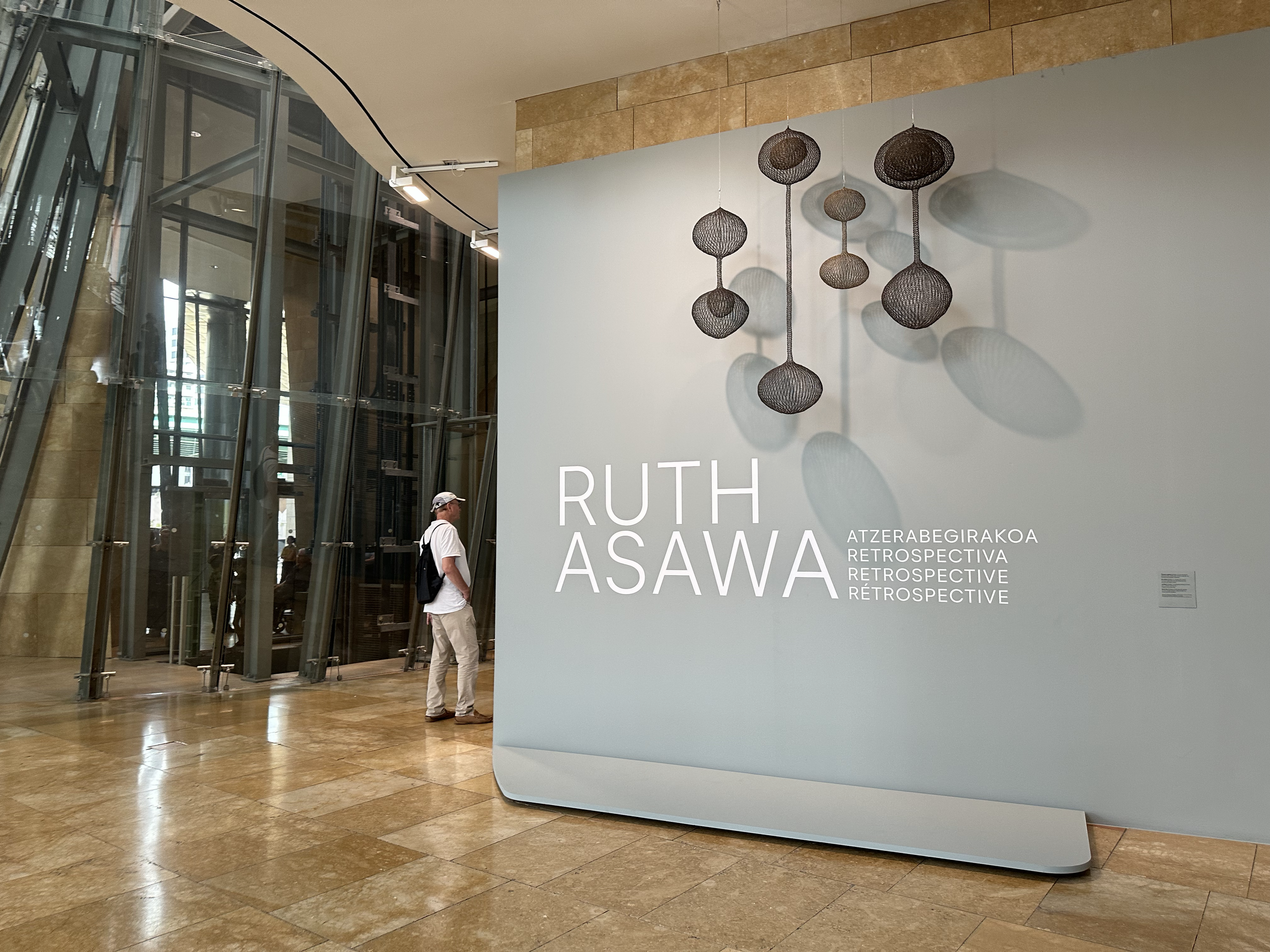
Ruth Asawa works in metal wire, creating forms within forms by weaving a continuous wire into a looped wire structure.
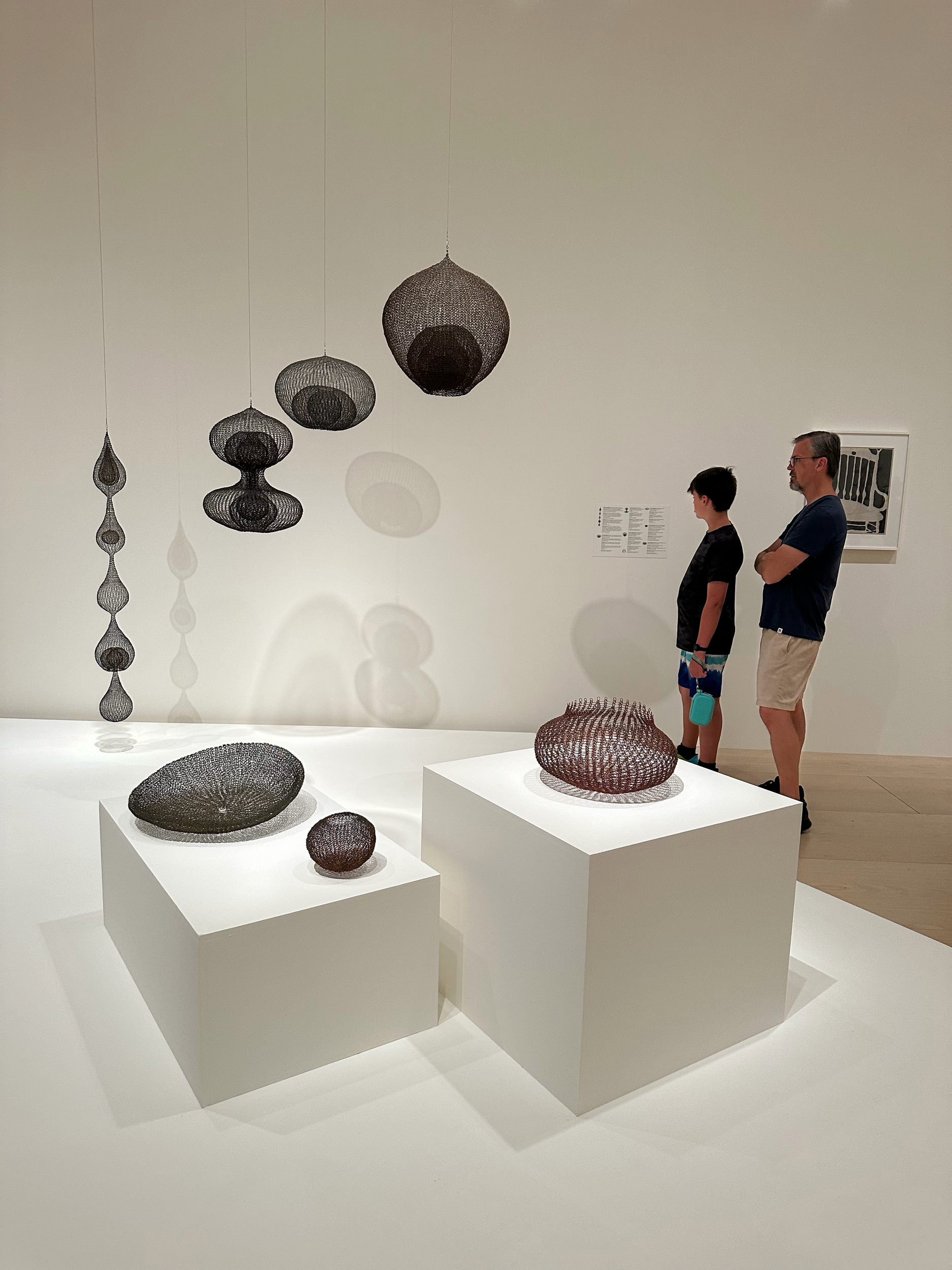
Trying to figure out how she accomplishes this. It was mind-boggling.
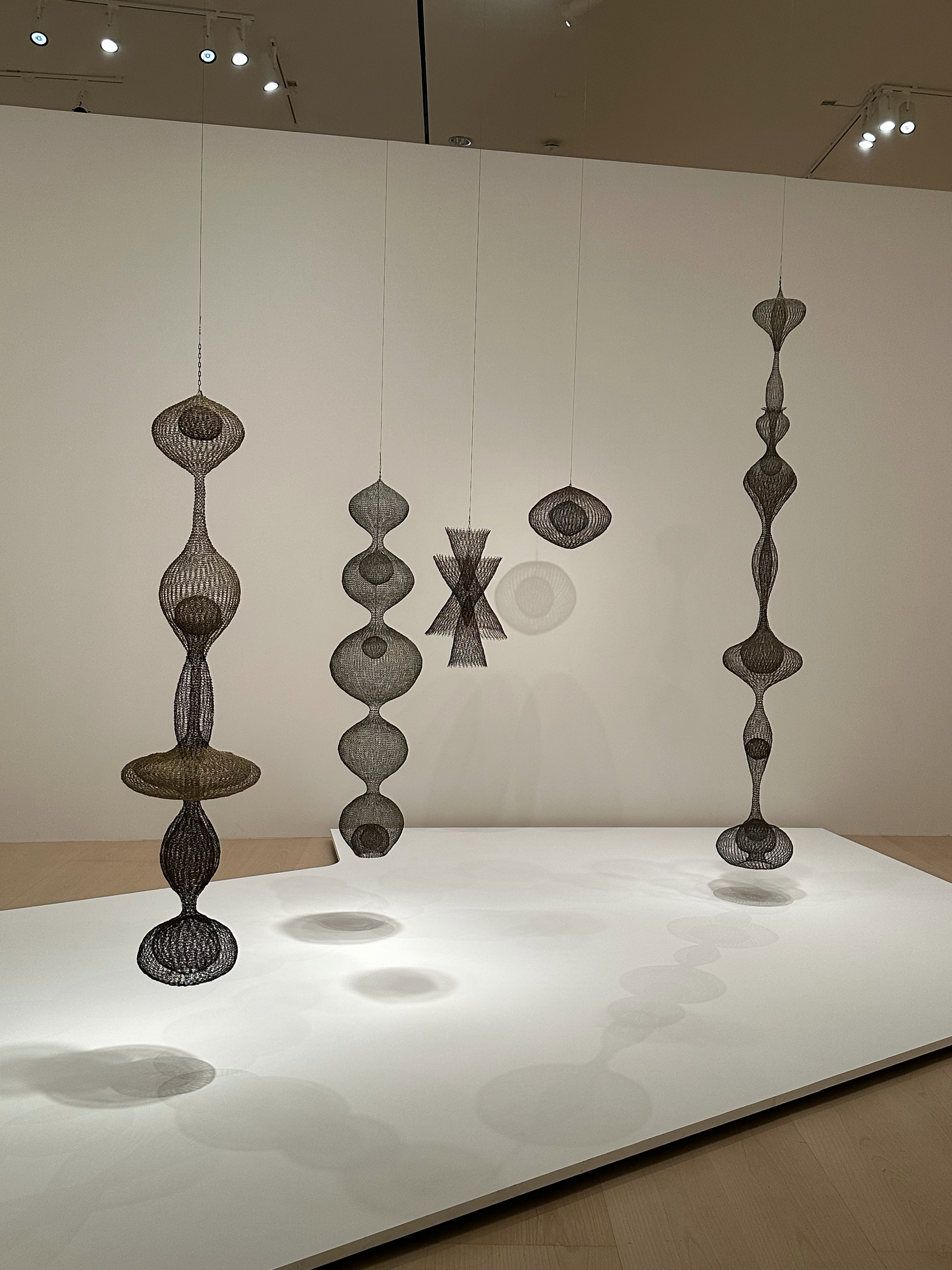
Not only were the hanging sculptures beautiful, but they also created really pretty shadows.
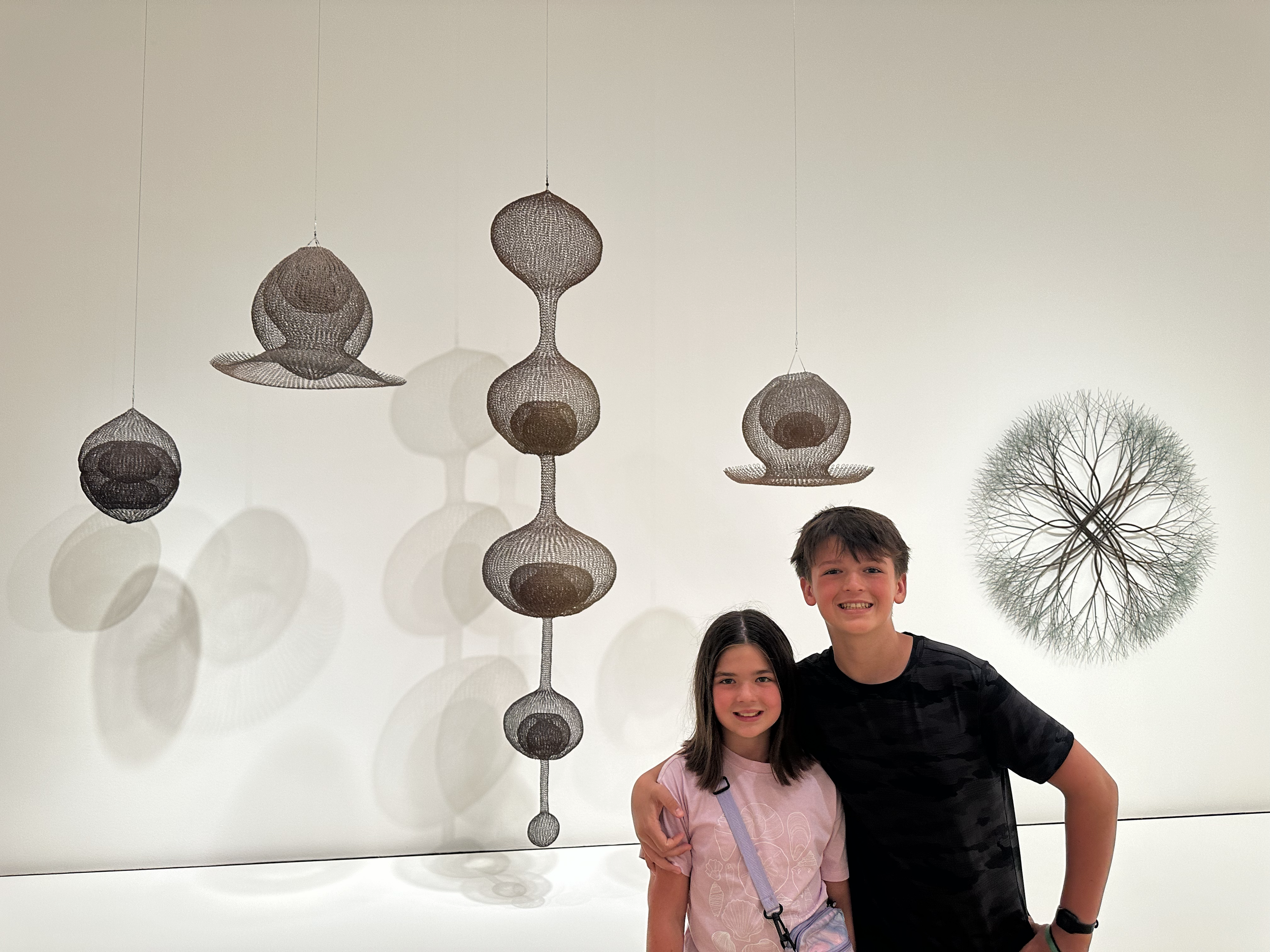
Joshua and Amelia loved exploring her sculptures.
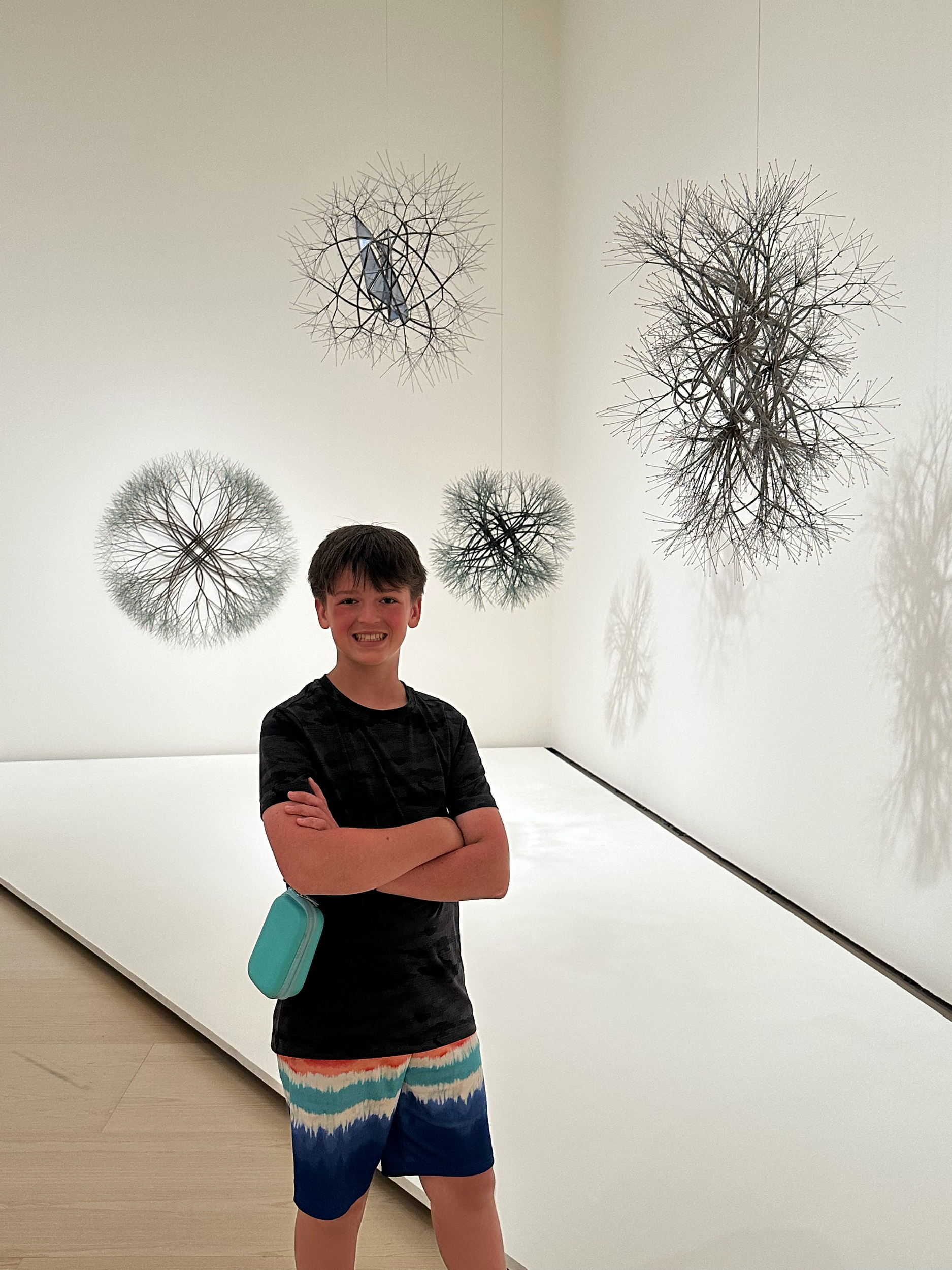
In her later works, she started exploring making "tied-wire" structures with a geometric center and often following a pattern from nature, either flowers or trees, or star-like patterns.
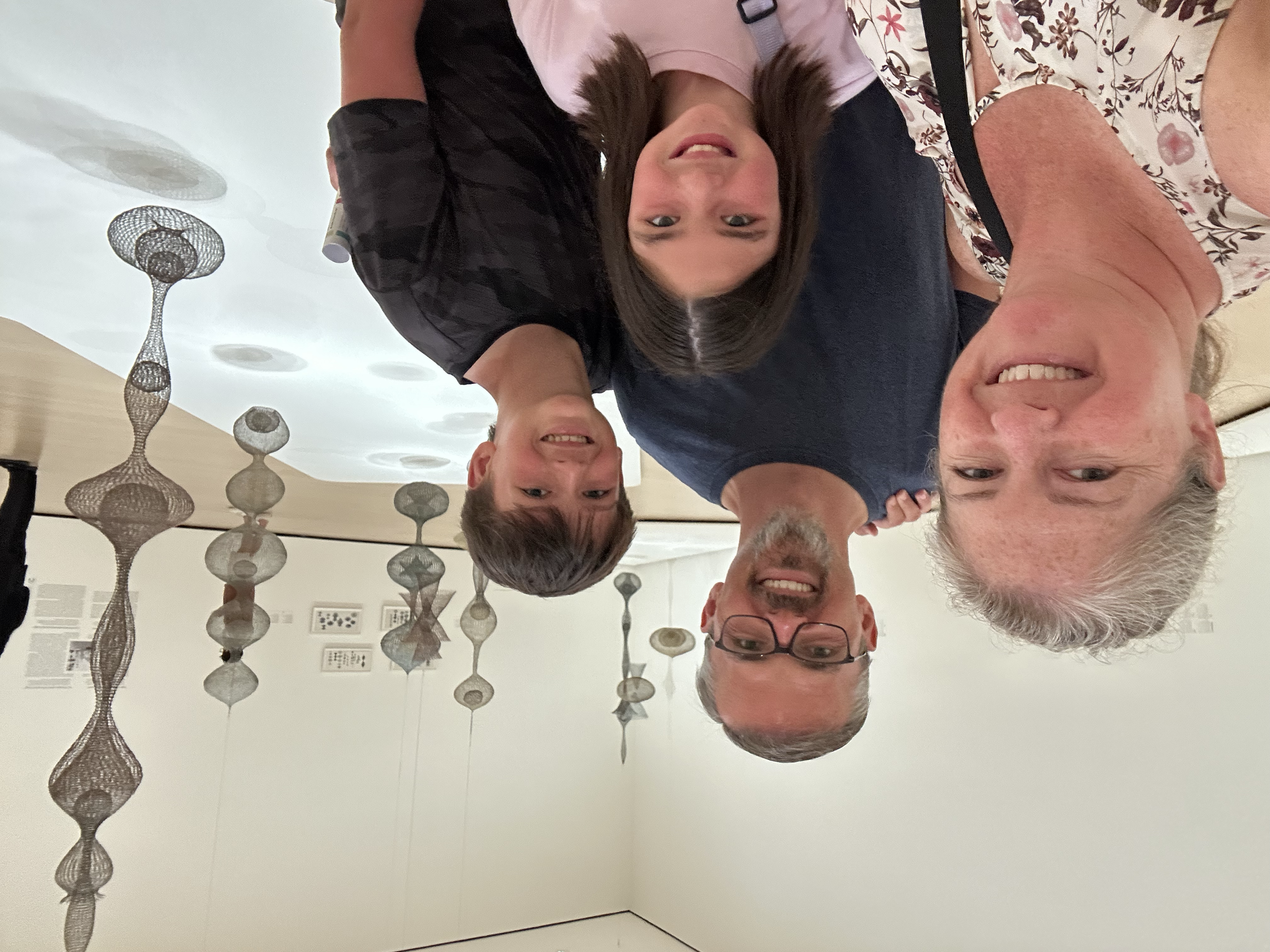
I think collectively this was our favorite installation.
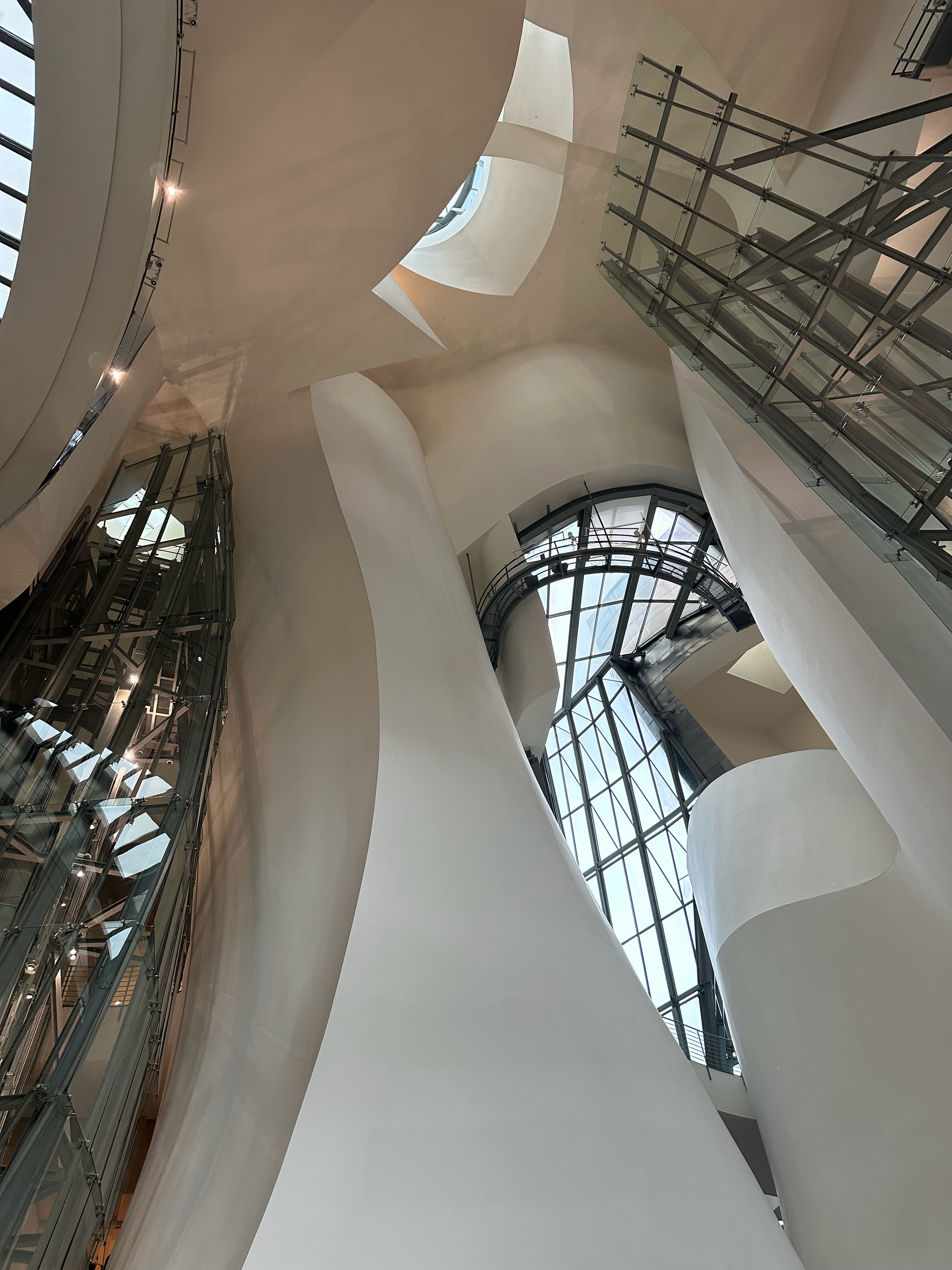
As one would expect, the structure of Guggenheim in Bilbao is a work of art in itself.
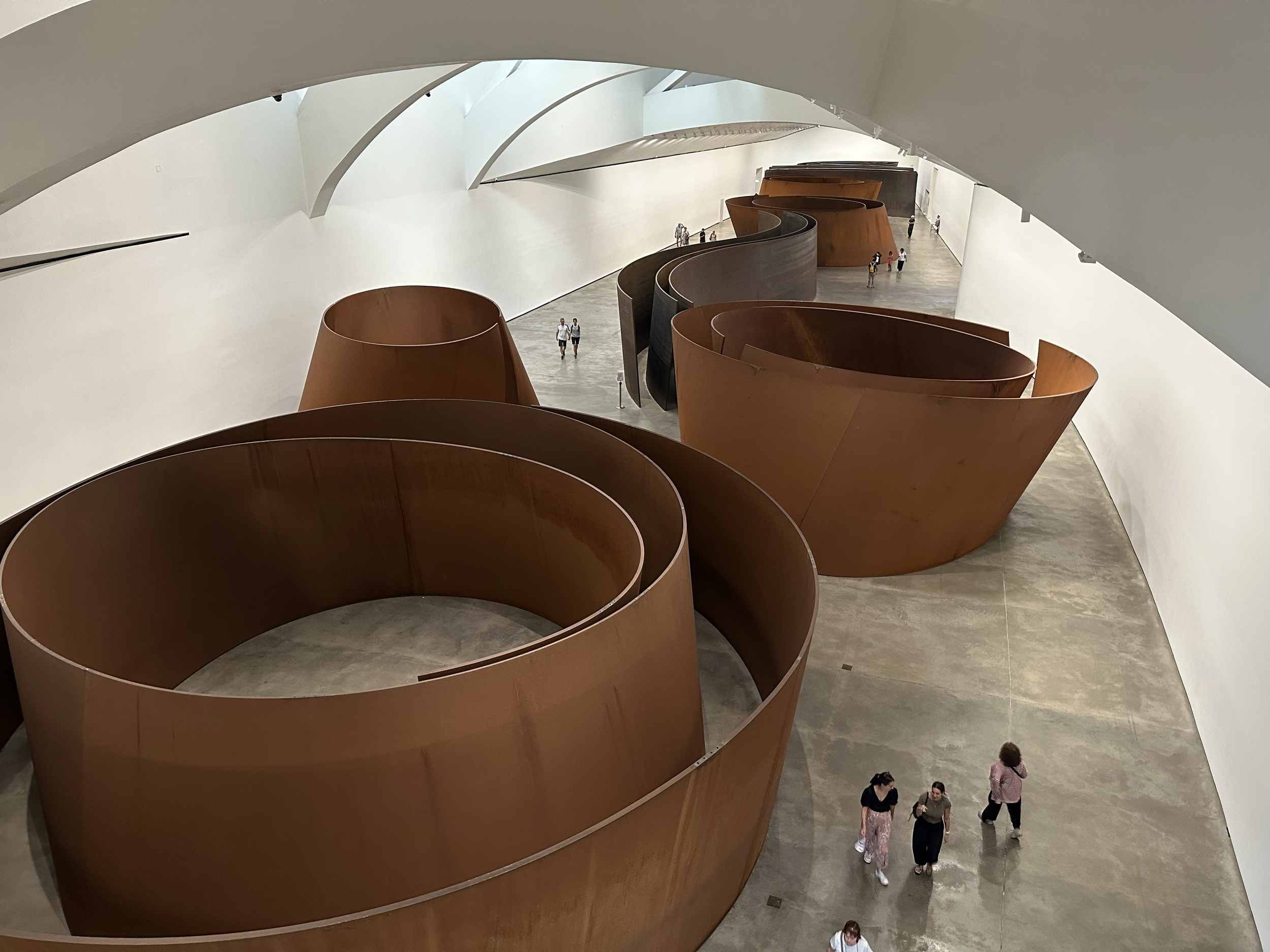
We stumbled on the permanent installation of "The Matter of Time" by Richard Serra (1994-2005). How could you not? These pieces were enormous and called for lots of interaction.
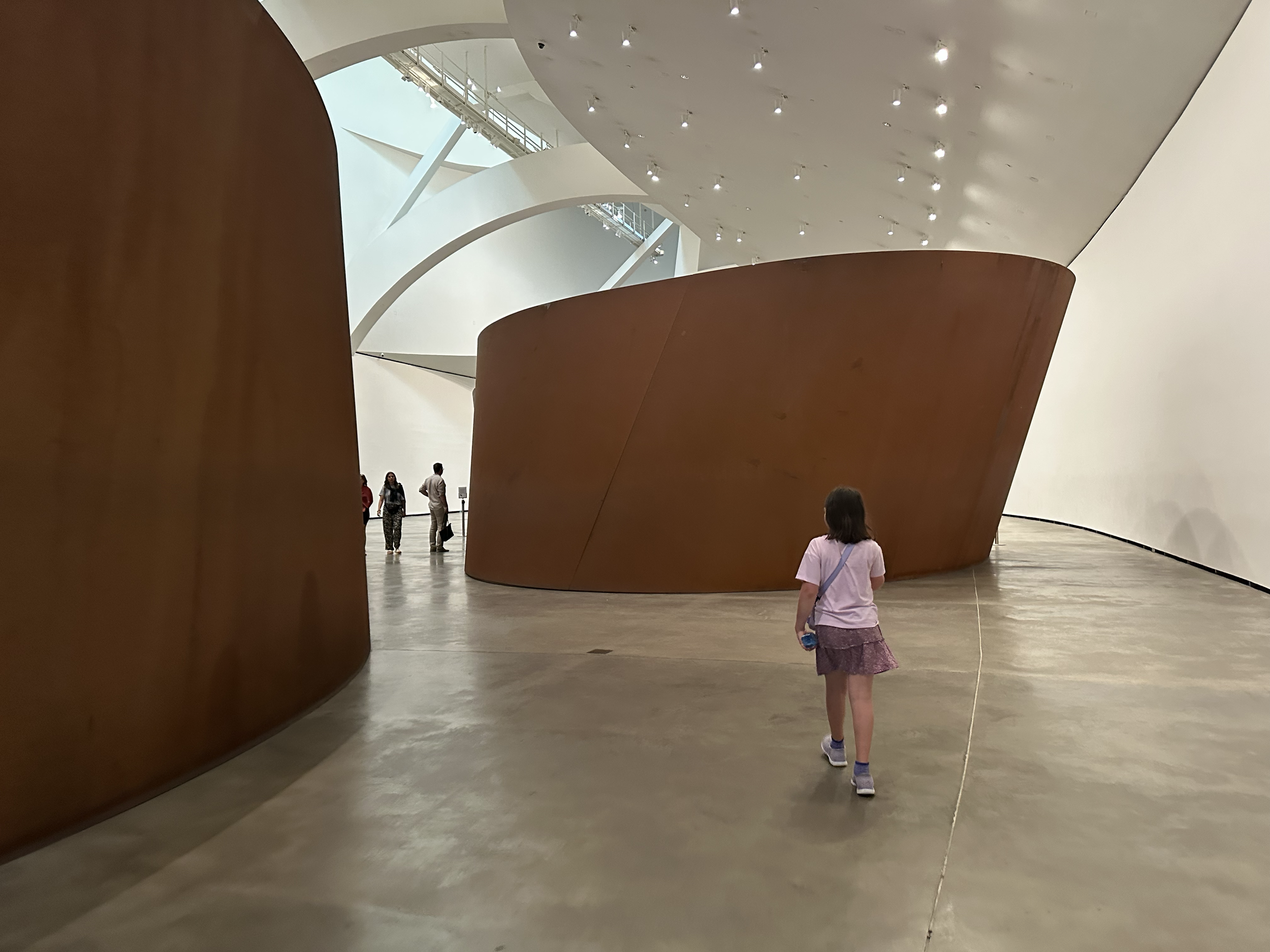
Walking up to the structures was overwhelming as they were so large. We had not seen them from above, so we didn't know what to expect.
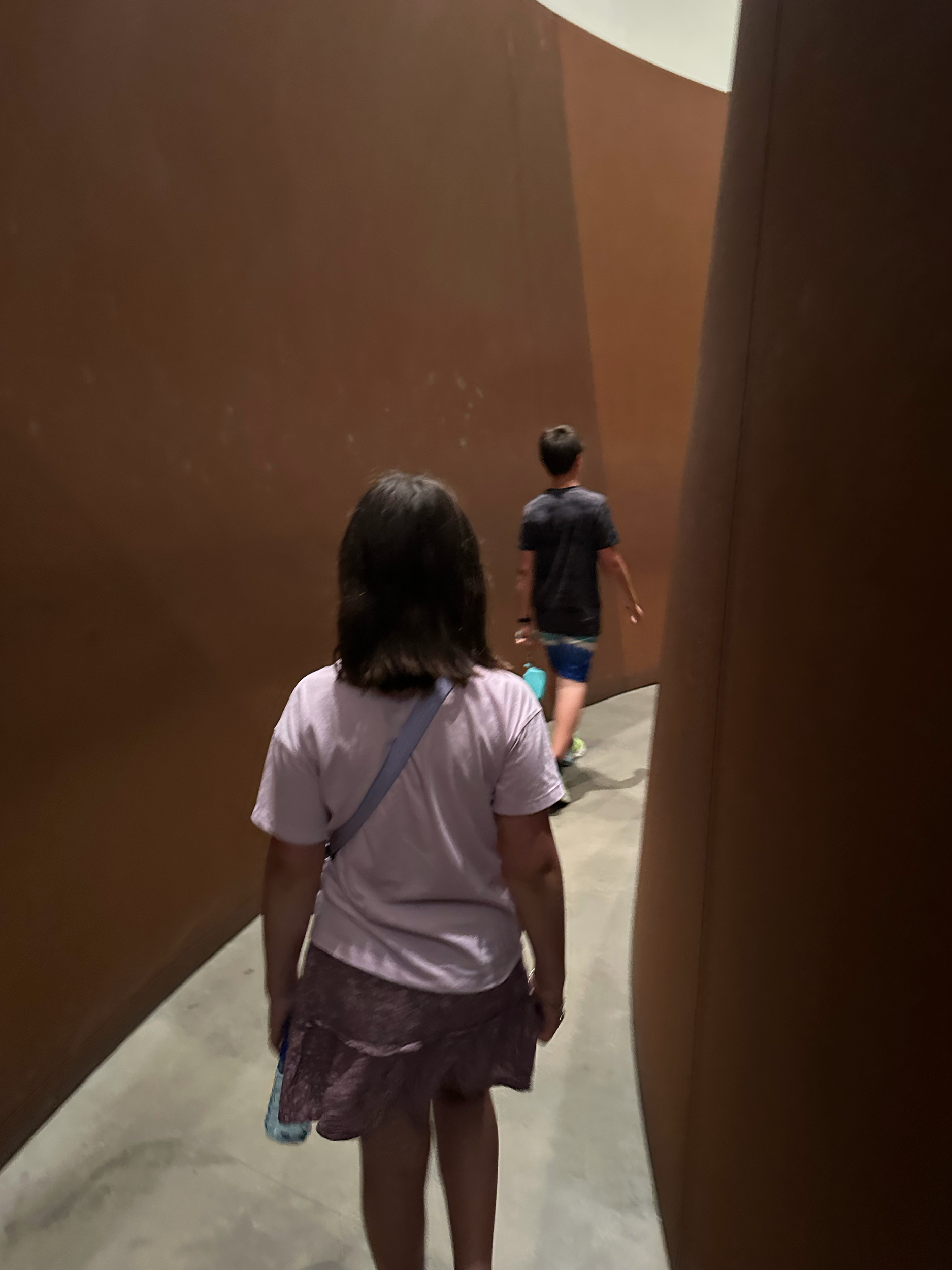
Joshua and Amelia were happy to explore.
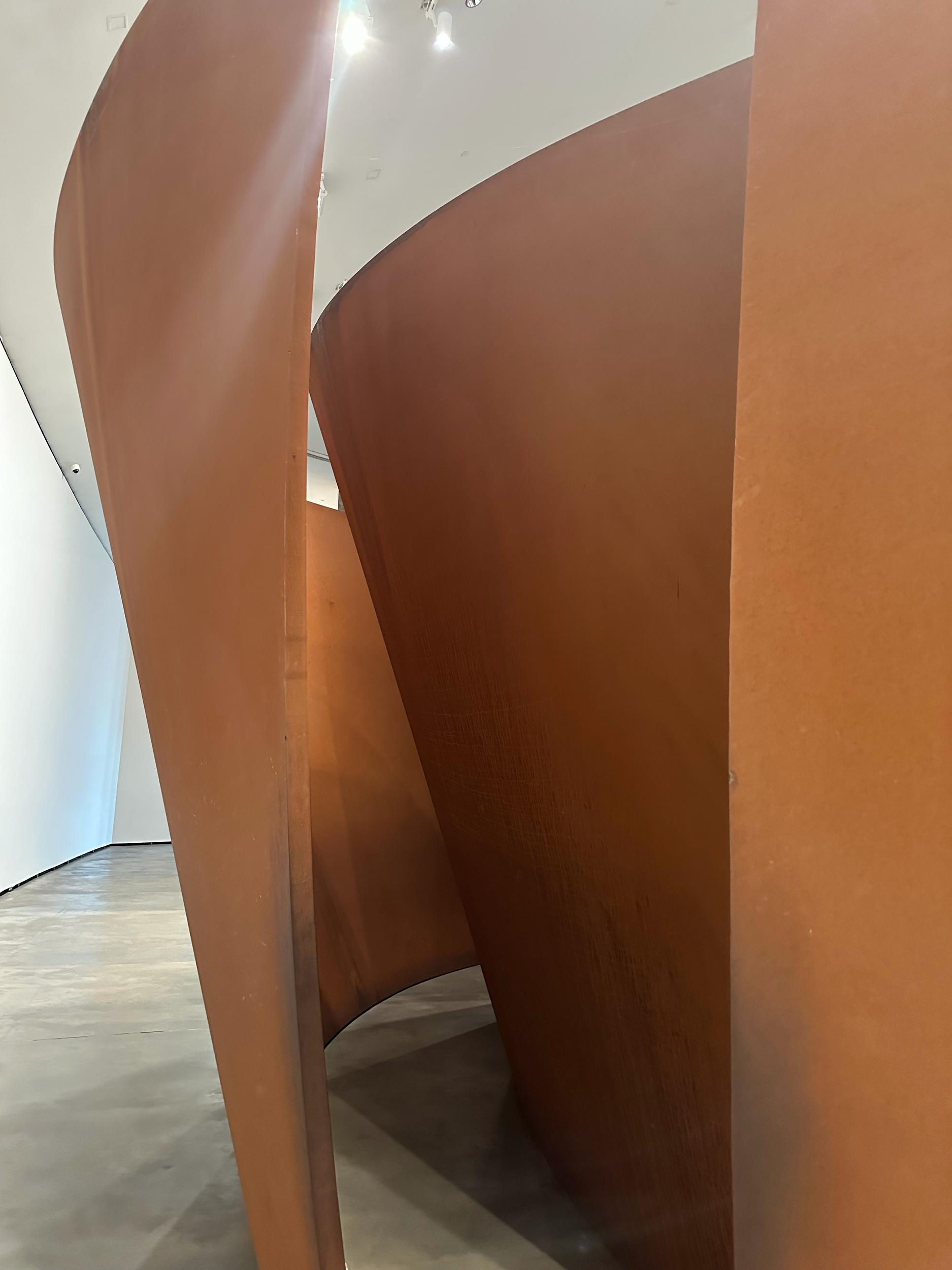
"Torqued Spiral" was made of 7 large pieces of weathering steel that tilted toward each other and then away from each other.
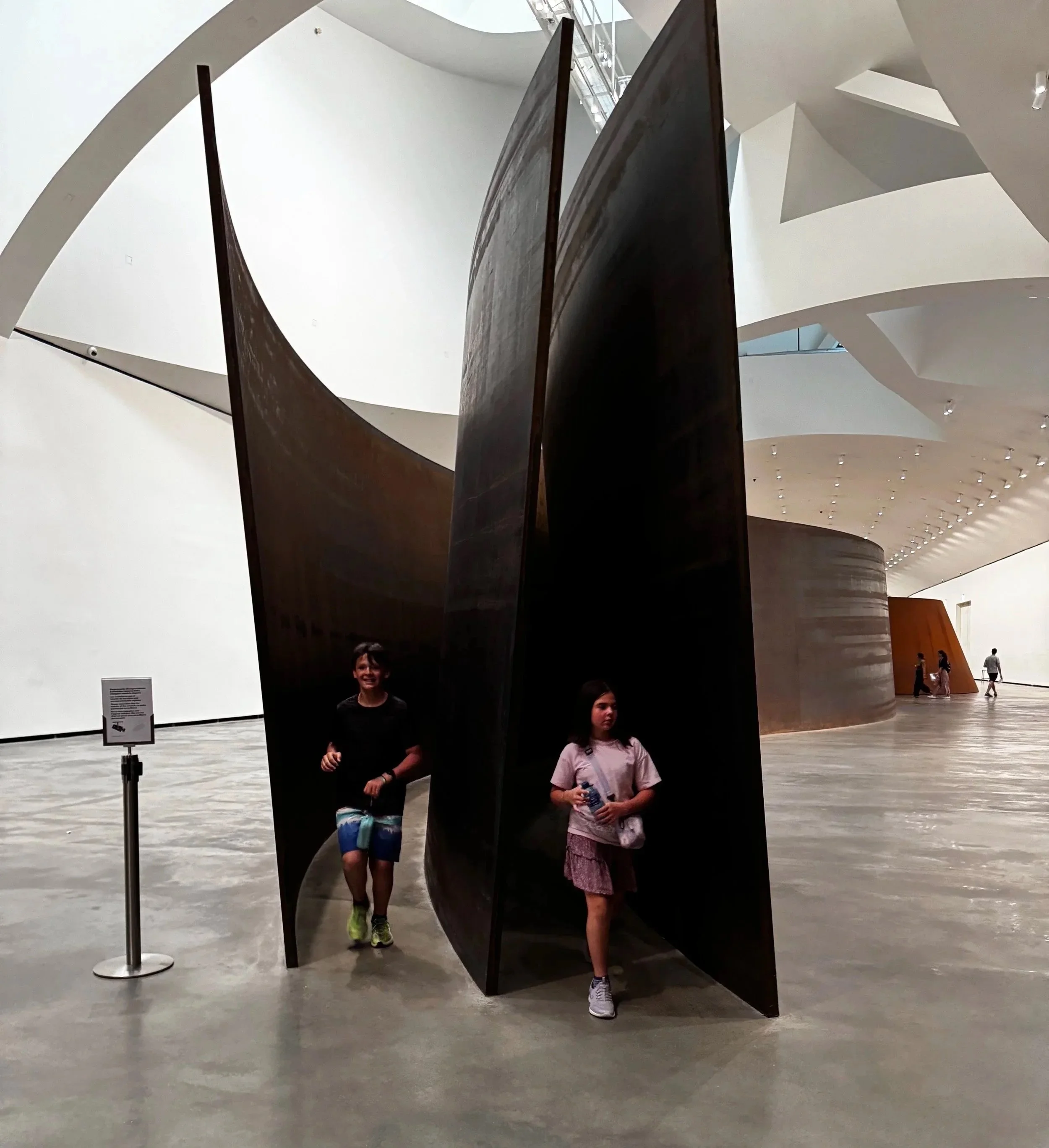
Running through the "Snake" made of three giant pieces of weathering steel.
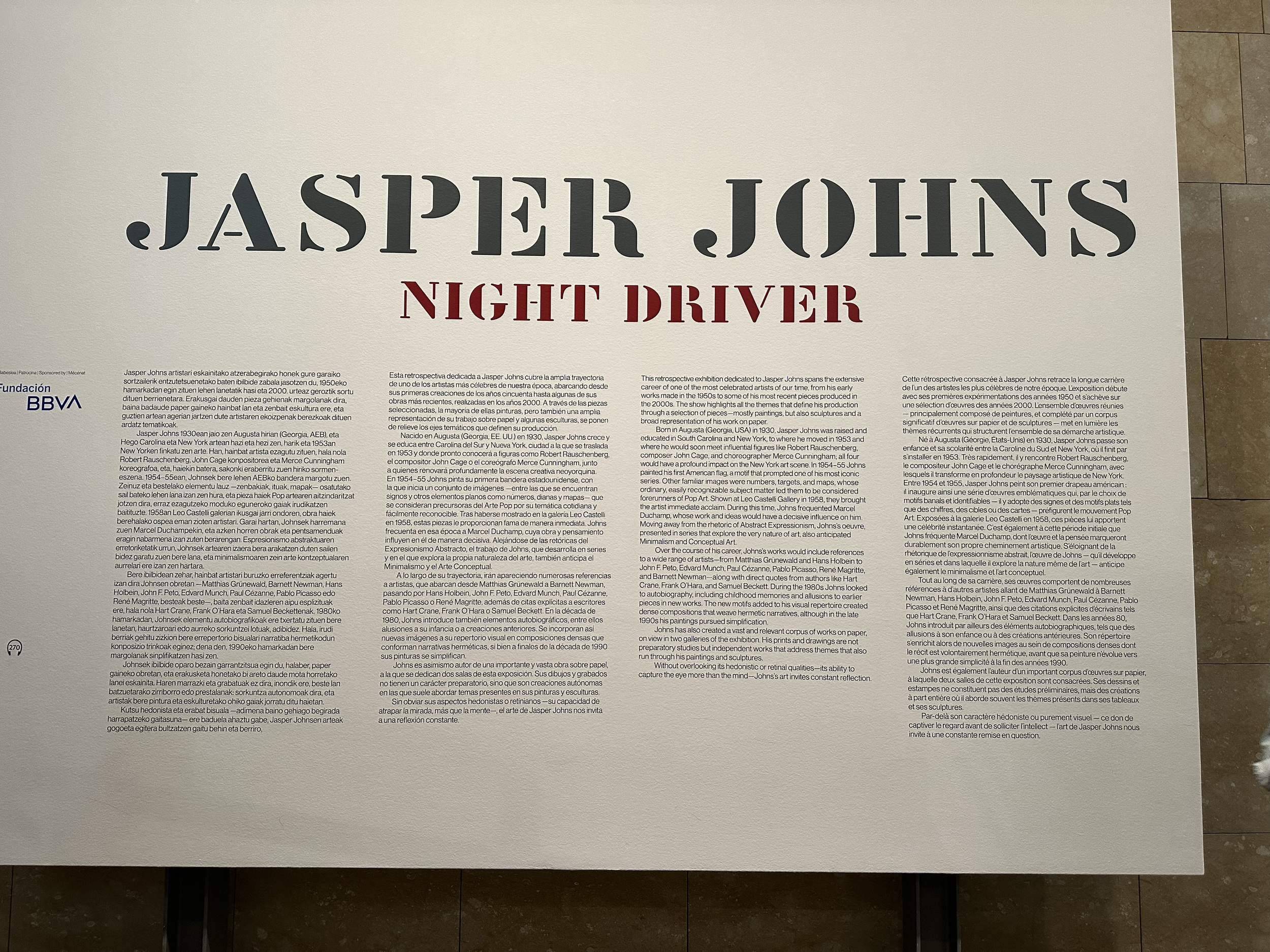
The second featured artist was Jasper Johns. As explained here, his art features recognizable shapes- numbers, maps, flags, in such a way that these works were considered "forerunners to pop-art."
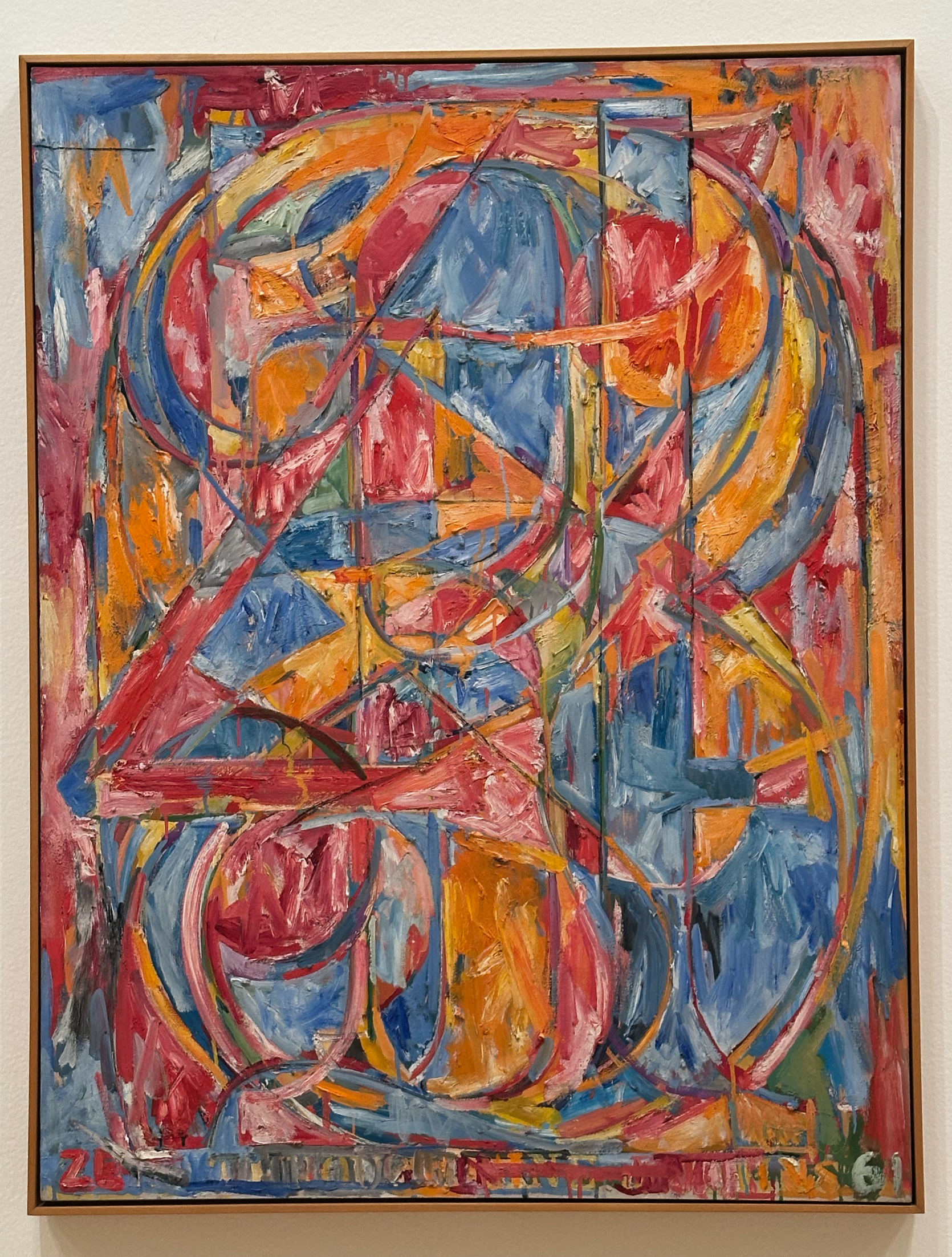
Numbers 0-9. Can you find them all?
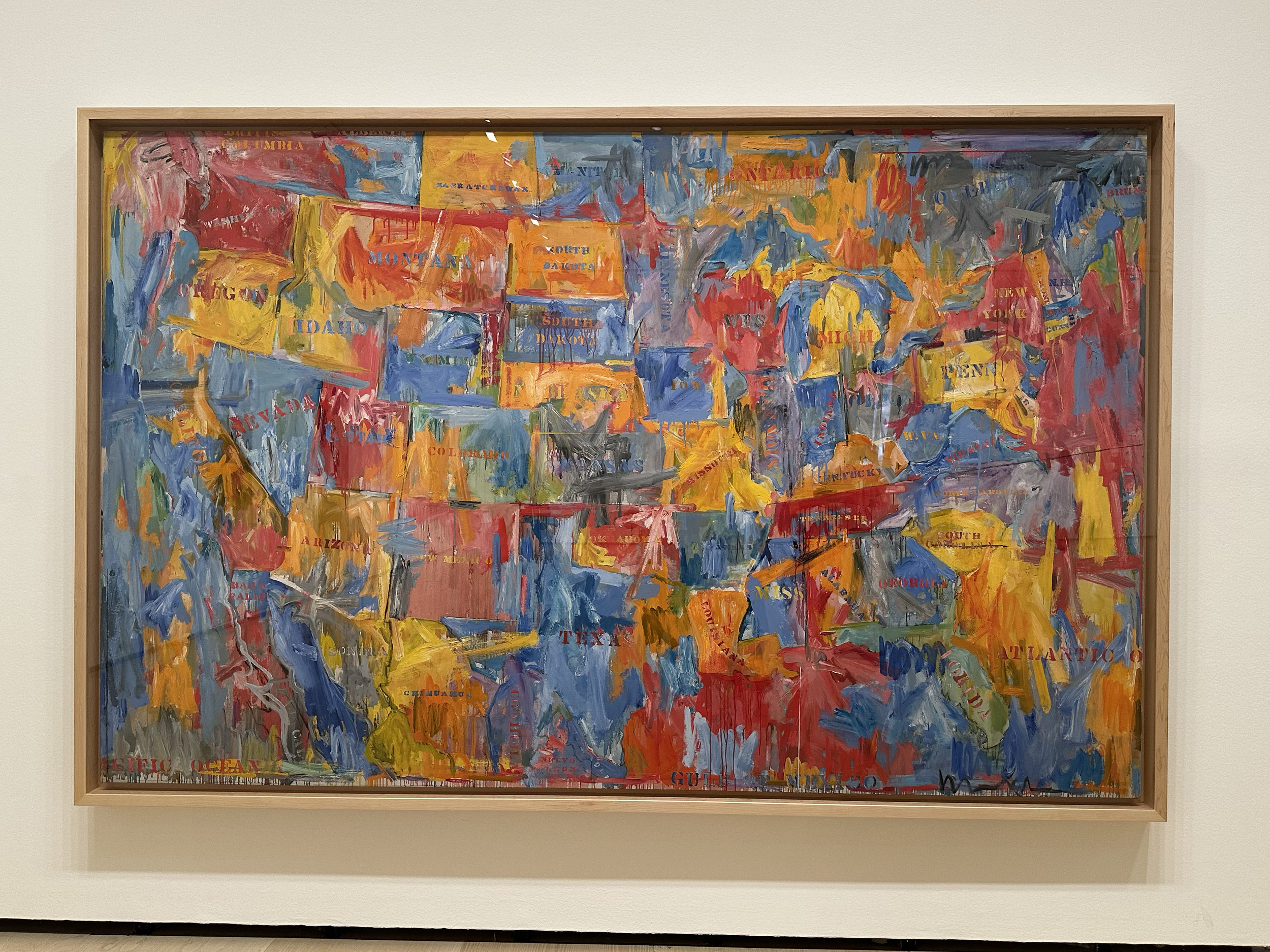
"Map" 1961. I love the color blocks and stencils.
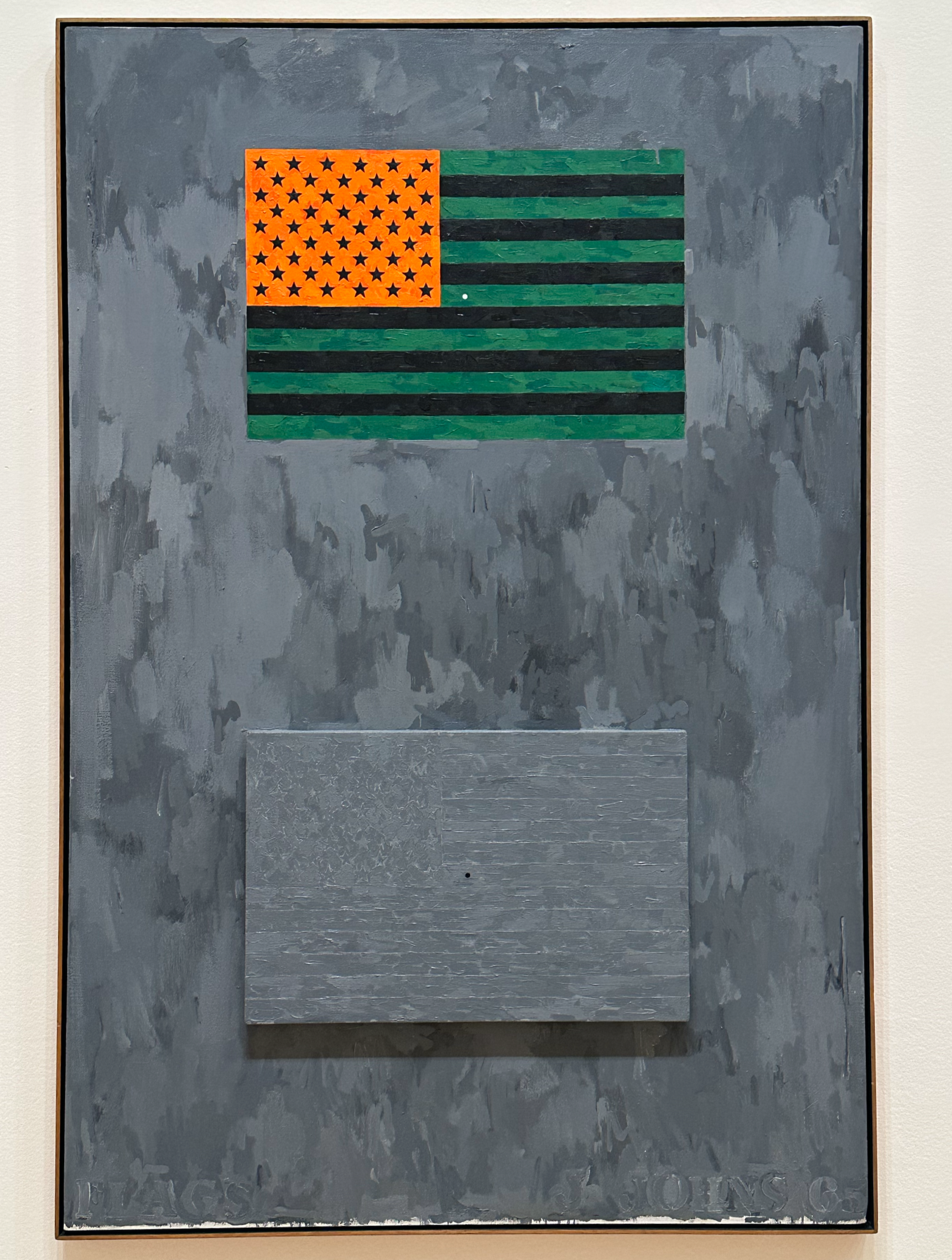
His series of flags are iconic ("Flags," 1965). I'm not sure if this will work on screen, but in real life, if you stare at the dot at the center of the top flag and then look up at the dot on the bottom flag, the flag will change from gray to the appropriate red, white, and blue colors.
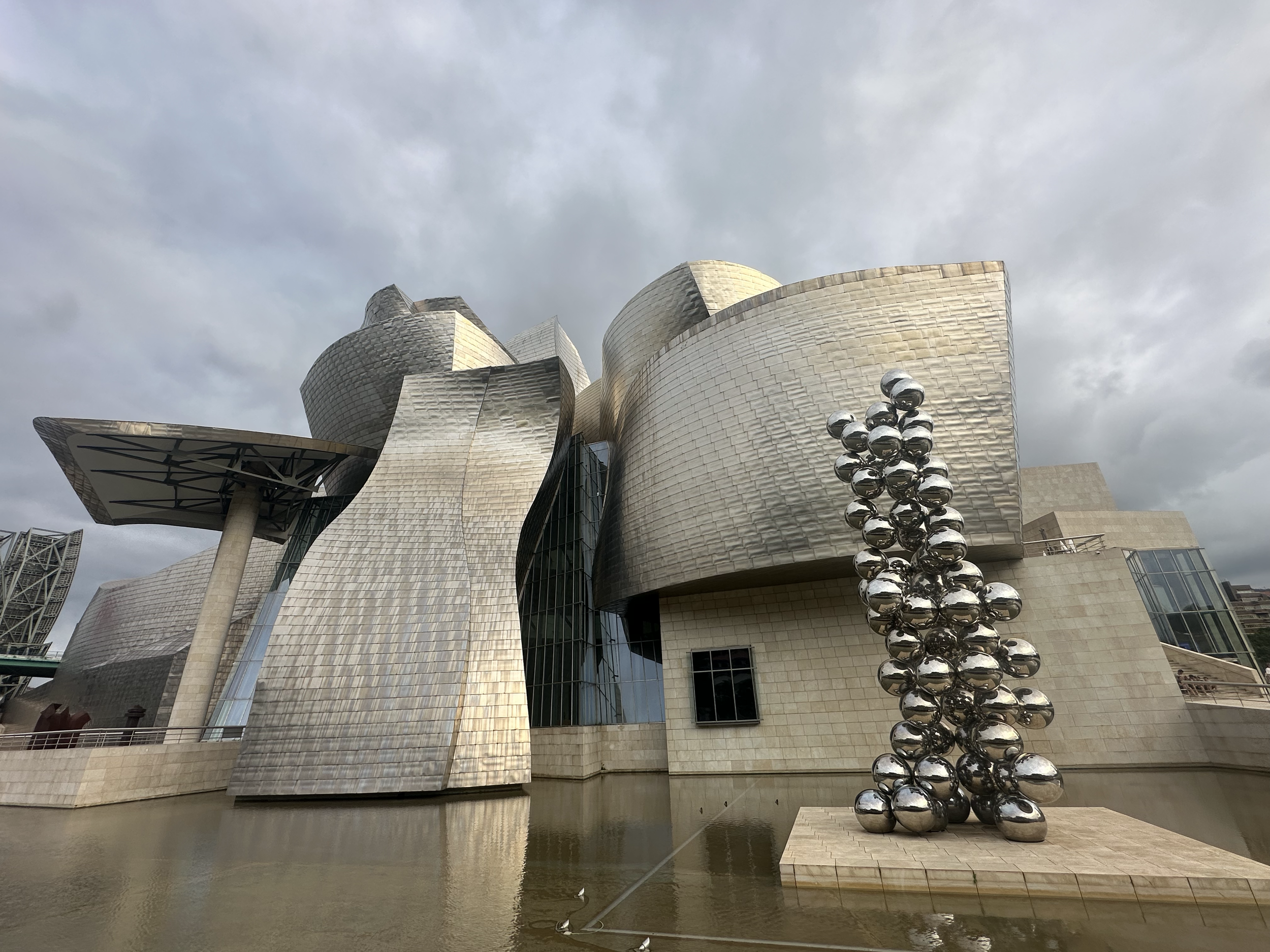
We explored other artists as well, but I don't want to bore you here! So, we'll move on to the outside of the building. We walked completely around taking in the different sculptures and architecture. Here you see "Bubbles"
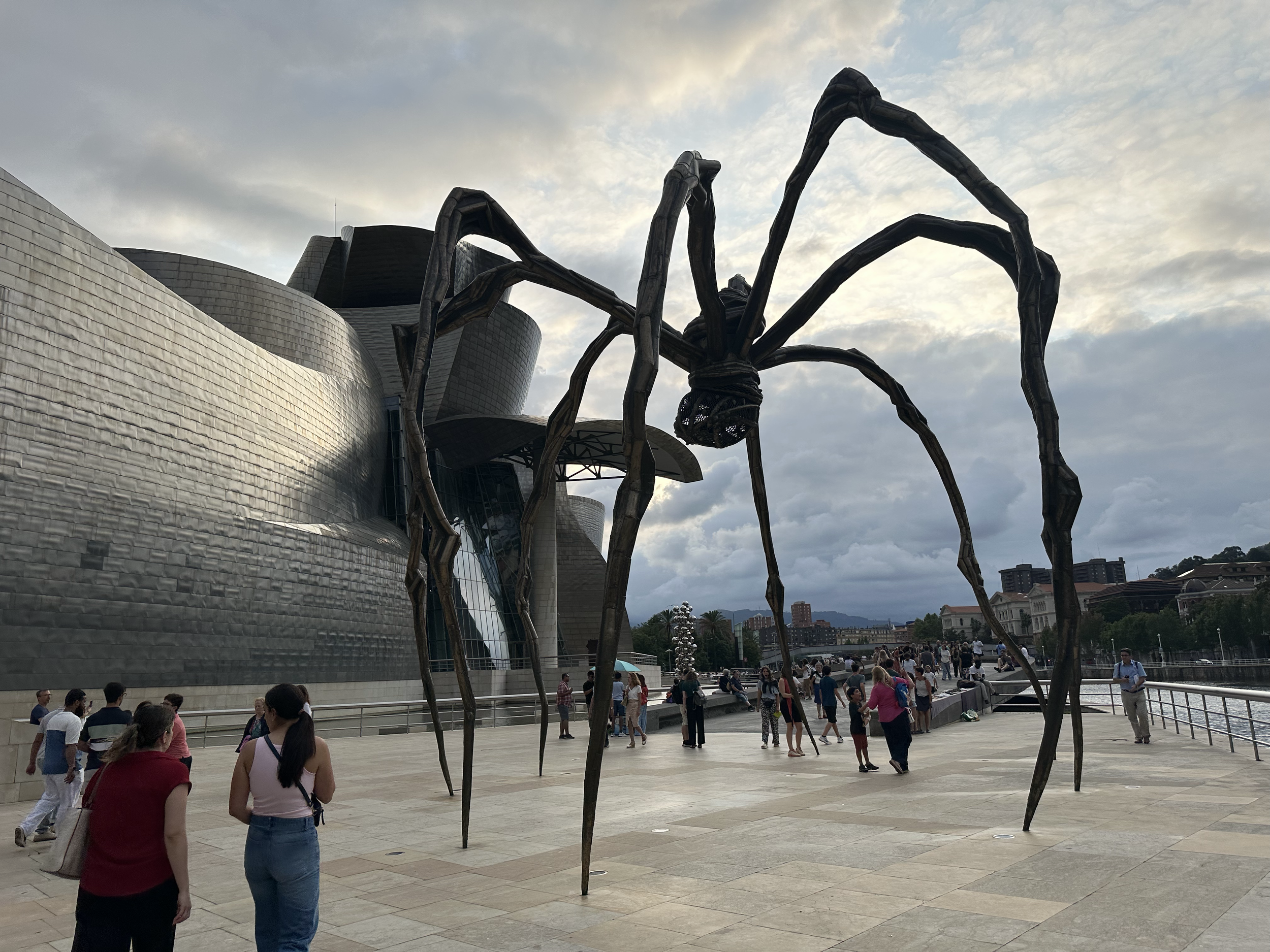
And the large arachnid, "Maman" 1999 by Louise Bourgeios.
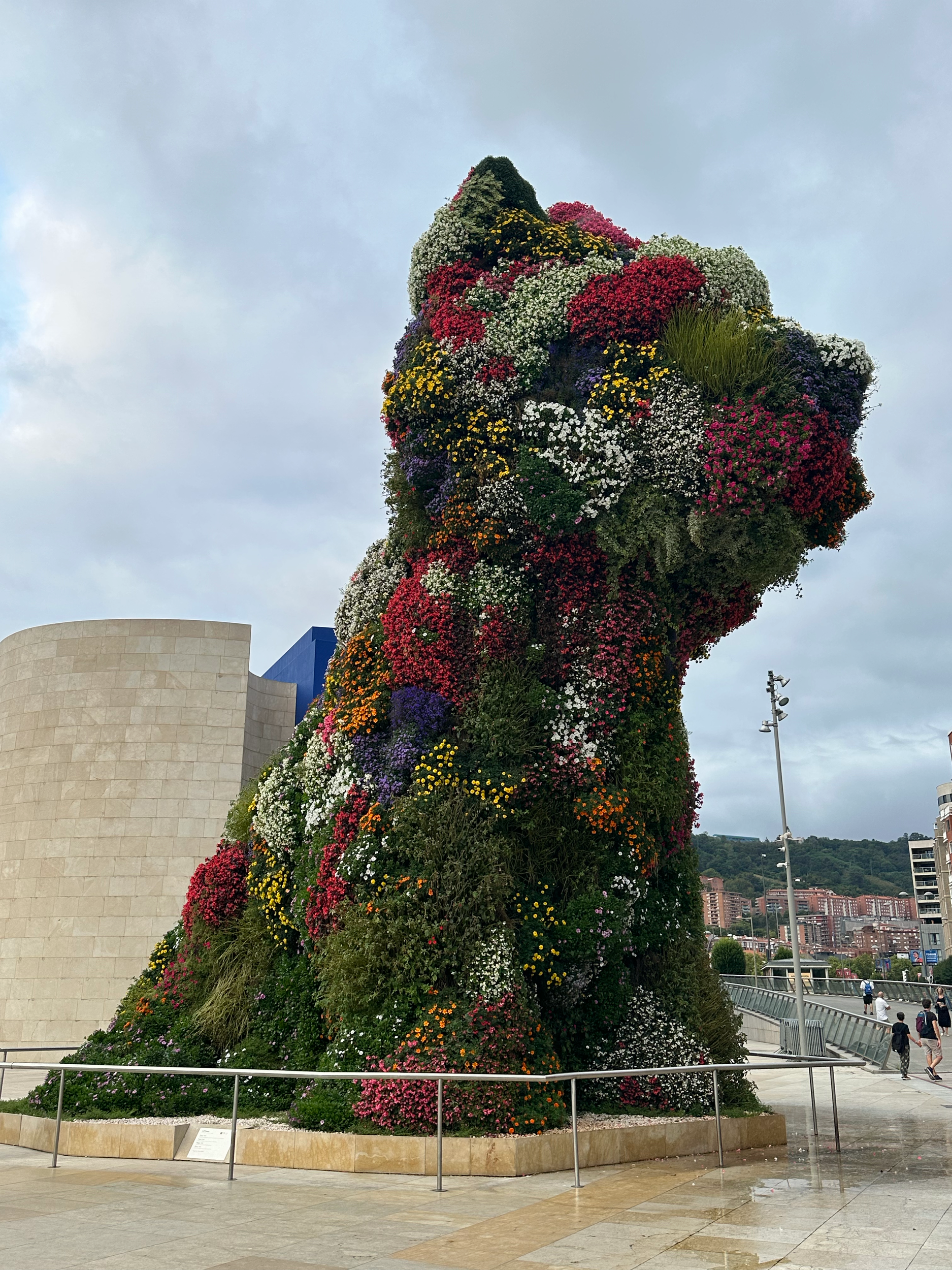
And one more time back around to the "Puppy."
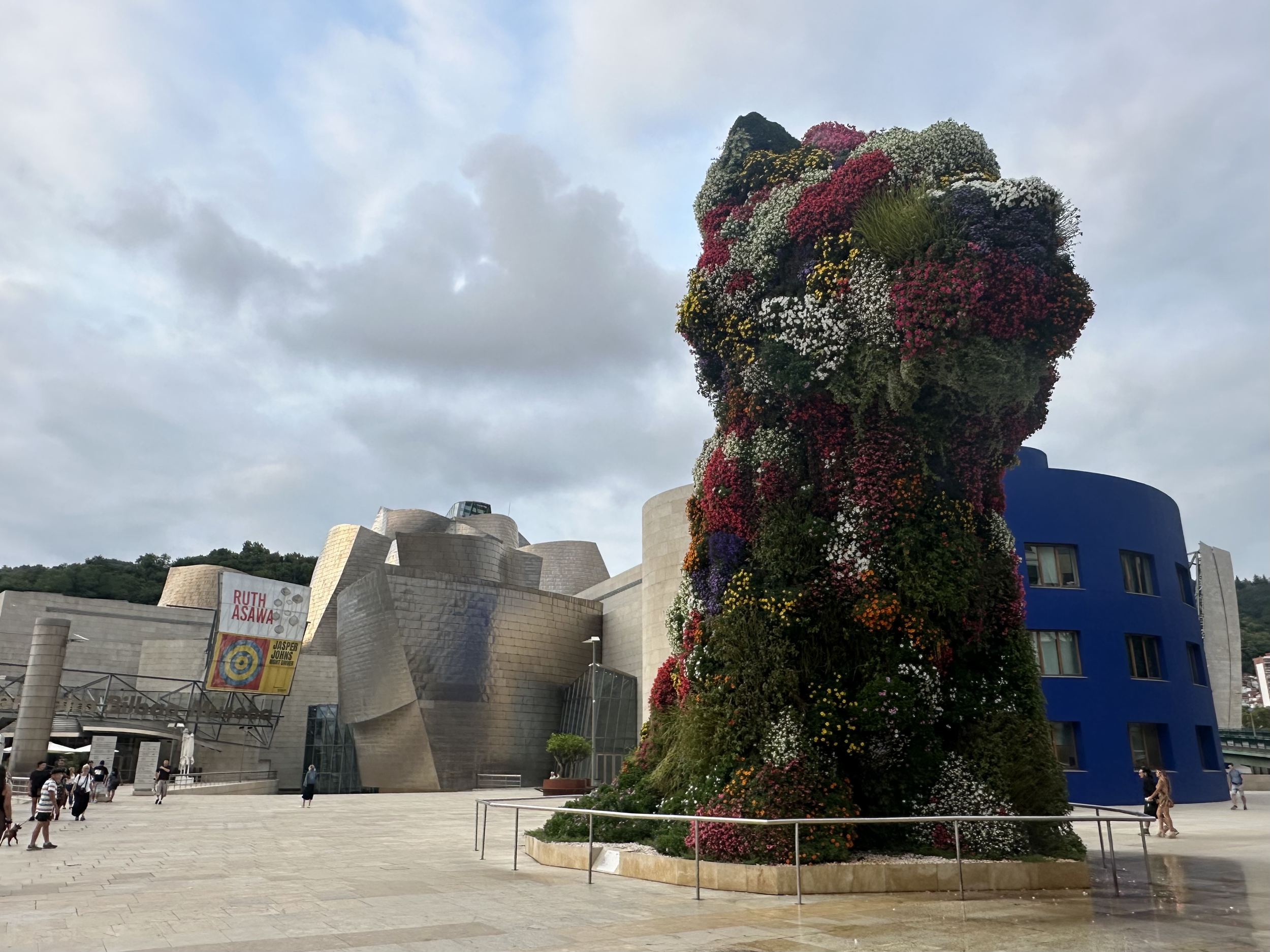
The skies have cleared. Can't get enough of the "Puppy"
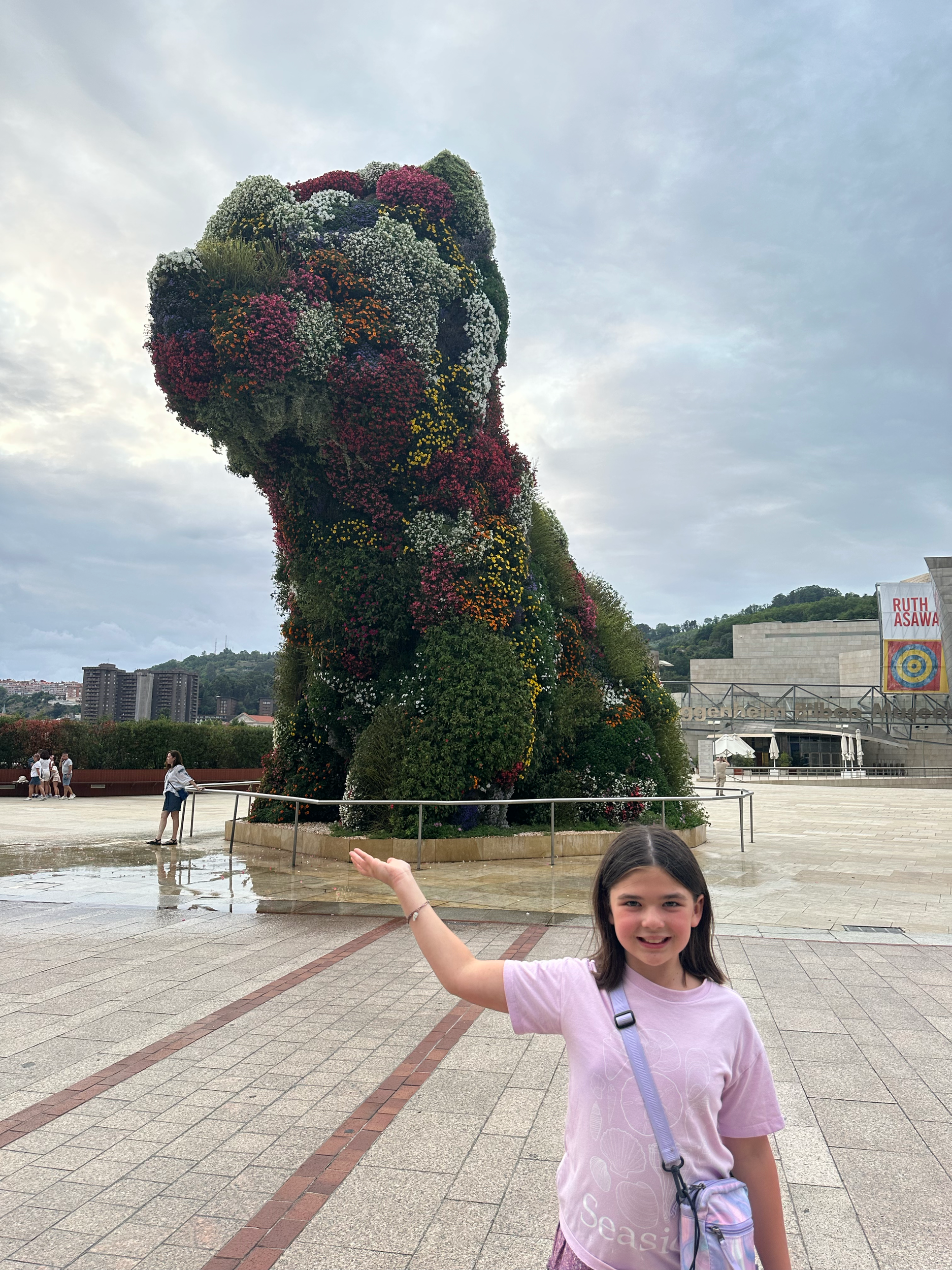
Amelia's holding him up! :)
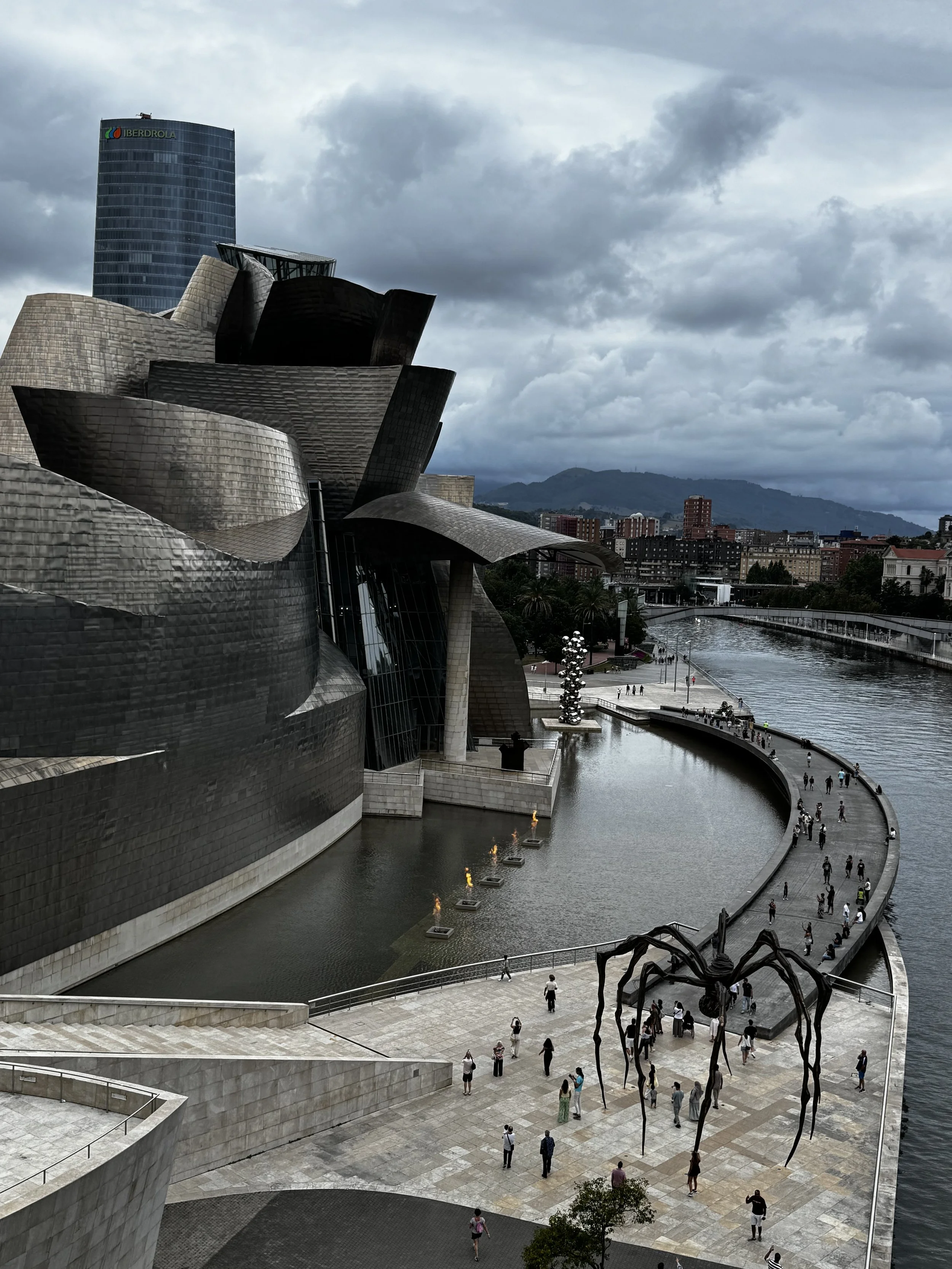
The Guggenheim Museum in Bilbao seen from the bridge crossing the river. Also, the "Fire Fountain" lit up as we were crossing!
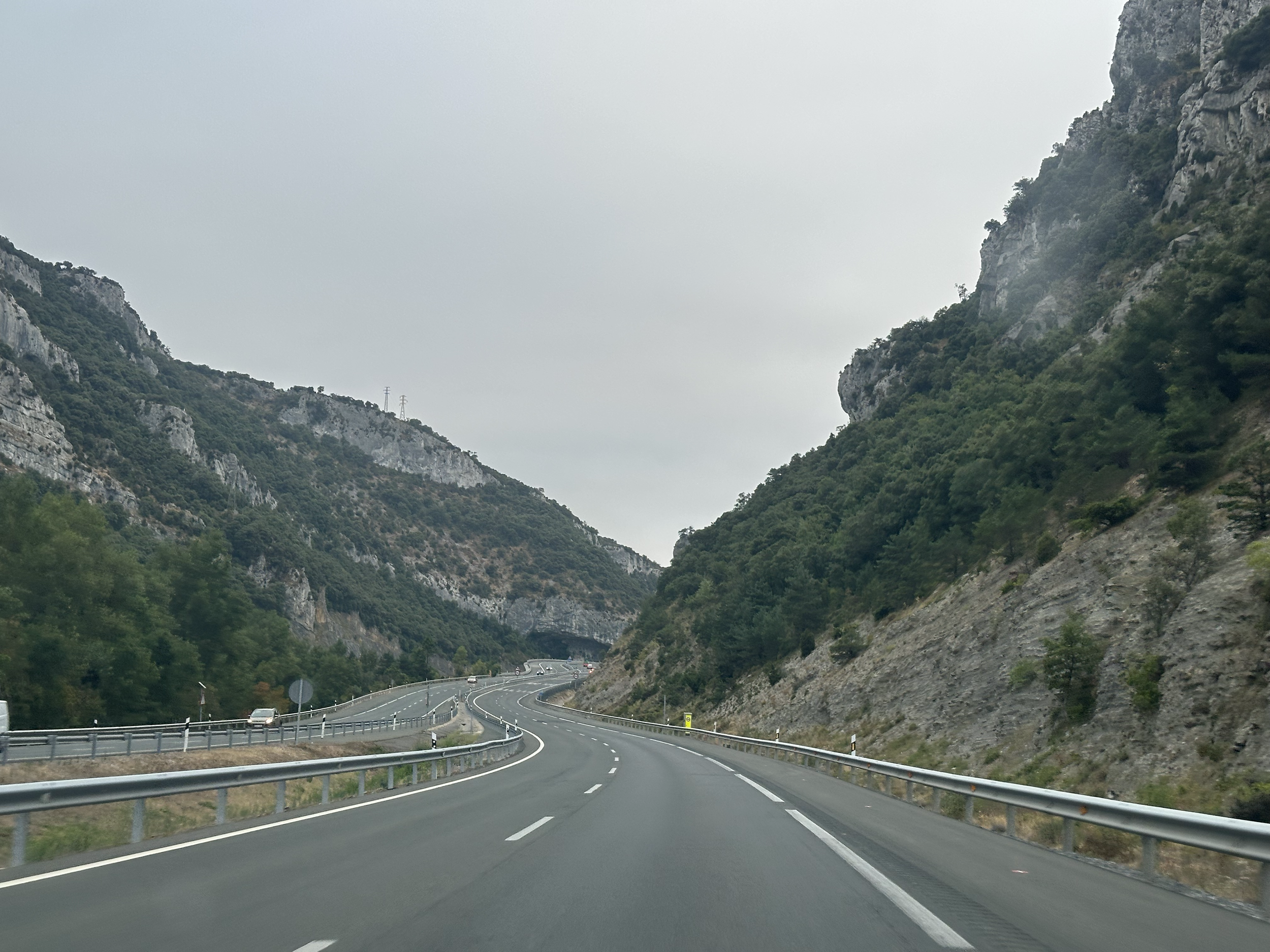
What an excellent visit to Bilbao! We had to head out early the next morning to return our car in Madrid. Beautiful early morning mountains along the way!
Madrid: The Capital and Center of Spain
Picking up where we left off...we traveled early in the morning towards Madrid.
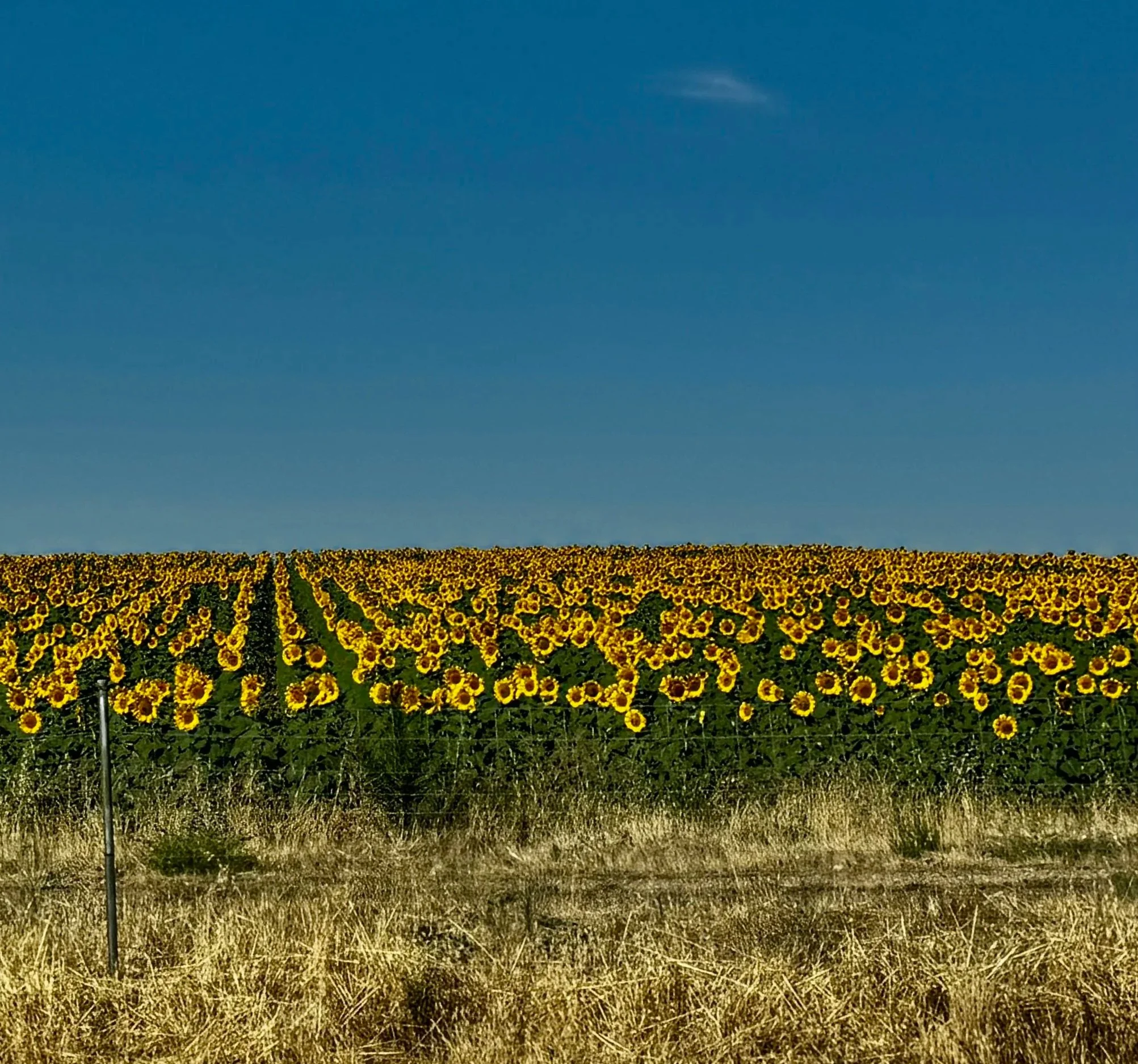
Not only did we see lots of mountains and rock formations, but lots of beautiful sunflowers along the roadside headed south from Bilbao to Madrid.
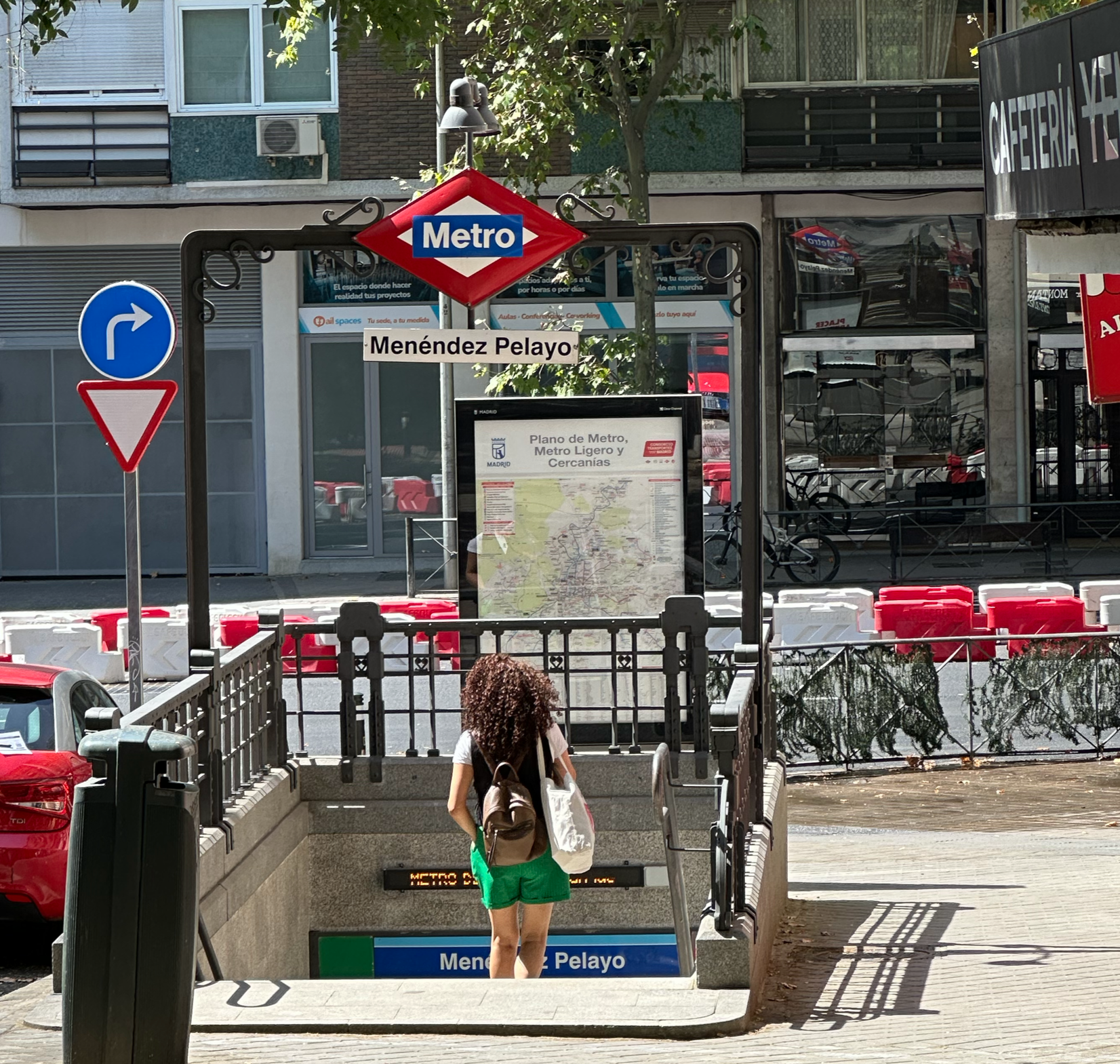
After we dropped off the car, we stored our luggage so we could explore until we were able to check in to our apartment.
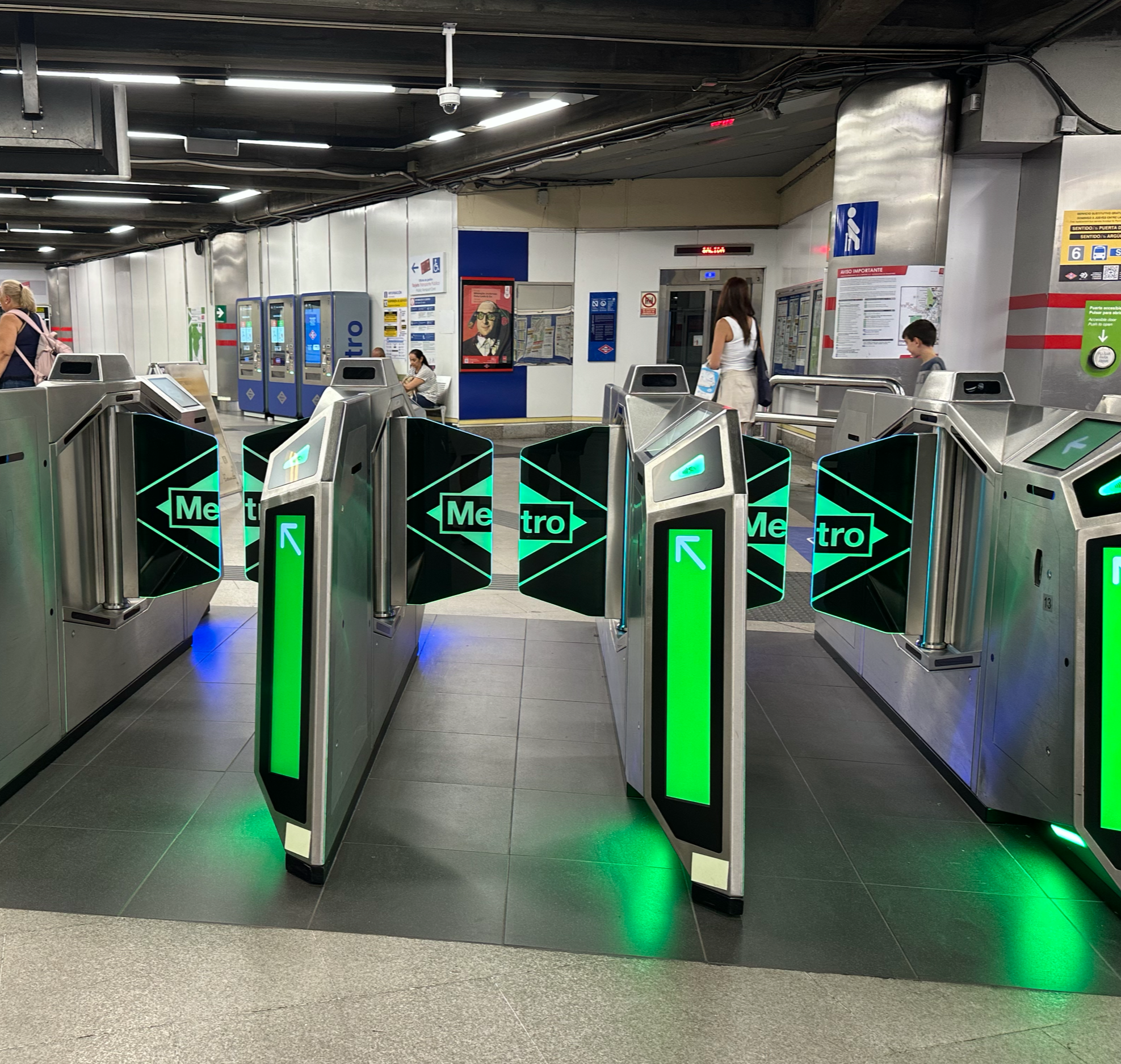
The Metro in Madrid was just as clean as the one in Valencia, and maybe even a little fancier! We hopped on the Metro and headed into town.
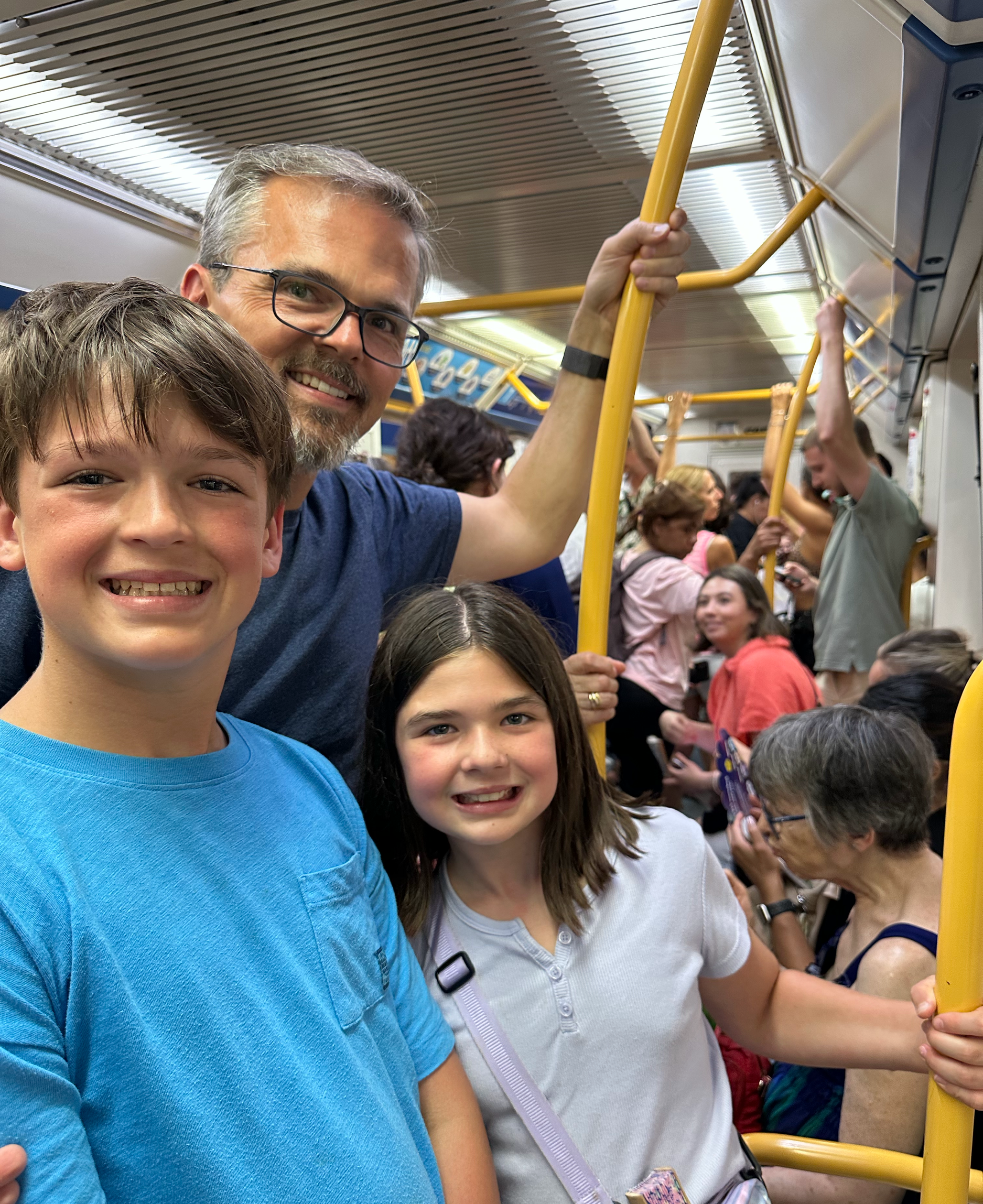
Much more crowded than our experiences in Valencia!
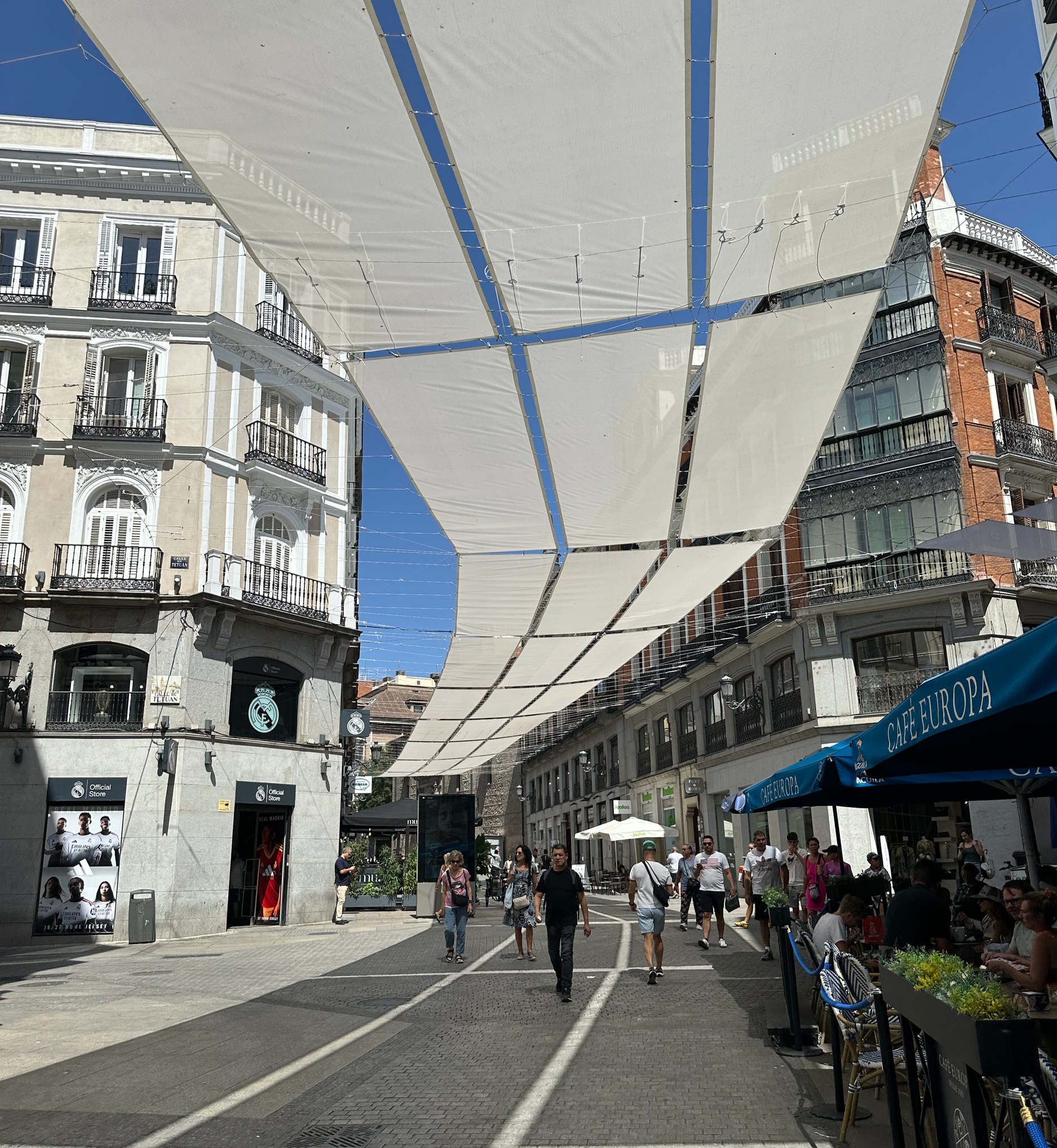
We stopped at Puerta del Sol and headed toward El Corte Inglés (think large department store) for a great view of the city. It was HOT so we were thankful for the overhead canopies.
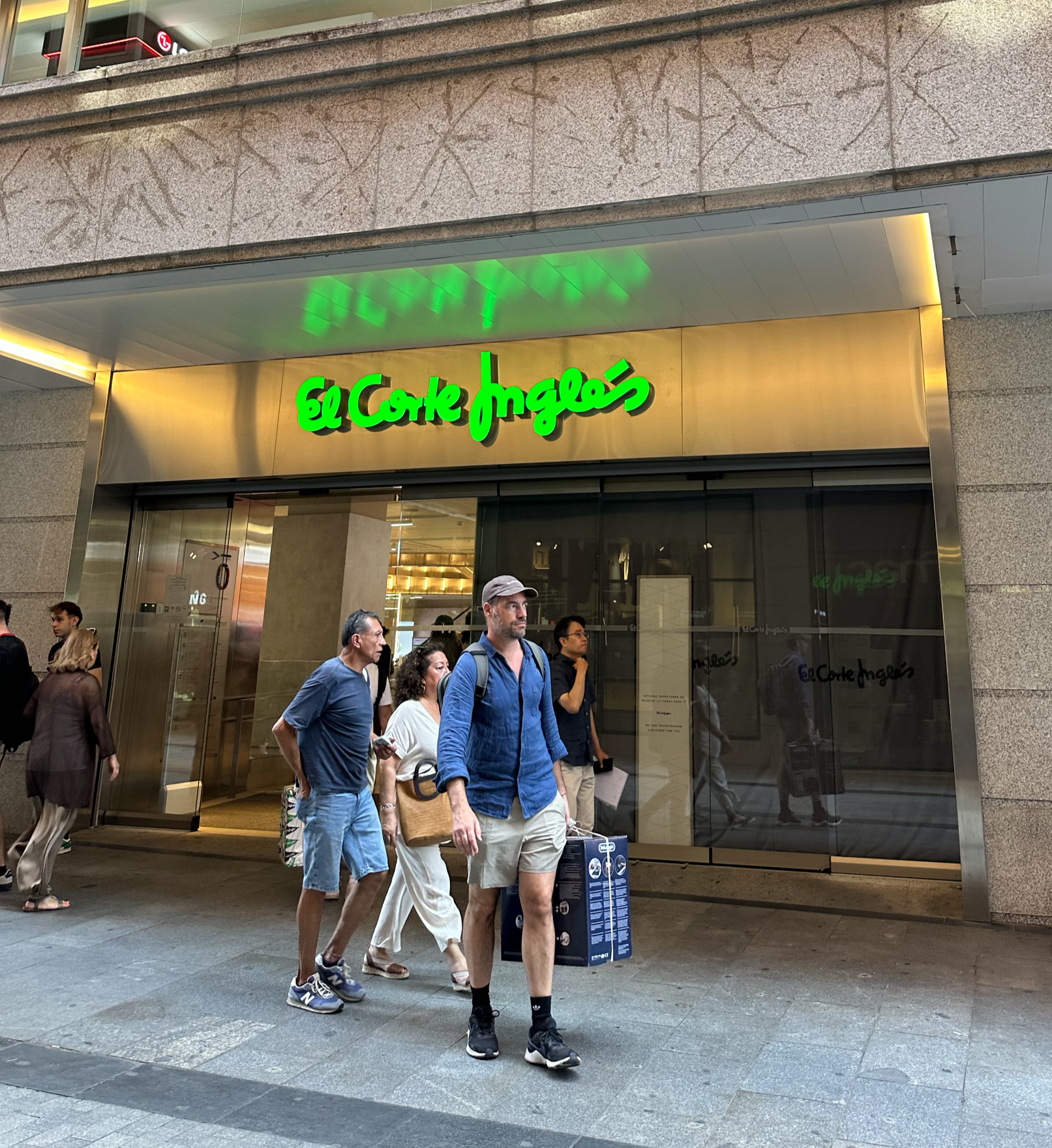
The beloved El Corte Inglés. We first discovered this department store in Valencia and were excited to explore the "9th floor food court."
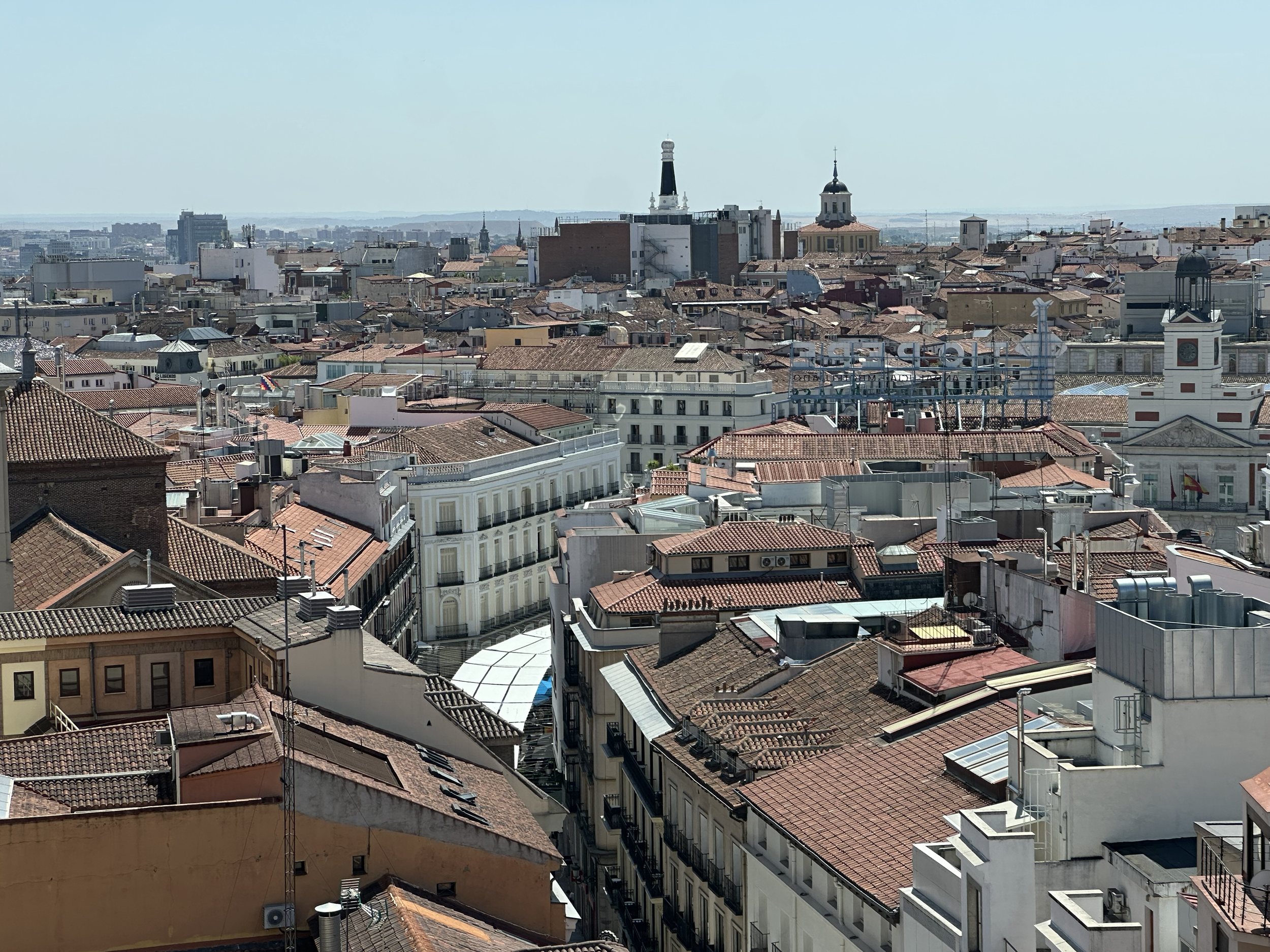
The views were even better than expected. Hello, Madrid!
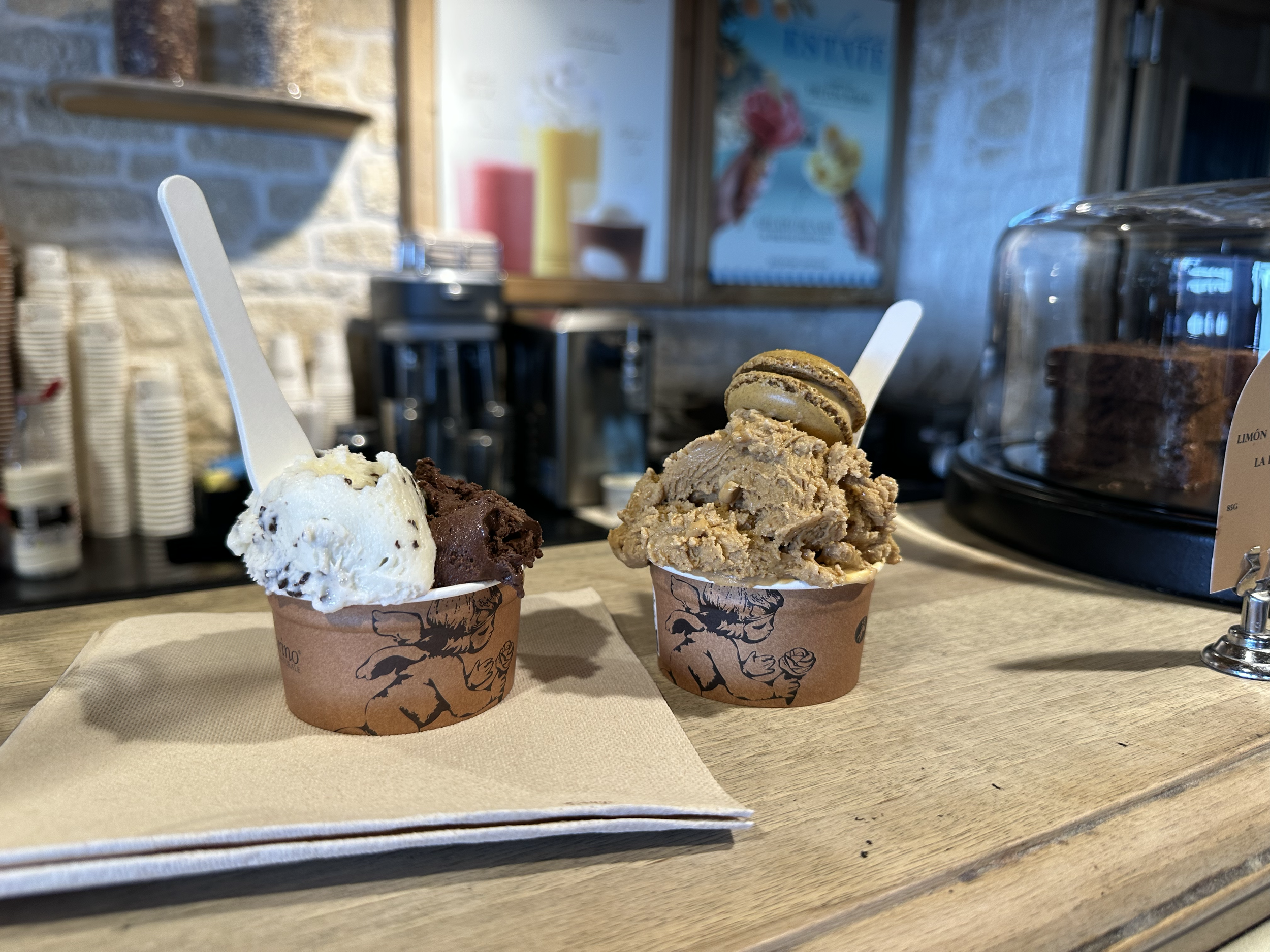
Gelato and Macarons?! Yes, please.
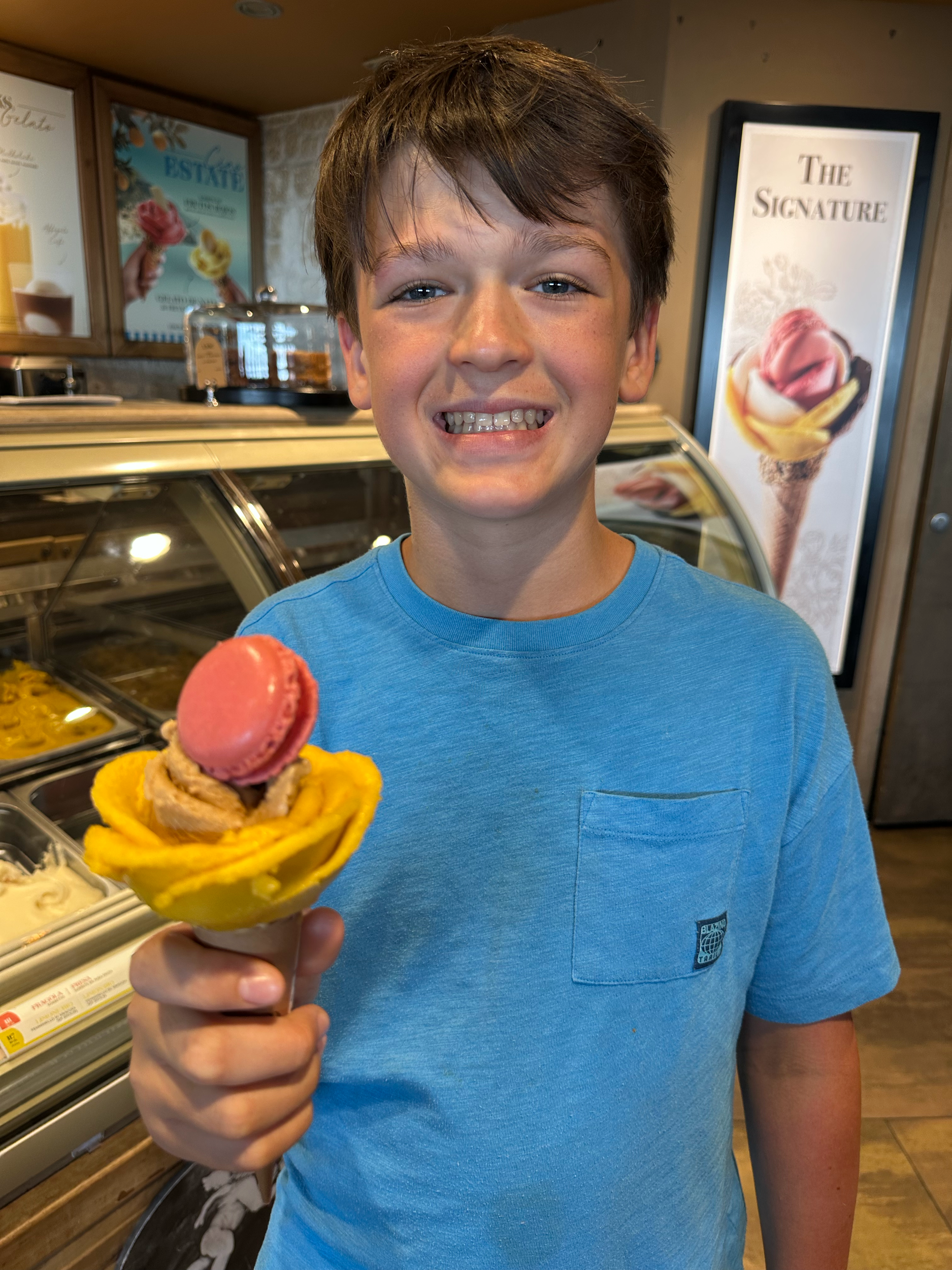
Joshua was excited to get "The Signature." How fancy is that gelato?
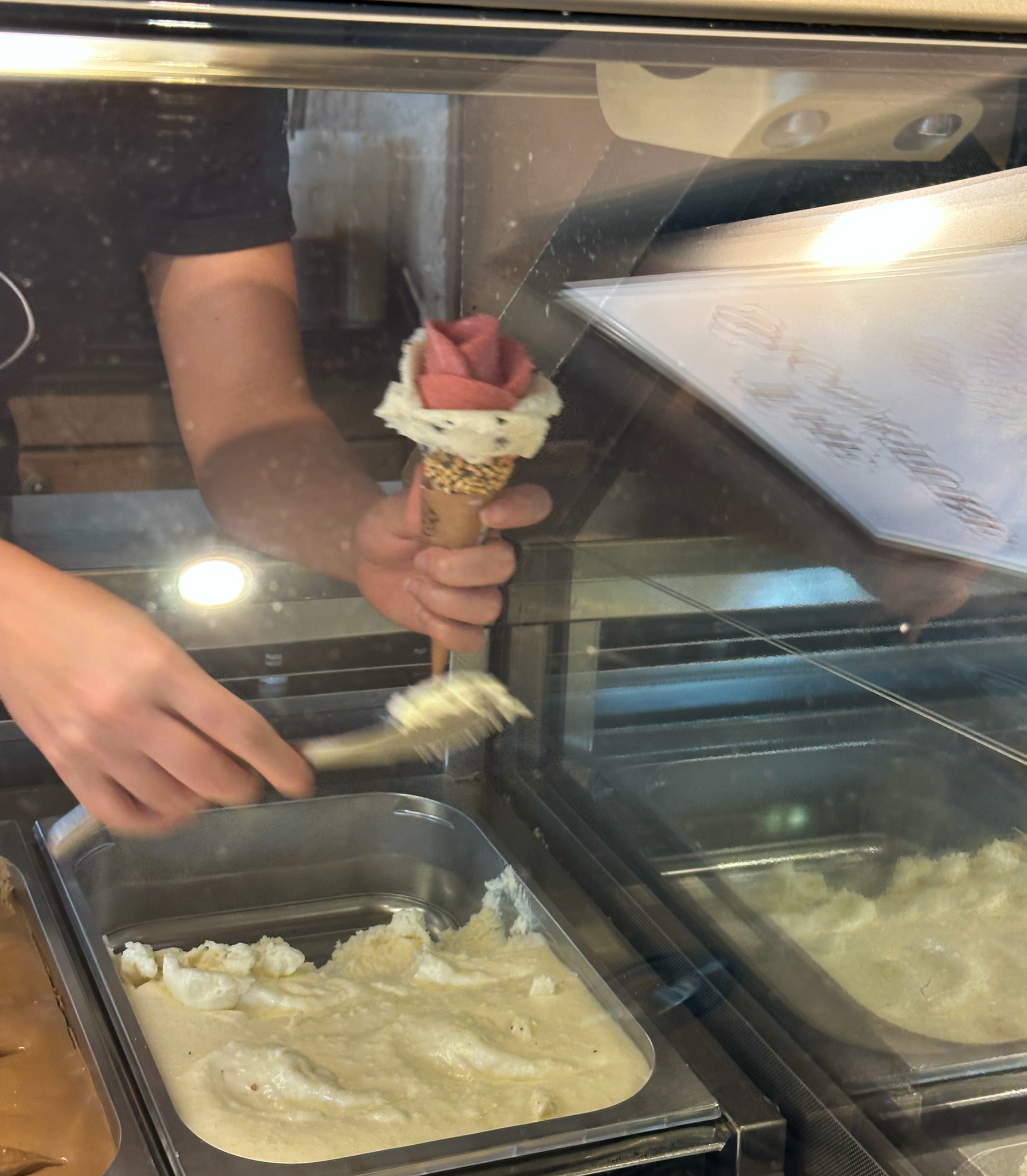
It was amazing to watch as they created "The Signature" cone. You can pick as many flavors as you want, and they create a flower.
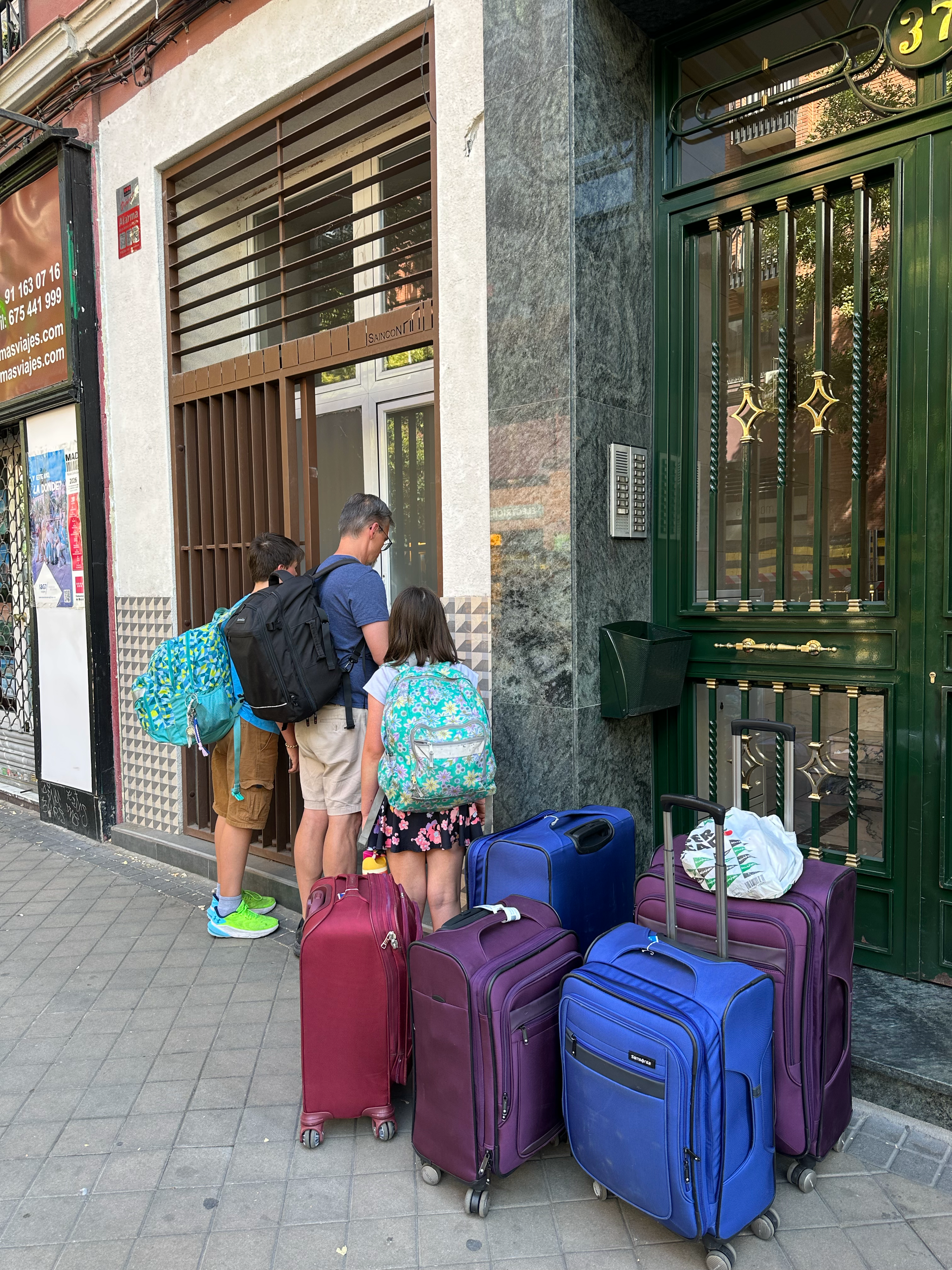
We were excited to collect our luggage and head to our apartment for the week.
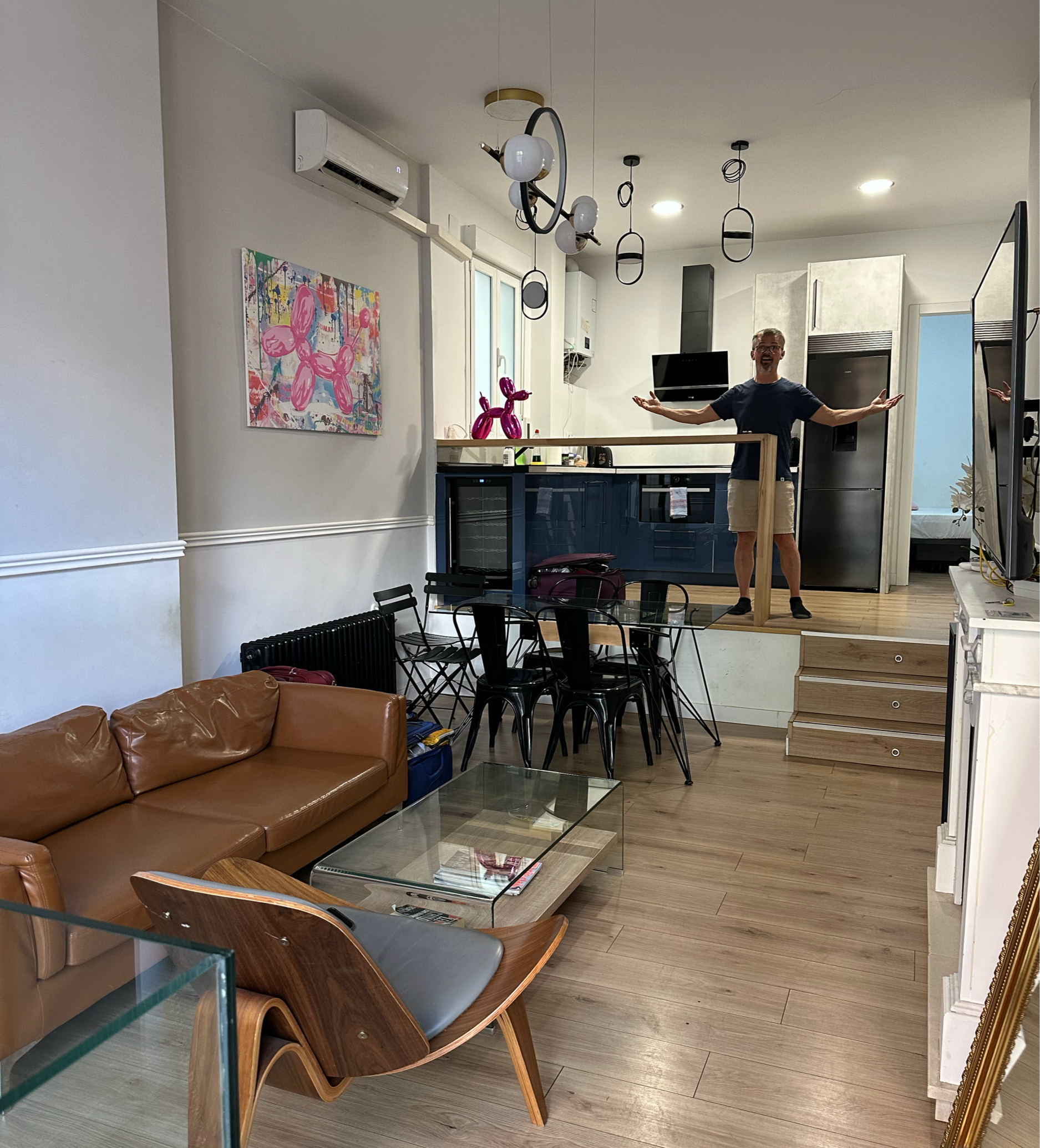
This apartment had a more modern feel with a few steps up to the kitchen and a downstairs with bedrooms.
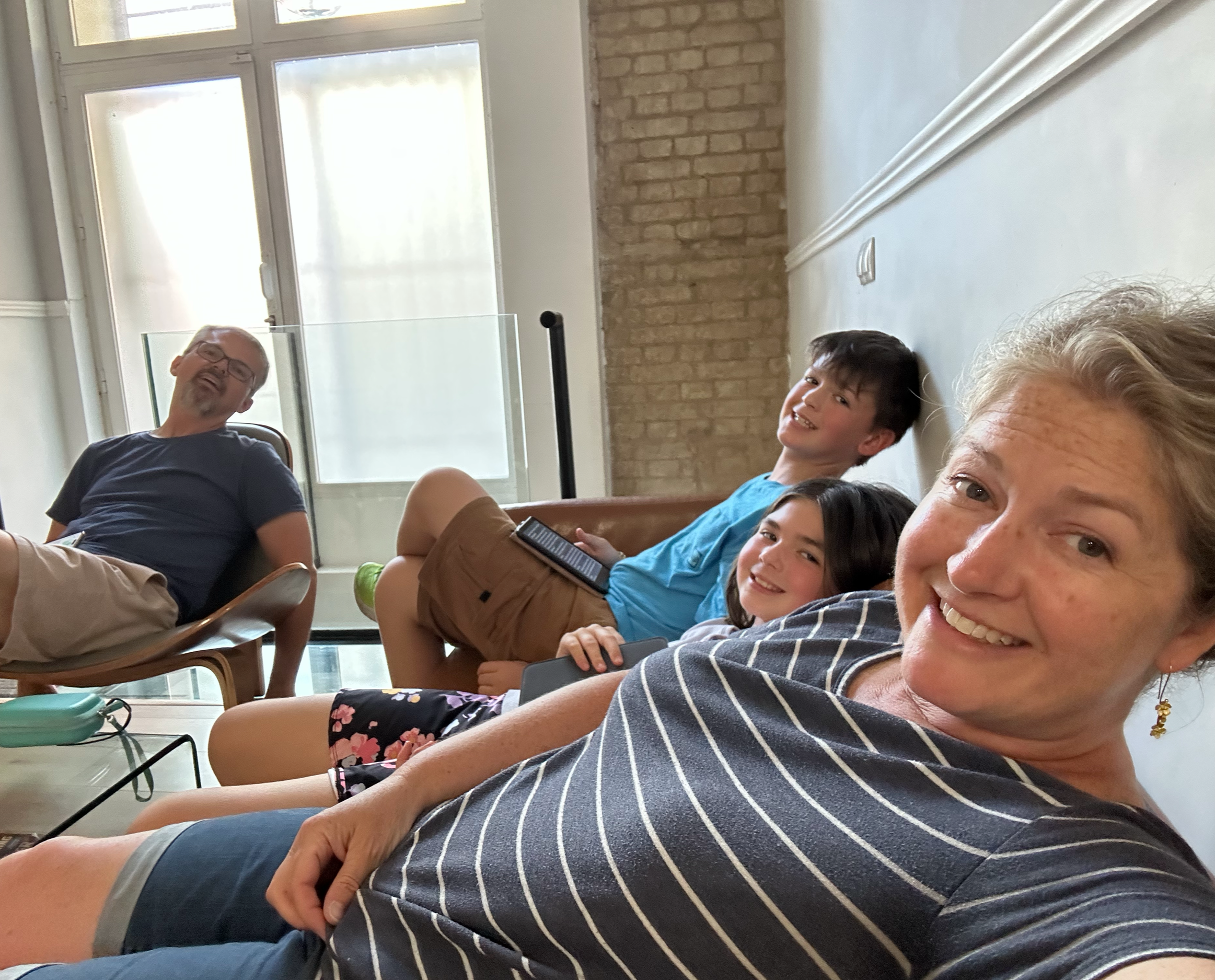
We were finally sitting down and relieved to be in one place for 5 days.
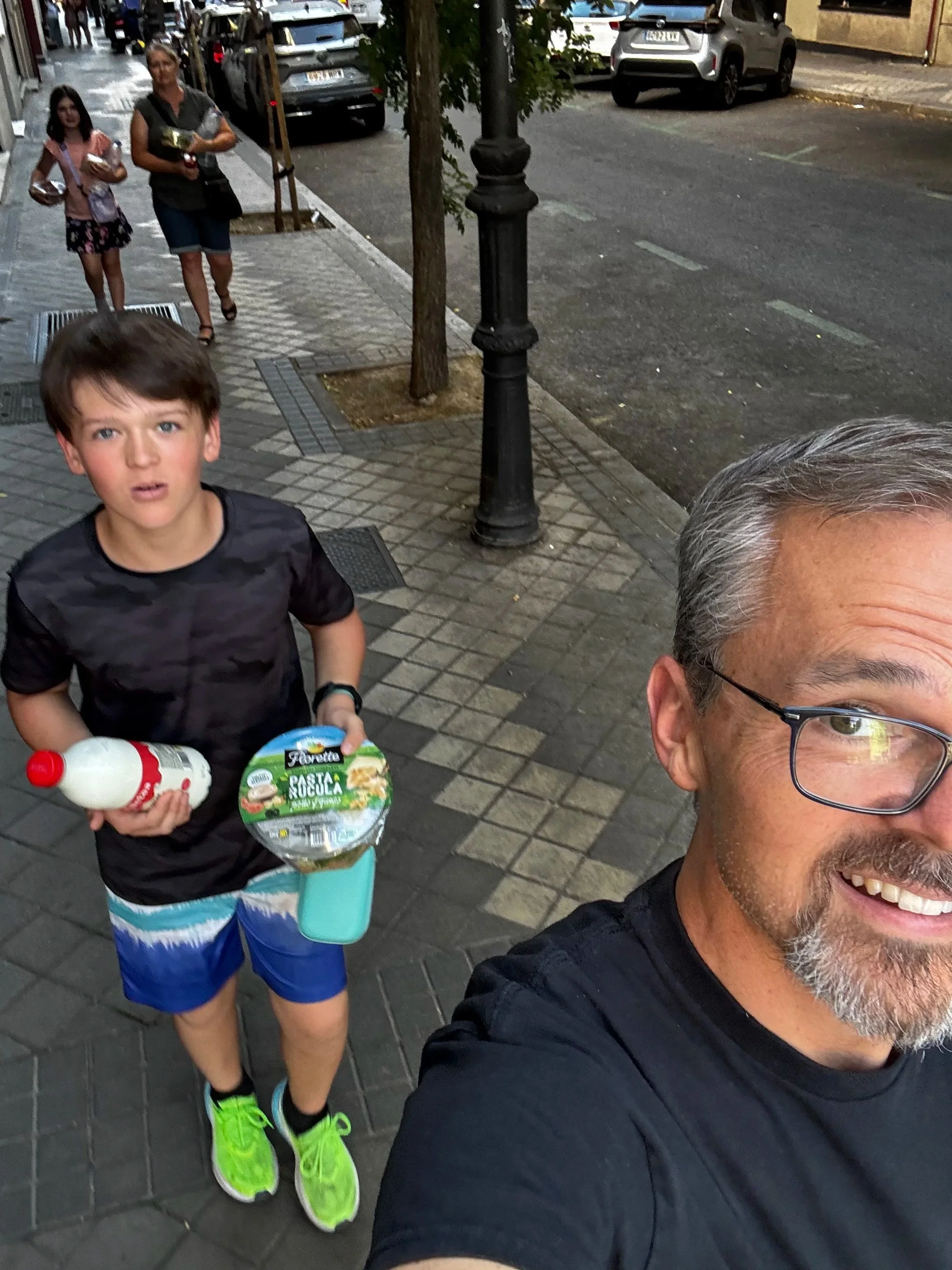
We found a market down the street to get groceries. Why pay extra for grocery bags when you've got 8 hands between you?
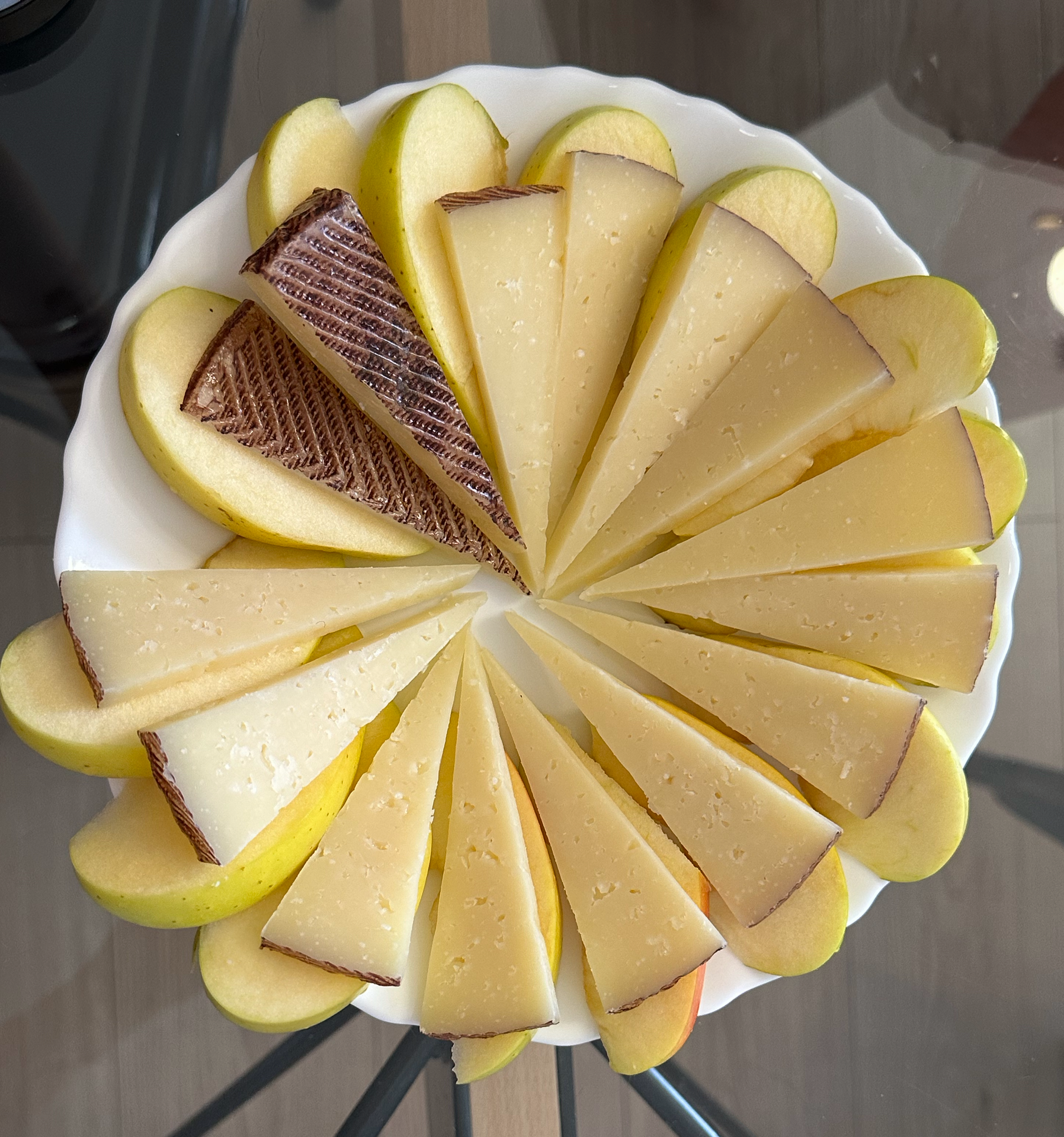
One of our favorite snacks has become golden delicious apples and manchego cheese. The kids enjoyed making fun patterns out of them.
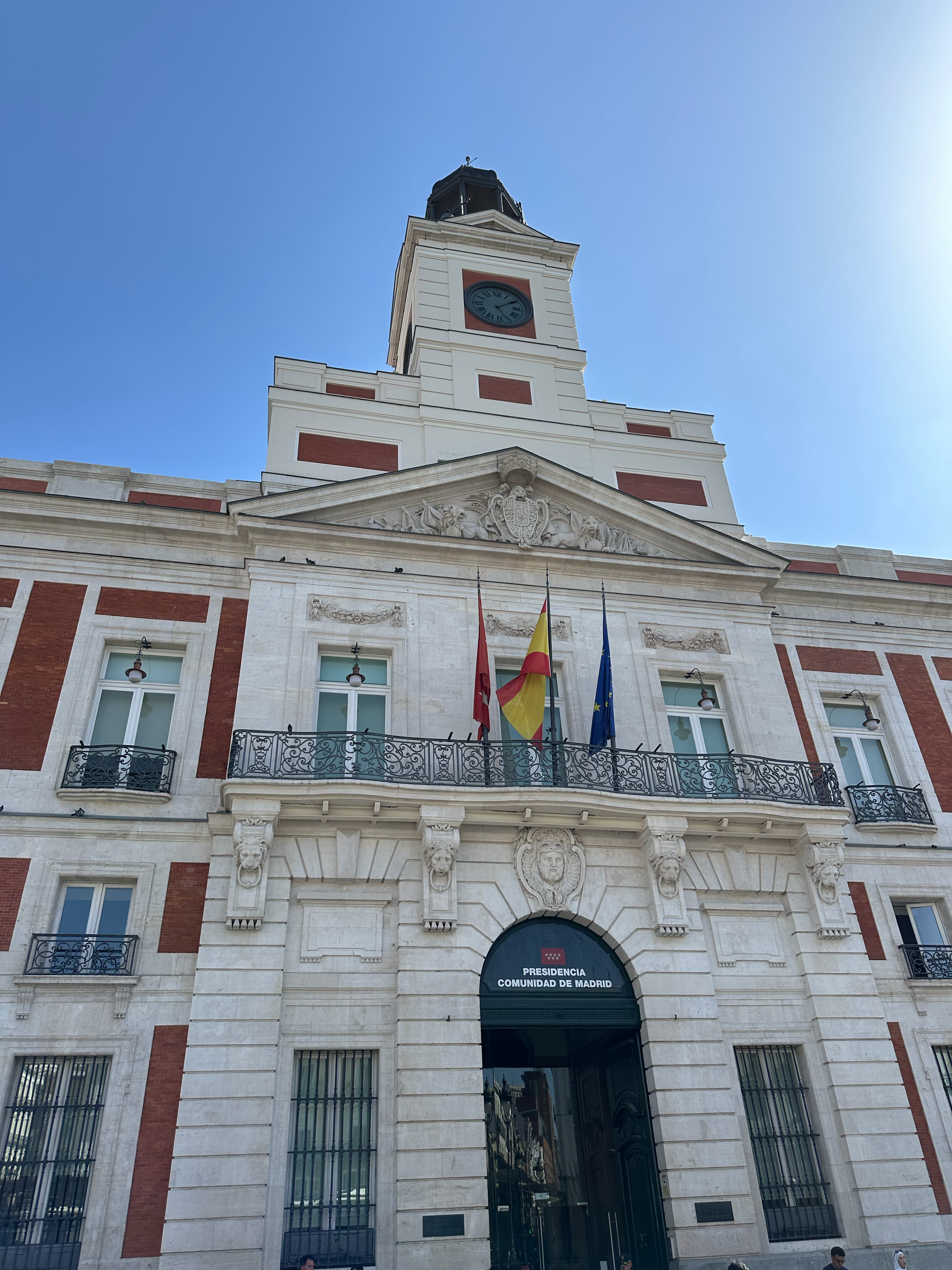
Our tour of the city began with heading back to Plaza del Sol and the Casa de Correos. This is the head of the regional government in Madrid and the focal point of New Year's Eve with the tradition of eating 12 grapes along with the 12 chimes at midnight to bring you luck in the new year.
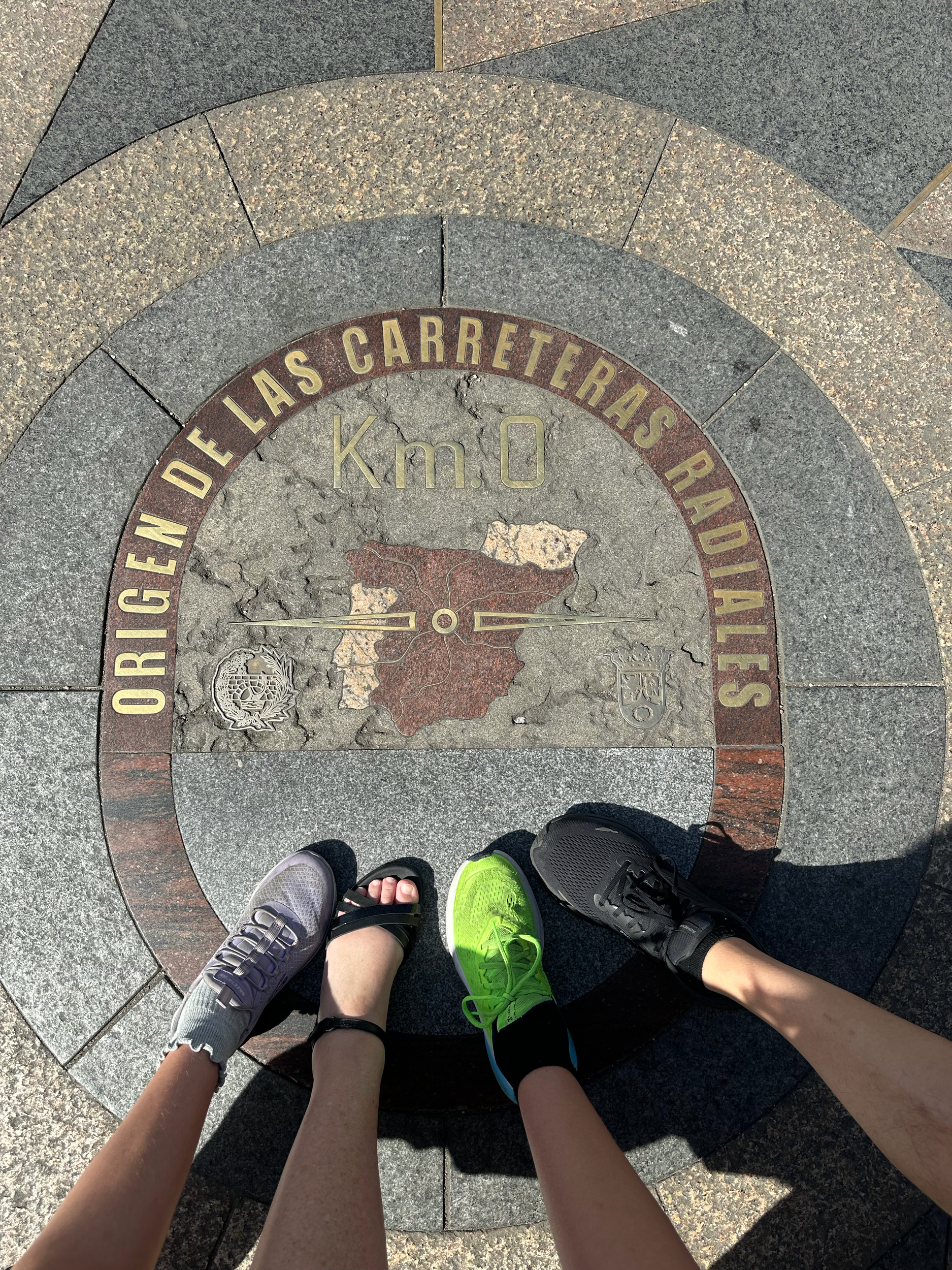
In front of the Casa de Correos is the Km 0 plaque. This plaque marks the spot from where all major radial roads start in Spain. We all stood on it together!
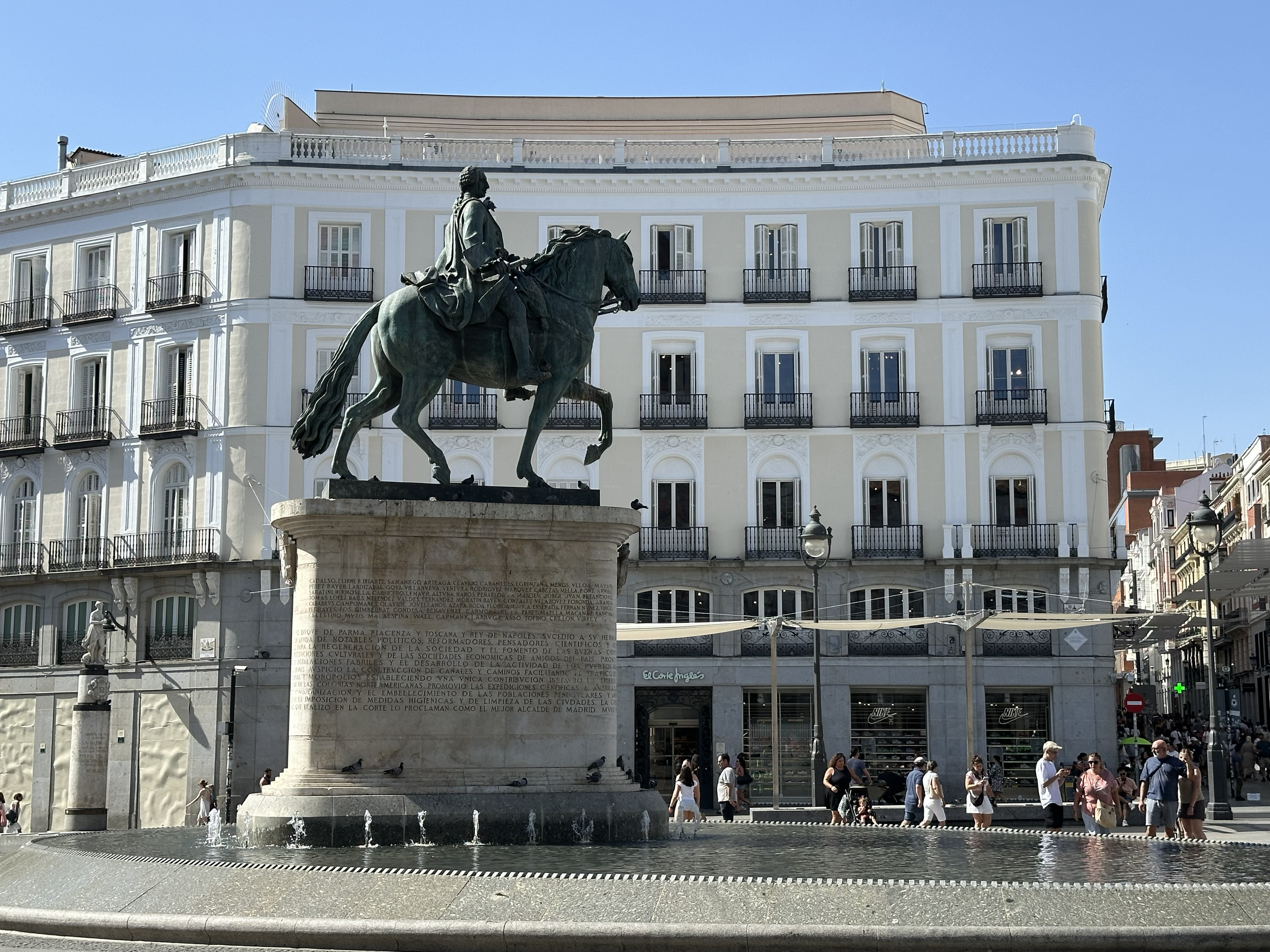
This plaza also hosts the statue of King Charles III of Spain on horseback. He ruled from 1759 until his death in 1788. He was known as an Enlightened Monarch and as "Madrid's best Mayor" due to his major reforms and changes to the city's landscape with the addition of iconic landmarks.
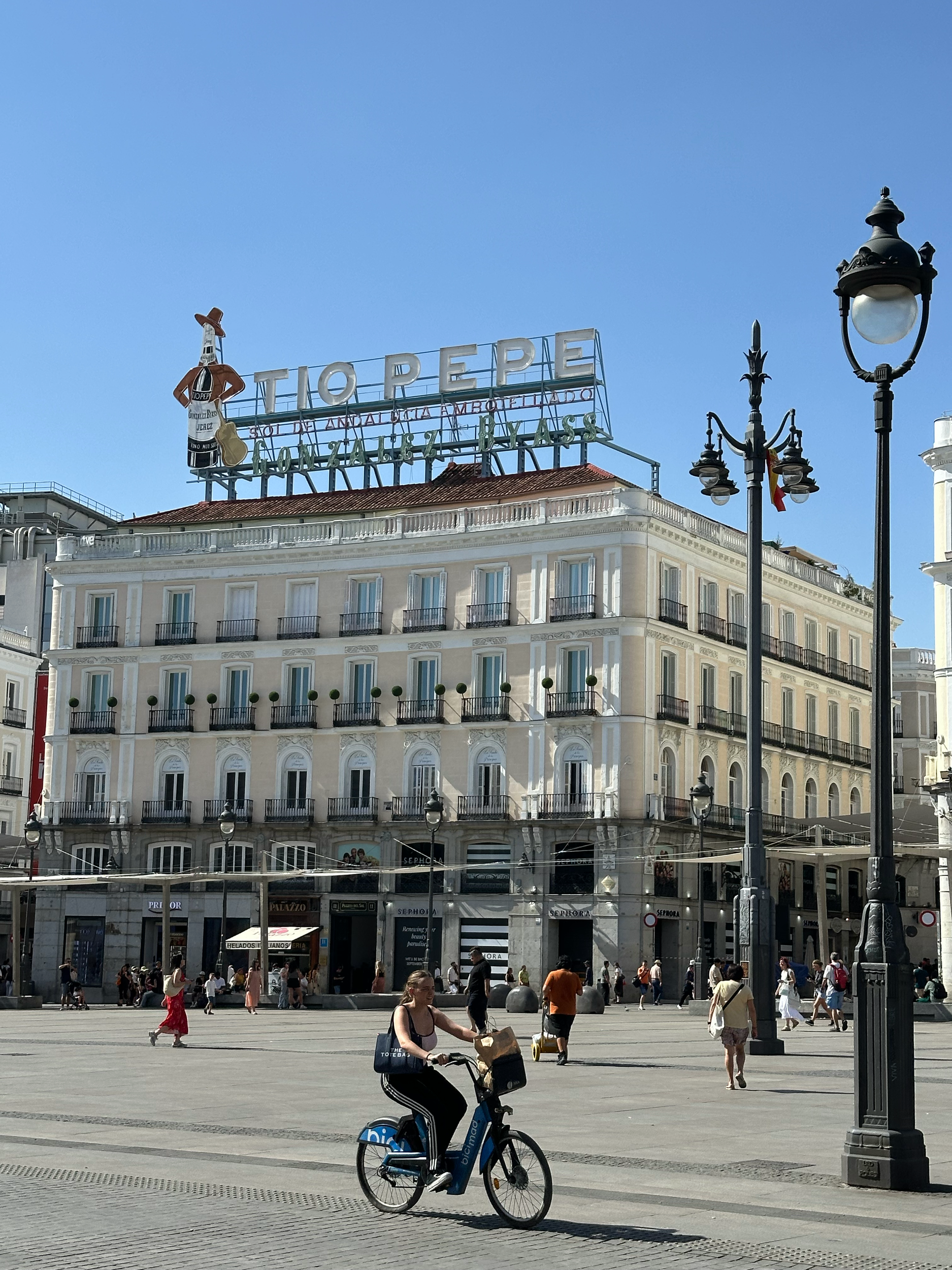
The Tio Pepe sign has been a part of the Puerto del Sol since 1936. The iconic sign for Andalusian Sherry was removed in 2011 with the renovation of the building, but the people of Madrid (Madrileños) revolted! And the sign was eventually repaired and repainted before being reinstalled on the building across from the government building on the square.
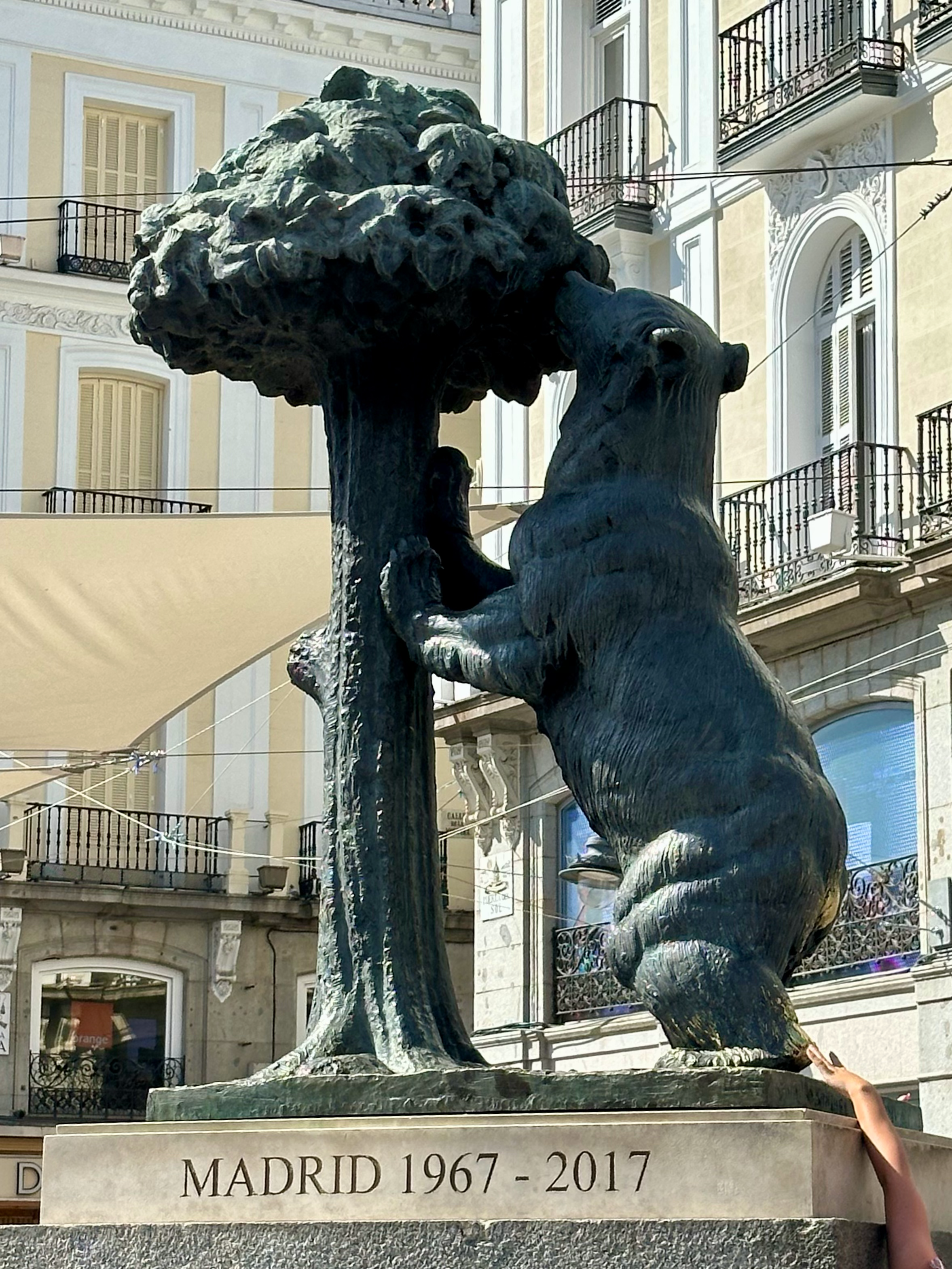
The "Bear and Strawberry Tree" (Oso y Madroño) has been on the coat of arms for Madrid since 1222 and this statue is its 3-D projection, which was installed in the square in 1967. So cute! People touch the heel of the bear for good luck- peep the photo above!
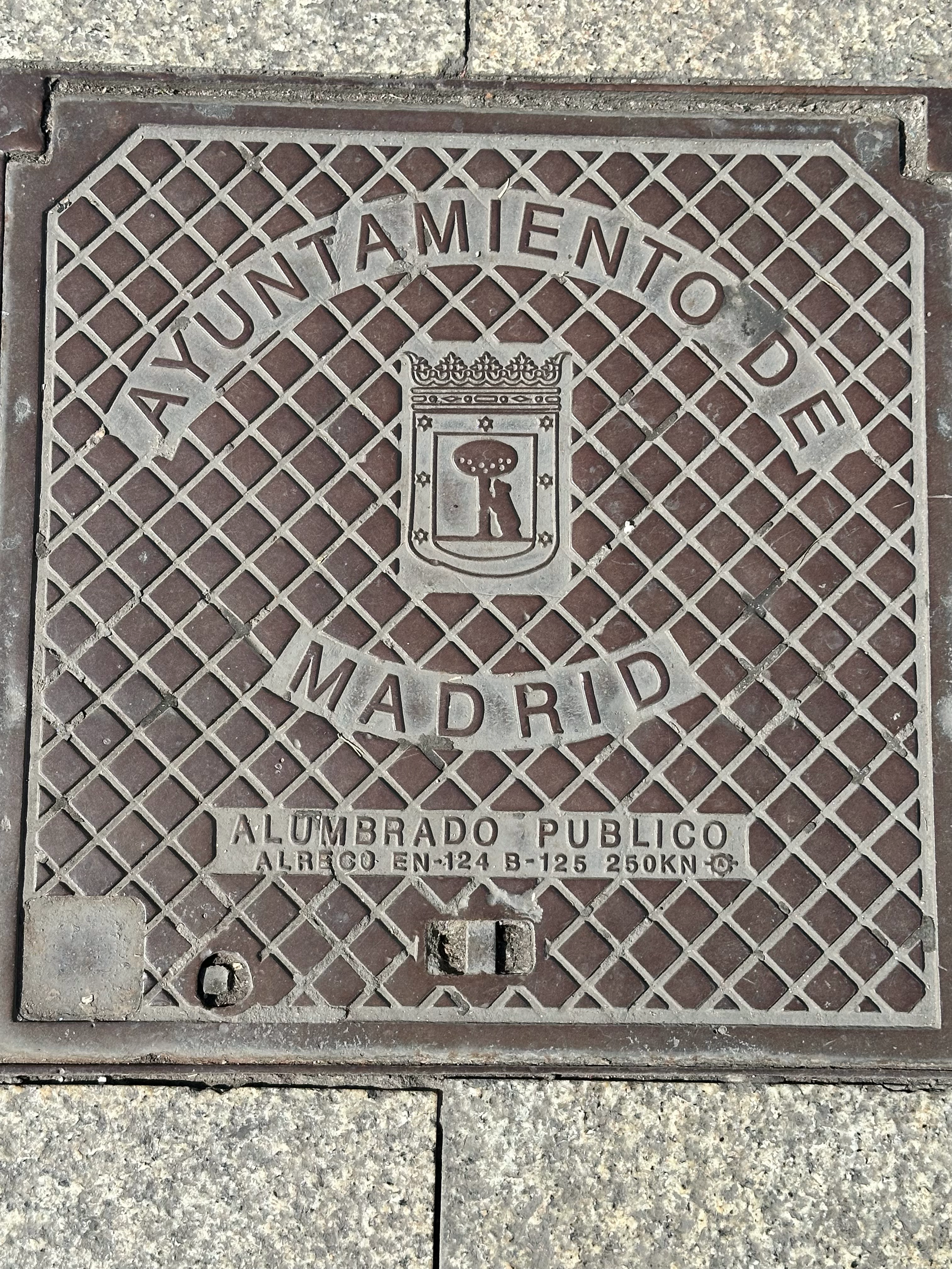
Much like the bat from the coat of arms in Valencia, the bear and strawberry tree appear all over the city of Madrid, from manhole covers to the symbol for one of Madrid's football teams (Atlético de Madrid).
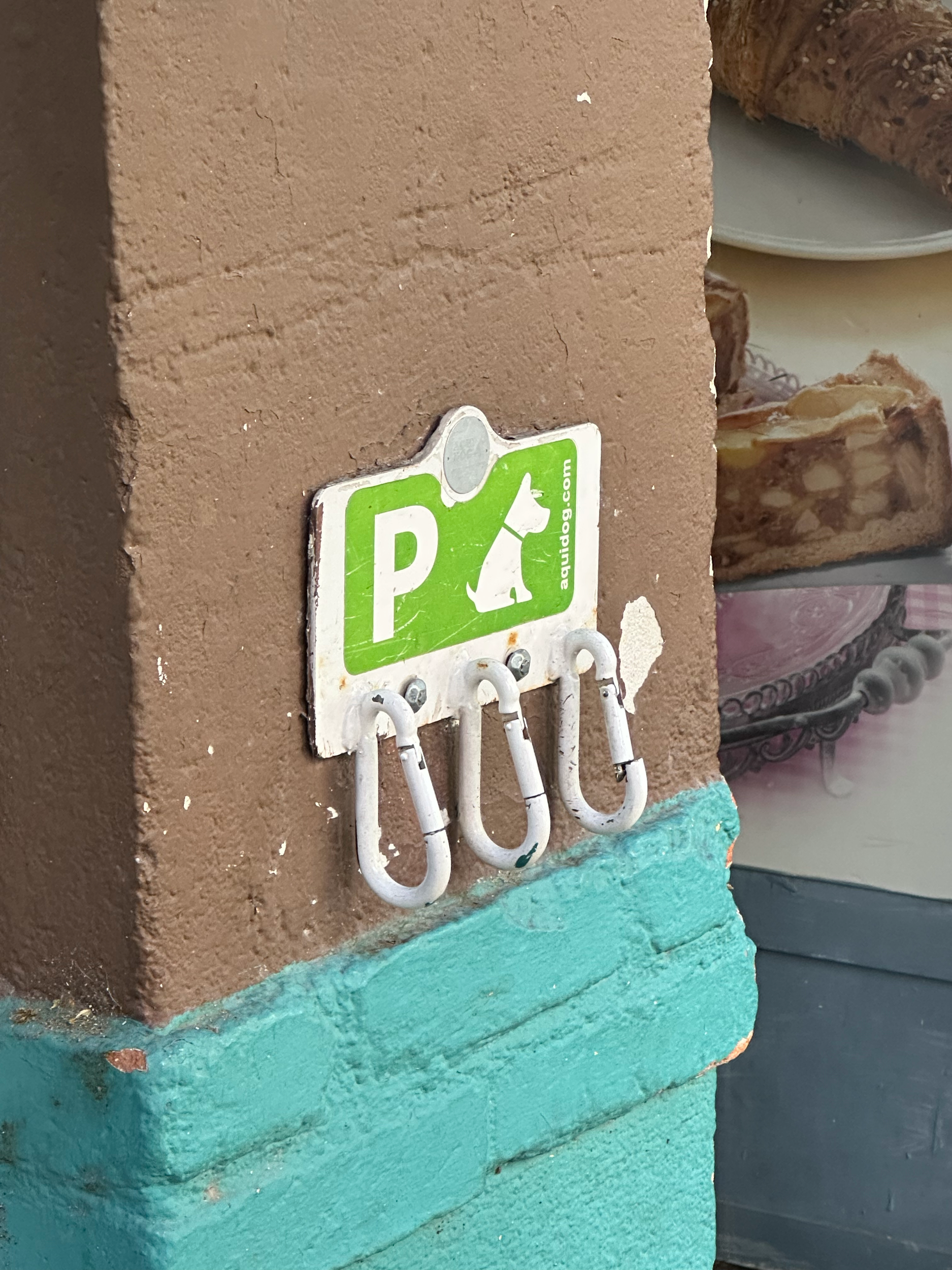
This is so random that I'm not exactly sure where to put it, but we were cracking up at the hooks to attach your dog on leash while you run into the store.
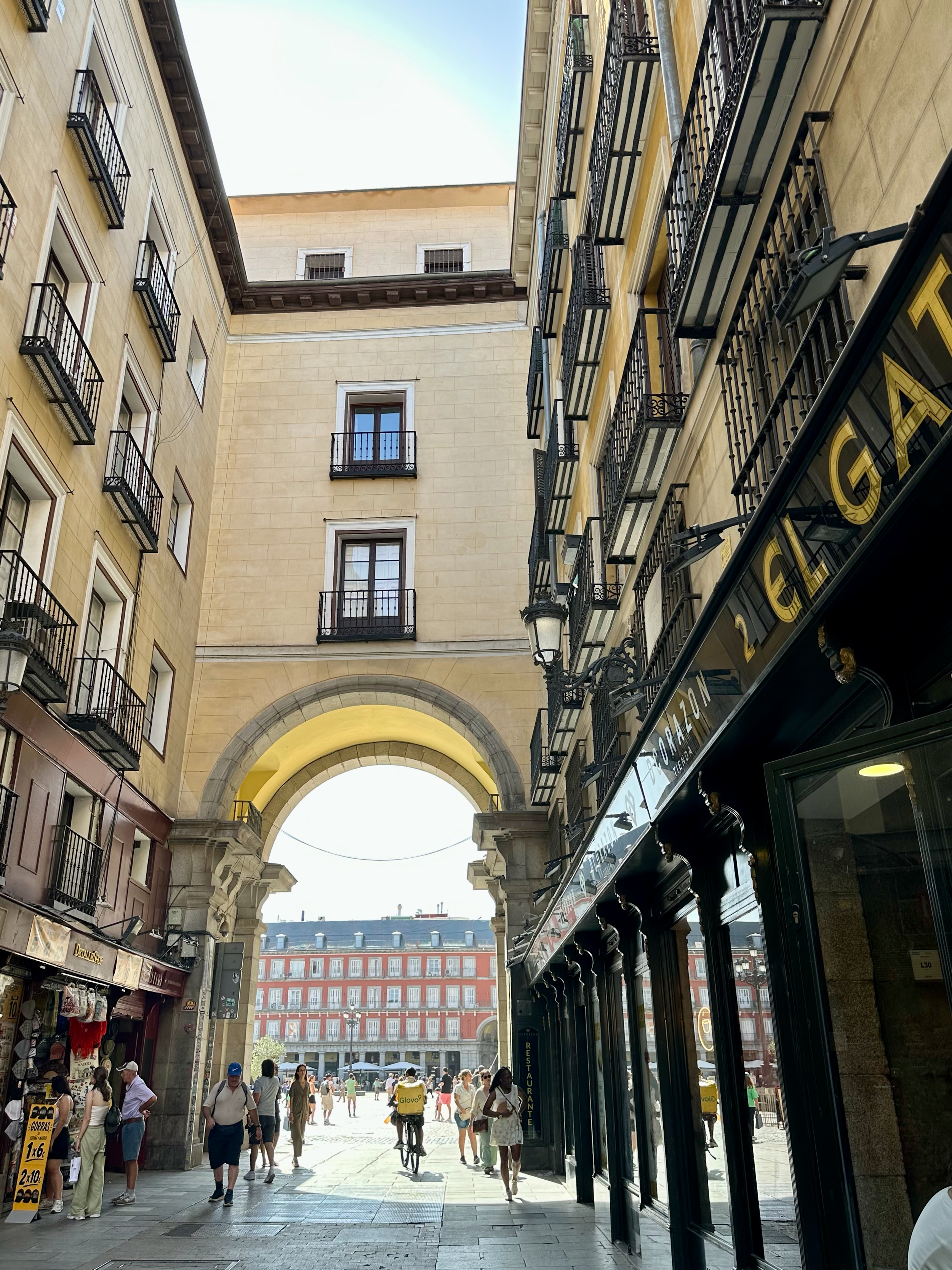
From Plaza del Sol, we made our way down Calle Mayor and turned to enter Plaza Mayor. This arched entryway is one of 10 that connect the streets of old Madrid to the square.
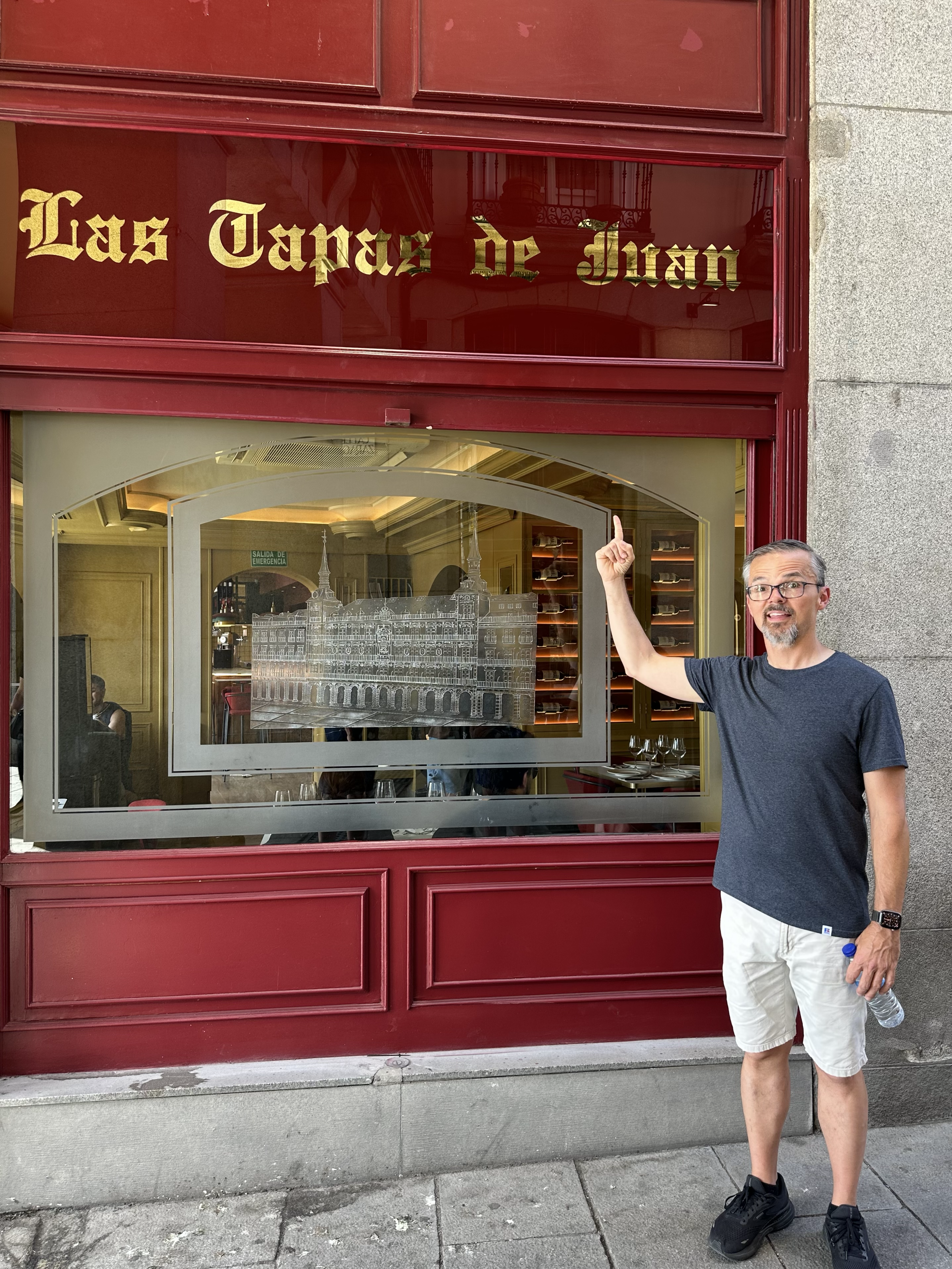
Of course we had to stop by "Las Tapas de Juan" since it includes John's name!
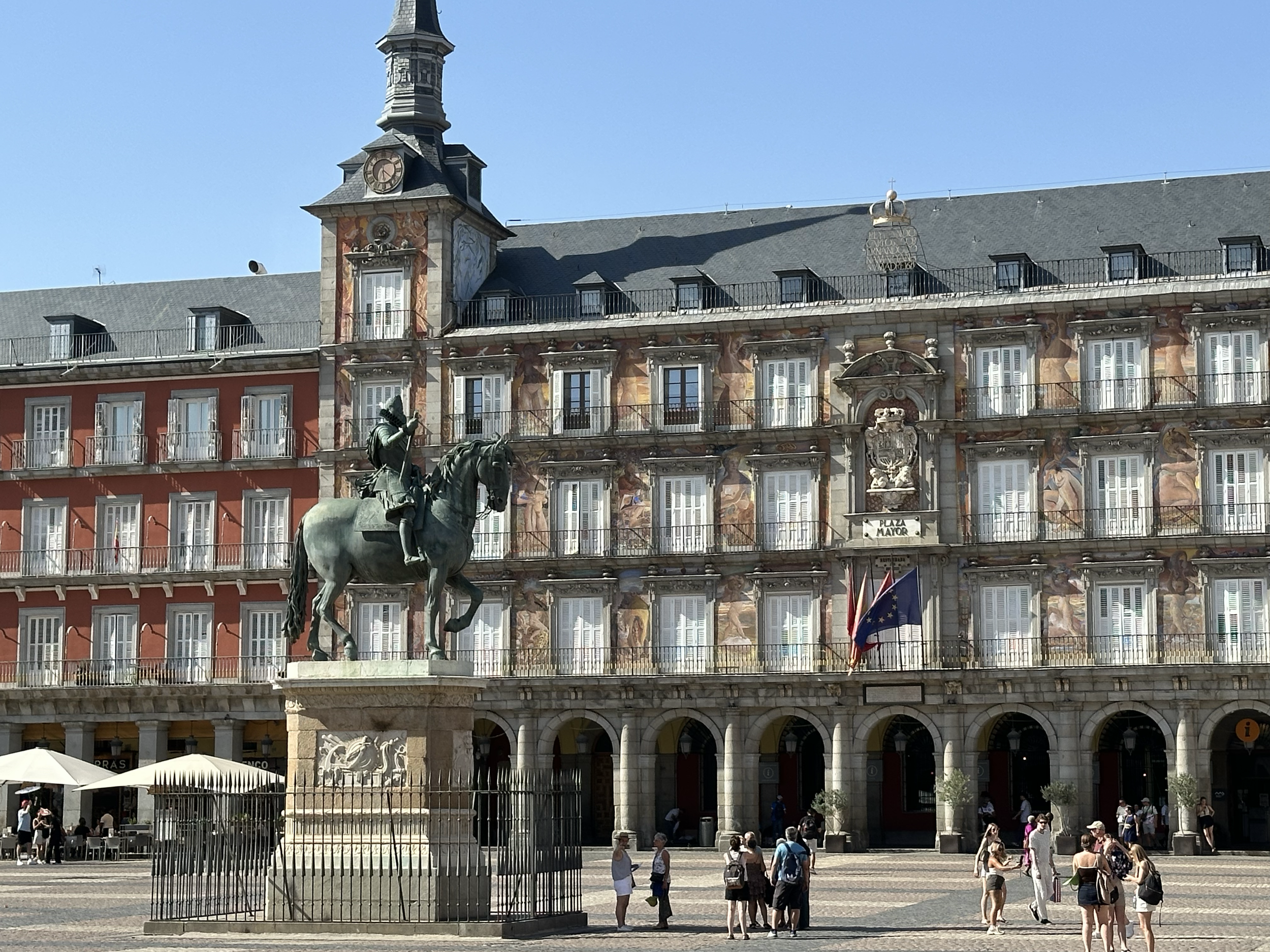
Plaza Mayor is rectangular in shape with shops on the bottom level and residences above. There are 237 balconies overlooking the square. At the center of the square is the statue of King Philip III of Spain on his horse. He reigned from 1598 until his death in 1621.
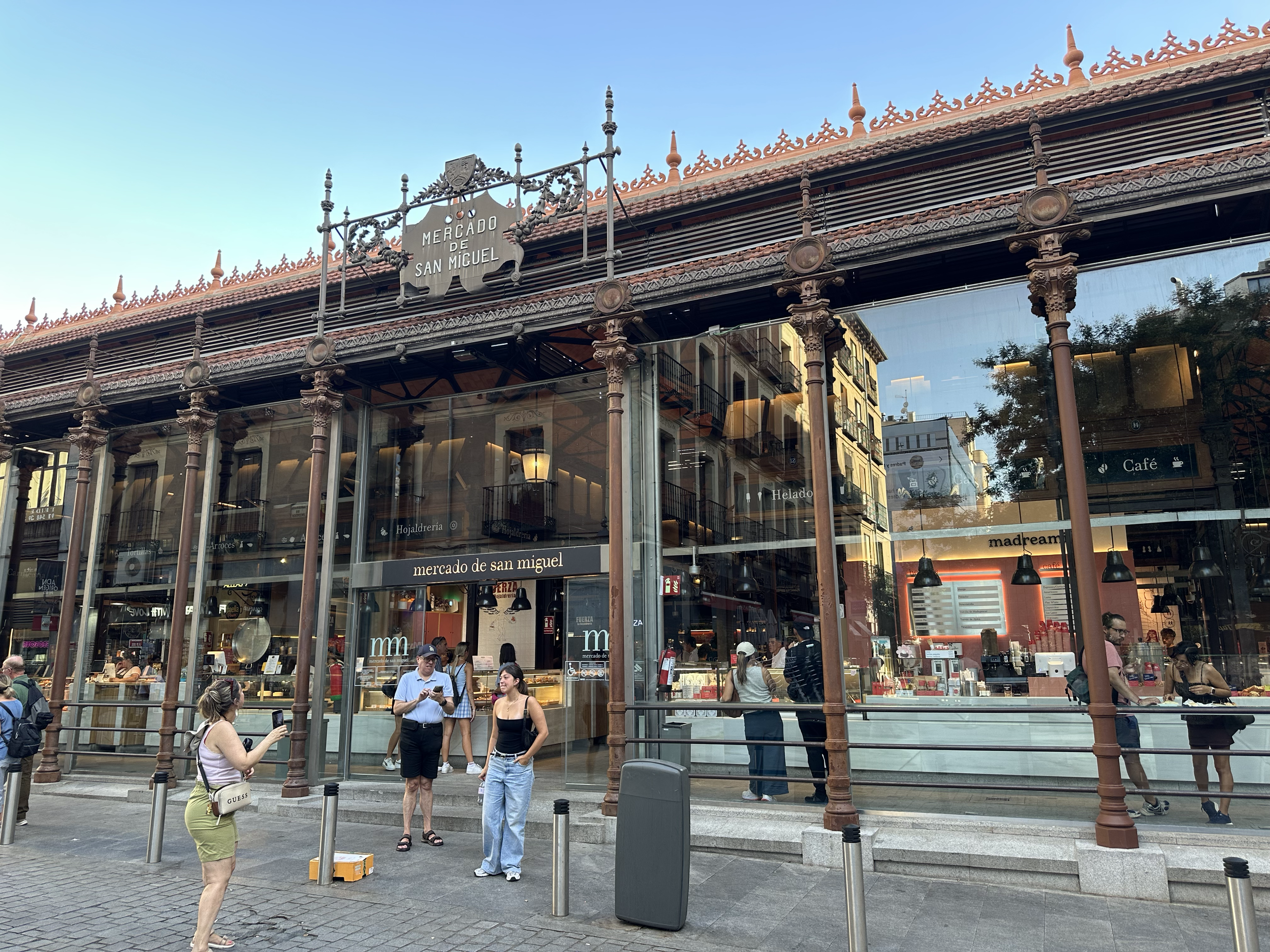
Just a block away from the Plaza Mayor is the Mercado de San Miguel. We were ready for a snack, so all of this delicious food made our mouths water!
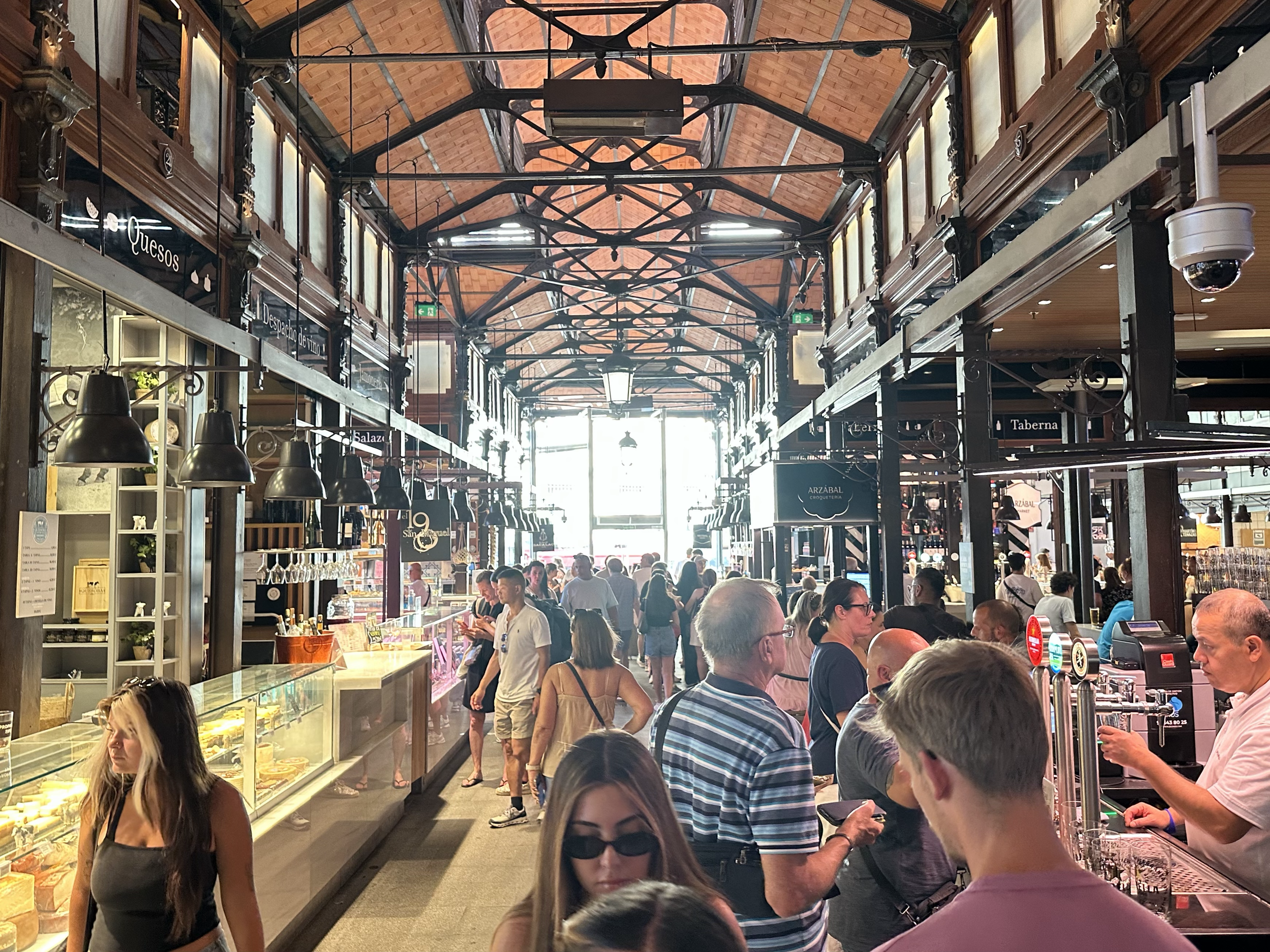
Inside the market was packed with people. There weren't many places to sit, but plenty of bar space around the market to stand and enjoy tapas.
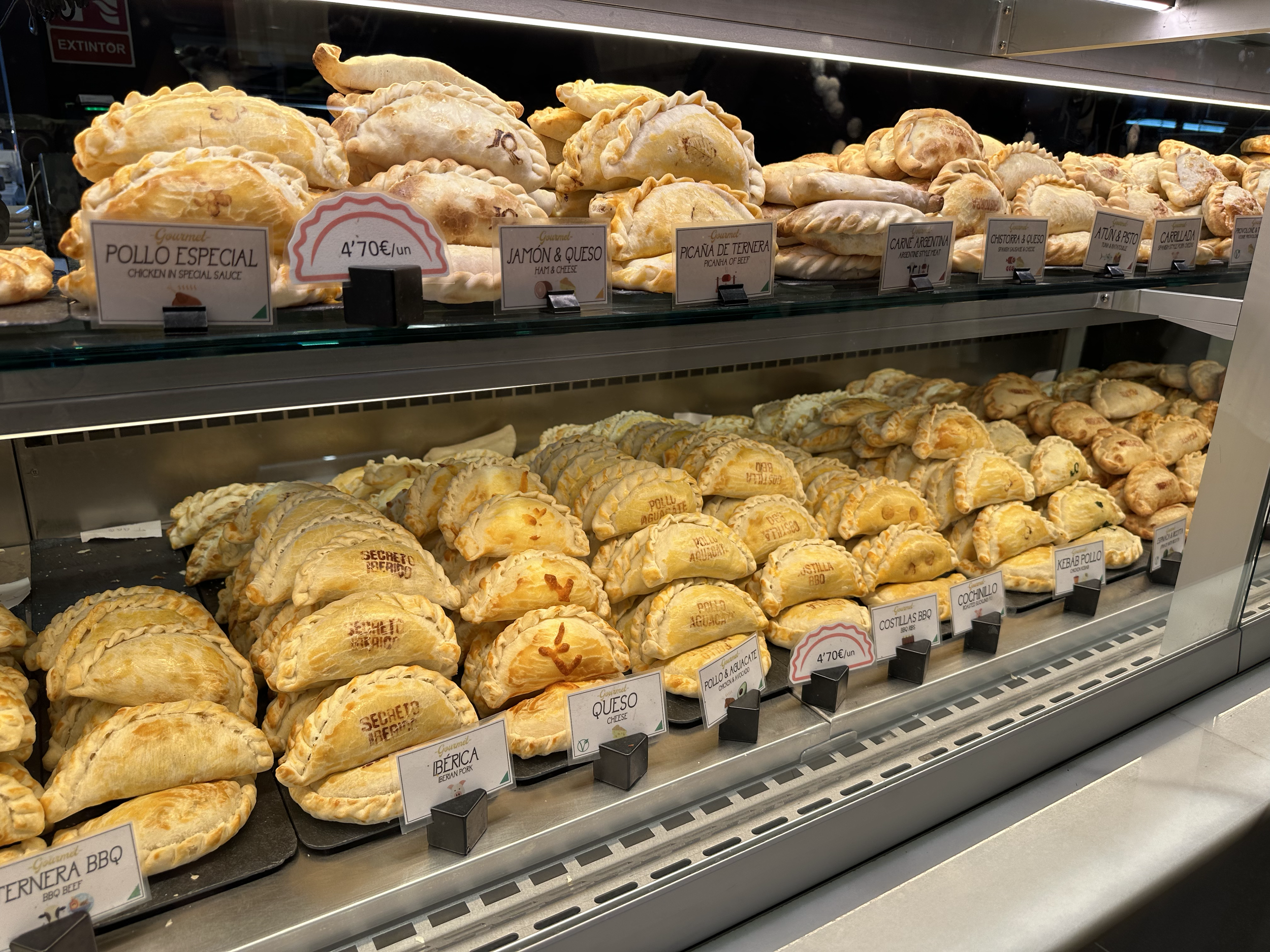
We had a few empanadas, one of our favorite foods in Spain. There are so many different types of fillings, and they seem to all be delicious!
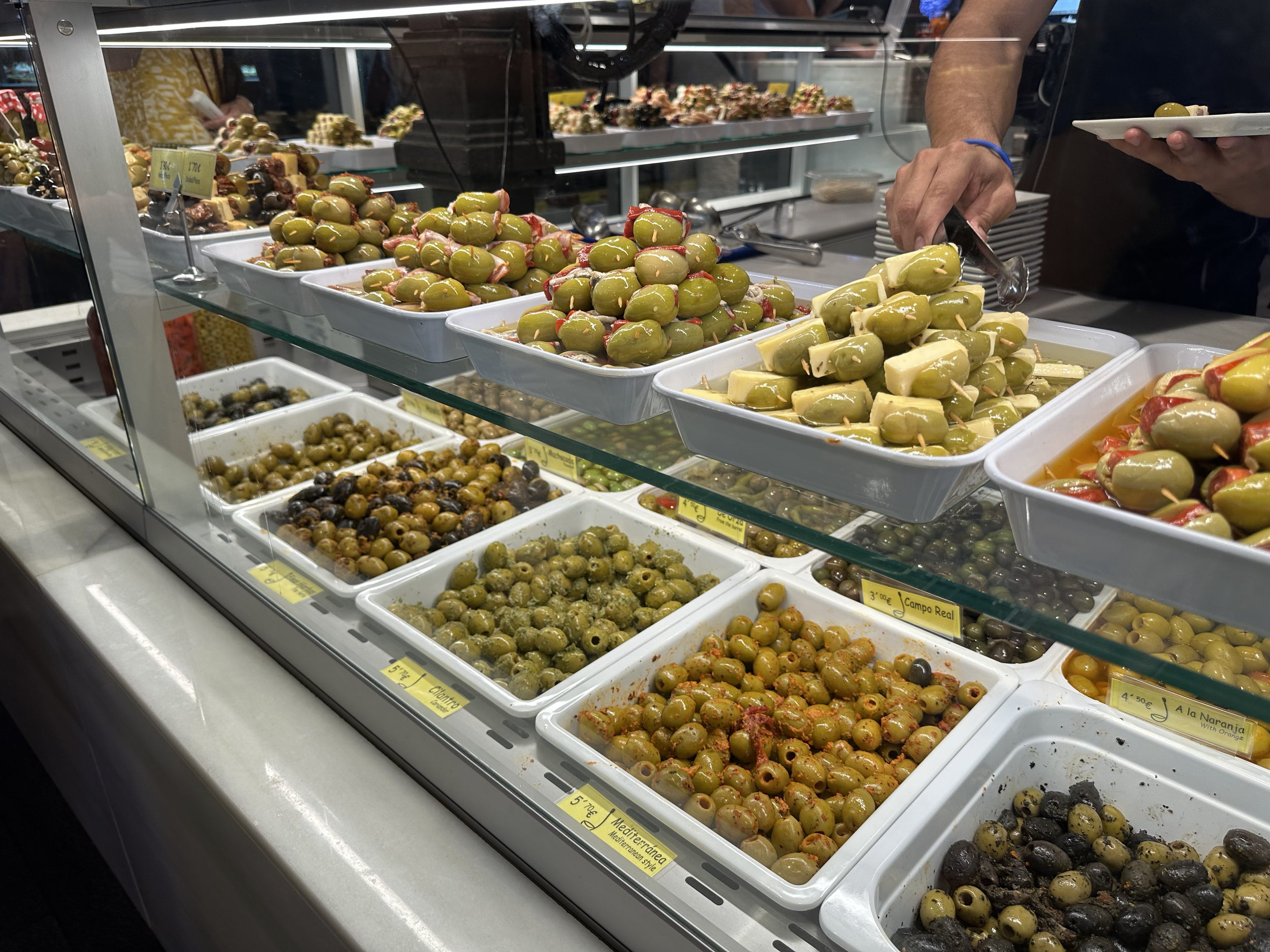
Wow! Look at all the varieties of olives!
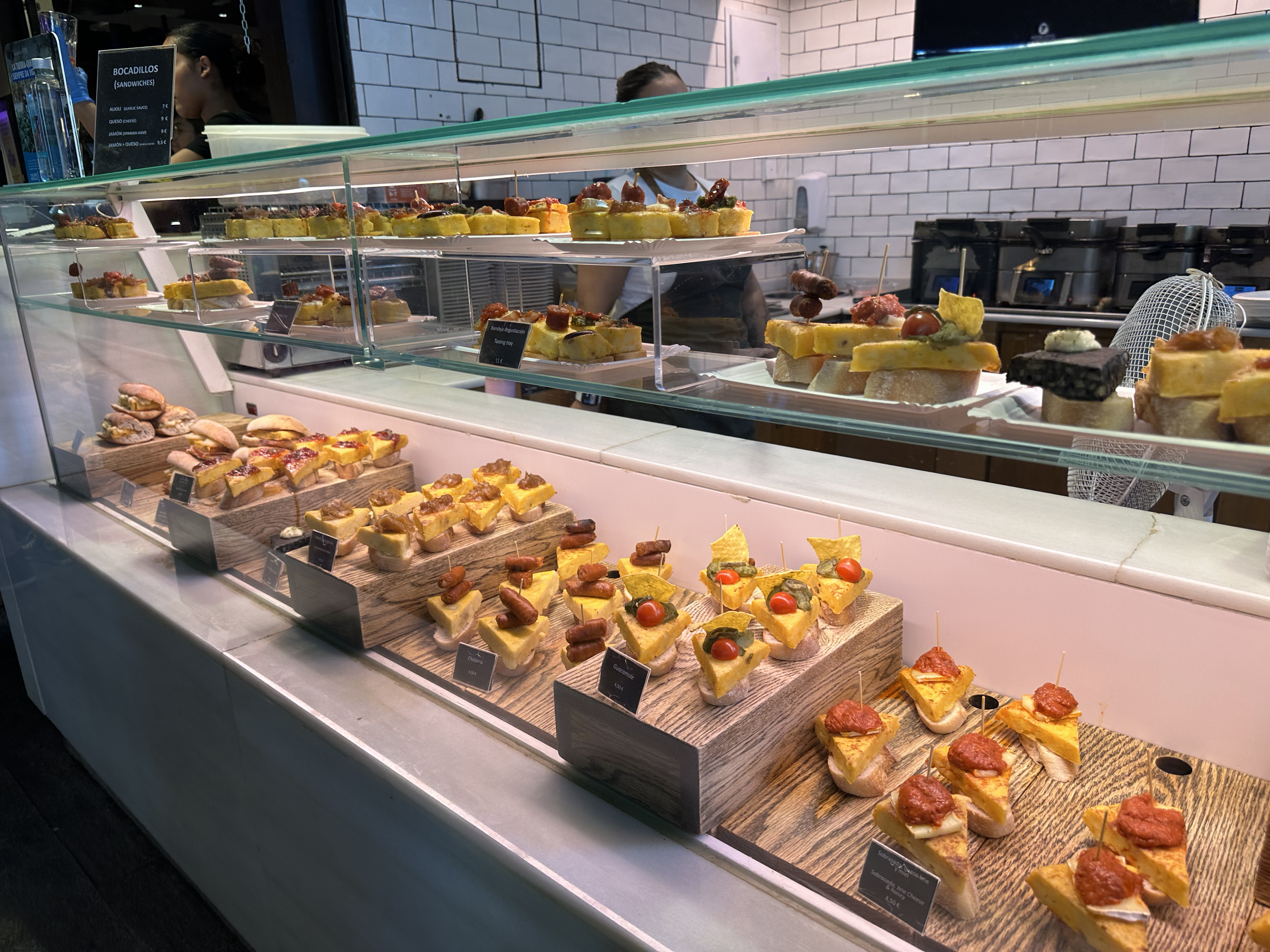
And here are some beautiful tapas creations.
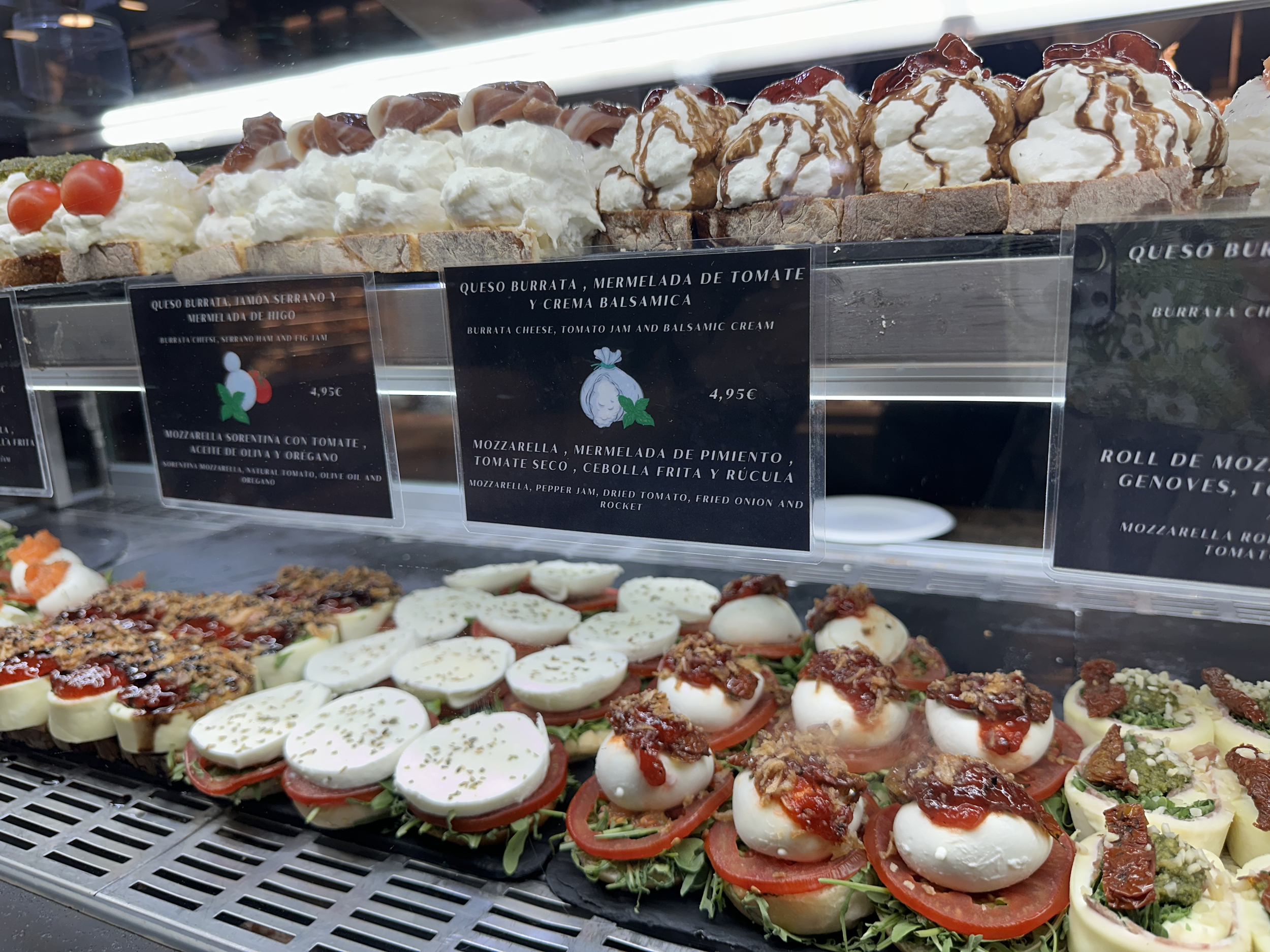
We especially enjoyed this Mozzarella Bar!
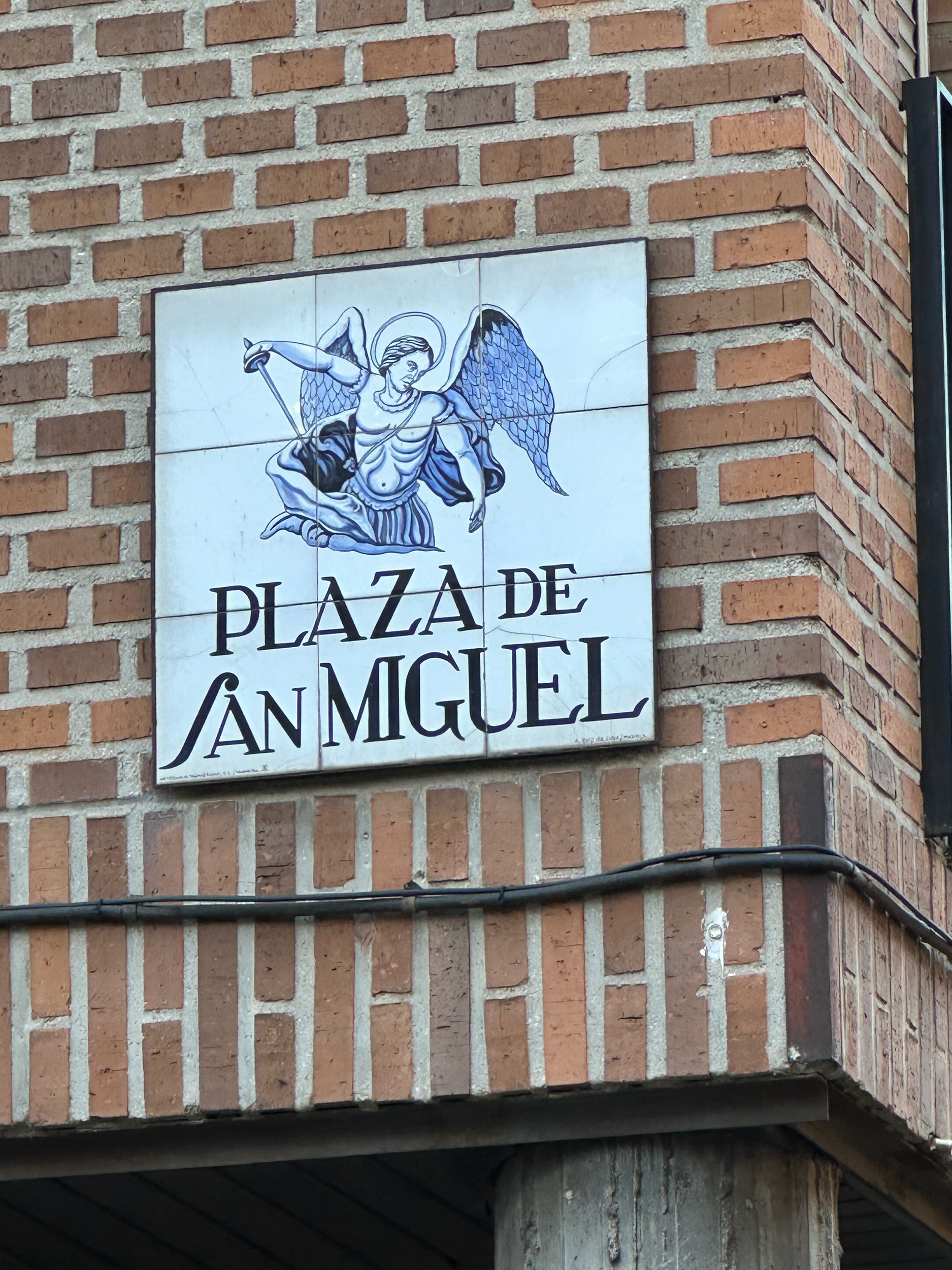
All of the street names were marked with tiles and illustrated with a picture that goes along with the name.
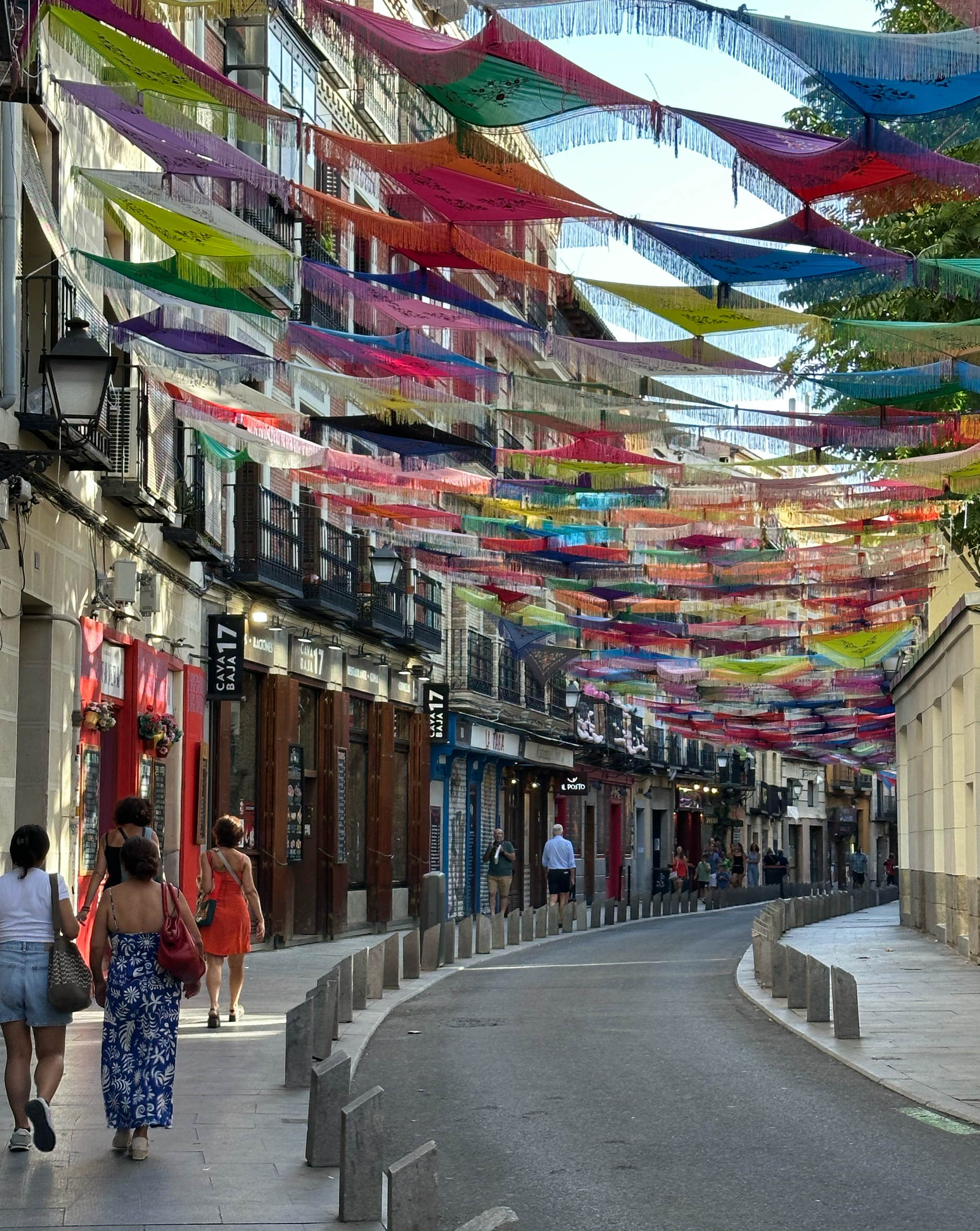
La Latina was a fun neighborhood to explore. It is considered one of Madrid's oldest neighborhoods, with winding streets and a medieval feel, also known for wonderful tapas restaurants and lively night life. We arrived shortly after the Fiesta de la Virgen de la Paloma in August, where people dress up in traditional Madrid attire and dance the "chotis," a traditional dance where the man stays in one place, turning on one heel, while circling the woman around him. (Look it up, it is super fun to watch).
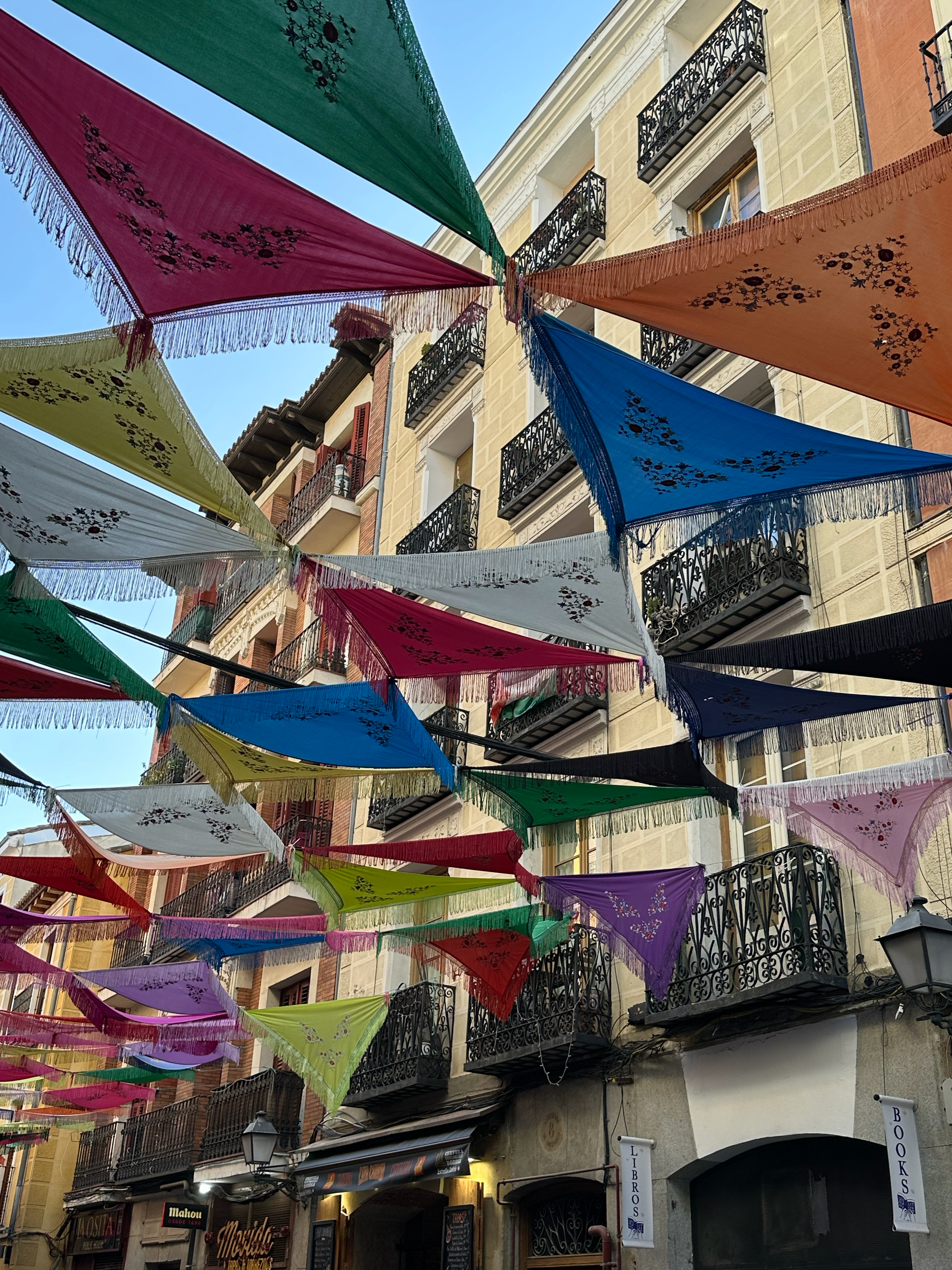
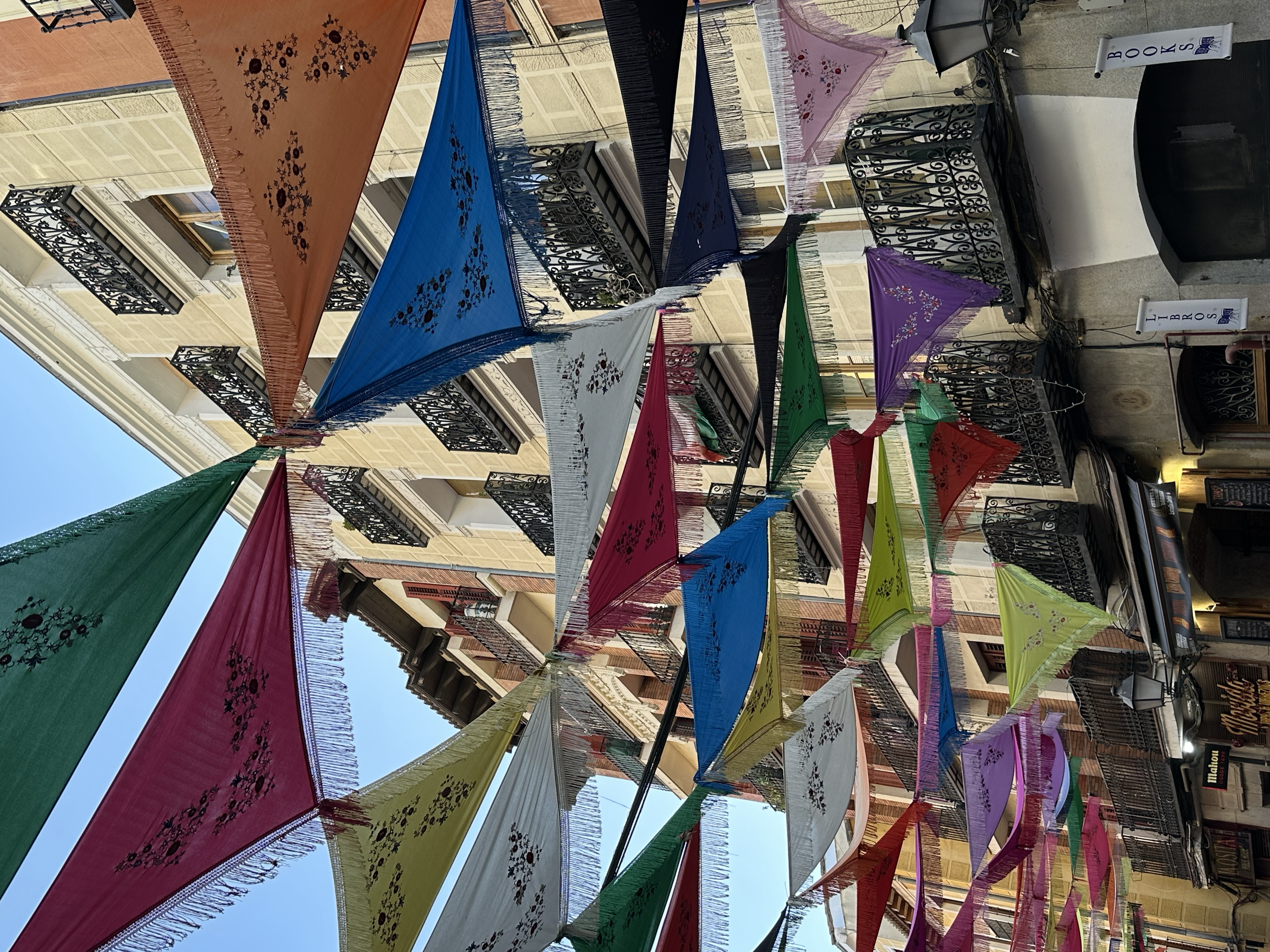
Festival decorations were still hanging above the streets. They are called "Mantones de Manila" (Manila silk shawls) and are a part of the traditional dress. During Spanish colonial times, they were shipped to Spain from the Phillipines.
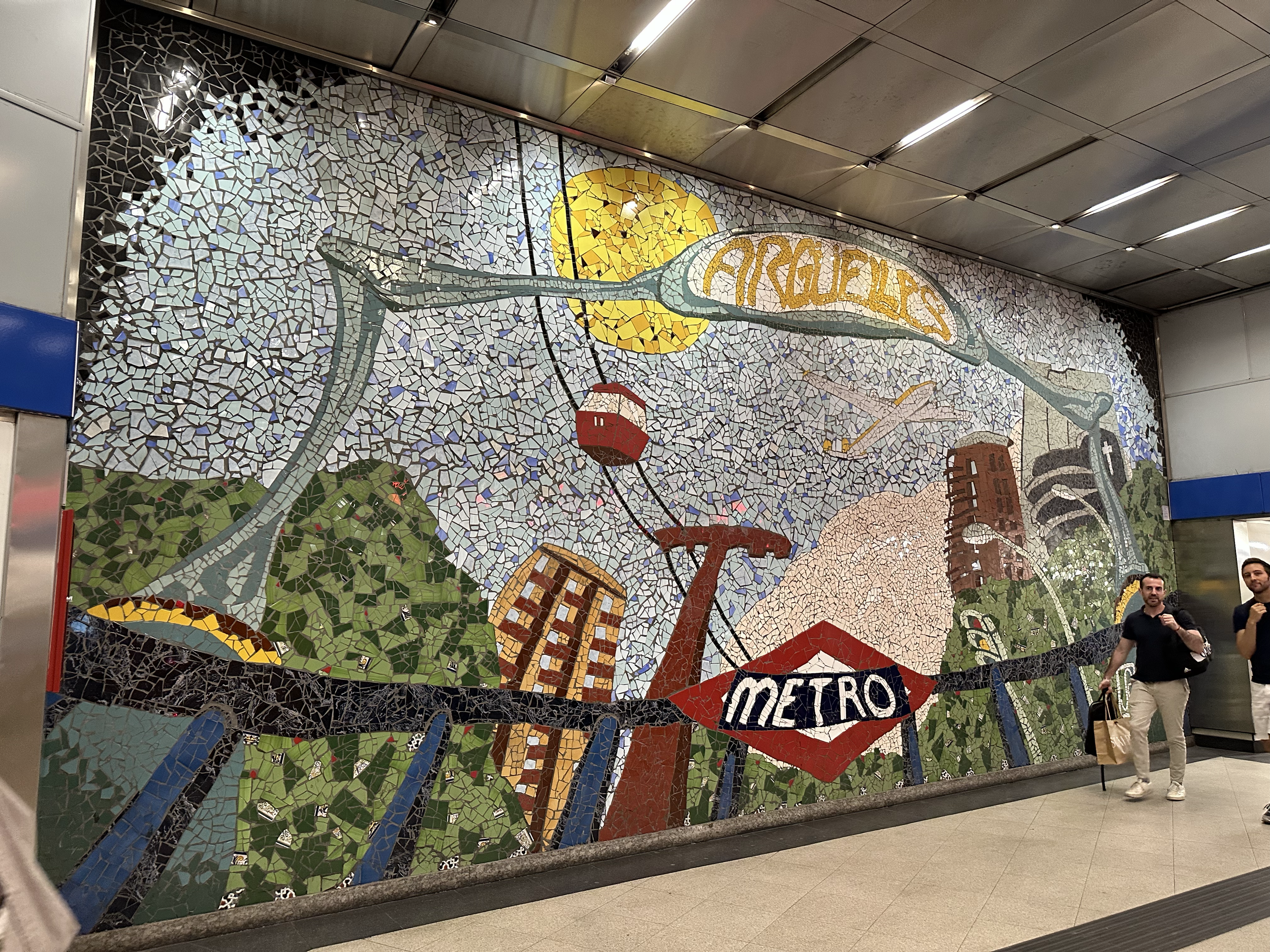
After a day of adventuring, we headed back to our apartment via the Metro. We thought this mural at our stop was so pretty- and made it easy to recognize where we were!
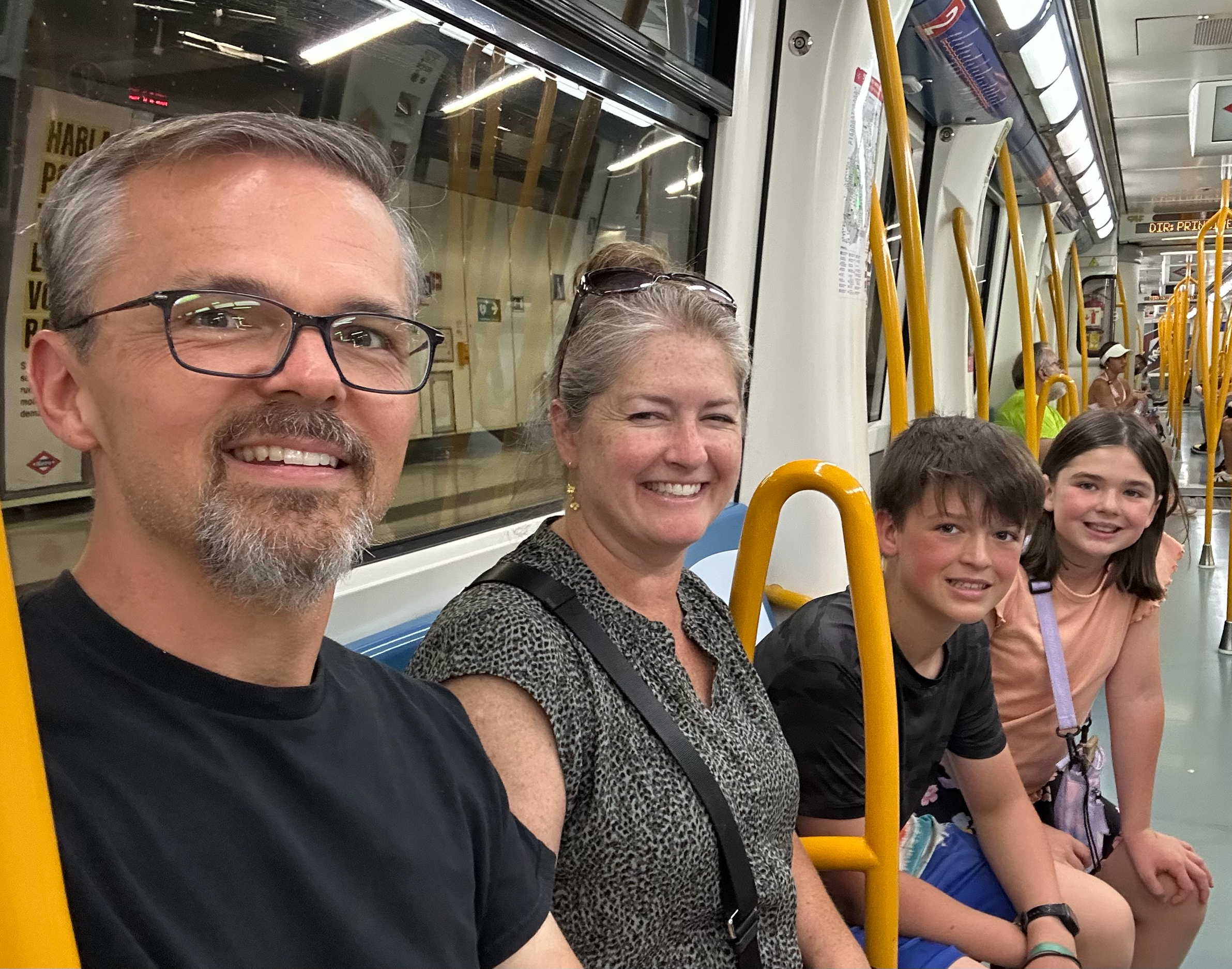
A more relaxed (and mostly empty) Metro ride.
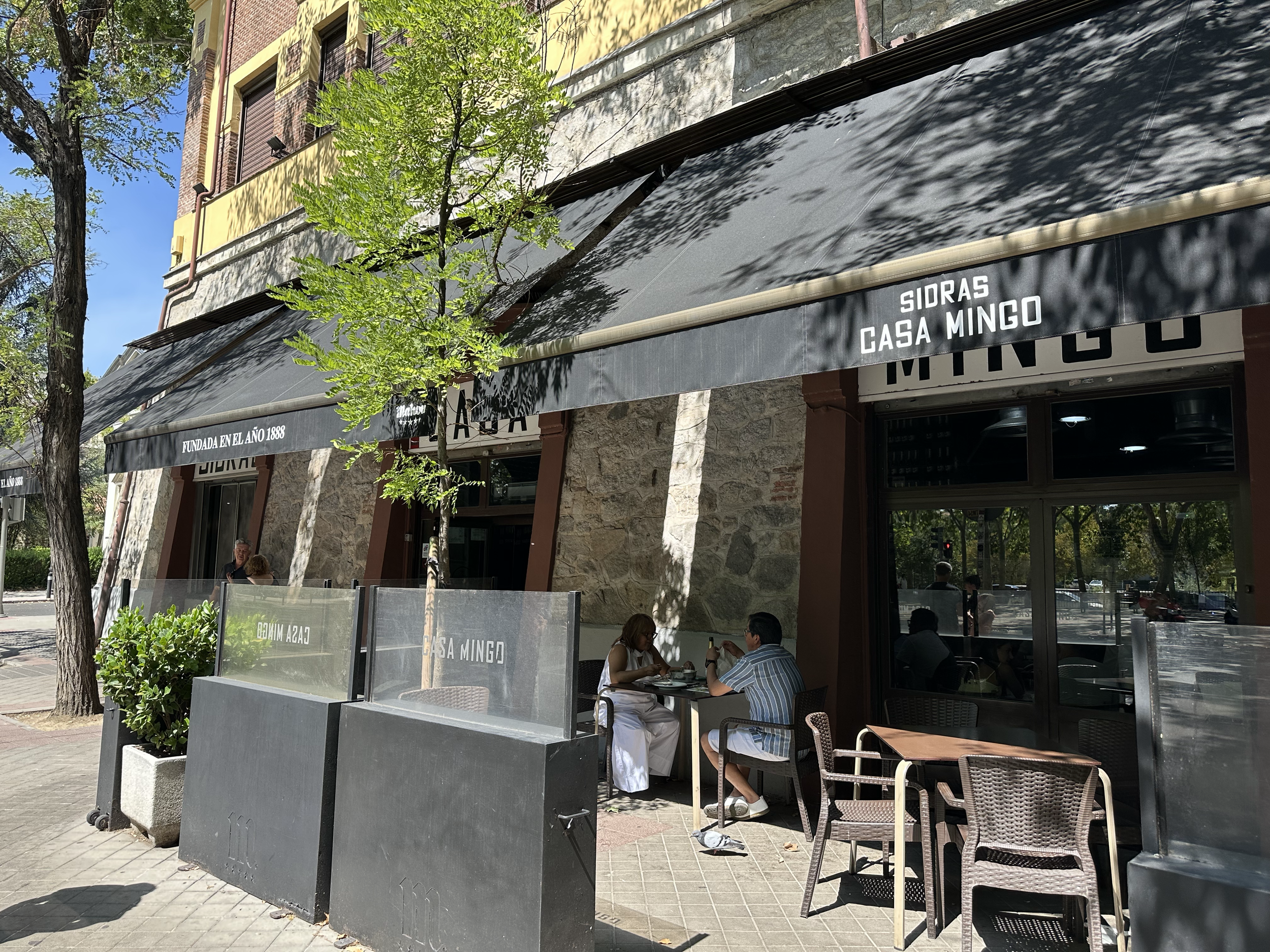
After a great recommendation, we ventured to Casa Mingo for lunch one day.
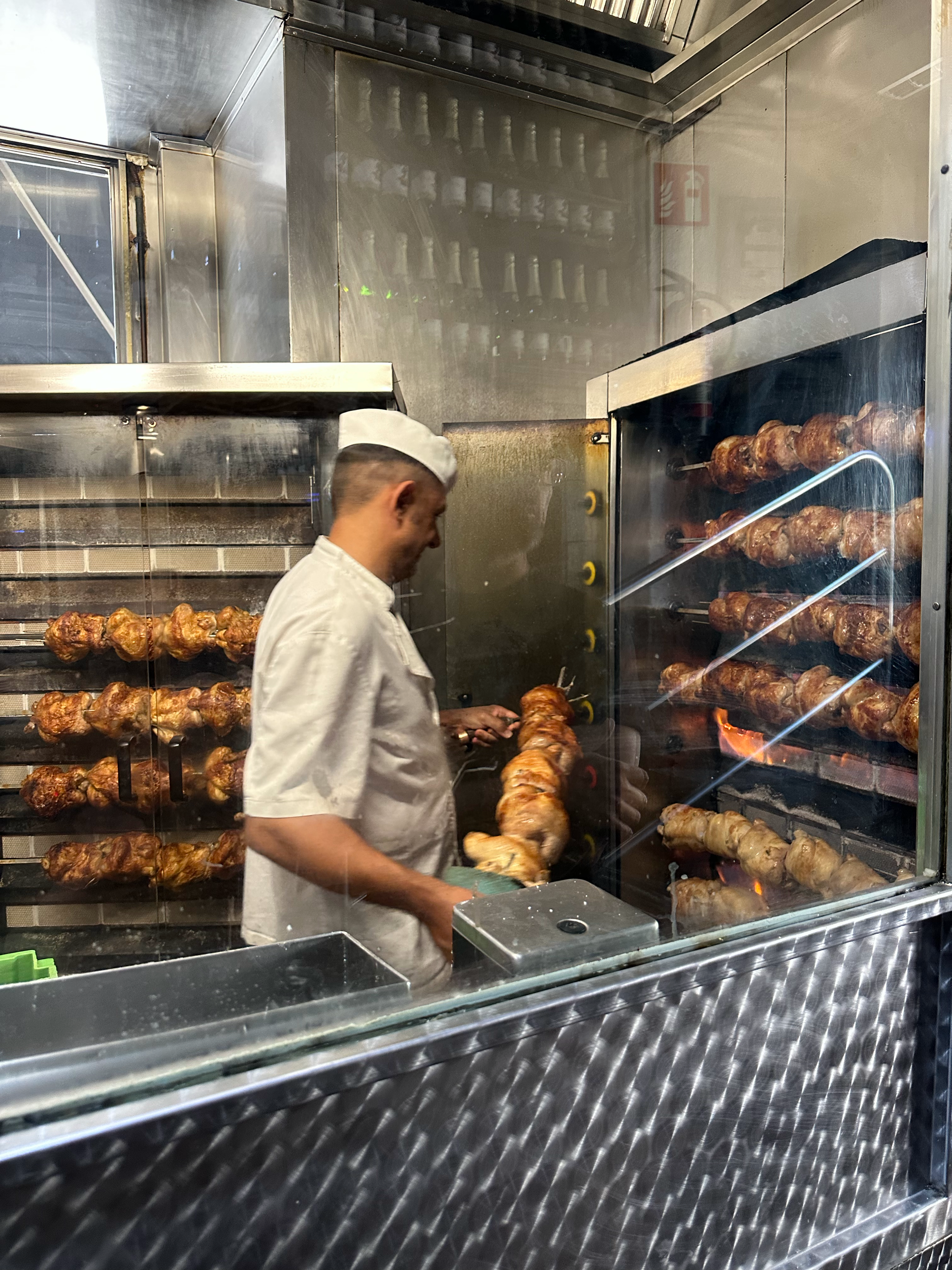
They are known for their traditional roasted chicken. We had a bit of a wait and enjoyed watching the process of turning the chickens on the rotisserie and moving the spits to keep the chicken cooking evenly.
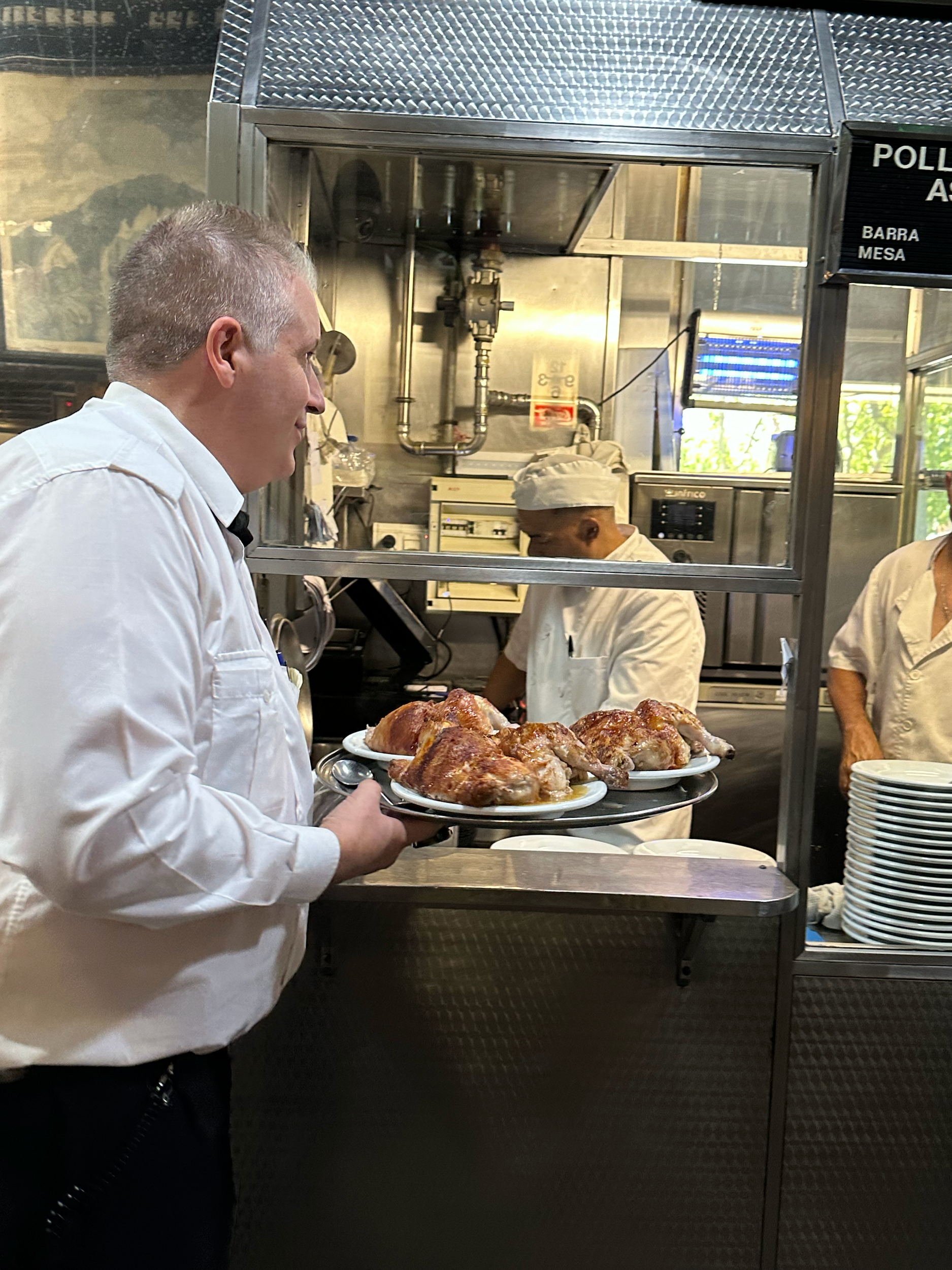
Serving the chicken was full of artistry (and took a great deal of balance!)
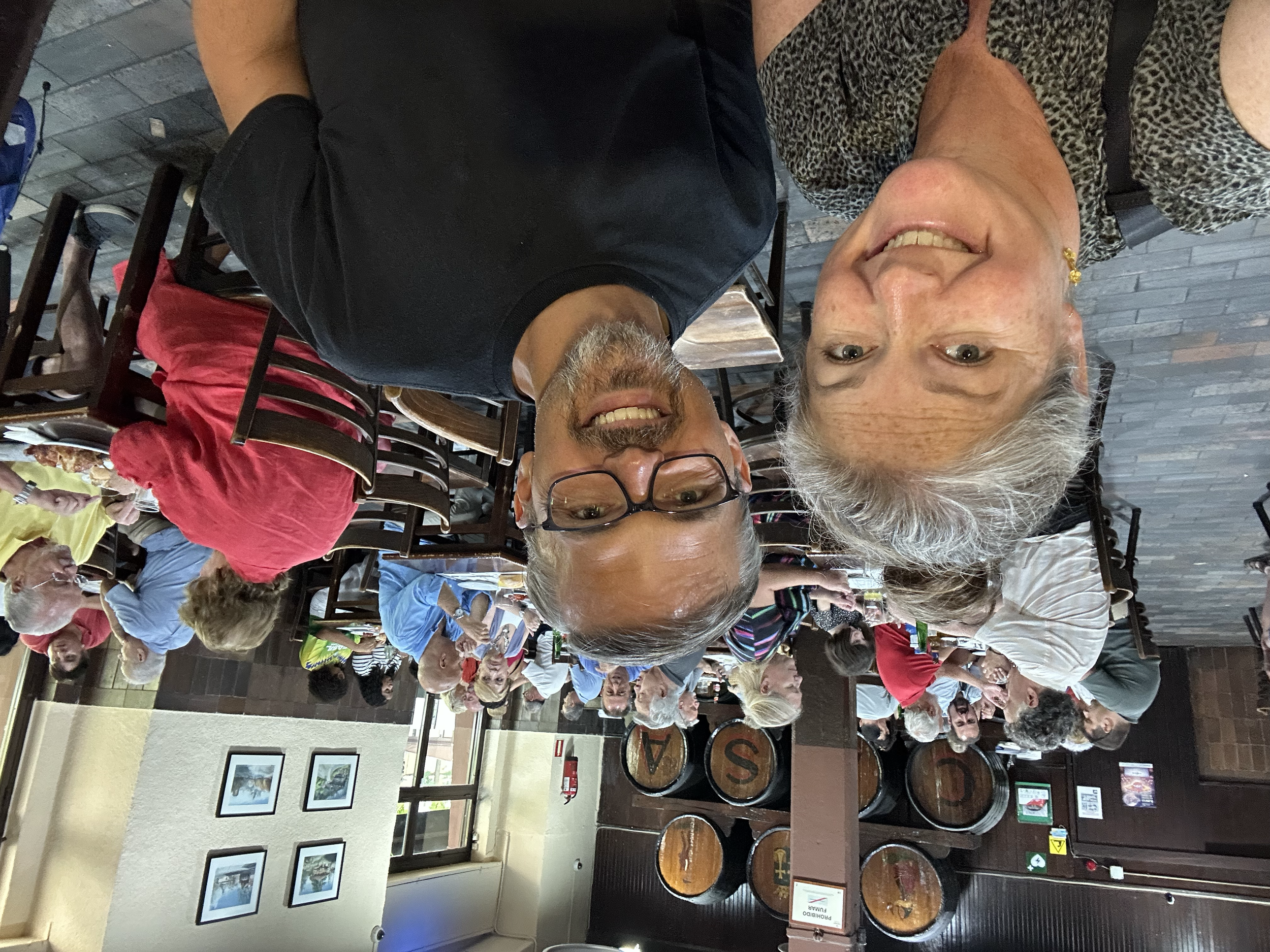
Full house!
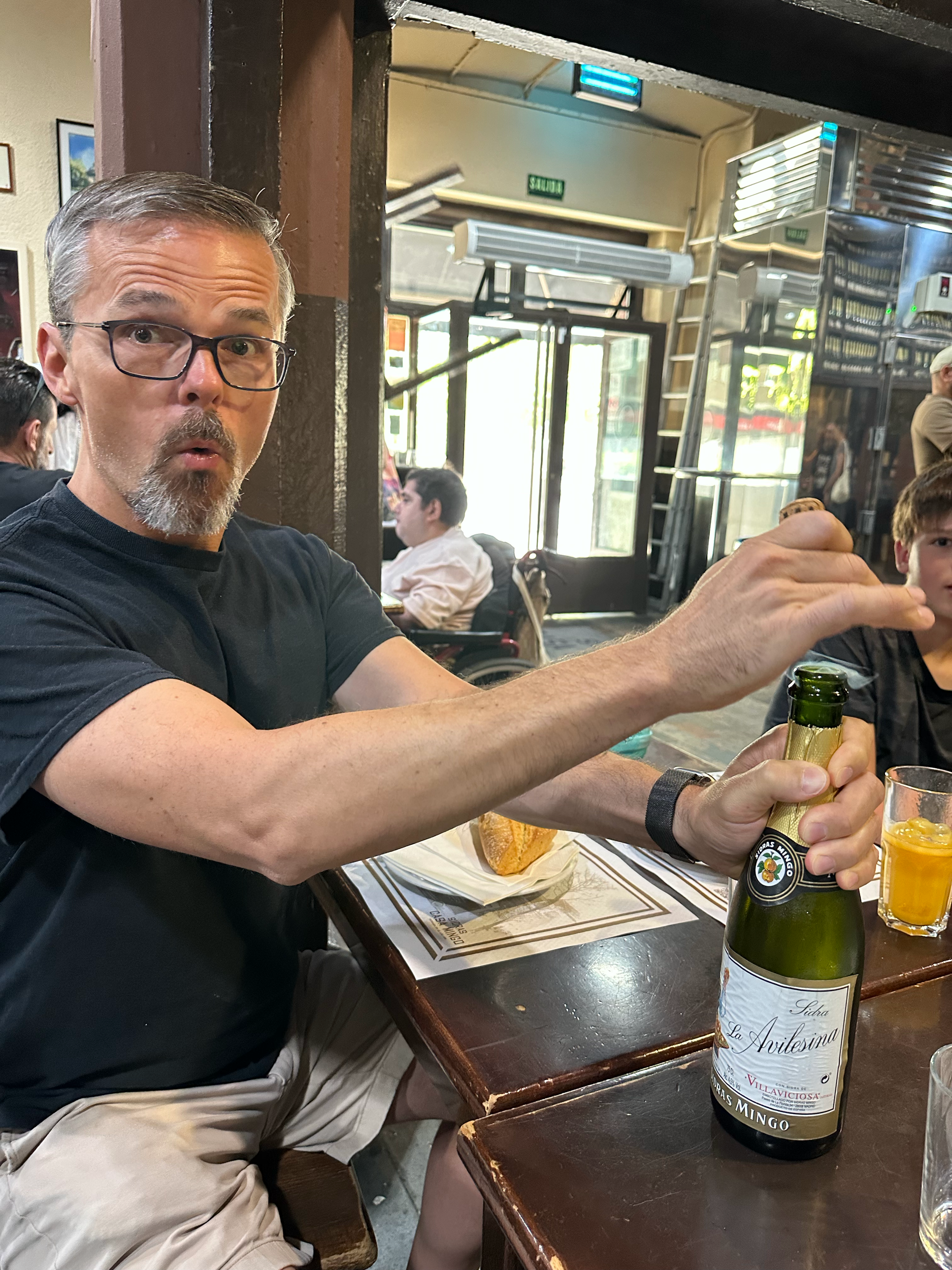
They are also known as a cider house and are famous for their hand-crafted cider since 1888.
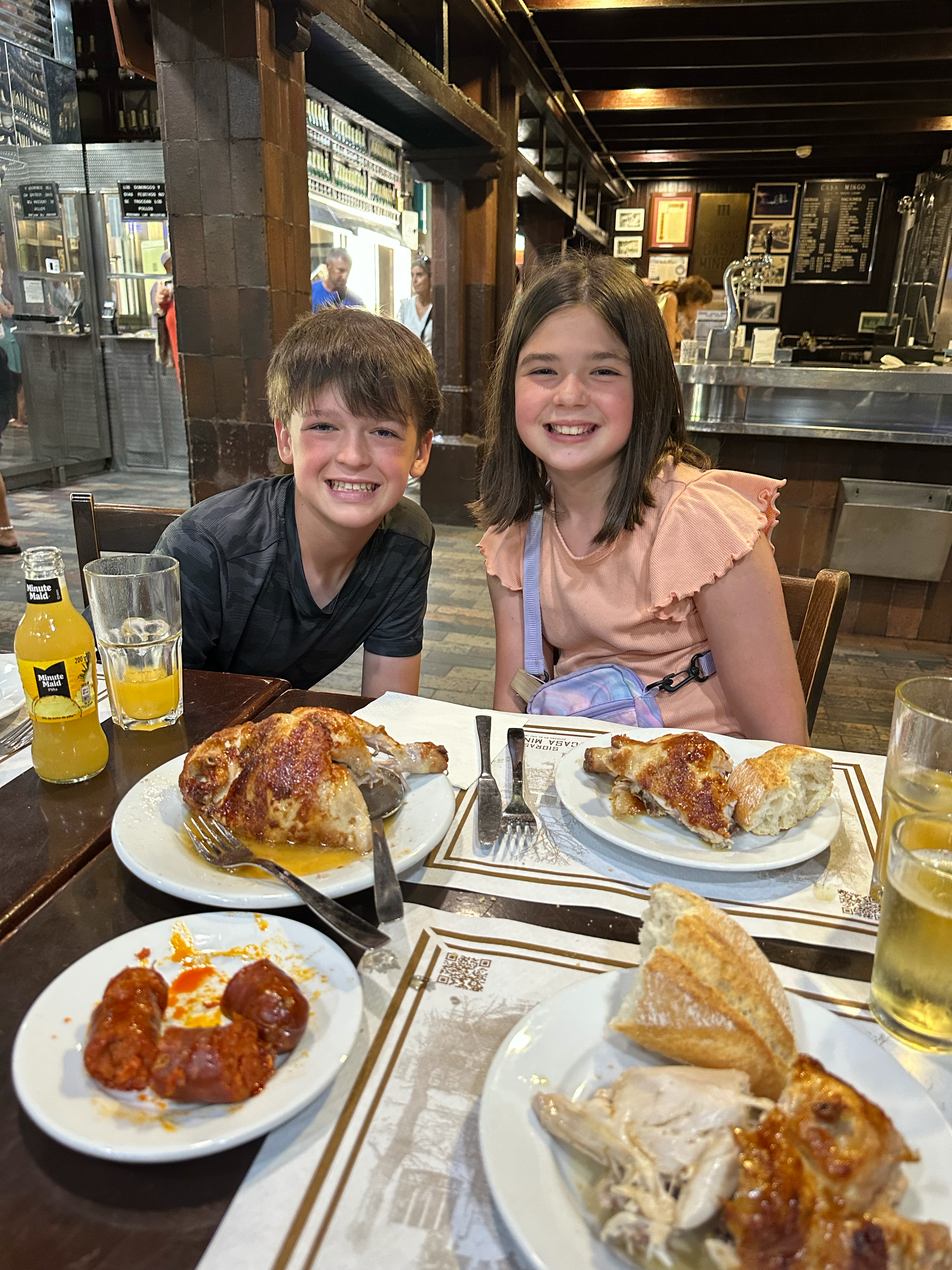
The chicken was absolutely amazing as well as the chorizo in cider. Thanks for the recommendation, Harbeson's!
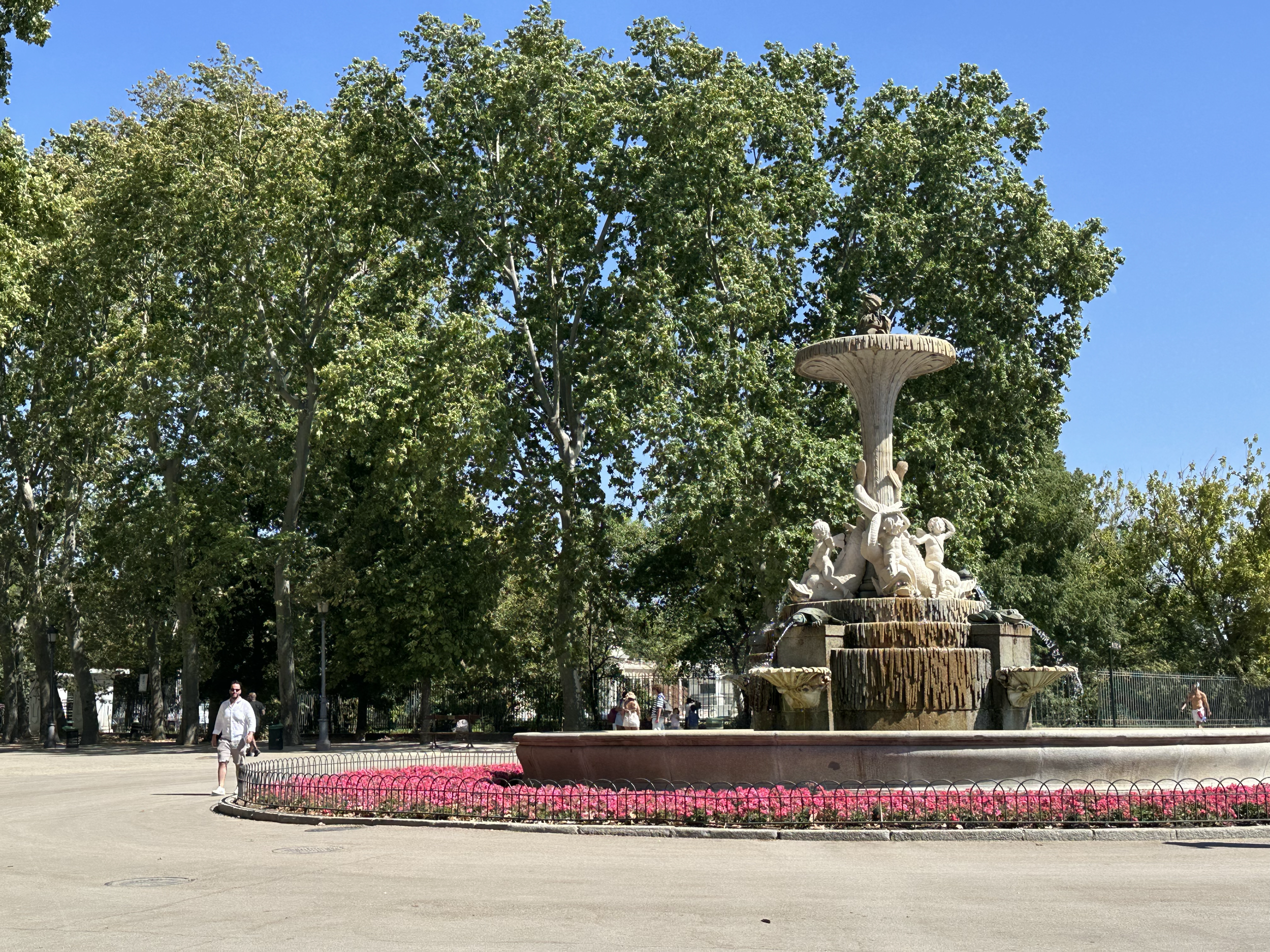
We needed to walk off that delicious lunch, so we headed to El Retiro Park (Parque de El Retiro), a 350-acre park towards the outside of the old city. The park was originally designed with tree-lined avenues in the 1500s.
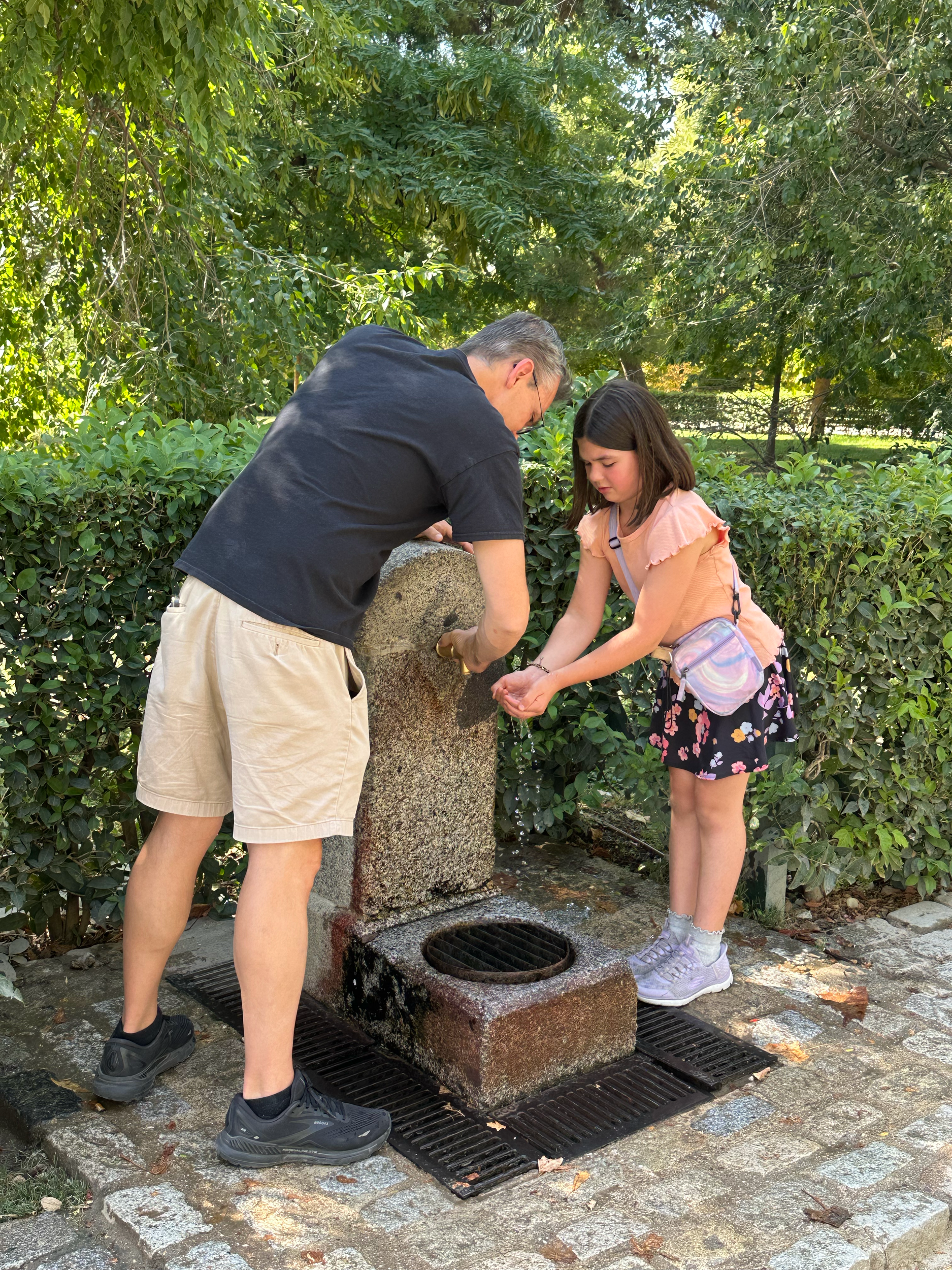
Public fountains like this are found throughout the city (actually, we've seen them throughout Spain). They have drinkable water, although it's easier if you have a bottle to fill!
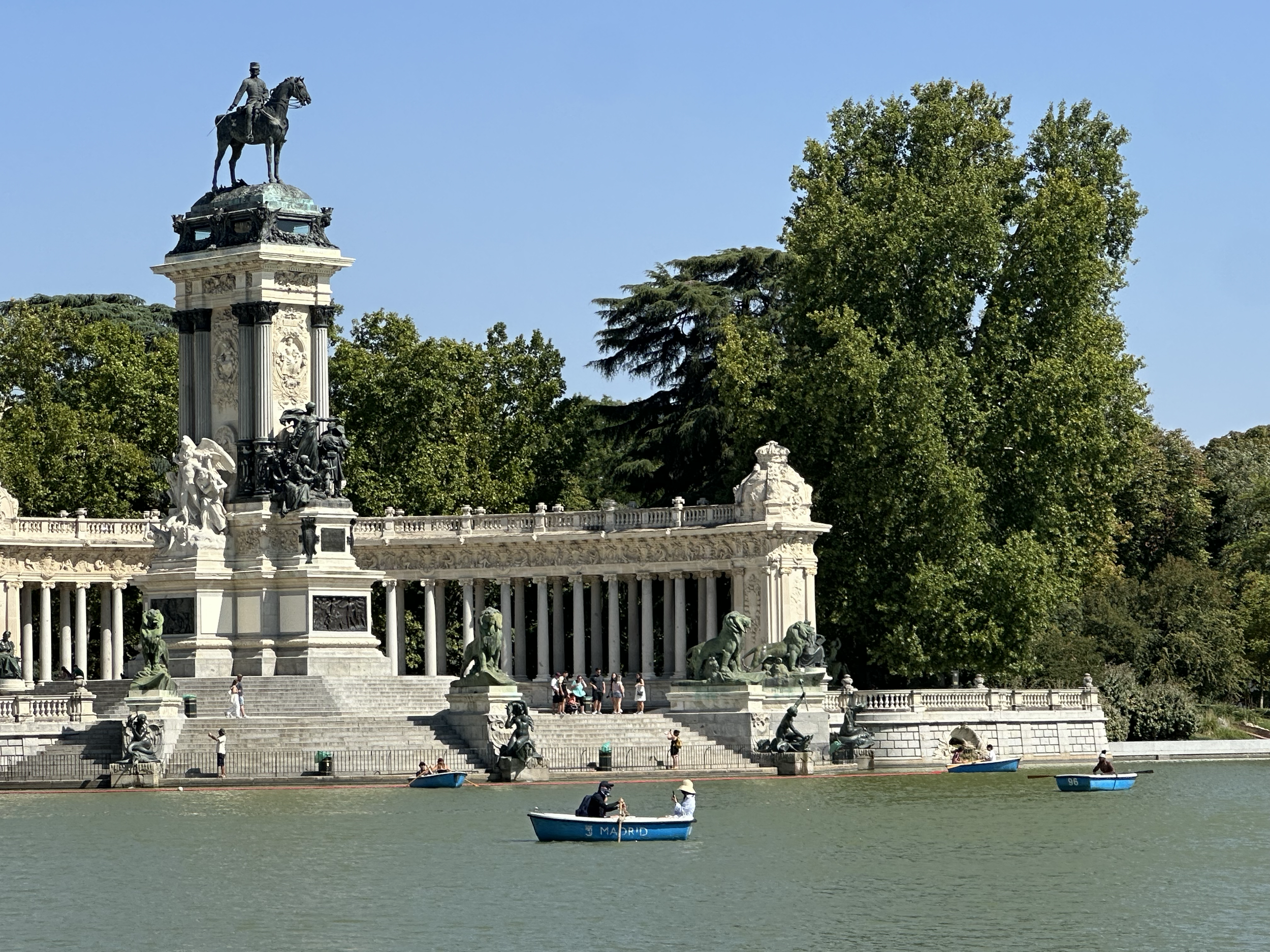
The Monument to Alfonso XII of Spain was built in the 1920s next to "The Great Pond." We were tempted to go out on a row boat; but honestly, it was so hot, sitting right in the sun did not sound like fun.
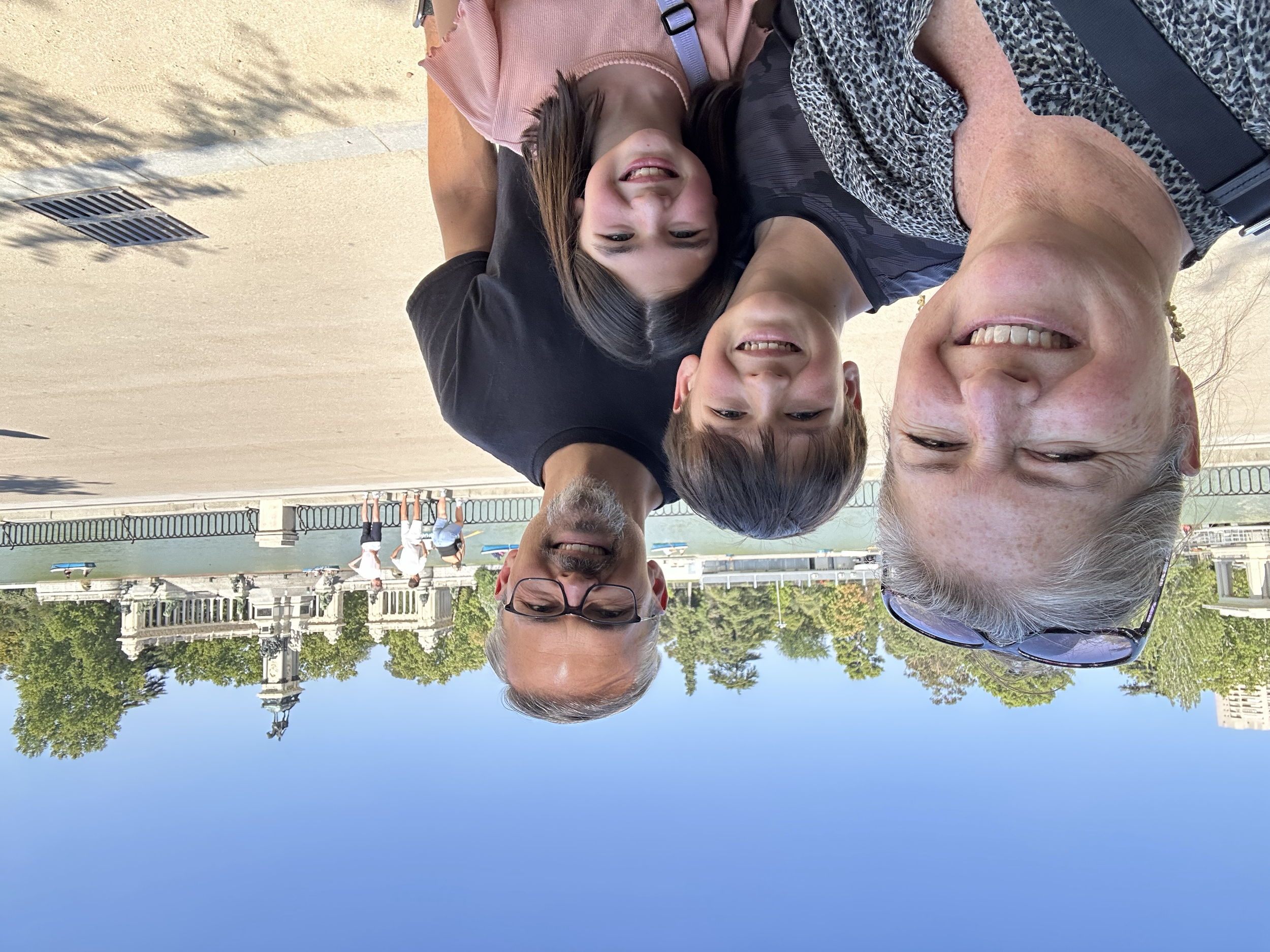
We stayed under the tree-lined outskirts of the pond and walked down the paths in the shade.
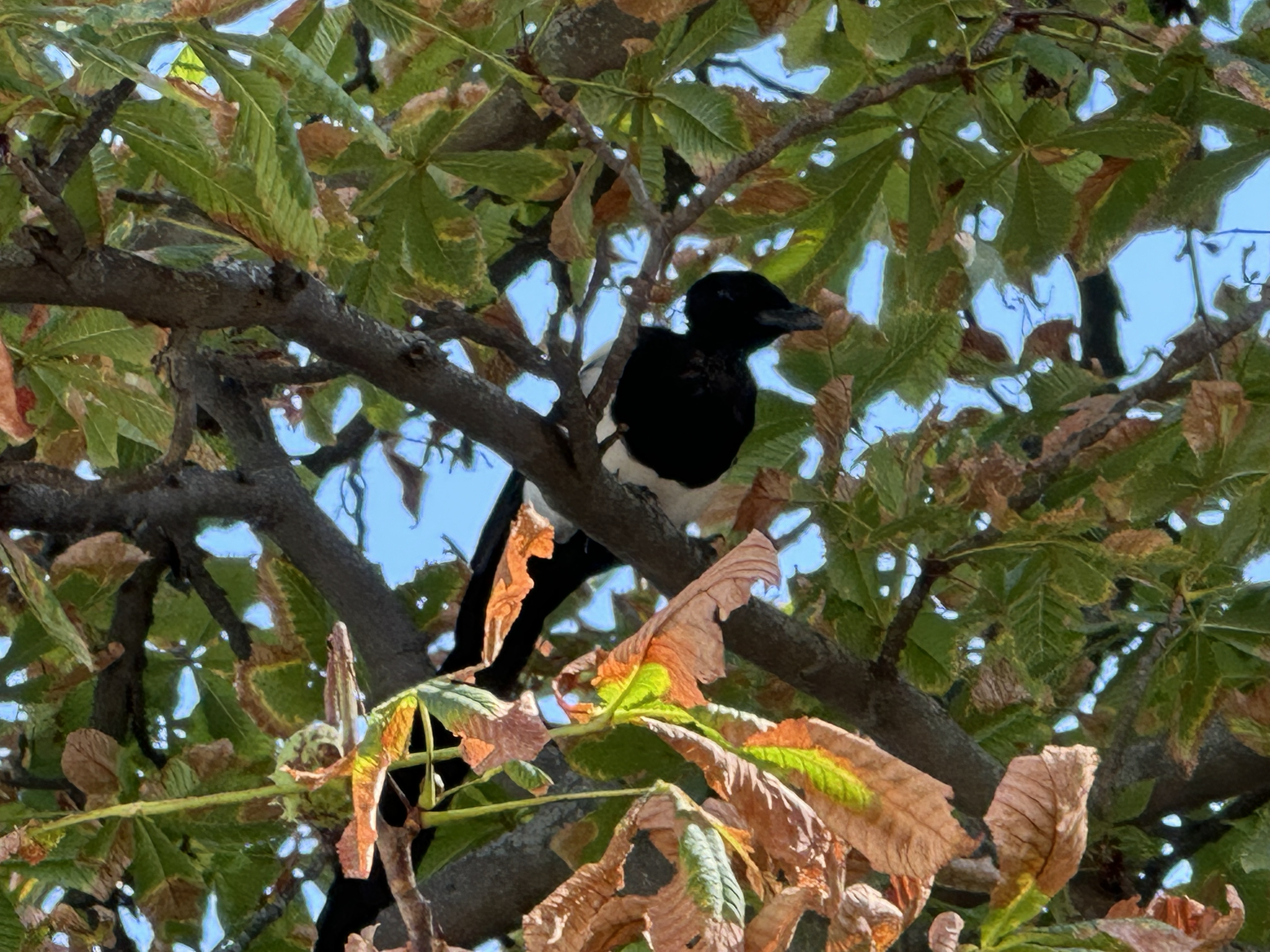
Have I shown you a picture of a Magpie before? We've seen these birds all around Europe. They are very distinct with the black head and white mid-body.
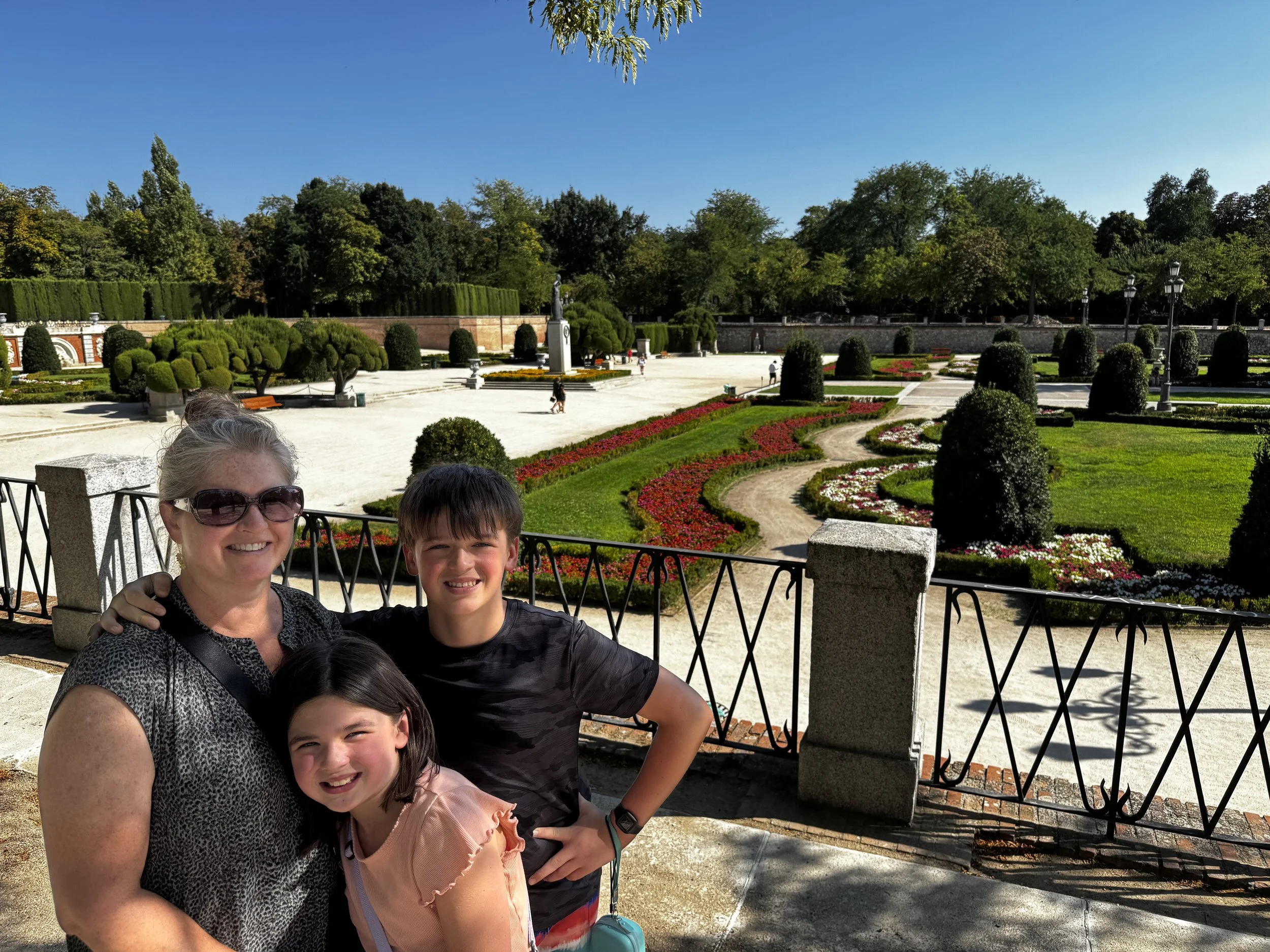
The park is filled with all sorts of different gardens. Here, a very inticately designed pattern with flowers and shrubbery.
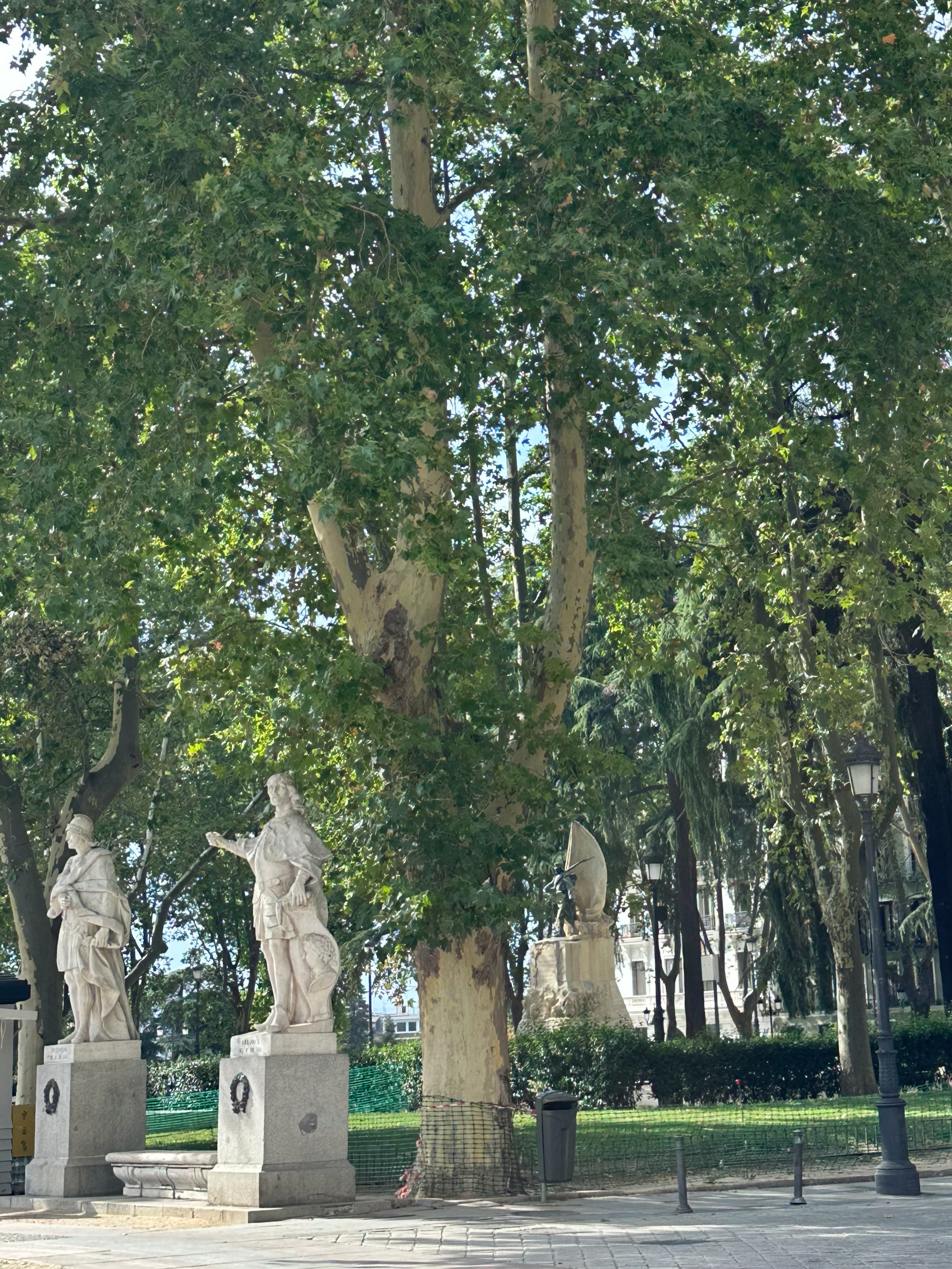
Down another path, we found the Paseo de las Estatuas (Walkway of Statues).
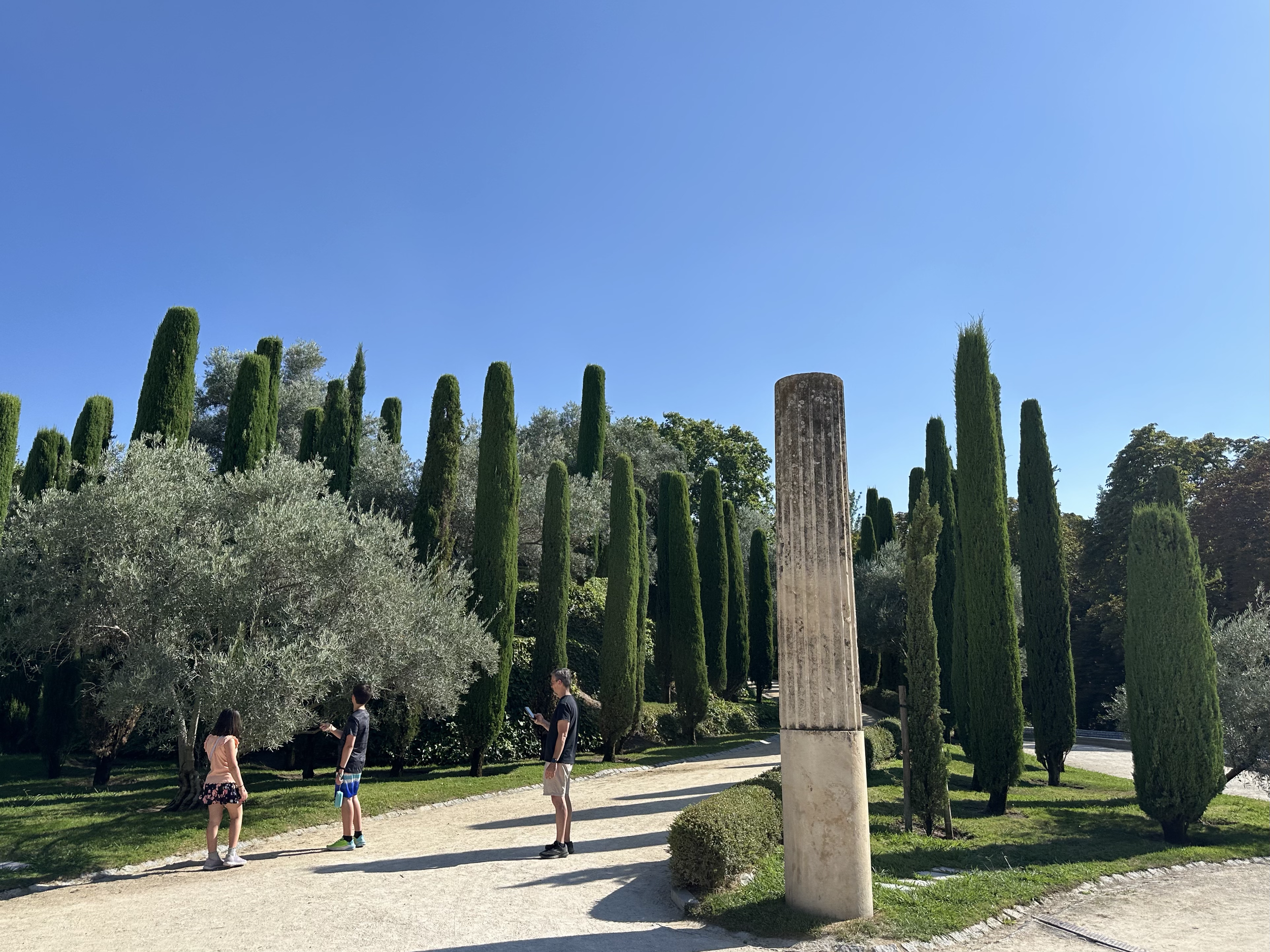
Another part of the park that we enjoyed was the Bosque de Recuerdo (Forest of Remembrance) dedicated to the victims of the Madrid train bombings on March 11, 2004. It contains 192 olive trees and cypress trees- one for each person who died.
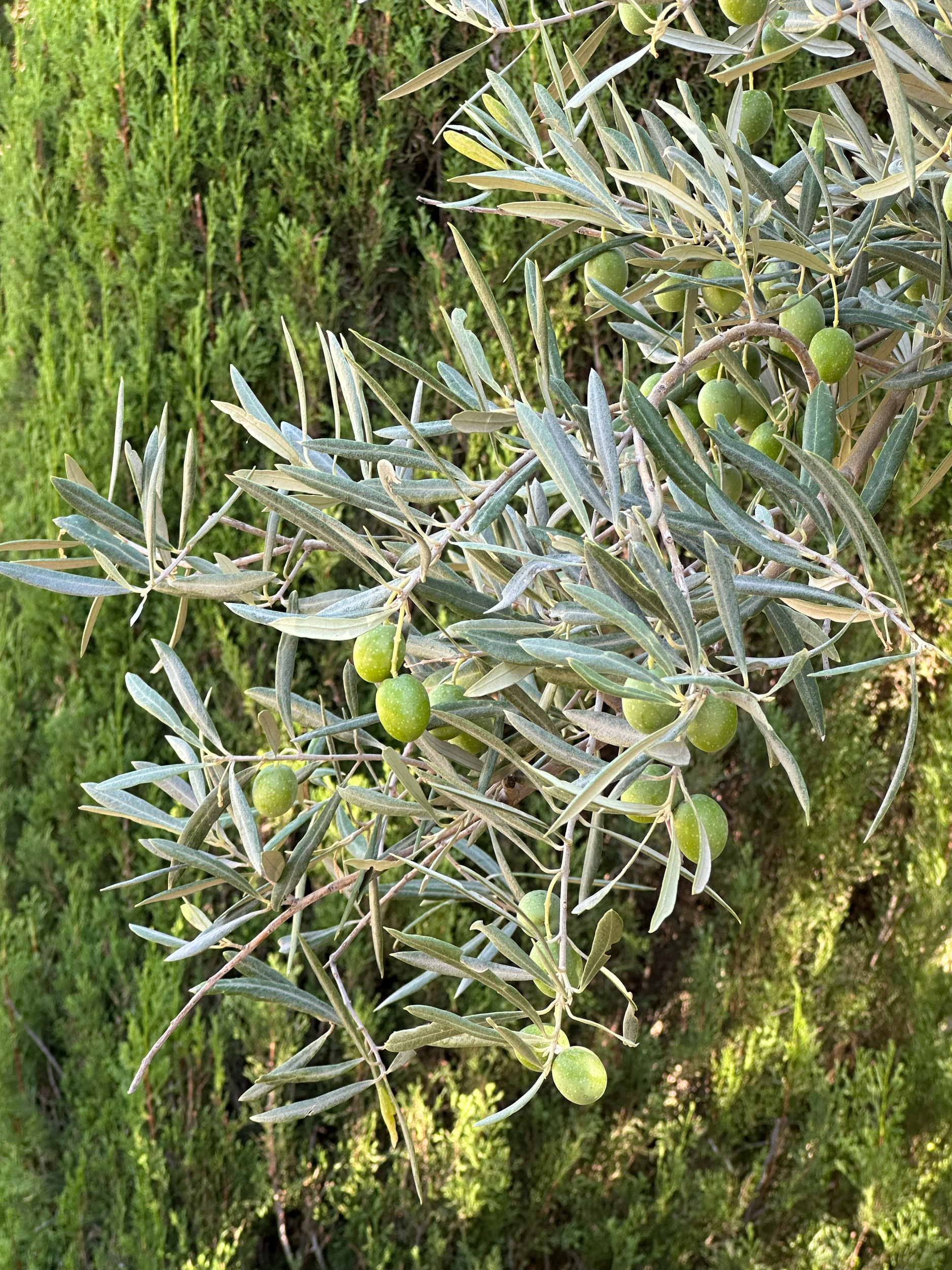
Beautiful olives contrast against the cypress.
Loving this guy who is growing so tall!
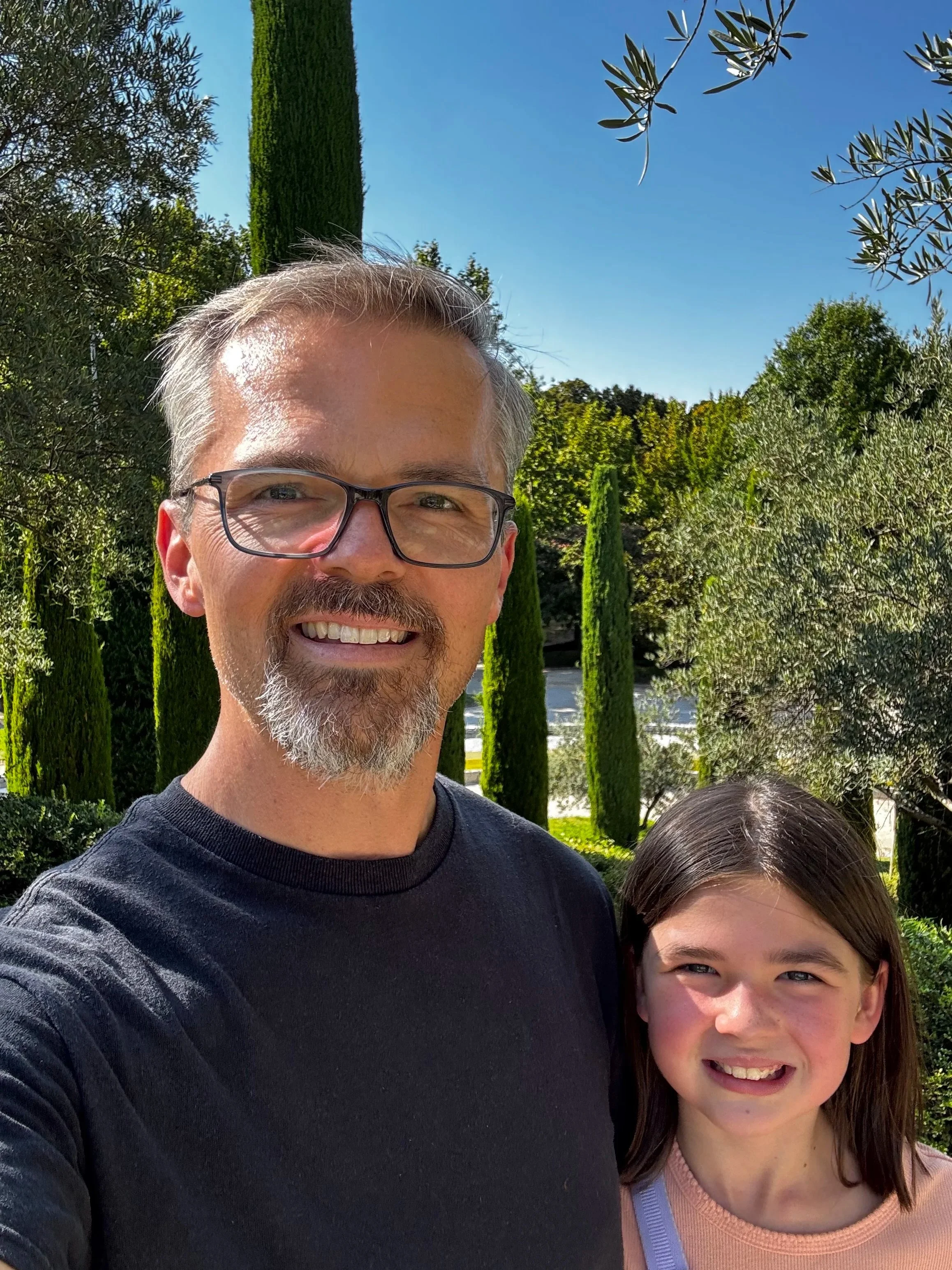
And she has our hearts with all her sweetness.
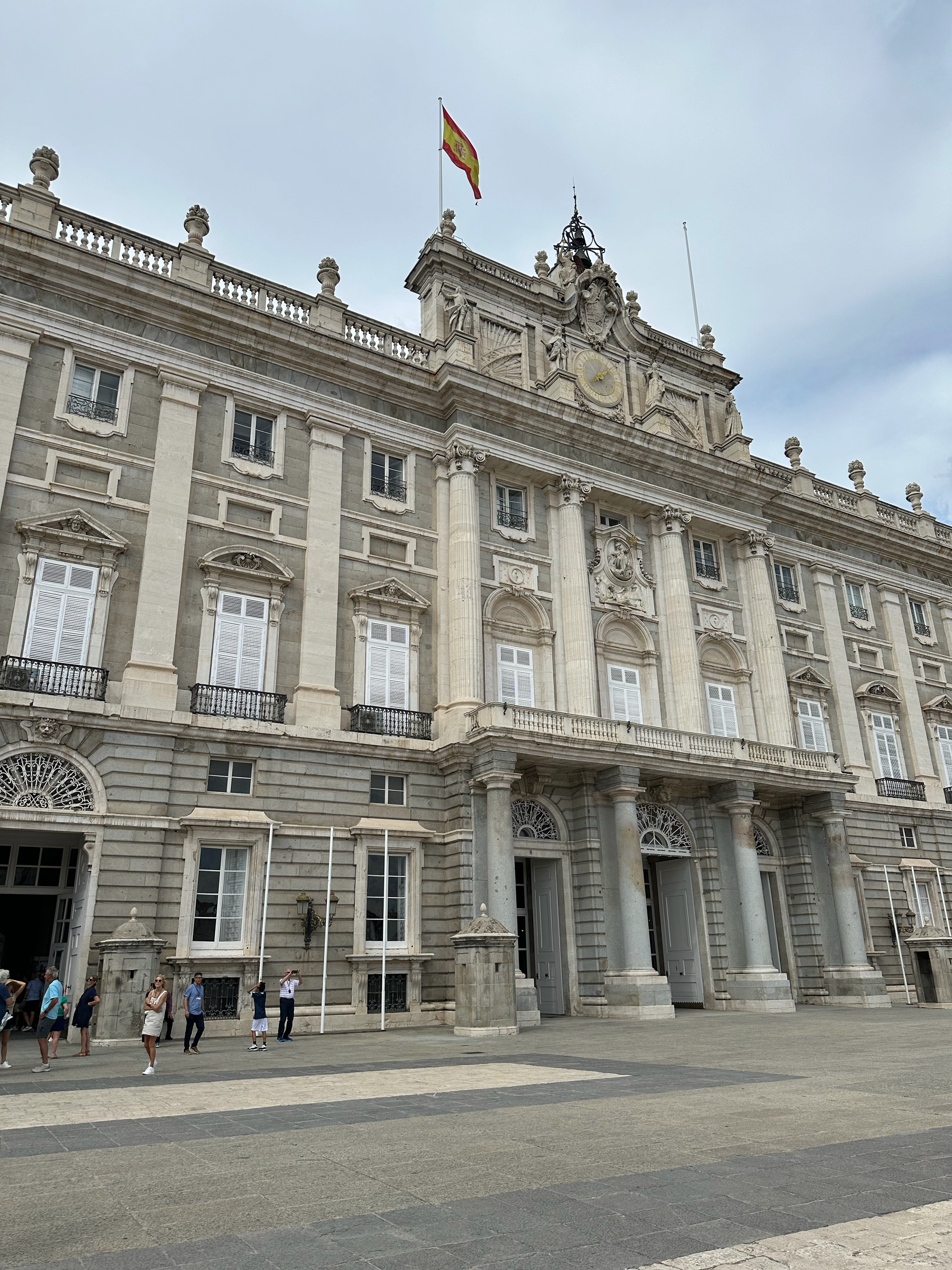
While Europe is filled with castles and cathedrals and palaces, we decided this was one we did not want to miss. The Palacio Real de Madrid (The Royal Palace of Madrid) is the largest royal palace of Europe and is the official residence of the Spanish royal family. Although it has seen many additions and changes over time, it was originally built in the late 9th century.
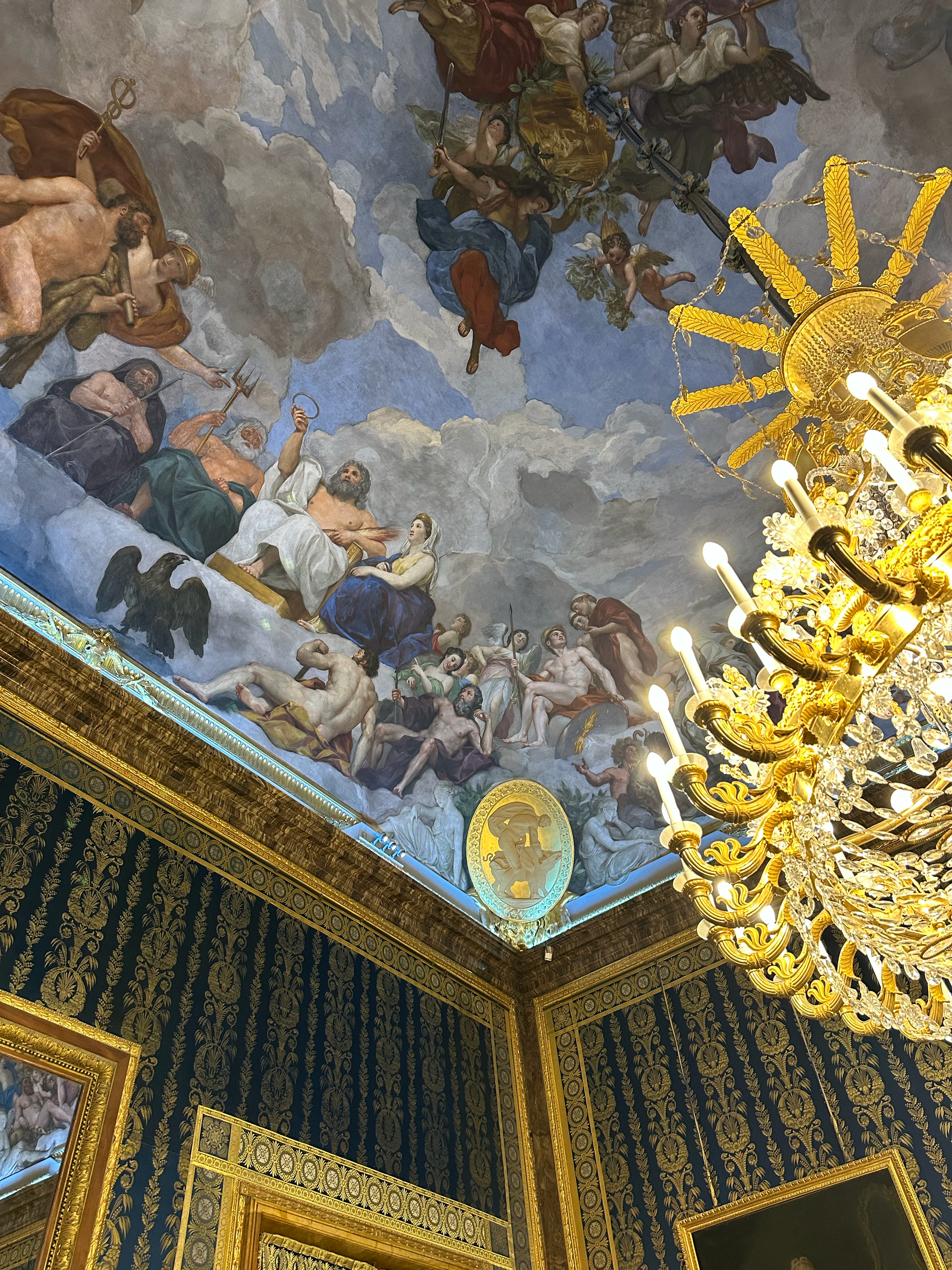
This palace was full of chandeliers and vividly painted ceilings. While awe-inspiring, I couldn't tell you the details of this room.
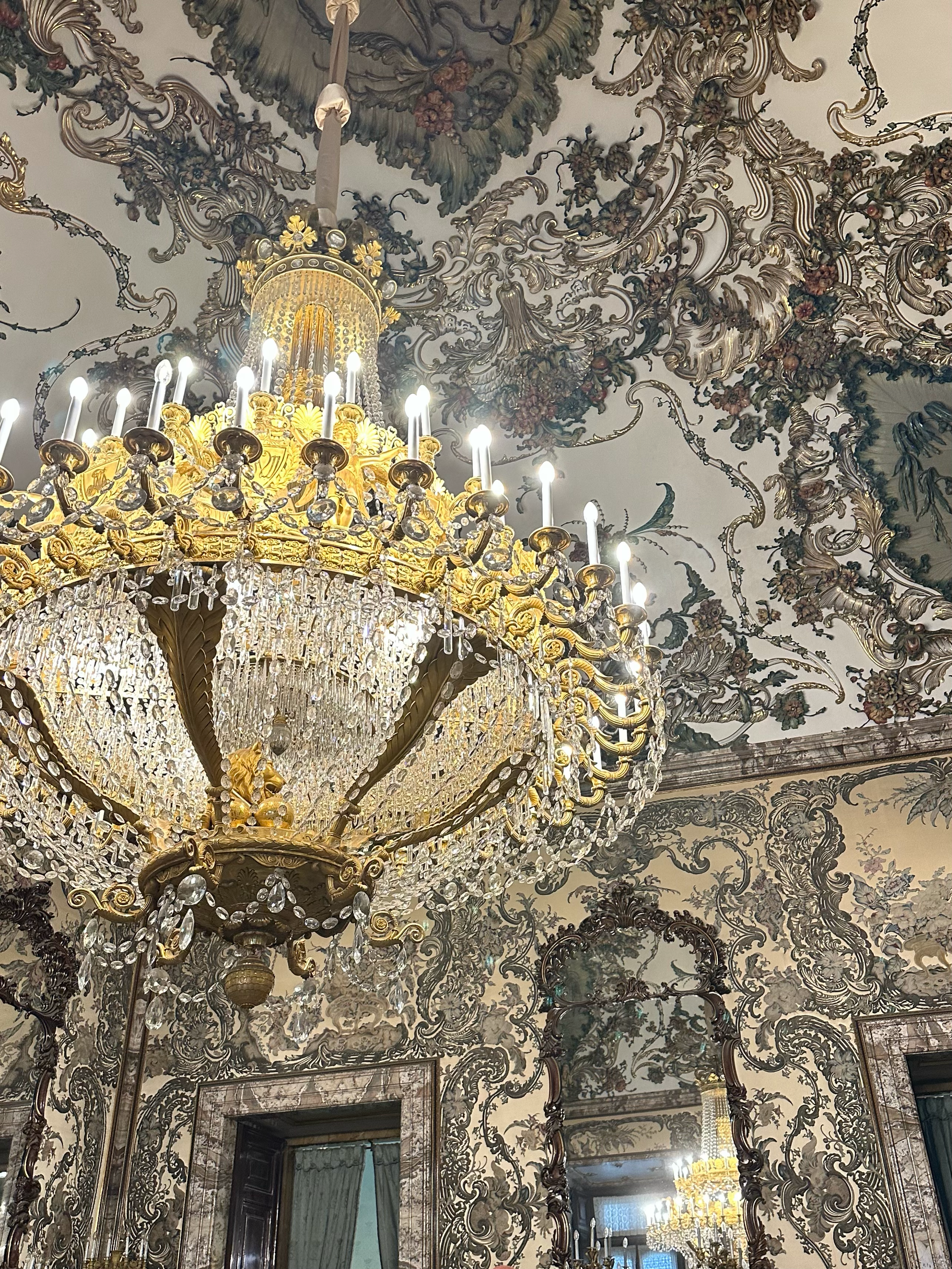
Another style chandelier and ceiling.
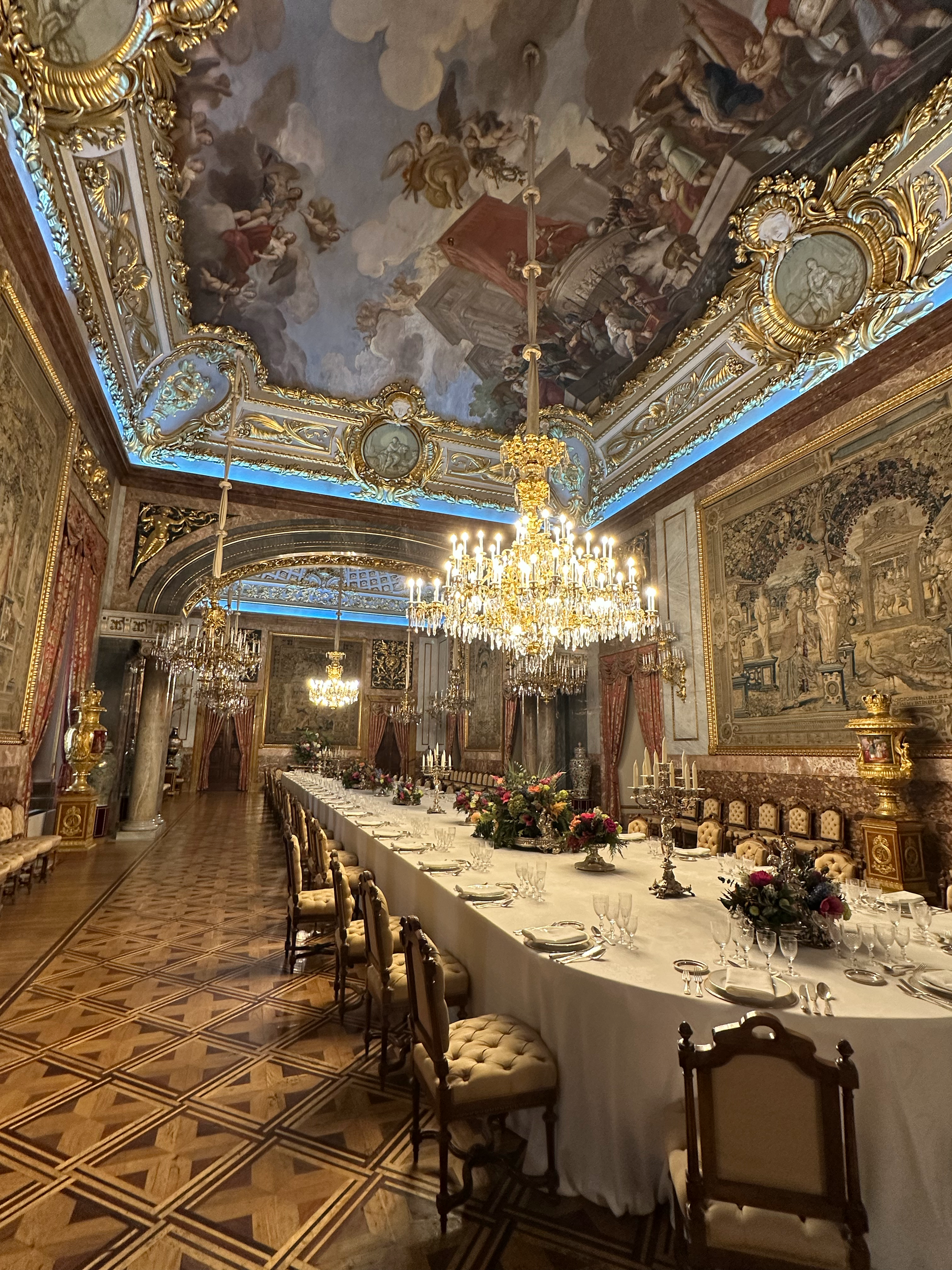
The dining room was magnificent. One thing to note- the fourth chair that is pulled out a little further than the rest is where the King sits at a royal dinner, and the Queen sits across from him.
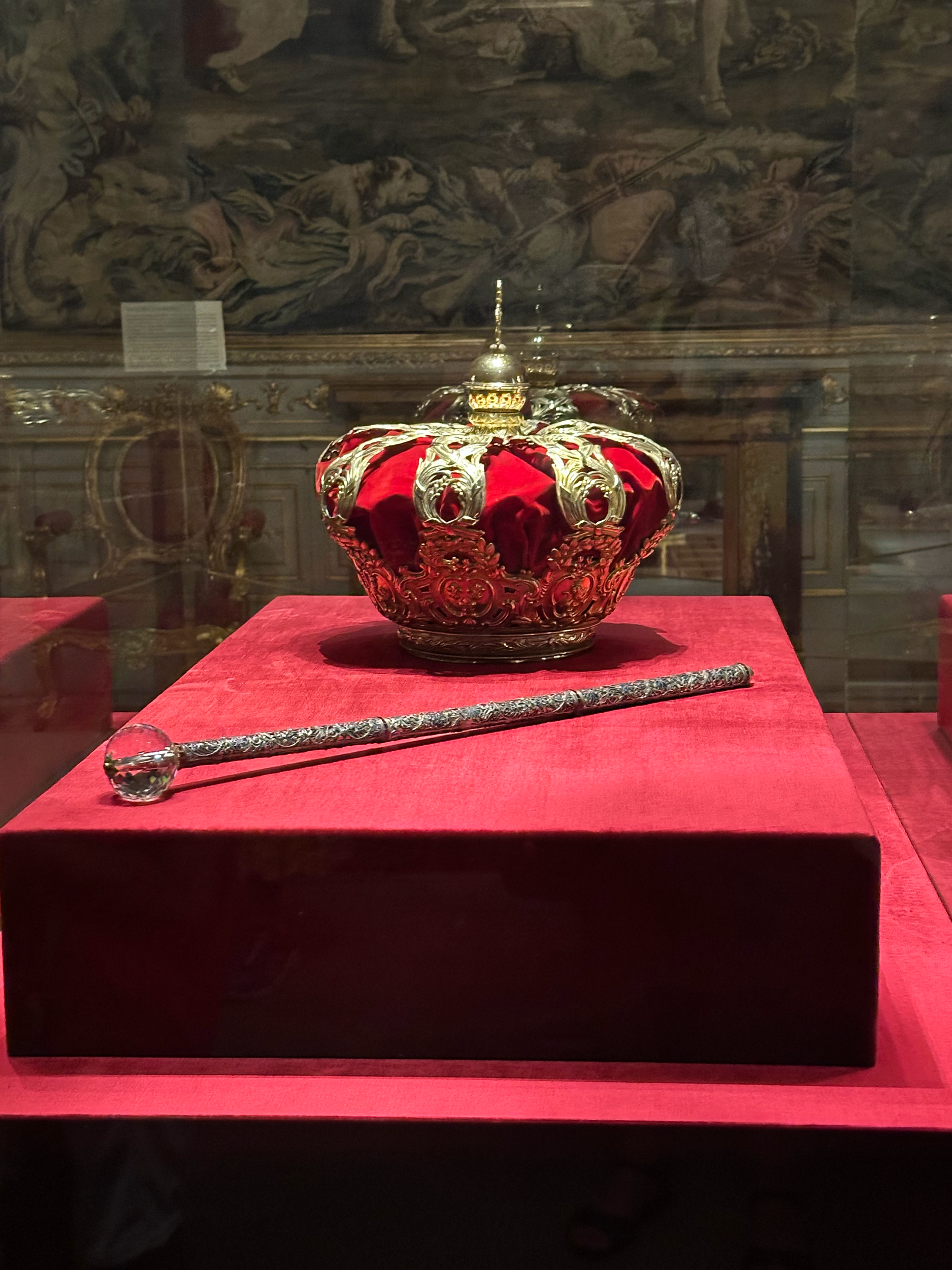
The Royal crown and septre. They are never placed on the King's head and are not part of the coronation ceremony, but are a symbolic display of the throne.
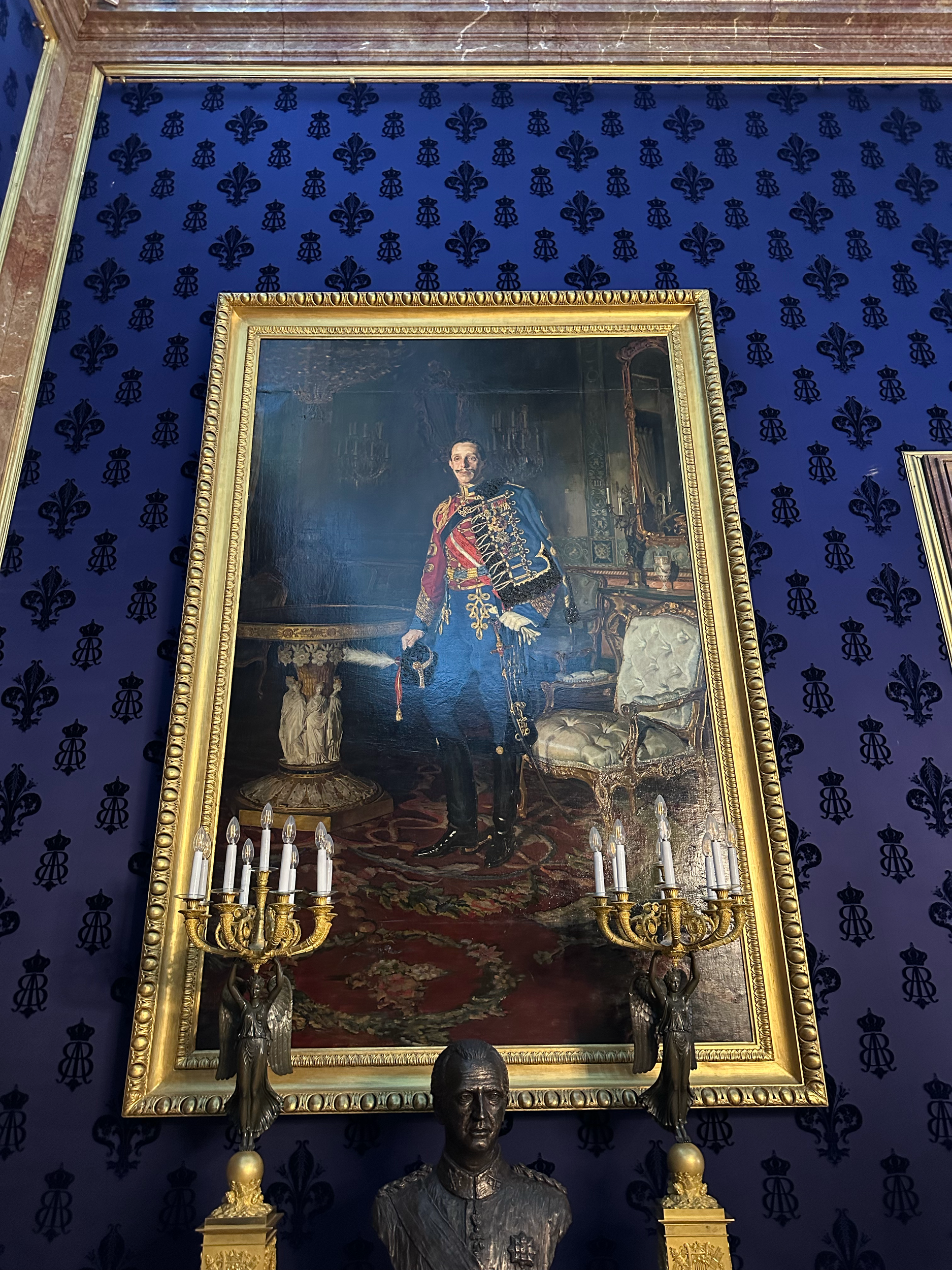
The Spanish Royal family is difficult to keep up with (perhaps because we learn more about the British Royal family in the U.S. than we do about other European kingdoms). This painting is of King Alfonso XIII. He became the Monarch of Spain at his birth (1886) as his father died the previous year. He was King until 1931, when he was dethroned and the Second Spanish Republic was formed. He lived in exile until his death. (I'm doing my best to understand all of this history, so please be gracious if I made mistakes!)
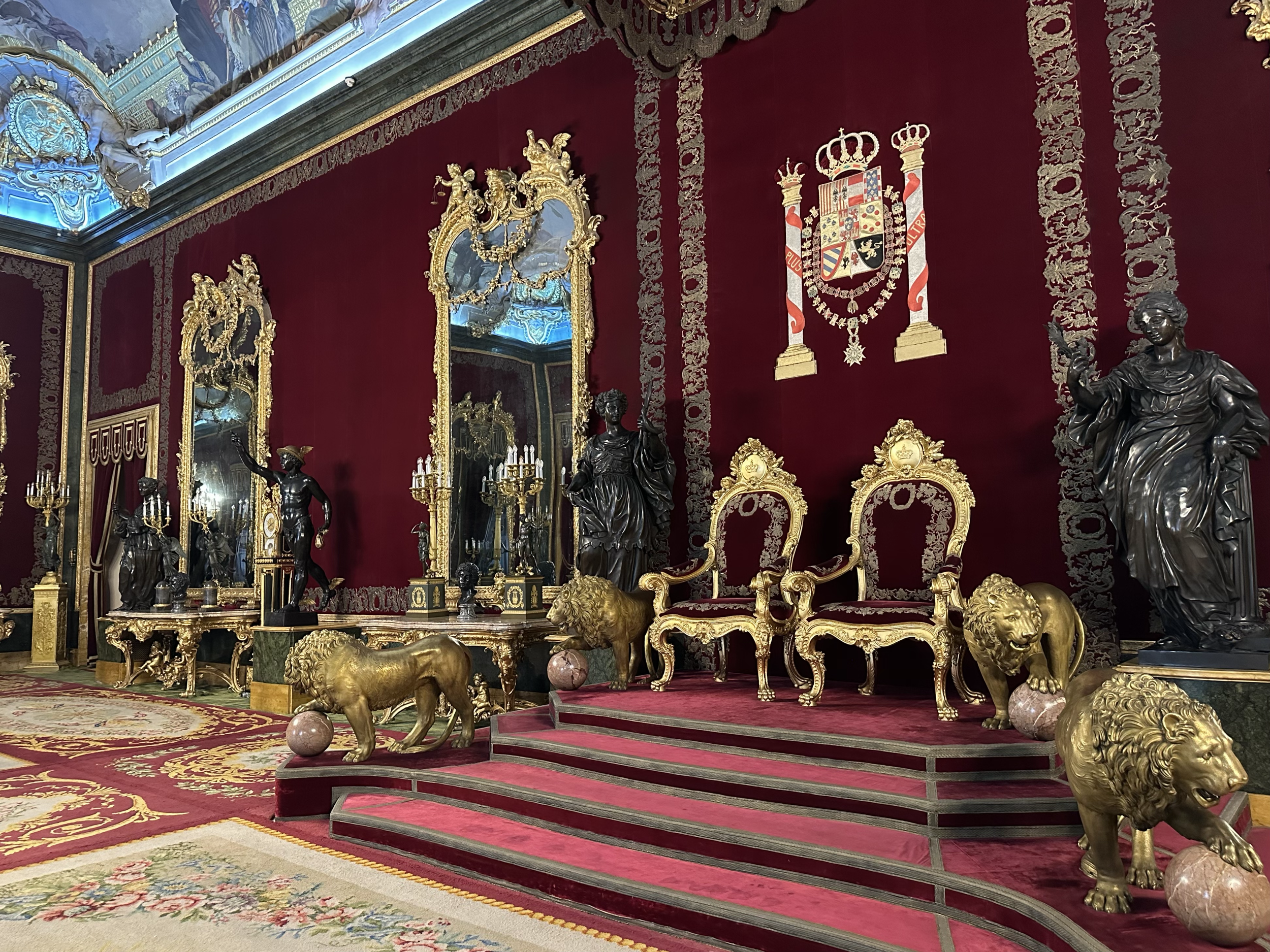
The Royal Throneroom was completed in 1772 by King Carlos III. It has been maintained with the same decoration since that time and is still used by the current King Felipe VI for state ceremonies.
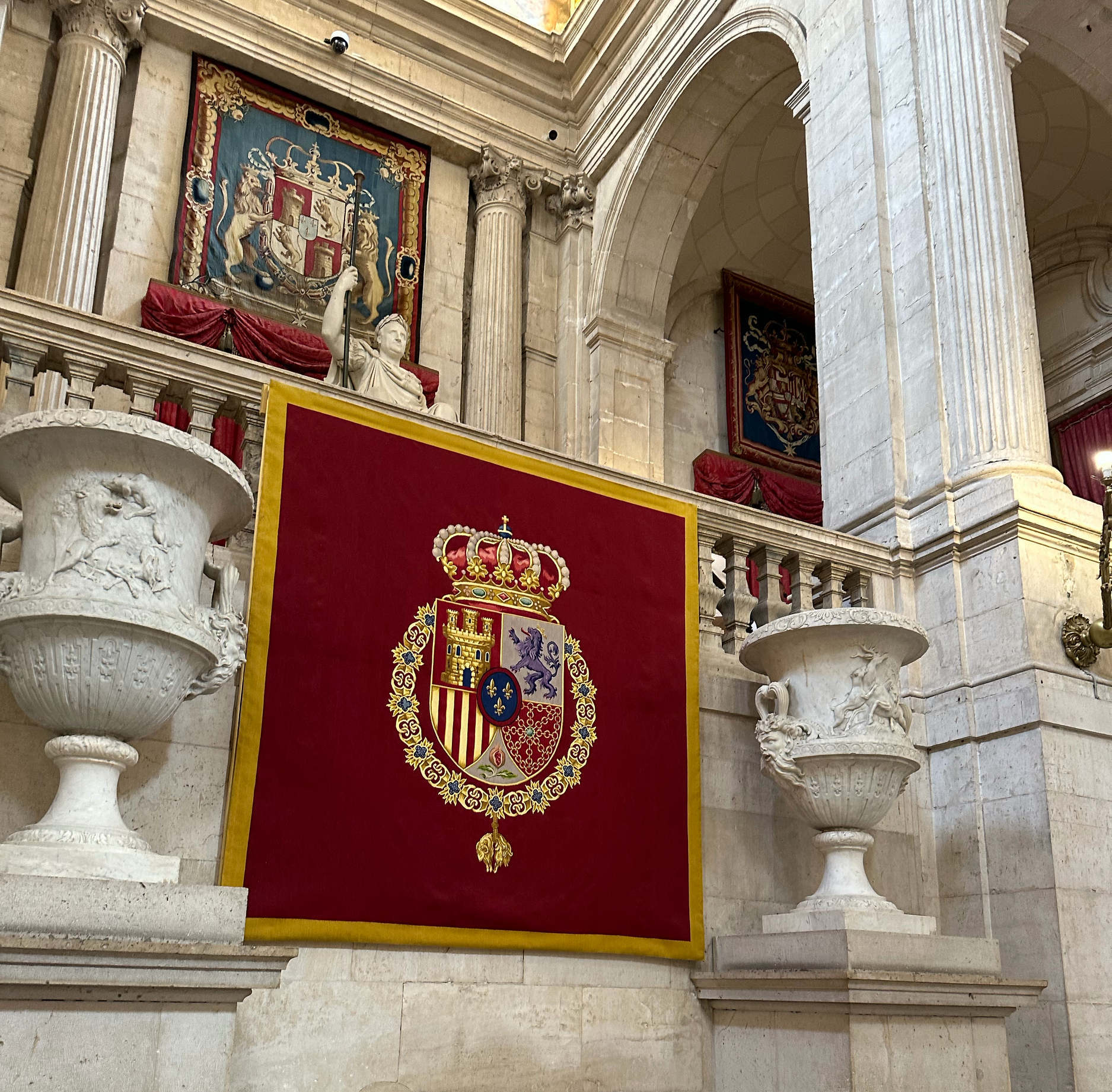
The tapestry above shows the Coat of Arms of Spain and the tapestry below is the Coat of Arms of the King of Spain.
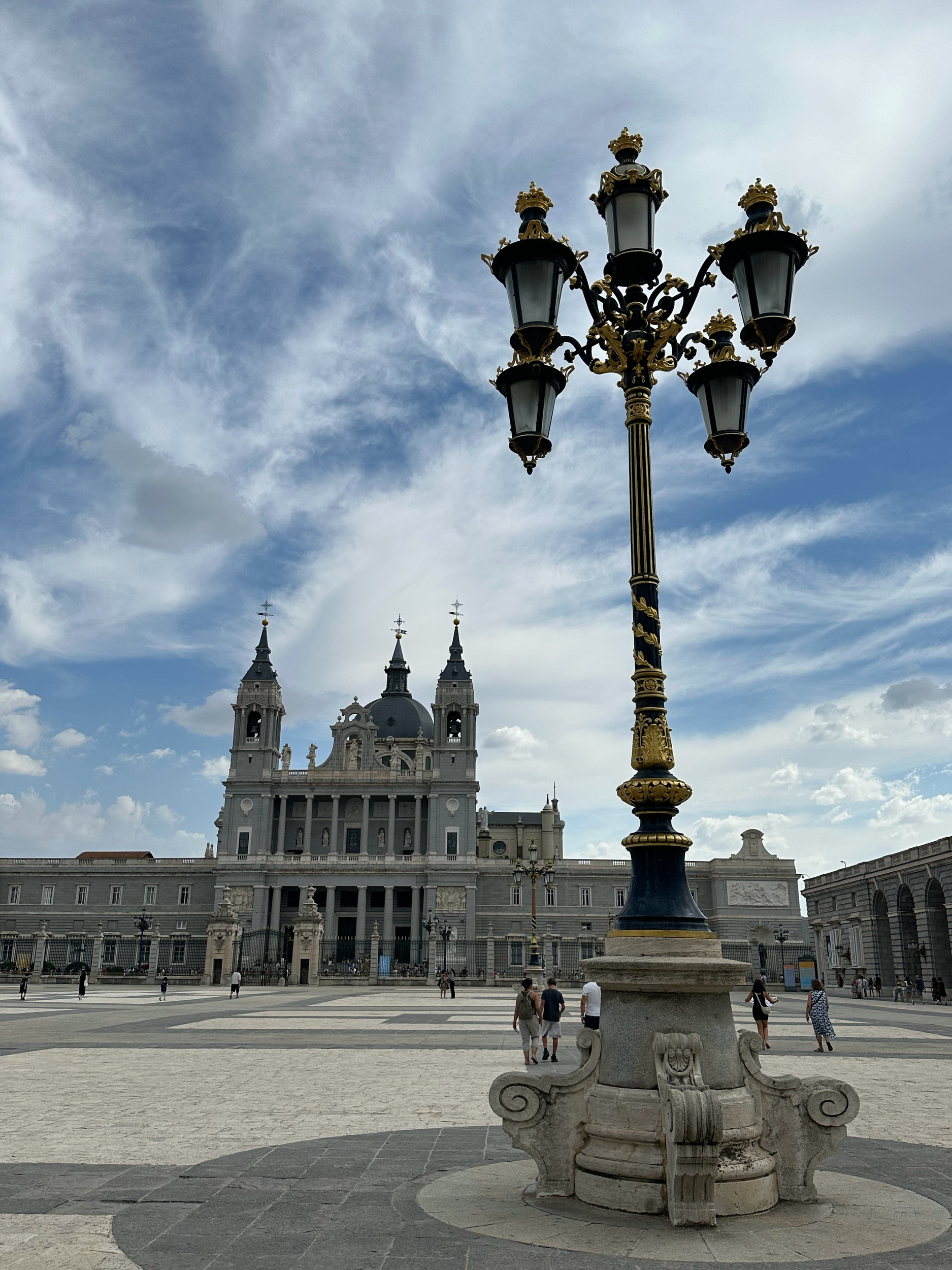
When you come out of the palace, you look right across the courtyard the the Catedral de Santa María la Real de la Almudena. Whew! That's quite a name.
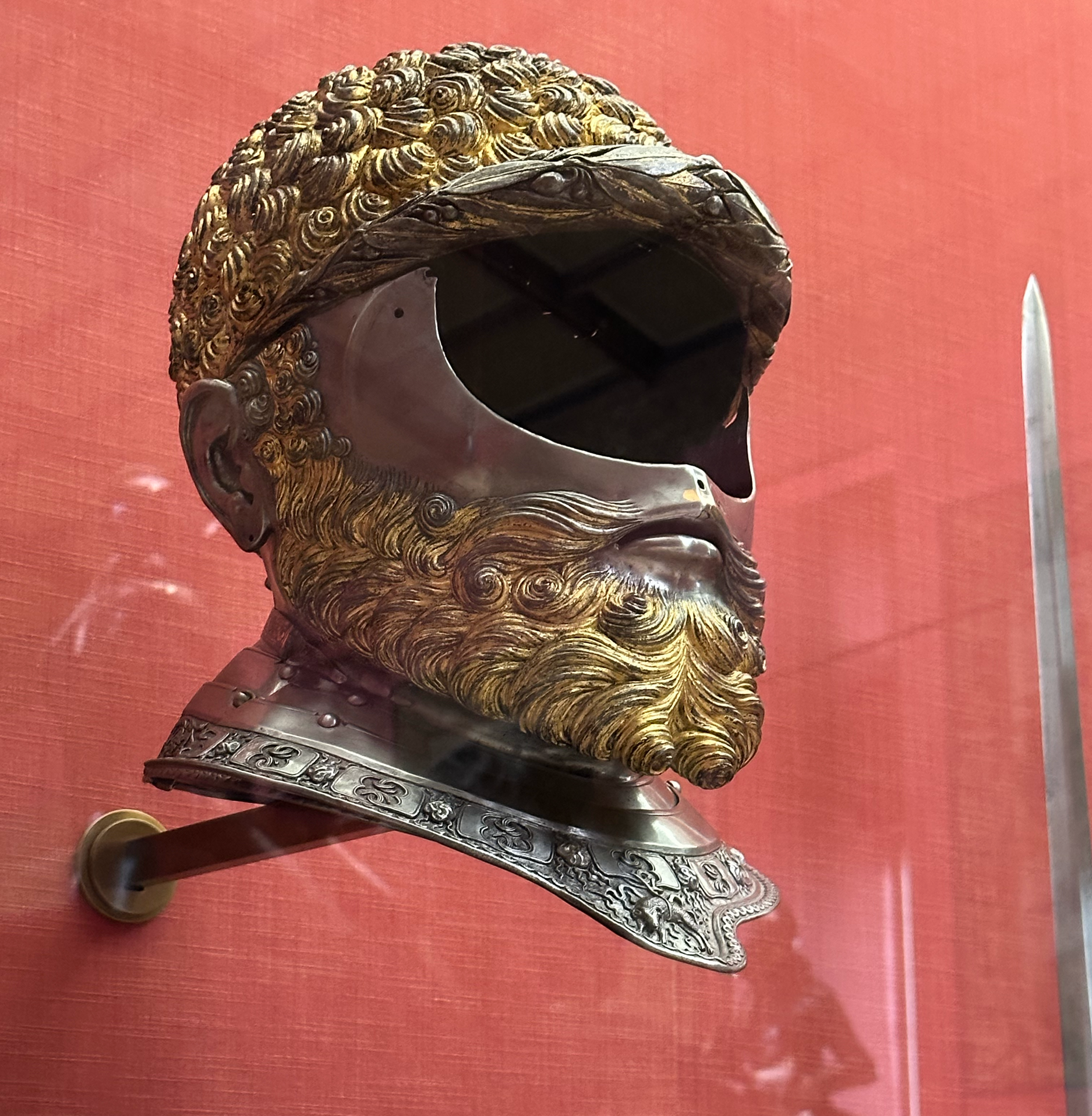
Before we left the complex, we took a quick visit into the armory. Weapons and armor are not really at the top of our interests, but because it is known to be such an extensive collection, we made a quick walk thought. We found this helmet with hair and beard to be quite comical!
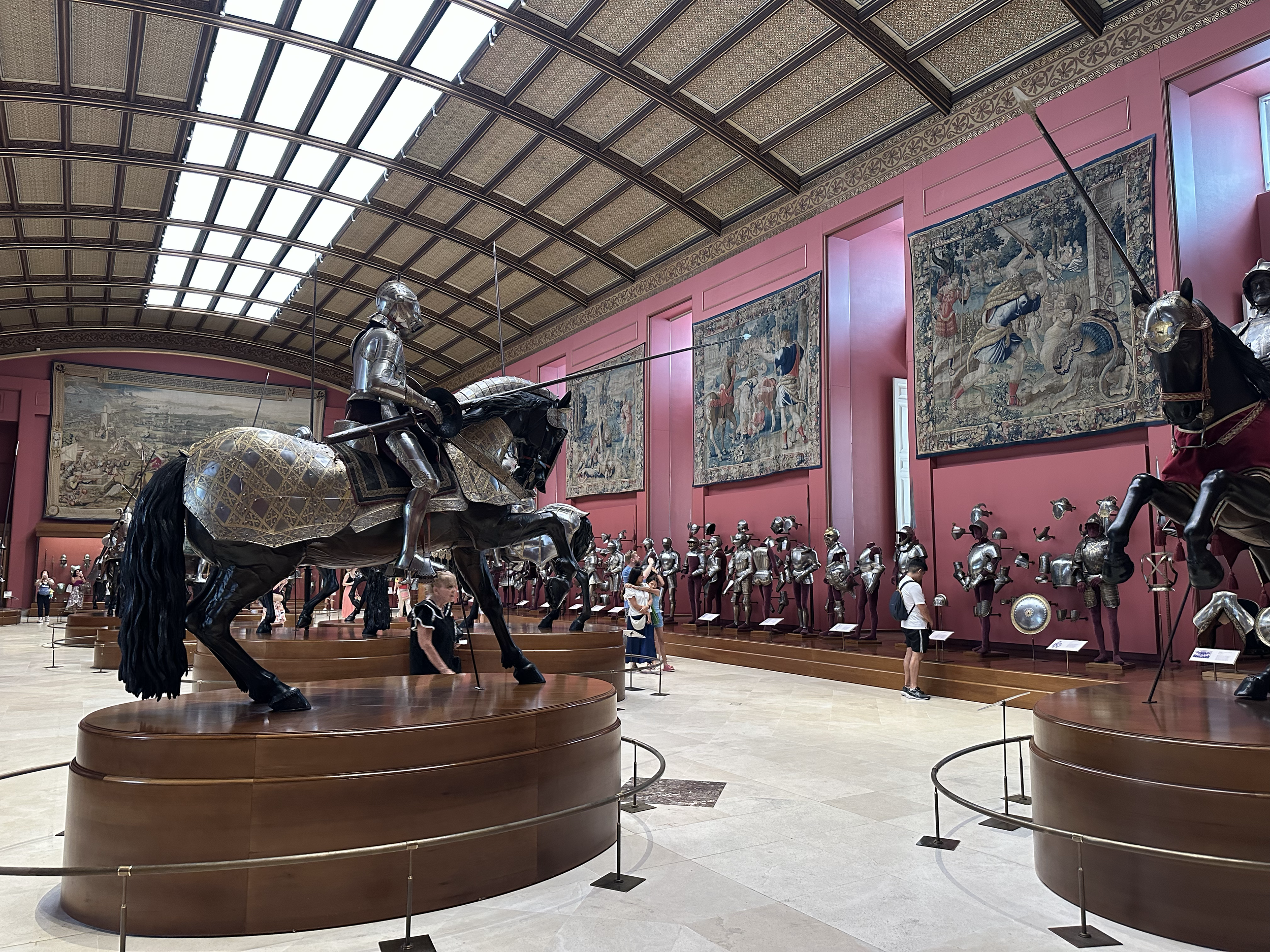
The armor for horses was quite impressive. We were struck by the sheer number of sets of armor there were displayed. All of the armor is from the 15th to 17th century.
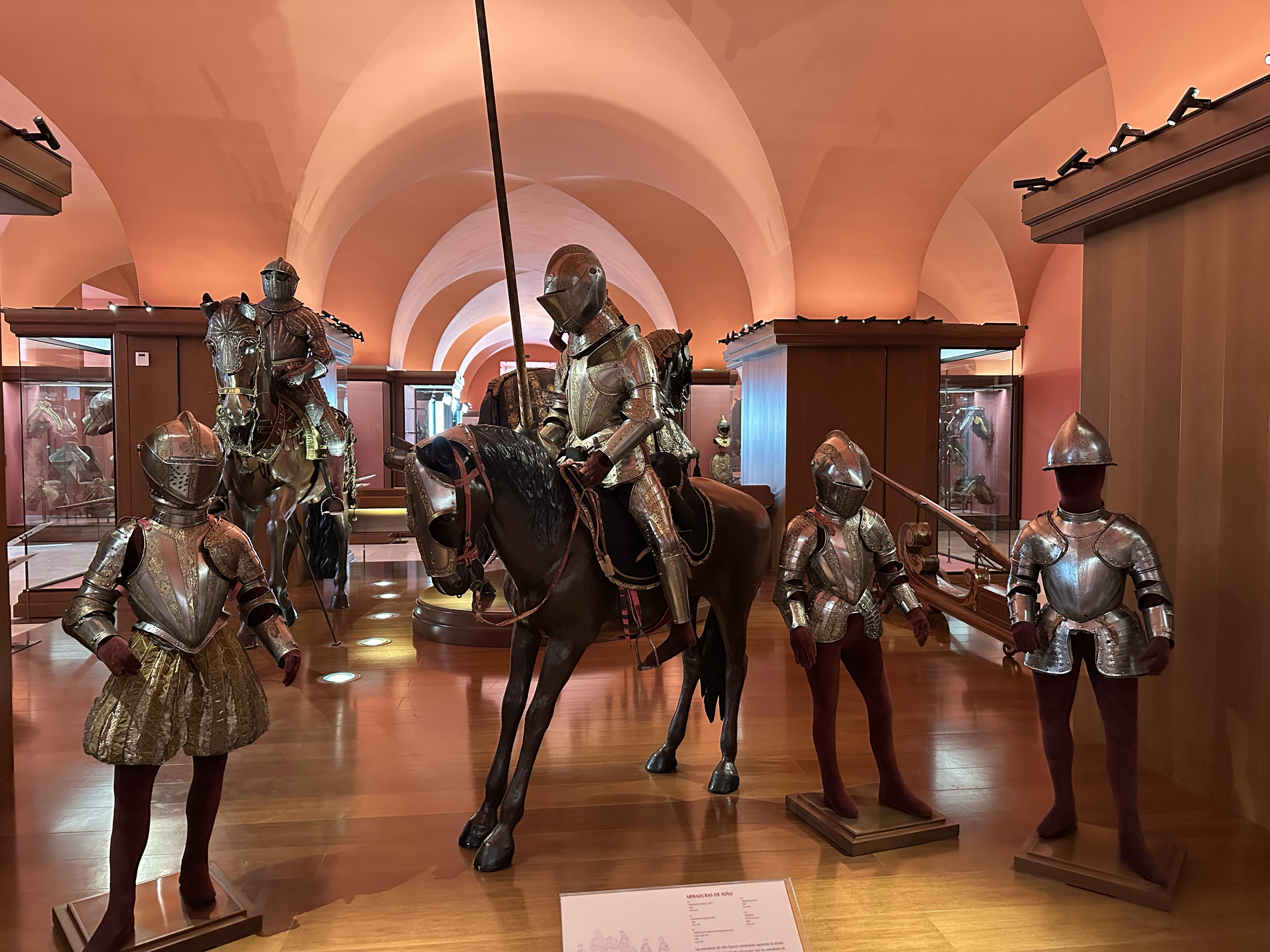
I'm not sure I fully understand the armor for kids. Maybe training them early?
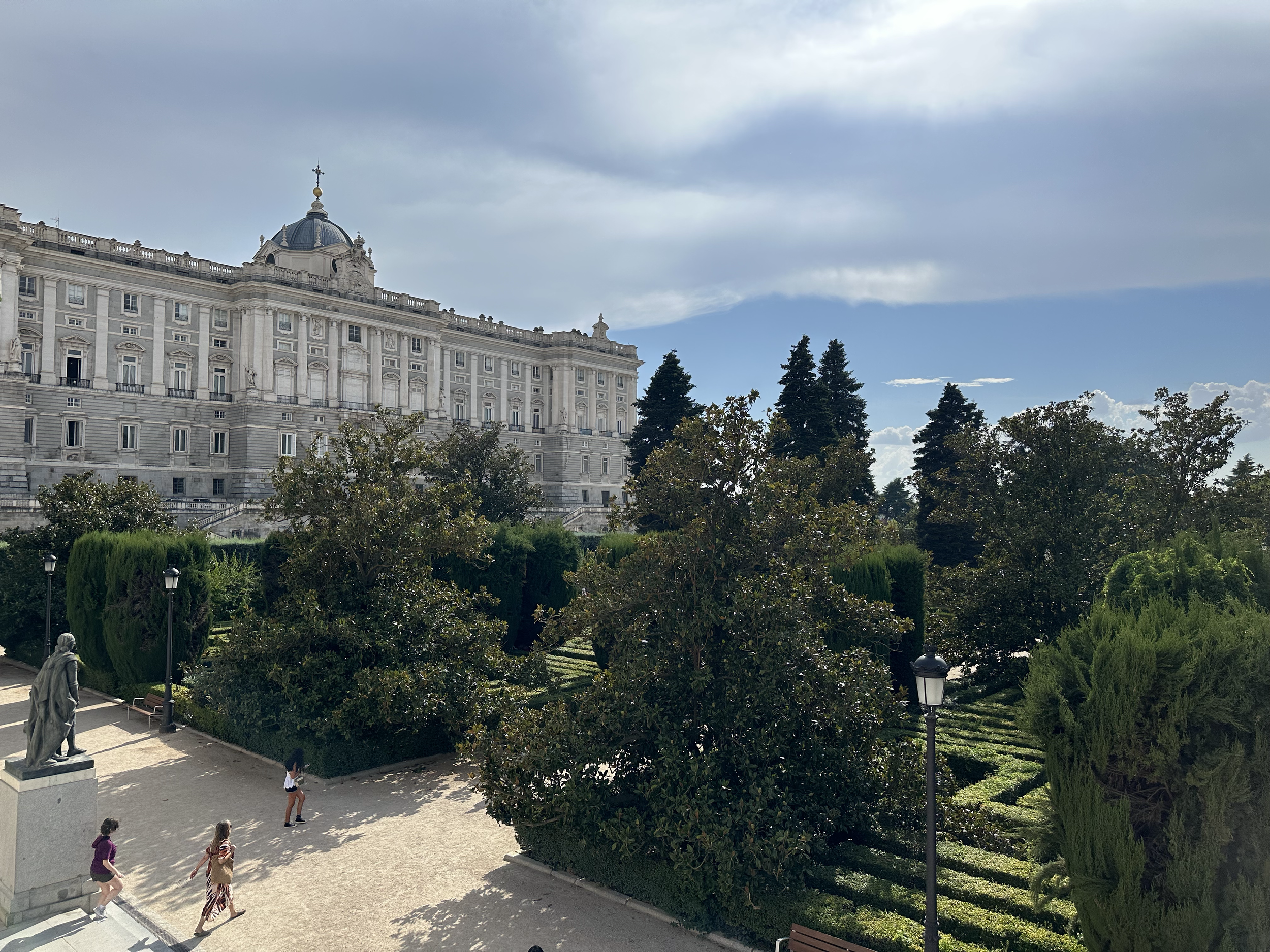
Another view of the Royal Palace as we climbed a nearby hill. It really is overpoweringly large!
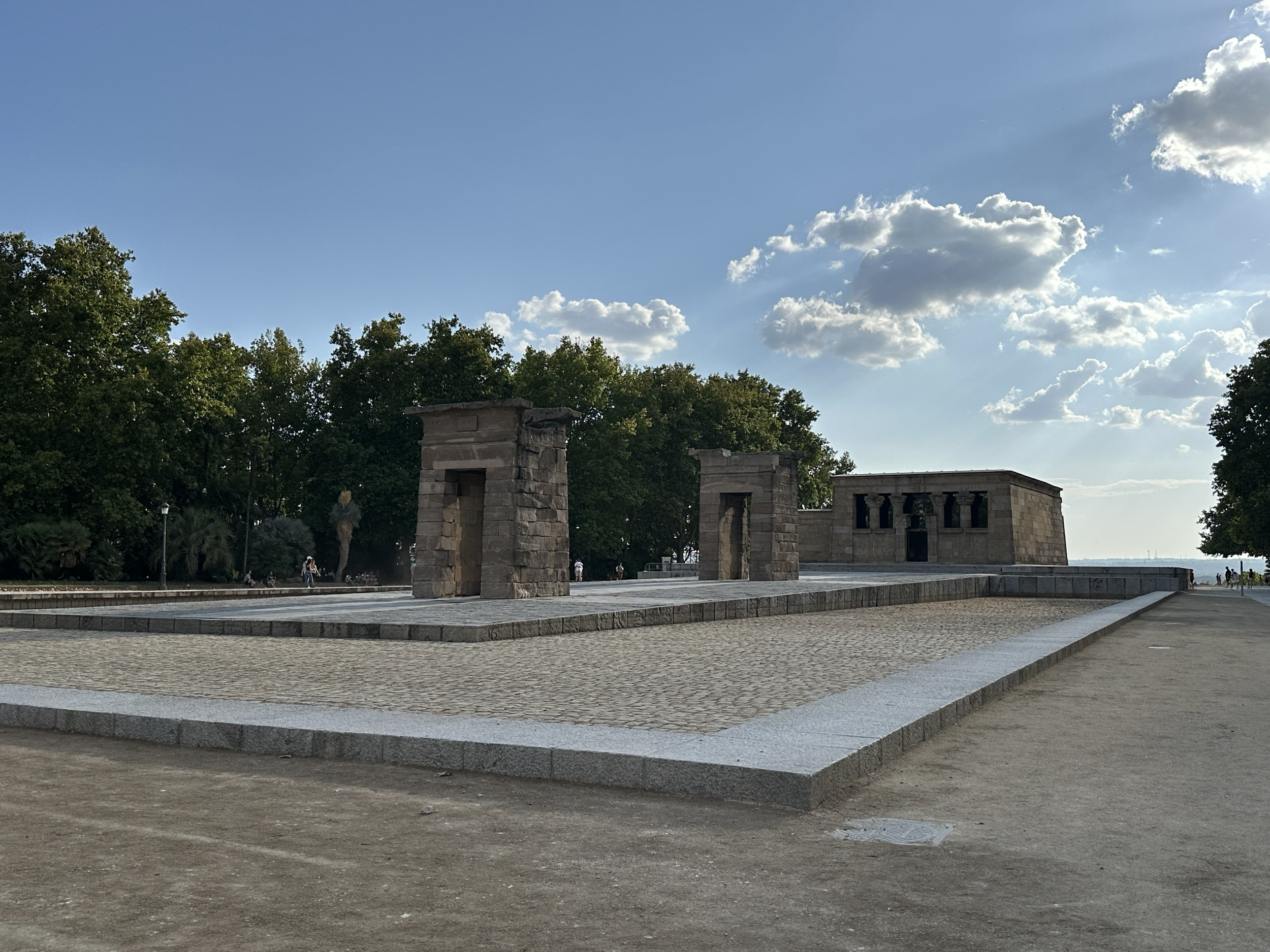
Our climb was up to the Temple of Debod, which looks out over the city, and is known to have a fabulous view of sunset (we did not stay that long!). This Egyptian Temple was gifted to the city of Madrid after Spain answered Egypt's call for help during a flooding crisis in the 1960s.
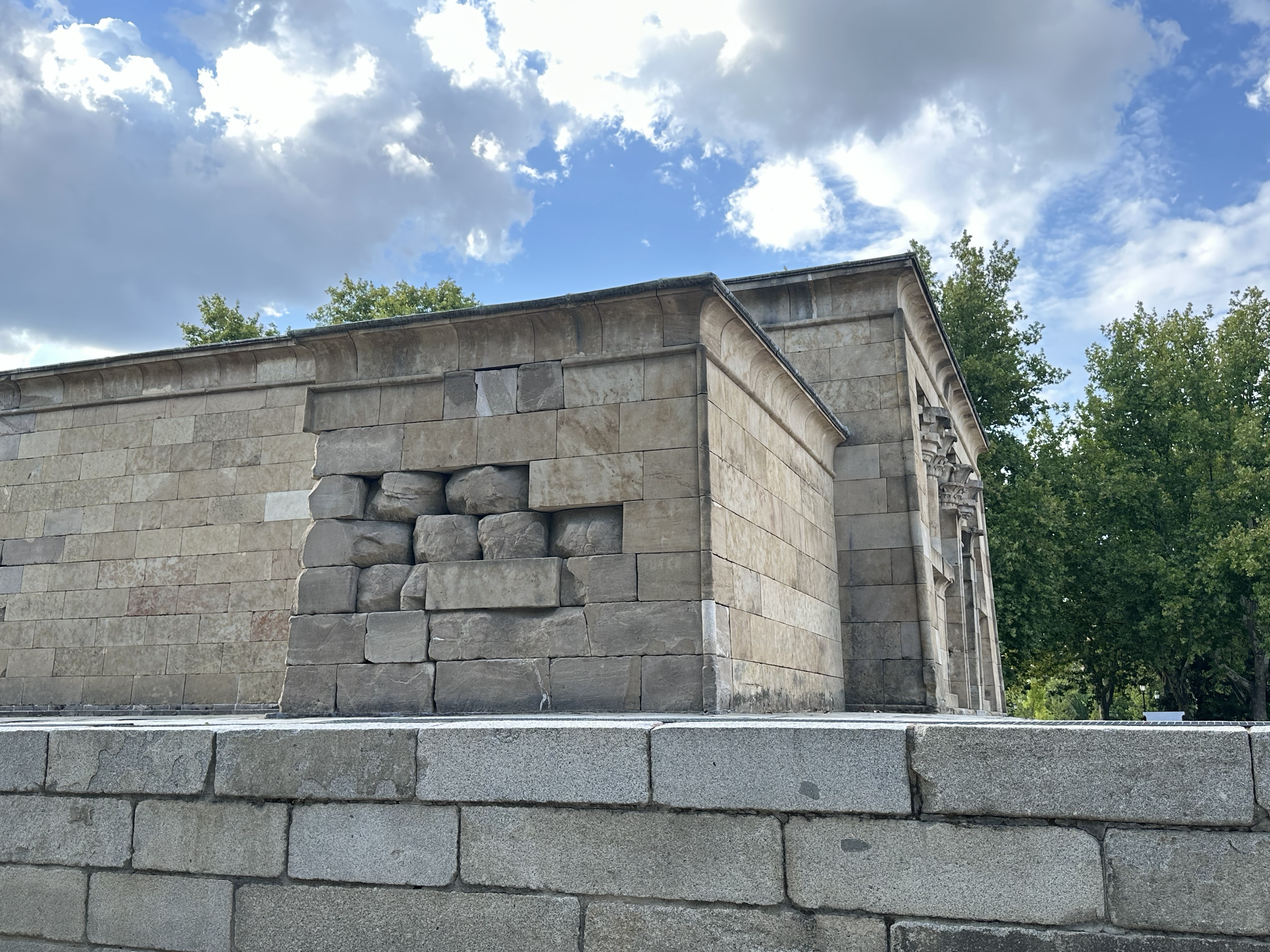
The temple was transported and rebuilt stone by stone in its original orientation. It was opened as a museum in 1972.
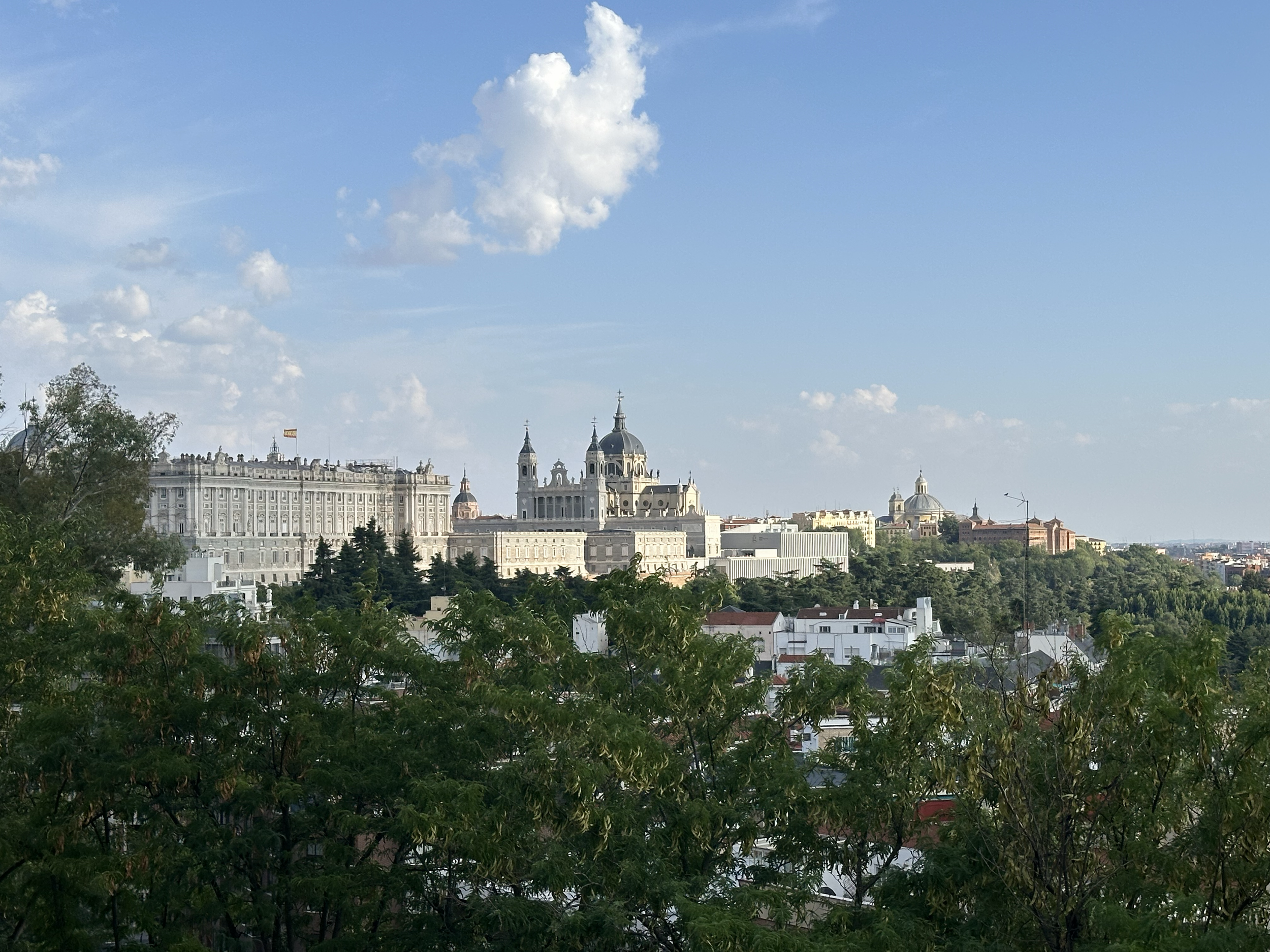
The view of the Royal Palace and the city from the Temple of Debod.
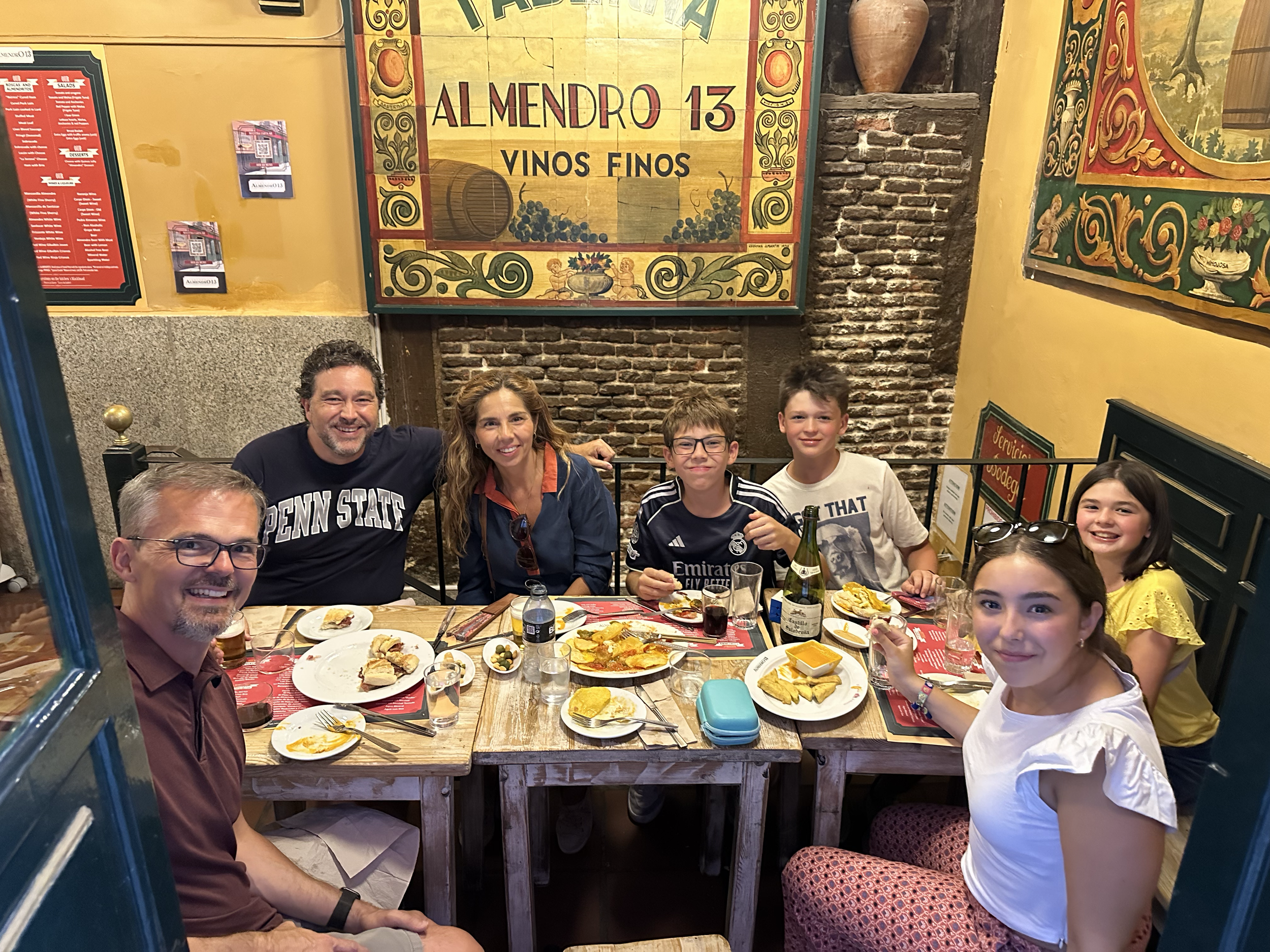
The best part of our trip to Madrid was getting to meet up with Amelia's second grade Spanish teacher, Sra A., and her family. They took us on a tapas tour of Madrid, and we had a wonderful time!
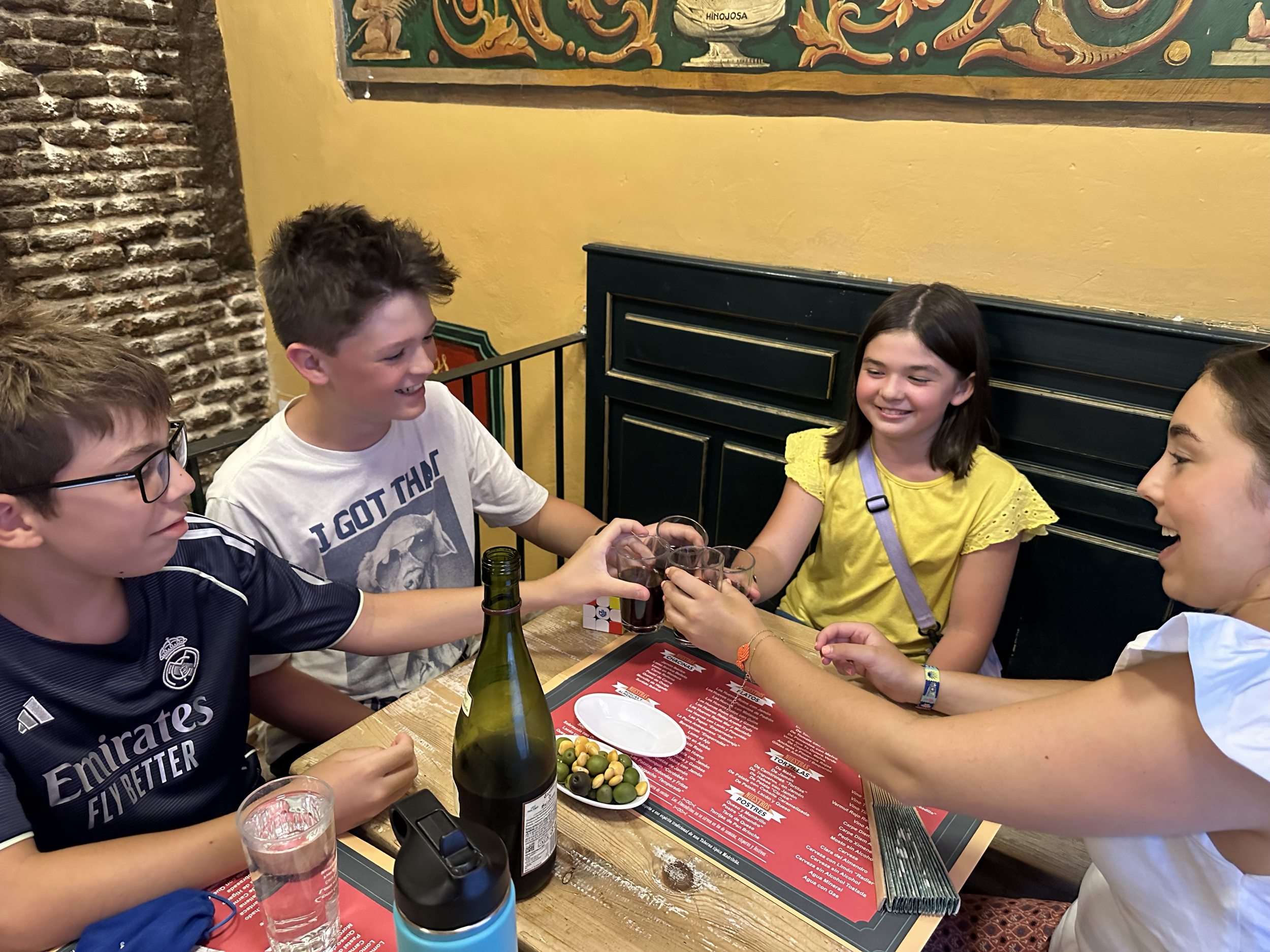
Our kids became fast friends- toasting with Castillo de Salobreña (a non-alcoholic tropical-like grape juice).
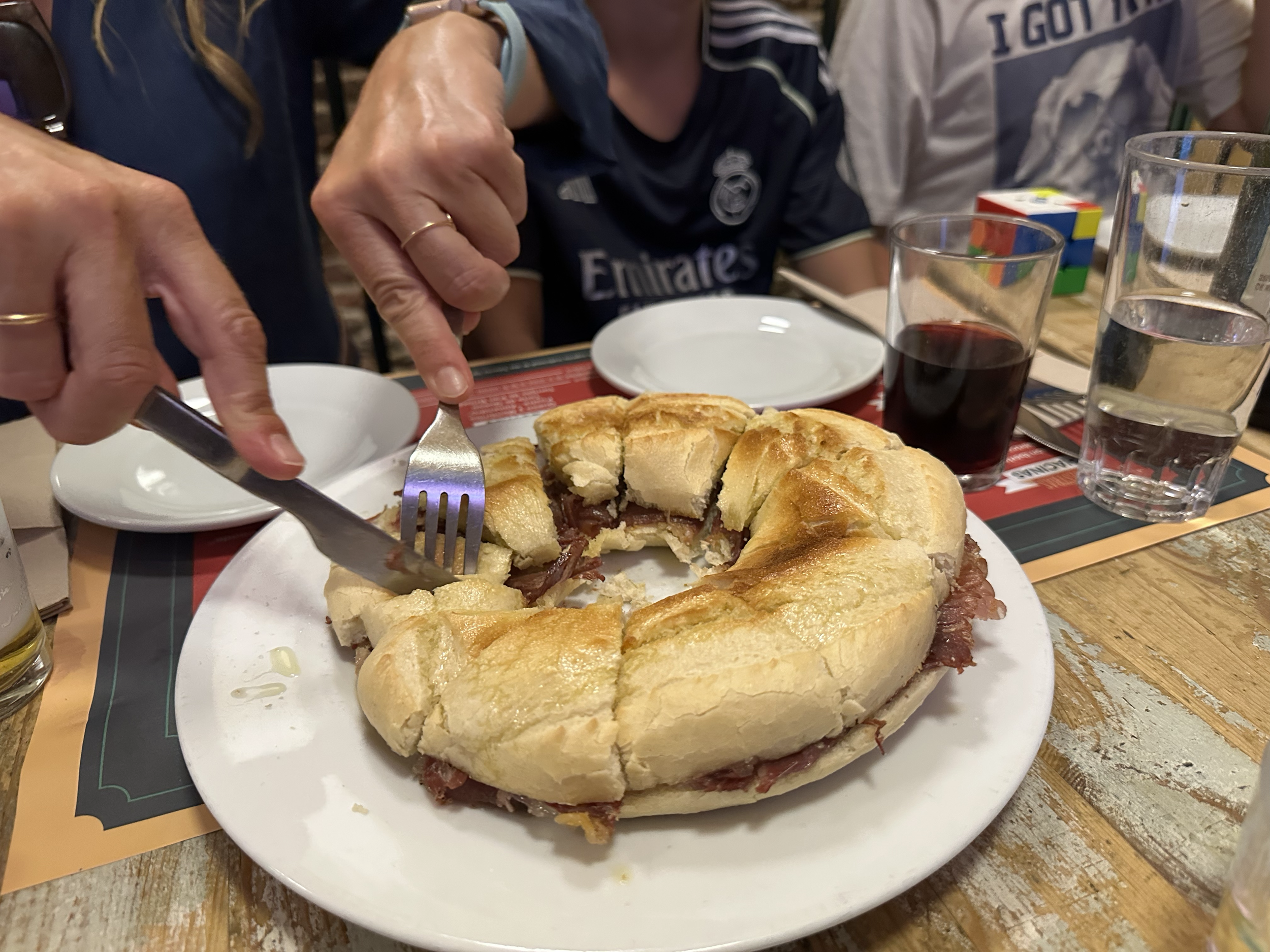
Our first restaurant "Alemendro 13" is known for their Rosca Jamón Ibérico con Brie. It's like a really large bagel with thinly sliced Ibérico ham and brie cheese that you cut up into sections to share. (In the picture of all of us you can see another delicious shared tapa called Pisto con Huevo, which is a ratatoille sauce with thick cut fried potato chips and a fried egg on top!)
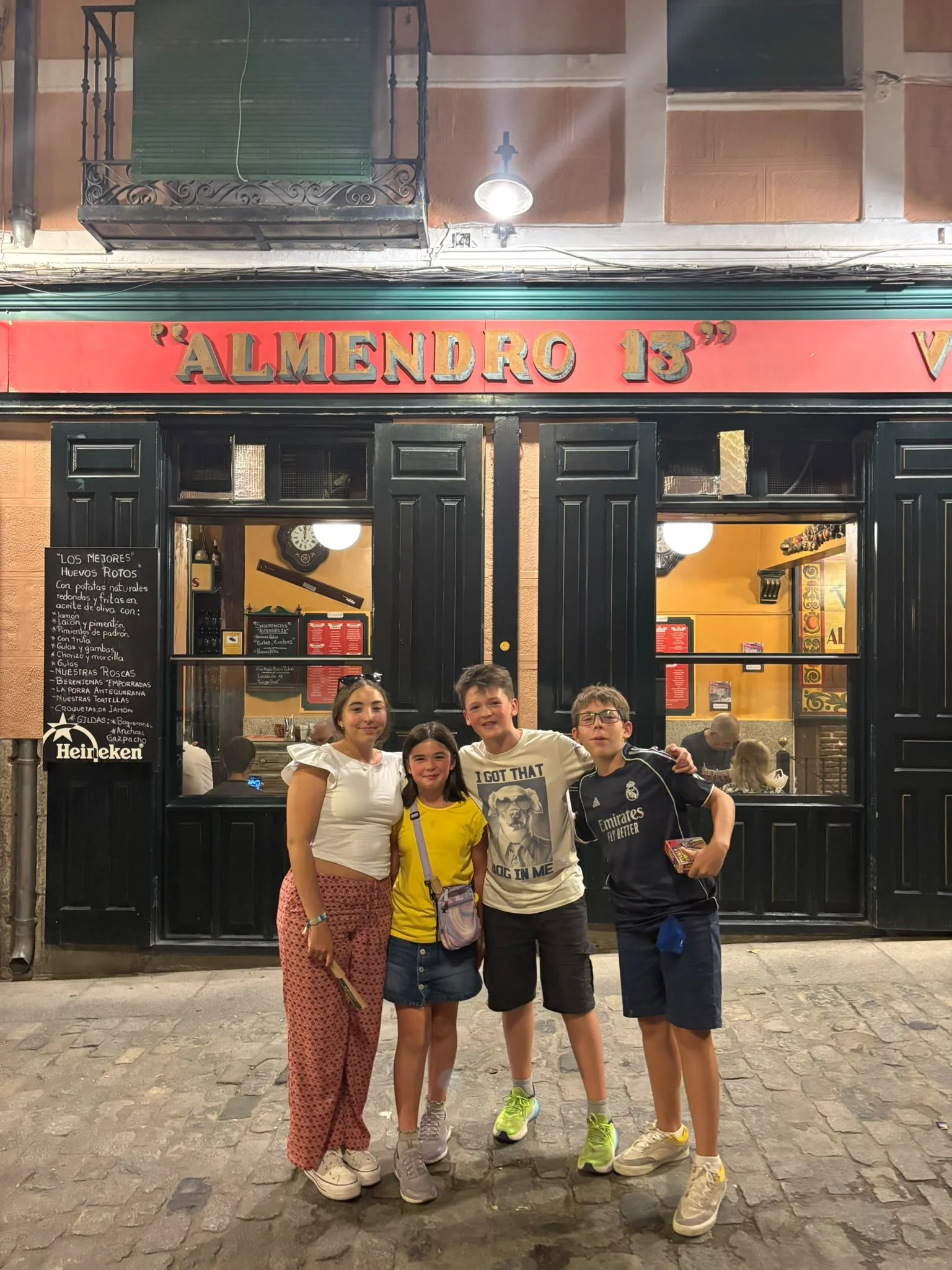
The kids in front of Alemendro 13.
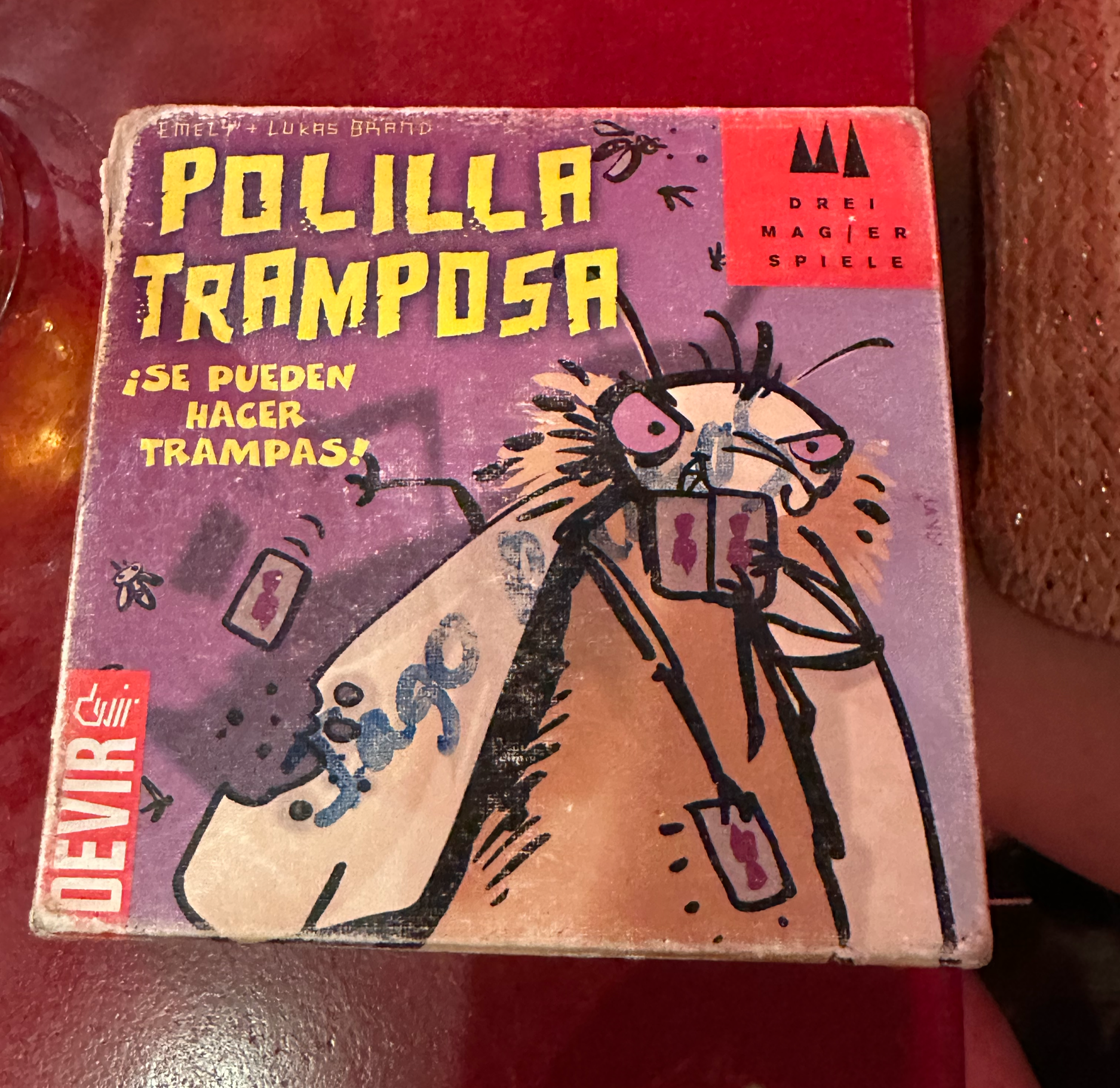
The kids were also introduced to a Spanish game called Polilla Tramposa or The Cheating Moth. It has become a favorite at our house.
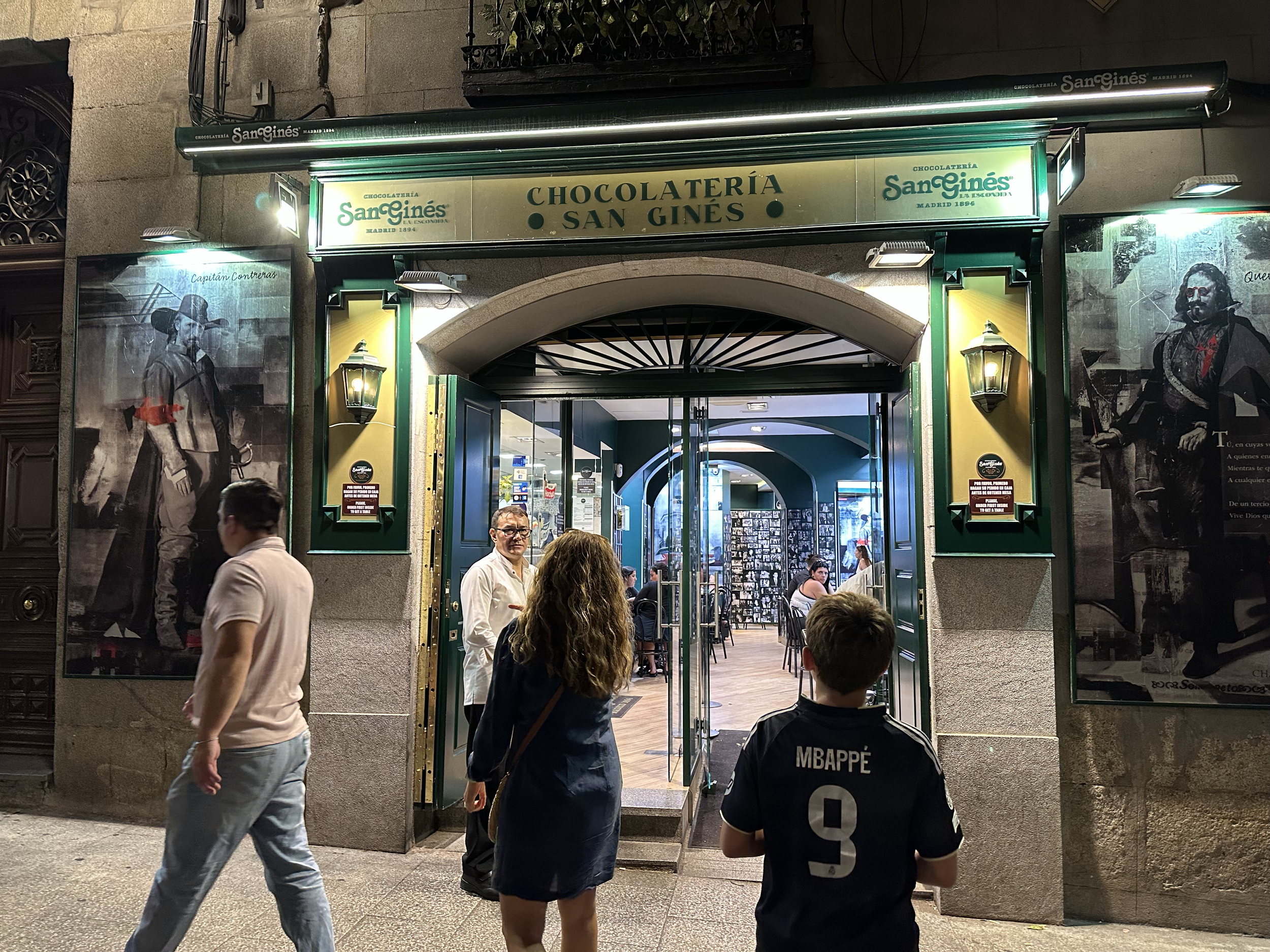
We ended our evening with some traditional Churros and chocolate at Chocolateria San Gines .
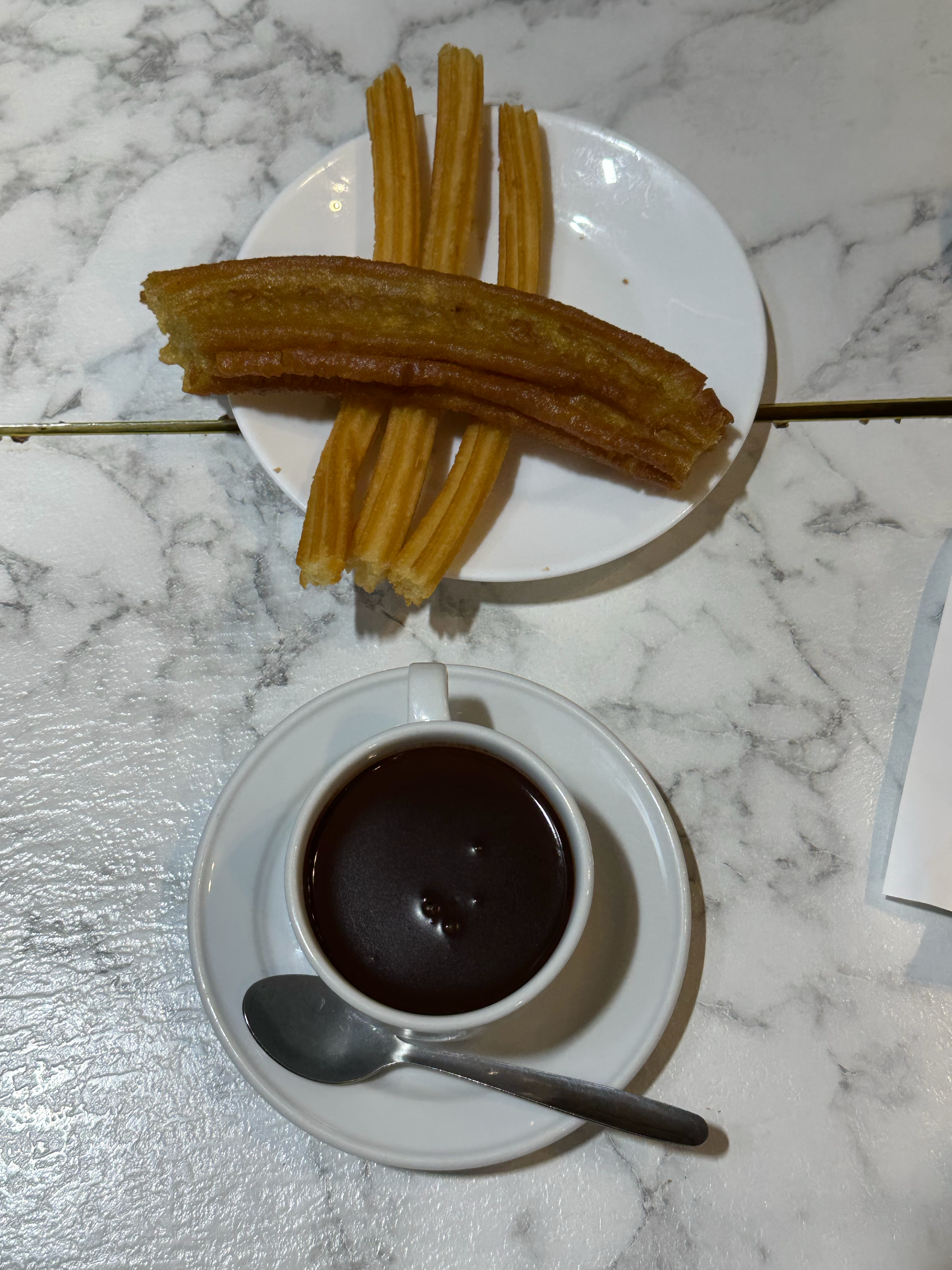
There are thick and thin churros, and you dip them in this thick chocolate sauce!
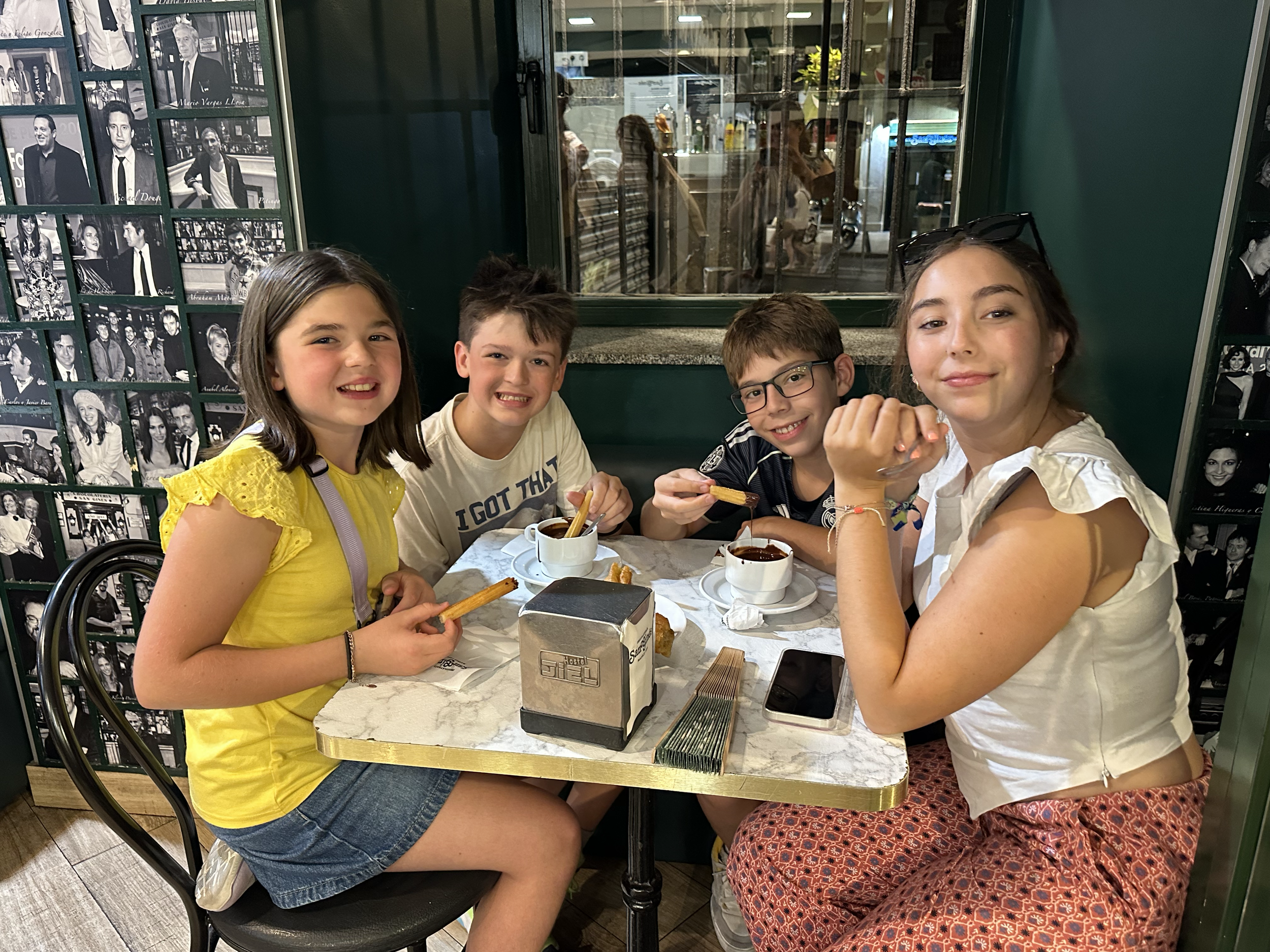
The kids enjoyed every last drop!
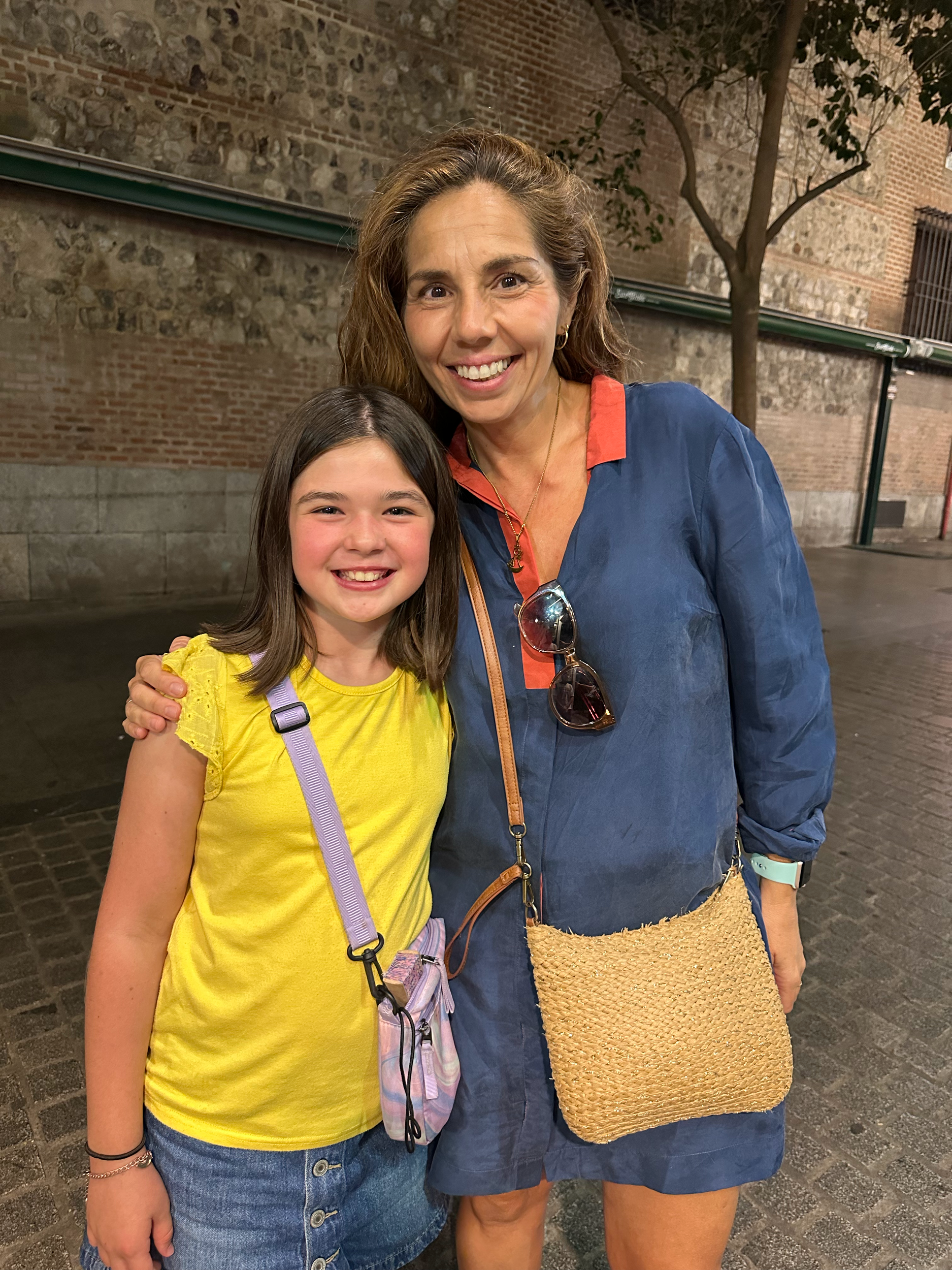
Sweet reunion between Amelia and Sra A.
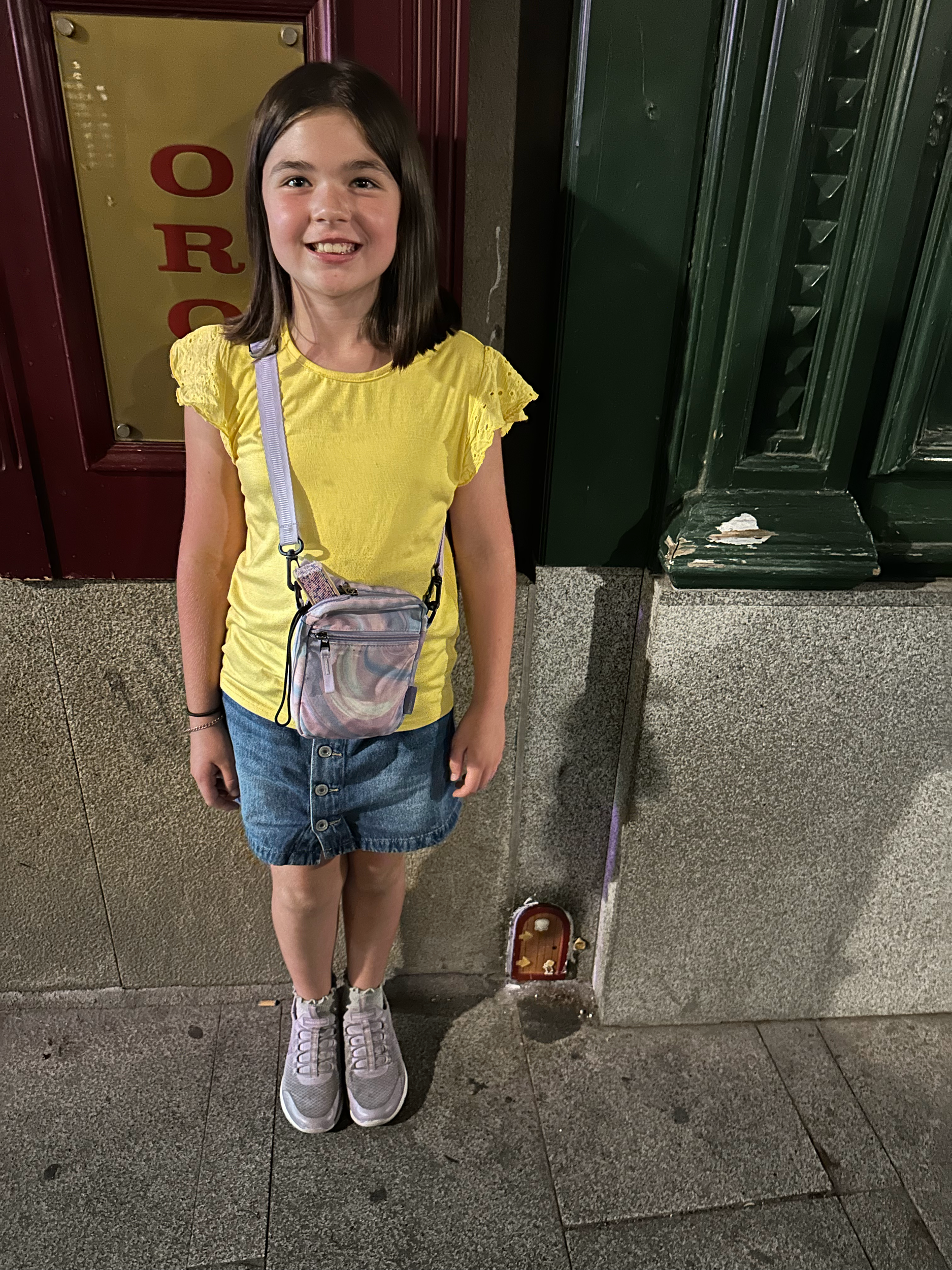
Ratón Perez is the Spanish version of the tooth fairy. The tale of Ratón Perez was made up by a royal advisor when King Alfonso XIII was a child. The story of the mouse spread and has become part of common folklore. There is a Ratón Perez museum in Madrid and you can even find small doors for his hiding places around the city. We found one!
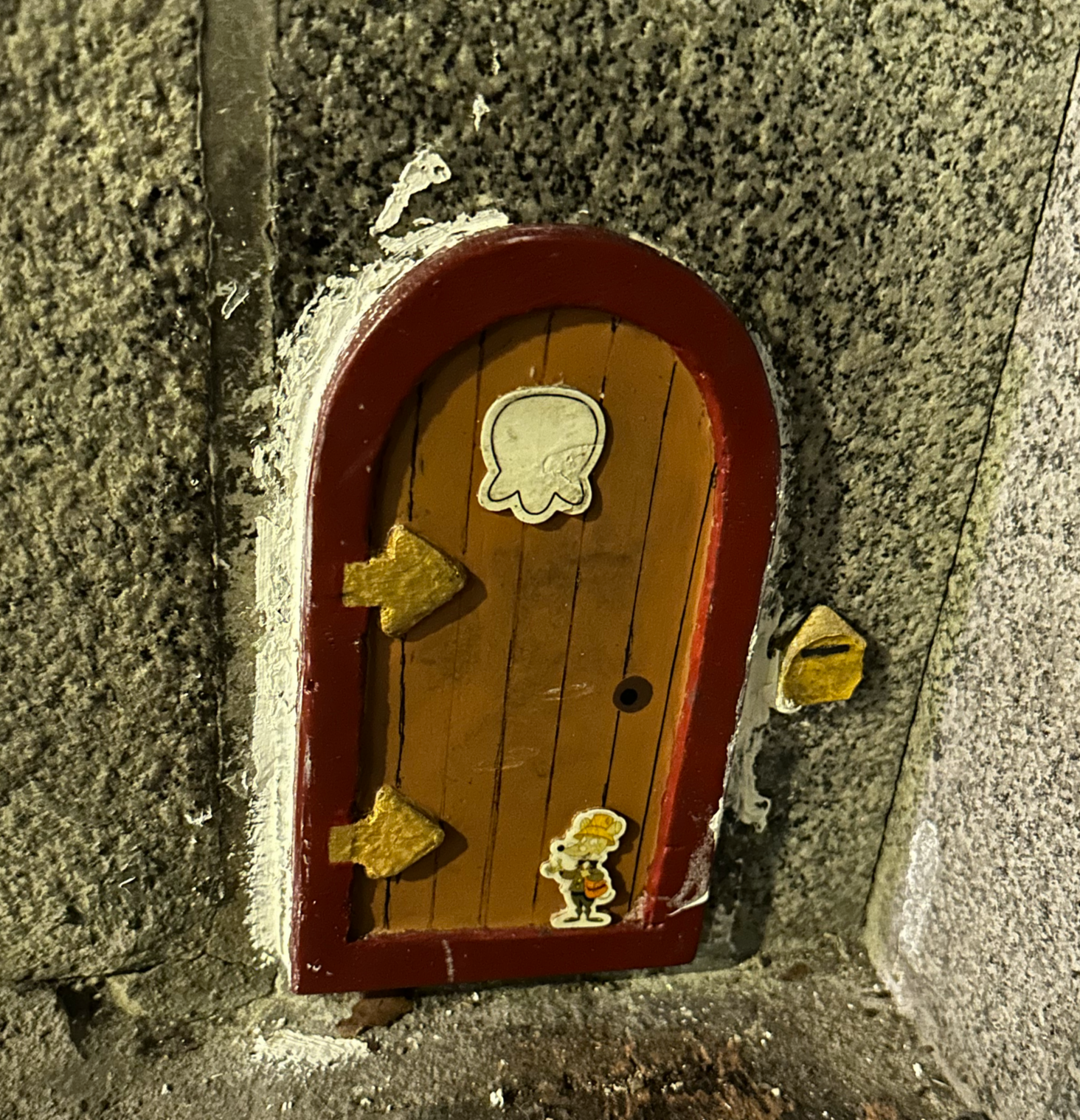
One of Ratón Perez's hideaways in the city.
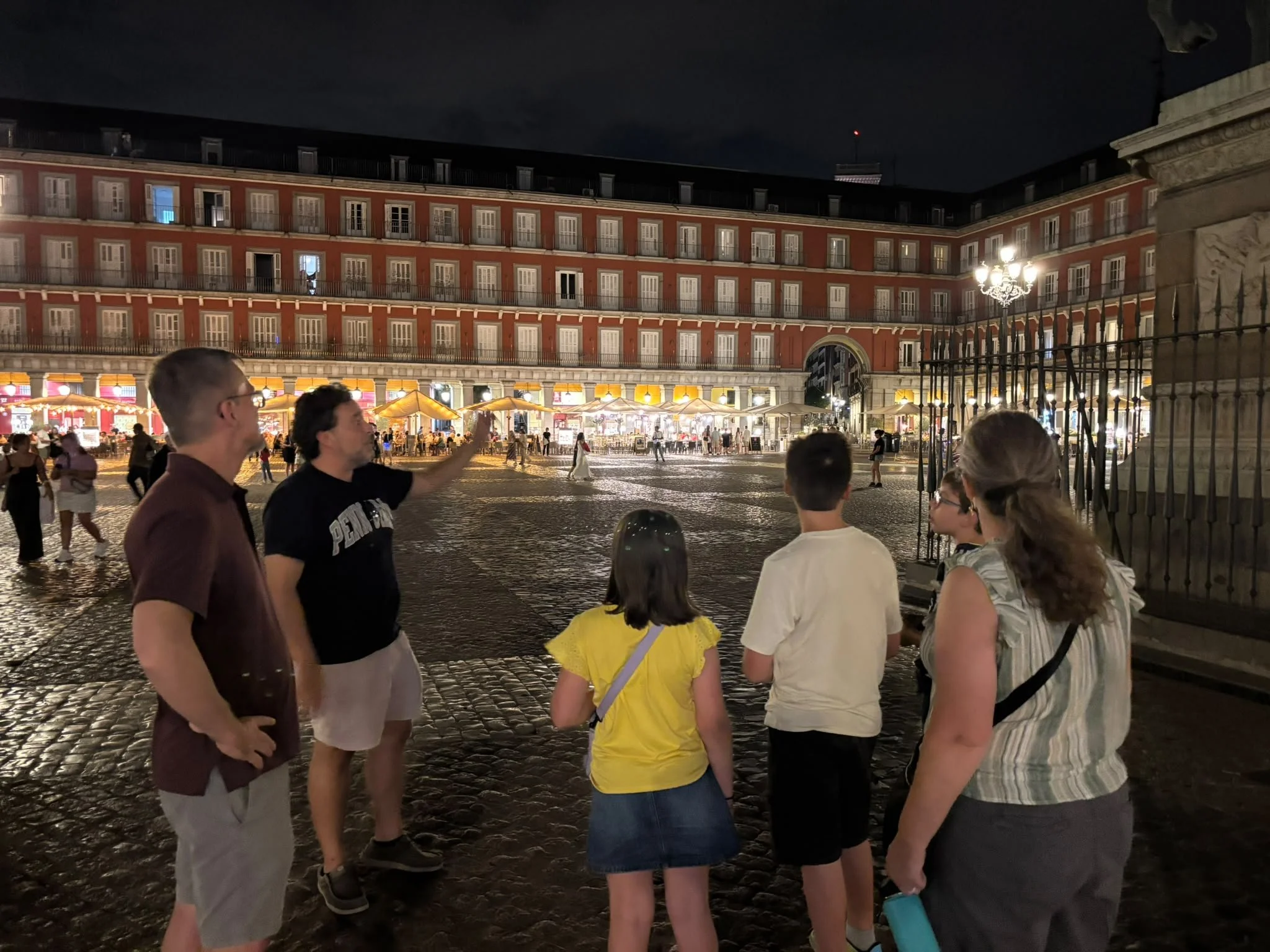
We ended our evening walking around the city together enjoying some of the sites. The kids were super excited that we were out after midnight (unusual for us, but not unusual in Spain!)
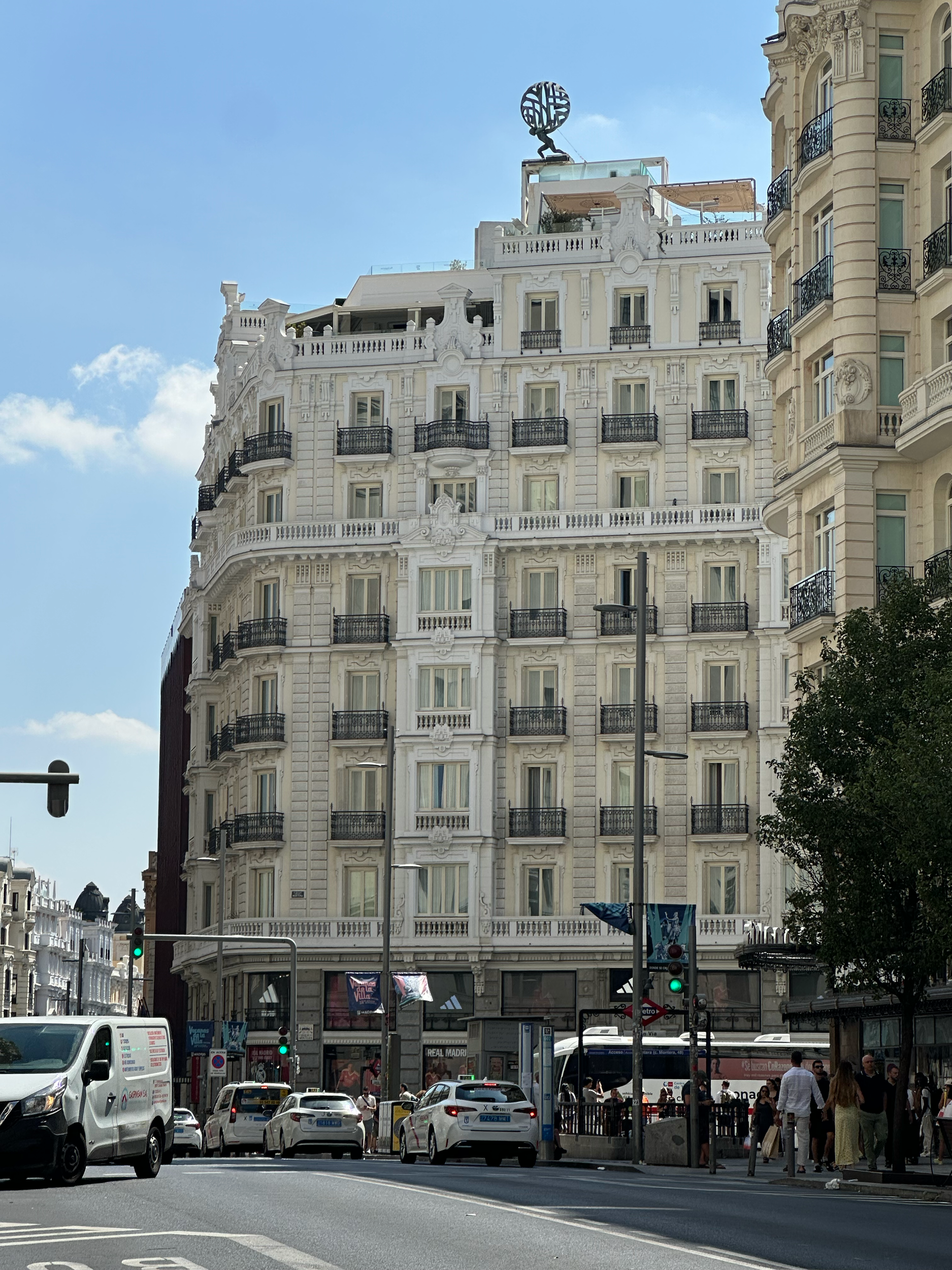
We had a little time on our last day to walk down Grand Via and see all the high-end shopping. The buildings were beautiful.
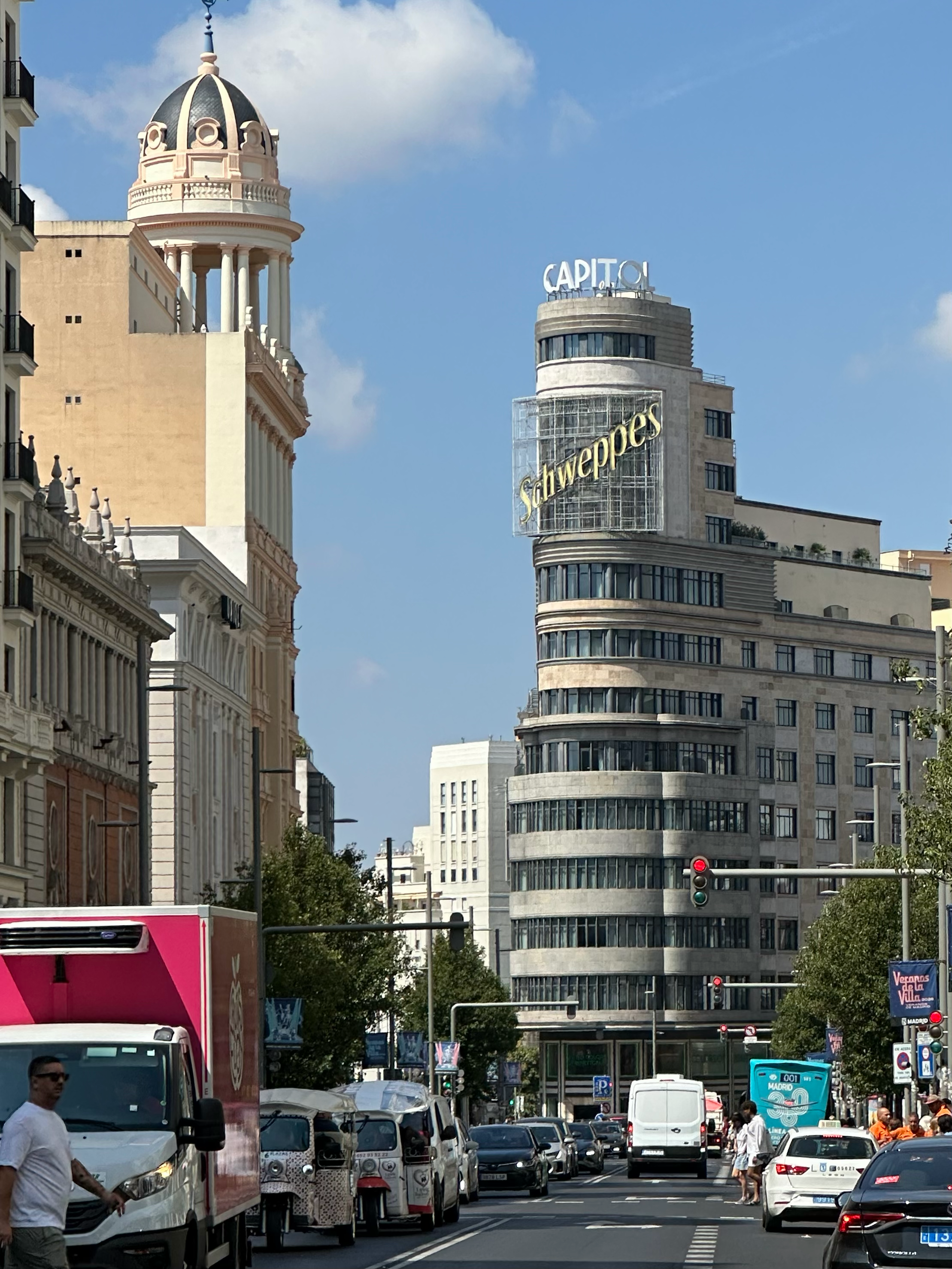
The Schweppes Building is a historic art deco landmark in Madrid.
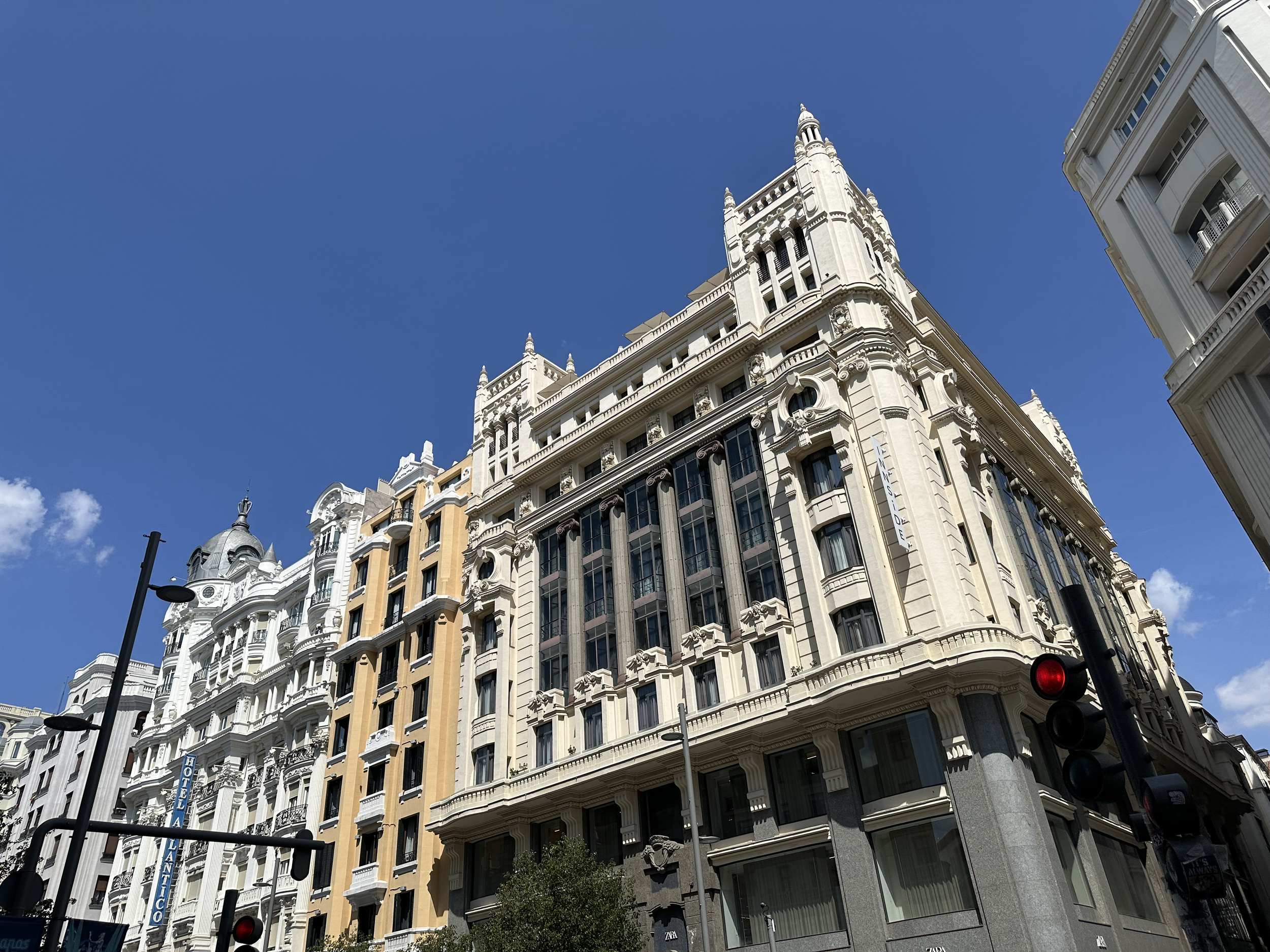
Beautiful!
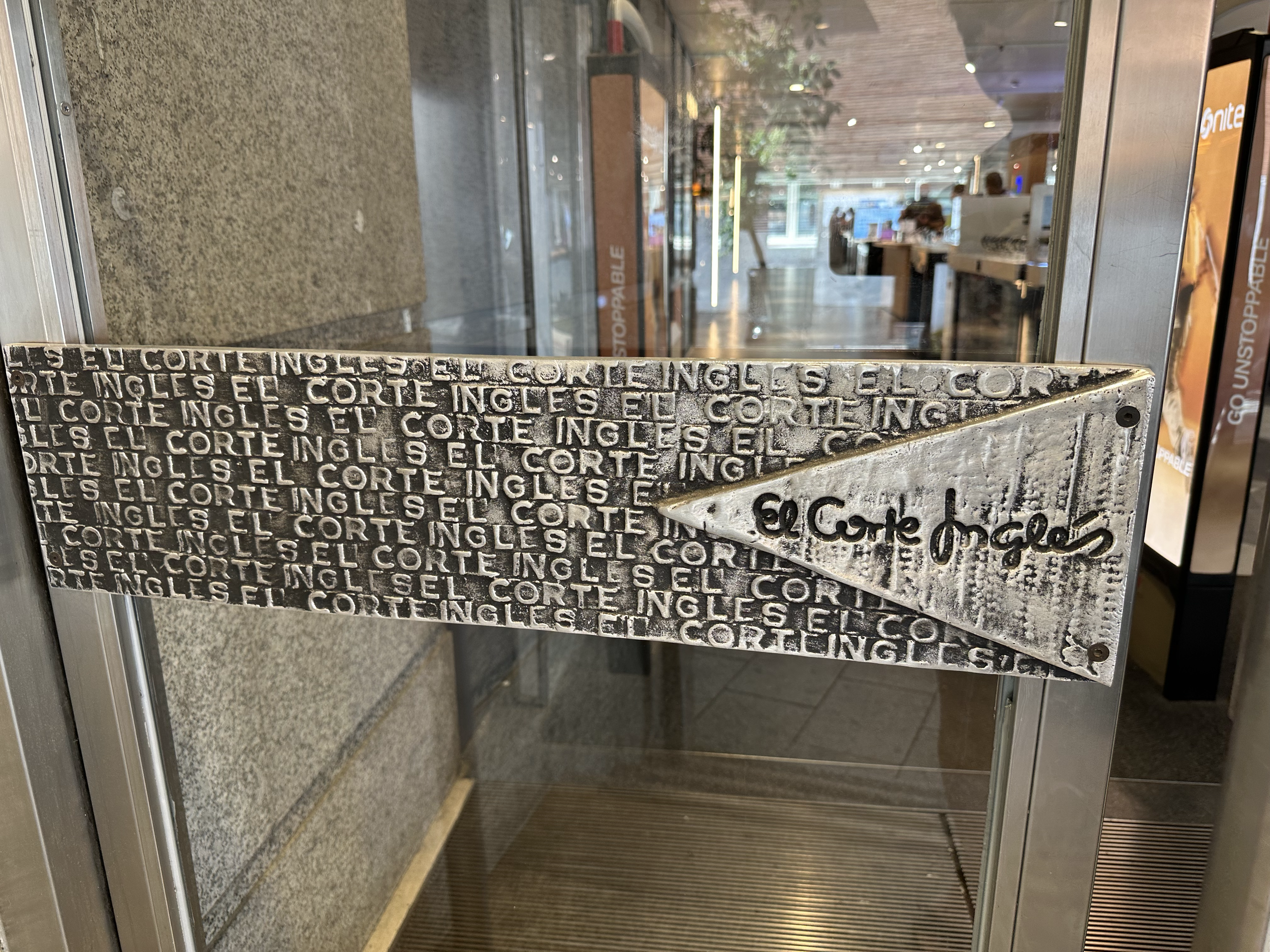
You know we made one more stop at El Corte Inglés before heading to the airport. What a great trip to Madrid! This marks the end of our first Schengen Chapter as we head to Great Britain!